
Search Results for: Rumba
Pupy Pedroso An Ambassador of Cuban Music in the World
Latin America / Cuba / La Habana
When we talk about the beautiful island of Cuba, it is impossible not to automatically think of its rich and ancient musical culture. We are talking about a small piece of land in the world, of that long Caribbean, but it is full of the most successful musicians of Cuba. the history of Latin rhythms.
It all lies in the Spanish and African influences that came to the Island hundreds of years ago, that race that was created from the strings and the drum, from the white and the black, from singing and dancing.
On this occasion I feel very proud to be able to speak directly with a cultural ambassador, recently appointed by the Latin Institute of Music, the leader of those who are are and one of the founders of the very famous Van Van orchestra, the great Cesar Pupy Pedroso, teacher of teachers, as we have called him for this occasion.
Good morning maestro, thank you in advance for the time you give us to all the readers of the International Salsa Magazzine and the portal www. salsamundi.com.
“Well, here I am very happy to be able to talk a little with you and grateful that you want to talk about this server”
Maestro with 19 years of foundation with Pupy and those who are maestro, tell us how the idea of founding this great orchestra was born after making the whole world dance with the Van Van.
“The idea for the project ‘’Los que Son Son’’ arose from a recording I made (while in Los Van Van) with songs of my authorship performed by an internationally renowned performer. (Omara Portuondo, Rolo Martínez, Xiomara Laugart, Raúl Planas, Caridad Cuervo, Pedro Calvo, Raúl Planas etc…etc..) From that moment on I got the idea of making another album with other performers, with a German publisher, and The album was called César Pedroso y Los que Son.
There came a time when I was on tour with Van Van and the dancers came with the records, so I could sign them, and it was then that the idea came to me of forming an orchestra and leaving Van Van and calling it ‘Los que Son Son’. . ”
Why Pianist?
“In my house when I was born there was already a piano, my father was a pianist, and children always want to be like their parents, and I was not going to be the exception, regardless of the fact that I liked the piano since I was little.”
What theme do you consider the flag of Pupy Pedroso’s new journey? When your orchestra opens
“Themes of the new transit: themes like ”What are the things in life” ””A crazy man with a motorcycle” ”Mommy behave well”, ”They’re calling me” and of course ”Six weeks “”

Tell us the story of the musical piece “De la timba a Pogolotti” does it tell us about a change in your life?
“From Timba to Pogolotti: It arises from a piano solo that I did in ”Sandunguera” and Pedrito Calvo identified me, as ”Pupy the sandunguero of Pogolotti” and the neighbors of La Timba (neighborhood where I I was born) they asked my older relatives why they said about Pogolotti, if I was born in La Timba, then I wanted to be okay with the two neighborhoods, when I made ”Los que Son…”
Well, I made that song in honor of the two neighborhoods, because I was born in La Timba, but I grew up in Pogolotti, and all my childhood friends are from Pogolotti, I don’t have friends in La Timba, and I consider that one is from where one is from. upbringing, not where he was born, because all the customs, friendships, first ”girlfriend” were Pogolotti’s.”
Which song is your favorite from Van Van’s golden era?
“If you talk to me about the songs from Van Van’s golden age, there are several, of mine the authorship of Maestro Formell and others of mine, for example of the maestro, there are several, “My doubts” ”Marilu”” The Painful” ”There are women” ”I’m everything” and one of mine: ”Six weeks “Sugar” ”The Negro is cooking” ”It must be over” ”That’s good ”, among many others, we live in a wonderful time”
Since August 2018, he was named Cultural Ambassador by the Latin Music Institute. Do you consider it an achievement or a new commitment?
“I consider both things, an achievement because it is not easy in a country with so much talent and so many performers to take me into account for said recognition, and at the same time a commitment, because I am obliged not to let my musical guard down in any way.” sense.”
Maestro comes from a family of great musicians, his grandfather a director, his father a pianist, both from great Cuban orchestras. Can we say that being a musician in your family comes in your blood? Is it inherited in the genes?
“Yes, sir, I am grateful for having been born in this family where there was so much musical talent, where only music was breathed, my autistic grandfather, director of an orchestra called ”Cuba”, my uncle a percussionist in an orchestra very famous for that ”Arcaño y sus Maravillas” era, and I believe a lot in the musical heritage because I consider myself a product of it.
As a pianist, it is because my fundamental patron was my father, from whom I copied and learned a lot from what I could discreetly practice and as a conductor, because I had the joy of having worked with different directors, Rolando Valdés, Enrrique Pérez, I assisted in substituting for my father and the ones I spent the longest time with, Elio Revé and Juan Formell, I spent 6 years with Revé and 32 with Formell and I learned a lot with both directors, I was lucky.”
To what do you owe your great success as a pianist and conductor?
“I think that to be good at any career, the fundamental thing is that you like it and have the aptitude for it, I think that music does not escape from that rule, because you can like it, but if you don’t have the aptitude, don’t waste your time, and Maybe if you have aptitude and you don’t like it, over time you may like it and fall in love with it, so aptitude is the fundamental thing.”
What is your greatest reference or influence in music?
“My greatest influence is Son, I love Son, rumba, guaguancó, Cuban music and Brazilian music, jazz, but my greatest influence is Son.”
Currently, how do you see timba within the island of Cuba? Minimized by Cubaton or leader of local rhythms?
“I believe that at all times, there have been different musical genres, which have been in the preference of the dancer, in the era of Rock and Roll they danced with Elvis Presly, with Bill Halle and his comets, with Little Richard, but also they danced with Aragón, Benny Moré, Sonora Matancera, among others,…
but today the balance leans more towards these foreign movements, good and bad, and that is happening all over the world, in the dance area, but I do not consider our dance music critical or dead, because there is taste for everything and every time “A convening orchestra performs on an open-air stage, it overflows with audiences, that means we are in battle, and the country that has the most musicians making a living from music is Cuba.”
Tell us about the 2019 projects? New CD? Tours?
“Fundamentally starting the next album, the release of a documentary of a tour we are doing in Cuba and some presentations abroad, to reappear again at the end of the year in Europe, with one of the dance hits from France:
”Having a good time”, I make a parenthesis, clarify that there are countries where our music prevails (El Son, La Timba, La Salsa) like Peru and Colombia, Cuban rhythms are still in fashion, thanks to many musicians and orchestras that make a great job for the dissemination, to the printed media and now the digital wave that quite develops our work, look, you are an example of this, we hope to continue giving our audience reasons to dance.
In August we return to South America, it is the tour we are most looking forward to, the Latin public is one of the best, we think about stopping in August in Colombia, Ecuador and Peru, in the same way we are now planning to organize the calendar, for businessmen or producers who wish to have us in their cities, must contact our direct representatives, talking to them is like talking to Pupy”
What should a producer do to have them in their Latin American projects?
“No compadre, very simple, contact them at these numbers +573022582306 and +51992630351, they are the only ones authorized to market our tour, we want to be in all the cities of Latin America.”
Grateful teacher for your time and for letting us get to know you a little, may the successes continue for what they are.
“Grateful to you, thank you for the dissemination you make of the popular dance music of my island.
It remains to leave you the social media links of such an important orchestra so that you can follow in its footsteps and find out about the development of the successes of this great band, on Facebook:
@pupypedroso and the numbers
+573022582306 and +51992630351.
Samuel Quinto Feitosa is a Brazilian virtuoso jazz and classical pianist
Samuel Quinto Feitosa, FRSA (born September 5, 1973) is a Brazilian jazz, pop, gospel and classical pianist, as well as music producer, composer, arranger, educator and writer living in Portugal since 2004.
Quinto grew up in Salvador, where he developed his art mainly with the piano. Samuel Quinto was born in Belém, Pará, but grew up in Salvador, Bahia.
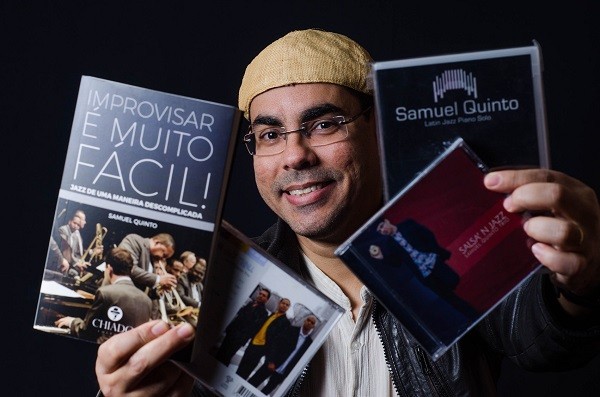
Since the age of seven, he developed his musical talent by virtue of the contact with the piano through the gospel, accompanied by the Baptist Church that he studied during his childhood with his family in Salvador.
Then Samuel took the first steps on the piano in the family home, always without accompanying teachers, and developed his piano skills learning also, as self-taught, harmony, reading and writing music and orchestration, musical composition, arrangements for the church choir, which begins to play as a pianist at the age of 12 years. In Europe.
Samuel Quinto released his first CD “Latin Jazz Thrill” in 2007, in Portugal, with trio formation (Bass, Piano and Drums), which formed the core of his repertoire in various festivals and concerts during the years 2007 and 2008 in Portugal.
During his 2008 tour he performed in cities such as Hamburg, Berlin, Cologne, Heilbronn, Liège and Limoges; in addition to a special concert held in Salvador in collaboration with the Catholic University of Salvador in June 2008. His compositions are used at the University of Porto (ESMAE) in the Jazz degree, as study material in the training of Jazz students.
The second CD entitled “Salsa ‘n Jazz”, containing eight original compositions by Samuel Quinto, and the standard Stella by Starlight, is released in June 2009 with a concert in the city of Porto, and the concomitant launch of his new tour.
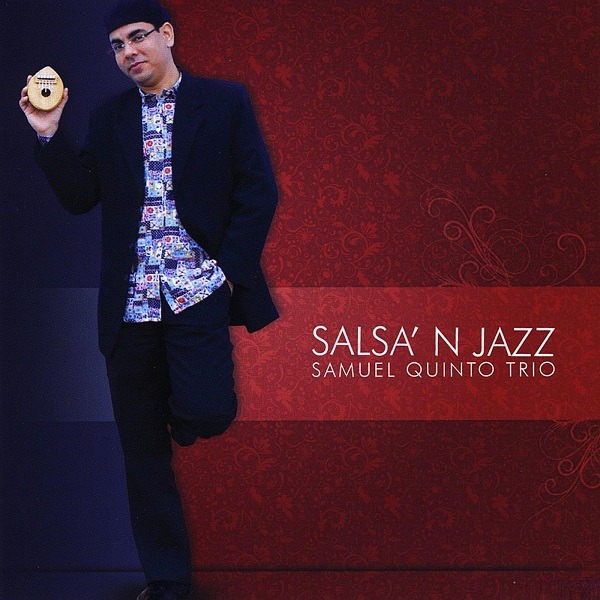
Even more extensive, which passed through Belgium, Germany, Portugal, Spain, France, Luxembourg, Netherlands and England. In this second work, Samuel was accompanied by another Brazilian, classically trained, Marcos Borges on bass and Manuel Santiesteban, Cuban, graduated in drums in Havana, Cuba.
He founded the first Latin Jazz course at the North Jazz School, Porto – first professional Jazz school accredited in Portugal and one in the Iberian Peninsula to have the Professional Jazz Instrumentalist course until then.
Besides being invited to be the artistic director of one of the most traditional Portuguese jazz clubs, Si bemol.
Samuel has also been invited to conduct workshops in the field of Jazz, Latin Jazz Composition and Arranging both in Brazil and Europe. But his musical talent is not only to jazz, after having been a pianist of the corps de ballet, he began to develop the scholar side of his music.
Inspired by great composers such as Beethoven, Mozart, Bach, Tchaikovsky, Brahms and others, he began compositions to accompany ballet in performances, as well as for orchestra and choir. _ (allaboutjazz)
There is something about Brazilian-born pianist Samuel Quinto that strikes a vibrant chord in the inner ear. Perhaps it has to do with his wonderful grasp of the joy that abounds in the Brazilian northeast.
His sense of “joy”. Perhaps it also has to do with his mature approach, his wonderful use of dynamics, his expression and his innate ability to allow the tonal center of his music to shine.
He has an exquisite ear and his hands are independently controlled by his mind, which separates melody and harmony when necessary.
Quinto, as a result, makes his fingers tingle on the keys, rumble and guffaw and cry with chords from which he wrings laughter and sadness and pure joy.
In Salsa’ N Jazz he plays with a primal hypnotic rhythm that calls to the roots of his music, which reach all the way to deepest Africa, through the folk corners of Brazil and Spain, which means the Mediterranean nooks and crannies of the Middle East, India and Europe.
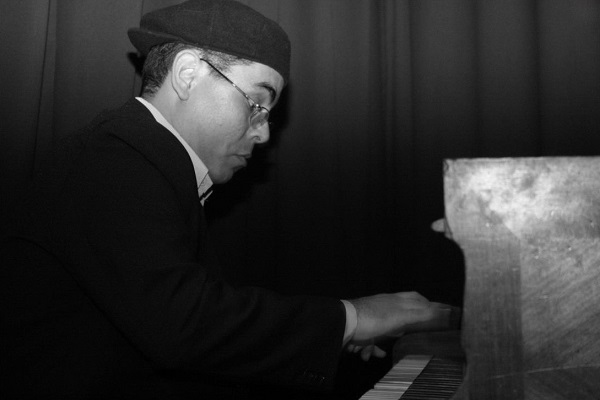
The result is a discotheque where these cultures converge in a point of ignition that warms the blood of the soul. His playing is muscular and intuitive and smacks of an artist who likes to invent on the fly, to constantly evolve.
The starting point of Quinto’s playing is also a deeply symbiotic relationship with forro music in all its vibrant splendor-baiao, xote and arrasta-pe-all elegantly captured and sparkling as his fingers touch ebony and ivory.
The most joyous and memorable display of this is her rendition of Victor Young’s “Stella by Starlight,” which gets a rousing liner treatment and reaches its climax as the song’s choruses unfold.
It is worth mentioning that on this song – as on the others on this album – Brazilian bassist Marcos Borges and Cuban drummer Manuel Santiesteban shine with their wonderful interplay.
Samuel Quinto is also an accomplished composer and demonstrates maturity and a sense of adventure with the rhythmic variety he presents here in a rumba, “Quinto’s Rhumba” which, by the way, is played in a deliciously choppy style reminiscent of Thelonious Monk.
“Jaci” is an exciting, danceable song that crosses Cuban rhythms with a touch of Brazil.
“Bolero To Preta,” an affectionate semblance of the pianist’s mother, suggests that the pianist has a lot of inner clave.
“Ficou No Meio” is simply a marvelous forro that becomes dizzying as Quinto, Borges and Santiesteban gloriously rumba in harmony and rhythm.
Santiesteban gloriously ruminate the harmony and rhythm.
“Voo Da Andorinha” is a chorinho that, quite simply, reveals Quinto’s “Alma de Nordeste”. And “Isabel (Para Voce)” is a beautiful ballad that shimmers and shines as its emotive tonal colors begin to unfold.
“Salsa’ N Jazz” is an emblematic song that captures everything unforgettable about this album: a pianist with the ability to dazzle in silence while the right hand flies exotically and the left constantly invents harmony and rhythm.
Here is a very promising pianist, who brings with him his rich Brazilian tradition and, indeed, all of Latin America, a new and exciting musical landscape. _
Raul D’Gama Rose
Samuel Quinto Trio – Salsa’N Jazz (2009).
Musicians:
Samuel Quinto (Piano)
Marcos Borges (Bass)
Manuel Santiesteban (Drums)
Information provided (September 16, 2023)
Samuel Quinto Feitosa (Neuroscientist and Musician)
Luis “Perico” Ortiz: six decades of impeccable musical trajectory
The lobby of the Centro de Bellas Artes in Caguas served as a prelude to the concert, entitled Tocando y contando historias (Playing and telling stories), for which we came to enjoy “Perico” and his guests. Mario Ortiz, Jr. brought together a dozen trumpet players (Luis Figueroa, Richie Segarra, Roby Texeira, Rafael Lebrón, Kevin Ibáñez, Ricardo Marrero, Kenneth Torres, Rubén Días, Ricky Zayas and Simón Rivera) to pay tribute to Luis “Perico” Ortiz by performing his most emblematic solo: ‘Coro Miyare’.
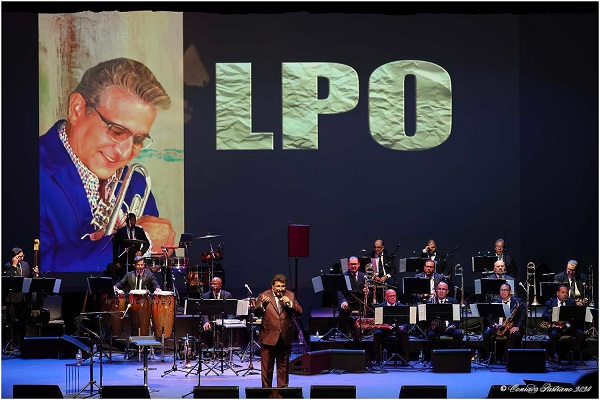
Once in the concert hall, the child trumpeter Daniel Torres (whom Perico predicted would be his successor) and Luis “Perico” Ortiz kicked off the concert with a fun trumpet correspondence. The musicians, turned into actors, shared with us the scene in which we saw Luis “Luisín” Ortiz as a child, playing ‘Quítate de la vía Perico’ with his trumpet; introduction that gave way to the custodian of Ismael Rivera’s legacy (“Moncho” Rivera) to sing the emblematic theme to which “Perico” owes his nickname, while the audience enjoyed images of “Maelo” on a giant screen. The short film defined how “El Sonero Mayor”, personified by “Moncho” told “Luisín”, that from that moment on he would be called “Perico”.
Moncho also interpreted ‘Bilongo’, a song in which Richard Carrasco stood out on the bongo after the saxophones made themselves felt with forcefulness. “Perico” also claimed his turn with the trumpet solo that preceded a resounding “Buenas noches” in the voice of the virtuoso trumpet player.
The orchestra was integrated by: Luis “Perico” Ortiz on musical direction; Yturvides Vilchez, Jan Duclerc and Rolando Alejandro Lora on trumpets; Rafy Torres, Jorge Díaz, Randy A. Román, Mario Alonso Ángel Marulanda on trombones; Roberto Calderón on baritone saxophone, Luis Daniel Valentín Muñiz on tenor saxophone; Antonio Luis Orta and Luis Fernando Hernández on alto saxophones; David Marcano on timbales; Gadwin Vargas Vélez on congas; Richard Carrasco Ayala on bongo; Juan Manuel Rivera Colón on piano; Carlos Luis Martínez Peña on bass; Henry Santiago and David Carrero on backing vocals.
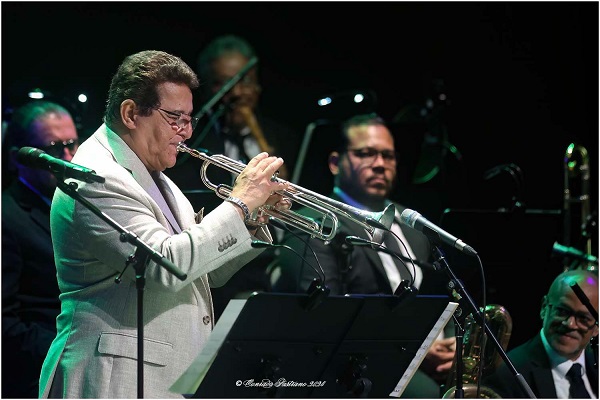
Then, Henry Santiago received the microphone to sing ‘Tres grandes amigos’. For the song, which refers to Tito Rodríguez, Tito Puente, and Machito; “Perico” introduced “Manolito” Rodríguez and Arianelys Ortiz Cruz, a blind autistic timbalera player.
He was followed by Norberto Vélez, who performed ‘Julián Del Valle’ (1978, Súper salsa) and ‘De patitas’ (1979, Luis “Perico” Ortiz, One of a kind) – songs of great vocal and interpretative difficulty, popularized by the unmistakable voice of Rafael De Jesús – with his usual sympathy. Nor-Bert once again demonstrated his powerful voice, and was matched by the saxophones, whose forcefulness did not diminish the power of Vélez’s voice.
“La India” arrived with her usual energy to interpret ‘Químbara’ and “Manolito” did his part singing ‘La Reina es la rumba’, in company of “La India”, alternating on the soneos.
Coro Miyare” made use of Richard Carrasco’s unbeatable performance in the bongo solo with drumsticks -which had been popularized by Roberto Roena-, followed by the crushing solo by “Perico”, the piano solo by Juan Rivera, the conga solo by Gadwin Vargas and the timbales solo by David Marcano.
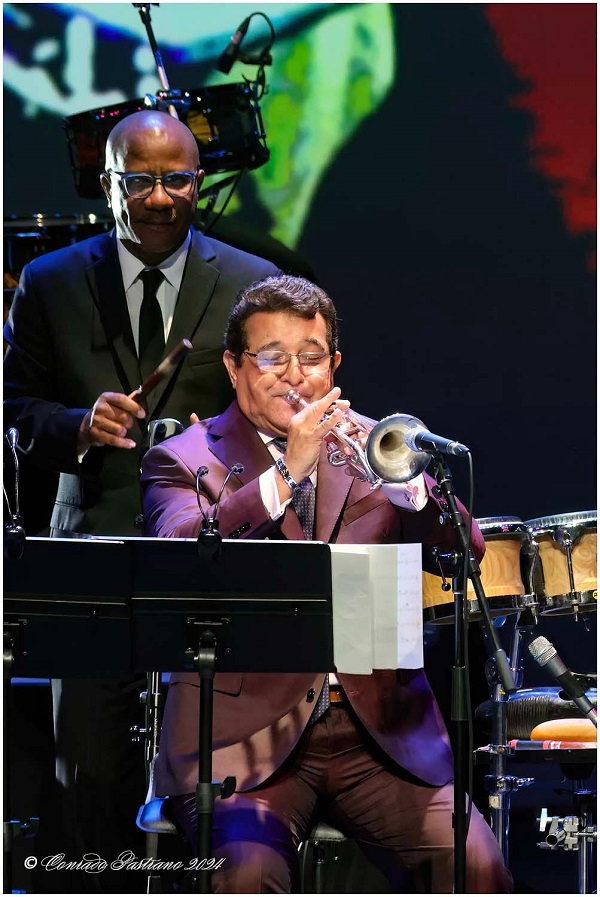
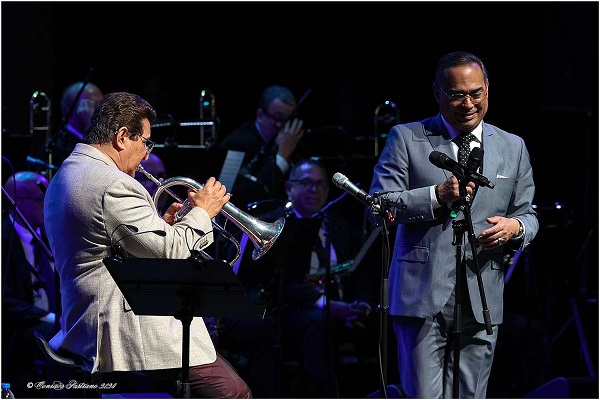
The highlight of the concert was Gilberto Santa Rosa’s brilliant renditions of ‘Atrevida’ and ‘Planté bandera’; recorded and immortalized by Tommy Olivencia’s La Primerísima, to which Santa Rosa briefly belonged.
After the intermission, as a tribute to the “Niño bonito de la salsa”, “Perico” invited Tony Vega to the stage to perform ‘Así se compone un son’ and ‘Borinquen tiene montuno’, the latter adorned with an elaborate trumpet solo by “Perico”.
“Perico” brought Gerardo Rivas to the stage to perform ‘Río abajo va’ (1985, La vida en broma), popularized in the voice of Domingo Quiñones. Gerardo explained that he had accepted the invitation to participate in the concert without knowing which song he was going to sing, in a clear allusion to the vocal difficulty of reaching Domingo’s vocal register. Gadwin Vargas sprinkled the theme with a conga solo with a mozambique beat, very well achieved. Gerardo’s second song, ‘Perico lo tiene’, brought to the stage the cacique of the Rivas dynasty (“Jerry” Rivas, singer of El Gran Combo de Puerto Rico) on the tres and Richie Bastar (bongos player of La Universidad de la Salsa). While Bastar took over on the bongo and the bell, Richard Carrasco took over the güiro. At the end of the intervention, “Jerry” asked for a round of applause for the mulato mayor, Don Rafael Ithier, who was enjoying the concert with all of us who were there.
Then, “Perico” dedicated ‘Perfume de gardenias’ to his mother; a speech that was enjoyed with an instrumental prelude performed by “Perico” and a great vocalization by “El Caballero de la Salsa”.
Next up was Rubén “Panamá” Blades, who received a standing ovation from the audience. This made visibility difficult, although it did not affect our enjoyment of the audio. Blades was in charge of the big hits ‘Plástico’ and ‘Pedro Navaja’ (1978, Siembra). During ‘Pedro Navaja’ Gadwin Vargas replicated the conga sound that Eddie Montalvo immortalized on the recording.
The stage was full when all the guests arrived to perform ‘Como vivo yo’, after Perico announced with a trumpet solo the song that would end the show.
As Luis “Perico” Ortiz said, the vote of love and confidence that we witnessed there will be remembered as an unrepeatable evening, which detailed what has been six decades of impeccable career that the trumpeter, composer, arranger and music producer has achieved.

Also Read: ¡Attack Sergio! Unbreakable: A fun read because of the contradictory content
Los Van Van and their 50th Anniversary
North America / USA / New York
Los Van Van returns to Lehman Center Performing Arts to celebrate their 50th Anniversary
For this special concert the Cuban legendary orchestra will join with the most popular lead Los Van Van vocalists: Mario “Mayito” Rivera and Pedro Calvo
Date: Saturday, June 1st
Show: 8:00PM
Cost: $50 – $100
Venue: 250 Bedford Park Boulevard West Bronx, New York 10468
Low cost onsite parking available for $5!

Lehman Center for the Performing Arts presents the return of Grammy-winning dance orchestra, Formell y Los Van Van, who bring direct from Cuba their blend of Afro-Cuban, disco and funk back to Lehman Center to celebrate their 50th Anniversary on Saturday, June 1st at 8PM.
Heralded as Cuba’s greatest dance orchestra known worldwide for their iconic live performances, Formell y Los Van Van features three of the late founder Juan Formell‘s children: Samuel Formell (Leader and Drummer/Timbalero) , Juan-Carlos Formell (Bassist) and the family’s youngest daughter, Vanessa Formell (lead vocalist).
BIO: Formell y Los Van Van, nicknamed the “Cuban Music Train,” is regarded as one of the most influential bands in the history of 20th century Cuban popular music. Founded in 1969 by Juan Formell when he was 27 years old, the band pioneered Songo, a hybrid rhythm that blended Cuba’s native folkloric son music with the go-go of the 1970s and has electrified dance floors in Havana for over forty-five years.
The band’s original members were: Juan Formell (bandleader, bass player, and songwriter), Cesar “Pupy” Pedroso (piano, songwriter), and Jose Luis “Changuito” Quintana (drums and timbales). Each one were music conservatory trained from a young age and were fascinated with the soul, go-go and disco music that dominated U.S. radio.
They named their dance band “Los Van Van” (which literally means “they go-go”) after the go-go fad, and pioneered the hybrid of son and go-go music – Songo – which can now be found throughout Latin jazz, pop, and world fusion.
And if the genius of Songo wasn’t enough, they also developed the complex rhythmic style that became known as Timba that was adapted by other bands in the ‘90s. Los Van Van soon became one of the best-known Cuban groups in the world, maintaining a loyal fan base throughout Latin America, Europe and Japan propelled by hits such as: “La Sandunguera,” “Anda, Ven y Muévete,” “Te Traigo” and “Yuya Martinez.”
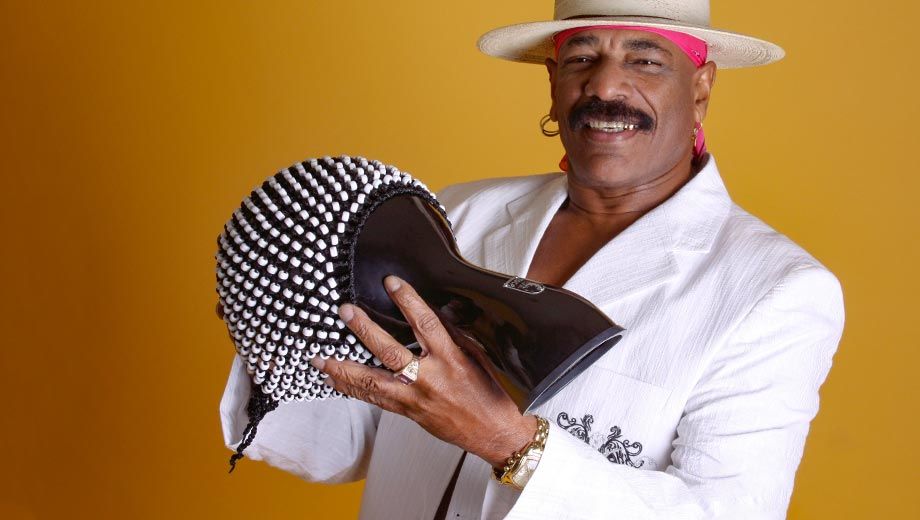
In 1993, Changuito left the band and was replaced by Formell’s son Samuel who also proved to be an outstanding composer as evidenced by the song: “Te Pone La Cabeza Mala”, the title track of one of their best albums. Although American politics hindered their ability to break into the U.S. market, their popularity in the U.S. grew throughout the ’90s, and the band toured the U.S. for the first time in 1997, including a memorable concert at Lehman Center.
Two years later, Los Van Van was honored with the GRAMMY® Award for Best Salsa Performance for their fifteenth album, Llegó…Van Van — Van Van is Here and in 2013, the Latin Recording Academy awarded Juan Formell with a special Grammy for a Lifetime Achievement of Artistic Excellence.
With over 40 albums to their credit, Formell y Los Van Van’s 2015 album Homenaje A Juan Formell: La Fantasia, was 80% completed at the time of Juan Formell’s death in 2014 and was finished under the direction of his son Samuel with another son, Juan-Carlos Formell.
The album’s release on Reyes Records in December, 2014 was on the 45th anniversary of the band’s founding and it features several of the band’s hit dance tracks refreshed with contemporary arrangements as well as many new songs including the widely popular: “Somos Diferentes”, “Todo se Acabó” and “La Moda”. Sony Music released it worldwide in 2016 and it earned a 2017 Grammy nomination for the Best Tropical Latin Album.
The group’s most recent album “Los Van Van son La Patria” is scheduled to be released on Cuba’s Engrem label later this summer.

BIO: Mario “Mayito” Rivera is nicknamed “El Poeta de La Rumba” for his ability to vocally interpret all forms of Cuban music in both modern and traditional styles with a colorful range that can be powerfully dynamic or tender and soft.
He was born in Pinar del Rio, Cuba, and has degrees from both the Escuela Nacional de Arte and the Instituto Superior de Arte. After college, he joined the band of Cuban singer Albita Rodríguez and played bass in Grupo Moncada.
From 1992 to 2011, Mayito was the characteristic voice and face of the extremely successful Cuban band, Los Van Van. He sang many of the band’s salsa hits, for which he was rewarded with a Latin GRAMMY® and two nominations.
Bio: Pedro “Pedrito” Calvo is a popular Cuban-born vocalist known for his charismatic and unique singing style which often includes clever word play and expressive rhythmic vocal sounds. Pedrito started his professional career singing with his father’s orchestra and years after with several Cuban orchestras including:
La Riviera, La Orquesta de Julio Valdés, and La Ritmo Oriental with hits such as: “Mi Socio Manolo” and “Aquí el que Manda es Mulé”. He was the most famous for his time (1974-2001) with Los Van Van, where he was part of the infamous lead singing trio of Los Van Van along with Mayito Rivera and Roberto Hernández.
Event Details:
www.LEHMANCENTER.org