• Skip to primary navigation
  • Skip to main content

International Salsa Magazine

  • HOME
  • Previous editions
    • 2026
      • ISM / March 2026
      • ISM / February 2026
      • ISM / January 2026
    • 2025
      • ISM / December 2025
      • ISM / November 2025
      • ISM / October 2025
      • ISM / September 2025
      • ISM / August 2025
      • ISM / July 2025
      • ISM / June 2025
      • ISM / May2025
      • ISM / April 2025
      • ISM / March 2025
      • ISM / February 2025
      • ISM / January 2025
    • 2024
      • ISM / December 2024
      • ISM / November 2024
      • ISM / October 2024
      • ISM / September 2024
      • ISM / August 2024
      • ISM / July 2024
      • ISM / June 2024
      • ISM / May 2024
      • ISM / April 2024
      • ISM / March 2024
      • ISM / February 2024
      • ISM / January 2024
    • 2023
      • ISM / December 2023
      • ISM / November 2023
      • ISM / October 2023
      • ISM – September 2023
      • ISM – August 2023
      • ISM July 2023
      • ISM Edition June 2023
      • ISM – May 2023
      • ISM April 2023
      • ISM March 2023
      • ISM February 2023
      • ISM January 2023
    • 2022
      • ISM December 2022
      • ISM November 2022
      • ISM October 2022
      • ISM September 2022
      • ISM August 2022
      • ISM July 2022
      • ISM June 2022
      • ISM May 2022
      • ISM February 2022
      • ISM January 2022
    • 2021
      • ISM December 2021
      • ISM November 2021
      • ISM October – 2021
      • ISM September 2021
      • ISM August 2021
      • ISM July 2021
      • ISM May 2021
      • ISM April 2021
      • ISM June 2021
      • ISM March 2021
      • ISM February 2021
      • ISM January 2021
    • 2020
      • ISM December 2020
      • ISM November 2020
      • ISM October 2020
      • ISM September 2020
      • ISM August 2020
      • ISM July 2020
      • ISM June 2020
      • ISM May 2020
      • ISM April 2020
      • ISM March 2020
      • ISM February 2020
      • ISM January 2020
    • 2019
      • ISM December 2019
      • ISM November 2019
      • ISM October 2019
      • ISM Septembre 2019
      • ISM August 2019
      • ISM July 2019
      • ISM June 2019
  • Spanish
  • Download Salsa App
    • Android
    • Apple

Search Results for: Rumba

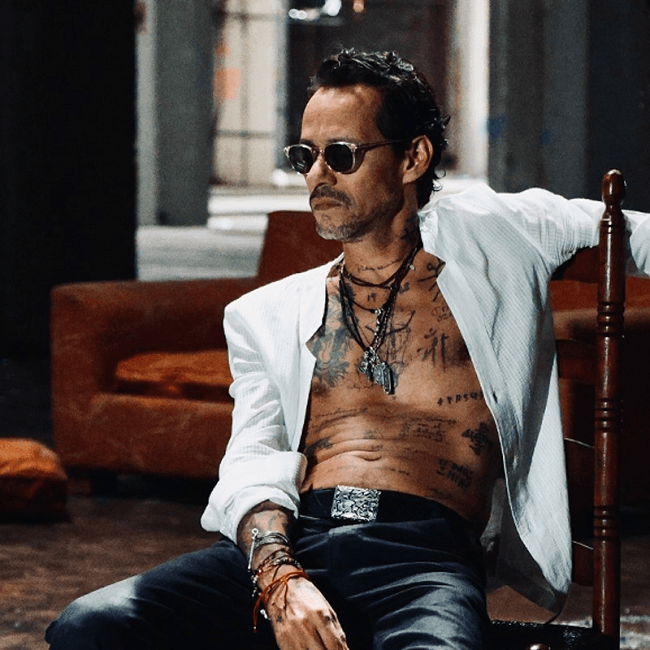
Marc Anthony Says to Europe Pa’llá Voy

The most influential tropical artist of the 21st century will offer a series of concerts in Spain, London, Holland, France, Italy, Switzerland, and Germany

Otra Nota (1993) was Marc Anthony’s first solo album

Si hay una fiesta pa’llá voy. Si hay una rumba, pa’llá voy. Con buena música y alcohol, cuando me llamen, pa’llá voy. With this nice choir of the song Pa’llá Voy that gives its name to the 2022 tour, Marc Anthony begins the series of concerts in Europe.

The versatile Salsa artist with the record for the most albums sold worldwide begins a series of 17 concerts on Saturday, June 4th at the OVO Arena Wembley in London (United Kingdom) with a capacity for 12,500 people. His next stop will be in the Rotterdam city (Netherlands) in Ahoy, which can hold 15,818 salsa souls, followed by Paris (France), Assago (Italy), Zurich (Switzerland), Cologne (Germany), ending his tour in 11 cities from Spain (Cornellá de Llobregat, Santiago de Compostela, Madrid, Seville, Fuengirola, Calvia, Oviedo, Valencia, Murcia, Cadiz, and Las Palmas de Gran Canaria). In this last city, the capital of Gran Canaria, Marc Anthony will step onto the stage of the Granca Live Fest that will take place on July 8th at the stadium of this cosmopolitan city with a capacity of 31,250 people.

This same tour, postponed due to the pandemic in 2020, was initially called “Opus Tour” and a year later it changed to “World Tour” now it is titled “Pa’ lla voy Tour” the homonymous name of the thirteenth album of the singer of Puerto Rican descent released on March 4th, 2022.

Pa’lla Voy was recorded during the pandemic period in Miami (United States), the place of residence of Magnus, the company of the singer awarded the Order of the Golden Sphinx by Harvard. This studio album is made up of nine Salsa pieces (Pa’llá voy, Yo le mentí, No se quita, Nada de nada, Amor no tiene sexo, Mala, Gimme some more, El que te amaba y Si fuera fácil).

“When we got to the studio to record this album, I was full of inspiration. I had time to absorb these songs, fall in love with them, and create what you can now hear.” The artist wrote on his Facebook account on March 4th.
You don’t need to carry out any additional management or expense if you purchased the tickets in 2020

Anthony, with almost three decades of trajectory, has released two singles from this new production, “Mala” co-authored by Lenier and under the production of Sergio George (producer of his first hits), and co-produced by Motiff, recognized for his work with Víctor Manuelle, Gente de Zona, Natalia Jiménez among many others.

In the same way, “Pa’lla Voy” was released this year, his most important single, and that gives life to the tour. This first track of the album was written by the Venezuelan singer-songwriter brothers San Luis (Luigi and Santiago Castillo). Another piece of information that we can provide you is about the participation of the only woman on this album, the Venezuelan singer Elena Rose, co-writer of the song “Yo Le Mentí”. Andrea Elena Mangiamarchi, known by the artistic name Elena Rose, is known for working with urban singers like Becky G, Rauw Alejandro, Tini, and CNCO.

Tickets for this long-awaited tour are between 40 Euros and 140+ Euros. The tickets purchased for the suspended tour in 2020 are valid.

Don’t miss out on this opportunity to sing and dance on Pa’lla Voy Tour,  https://www.marcanthonyonline.com/gira/ and enjoy this new salsa jewel live and listen to his greatest hits such as “Valió la pena” or “Vivir mi vida”, the latter ranked 46th among the category of the 50 most important Latin songs of the American magazine specialized in music, Rolling Stone.


The 4 Ladies of Venezuelan Salsa project

The rumba night is dressed as a woman with the arrival of Las 4 Damas de la Salsa de Venezuela, a project of musicalizers at parties and events to exalt one of the Afro-Caribbean rhythms that most identifies Latin culture: SALSA.

The 4 ladies of Venezuelan Salsa debuted in May 2018, on the initiative of Sol Graffe after feeling that there was no female and group movement as DJane’s or musicalizadoras.

When musicalizing becomes, not a job but a passion, the commitment grows, and so these D’jane’s arrive presenting a different proposal giving prominence to females, with the aim of incorporating into the salsa market 4 women willing to permeate in a movement where the male presence predominates.

Professional and tasteful, lovers of this genre that unites us in one spirit: SALSA, to bring a musical selection, energy and good vibes to encourage salsa dancers and dancers of Venezuela and beyond its borders.

4 Personalities Conjugated in one Rhythm

DJane. Sol Graffe: Born in Caracas, a salsa dancer at heart, she became a radio promoter, TV producer and event producer under her slogan “Sol 100% Salsa” with more than 25 years of experience in the salsa industry.

DJane. Rocío Blanco: Born in Maracay edo. Aragua, lawyer, manager of the Posada Turística África and salsera by birth, dedicated to the musicalization five years ago being the only lady of the aragüeña entity baptized “La Consentida de la Salsa”.

DJane.  Zaire Plater: “La del Melao Salsero”, born in Caracas, economist by profession, salsera by conviction; dedicated to the musicalization of salsa for five years, leads the family project called “El Arepazo Salsero Plater”, where they gather a large group of dancers and salsa lovers to dance and share eating some typical and delicious arepas.

DJane. Zulay Millán: Caraqueña, lives between two passions: Radio and Salsa. She is a teacher by profession and a salsa dancer by heart. Announcer, certificate #55.721, voice over, radio producer, with experience in events and TV production, radio host for 25 years and counting, presenter/entertainer, composer and article writer, which explains her slogan “Soy Salsa y Más” (I am Salsa and More).

The 4 Ladies of Venezuelan Salsa have managed to position themselves with this interesting project in the salsa environment, whose protagonism brings a touch of elegance and distinction when they go on stage uniformed and organized, supporting each other, where camaraderie and good vibes are noted, as well as the demonstration of commitment and discipline setting a precedent, opening the way for alternatives to enrich the forms of dissemination of the salsa genre.

A solid project, which has the acceptance of producers and especially the dancers, who have become an important support for the permanence of Las 4 Damas de la Salsa in the collective memory and the salsa scene.

Sol, Zaire, Rocio and Zulay.

Last March 12, 2022 they were awarded as best musical project 2021 – 2022 event held at Cerro del Avila V.I.P Disco in Caracas, this activity was conducted and sponsored by Libia Ascanio and Edgar Mendoza.

They are The 4 Ladies of Venezuelan Salsa

Facebook: https://www.facebook.com/4damasdelasalsadura

Catalino “Tite” Curet Alonso, the most important composer in the history of Latin music.

(Guayama, 1927 – Baltimore, United States, 2003) Puerto Rican composer considered the most important author of salsa music in his country and one of the most outstanding Latin American composers of the second half of the 20th century.

His songs, produced throughout a fertile creative career that gave birth to more than two thousand pieces, were brought to fame by the most famous interpreters of the genre (Rubén Blades, Tito Rodríguez, Celia Cruz, Cheo Feliciano or Willie Colón, among others).

The son of an orchestra musician and a seamstress, Tite grew up in a working class neighborhood in Santurce, where he remained after his parents separated.

He studied music theory and solfeggio with professor Jorge Rubián, and in 1965 he wrote his first melodies for Joe Quijano, one of the best pachangueros of the time.

Are the 100 most listened to songs by Catalino “Tite Curet” Alonso in alphabetical order.


1.Adelante siempre voy :Ray Barreto con Adalberto Santiago

2.Anacaona :Cheo Feliciano

3.Adios Adiós :Pedro Arroyo

4.Apelo:(tema brasilero adaptado al Español por Tite para Roberto Roena)

5.Aquella mujer: Bobby Valentín y Marvin Santiago

6.Aqui estoy yo con mi son: Frankie Hernández

7.Aqui se puede :Airto Moreira /versión Ray Barreto

8.Babaila :Pete Conde Rodríguez

9.Barra limpia: Sonora Ponceña y Tonito Ledee

10.Barrunto: Willie Colon y Héctor Lavoe

11.Bandolera :Héctor Lavoe

12.Boca mentirosa(Andy Montañez)

13.Buen Corazón:(adaptación de Tite para Bobby Valentín/Cano Estremera

14.Cha cha ri cha :Willie Rosario/Guillo Rivera

15.CAONABO:(canta TITE CURET/arreglo Jorge Millet)

16.Candilejas:(Versión en Español de Tite para Wilkins/o Graciela)

17.Cabellos Blancos: Orquesta Mulenze y Pedro Brull

18.Callejon :Arabella (para la película Retén de Catia/Venezuela)

19.Camaron :Justo Betancourt /& versión Marvin Santiago

20.Cenizas:Milly Quezada con Perico Ortiz

21.Con los Pobres Estoy :Roberto Roena y Apollo Sound

22.Con mi viejo amigo: Larry Harlow e Ismael Miranda

23.De todas maneras rosas :Ismael Rivera y Los Cachimbos

24.Distinto y Diferente: Justo Betancourt y Borincuba

25.Don Fulano: Tito Rodríguez

26.Efectivamente: Joe Quijano

27.El eco de un tambor Dimensión Latina con Andy Montañez

28.El hijo de Obátala :Ray Barreto con Tito Allen

29.Ella está en otra rumba ;Justo Betancourt

30.Ellos se juntan: Cortijo y su combo con Maelo

31.Escucha una voz latina: Conexión Latina de Alemania

32.Estaca de guayacán: Marvin Santiago

33.Estampa Marina :Cheo Feliciano

34.El antifaz:Willie Rosario con Gilberto Santa Rosa

35.El cantar de los pinales: Pacheco y Pete Conde

36.El verdadero aniversario :El combo del ayer

37.Felicitaciones: Cheo Feliciano

38.Flor de los lindos campos Ray Barreto y Adalberto Santiago

39.Galera 3:Ismael Miranda

40.Guaguanco del Adiós :Roberto Roena y Apollo Sound

41.Hace furo: Cheo Feliciano

42.Hermano Héctor: La 2013 canta: Van Lester

43.Huracan:Bobby Valentín con Frankie Hernández

44.Isadora: Celia Cruz y Estrellas de Fania

45.Juan Albañil: Cheo Feliciano

46.Juanito Alimaña: Héctor Lavoe y Willie Colon

47.La Cura: Frankie Ruiz

48.La esencia del guaguancó (Pacheco/Pete Conde/primer versión Willie Rosario con Meñique)

49.La Oportunidad :Ismael Miranda con Larry Harlow

50.La Oportunidad: Ismael Rivera

51.La palabra Adiós: Ruben Blades con Estrellas de Fania

52.La Perla: Ismael Rivera

53.La Tirana: La Lupe

54.Lamento de Concepción: Roberto Roena y Apollo Sound

55.Las Caras Lindas: Ismael Rivera

56.Las mujeres son de Azúcar: Sonora Ponceña y Luigui Texidor

57.Los Entierros: Cheo Feliciano

58.Luz Negra: Sonora Ponceña y Miguel Ortiz

59.Llevame: Adalberto Santiago

60.Marejada feliz: Roberto Roena y Apollo Sound

61.Me pongo yo: La Descarga Boricua de Frank Ferrer

62.Morejon: Frankie Hernández

63.Mi música: Ismael Rivera

64.Mi triste problema: Cheo Feliciano

65:Nabori:Cheo Feliciano

66.Noche como boca ‘e lobo: Sonora Ponceña y Luigui Texidor

67.Pa’ Colombia: Willie Colon y Héctor Lavoe

68.Pa’ los ponceños: Sonora Ponceña y Tito Gómez

69.Pa’ que afinquen: Cheo Feliciano

70.Part time lover:(tema de Stevie Wonder traducido al español por  Tite para Bobby Valentín)

71.Pase la noche fumando: Willie Colon y Héctor Lavoe

72.Pedregal:Justo Betancourt

73.Penas de amor: Bobby Rodríguez y la Compañía

74.Periodico de Ayer: Héctor Lavoe

75.Piano Man: Ismael Quintana y Estrellas de Fania

76.Pirana:Willie Colon y Hector Lavoe

77.Plantacion Adentro: Willie Colon y Rubén Blades

78.Por que adore :Markolino y Chivirico Dávila/Versión Truco &

Zaperoko

79.Plante bandera: Tommy Olivencia canta: Chamaco Ramirez

80:Presencia:Justo Betancourt y Borincuba

81.Primoroso cantar: Pacheco y Pete Conde

82.Profesion esperanza: Ismael Rivera

83.Pueblo latino: Pete Conde con las Estrellas de Fania

84.Punto Bare: Pete Conde Rodríguez

85.Primer Montuno: Andy Harlow con Johnny Vásquez

86.Puro teatro: La Lupe

87.Que me lo den en vida: Roberto Roena y Apollo Sound

88.Reunion en la cima: Andy Montanez con la Puerto Rico All Stars

89.Sali porque sali: Cheo Feliciano

90.Salome:Cheo Feliciano

91.Salsaludando:Cheo Feliciano

92.Saborea:Los Hermanos Lebrón

93.Sobre una tumba humilde: Cheo Feliciano

94.Susana:Jose Feliciano

95.temes:Vitin Avilés

96.Tiemblas:Tito Rodríguez

97.Tomatero: Kim de los Santos

98.tu loco, loco y yo tranquilo: Roberto Roena y Apollo Sound

99.Vale más un guaguancó: Ray Barreto y Rubén Blades

100.Vete y Pregona: Justo Betancourt

Curet Alonso, the most important composer in the history of Latin music.


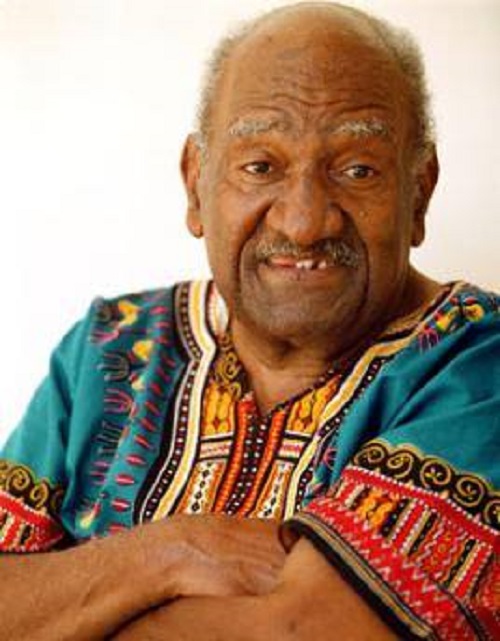
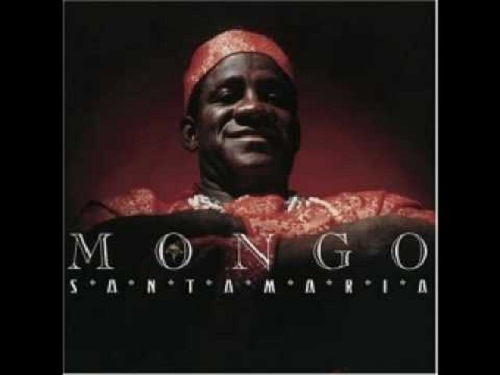
Ramón “Mongo” Santamaría “I wanted to do something that sounded like home”.

April 7, 1917, Mongo Santamaría was born in the Jesús María neighborhood of Havana, Cuba.

Exceptional percussionist of Latin Jazz and related rhythms, whose first name was Ramón Santamaría.

Mongo left to continue playing his Congas hard in the sky on February 1st, 2003.

“I wanted to do something that sounded like home”. With these simple words, Ramón Santamaría Rodríguez “Mongo Santamaría” spoke of his essence.

The purpose of his music pursued a sonority and a memory, possibly located in Cuba, in Jesús María, a marginal neighborhood where he grew up and enjoyed a tradition attached to the drum, to religion, to the street and from where this great Cuban percussionist drank infinitely.

But surely those drums also came to him from far away, from the Congo, where his grandfather came from to be a slave on the island and who also filled his head with sounds full of meanings and colors, which he later masterfully spread around the world.

The name of Mongo Santamaría (Havana, April 7/1917 – Miami, Feb. 1/2003) is, for the glory of all music, an inevitable reference of Cuban percussion.

Since he was a child he knew that his thing was to play the drum and he was lucky enough to belong to a family of empirical musicians, singers and drummers who supported him in the learning and mastery of these instruments.

During his time in Cuba, already a professional musician, he participated in numerous groups that little by little gave him a place among the most outstanding percussionists of the time. Some names of these groups are El Conjunto Boloña, Lecuona Cuban Boys, with whom he was able to participate in the recording of his first album, Conjunto Matamoros, Segundo Grupo de Arsenio Rodríguez, among others.

Each group had its own style and stamp, but in each of them Santamaría put his personal “touch”.

At the prestigious Tropicana cabaret he played with Chano Pozo as a member of Armando Romeu’s orchestra.

From that moment on, his career would not stop. Conjuntos, Septetos de Son were the perfect selection to complete the sap from which he would draw all his style and technique.

Later, from carnival to carnival, he would gather with other percussionists to play in the comparsas and experience the festive musical atmosphere par excellence of those years.

Alongside him played other friends who soon became a Cuban reference in the United States: Patato Valdés and Armando Peraza.

As part of the Tropicana orchestra and located in a show in Mexico, he decided to settle there as did many musicians of his time and came to play with Pérez Prado and Benny Moré.

It was precisely in the latter orchestra where he met Clemente Piquero “Chicho”, another Cuban percussionist whose style made him rethink the role of percussion in Cuban popular orchestras.

Mongo Santamaría belongs to the second wave of Cuban percussionists who arrived in New York in 1950.

His new idea of restructuring and designing his own style in the use of Cuban percussion was perfectly in tune with the reality that a few years earlier was being experienced in the music produced and sold in New York, after the arrival of the Cuban rumbero Chano Pozo.

“The rhythm produced by the conga organizes all the percussion of a band, from which melodies and counter-melodies can be experimented with.”

“I think percussion is the base from which things come out.”

Already in the United States, Mongo plays with Gilberto Valdés, again he is part of Pérez Prado’s orchestra and finally with Tito Puente’s, where he stayed for 7 years. Once in the line of Afro-Cuban jazz, so popular at the time, he joined George Shearing’s group and later the vibraphonist Cal Tjader.

With his own orchestra, he accompanied La Lupe, one of his favorite singers, and undertook projects of novel formats for the time, such as small formations of brass trio, piano, bass, percussion and drums, at a time when jazz bands predominated.

Mongo Santamaría, perhaps without the theatricality to which Chano had accustomed the New York public, focused all his strength on achieving his own sonority, with a fusion of Cuban styles and genres, perfected and deepened in the introduction of Afro-Cuban rhythms with a naturalness and using colorful timbre elements by using several tumbadoras in his set.

His creativity is highly demonstrated in the great amount of music that is part of his catalog of works and the quality becomes indisputable when seeing the amount of outstanding jazz interpreters that version and recreate his work.

In 1959 he recorded Tambores y cantos, which contains the song Afro blue, which over the years became “a jazz anthem of all times”, according to Nat Chediak, author of the Latin Jazz Dictionary.

His long recording career (50 albums), testifies to the musical activity that this great percussionist carried out throughout his professional career. He worked with American jazz legends such as Chick Corea, Herbie Hancock, flutist Hubert Maws, Dizzy Gillespie, trumpeter Marty Seller, among other musicians who today still pay tribute to this Cuban conguero who was the architect of the fusion of rhythm & blues rhythms and Afro-Cuban music, recognized the connection of Cuban music to African roots and placed the congas in an indispensable instrument for the determination of Latin jazz.

In 1977 Mongo Santamaría received the American Grammy Award for “Best Latin Recording” for the work Dawn.

In 1999, Rhyno Record Company, based in Los Angeles, California, recognizing his contribution to Latin Jazz, released the “box set” (CD) Skin On Skin: The Mongo Santamaría Anthology (1958-1995), which includes 34 of his most successful pieces (from his rumba albums, his LP with La Lupe and his projects in the fusion of Jazz and Latin) and an extraordinary literature about his career written by actor Andy García, musician Poncho Sánchez and other connoisseurs of the Latin Jazz genre such as José Rizo, Luis Tamargo, Joel Dorn and Miles Pelich.

The legendary musician was extremely honored and grateful for the distinction Rhyno gave him by introducing this historic anthology to the world. As stated in the conversation with Jaime Torres, Mongo said:

“This is the fruit of many years of work, music made with taste and love.”

May he rest in peace and eternal glory to him.

Frederlyn Mayora returns to Venezuela to sing Salsa Romántica to the dancing public.

Last Friday, April 22, at 7:00 p.m., a concert was presented at the Juana Sujo Hall of the Casa del Artista, in Quebrada Honda, Caracas. Tickets are already on sale at popular prices.

After several years out of the country, Venezuelan singer Frederlyn Mayora returns to Venezuela to relaunch his musical career and sing Salsa Romántica to Venezuelan dancers and music lovers.

Mayora, who has been part of the orchestras of Tony Vega, Maelo Ruiz, Jose Alberto “El Canario”, Luisito Carrion and Tito Nieves, among others, arrives in the country with a single called “Viernes Romantico” that promises to be a hit in a short time.

“I want everyone to know what I am doing and what I come to do in Venezuela”, said the singer who now has his own orchestra.

The singer will be in Venezuela until the end of his musical production loaded with romantic Salsa, ballads and merengues.

On April 1 and 2, Mayora offered a couple of concerts called “After Party de los Hermanos Primera”, that is to say, he performed in a well-known venue of the CCCT as soon as the presentation of the renowned singers Servando and Florentino was over, and it was a full house.

On Friday, April 8, at 4:00 pm, he will offer a press conference at the Doris Wells Hall of the Casa del Artista in order to announce in detail the entire agenda that he will fulfill on Venezuelan soil.

On Friday, April 22, he offered a concert at the Juana Sujo Hall of the Casa del Artista, located on Amador Bendayán Boulevard, Quebrada Honda, Caracas.

The event was scheduled for 7:00 pm. The occasion will be propitious to record a video click.

All Frederlyn Mayora’s events and presentations are in charge of her manager, Humberto Gonzalez, president of Producciones Salsayer.

A little bit of history

Frederlyn Alejandro Mayora Martínez, was born on July 27, 1982, in the populous Sucre Parish, west of Caracas, Venezuela.

He is a musician, singer and percussionist. At the age of 9 he began his musical studies, especially in percussion. He belonged to the estudiantina Héctor Pacheco and spent several years at the Bigott Foundation, where he received master classes with Professor Rodolfo González.

When Mayora turned 15 years old, he decided to focus his musical career as a singer and it is when the producer Humberto González, currently director of the Salsayer Orchestra, took him to sing in several salsa groups in Venezuela, among them, “Herencia”, “Neo Latino” and “El Combo Antillano”, among others.

In 2003 he moved to Spain, specifically to Galicia. There he became part of the orchestras “Panama”, “Filadelfia” and “Orquesta TV”, among others. His artistic commitments reached the beautiful city of Santander, located in the North of Spain, where he performed ballads, salsa and merengue.

In addition to the aforementioned orchestras, Frederlyn Mayora has been the lead voice in groups such as “Ekilibrio”, “La Junior”, “Mandinga Star Band”, “Puma Band”, “Patatín Orquesta” and the “Máquina de la Salsa” and has accompanied in the chorus, since 2002 to date, renowned singers such as “Maelo” Ruiz, José Alberto “El Canario”, Tony Vegas, Luisito Carrión and Charlie Aponte, former member of the Gran Combo de Puerto Rico.

Balance of the work carried out at the level of Social Media in Venezuela.

Publication of the Briefing

Noti-America (01-04-2022) Mexico

La Patilla (El Farandi) (02-04-2022) Venezuela

https://www.elfarandi.com/2022/03/30/briefing-vuelve-a-venezuela/

Notimundo (03-04-2022)

Press Conference

Day: Friday, April 8, 2022

Place: Doris Wells Hall of the Casa del Artista.

Attended by representatives from 10 media outlets and Instagram accounts. Examples: Venevisión, Portal La Patilla, Rumbas Venezuela, Intervez, Diario La Calle, Noticiero Digital, Analítica, El Universal, Tendencia Internacional and Radio Tiuna, among others.

Press releases published in digital media

Analitica.com (11-04-2022) Venezuela

https://www.analitica.com/emprendimiento/noti-tips/de-vuelta-al-barrio-toma-caracas-de-la-mano-del-salsero-frederlyn-mayora/

Tendencia Internacional (11-04-2022) Venezuela

https://www.tendenciainternacional.com/2022/04/11/de-vuelta-al-barrio-toma-caracas-de-la-mano-del-cantante-salsero-frederlyn-mayora/

Contraste Noticias Newspaper (12-04-2022) Venezuela

https://www.diariocontraste.com/2022/04/de-vuelta-al-barrio-toma-caracas-de-la-mano-del-salsero-frederlyn-mayora/

Vida y Arte (14-04-2022) Venezuela

http://www.vidayarte.com/farandula/cantante-salsero-frederlyn-mayora-esta-de-vuelta-al-barrio

Intervez (14-04-2022) Venezuela

Business and Destinations (15-04-2022) Venezuela

Cantante salsero Frederlyn Mayora regresa a Venezuela con “De vuelta al barrio”

La Calle Newspaper (17-04-2022) Venezuela

Mentions on Instagram accounts

@TendenciaInternalcional

@caracas_view

@augustofelibertt (Dj)

TV Programs, Portals and Radio

Wednesday, April 6, 2022

Venevisión, Channel 4. Presentation in the program “Sábado Sensacional” on the occasion of the 50th Anniversary.

Thursday, April 7, 2022

Globovision, Channel 33. Interview

Tuesday, April 12, 2022

Portal La Patilla. Interview. Broadcasted on April 20, 2022

Thursday, April 21, 2022

Program “Asi Suena”, Channel 8, with Rubén Jiménez. Broadcasted on Sunday 24-04-2022

Radio program 24-04-2022

“Ni tan Bravo”, with Isnardo Bravo. FM Center La Romántica 88.9 FM

This is a balance of the presence he has had in the media.

Wednesday, April 27, at 8:00 am, he was on Televen, Channel 10, in the program “Con lo actual”.

Sources

Salsayer Press Director: Yira Yoyotte, journalist. 0424-105-61-66. E-mail: [email protected]

Facebook: Frederlyn Mayora

  • « Go to Previous Page
  • Page 1
  • Interim pages omitted …
  • Page 31
  • Page 32
  • Page 33
  • Page 34
  • Page 35
  • Interim pages omitted …
  • Page 48
  • Go to Next Page »

International Salsa Magazine (ISM) is a monthly publication about Salsa activities around the world, that has been publishing since 2007. It is a world network of volunteers coordinated by ISM Magazine. We are working to strengthen all the events by working together.