• Skip to primary navigation
  • Skip to main content

International Salsa Magazine

  • HOME
  • Previous editions
    • 2026
      • ISM / March 2026
      • ISM / February 2026
      • ISM / January 2026
    • 2025
      • ISM / December 2025
      • ISM / November 2025
      • ISM / October 2025
      • ISM / September 2025
      • ISM / August 2025
      • ISM / July 2025
      • ISM / June 2025
      • ISM / May2025
      • ISM / April 2025
      • ISM / March 2025
      • ISM / February 2025
      • ISM / January 2025
    • 2024
      • ISM / December 2024
      • ISM / November 2024
      • ISM / October 2024
      • ISM / September 2024
      • ISM / August 2024
      • ISM / July 2024
      • ISM / June 2024
      • ISM / May 2024
      • ISM / April 2024
      • ISM / March 2024
      • ISM / February 2024
      • ISM / January 2024
    • 2023
      • ISM / December 2023
      • ISM / November 2023
      • ISM / October 2023
      • ISM – September 2023
      • ISM – August 2023
      • ISM July 2023
      • ISM Edition June 2023
      • ISM – May 2023
      • ISM April 2023
      • ISM March 2023
      • ISM February 2023
      • ISM January 2023
    • 2022
      • ISM December 2022
      • ISM November 2022
      • ISM October 2022
      • ISM September 2022
      • ISM August 2022
      • ISM July 2022
      • ISM June 2022
      • ISM May 2022
      • ISM February 2022
      • ISM January 2022
    • 2021
      • ISM December 2021
      • ISM November 2021
      • ISM October – 2021
      • ISM September 2021
      • ISM August 2021
      • ISM July 2021
      • ISM May 2021
      • ISM April 2021
      • ISM June 2021
      • ISM March 2021
      • ISM February 2021
      • ISM January 2021
    • 2020
      • ISM December 2020
      • ISM November 2020
      • ISM October 2020
      • ISM September 2020
      • ISM August 2020
      • ISM July 2020
      • ISM June 2020
      • ISM May 2020
      • ISM April 2020
      • ISM March 2020
      • ISM February 2020
      • ISM January 2020
    • 2019
      • ISM December 2019
      • ISM November 2019
      • ISM October 2019
      • ISM Septembre 2019
      • ISM August 2019
      • ISM July 2019
      • ISM June 2019
  • Download Salsa App
    • Android
    • Apple
  • Spanish

Search Results for: Rumba

70th Anniversary of the Sonora Ponceña at the Roberto Clemente Coliseum

Major guests joined the historic Sonora Ponceña concert, which was held on Saturday, November 1, 2025, at the Roberto Clemente Coliseum in San Juan, Puerto Rico, to mark the 70th anniversary of the musical career of one of the most important orchestras in the salsa scene.

The concert kicked off with a performance by the virtuoso timbalero, singer, and orchestra director Manolito Rodríguez. His orchestra, La Zónika, set the venue on fire with refreshing versions of ‘Encántigo’, ‘Sin tu cariño’ (Without Your Love), ‘Nina’, ‘Antillana’, ‘Maestro de rumberos’ (Master of Rumba Dancers), and ‘Piano man’. It’s worth noting that Manolito was part of “La Ponceña” from 2004 until the end of 2007.

Once La Zónica had warmed up the coliseum stage, the Sonora Ponceña began to deliver its repertoire, which included ‘Prende el fogón’ (Light the Stove), ‘Ñáñara cai’, ‘Ramona’, ‘Boranda’, ‘El rincón caliente’ (The Hot Corner), ‘Tumba Mabó’, and ‘Las mujeres son de azúcar’ (Women Are Made of Sugar) sung by Daniel Dávila; ‘Como amantes’ (Like Lovers), ‘Como te quise yo’ (How I Loved You), ‘Sigo pensando en ti’ (I Keep Thinking of You), ‘Timbalero’—which allowed the timbal player to dedicate himself to the instrument with a spectacular solo, ‘Fuego en el 23’ (Fire in ‘23), and ‘Luz negra’ (Black Light) performed by Darvel García. In fact, shortly after Darvel performed ‘Como amantes’, he was in charge of welcoming the pianist, composer, arranger, and director of the Sonora Ponceña, Papo Lucca, who enjoyed the concert from the stage in a wheelchair.

Omar Ledée, uno de los invitados de la Sonora Ponceña Foto By Conrado Pastrano

The rotation of the repertoire allowed for a dynamic interspersing of performances by the guests whom the concert production granted access to the celebration.

With 90 years of sabor (flavor/soul) and salsa, Luigui Texidor, who left the Sonora Ponceña in 1973, returned smiling and grateful. Texidor, who recently received the welcomed honor of seeing his name mark the street leading to Colonia Las Flores in Santa Isabel, his hometown, sang ‘El pío pío’, ‘Bomba carambomba’, and ‘Noche como boca de lobo’ (Night Like a Wolf’s Mouth / Pitch-Black Night).

Sharing that same celebratory vibe, one of the most remembered voices of “Los gigantes del sur” (The Giants of the South), Yolanda Rivera, who was part of “La Ponceña” until 1982, was heard. Rivera proudly recalled her seven years as a member of the orchestra while thanking the invitation to the historic concert, where she performed ‘Hasta que se rompa el cuero’ (Until the Skin Breaks), a track that featured a powerful bongo solo.

Omar Ledée performed ‘Remembranzas’ (Remembrances), originally recorded in the voice of his father, the late and ever-remembered Toñito Ledée, whom Omar represented in a heartfelt posthumous tribute.

Another fan favorite of the Sonora Ponceña followers is Pichie Pérez, who joined the group in 1983 “in substitution of Miguelito and Yolanda.” The singer performed ‘Te vas de mí’ (You Leave Me) and the updated version of an emblematic track, which for the celebration was titled ‘Jubileo ‘70’ (Jubilee ‘70), and which Pichie himself describes as “one of ‘La Ponceña’s’ iconic tracks and the first unreleased track I recorded.” The vocalist was associated with the orchestra for three decades, from 1983 to 2013. Since his departure, he has been promoting his solo career, making this the first time in 12 years he was heard live with his “alma mater” orchestra.

Orquesta La Zónika de Manolito Rodríguez, abriendo el espectáculo Foto By Conrado Pastrano

Wito Colón, who left the Sonora Ponceña 15 years ago, arrived ready to sing ‘Hachero pa’ un palo’, ‘Vas por ahí’ (You Go Around), ‘Yaré’, ‘Yambeque’which interspersed a powerful tumbadora (conga) solo, and ‘Sola Vaya’ (Go Alone), the latter song performed with Daniel Dávila and Darvel García. The vocalist was hailed by concertgoers as “the champion of the night” for his vocal power, as well as his charisma before the ardent audience.

Undoubtedly, it was an unforgettable night.

Bella Martinez Puerto Rico


Also Read: Bella Martinez, the irreverent Salsa writer
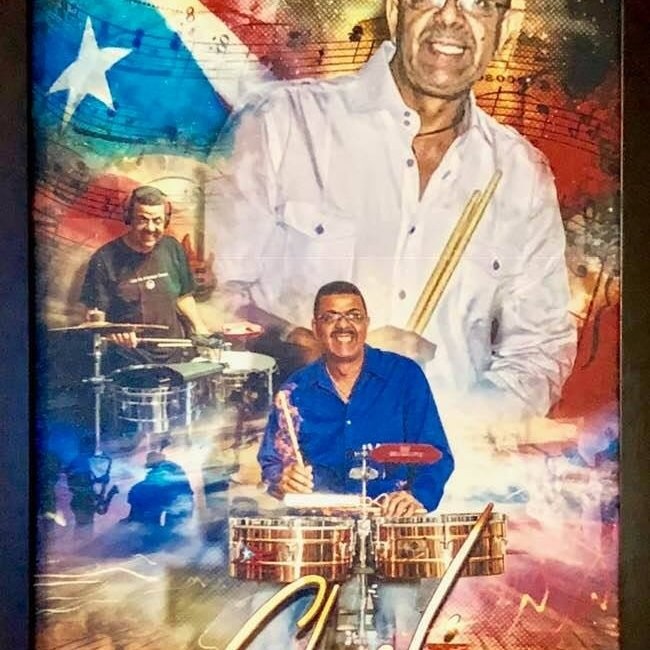
Charlie Sierra was a prominent Puerto Rican timbalero, recognized for his long musical career and virtuosity on the instrument

Carlos Manuel Sierra Sánchez, better known in the music world as “Charlie Sierra,” was born on October 10, 1956, in Vega Baja, Puerto Rico.

Charlie Sierra fue un destacado timbalero puertorriqueño

An excellent percussion musician from Barrio Sabana, Charlie Sierra recorded with important figures in music such as Don Mario Ortiz, Andy Montañez, Raphy Leavitt, Marc Anthony, Oscar D’León, Julito Alvarado, and many others. He even recorded the album Bravo by the Fania All-Stars in 1997.

To the worldwide community of salsa fans (salsómanos), he was a member, along with Chago Martínez, Tito De Gracia, Edgardo Morales, and Edwin Clemente, of the Gran Cumbre de Timbaleros (Great Summit of Timbaleros) that emerged in Puerto Rico’s rumbero (Afro-Cuban rhythm/rumba) scene during the penultimate decade of the 20th Century.

Charlie Sierra fue un destacado timbalero puertorriqueño reconocido por su larga trayectoria musical y su virtuosismo en el instrumento

Among these five virtuosos, the majority of the recording sessions in the Puerto Rican market were divided. The others were, practically, second choices for producers.

This fortunate circumstance allowed him to develop an impressive discography as a session musician, which includes the most stellar names in salsa. Likewise, he traveled across a large part of the globe as a member of the backing bands for many of those stars.

Our biographical subject was a child when he began, without a teacher, to learn the bongos and drums which he also played on recordings and on stage and the timbales, leading him to be identified as a fundamentally intuitive musician.

At the age of thirteen, he moved with his family to Bayamón, and it was during his time as a student at the Nuestra Señora del Rosario School that he began to show signs of his talent.

At fourteen, he enrolled in the Ernesto Ramos Antonini Free School of Music (Escuela Libre de Música), where he was a disciple of the Argentine master Samuel Lipchik.

During that time, he also advanced his knowledge of the flute, guitar, and piano, instruments he would never cultivate professionally, as percussion was always his great passion.

Papo Lucca, Charlie Sierra y Cheo Feliciano

However, his time at the Free School of Music was relatively brief (1972-1974). He soon began his professional career, gaining his first experiences with the Orquesta Rica and the Orquesta Tabú.

During this period, he received private lessons from the renowned professor Raúl Berríos Sánchez.

Fully immersed in the music scene, his name began to gain relevance in the salsa world following his tenure with the original Orquesta Mulenze, led by bassist Edwin Morales, during the 1976-1978 period.

At that time, this organization focused its work on providing accompaniment to solo singers affiliated with the genre, both national and foreign, who visited the island. He had the opportunity to travel with several of them: Santos Colón, Celia Cruz, Cheo Feliciano, Chivirico Dávila, Pellín Rodríguez, Yayo El Indio, etc.

From the Orquesta Mulenze, he moved to the lineup of Raphy Leavitt & La Selecta (1978-1979), with whom he had the opportunity to record hits like “La cosquillita,” vocalized by Tony Vega. He later worked with the orchestra led by pianist Tito Valentín, which featured Marvin Santiago as the vocalist.

He then joined trumpeter Mario Ortiz’s orchestra (1982-1984); he collaborated in the founding of the backing bands for the great sonero (Cuban son singer) Carlos «Cano» Estremera (1984) and the equally admired Tony Vega (1988).

In the interim, he worked independently and constantly recorded with other groups and a large number of soloists. He maintained this intense work routine until the present.

In 2009, Charlie Sierra organized his own orchestra, Paso Nivel, with which he recorded the album Ganas de bailar (Paso Nivel, CD-10692).

The album prominently features singer Efraín «Pichi» Gaetán, and included special guests such as Cheo Feliciano, Ismael Miranda, Andy Montañez, and Gilberto Santa Rosa, as well as Primi Cruz, Darvel García, and Héctor Luis «Pichie» Pérez.

Charlie Sierra was a distinguished Puerto Rican salsa timbalero, recognized for his long musical career and his virtuosity on the instrument.

He passed away on October 23, 2024, at the age of 67. Throughout his career, he collaborated with artists of the stature of Andy Montañez, Celia Cruz, Cheo Feliciano, and Bobby Cruz.

Musical Career: He began his career with the Orquesta Mulenze in 1970 and later joined Raphy Leavitt & La Selecta’s band.

Charlie Sierra y Orestes Vilato

Notable Collaborations:

He worked with Andy Montañez for over 25 years, being a key piece in his orchestra. He also collaborated with artists like Celia Cruz, Cheo Feliciano, Gilberto Santa Rosa, Bobby Cruz (on the hit “Sonido Bestial”), Tito Valentín, among others.

Own Orchestra: In 2009, he founded his own orchestra called Paso Nivel, with which he recorded the album “Ganas de bailar” (Desire to Dance).

 Collaborators:

L’Òstia Latin Jazz

Also Read: Orestes Vilato. Cuban multi-percussionist.

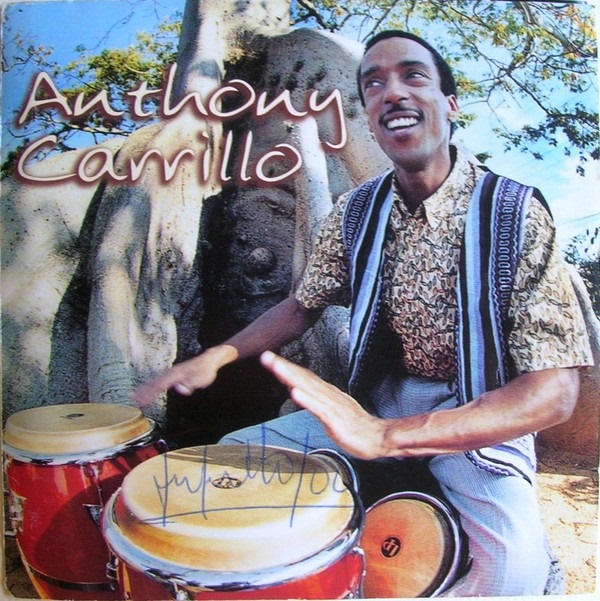
Anthony Carrillo The Legendary and Virtuoso Bongocero for Batacumbele and

Anthony Carrillo was born in New York City on 117th Street and Lexington Avenue, a neighborhood marked by significant complexities in terms of violence and drugs. This is why his father decided to move the family back to Puerto Rico in 1972.

Anthony Carrillo el Virtuoso del Bongo

“I remember that when I opened my eyes the second day, I heard the music of Willie Colón and Héctor Lavoe”.

Me opening my eyes, and the smell of the earth. It’s a scene I’ll never forget in my life.”

Once in Puerto Rico, his father continued to play music and was connected with musicians such as David “La Mole” Ortiz, who would later become a great mentor and collaborator for Anthony.

In the mid-1970s, Anthony and his brother began collaborating with the Areito Folkloric Ballet.

Anthony Carrillo: Master Percussionist

Master percussionist Anthony Carrillo comes from a proud Puerto Rican musical heritage. Although perhaps best known for his performances alongside his childhood friend and famous LP artist, Giovanni Hidalgo, Carrillo has performed with numerous renowned musicians throughout his career, including Eddie Palmieri, Gonzalo Rubalcaba, Paul Simon, and Harry Belafonte.

Anthony Carrillo Mis Raíces 1997

He was also an integral member of the outstanding percussion ensemble, Batacumbele, and, in contrast, the Puerto Rican metal band, PUYA. Piano legend Eddie Palmieri has referred to Carrillo as “the best bongocero in the universe.”

Under his own name, Anthony Carrillo has released three CDs, which include the historic first rumba recordings from Puerto Rico. His most recent performances include the off-Broadway musical “I Like it Like That” in 2017, and recording bongos with Puerto Rican artist Residente on his recent track “Hijos del Cañaveral.”

In April 2018, his Latin jazz group, AA team, released two original singles featuring Carrillo on bongos, drums, and vocals.

In August 2018, his dance orchestra, YÁMBAWA, released a four-track EP with originals and English-language pop standards infused with Spanish rap. He has stated that these two productions form his most prolific and inspired body of work in his career so far.

AA Team YÁMBAWA
AA Team YÁMBAWA

Musical Origins

Anthony Carrillo was born in New York City of Puerto Rican ancestry. From childhood, he expressed a special interest in music. His father, Mr. Roman “Don Nan” Carrillo, was his first teacher.

Through his father, Anthony Carrillo was exposed to the music of “Ramito” (one of the greatest exponents of folkloric music in Puerto Rico) and Rafael Cortijo.

Anthony’s earliest influences were “Papi Andino” (Ramito’s bongocero) and Roberto Roena (Cortijo’s bongocero).

When he was only nine years old, Anthony Carrillo’s family returned to Puerto Rico.

It was then that his father asked David Ortiz “La Mole” who was considered one of the best Rumberos in Puerto Rico to teach his son the techniques and patterns of Rumba. By age 13, Anthony was already part of the touring National folkloric group Areito, directed by Mrs. Irene Mcleane.

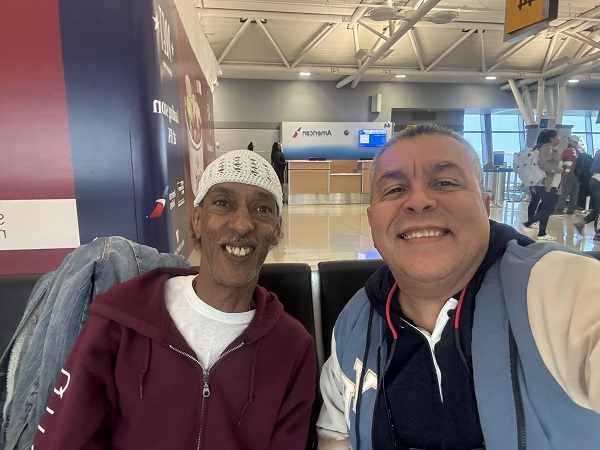
Anthony Carrillo Y Yova Rodriguez

In the early 1980s, Anthony Carrillo became a member of the famous folkloric group, La Familia Cepeda, the foremost exponents and keepers of the traditional “Bomba” and “Plena” styles.

Collaborators:

Yova Rodriguez

Planet Drum

Also Read:  Papo Vázquez the Pirate & Troubadour of Our Latin Music

Kadenza Dance School

Latin America / Argentina/ Buenos Aires

Kadenza Dance School is a dance academy located in Buenos Aires, Argentina. They don’t just teach people the steps of a musical rhythm; they demonstrate through their teaching that dancing nourishes the spirit of those who practice it. Not only that, but dance also allows for a connection with emotions, giving students more freedom for their spirit or soul.

KADENZA is a school geared toward students of all ages and with different goals, whether they wish to pursue a professional path or use dance as a form of recreation or therapy. All their students and teachers benefit from a comfortable reception area, spacious studios equipped with mirrors, barres, wooden floors, high-quality sound systems, and Wi-Fi throughout the studio. In short, it’s an ideal place to learn with passion, as the atmosphere is full of joy, respect, and good vibes, where one can enjoy what they love to do most… which is dancing.

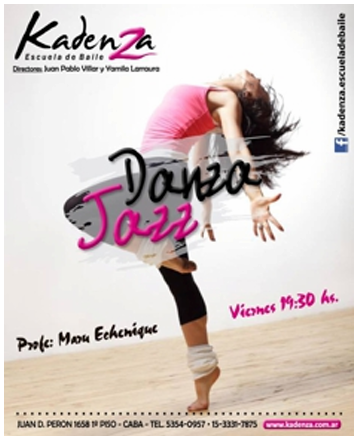
Kadenza Dance School - Danza Jazz
Kadenza Dance School – Danza Jazz

They also state that they are seriously committed to the quality of instruction, where qualified professors and instructors give their best in every class. This ensures their students incorporate the essentials of each technique and develop the maximum potential of their learning in the rhythms chosen by the student.

The Directors: Yamila Larraura and Juan Pablo Villar

The School’s Directors are Yamila Larraura and Juan Pablo Villar, who mention that, “Anyone can open an Academy, but few are the ones that make a difference.”

If we want to know more about the history of these two directors, we can start with Yamila Larraura, who was born in Argentina. Since she was a child, she began listening to Afro-Latin music thanks to her father, “Jorge Washington Larraura,” who was of Uruguayan origin. When she was 14, she went on vacation to Villa Gesell with her parents and a friend of theirs. It was on this trip that her interest in Salsa was awakened, as she went to a place near the beach that played Salsa music and offered classes in the afternoon with all the people from the beach.

One of the songs heard back then was “El Muerto se fue de Rumba” by the group “Las Sabrosas Zarigüellas,” which was very catchy for everyone who heard it. After her vacation, she decided to enroll in Salsa classes, where her teachers were Pablo Demaro and Kimena Puente.

As for Juan Pablo Villar, during his youth, he worked as a waiter in a bar and took theater classes, which also included lessons in national folklore and Latin rhythms (Salsa). This was his first contact with dance, and from that moment, he developed an interest in it. One day, a person came to the bar and mentioned that they taught classes in a studio, asking if they could leave flyers at the bar for people who wanted to dance. Knowing this, Juan Pablo Villar decided to go to the Salsa classes taught by Professor Pablo Demaro.

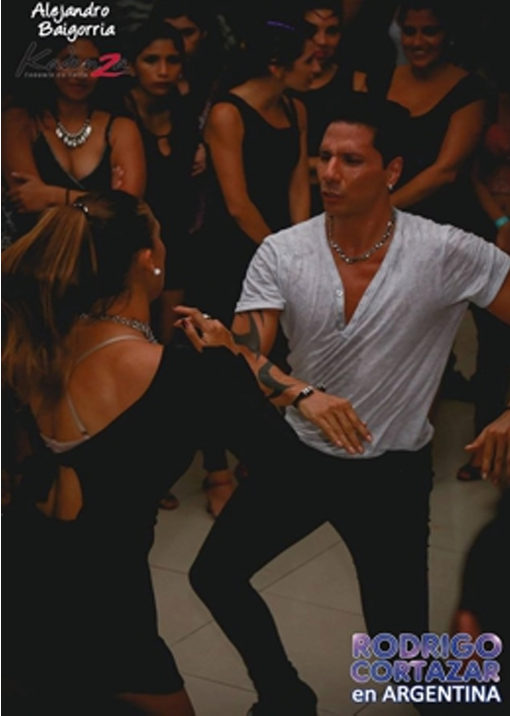
Kadenza Dance School - Social
Kadenza Dance School – Social

They explain that the Salsa classes back then were in a Cuban style, which featured fairly simple movements and figures. It was in these very classes that the future directors of KADENZA, Juan Pablo Villar and Yamila Larraura, first met.

The Journey to Kadenza

To gain a better experience, and to teach and give classes, they had to learn new techniques. They decided to seek out the best teachers in Argentina, who at that time were from the “Escuela de Mambo en Dos,” led by teachers Liz Paredes and Carlos Aragón, until they moved to Italy in 2007.

Afterward, they formed a dance group with their colleagues called “Combo Bayres,” during which time they toured the country and performed on various stages. In 2007, Liz Paredes and Carlos Aragón returned from Italy and formed the “Compañía Mambo en Dos,” where Yamila Larraura and Juan Pablo Villar joined the project. They gained great experience in the artistic world, traveling to different Argentine cities like Mar del Plata, Rosario, among others.

They also had the opportunity to travel abroad, attending the Salsa Congress in Uruguay, and later going to the United States, to New York City, to present at the Salsa Congress where they met great dance legends like Eddie Torres. Another great experience they had was the honor of being the official dancers for the famous Venezuelan Salsa singer “Oscar D’León” and the Dominican Salsero José Alberto, also known as “El Canario.” By 2010, they left the Mambo en Dos company to start their own school.

The academy’s beginning went without a name for a year, simply referred to as Pablo and Yamila’s school, but they were always looking for a name that would identify the essence they wished to convey. They eventually came up with “Cadenza,” which in Italian means “style of free rhythms.” To make the name more original, they changed it to “KADENZA,” feeling proud of their choice.

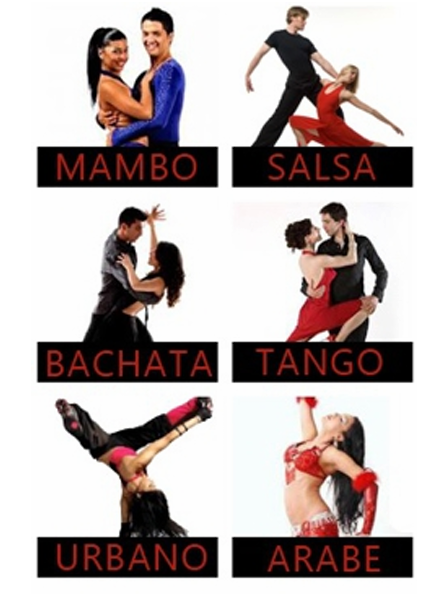
Kadenza Dance School - Mambo, Salsa, Bachata, Tango, Urbano, Arabe
Kadenza Dance School – Mambo, Salsa, Bachata, Tango, Urbano, Arabe

Contact Information

For more information, contact them at:

  • Website: http://www.kadenza.com.ar
  • Facebook:escueladebaile
  • Phones: 5354-0957 / 15-3331-7875
  • Email: [email protected]
  • Google Plus: https://plus.google.com/106664874547676369685
  • Youtube: https://www.youtube.com/channel/UC-he58RYqrJwoxoH8OID3ZA


Pedrito Moya and Jhonatan Araque: A Tribute to Jerry Rivera

Latin America / Venezuela / Caracas

“There is a great variety of new artists who want to expand and promote their new talents to all lovers of salsa music. For this new edition, we present Jhonatan Araque, a Venezuelan born in Maracay, Aragua, on March 25, 1983. Since he was very young, he showed admiration and an inclination for music, especially singing. By the age of 14, he joined the Grupo Rumba Costeña for a year, performing as a soloist; later, he joined the quintet ‘Quinto Elemento,’ who interpret pop and ballad music. From that moment, he had the opportunity to perform at the ‘Forum’ of Valencia, his first experience performing in front of a significant audience.

He mentions that he began his studies at the ‘Tecnológico de Música de Valencia’ (Valencia Technological Institute of Music), where he graduated with a major in singing, obtaining excellent grades. By the age of 18, he decided to record his first solo demo, which opened the doors to his first record contract with the ‘Sonográfica’ record company, alongside the Moratinos brothers, forming part of a group called ‘Okey,’ experimenting with various genres on that album, such as ballads and pop with Latin and Spanish influences.

“Jhonatan Araque’s Orchestra is made up of very talented young Venezuelans.”

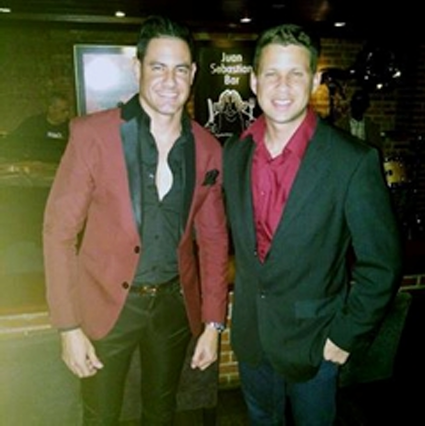
Pedrito Moya and Jhonatan Araque

After performing in various nightclubs, he decided to join the salsa orchestra ‘Los Latinos,’ where he became known in the cities of Caracas, Maracay, and Valencia, having the opportunity to share the stage with great national and international performers of the genre, including: Hernan Olivera, Marcial Istúriz, Wilmer Lozano, Edgar ‘Dolor’ Quijada, Hildemaro, Erick Franchesqui, Rodrigo Mendoza, Ángel Flores, and Mariana La Sonera.

Additionally, he spent six months as the singer for La Dimensión Latina, performing with them in different cities across the country; he also auditioned and became part of the ‘Simón Bolívar Latin Caribbean Orchestra,’ belonging to the National System of Youth and Children’s Orchestras and Choirs of Venezuela, with which he had great experiences in various projects under the direction of maestro Alberto Vergara Icaza.

With all these new experiences, new opportunities arose for him in various forms to become part of renowned orchestras within the national salsa genre, such as Rumberos del Callejón, Orquesta Puma Band, El Combo de Venezuela, and the recording of two tracks with Fidel and Julito Antillano. In 2013, he decided to retire from La Latino Caribeña and form his own orchestra to lead ‘The Tribute Project to Jerry Rivera and Rey Ruiz.’

Salsa singers Jerry Rivera (Puerto Rican) and Rey Ruiz (Cuban) are recognized in all Caribbean countries, and both have had a great impact in the Venezuelan salsa scene, where their recordings are widely known and have a large following.

Jhonatan Araque’s orchestra is made up of very talented young Venezuelans with specific studies for each of the instruments they use. They are dedicated to presenting the audience with the interpretations that have been highly successful throughout their careers, thus paying tribute to these two singers of great international renown.

The members of this great orchestra are:

Name Role
Jonathan Araque Solo Vocalist
Mauricio Marin Backing Vocalist
Luis Martínez Backing Vocalist
Angel Palma Piano
Edwin Garcia Bass
José “Puma” Reyna Timbales
Braimy Mijares Congas
Lukas Gomez Bongos
Jose Anahole Trumpet
William Rada Trumpet
Pedro Xavier Moya Trombone (Musical Director)
Leycester Licon Trombone
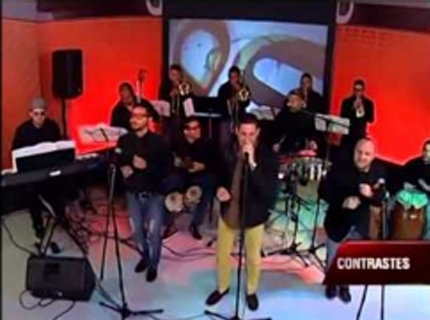
Pedrito Moya and Jhonatan Araque - TV
Pedrito Moya and Jhonatan Araque – TV

For more information, contact them at:

Contact Method

Phones

Jonathan Araque: +58 424-3443504 Pedro Xavier Moya: +58 416-3077868 0414-9276637

Facebook: https://www.facebook.com/ Bachology?hc_ref=SEARCH

Correo: [email protected]

YouTube: https://www.youtube.com/ channel/UCZP0snvp3tqkP24c X_fg1KQ

Twitter: @Bachology

  • « Go to Previous Page
  • Page 1
  • Interim pages omitted …
  • Page 3
  • Page 4
  • Page 5
  • Page 6
  • Page 7
  • Interim pages omitted …
  • Page 48
  • Go to Next Page »

International Salsa Magazine (ISM) is a monthly publication about Salsa activities around the world, that has been publishing since 2007. It is a world network of volunteers coordinated by ISM Magazine. We are working to strengthen all the events by working together.