• Skip to primary navigation
  • Skip to main content

International Salsa Magazine

  • HOME
  • Previous editions
    • 2026
      • ISM / March 2026
      • ISM / February 2026
      • ISM / January 2026
    • 2025
      • ISM / December 2025
      • ISM / November 2025
      • ISM / October 2025
      • ISM / September 2025
      • ISM / August 2025
      • ISM / July 2025
      • ISM / June 2025
      • ISM / May2025
      • ISM / April 2025
      • ISM / March 2025
      • ISM / February 2025
      • ISM / January 2025
    • 2024
      • ISM / December 2024
      • ISM / November 2024
      • ISM / October 2024
      • ISM / September 2024
      • ISM / August 2024
      • ISM / July 2024
      • ISM / June 2024
      • ISM / May 2024
      • ISM / April 2024
      • ISM / March 2024
      • ISM / February 2024
      • ISM / January 2024
    • 2023
      • ISM / December 2023
      • ISM / November 2023
      • ISM / October 2023
      • ISM – September 2023
      • ISM – August 2023
      • ISM July 2023
      • ISM Edition June 2023
      • ISM – May 2023
      • ISM April 2023
      • ISM March 2023
      • ISM February 2023
      • ISM January 2023
    • 2022
      • ISM December 2022
      • ISM November 2022
      • ISM October 2022
      • ISM September 2022
      • ISM August 2022
      • ISM July 2022
      • ISM June 2022
      • ISM May 2022
      • ISM February 2022
      • ISM January 2022
    • 2021
      • ISM December 2021
      • ISM November 2021
      • ISM October – 2021
      • ISM September 2021
      • ISM August 2021
      • ISM July 2021
      • ISM May 2021
      • ISM April 2021
      • ISM June 2021
      • ISM March 2021
      • ISM February 2021
      • ISM January 2021
    • 2020
      • ISM December 2020
      • ISM November 2020
      • ISM October 2020
      • ISM September 2020
      • ISM August 2020
      • ISM July 2020
      • ISM June 2020
      • ISM May 2020
      • ISM April 2020
      • ISM March 2020
      • ISM February 2020
      • ISM January 2020
    • 2019
      • ISM December 2019
      • ISM November 2019
      • ISM October 2019
      • ISM Septembre 2019
      • ISM August 2019
      • ISM July 2019
      • ISM June 2019
  • Download Salsa App
    • Android
    • Apple
  • Spanish

Search Results for: Rumba

Juancito Torres: The National Trumpet of Puerto Rico

We present the musical life of one of the greatest trumpeters in Latin music, the master Juan “Juancito” Torres Vélez, known as “The National Trumpet of Puerto Rico.”
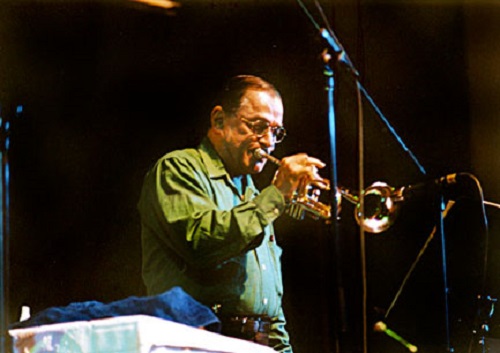
La Trompeta Nacional de Puerto Rico Juan Torres Vélez

Born on January 14, 1936, in Caguas, Puerto Rico, to Justina Vélez Vázquez and Félix Torres Varcárcel, he began his musical journey playing the violin in his hometown. He joined the Municipal Band, where he was taught by Adrián Benjamín and Carlos Julio Bosch, who also taught him the intricacies of the trumpet.

Juancito was a fan of Placido Acevedo, the trumpeter and director of the Mayarí quartet, and Acevedo was his biggest influence for his development as a professional trumpeter. At the age of fourteen, he studied at the Escuela Libre de Música. In 1952, he joined the orchestra of jazz musician Ramón “Moncho” Usera Vives and stayed with him for a year before joining his teacher Miguelito Miranda’s band.

In 1955, he traveled to New York, where he worked with Xavier Cugat, Noro Morales, and the Lecuona Cuban Boys. It is also said that he was part of the orchestras of Pupy Campo and Tito Rodríguez and that he recorded with René Touzet, Dámaso Pérez Prado, and Eddie Cano.

Juancito Torres Primera Trompeta de Fania All Stars

Juancito returned to Puerto Rico in 1960 and enrolled at the Puerto Rico Conservatory to further his musical knowledge. In 1965, he appeared on the list of musicians who recorded the album Bobby Capó and His Orchestra with the great Bobby Capó. In the late 1960s, Juancito joined master Bobby Valentín’s orchestra, recording five albums with them between 1969 and 1975. During the 1970s, he recorded with Frank Ferrer, Justo Betancourt, Puerto Rico All Stars, and Marvin Santiago.

In 1979, Juan began his participation in recordings, concerts, and international tours with the Fania All Stars. He appeared as a member of the Pacheco and Masucci collective on at least ten albums between 1979 and 1997. These include Habana Jam, Commitment, Latin Connection, Lo que Pide la Gente, “Live”, Viva Colombia, and Bravo 97.

Juancito’s extraordinary musical career and great talent also allowed him to participate in recordings for many singers, musicians, and groups such as Cheo Feliciano, Tommy Olivencia y su Orquesta, Adalberto Santiago, Roberto Roena, Sonora Ponceña, Eddie Palmieri, Tito Rojas, Pedro Arroyo, Descarga Boricua, Lalo Rodríguez, and Ray Barreto, among many others. “The National Trumpet of Puerto Rico” also participated in recordings by musicians and singers of other rhythms and musical genres such as Pop, Tropical, Jazz-Rock, Progressive Metal, Rock, Reggae, and Funk/Soul.

Juancito Torres
Juancito Torres

Regarding our music, we remember some of the tracks in which our great musician from Caguas recorded immortal trumpet solos: “Cuando Te Vea” with Bobby Valentín, “Dime,” “Menéame La Cuna,” “Quítate La Máscara,” and “Puerto Rico/Adoración” with Fania, “Amada Mía” and “Salí Porque Salí” with Cheo Feliciano. “Pedregal” with Justo Betancourt, “Canto A Borinquen” and “Alianza De Generales” with Puerto Rico All Stars, and “Palo Pa’ Rumba,” “Prohibición de Salida,” and “Solito” with Eddie Palmieri.

Through this work on Juancito Torres’ artistic life, we want to pay a small but well-deserved tribute to one of the ambassadors of Puerto Rican music. Juan Torres Vélez’s musical career spanned half a century, during which he participated in more than a hundred albums in our music alone, which was named Salsa from the beginning of the 1970s. The National Trumpet of Puerto Rico will live forever in the hearts of Salseros around the world.

The trumpeter and producer Charlie Sepúlveda presented his new musical work titled Feeling Good Again, a jazz album released in 2003 on the Metrix label, which included our Juancito Torres on flugelhorn. Los Licenciados is the name of an album published by the Duque Records label and Omar Duque y su Orquesta. The recording year for this album is not specified, but Juancito Torres also participated as a trumpeter.
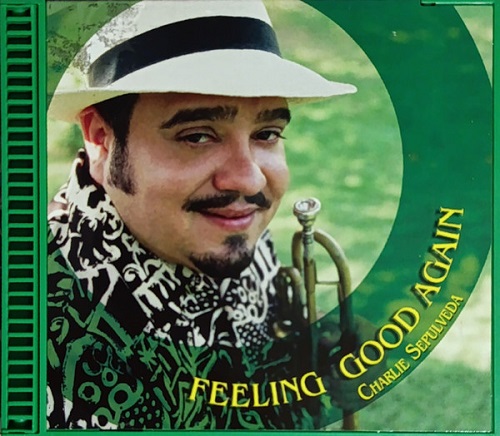
Charlie Sepulveda Feeling Good Again, Lanzado en 2003

Juancito Torres suffered from high blood pressure and bronchial asthma. Unfortunately, he passed away from a heart attack while sleeping at his home in Carolina on July 26, 2003. We will always remember him.

Long Live Music! Long Live Salsa! Long Live Juancito Torres!

By:

The Best Salseros in the World

Dj. Augusto Felibertt

Read Also: Luis “Perico” Ortiz: six decades of impeccable musical trajectory

Puerto Rican American bandleader and singer Elle Jay is proud of her roots

After so many years of coexistence between Latinos and Americans on US soil, there are many citizens who, as a result of this mix, carry in their DNA both identities and that is how they live their lives. Such is the case of Elle Jay, the founder and lead singer of Spanglish Latin American Band, with whom we talked about her life, career, and current orchestra.

Elle Jay recording
Bandleader and singer Elle Jay recording in the studio

Elle’s beginnings in music

Elle has been singing since she was very young. In fact, her mother says that when she was just six months old, she flounced excitedly whenever she heard Latin music. In addition, she comes from a family of musicians, firstly with her father, who played drums in an orchestra, and her mother, who was a singer. For this reason, music was always very present in each and every stage of her life, but she would not become a professional until many years later.

Moreover, once she grew up and became an adult, she felt she did not yet have the skills required to be a good singer, so she had to roll up her sleeves and start to gain experience if she wanted to reach the level she sought. That is how she met the members of a salsa orchestra that played in her area and asked them if they could give her the opportunity to join the group and get better over time. They said yes, and that is when she began to learn everything she could under the wing of various veteran musicians, who taught her to understand the rhythms and clave in the various genres of Latin music. 

She also joined other bands like the Orquesta Curaré and Pa’ Gozar Latin Band led by vocalist Laura Sosa, whom Elle considers one of her greatest mentors and teachers in the competitive and complex world of music.

Elle Jay and Jorge Rosario
Guitarist and bassist Jorge Rosario and Elle Jay presenting an evening serenade

How Spanglish Latin American Band got started

Several years later, she finally felt ready to start her own project according to her professional aspirations and therefore stop relying on what others were looking for in a group. In that regard, she took advantage of her half-Puerto Rican and half-American identity and her fluency in Spanish and English to develop an idea that she would share with other musicians she met in her neighborhood. These artists liked it and decided to join her on this road and see what the future held for them.

That was about six years ago, and the project has not done more to grow over time thanks to the tenacity of both Elle and the rest of the team who have made it all possible.

Current and former members of Spanglish Latin American Band

As many other groups of its type, Spanglish Latin American Band has undergone many changes since its founding. One of the few who has stayed in the band from day one is guitarist and bassist Jorge Rosario, who has accompanied Elle at all times and is by her side to this day. He also supports her greatly in everything related to sound and recordings.

The rest of the musicians have come and gone since the beginning. Among the current members of the band are Elle, Jorge, Italian trombonist Mike Matarrazo, and pianist Walter Ávalos. They are currently the most visible and stable faces of the group, while the others only play along with them occasionally.

Elle Jay and the rest of the band
Conguero Mike McSweeney, trombonist Mike Matarrazo, bandleader and singer Elle Jay, drummer Hermidez, bassist and guitarist Jorge Rosario, pianist Walter Ávalos, and bongo player Jay Torres

Half Puerto Rican, half American

In other interviews, Elle has said that she identifies herself a lot with both the United States and Puerto Rico, which she has wanted to reflect in her music. That is why she has always felt a strong connection with artists like Selena, as “The Queen of Tex-Mex” was also very aware of her Latin culture despite being born in the United States. Quintanilla inspired her so much that she wanted to make a tribute to her by singing her famous song “Bidi Bidi Bom Bom” in reggae.

Another example of this is the group Sade with the song “The Sweetest Taboo,” which Elle translated into Spanish and covered in rumba and salsa to “latinize” it. She has done the same with many other well-known songs that have been covered in salsa and Spanish by her group. 

Although the majority of the public has shown great receptiveness to their work, Elle also points out that this has caused them some problems with producers and event promoters who think that the group is not American or Latin enough, which has negatively impacted them in some bookings. However, the artist assures that both she and her bandmates stand firm in their convictions and should not change the basis of their project just because a few people do not like it.

“This is who I am, and I can’t please everyone. There always will be people who say yes or no because that’s how this business works, so you have to be strong and move forward despite the obstacles you face,” Elle said on the subject.

Elle Jay and her students
Elle Jay with her students during a salsa class. She is also a dance teacher

To communicate with Spanglish Latin American Band, you can do so via social media or email:

Facebook: Spanglish Latin American Band

Instagram: @spanglishlatinamericanband

Email: [email protected]

Read also: Trombone player Lindsey McMurray from the women’s orchestra Las Chikas

Trumpeter Davián Raúl Launches Solo Career with “Despierta Salsero” Album

Davián Raúl has released his debut production, Despierta Salsero, available now in digital format and on CD. The young Puerto Rican salsa artist is currently on a promotional tour for the album.

Davián Raúl is no stranger to the salsa scene. He’s been playing the trumpet since he was ten years old, starting with the Banda Sinfónica de Toa Baja. He eventually became a trumpeter for Sonora Ponceña, thanks to the support of Papo Lucca, director of “Los Gigantes del Sur.” To reach his current position, Davián Raúl pursued an education in Music Education and Performance, with the trumpet as his primary instrument. He is a graduate of the Interamerican University of Puerto Rico and is currently a music teacher at a school in Comerío, Puerto Rico, where he mentors students from pre-kindergarten through sixth grade.

Trumpeter Davián Raúl launches his solo career with the album Despierta Salsero.

Before joining one of the most important and iconic salsa orchestras—one that heavily emphasizes the trumpet’s sound—Davián was a trumpeter for the orchestras of Nino Segarra, Primi Cruz, Osvaldo Román, and Anthony Cruz, to name a few. He was also part of Conjunto Chaney shortly before auditioning for La Ponceña. During his time as a backing musician, he traveled the world, playing his instrument in major venues and gaining the experience necessary to make his leap. Davián Raúl makes his debut as a solo singer with Despierta Salsero, bringing a solid hard salsa proposal aimed at satisfying the taste of true salsa aficionados.

Album Details

The album features 10 tracks encompassing hard salsa, romantic salsa, rumba, bolero, and son. The recording includes: ‘Al que nace pa’ salsero,’ ‘Tengo que marcharme,’ ‘La campana’ (a song dedicated to Cali, Colombia, known as “the salsa capital of the world”), ‘Ahora me extrañas,’ ‘Coño, despierta salsero,’ ‘Mientras me sigas necesitando,’ ‘Mi salsa no muere,’ ‘La pachanga,’ ‘Te traigo el son,’ and ‘Ten compasión.’ The orchestration was arranged by Raúl Berríos Raymundí, with arrangements by talented musicians such as Ramón Sánchez, Ernesto “Tito” Rivera, Ángel “Pajay” Torres, and Andy Guzmán. Nine of the ten compositions are original works by Raúl Berríos Raymundí and Irvin Raúl Berríos López. The tenth track, ‘Mientras me sigas necesitando,’ is a renowned song by the celebrated Camilo Sesto.

Musical Production and Guest Artists

The musical execution was handled by a carefully selected group of great Puerto Rican and international musicians. The congas feature “Pequeño” Johnny Rivero, Kachiro Thompson, Gadwin Vargas, Charlie Padilla, and Sammy García. Japhet Rodríguez, Pete Perignon, Edwin Clemente, Pablo Padín, and Diego Camacho play the timbal. Alexandra Albán, Luisier Rivera, Javier Oquendo, and Richard Carrasco perform on the bongos. Richard Bravo is on drums, while Raúl Berríos Raymundí, Sergio Múnera, Ricardo Lugo, Ramón Vázquez, and Pedro Pérez provide the rhythm on bass. Andy Guzmán, Ramón Sánchez, and Carlos García play the piano. The trumpet section showcases David “Piro” Rodríguez, Angie Machado, Jesús Alonso, Marito Ortiz, Dante Vargas, Pedro Marcano, Yoandy Vera, and Davián Raúl himself. José Berríos Raymundí and Irvin Raúl Berríos López contribute on trombones. For the choruses, the voices of Carlos García and Jorge Yadiel Santos alternate with those of Raúl, Irvin, and Davián himself. The sound engineering team responsible for mixing and mastering included Papo Sánchez, Andy Guzmán, and Rolando Alejandro. With this impressive lineup, Davián Raúl, one of the youngest members of the Berríos dynasty, makes his debut, confidently declaring that “salsa is still in control.”

Davián Raúl released his first production available in digital format and on compact disc, Despierta Salsero.

Endorsements

Recently, “El Caballero de la Salsa,” Gilberto Santa Rosa, endorsed Davián Raúl’s debut production via a video clip shared on social media. Santa Rosa stated, “Davián Raúl is a tremendous young talent whom you must listen to… so that true salseros know there’s plenty of salsa for a long time to come. Davián Raúl: Go for it!” In response, Davián Raúl commented on his Facebook page, “Infinite thanks (…) for making this dream possible. You didn’t just give me space, you gave me an opportunity worth gold! This is just the beginning… and may the salsero awaken throughout the world!”

Bella Martinez Puerto Rico


Also Read: Bella Martinez, the irreverent Salsa writer

North America – July 2017

Advanced Salsa Dancers thubnails - North America - July 2017

Bachata Festival 2017 thubnails - North America - July 2017

Dance With Joy Studios thubnails - North America - July 2017

DF Dance Studio thubnails - North America - July 2017

Rumbao Latin Dance Company thubnails - North America - July 2017

Salsa Sabor thubnails - North America - July 2017

Eduardo Tancredi is a renowned Uruguayan pianist and composer specializing in Latin Jazz

Eduardo was a distinguished student at Berklee College of Music in Boston.

Eduardo was an outstanding student at the Berklee College of Music in Boston.

Musical Style: His music fuses a wide variety of Afro-Latin rhythms (such as Uruguayan candombe, Brazilian samba, Cuban son, Peruvian landó, and Venezuelan joropo) with the harmonies and melodies of modern jazz.

Accolades: He has recorded several CDs with his own compositions and has received awards for his outstanding performance in the Latin jazz scene. His album “Ongoing Dreams” was chosen as the best album in its category in 2002 by “The Boston Globe.”

Teaching Experience: During his time in the United States, he was a piano and harmony professor at Berklee College of Music. Since 2003, he has resided in Barcelona and teaches at ESMUC (Escola Superior de Música de Catalunya).

Collaborations: He has collaborated with numerous musical groups as a pianist and is a significant figure in the jazz scene in Spain.

Eduardo Tancredi is a prominent figure in Latin Jazz, known for his ability to integrate diverse Latin American rhythmic influences with the harmonic sophistication of modern jazz.


Latin accents took some time to establish themselves in jazz music. Very few composers ventured into that genre in the early decades of the last century, to the point that their timid attempts were considered exotic and trivial.

Initially, one recalls passages from William C. Handy’s “St. Louis Blues,” some Scott Joplin ragtimes, Jelly Roll Morton’s references to the “Spanish tinge,” or, shortly after, the themes performed by Duke Ellington’s orchestra.

Eduardo Tancredi
Eduardo Tancredi

It was in the 1940s that the Latin touch gained relevance. Cuban Mario Bauzá, who had played trumpet in Chick Webb’s and Cab Calloway’s orchestras, propelled the success of Machito’s band and convinced Dizzy Gillespie to hire conga player Chano Pozo.

Afro-Cuban influence became powerful in the following decades through sones, charangas, rumba, mambo, and salsa. Names like Chico O’Farrill, Tito Puente, Mongo Santamaría, Ray Barretto, and Chucho Valdés became highly regarded, and their works inspired a legion of jazz musicians.

Eduardo Tancredi es un reconocido pianista y compositor uruguayo, especializado en Jazz Latino

Latin jazz today has a strong presence in popular music, and Uruguayan Eduardo “Edú” Tancredi is a brilliant exponent of that style. He was an outstanding student at Berklee College of Music in Boston, where he won awards such as the Quincy Jones Award and the Outstanding Latin Act Award.

After his acclaimed “Ongoing Dreams” from 2002, this CD, “Venimos Tumbando,” recorded in 2007, now arrives with ten formidable compositions and his own arrangements. His background in Latin American folklore plus his jazz studies have achieved a splendid confluence that is enjoyed from beginning to end on this album.

His versatility as a composer is evident in candombes (“La mama vieja” and “Montevideo”), a baião (“Baialona”), a chorinho (“El germen”), a zamba (“Zamba del aire”), and the obvious references to Afro-Caribbean rhythms that unite their exciting cadences with jazz elements. Edú’s works are incisive, stimulating, possess an overflowing swing, and it’s easy to imagine the musicians’ pleasure during their performance.

The arrangements contrast the different orchestral sections, highlighting their diverse sound textures, suggestive harmonizations, and enhancing the dynamics and fiery percussion instruments. Three saxophones, piano, guitar, bass, and drums alternate with ten other guest musicians (vocals, sax, harmonica, two basses, two drum sets, and three percussionists), generating a sonic turbine that captivates the listener from the first note.

This doesn’t mean that all tracks propose an overwhelming rhythm. There are passages of beautiful lyricism, as in the two versions sung by Ana Finger, or the pleasant harmonica of Antonio Serrano, or the director’s piano in “Como un blues.”

The soloists perform at a high level, with special mention of Miguel Zenón’s alto sax, an improviser of fresh ideas, clean musicality, and great inspiration and fervor. The interventions of guitarist Alejandro Luzardo, trumpeter Matthew Simon, tenor saxophonist Eladio Reinón, and baritone saxophonist Xavi Figuerola are also noteworthy.

“Venimos Tumbando” confirms Tancredi’s talent as a composer and pianist and his skill as an orchestra conductor. Abilities he generously demonstrated during his acclaimed performance at the Teatro Solís last December. Thomas Werner

Edu Tancredi & Bandon 33 – Venimos Tumbando (2007)

Tracks:

  1. El Subibaja
  2. Hocus Pocus
  3. Montevideo
  4. El Germen
  5. La Mama Vieja
  6. Baialona
  7. Mapa Del Mundo
  8. Venimos Tumbando
  9. Como Un Blues
  10. Zamba Del Aire

Musicians: Edu Tancredi (Piano) Ana Finger (Vocals) Antonio Serrano (Harmonica) Mathew Simón (Trumpet) Pere Grau (Soprano sax, alto sax) Miguel Zenón (Alto sax) Eladio Reinón (Tenor sax) Juajo Arrom (Trombone) Xavi Figuerola (Baritone sax) Alejandro Luzardo (Guitar) Matías Migues, Paco Weht, Javier Gómez (Double Bass) Santiago Blanco, Salvador Toscano (Drums) Carlos Reyes “Compota”, Alejandro Luzardo, Santiago Blanco, Alexis Liden, Sandro Lustosa, Salvador Toscano (Percussion)

Edu Tancredi & Bandon 33 - Venimos Tumbando (2007)
Edu Tancredi & Bandon 33 – Venimos Tumbando (2007)

Information By:

Ostia Latin Jazz

DJ, Augusto Felibertt

Also Read: Arturo “Chico” O’Farrill. “The Architect of Afro-Cuban Jazz”

  • « Go to Previous Page
  • Page 1
  • Interim pages omitted …
  • Page 5
  • Page 6
  • Page 7
  • Page 8
  • Page 9
  • Interim pages omitted …
  • Page 48
  • Go to Next Page »

International Salsa Magazine (ISM) is a monthly publication about Salsa activities around the world, that has been publishing since 2007. It is a world network of volunteers coordinated by ISM Magazine. We are working to strengthen all the events by working together.