• Skip to primary navigation
  • Skip to main content

International Salsa Magazine

  • Home
  • Previous editions
    • 2026
      • ISM / January 2026
      • ISM / February 2026
    • 2025
      • ISM / December 2025
      • ISM / November 2025
      • ISM / October 2025
      • ISM / September 2025
      • ISM / August 2025
      • ISM / July 2025
      • ISM / June 2025
      • ISM / May2025
      • ISM / April 2025
      • ISM / March 2025
      • ISM / February 2025
      • ISM / January 2025
    • 2024
      • ISM / December 2024
      • ISM / November 2024
      • ISM / October 2024
      • ISM / September 2024
      • ISM / August 2024
      • ISM / July 2024
      • ISM / June 2024
      • ISM / May 2024
      • ISM / April 2024
      • ISM / March 2024
      • ISM / February 2024
      • ISM / January 2024
    • 2023
      • ISM / December 2023
      • ISM / November 2023
      • ISM / October 2023
      • ISM – September 2023
      • ISM – August 2023
      • ISM July 2023
      • ISM Edition June 2023
      • ISM – May 2023
      • ISM April 2023
      • ISM March 2023
      • ISM February 2023
      • ISM January 2023
    • 2022
      • ISM December 2022
      • ISM November 2022
      • ISM October 2022
      • ISM September 2022
      • ISM August 2022
      • ISM July 2022
      • ISM June 2022
      • ISM May 2022
      • ISM February 2022
      • ISM January 2022
    • 2021
      • ISM December 2021
      • ISM November 2021
      • ISM October – 2021
      • ISM September 2021
      • ISM August 2021
      • ISM July 2021
      • ISM May 2021
      • ISM April 2021
      • ISM June 2021
      • ISM March 2021
      • ISM February 2021
      • ISM January 2021
    • 2020
      • ISM December 2020
      • ISM November 2020
      • ISM October 2020
      • ISM September 2020
      • ISM August 2020
      • ISM July 2020
      • ISM June 2020
      • ISM May 2020
      • ISM April 2020
      • ISM March 2020
      • ISM February 2020
      • ISM January 2020
    • 2019
      • ISM December 2019
      • ISM November 2019
      • ISM October 2019
      • ISM Septembre 2019
      • ISM August 2019
      • ISM July 2019
      • ISM June 2019
      • ISM May 2019
      • ISM April 2019
      • ISM March 2019
      • ISM February 2019
      • ISM January 2019
    • 2018
      • ISM December 2018
      • ISM November 2018
      • ISM October 2018
      • ISM September 2018
      • ISM August 2018
      • ISM July 2018
      • ISM June 2018
      • ISM May 2018
      • ISM April 2018
      • ISM March 2018
      • ISM February 2018
      • ISM January 2018
    • 2017
      • ISM December 2017
      • ISM November 2017
      • ISM October 2017
      • ISM September 2017
      • ISM August 2017
      • ISM July 2017
      • ISM June 2017
      • ISM May 2017
      • ISM April 2017
      • ISM March 2017
      • ISM February 2017
  • Download Salsa App
    • Android
    • Apple
  • Spanish

Search Results for: Salsa Fest

Yma América

Yma América “Every time I go out to play, to sing, I show my training and above all I put the name of Venezuela up and without speaking much.”

Yma América, she reaffirms that; We have done a good job, making our Latin music and culture known.

The trace that many Venezuelan artists, who have decided to settle abroad, are leaving behind is passing through the world, because they distinguish themselves by their achievements and place the name of Venezuela in a big way, making their fellow citizens proud of their successes, such is the case of Yma América Martínez, born in Caracas and based in Germany for almost 30 years.

With a musical vein that he inherited from his parents who points us out, they were the fundamental pillar in his training and career, and why not, for having grown up in one of the most musical parishes in Caracas, the San Agustín del Sur neighborhood, Marín sector, from where great characters have come out including his uncle the choreographer and dancer Carlos Enrique Orta (+), who traveled with his dance company, “Coreoarte” great stages throughout the world.

His musical beginnings were with a group created by his father “Los group created by his father “Los Azulitos Juveniles” where he sang aguinaldos with his sisters and neighbors, and then entered the San Agustín Choir at Don Pedro School “Fe y Alegría”.

(Yma América) She received her academic preparation at the “José Ángel Lamas” School of Music and the “Simón Bolívar” National and Youth Orchestra, to continue her cello studies in Paris at the “Ecole Normale de Musique de Paris” and song and composition at the CODARTS of the World Conservatory of Music in Rotterdam.
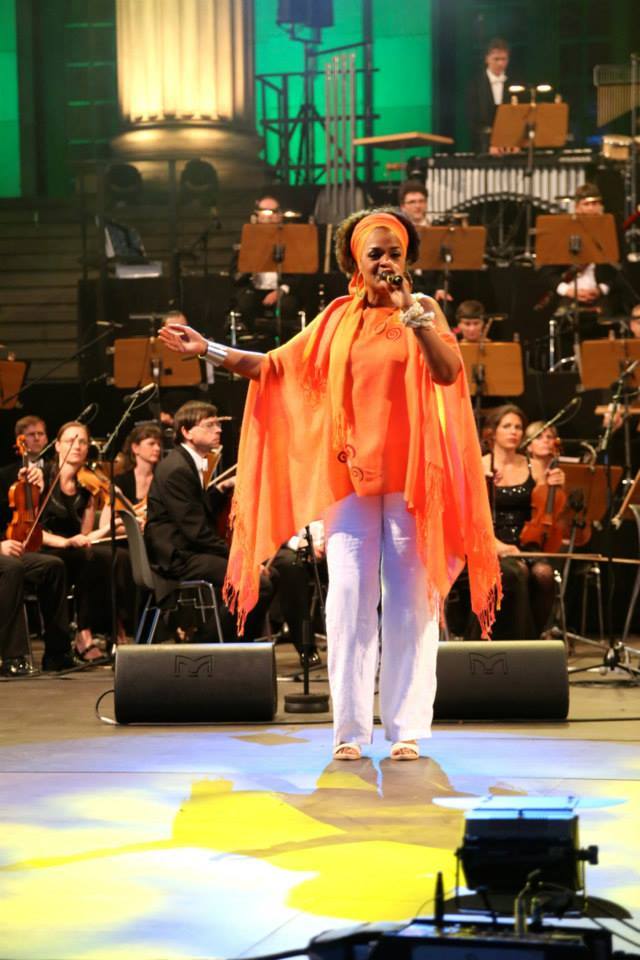
Yma América
Yma América

Yma América is a singer, musician, songwriter, arranger, plays the violoncello and the cuatro. It’s clear and powerful voice makes it very popular throughout Europe. He has worked with different groups; Kimbiza, Latin Sampling, Francisco Zumaqué, Connecting Latina, Mirta & The Goalgetters, Duo Ymaya, Cubop City Big Band, among others. He has participated in major jazz and classical music festivals, such as the Ruhr Guitar Festival, the North Sea Jazz Festival, the RuhrTriennale, the MusikTriennale Köln and the Elblandfestspiele. In 2004 his record made her the winner of the international competition “Voice and Guitar” in Saarbrücken – Germany, obtaining the first prize with the Colombian guitarist Andrés Mendoza Villamil.

Another relevant fact in the life of this artist can be seen in the song “Play it”, a song that he composed and sang for the commercial of the Bacardi company, which became a success in the summer of 1998 and 2000. He participated in the musical “King of The Lions” with WDR Big Band in the main role of Lilipuz’s children’s concert “Die schlaue Mama Sambona”; and has performed more than 30 times with the production “Adventure Weltumrundung” of the Fly & Help Foundation.

She has on her shoulders the responsibility of a great project that he has in Germany and wishes to perform in his native country, to make music with percussion for deaf people called “FEEL SOUNDS”, due to this proposal in 2010 he was awarded La Disability Policy of the Cologne Innovation Award (KIB).

He assures us that; “The language of music is the same throughout the planet,” with this phrase we enter to discover the virtues, dreams and desires of the interviewee.

How is Yma América defined?

“It is not easy to answer this, but I think I am a very patient and calm person, I would say too much. I do not give myself a bad life, fortunately I have done what I wanted, thanks to the support of my parents and family in general”. “I am a character who, thanks to the gods, things and opportunities have been offered to me, some have taken advantage of them, some have not, there are some that I have not realized in time that they have been there waiting for me and I have lost.

But I can say that I have lived my life, with the ups, downs, good and bad, without involving anyone and thus I have been leading and learning.”

Part of his training was obtained through the Conservatory of Music “José Ángel Lamas” and the National and Youth Orchestra “Simón Bolívar”

What do you thank and how he gives back his training with them?

“I thank you for part of my training as the musician that I am, because the other part I owe to my family and my people where I come from.” “-Retribute-“, I think that every time I go out to play, to sing, I show my training and above all I put the name of Venezuela up and without speaking much”.

What do you think of the phrase “Nobody is a Prophet in his Land”?

“-Sincerely do not know what you mean-“. “I don’t think I would have started singing professionally if I had stayed in Venezuela. I was quiet there, I played Violoncello in the National and Youth Orchestra of Venezuela, I played and made substitutions for cellists in the Philharmonic Orchestra of Venezuela and in the Municipal Orchestra of Caracas, I sang solo of vacilón in each party and family celebration, and Actually I was very calm in my house. ”

“I don’t think I’m a” prophet “where I am, I always do my best and people value it and often criticize it, of course.”

Why did you choose Germany and not another Latin American country? How many years have you lived in German Colony?

“I left Caracas in 1986 to Paris-France, thanks to my grandmother working in a wealthy family home and they offered to help a family member to study abroad, specifically in France because they had relatives there. First my uncle Carlos Enrique Orta – Choreographer-dancer with a lot of international professional career – left, many years before and then I wanted to “take the floor” after a while ”.

“Actually I wanted to study violoncello for 1 year in Paris and return to Venezuela, but at the end of my 1st year of study at the “Ècolle Normale de Musique de Paris”, they offered me to stay and I did not refuse. The last year of studies in Paris I did not have much money to live and in Köln-Germany lived the musicians of ‘COREOARTE’ (Dance company created by my uncle Carlos Enrique Orta with dancers and musicians of San Agustín), at that time I was leaving every weekend, on Fridays after school, from Paris to Köln and I returned on Monday at 6 am and arrived directly to classes in the afternoon.

I did that because we played; Renis Mendoza, Felipe “Mandingo” Rengifo, Charles Peñalver, Orlando “El Diablo” Blanco and I was in the street to collect some money and brighten the streets and faces of the Germans, and with that I could buy food for the whole week in Paris until the following Friday that I was returning to Köln … and so for many months until after finishing my studies, I decided to move to Köln and the first months I lived at the home of Renis Mendoza who shared his apartment with another ‘Coreoarte’ boy and then I got my room sharing an apartment with a German girl. ”
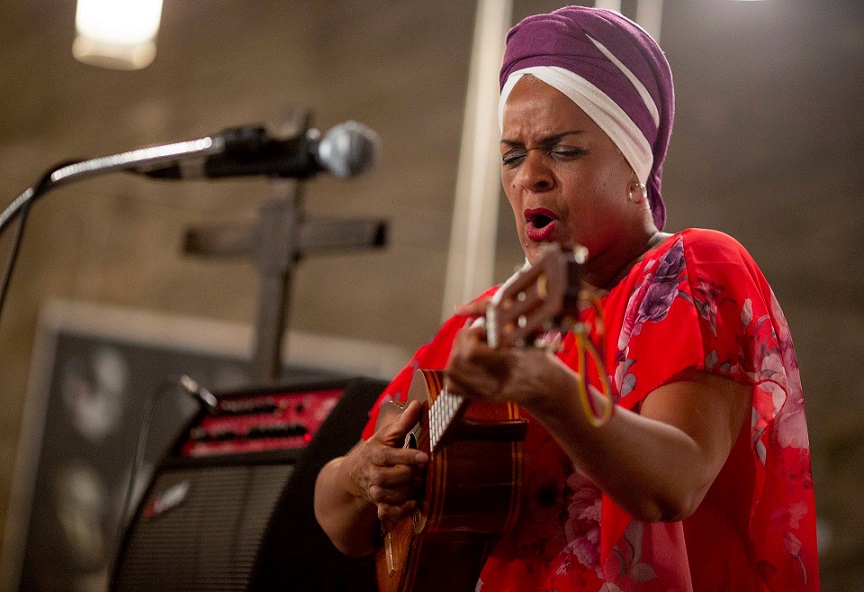
Yma América
Yma América

“I lived first in Paris from 1986 to 1990, 4 years and from 1990 to the present day in Köln, next year I am 30 years old based in Germany, I say “I have my bed in Köln “, because in reality I am almost never in my home, thanks to the music and the life that has given me so much ”

“I never thought, nor have I imagined living in another country in Latin America, I think that from here, I’m going to my house … Pa ‘Venezuela (to Venezuela)!”

How has been the receptivity of the German public with Latin rhythms, there was no resistance?

“At this moment there is a stagnation in the development of activities with Latin music, but in the same way there is more and more receptivity, I know we have done a good job, making our Latin music and culture known, there are several Salsa bands with German musicians, there are more and more dancers, more dance classes, many have understood the message and others interpret it to its wave but there is a lot of atmosphere and places with Latin music, with Dj of Salsa-Merengue and the crap they call Reggaeton music”.

“I must say that some years ago there were more Salsa orchestras with German musicians and there were more Salsa Festivals that unfortunately has been reduced by the phenomenon” Salsa Dj “I think and I am almost certain, because it is cheaper and people dance the same. That has done a lot of damage to live music. ”

What memories do you have of being under the baton of these great maestro Abreu, Aldermaro Romero, Carlos Riazuelo and Yehudi Menuhin?

“I don’t really remember at this moment any particular experience or directly with them. Although I had more contact with José Antonio Abreu, the experience was the same as with many of the ONJV members. But of all of them, the security with which they could dominate and control the amount of musicians an Orchestra has, and especially that in style and classical pieces, the feeling that is transmitted is that of the conductor and not that of the conductor musician or performer. Of course they were wonderful experiences. ”

How many compositions have you performed?

“Honestly, not many, about 12 but arrangements have been made, played and recorded, only 4.”

Your parents have been promoters of your career, how do you thank them?

-Chacha! –

“My parents are the reason for my profession, from them is that this Yma America that you are interviewing for my work has come out. Thanks to their way of being, their offspring, their education, I thank them for what I am and what I have done … My life. ”

Are you constantly growing anecdotes of your time at the “Normal School of Music in Paris” and the “Conservatory of World Music”?

“In Paris, I think, having to change the mentality of learning everything little by little and without hurry like in Venezuela, to the need to charge the “batteries” because here they do not wait, I have to go for it and comply daily, in addition to that that impelled me to learn the French language faster ”.

“And in Holland, going from being a student to being the singer of the Cubop City Big Band of the Prof. of the conservatory Martin Verdonk (percussion), Leslie López (bassist) and directed by the drummer Prof. Lucas van Merkwijk that was strong, especially at the beginning that it was to understand how they interpreted Latin music that is something other than Latin Jazz, there we started with Mambo of one, and as Leslie López was the bassist of Puerto Rico there was a balance and there we were learning and obtaining experiences all alike. ”

How do you feel about working alongside the Dutch percussionist and producer Lucas Van Merwijk and being the vocalist of the hit band “Cubop City Big Band”?

-Chévere! – assures us

“Working with Lucas and with those wonderful musicians, people with an extraordinary musical level, is very relaxed, zero stress, there we have all learned, failures and successes have gone hand in hand with everyone. Next year (2020), with CUBOP CITY Big Band we will be 25 years old together and surely something good will be done, something wonderful is being cooked, with maestro Edy Martínez – Colombian pianist, composer and arranger -, of course, also thanks to the Lucas’s wife, Roosje who does a great job, is the organizer/ manager of that crowd and all the tours. ”

Have you surrounded yourself and trained with musicians who, due to their quality and career, are considered the best, what do you think you still have to do?

“I have done and learned many things from life, both personally and musically, I believe and I know that I am missing a lot, now I have to do and learn.”

Hasn’t language been an obstacle?

“No, musically speaking, no, the language of music is the same on the entire planet.” “The French language I had to learn quickly because I came from Venezuela directly to the Conservatory of music, in Holland the classes are in English and I did not have to learn Dutch and the German language has been strong in other daily situations or life in general.”

In which festivals have you participated in both Europe and Venezuela?

– Oh! – “How many exactly I cannot tell you, but in these 30 years living in Germany and making music professionally there have been many, in almost all of Europe.”

There is a project with deaf people in Germany, which we hope can also be carried out in Venezuela. Tell us about that musical project and why did you decide that this topic should be precisely?

“TO FEEL (FEEL) – SOUNDS (SOUNDS), but as my name I put” FEEL SOUNDS “in view of the fact that the sense of touch is much more developed in deaf people and my work is based on making music with percussion, so that the vibration of sound is what they feel. ”

“It is a project that I have had in mind for many years, 1980, when I was studying” Hospitality and Tourism Administration “at the University College of Caracas and doing a field job in San José de Río Chico, at the end of my activity and visiting people, they gave me a party, drums and fulías until dawn, there were 5 drummers, dad and 4 children and in the end dad tells me that one of them was deaf. And the young man played very well, I never imagined he could be deaf, he played perfect and we even danced salsa. And from there I had the idea of working and teaching percussion to the deaf. ”

“After all that time, it was that in one of those turns that gives life, I had the courage and I started studying” German Sign Language “and I planned my workshops, I went to the deaf schools in Köln, many percussionist friends helped me Renis lent me his drums and plays with us each presentation at the end of the workshops, other friends lent me his rehearsal room to teach, my Sign Language teacher supported me looking for money to move on … and so…

This year I will be 10 years of having developed it here in Germany and the experience has been wonderful, every day I learn more and more of that world that I cannot imagine, but seeing everyone’s face when they feel the vibration of the sound when they play a drum – event listeners, people without hearing problems – that feeling is uniquely Fascinating! ”.

Yma América
Yma América

Working with children and adults with special conditions is a great challenge. What do you feel when you see that experience come true?

“I feel that I must move on, I have already been invited to several cities in Germany, the Netherlands and Poland and I want to continue doing it, take it to my country and fulfill my desire to develop it there, carry it out, execute it and make it known in my Venezuela.

Although several years ago I attended a conference held by FEVENSOR Federation of the Deaf of Venezuela, with the assistance of several Latin American countries, Spain and Australia, I made an exhibition and presentation of several deaf young people who attended, with the participation and collaboration of Naifer Hernández and Juan Carlos “El Indio”, Betancourt percussionists from San Agustín / Marín, but everything remained there. Of course, I must always be present in order to move forward, it is like that.

I lack the financial support because the program, project, the subjects, the desire, the yearning and the cravings are already there, but I keep moving and insisting, searching and “cursing” until I find the support itself. ”

What new projects are coming?

“We recently started with a new project for the Latin American Music Trio, from Mexico to Argentina, with Prof. Thomas Böttcher, German pianist, Renis Mendoza Venezuelan percussionist, also from San Agustín / Marín and I singing and playing Violoncello, we are in the preparations, making videos, propaganda, looking for program and composing, also in conversations and looking for an agency to sell it and move it forward. The 25th anniversary of Cubop City Big band next year, has finished looking for the musical program for those celebratory concerts. ”

“Continue with my musical project“ FEEL SOUNDS ”, teaching my classes and music workshops to groups of children, youth and deaf adults and from January 1st, start giving talks on this new proposal to students of” Education and Special Pedagogy “to keep moving forward with this and carry it forward until it reaches Venezuela and the entire world. ”

What does the San Agustin parish mean to you?

“It is the neighborhood where I was born, there is all my childhood and adolescence, I love it and I respect its inhabitants very much, besides there is my family whom I love with all my being, there have always been many valuable people, thanks to that work that artists have been doing and all that cultured and fighter generation that lives and has always maintained that training and information contact with the new generations. San Agustín is the good people who live there, the rest is everywhere in the world”.

Yma América
Yma América

Venezuela in one word?

“-MUSIC-” in capital letters.


Eiling Blanco Latin America Correspondent 


The Conjunto Bailatino “La Resistencia Salsera” again “Antes los ojos del Mundo” and here, “No hay quinto malo”

On April 21, 1991, in Venezuela, Bailatino “La Resistencia Salsera” was founded.

The Bailatino Ensemble, was born as a need to revalue and revitalize the Caribbean musical heritage so diverse and original; a heritage that refuses to die because it is part of our Cultural Identities, that is to say, it does not obey the dictates of fashion, nor the whims of the record companies, but our sense of belonging and our pride for the cultural contribution we have given to the world.

Bailatino represents the Salsa Resistance, Salsa without Concessions; it expresses the influences of the best musical groups that interpret the “Salsa Dura”, but, with its own identity.

Bailatino Llegó... Con Todo!!! 2003
Bailatino Llegó… Con Todo!!! 2003

The versatility, trajectory and professionalism of each of its members are known and recognized not only in the salsa world, but also in the wide range of Venezuelan music.

The musicians that make up Bailatino are constantly invited to accompany the best national and foreign orchestras that visit Venezuela; they are also requested in important international stages;

They have recorded different musical genres and are members of various Venezuelan orchestras. José “Cheo” Navarro, Marcial Istúriz, Edgar “Dolor” Quijada, Felipe Blanco, Johan Muñoz, Eliel Rivero, Alberto Crespo, José “Mortadelo” Soto, and Alexis Escobar (R.I.P) and replaced by Leo Pérez, make up a compendium of talent, knowledge and experiences whose result cannot be other than excellence and quality expressed in each of their interpretations.

Bailatino Llegó... Con Todo!!! 2005
Bailatino Llegó… Con Todo!!! 2005

Bailatino is the result of national and international musical influences, such as: La Dimensión Latina, Federico y su Combo Latino, El Grupo Mango, La Salsa Mayor and Tabaco y sus Metales, just to mention a few Venezuelan groups; likewise, Eddie Palmieri, Charlie Palmieri, Grupo Libre, Grupo Experimental Newyorkino, Ricardo Ray, Sonora Ponceña, Fania All Star , Mon Rivera, among others.

In 1995, Bailatino debuted in the framework of the International Theater Festival of Caracas, coincidentally in the spaces that previously was one of the temples of salsa and dance, the now disappeared “Sabor Latino”, formerly called “La Pelota”, sacred contexts of salsa and the nightlife of Caracas.

Bailatino has become one of the most popular and requested groups by the legion of “rumberos” and “rumberas”; salsa men and women, true experts and connoisseurs in the matter.

La Resistencia 2008, Bailatino
La Resistencia 2008

Who organize throughout the year the best salsa parties in Caracas, promoted and spread by means of oral tradition or selling tickets in the famous “Tío Pepe” of Sabana Grande, in Caracas.

These CDs are dedicated to all of them, because with their encouragement we were able to make our dream come true.

Bailatino has also performed on various stages in our capital and internationally:

Museo de Bellas Artes, Corp. Group, Espacios Unión, Trasnocho Cultural del Paseo Las Mercedes; Banco Central de Venezuela, Colegio de Ingenieros, Colegio de Médicos, El Maní es Así; “El Rincón Caribeño (currently “Rumba Aché”), Hawai Kai, El Atrio, Centro de arte la Estancia, celebrated its tenth anniversary at Casa del Artista, Aula Magna, first Metropolitan Salsa Festival, Herman among others. Internationally Bailatino makes his first presentation at the Jorge Isaac theater in Cali Colombia, he was invited to the festival “Salsa al parque” in Bogota Colombia, in 2007 he travels to the city of Dax France for the festival “Toros y Salsa”, in 2008 he travels to Mexico and that same year he performed at the Salsa summer festival in Cali, in that city, he also performed at the prestigious Changó nightclub; in 2009 we were in Australia; all these presentations with resounding success and acceptance.

Bailatino is a network of alliances, solidarity and complicity between musicians, composers, arrangers and friends from different professions and trades, who have contributed their grain of sand so that the Bailatino project, once the proposal was approved by music lovers and dancers, would not remain only in multitudinous presentations and excellent comments from its heterogeneous audience that multiplies every day.

Aniversario 2012
Aniversario 2012

Bailatino, is musical memory transmitted from one generation to another, reinterpreted with all the care and respect that the great masters deserve, who have contributed to design the musical map of Latin America.

The Bailatino group vindicates, once again, the place of honor that Latin Music deserves, not only for the Caribbean, Andean and Afro-American countries; it is a proposal within the framework of a globalized society, but also in a historical moment in which our cultural identities have a great capital to contribute in this multicultural and multiethnic counterpoint that currently exists in the world, in diverse fields and of course in the musical plane.

Currently they are preparing their fifth production entitled “No hay quinto malo”, and at the same time they have released two excellent songs with the brand of “Bailatino”, “Lo mismo de siempre” from the pen of José “Cheo” Navarro and a masterful arrangement José Soto “Mortadelo” in the vocal part Edgar “Dolor” Quijada, the second song entitled “Salsero Soy” composition and arrangements by pianist Alberto Crespo in the voice of the talented young Francisco Rojas and as special guest in this production the Sonero del siglo XXI Herman Olivera performing the song “El que te ama” another excellent composition and arrangements by Alberto Crespo.

Bailatino y Herman Olivera el Sonero del Siglo XXI
Bailatino and Herman Olivera el Sonero del Siglo XXI

For next Friday May 5, 2023 from 8:00 PM they will be performing at the public works club of Maracay in Venezuela with the help of “Taylor Productions” celebrating their 28th anniversary, an event that promises for the public of Maracay since La Ciudad Jardín is their second home.

El Conjunto Bailatino “La Resistencia Salsera”

Read also: Ronald Gòmez One of the most respected young soneros of the New Generation

Hindy & his Orchestra “The Sonera of the Moment”

Latin America / Buenos Aires / Argentina

Hindy Singer of the Latin genre, with a high and extensive artistic career in salsa.

Hindy born in San Félix – Edo. Bolívar, in the south east of Venezuela, in 27 years of artistic career, has enriched her musical career through her different participations as a soloist, chorister, singer-songwriter and producer.

Photo 1: Hindy dancing in a party festival

His beginnings in the Venezuelan salsa music elite are with a first place in the Record Report, at the hands of the international producer César Monges “Albóndiga” interpreting in his production “De Regreso a mi País” the version of the song A Flor de Piel del Venezuelan singer-songwriter Yordano Di Marzo, being in turn the leading voice of the Monges orchestra “Latín Girls” under the representation of Korta Records of the businessman “Negro Mendoza”.

Among some of the national and international celebrities with whom he has participated on different stages are: Cheo Feliciano, Viti Ruiz, Henry Fiol, Roberto Blades, Jr. Gonzáles, Paquito Guzmán, Richie Ray & Bobby Cruz, Gilberto S, Wladimir Lozano, Erick Franchesqui , Paquito Barón, Gustavo Rodríguez, Armando Manzanero, Pancho Céspedes, Gran Combo, S. Ponceña, Hildemaro, etc.

There is a long way to go, if it can be said, in the “short” artistic career of Hindy Castillo. His jump to internationalism was in 2007-08 to Europe, where he participated for two consecutive summers in different popular music orchestras touring more than 30 cities in Spain, and in France.

Photo 2: Hindy dancing in a party festival

His next artistic stop was in the state of Mexico.

Hindy was selected to assemble an international orchestra and travel from Venezuela to do a 3-month tour, which lasted another 13 months, the immediate rapport of all its members was a total success, profiling a true blunderbuss in the salsa environment. Veracruz.

She was also chosen to participate in the 1st Boca del Río salsa festival and, among other presentations, shared the stage with the great composer Armando Manzanero and Pancho Céspedes, extending her presentations to Guatemala City. Later, she travels to the capital, DF, invited by a local producer, who, seduced by her talent, encourages her with her orchestra to perform on different stages of the Aztec capital, capturing the taste of the Mexican music lover and salsa dancer, who turn to her presentations. to appreciate and enjoy his voice and the special talent of the soneo Salsoso.

Hindy musicalizes, produces her first songs and debuts as a singer-songwriter, under the executive production of her representative Carlos Zapata.

They record four songs sprinkled with romanticism, maintaining the bases of “hard” salsa and with novel musical variants.

Flamenco was one of these variants that played an important role in this product since its mixture with salsa resulted in a very genuine and fresh sound, from the pen of select Venezuelan arrangers. Graduated instructor of Popular Singing.

He has developed musical studies of: vocal technique, German singing method in Spain, Latin piano and modern harmony. He is currently doing his Bachelor of Music and Popular Singing at the José Ángel Lamas High School of Music. And preparatory studies of trombone. Caracas.

Photo 3: Hindy dancing in a party festival

As a musical producer, she manages the concepts “MujereSon & Boleros”, a musical of Boleros and sones, the social project Mujeres de la Escena, and her main project “Hindy & su Orquesta”, with a dynamic scene, full of salsa for all tastes, with the majestic quality that characterizes her performances.

Hindy is a talent full of energy, charisma, quality, with a Venezuelan flavor to export.

Five Latin – Caribbean artists who triumph in Canada

Canada is another of the countries that has been influenced by the arrival of Latin music. Its beginnings are attributed to the immigration of Latin Americans to their lands.

Canada's map
Canada’s map

By sharing borders, the United States and Canada tend to have similarities in the musical field. In the 90s, Latin music was present in Canada. However, Spanish pop singers such as Julio Iglesias and Gloria Estefan, as well as Lydia Mendoza, an interpreter of Tejano music, were already known.

Having Latin Americans started a kind of Latino roots, allowing Latin music to gain more ground on Canadian soil. Singers like Celia Cruz, Willie Colón and Rubén González made their songs sound in Canada. However, the beginnings of Latin music in the country are attributed to Ferdinand Morton, known in the artistic field as Jelly Roll Morton, an American jazz pianist.

Starting in 1999, Latin music had a greater growth, beginning to be heard on radio stations, events, festivals and national television stations. By that time singers like Ricky Martin were already being heard in other parts of the world.

Selena, Buena Vista Social Club and Jennifer López. Arriving in Canadian lands was no exception. In fact, Buena Vista Social Club’s album broke a record by becoming the highest-selling Latin album in Canada.

Surprisingly, Canadian artists were also captivated by the benefits of Hispanic countries, by the Caribbean flavor and the warmth of its people. Nelly Furtado, singer, songwriter and producer born in Canada was inspired by the island of Cuba for her album “Mi Plan”. Furtado recorded what would be his fourth album entirely in Spanish. It featured the participation of renowned Latin artists such as Juan Luis Guerra, Alejandro Fernández and the Latin American Julieta Venegas.

“I think this album has several of my first true love songs. They are not complicated. They were not over-thought and I discovered that it is liberating to be able to sing in a Latin language and express my Latin soul,” he said.

Mi Plan obtained great merits and was positioned as the album in Spanish with the highest sales numbers recorded by a Canadian singer. Undoubtedly, a suitable place for many Latino musicians of birth or descent who have wanted to try their luck outside their borders. Some have succeeded and today are among the most loved in Canada.

Some representatives of Latin music in Canada

Hilario Durán, Cuba

Photo by Hilario Duran

Hilario Durán

Hilario was born in Havana in 1953. He moved to Canada in the late 90’s, after touring the world with his band “Perspectiva”. He is a famous jazz pianist who fell in love with Canada and decided to live on its streets. He joined the Afro-Cuban jazz band “Spirit of Havana” belonging to Jane Bunnet, a Canadian lover of Cuban culture. In fact, Bunnet regularly travels to Havana to perform with Cuban musicians.

Hilario Durán has become known in Canada and other parts of the world thanks to his orchestra (Big Band), where together with his friend Roberto Occhipinti, a Canadian musician, they bring together Cuban and Canadian musicians. Leaving Latin jazz high. In 2007 he was nominated for a Grammy for his album “From the Heart”, along with Roberto D’Rivera. In addition, it obtained three Juno Awards and different awards in Canada.

Amanda Martínez, Mexico

Photo - Amanda Martínez in concert

Amanda Martinez in concert

Amanda Martínez was born in Toronto, Canada with Latino blood. His father is Mexican. Martínez studied biology and business administration but decided to take a course in his life and dedicate himself to what he really loved: music. The artist was not wrong in her decision. He has left his roots high by venturing into Latin jazz.

In 2007 and then in 2009 she was nominated for the Latin Jazz Artist of the Year Award at the National Jazz Awards in Canada. He has three albums to his credit and his first album “Sola” won the Best World Music award, selling around 6,000 copies.

Martínez has performed on famous stages and renowned events; she sang at the Winter Garden Theater, at the Koerner Hall in Toronto, the Festival Centro Histórico de México, at the Montreal Jazz Festival

Ogguere, Cuba

Ogguere's photo

Ogguere

Aka Edrei Riveri, is a Cuban singer and songwriter who resides in Canada. It has become famous for its musical fusions. He walks through rap, hip hop, jazz and la chacuba. A mix of cha-cha and rap. It is registered as the first mix between both styles.

Ogguere has two solo albums, “Solar” released in 2011 which earned two nominations for a Cubadisco award and “Raíces”. He moved to Toronto in 2010 and has since become an immediate reference in jazz and hip hop.

Natasha Roldán, Colombia

Photo by Natasha Roldan
Natasha Roldán

Born in Colombia and based in Toronto, Canada, Natasha Roldán breaks stereotypes in the musical field. She walks between jazz and bossa.

The artist has a fair complexion and very light eyes. From what anyone would believe, she is a native Canadian singer. However, her Colombian roots run deep in her career.

For Natasha it is important that the musical boundaries collapse. It promotes pattern-free Latin music.

“I think that above all I break many stereotypes because people in Canada whenever they think of Latin music, identify it directly with salsa or bachata. Well, and now reggaeton (laughs). And everything is linked to a super sexy image of the Latin woman, who dresses spectacularly and clearly I am not like that.

Therefore, it is very gratifying to share another type of music that people do not know such as bambuco, cumbia, Argentine zamba, Brazilian music aside from bossa nova … and whenever I talk to someone and they discover that I am always Colombian They ask me why I don’t play such music or dance this.

Suddenly I break with the stereotype but not because it is a bad stereotype but because other things have to be shown as well ”, she expressed in an interview for the Hispano Phone portal.

Her music has allowed many Canadians to have access to the Latin culture and to experience sounds with different influences.

Henry Vivel, Colombia

Photo by Henry Vivel

Henry Vivel

Henry was born in Colombia but moved to New York and later to Toronto. In New York he had the opportunity to study music with Enrique Gil, musician and composer. After his arrival in Toronto, he worked in Sky’s Banda, a group that performed at weddings and different events. He sang Latin music.

In 2009 he became the leader of the Tropicanada Orquesta. Pioneer Latin Orchestra in Toronto. They have participated in different salsa festivals and radio stations. Henry and the band have also been a part of different charities in Canada and other countries. In the same way, Henry has joined social causes for the inclusion of immigrants, he has taught them English and part of Canadian culture.

In 2013 he was nominated for the Oye Awards and 10 Most Influential Latinos in Canada. The singer is very pleased with the affection of the Canadian public.

“The chemistry is so great, especially with those who don’t understand my songs in Spanish, which makes the language barriers dissolve into enjoying themselves, dancing and having a good time. With the orchestra I have been able to witness how people enjoy the beauty of Latin music and it makes me very happy to be a Colombian who sings to Canadians and who puts up our musical roots ”, he commented

Toronto has been a city with great Latin influence. Canada has received mixtures of different cultures and they have formed a variety of styles that locals and visitors enjoy. It has been one of the countries that receive the foreign musicians as part of a great family and give them the opportunity to present their work. They have a great affection for Caribbean music.

Javier Cabanillas and his Cabanijazz Project

It has been a privilege for International Salsa Magazine to talk to Mexican bandleader, professor and musician Javier Cabanillas, who told us in detail about his life from the day he started in music until today, when the fruits of all the hard work and great talent are seen.

Javier Cabanillas playing the conga

Interesting beginnings

Javier begins by speaking of his beginnings in the world of music on the streets of Tijuana, in his native Mexico. He tells us that he used to work in San Diego, USA, and Tijuana is a border city, so he had to cross the border every day in order to fulfill his professional commitments.

On his days off, he often went to what is known colloquially as ”sobremesas” or ”tianguis”, which are closed streets where vendors set up their stands to offer their goods to passersby. In those places, he played the conga, as he felt that this was a space where he could freely express his art in front of an audience, although his dream was to do it on stage. What he did not know was that sooner or later it would come true.

Javier did not think he could walking down a red carpet in Los Angeles, since his activity was completely informal. He was just looking to blow off some steam and drain daily stress. I felt very comfortable playing the conga as I did, but over time, I began to professionalize myself in the musical area and that is how I have gradually achieved what I have set myself out to do,” says the artist.

Although it is a long time ago, Javier remembers very fondly those years because that gentle scene and that communication with people on the street helped him to develop the warmth an artist needs to connect with the audience.

Javier Cabanillas and his Cabanijazz Project at the 62nd Monterrey Jazz Festival

How have your Latin roots affected your career in the United States?

As to how his roots have affected his career, Javier says that he had to learn most things on the go, but always ramaining respectful toward all cultures in which his music was involved. He mentions this as his origins are focused on northern Mexico where the typical thing is to listen to norteño and banda music, but he did not choose those genres for his career, but jazz and Afro-Cuban rhythms. ”I had a lot of respect for that culture because I felt that it was not completely mine, which led me to be much more responsible and respectful when experimenting with this market,” he said.

When talking about learning to play an instrument or genre that does not belong to his culture, he said that there are always some limitations because musical language will always vary. In his case, the kind of musical language comprehensible to him is that of mariachi or banda music, making easier for him to identify certain elements. When he went to live in San Francisco, he spent time with musicians from all nationalities and could realize that they were not able to do many of the things that were not proper from their countries of origin. This makes learning more complicated, but not impossible.

In that sense, Cabanillas says there are some useful techniques to learn to play instruments and rhythms we did not grow up with, so there is a revolution of percussionists and musicians who have managed to break that mold. The Internet has played an extremely important role in all this, as artists of all kinds can access content that helps them improve and develop professionally. In his particular case, YouTube and these online tools did not exist, so he could only count on his ear and imitate what he heard to learn.

Cabanillas' music is based on jazz and Afro-Cuban rhythms
Cabanillas’ music is based on jazz and Afro-Cuban rhythms

The Grammy

One of the great victories in Cabanillas’ artistic life was the Grammy he won with the Pacific Mambo Orchestra. Since the members of the group did not have the necessary funds to produce an album, they turned to other financing options supported by the community through an online fundraising campaign. The intention was that anyone could make a donation or even buy the album in advance.

30 days later, they achieved their goal and recorded the album. Javier was one of the 36 musicians who participated in the production and his role was to be in charge of percussion with his congas. The orchestra was not supported by any major label, so they did everything independently. This gave them more control over what they wanted to offer to the audience, since they were not subject to what any management wanted from them. This meant that the process of preparing the material was very organic and spontaneous.

When the album came into competition in the ”Best Tropical Album of the Year” category, it managed to be among the five best nominees along with Marc Anthony, Carlos Vives, Los Ángeles Azules, Sergio George, Oscar D’ León and many more. Three of them were working with Sony Latin Music, so they had great chance chances to win because they worked with such a big label, while Pacific Mambo did not have all that machinery behind them, not even close.

Javier Cabanillas with the Grammy he won with the Pacific Mambo Orchestra

That’s how we were invited to Los Angeles, walked down the red carpet like the rest of the artists and took a huge surprise to win the Grammy in our category. At that moment, I felt that all my effort was worthwhile” the conguero said excitedly. He confesses that he and his orchestra fellows did not expect the win because they were the least popular nominees in the category. Fortunately, the judges focused their attention on the quality of their work and not on their popularity at the time.

Cabanijazz Project

As noted, the name of the group is a play on words between the artist’s last name and the word ”jazz”. The whole idea came up in Tijuana, where he was clear that he wanted to start a project in which he would not limited to a single rhyming scheme. He did not want to use something as generic and worn-out as ”Javier Cabanillas Y Su Orquesta”, so he started to play with other elements to obtain an original name that would capture the essence he wanted to show. This is how the name ”Cabanijazz Project” was born.

The project started as a quintet that played in several festivals and events, achieving some success in a short time. Later, he added more musicians until having eight. When he started working in San Francisco, he began studying more and absorb the culture around him for a few years. Some time later, he restarted his project again with Bay Area musicians and started uploading his material to music platforms such as ITunes and Spotify.

Among the instruments used by his group, the trombone, the tenor saxophone and the baritone cannot be left out. They are the three largest wind instruments in the brass range, so they were the ones that achieved the sound Javier was looking for in his orchestra.

Another important detail is that the music they play is entirely original and they only change their repertoire a little when they play live.

San Francisco Salsa Festival 2023

One of the group’s upcoming performances will be at the annual San Francisco Salsa Festival to be held in March 2023. Cabanillas says that one day he received an email from the event organizers informing him that Cabanijazz Project was the choice to play there. They were recommended by several of Javier’s friends and colleagues who assured the organizers that the band was the best choice for its quality.

They have already played three times at the festival before the pandemic resulted in the suspension of the event, so the artist and his musicians already have a lot of experience entertaining the tough Bay Area audience. Cabanijazz Project will be the opening band for the festival and will perform along with two other local groups that will also offer their talent to the attendees.

Read also: Tribute to Eddie López for his career

  • « Go to Previous Page
  • Page 1
  • Interim pages omitted …
  • Page 38
  • Page 39
  • Page 40
  • Page 41
  • Page 42
  • Interim pages omitted …
  • Page 126
  • Go to Next Page »

International Salsa Magazine (ISM) is a monthly publication about Salsa activities around the world, that has been publishing since 2007. It is a world network of volunteers coordinated by ISM Magazine. We are working to strengthen all the events by working together.