


• Skip to primary navigation
  • Skip to main content

International Salsa Magazine

  • HOME
  • Previous editions
    • 2026
      • ISM / April 2026
      • ISM / March 2026
      • ISM / February 2026
      • ISM / January 2026
    • 2025
      • ISM / December 2025
      • ISM / November 2025
      • ISM / October 2025
      • ISM / September 2025
      • ISM / August 2025
      • ISM / July 2025
      • ISM / June 2025
      • ISM / May2025
      • ISM / April 2025
      • ISM / March 2025
      • ISM / February 2025
      • ISM / January 2025
    • 2024
      • ISM / December 2024
      • ISM / November 2024
      • ISM / October 2024
      • ISM / September 2024
      • ISM / August 2024
      • ISM / July 2024
      • ISM / June 2024
      • ISM / May 2024
      • ISM / April 2024
      • ISM / March 2024
      • ISM / February 2024
      • ISM / January 2024
    • 2023
      • ISM / December 2023
      • ISM / November 2023
      • ISM / October 2023
      • ISM – September 2023
      • ISM – August 2023
      • ISM July 2023
      • ISM Edition June 2023
      • ISM – May 2023
      • ISM April 2023
      • ISM March 2023
      • ISM February 2023
      • ISM January 2023
    • 2022
      • ISM December 2022
      • ISM November 2022
      • ISM October 2022
      • ISM September 2022
      • ISM August 2022
      • ISM July 2022
      • ISM June 2022
      • ISM May 2022
      • ISM February 2022
      • ISM January 2022
    • 2021
      • ISM December 2021
      • ISM November 2021
      • ISM October – 2021
      • ISM September 2021
      • ISM August 2021
      • ISM July 2021
      • ISM May 2021
      • ISM April 2021
      • ISM June 2021
      • ISM March 2021
      • ISM February 2021
      • ISM January 2021
    • 2020
      • ISM December 2020
      • ISM November 2020
      • ISM October 2020
      • ISM September 2020
      • ISM August 2020
      • ISM July 2020
      • ISM June 2020
      • ISM May 2020
      • ISM April 2020
      • ISM March 2020
      • ISM February 2020
      • ISM January 2020
    • 2019
      • ISM December 2019
      • ISM November 2019
      • ISM October 2019
      • ISM Septembre 2019
      • ISM August 2019
      • ISM July 2019
      • ISM June 2019
  • Spanish
  • Download Salsa App
    • Android
    • Apple

Search Results for: Salsa Fest

Malia The Energy That Allows The Blues To Have A Soul, A Voice

Malia (born in 1978) is a singer from Malawi. She has released seven studio albums. Her mother is Malawian and her father is from the United Kingdom. She moved to London in her teens.

After finishing school, Malia dedicated herself to music. She worked as a waitress while organizing a backing band, singing ballads and classic jazz in London bars and clubs.

During a visit to New York, she heard a pop-jazz track sung in French by vocalist Liane Foly, produced by André Manoukian. She contacted Manoukian to ask for his help, and they began working on her 2002 debut album, Yellow Daffodils. Although the release included English lyrics, it achieved recognition in France and Germany.

Malia (born in 1978) is a singer from Malawi

Her subsequent releases, Echoes of Dreams (2004) and Young Bones (2007), were highly acclaimed among jazz fans across Europe. Malia is known for her expressive voice. From the beginning, she found her way to the stage and her singing style flirted with sounds from the 1960s and 1970s.

Her role models include Billie Holiday, Sarah Vaughan, and Nina Simone. In 2013, she received the Echo Jazz Award for “International Female Vocalist of the Year.” She explored her African roots in the album Malawi Blues/Njira, released on MPS in 2016. In her 2018 release, Ripples (Echoes of Dreams), Malia offers another perspective on her previous album, Echoes of Dreams. Her latest release, The Garden of Eve, is dedicated to the blues.

Malia is the energy that allows the blues to have a soul, a voice

“My heart beats for many things. I think that is because I come from a marriage of mixed heritage. I have never felt like I am one thing or the other; I am more of a fusion of both, and my music reflects that. I feel I am evolving as a human being, and although music is simply a medium for expression, I like the idea of resonating with it, if its rhythm suits me.

The blues has always been dear to my heart: it is a cathartic, precious, and profound experience, whether playing it or hearing it on the radio. When I first heard Billie Holiday sing ‘Blue Moon,’ I could feel it in every cell of my body.

She had a very powerful effect on me. Sentimental blues, originating in tragic situations, sometimes even reflecting my own experiences… No matter how bad family, friends, politics, lovers, governments, or society may be, they can never destroy the forces of good in this world.

And as time passes, I find more and more of the truth that is rooted in my soul. And I finally feel mature enough to understand this wonderful musical tradition, because the blues means life.”

And if the blues means life, Malia is the energy that allows the blues to have a soul, a voice. It has been a long time since a contemporary artist paid such a beautiful homage to the blues—a style that, in the year 2020, deserves to have the dust shaken off.

Marshall McLuhan’s once-futuristic idea of the “global village” became a reality long ago. Only now, in pop music, are we learning and experiencing, in many ways, what the legendary media theorist formulated in the early 60s. Thanks to digital technological advancements, most pop genres have acquired a global dimension.

Her mother is Malawian and her father is from the United Kingdom. She moved to London in her teens.

Hip-hop, blues, and jazz are evolving into hundreds of regional variants, far from their original roots. Malia’s music can undoubtedly be considered an impressive testament to this worldwide fusion.

After moving from the southern African republic of Malawi to London at age fourteen, the singer spent her adolescence in the UK capital (Note: the “Big Apple” is the nickname for New York, which contradicts having spent her adolescence in London. The original text was left, but the inconsistent use of the term is corrected).

Malia recorded three albums in France with André Manoukian: Yellow Daffodils (2002), Echoes of Dreams (2004), and Young Bones (2007), all created in Manoukian’s Parisian studio.

In 2010, she met Swiss producer Boris Blank, who, since the 80s as part of the avant-garde duo Yello (The Race, Bostich) with Dieter Meyer, has garnered great success. In 2012, Malia released a tribute to Nina Simone, Black Orchid, which won that year’s ECHO Jazz Award. In 2014, Boris Blank produced the eleven electronic-style songs for her album Convergence.

Malia’s sixth studio album, Malawi Blues/Njira, sees her clear, incisive voice amplified again in a soul-jazz context. “An album I’ve always wanted to make… I feel like the time is right now… I wanted songs that reflected my consciousness and my ancestry,” she summarizes the essence of the ten tracks on Malawi Blues/Njira.

The album features thoughtful, mostly slow-tempo original tracks, with sparsely orchestrated piano, accompanied by guitar and percussion, including an almost minimalist version of the classic ‘Moon River.’ From the outset, with Malawi Blues/Njira, Malia recalls the sound of her childhood.

The local vibes of the Kwela and Kwasa-Kwasa traditions are felt not only in the moving “Love Is Holding Both Our Hands.” “I humbly consider it my duty to pass on the rich traditions and stories, just as my ancestors did, as my grandparents and parents did when we would sit around the fire in the evenings in Malawi, eating nsima with pumpkin leaves and peanut sauce.” Of course, that is only one aspect of her rich work.

Her songs are characterized by artistic experiences and experiments, an amalgam that has shaped Malia’s life and a lasting effect of her time in the London club scene, where she was able to sharpen her sense of rhythm in small bars in front of reduced audiences. Here, she could always adjust her sets live, night after night.

This musical diversity now benefits her, when, in Chipadzuwa (a southern African colloquial term for a beautiful woman), she alternates between the regional language, Chichewa, and the universal language, English, with a mellifluous ease.

With the support of the virtuoso pianist Alex Wilson, a sound that is both fresh and warm emerges. Malia has arrived in a global musical world for which she works and fights. “To all the silent warriors in this world,” Malia concludes, “Malawi Blues/Njira is for you!” (mps-music)

Malia – Malawi Blues / Njira (2016)

Malia - Malawi Blues Njira (2016)
Malia – Malawi Blues Njira (2016)

Tracks:

  1. Malawi Blues / Njira
  2. Love Is Holding Both Our Hands
  3. Chipadzuwa
  4. Let Me Breathe
  5. Disgrace
  6. The Seed
  7. Black Widow
  8. Moon River
  9. Friendship
  10. Wonder Of The World
  11. Let Me Breathe (bonus track)

Musicians:

  • Malia (Vocals)
  • Alex Wilson (Piano, Programming)
  • Dimitris Christopoulos (Double Bass)
  • Edwin Sanz (Drums, Percussion)
  • Ahmed Fofana (Guitar on track #2, Instruments on track #9)

About Malawi, The Warm Heart of Africa

Malawi, known as the “Warm Heart of Africa” for the kindness of its people, is a landlocked country located in southeastern Africa. It is famous for its stunning natural landscapes, highlands, and, above all, the vast Lake Malawi, which covers approximately 20% of its territory.

Culture and History

  • Culture: Malawi’s culture is rich and diverse, with various tribes such as the Maravi, Nyanja, and Tumbuka. Each contributes particular aspects to the traditional masks, dances, music, and clothing. The people are known for their friendly nature and relaxed pace of life.
  • History: The territory was a British protectorate called Nyasaland until its independence on July 6, 1964. Subsequently, it became a one-party state under the authoritarian rule of Dr. Hastings Kamuzu Banda for decades, until the transition to a multiparty democracy in the 1990s.

Tourism and Nature The main tourist attraction is Lake Malawi, the third-largest lake in Africa, known for harboring more fish species than any other lake in the world, including about 1,000 species of cichlids. The country offers an authentic travel experience and is considered one of the safest countries in Africa for visitors.

🎤 Personal Data on Malia

  • Birth Name: Not commonly used publicly; she is known simply as Malia.
  • Year of Birth: 1978.
  • Place of Birth: Malawi, East Africa.
  • Nationality: Malawian and British (United Kingdom).
  • Family Origin: Her mother is Malawian, and her father is from the United Kingdom.
  • Musical Career: She was exiled with her family to London when she was a teenager (around age 14) due to political reasons. It was there that she discovered jazz and was inspired by singers like Billie Holiday, Sarah Vaughan, and Nina Simone.
  • Genres: Jazz, Soul, Blues, Pop, with African influences.
  • Recognition: She won the Echo Jazz Award for “International Female Vocalist of the Year” in 2013 in Germany.
  • Notable Discography:
    • Yellow Daffodils (2002) – Her debut album.
    • Black Orchid (2012) – A tribute to Nina Simone.
    • Malawi Blues/Njira (2016) – An album where she explores her African roots.


Collaboration:

L’Òstia Latin Jazz

Dj. Augusto Felibertt.

Also Read: Dave Valentin considered one of the most important Latin Jazz flutists in history, thanks to his technique and rhythm.

6th International Kizomba Gala Hamburg

Europe / Germany / Hamburg

6th International Kizomba Gala Hamburg – Germany 13 – 16 Oct 2017

6th International Kizomba Gala Hamburg

We invited you to be part to one of the oldest and Best Kizomba Festivals in Germany. They are pioneers of Kizomba in Germany. They have a tradition of inviting 1st class International Teachers and DJs. Just follow their history of the Artists they have invited the last years. They brought most of the Artists you see at current Festivals in Germany for the first time. That tell you about the quality of this event.

We believe in Quality not Quantity!

They have invited first class International Instructors to teach you the proper way of Dancing Kizomba, Zouk and other African Dance. There will be an intensive 3 days Workshop starting from 9pm Friday – 07:00 pm Sunday, which will end with a Party. The Party will be thrill with shows and animations from the international instructors.

6th International Kizomba Gala Hamburg - Flyers
6th International Kizomba Gala Hamburg – Flyers

Confirmed Artists

  • Helio Santos (Lisbon/Cabo Verde)
  • Tomas Keita (Barcelona/Guinea-Bissau)
  • Mauro D One and Ana Rita (Lisbon /Angola)
  • Lisandra Lopes (Lisbon/Cabo Verde)
  • Hugues & Ailina (Haiti/ Paris)
  • Abdel Zouk & Gabriella (Dusseldorf/Morroco/ Berlin/Curacao)
  • Ben & Adama (Hamburg/ Ghana/Cameroon)
  • Mattias & Kaou (Brussels / Morocco)
6th International Kizomba Gala Hamburg 2017

DJ’s

  • DJ Ze Zom (Angola/Copenhagen)
  • DJ Ben (Hamburg/Ghana)
  • DJ Dos Anjos (Rotterdam/ Cabo Verde)

and more to come…

Photo by Kristi Fuoco. http://blog.young-germany.de/2012/12/hamburg-germany-top-ten -reasons-i-love-living-here/

See more information at this page: http://www.kizombagala.com/

2nd Edition Kizomba-Salsa-Schiff July 8. Mississippi Queen Dampfer.

For the second time in Hamburg we are going to have a KIZOMBA SHIP with Salsa, Bachata and Zouk shared on 3 Floors. We have been able to book the Mississippi Queen with selected DJs & Live act. Germany Hamburg Überseebrücke South-East Ponton 20459.

Germany / Hamburg
Germany / Hamburg

Dominican bandleader and singer Papo Ross is triumphing in Montreal

Canada continues to give us something to talk about when it comes to Latin music, and our daring guest is firm proof of this. Dominican bandleader and singer Jorge “Papo” Ross has given us the great honor of talking about his interesting career both in his native country and Montreal, where he currently resides and moves forward with his musical projects.

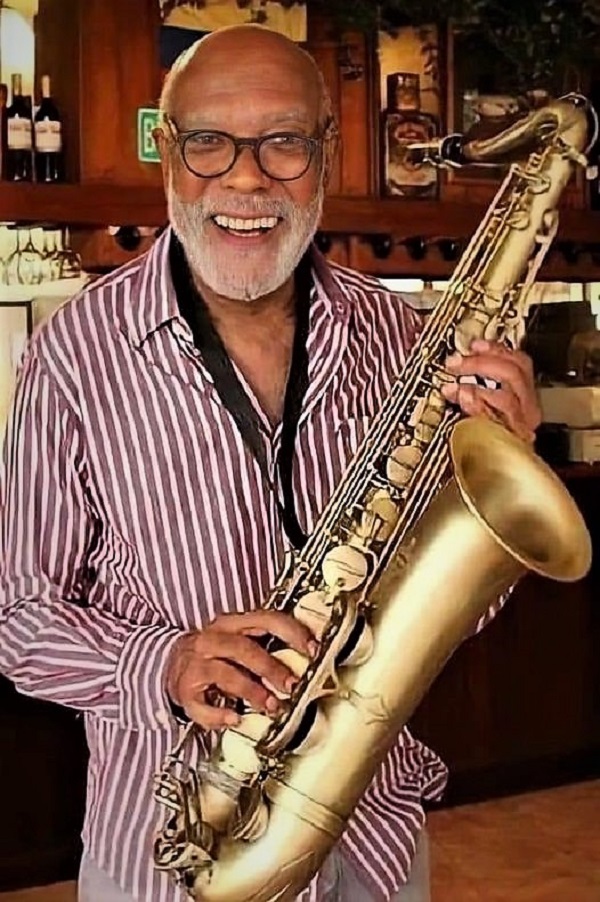
Papo Ross with his saxophone
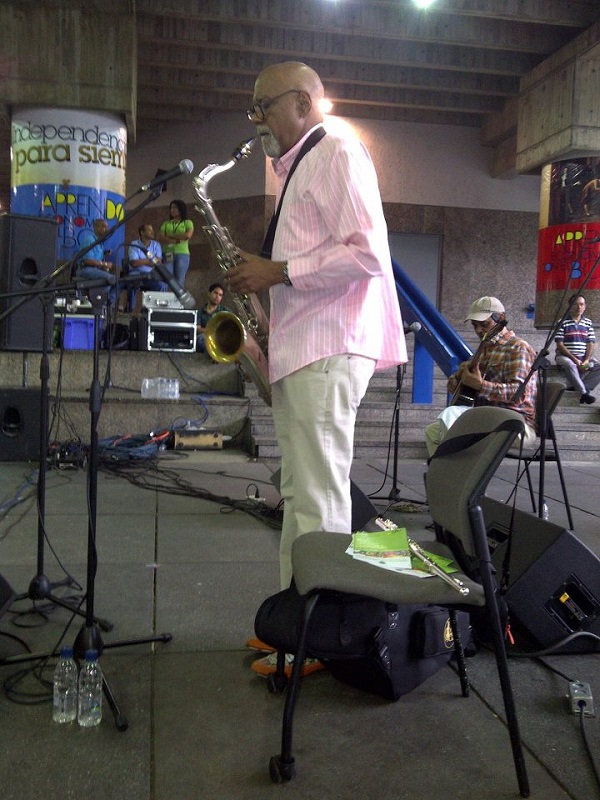
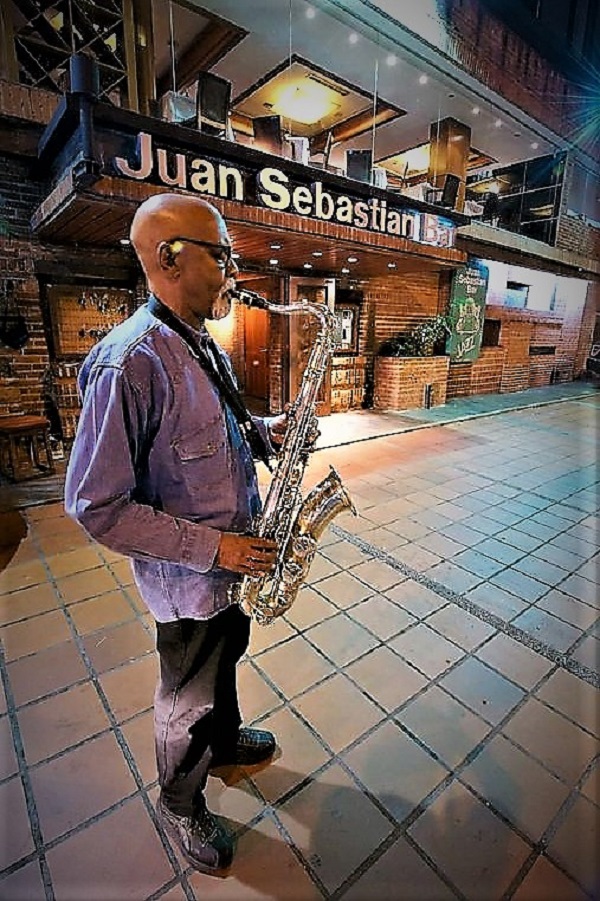
Dominican bandleader, singer, and musician Papo Ross posing with his saxophone

Papo’s beginnings in the Dominican Republic

Papo’s musical beginnings were in his hometown of San Pedro de Macorís by playing instruments made of tin or wicker that he and his friends themselves created so they could play, which led him to learn to play percussion, albeit in a very crude manner. Among the first instruments he played were the guiro, the tambora, and the conga.

Seeing his interest in music, his late brother, who was a saxophonist and led a band at the time, took him along to play with him so he could learn the trade through practice. However, the young man did not want to stop there and also began creating his own bands, such as Grupo Enriquillo, in which he and the rest of the members used homemade instruments and a marimba, which doubled as the bass. 

He also played with La Moderna de San Pedro, with which he served as the musical director during rehearsals and earned two percent of the orchestra’s contracts. In addition, he founded the group Sui Generis, played with the late merengue musician July Mateo “Rasputín,” and, before leaving the country, played with the recently deceased Rubby Pérez in the 1990s.

Academic training prior to his trip to Canada

After having played with several orchestras, Papo realized that, while it is true that he had gained some experience and knowledge, it was not enough and he needed to train more. That is why he was admitted to study at the Escuela de Música Patria Logroño at the elementary level and the Conservatorio Nacional de Música in Santo Domingo.

Papo Ross & Pambiche
Papo Ross & Orquesta Pambiche as a whole

At the academy, he learned spoken and sung solfeggio and took some saxophone lessons there in the same place. As for the conservatory, he studied percussion, but did not finish his training in this area, as he was also studying law at the Universidad Central del Este in San Pedro de Macorís. Then when the time came for him to choose one or the other, he obviously opted against university, although he did not get to exercise this career either because he missed a few semesters to complete it.

Moving to Canada

Before arriving in Canada, Papo had already traveled to other places such as Puerto Rico and New York as part of his work and had the opportunity to live there for a few seasons, but the Orquesta Tambora invited him to go to Canada to lead the group, which the artist accepted.

Although it was the best decision, it certainly was not easy, as he had to deal with language barriers and the process of adapting to a music scene completely different from that of his native country. 

The latter and the fact that he belonged to a minority like the Latino community, limited him a lot at first, but he says he keeps no regrets about his decisions and does not complaint about what he has already accomplished.

Rafael Ithier and Papo Ross
Rafael Ithier from El Gran Combo de Puerto Rico and Papo Ross

Papo Ross & Orquesta Pambiche

In 1992, he finally decided to break through his own and create his own orchestra, Papo Ross & Orquesta Pambiche, thanks to all the skills he had developed so far. After having learned to lead an orchestra, compose, arrange, and sing, he felt more than ready to carry out his own project consisting of 13 members, including two trumpeters, a trombonist, two saxophonists, a percussionist, and three singers, among others. None of the original group remain, and Papo practically does not use the big band, but a slightly smaller format called Papo Ross Meren Latin Jazz Approach. 

This band offers its services for private parties and drinks receptions, where Papo sometimes sings with a minus-one and even includes dancers in his shows.

Together with his orchestra, he has played at the Montreal International Jazz Festival on a few occasions, but they have also played in several other cities like Toronto, Regina, Saskatchewan, Victoria, Saint Pierre, Saint John, and many more. He has also collaborated with several other groups and musicians such as Pablo Ramos and the group Calipso.

Outside of Canada, they have played in various places in the United States such as Detroit, Wellington, and Vermont.

Eduardo, Papo, and Dave
Trumpeter Eduardo Sanchez, Papo Ross, and Trombonist Dave Grott

Read also: Colombian dancer and instructor Camila Cepeda takes salsa caleña to Canada

Latin America – April 2017

Venezuela. Gran Sabana Canaima National Park thubnails - Latin America - April 2017

Salsa and Casino Ecuador Festival 2017 thubnails - Latin America - April 2017

Oscar de leon thubnails - Latin America - April 2017

Eduardo Herrera thubnails - Latin America - April 2017

North America – April 2017

Alma Cubana Dance Academy thubnail - North America - April 2017

Yerba Buena Gardens Festival 2017 in San Francisco thubnails - North America - April 2017


  • « Go to Previous Page
  • Page 1
  • Interim pages omitted …
  • Page 54
  • Page 55
  • Page 56
  • Page 57
  • Page 58
  • Interim pages omitted …
  • Page 132
  • Go to Next Page »

International Salsa Magazine (ISM) is a monthly publication about Salsa activities around the world, that has been publishing since 2007. It is a world network of volunteers coordinated by ISM Magazine. We are working to strengthen all the events by working together.