• Skip to primary navigation
  • Skip to main content

International Salsa Magazine

  • HOME
  • Previous editions
    • 2026
      • ISM / April 2026
      • ISM / March 2026
      • ISM / February 2026
      • ISM / January 2026
    • 2025
      • ISM / December 2025
      • ISM / November 2025
      • ISM / October 2025
      • ISM / September 2025
      • ISM / August 2025
      • ISM / July 2025
      • ISM / June 2025
      • ISM / May2025
      • ISM / April 2025
      • ISM / March 2025
      • ISM / February 2025
      • ISM / January 2025
    • 2024
      • ISM / December 2024
      • ISM / November 2024
      • ISM / October 2024
      • ISM / September 2024
      • ISM / August 2024
      • ISM / July 2024
      • ISM / June 2024
      • ISM / May 2024
      • ISM / April 2024
      • ISM / March 2024
      • ISM / February 2024
      • ISM / January 2024
    • 2023
      • ISM / December 2023
      • ISM / November 2023
      • ISM / October 2023
      • ISM – September 2023
      • ISM – August 2023
      • ISM July 2023
      • ISM Edition June 2023
      • ISM – May 2023
      • ISM April 2023
      • ISM March 2023
      • ISM February 2023
      • ISM January 2023
    • 2022
      • ISM December 2022
      • ISM November 2022
      • ISM October 2022
      • ISM September 2022
      • ISM August 2022
      • ISM July 2022
      • ISM June 2022
      • ISM May 2022
      • ISM February 2022
      • ISM January 2022
    • 2021
      • ISM December 2021
      • ISM November 2021
      • ISM October – 2021
      • ISM September 2021
      • ISM August 2021
      • ISM July 2021
      • ISM May 2021
      • ISM April 2021
      • ISM June 2021
      • ISM March 2021
      • ISM February 2021
      • ISM January 2021
    • 2020
      • ISM December 2020
      • ISM November 2020
      • ISM October 2020
      • ISM September 2020
      • ISM August 2020
      • ISM July 2020
      • ISM June 2020
      • ISM May 2020
      • ISM April 2020
      • ISM March 2020
      • ISM February 2020
      • ISM January 2020
    • 2019
      • ISM December 2019
      • ISM November 2019
      • ISM October 2019
      • ISM Septembre 2019
      • ISM August 2019
      • ISM July 2019
      • ISM June 2019
  • Spanish
  • Download Salsa App
    • Android
    • Apple

Search Results for: Salsa Orchestra

Puerto Rican salsa singer Jai Ramos spoke to us of his life and projects

First years and military life

We are talking with Puerto Rican salsa singer Jai Ramos. How are you feeling? Glad to have you here.

I’m feeling fine. Thank you very much for the invitation. I feel blessed to be able to release my songs, but more important is the opportunity I have to be here talking to you and your audience.

person with clave in your hand
During his youth, Jai Ramos listened to ballads and popular music

Why did you choose salsa as your main genre? Was it to do with your environment or your roots?

It had much to do with my roots. When I started to lean towards music, I listened to ballads and various popular music singers that we had in Puerto Rico such as Chuco Avellanet, Lucecita, Lissette, among others. I also listened to other international artists such as Nino Bravo.

However, what made the switch was to go to the movies to see Our Latin Thing with the Fania stars. That’s when I made the change to salsa.

It’s very interesting because most of the artists you mentioned are boleristas or balladers, in other words, it was a huge change.

That’s correct.

You belonged to the United States Army, how did you combine your military career with your musical activities?

Interesting and very valid question. Even though I became interested in music, the places where I wanted to take music lessons would not accept me. After I finished school and became an adult, I joined the military and started to get exposure to different local music groups after arriving in the United States. That’s how I began to develop in my spare time. Admittedly, it was difficult, but where there’s a will, there’s a way.

I’ve talked to several Puerto Rican artists who were also in the U.S. Army at various ranks.

Did you get to coexist with other artists and salseros there? If so, do you think that helped you pursue your career in music?

Absolutely. Ar first, I met a lot of people who had a lot of musical experience in their spare time even though they were serving in the armed forces and they were the ones who provided me with the knowledge needed to improve this balance. With the passage of time, I also got to know people with musical experience who are very famous today such as Angel Santos. He and I served in the armed forces at the same time and retired at about the same time, so he chose composition, while I chose music performance.

I made a career in the army for 22 years of service. During all that time, I met many people and today I have communication with many of them even though we’re now civilians.

Jai Ramos
Jai Ramos shared with many other salsa artists during his time in the army

What Ramos learned from other artists

You got to share and sing along with artists such as Ray Barreto, Celia Cruz, Grupo Niche, Oscar D’ León, Nino Segarra, among many others. What did you learn from each of them?

Good question. They all taught me that they were still human beings and have a duty to the people in spite of being so famous. They were all very humble and that gave me to understand that they are flesh and blood people like us, but that they achieved success because of their talent.

When I was on a military base in Atlanta, I had an enormous exposure to many of them and it was Mr. Enrique Mercado who invited me to be part of his orchestra, which opened up for many great artists such as Celia Cruz, Ray Barreto, Grupo Niche, Eddie Palmieri, Conjunto Libre and the King of timbales Tito Puente. When I met them, I realized that they are devoted to people, prompted me to move forward in this career.

In musical and technical matters, what did these artists teach you?

Discipline and professionalism. Many people think that music is just entertainment, but those working on it see it as their profession. I also perceived the pride of providing entertainment for people, but always with quality. I understood that idea and started to apply this in my life.
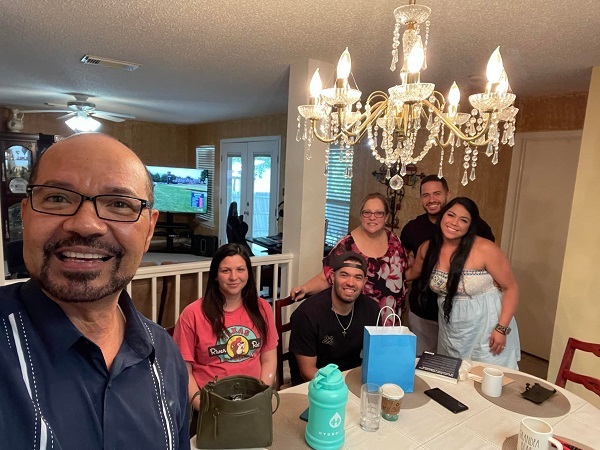
Jai Ramos and family
Jai Ramos with all his family

What did you learn not to do?

Some of the musicians who accompanied orchestras had certain habits that I was able to observe and I became convinced that I did not wanted to copy them. Sooner or later, I knew that such habits would eventually affect anyone.

I want to clarify that I did not see these things in any of the artists. That is why they are so professional, since they always behave well, both on and off stage. At the same time, they are humble enough to speak directly to a person like me who approached them to ask questions and get some advice.

What led you to have a solo career after having belonged to several orchestras?

I’ve always loved to be a lead singer, but I wasn’t the only one in the orchestra. However, something I noticed while being part of an orchestra is that I was always subjected to the music projects of our musical director, which stopped me from implementing my own ideas and my own music. That’s why I ventured to pursue a solo career and implement what God has put in my heart and mind.

You had already told me about your most recent release “Seguimos Como El León”, a tribute to Angel Santos Junior. Why did it take you to embark on this project? Why pay tribute to Angel Santos Junior?

Thank you for that question. I want to keep giving credit where credit is due. Angel and I were very close friends and I’m using the past tense because unfortunately he passed away on 15 April 15 this year. When I came here to San Antonio, he was one of the first musicians I met and I shared with him in many performances. As I mentioned before, he and I were in the army at the same time.

One of the things Angel has achieved was to create many successful compositions. When I decide to launch my own project, one of the people that I had in mind to get an original song was Angel. When I called him and asked if he had something available, he told me that he only has one song, which was “Seguimos Como El León”. By that time, I knew he was having health problems, but I had no knowledge that he had already been evicted.
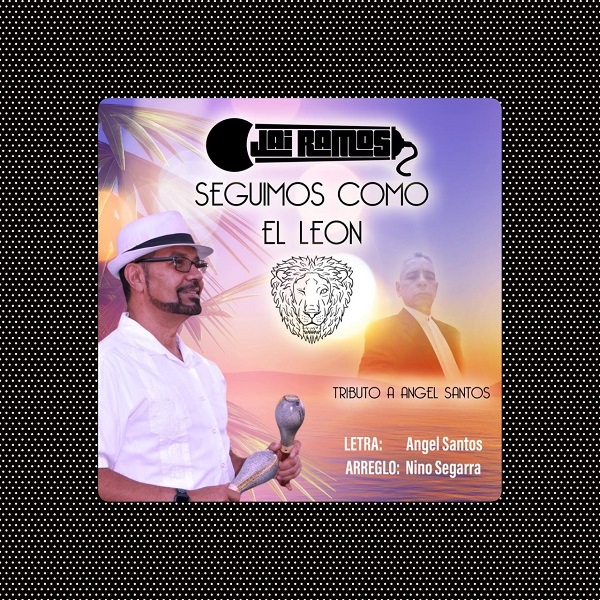
cover jai ramos
Cover of the song “Seguimos Como El León”

When I listened to the lyrics, I didn’t realize that he was giving a message about himself for when he left. Almost all of his compositions had a joking or small-town tone, but this one is a message of overcoming.

By the time we finished the song, maestro Nino Segarra and yours truly agreed to record the project, master it and record it. Then, I shared it with Angel so that he could listen to it and I told him that we gave him credit. Nino Segarra and I thought it was important that everyone who listened to the song always knew that it was one of his compositions.

When we were getting ready to do the release, we learned that he passed away. So, I proceeded to communicate with his family to ask permission from them to use his image and pay tribute to him with that song. They agreed, so I changed the cover and the title of the song to make it look like a posthumous tribute to Angel and thus to perpetuate his name.

What did you learn from Angel Santos artistically and musically?

He was my mentor in this release. I carried out the project, but he mentored me into most of the steps I followed. The biggest lesson I learned from him in the last years was how to be an independent producer and how to implement the ideas I had in mind.

You have songs with titles such as “Seguimos Como El León” and “Lo Que Dios Me Dio”. We can note that these songs are focused on bringing positive messages and about personal growth. Why are these aspects so important to you? Why reflect them in your music?

I am a servant of the Lord. In my spare time, I am a minister at a church. With all the things happening today, I felt in my heart that I had to be part of the solution and bring a positive message in the midst of what is going on.

My musical proposal is based on messages about personal growth with the idea of getting people closer to the Creator.
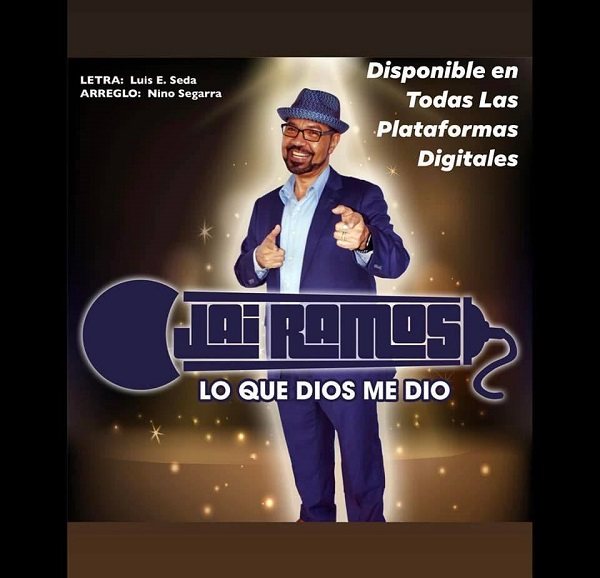
 

cover jai ramos lo que dios me dio
Cover of the song “Lo Que Dios Me Dio”

You can read: This is Roger Danilo Páiz Pérez from Danilo Y Su Orquesta Universal
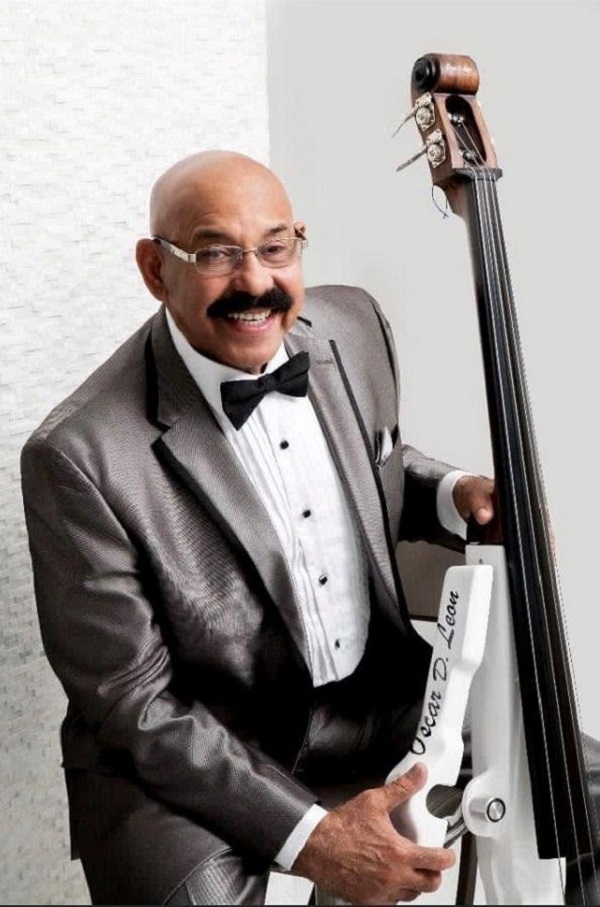
Oscar D’León celebrates 50 years of career in Caracas “International Salsa Magazine says present”

In September, the greatest exponent of Venezuelan salsa in the world will celebrate five decades of brilliant artistic career with an international tour that will have as its main event, an impressive and awaited symphonic gala at the Teresa Carreño Theater. And for september 22 at the Forum in Valencia.

Miami, May 19, 2022. Undisputed legend of Caribbean music, Oscar D’León, the Sonero of the World, celebrates 50 years of successful artistic career with an international tour that will take him to different locations in the Americas and Europe this summer.

This tour, which will begin on June 20 in Mexico City, will continue in July with the “50th Anniversary Europa Tour 2022”, culminating in a spectacular symphonic gala at the iconic Teresa Carreño Theater, which, during two performances on September 16 and 17, will give his audience the opportunity to sing and dance to the music that has made him the most recognized and admired Venezuelan artist in the world over the course of five decades.

Acapulco, Arequipa, Santiago de Chile, Miami, Frankfurt, Munich, Berlin, Paris, Amsterdam, Madrid, Tenerife, London, Istanbul are some of the cities that will live the energizing experience of seeing him on stage, a real party for music lovers.

Deserving of hundreds of awards and recognitions, including five Latin Grammys, D’León has been nominated nine times for the U.S. Grammy, being the first Venezuelan to obtain such a statuette. He did it in 2001 thanks to the song “Cielito Lindo, La Negra Mariachi Medley” Featuring-Oscar D’Leon, included in a collection album: “Masterpiece/Obra Maestra de Tito Puente y Eddie Palmieri”.

In 2013, he received the Award for Musical Excellence, a special recognition granted by vote of the Board of Trustees of the Latin Recording Academy to artists who have made creative contributions of exceptional artistic importance in the field of recording during their careers.

A true prophet in his own land, this global artist who began writing his formidable musical history in 1972, at the age of 28, when he formed the Dimensión Latina Orchestra, promises to celebrate his half-century of career with an unforgettable show at the Teresa Carreño Theater, the most important in Caracas, organized by the Venezuelan companies Imagen Producciones and Oz Show, in alliance with the National Orchestra System of that country.

Important Notes

Venezuelan musician who is among the most outstanding authors and performers of salsa and Caribbean music in general. Oscar D’León’s professional career began late: legend has it that one night, while visiting a nightclub in 1973, he heard that the band playing there had been fired. Oscar seized the opportunity and offered his own band to replace the one that had left.

The owner accepted and hired him to start playing a few days later. There was only one problem: the band at that time consisted only of D’León himself. He quickly got in touch with trombonist César Monge, told him what had happened and both got down to work to put together a line-up.

The band was finally formed by Oscar (vocals and bass, an instrument he had taught himself to play), César Monge (trombone), José Rodríguez (percussion), Enrique Iriarte (piano) and José Antonio Rojas (trombone).

Thus was formed La Dimensión Latina, Oscar D’León’s first orchestra. “Pensando en ti” was the first of the orchestra’s long list of hits. Four years later, Óscar left the band and was replaced by Puerto Rican Andy Montáñez, a vocalist who sang with the Gran Combo de Puerto Rico. Óscar returned with his own orchestra, La Salsa Mayor, with which he recorded his first album, titled after the group’s name: La Salsa Mayor (1977). The work was a great success in his country, and little by little his name began to be heard on an international scale. The following year he recorded the album El Más Grande, which contained the songs “El baile del suavecito” and “Mi bajo y yo”, and shortly afterwards he made his first visit to New York to offer live performances.

Aside from being a great sonero, Oscar D’León is also an extraordinary showman. Almost always accompanied by his bass, with which he plays and dances as if they were a couple, Óscar moves around the stage with great skill. In Venezuela, Óscar D’León is an idol, not only as a singer and musician, but also as a model of a self-made man who, from a very humble position, achieves fame and success on an international scale.

He is considered one of the best interpreters of Afro-Latin music of all times and is undoubtedly among the Venezuelan artists with more projection abroad.

Despite having gone through several stages in the development of Latin music, Oscar D’León’s style, always unmistakable, has maintained some constants that have allowed him to ensure the loyalty of his wide audience. D’León has recorded with the most outstanding salsa stars; among his collaborations, which can be traced in more than fifty albums, stands out his participation in The Mambo King, the hundredth full-length album by the legendary Tito Puente.

Corresponsal: Lida. María Fernanda León

www.Sanjuanproducciones24.blogspot.com

Yissy García Calzadilla, former member of the Anacaona Orchestra, plays drums, timbal and bongo

On May 29, 1987, in Havana, Cuba, Yissy García Calzadilla was born.

With a great musical heritage that comes from her father and inspiration, Bernardo Garcia, who is a drummer of the ICRT Orchestra.

Since she was a child she has been inclined towards percussion and has her father as her first teacher.

At the age of 9 she began her elementary music studies at the “Manuel Saumell” school, later attending the Amadeo Roldan Conservatory where she excelled in the school’s Charanga band and was also a member of the Youth Symphony Orchestra.

As a student of the conservatory in 2004 she traveled to the island of Guadeloupe as part of a cultural exchange between music schools in both countries.

Also in 2005 she was invited as a soloist in the paila (Cuban percussion instrument) to play with the National Symphony Orchestra of Cuba under the direction of the prestigious conductor Zenaida Romeu. In the same year she obtained the Special Prize of the “Fiesta del Tambor” contest.

In 2006 he travels to Barbados to participate with the “Quinteto Chico de la Habana” (a group of outstanding students of the conservatory) in the Barbados Jazz Festival and shares the stage with prestigious jazzmen such as Horacio Hernández (El Negro), Giovanni Hidalgo, Arturo Tappin (saxophonist) and Roy Hargrove (trumpeter), his performance is reviewed by international television stations and for the English newspaper Daily Niticns.

In November of the same year he obtains a Special Performance MECION at the International Festival of Young Jazz Players “JOJAZZ” and plays drums with the Big Band of Canada.

It is in this same year that she graduates in Percussion with excellent grades.

Once graduated, she joined the female orchestra Anacaona with which she made multiple performances on stages all over the country, and also performed on national television and radio, recorded the album “No lo puedo evitar” for the Bis Music label, and has also accompanied the Buena Vista Social Club diva Omara Portuondo.

With a small orchestra format, he recorded in 2008 the song “Parampampán”, for the musical film: “Chico y Rita” by the Spanish filmmaker Fernando Trueba. And also participates in another recording of traditional music with an American singer, both in the Areito studios of the EGREM.

In 2009 she made two important international tours with Anacaona, first in several Canadian cities, among them, performing at the “Art Jazz Festival” in Toronto, and in the Lula Lounge of the same city, the “30th Montreal International Jazz Festival”, alternating with the famous salsa singer “La India” with whom she was also invited to play, During the days of this great festival she participated very actively in various Jan sessions with Canadian musicians and musicians from other countries, in the city of London in the “Sunfest”, the Festival “La Nuit de Africa” in Montreal in its 27th edition and in the cities of Chicoutimi in the Festival “Rhythms of the World” and in the City of Quebec in its festival “Musics of the World” in addition to other venues in some of these cities, monopolizing in all many applause and congratulations for his outstanding performance.

In September 2010 the Aruba Jazz Festival is presented where they have the responsibility to close the festival and also perform with great success with saxophonist David Sanborn with whom they have the honor of downloading to close his performance the first day of the festival, for all this they are welcomed with great success by the public and the press.

He has worked in Cuba with other important jazzmen such as Alexis Bosh and Orlando Cubajazz.

He also performs for a special program on French TV channel 33 about his musical life and appears on a web page of the Spanish magazine “The H”.

He competes again in the JOJAZZ Contest and obtains the 2nd place in interpretation.

He has also recorded the Cuban Television program “A todo jazz” with trumpeter Roberto García and saxophonist Emir Santa Cruz, and with the group “Joven Jazz” led by saxophonist Michel Herrera, with whom he also performs in Havana’s Jazz clubs. He has worked with the outstanding trumpet player Yasser Manzano and his group.

In early 2010 he made the national tour of the singer Cucu Diamantes and also participates in the film that was recorded of the same.

In June 2010 he performed with Anacaona a successful tour of Curacao presenting the show “Viva Cuba”, in order to raise funds for the fight against breast cancer, organized by the Sinte Rose Foundation of that country and also close the 1st International Film Festival of Aruba.

Solo career

Yissy and Bandancha.

In 2012 she decided to embark on her solo career, debuting as composer and leader of the project YISSY & BANDANCHA, a quintet that develops jazz from the fusion with other genres.

She is regularly invited to participate in the most important festivals in Cuba, such as Jazz Plaza, JoJazz, Ellas Crean, Havana World Music Festival, among others.

Along with her project, she develops an intense work of collaboration in record productions and with various artists and recognized groups in the country, as is the case of Interactivo, Alexis Bosch and Telmary Diaz.

In 2014 he participated in Argentina in the festival El sur suena a cubano, along with Kelvis Ochoa, William Vivanco and Yusa, whom he also accompanied on his tour of Japan. He participated in the recording of the album Feeling Marta, by singer Gema Corredera, and accompanied the Buena Vista Social Club diva, Omara Portuondo, on her tour of Mexico.

Since that same year and until now, he is part of the line up of the band Maqueque, led by the renowned Canadian saxophonist Jane Bunnet, with whom he has played in the most important festivals in Canada and USA, in addition to having recorded the album Jane Bunnett and Maqueque, winner of the 2015 Juno Award for Best Jazz Album.

She began 2015 with the recording of her debut album Última noticia, and with a tour with her band YISSY & BANDANCHA through several cities in the USA.

She was included in a documentary for Brazilian TV directed by filmmaker Max Alvim, which aims to collect the most outstanding of the vanguard of Cuban jazz today.

She was part of the concert Women of the World, led by M Alfonso. She participated, together with Brazilian artist Baddi Assad, in the Les Voix Humains festival, held in Havana and organized by the Leo Brouwer Office.

Invited by the prestigious drummer Terri Lyne Carrington, she gave a clinic on Cuban rhythms at Berklee College of Music.

Salsa En La Web also promotes Latin music around the world

Salsa En La Web

As our dear readers know, International Salsa Magazine is dedicated to promoting Latin music artists, especially those who sing salsa, but we also believe that it is of extremely importance to promote platforms that, like us, seek to spread this wonderful and colorful music everywhere.

Salsa En La Web is a salsa community on the internet, so there are members from all over the world. This site is devoted to promoting and spreading everything related to salsa and Latin music so that the new generations get to know the musical idols of their parents and grandparents. They also want this musical genre to keep growing and never go out.

DJ Danny Salsa, director and programmer of Salsa En La Web

Interview

Today, we talked to the administrators of the website Salsa En La Web, which is devoted to promoting salsa worldwide, and our questions were as follows:

Who are we talking to? Please provide your name, occupation and direct or indirect relashionship with salsa.

You’re talking to DANNY SALSA, director and programmer of SALSAENLAWEB. I am also a chemist and DJ by profession. – Collector of romantic salsa.

According to what I read on your Facebook page, you have spread salsa culture at the global level for 11 years. How did everything start?

In 2011 we started sharing music on a blog where we spread LP, CD, ARTISTS, GROUPS, ORCHESTRAS. After that, we also shared gatherings of collectors and salsa events in Bogota.

To date, we have not failed to spread salsa culture that through this beautiful music, we want to make a better culture.

DJ Danny Salsa loves salsa and wants to promote it

What has motivated you to create a website of this style? Why are salsa and Latin music so important to you?

First of all, the taste for salsa music started from I was 13 years. From a very young age, I had contact with computers after school. In my spare time, I created my first blog and, after knowing the world of the internet, I created this website of salsa.

Salsa has brought me great friends, moments, live artists since I programme salsa at bars. I saw the happiness dancing and sharing after entering the world of collecting your albums for your own taste brings.

What part of the world is the largest part of your audience from?

Colombia is our biggest audience with listeners who always listen to our programming at any time of the day and from any time of the day and from any part of the planet where there is an Internet connection.

According to the map on your website, many members of your audience are in Europe and the southern United States. Where are you located? Are you in different countries?

The website is free on the platform www.salsaenlaweb.com.co and from the APP without any cost, listeners in these countries can listen to us from these countries send us their good comments and this motivates us to programme the best salsa music through our . We are in Bogota, Colombia but we have listeners all over the world.

In addition to salsa, what other musical genres do you promote?

We don’t do dissemination of other genres because we are select in salsa.

What goals have you set in the long run?

We want to be the salsa website of reference for its good content in the whole world and have great sponsors that allow us to keep working in favor of salsa.

Logo of Salsa En La Web


Home

Milano Latin Festival Will Have Great Salsa Stars

The Lombardy Metropolis will continue impregnated with Latin American Culture until August

Milano Latin Festival opens its doors at 5:30 PM, and concerts start at 9:30 PM

The most important annual festival of the summer in northern Italy dedicated to celebrating Latin American culture will continue bringing Salsera fun to the 190,000 visitors of the Foro Mediolanum in the town of Assago located in ASSAGO Viale Milano Fiori parking Metropolitan 20100 Assago, Lombardy, Italy.

Milano Latin Festival founded almost a decade ago (2013), maintains the format of its beginnings with concerts by artists with a trajectory in tropical genres, urban rhythms, and traditional music, tasting of Latin American cuisine, art exhibition, and sale of crafts with a wide variety of Natural ethnic products for health and nutrition with organic and fair trade. Likewise, you can find the Salone Delle Nazioni (Nations Hall), especially for Diplomatic Missions of Latin America, organizations, and institutions.

This reopening that began on June 9th and will end on August 16th puts the magnifying glass on the public that loves Latin dances, residents, tourists, experts, connoisseurs, or simply curious about Latin rhythms after two years of cessation due to the Covid-19 pandemic.

This edition has featured presentations by artists from the Tropical genre such as Marc Anthony (June 10th), Frank Reyes (June 11th), and Habana D’ Primera (June 12th).

The Van Van derives their name from the jargon of the cane collectors to say Come on, Come on.

This month brings Prince Royce (July 1st) and continues with the presentation in a single evening of Maelo Ruíz, Alex Magan, and David Pabón with Salsenato Vol. 2 (July 2nd). Oscar D’ León (July 14th), Tony Vega (July 23rd), Tony Succar (July 30th), and ends on August 7th with the performance of the most prolific group in Cuba, Los Van Van.

This prolific Cuban orchestra is still in force with its peculiar sound. “Their texts are considered by many to be true chronicles of Cuban society. They have an extensive recording career with more than 40 albums, many of them nominated and awarded. They obtained a Grammy (2000) with the production “Permiso que llegó Van Van” and were nominated with the album “Fantasia”, a tribute to Juan Formell in 2017”. Fragment extracted from the Milano Latin Festival website. https://www.milanolatinfestival.it/

For the Salone Delle Nazioni program, there will be a rich calendar of cultural events on the occasion of paying tribute to the various countries with the celebration of their national holidays. This tribute begins with the Day dedicated to the second generation: A challenge for everyone! (July 1st). During this celebration, there will be reflections and testimonies of the “New Italians” with themes inspired by the encyclicals of Pope Francisco, Laudato Si, and Fratelli Tutti. In the same way, this tribute to each country will continue with Los Kunas de Panamá (July 4th), the national day of the Bolivarian Republic of Venezuela (July 5th), and then there will be the pictographic exhibition of the Environment in tribute to the Holy Father Pope Francis from July 6th to 8th. The celebration of the national days of Argentina, Peru, Colombia, Cuba, El Salvador, and Bolivia will continue.

So, July is the best month to vacation in Milan thanks to the most complete Festival that celebrates Latin American culture with more than five honored countries, concerts by internationally renowned artists, dance schools with great instructors, performances by folk groups and DJs, exhibitions photo booths, ethnic restaurants, and a street food area, musical plazas, cocktail bars, and a concert area. Milano Latin Festival is the largest three-month event celebrating Latin American culture in Italy.

  • « Go to Previous Page
  • Page 1
  • Interim pages omitted …
  • Page 22
  • Page 23
  • Page 24
  • Page 25
  • Page 26
  • Interim pages omitted …
  • Page 156
  • Go to Next Page »

International Salsa Magazine (ISM) is a monthly publication about Salsa activities around the world, that has been publishing since 2007. It is a world network of volunteers coordinated by ISM Magazine. We are working to strengthen all the events by working together.