• Skip to primary navigation
  • Skip to main content

International Salsa Magazine

  • Home
  • Previous editions
    • 2025
      • ISM / November 2025
      • ISM / October 2025
      • ISM / September 2025
      • ISM / August 2025
      • ISM / July 2025
      • ISM / June 2025
      • ISM / May2025
      • ISM / April 2025
      • ISM / March 2025
      • ISM / February 2025
      • ISM / January 2025
    • 2024
      • ISM / December 2024
      • ISM / November 2024
      • ISM / October 2024
      • ISM / September 2024
      • ISM / August 2024
      • ISM / July 2024
      • ISM / June 2024
      • ISM / May 2024
      • ISM / April 2024
      • ISM / March 2024
      • ISM / February 2024
      • ISM / January 2024
    • 2023
      • ISM / December 2023
      • ISM / November 2023
      • ISM / October 2023
      • ISM – September 2023
      • ISM – August 2023
      • ISM July 2023
      • ISM Edition June 2023
      • ISM – May 2023
      • ISM April 2023
      • ISM March 2023
      • ISM February 2023
      • ISM January 2023
    • 2022
      • ISM December 2022
      • ISM November 2022
      • ISM October 2022
      • ISM September 2022
      • ISM August 2022
      • ISM July 2022
      • ISM June 2022
      • ISM May 2022
      • ISM February 2022
      • ISM January 2022
    • 2021
      • ISM December 2021
      • ISM November 2021
      • ISM October – 2021
      • ISM September 2021
      • ISM August 2021
      • ISM July 2021
      • ISM May 2021
      • ISM April 2021
      • ISM June 2021
      • ISM March 2021
      • ISM February 2021
      • ISM January 2021
    • 2020
      • ISM December 2020
      • ISM November 2020
      • ISM October 2020
      • ISM September 2020
      • ISM August 2020
      • ISM July 2020
      • ISM June 2020
      • ISM May 2020
      • ISM April 2020
      • ISM March 2020
      • ISM February 2020
      • ISM January 2020
    • 2019
      • ISM December 2019
      • ISM November 2019
      • ISM October 2019
      • ISM Septembre 2019
      • ISM August 2019
      • ISM July 2019
      • ISM June 2019
      • ISM May 2019
      • ISM April 2019
      • ISM March 2019
      • ISM February 2019
      • ISM January 2019
    • 2018
      • ISM December 2018
      • ISM November 2018
      • ISM October 2018
      • ISM September 2018
      • ISM August 2018
      • ISM July 2018
      • ISM June 2018
      • ISM May 2018
      • ISM April 2018
      • ISM March 2018
      • ISM February 2018
      • ISM January 2018
    • 2017
      • ISM December 2017
      • ISM November 2017
      • ISM October 2017
      • ISM September 2017
      • ISM August 2017
      • ISM July 2017
      • ISM June 2017
      • ISM May 2017
      • ISM April 2017
  • Download Salsa App
    • Android
    • Apple
  • Spanish

Search Results for: Salsa Orchestra

René Latin Soul and his journey into music from his home country

René Latin Soul 

After anything we have yet witnessed in the Latin music scene of the United States, we can say that it is undeniable that Cuba is an endless source of talent and passion for music, so this island can never be missing in International Salsa Magazine. On this occasion, it was the turn of producer, musical director, arranger, composer and trombonist René Latin Soul. 

René is a talented Cuban who has managed to gain a very important place in the music industry in this country and we wanted to know how he managed to get there. Do not miss the fascinating conversation we had with the artist.  

René playing the trombone
René Latin Soul playing the trombone during a performance

Beginnings in Cuba 

René Amet Campos Artigas was born in the province of Camagüey, specifically in the municipality of Nuevitas. He came to music from a very early age, as many of his relatives are musicians, including his father and grandfather. This led him to enroll in the music conservatory when he was only 10 years old. 

He confesses that he always knew he wanted this to be his profession and had no other career in mind for tomorrow, so he always did his best to excel as much as he could in the music business. 

Once he finished school, René entered the military for mandatory service and was part of the general staff band. He was always intended to move to Havana in order to make himself known as an artist and he finally did it to stay for a while and see how he was doing. 

During this time, he was working for several nightclubs that offered live music, but he did it with the trombone given by the army when he was in the staff band, since he just did not have enough money to buy one of his own.  

Unfortunately, the time of the ”Special Period” arrived and this crisis forced him to return to his native Camagüey. However, this was not the end of his dream.   

Upon returning, both René and his father started an artistic project which they named ”Valentín y Los del Caribe” and started working in tourism, specifically in a company called El Cuartón Club which had hotels in Acapulco, Puerto Vallarta and Ixtapa, Mexico.   

Canada and the United States 

While working with El Cuartón, René spent a long spell touring in the Aztec country, which gave him the opportunity to get to know other territories and other ways of doing things. In one of these trips, he made the decision not to return to Cuba and try his luck on new horizons.  

He lived in the capital of the aforementioned country for more than 12 years, during which time he worked as an instrumentalist and worked with several artists belonging to the salsa guild such as La India, Jerry Rivera, Grupo Niche, Oscar D’ León, Los Adolescentes, among many others.   

René on stage
René Latin Soul performing on stage

When he met the woman who became his wife, they started their romantic relationship and began making plans of life in common, between which Mexico fell a long way short, so it was time to put down roots elsewhere. At first, this new place would be Canada, but plans changed and the couple ended up leaving to the United States of America. 

René and his wife spent about eight months living in Canada, but immigration issues became very difficult for them from one moment to another, so it did not take long for them to relocate to the United States.   

René never thought to live here, since the Cuban government instilled an absolutely negative view of what this country represents in children from a very young age and he was no exception. However, all those opinions changed once the musician began to really get to know this nation. Today, he feels he has adapted perfectly and has been here for about six years, when he moved to this country to establish his family and career.  

René Latin Soul & His Quartet 

Once René arrived in the United States with his wife, his situation was very complex as any immigrant’s, so he had to work on things that had nothing to do with music. In fact, he recalls he spent more than a year without playing the trombone because he could not devote himself to music at that time. 

That was it until he started playing trombone with the Kimbalai Orchestra, which he left in December 2021 and went to live in the city of Murrieta, one hour from San Diego. Once there he met Michael Mora, a friend who advised him to exploit the features of the city to start a solo project, which led him to start a solo career, which he finally did. 

As he made a name for himself, he was able to include other musicians in his project, which allowed him to build the quartet he has today. Although René is very happy with what he has accomplished so far, he plans to have a much bigger salsa band in the future.  

René and his piano
René Latin Soul in front of his piano

Music classes 

A very important part of René’s work with music is teaching and this was a point we found interesting to discuss.   

When asked if talent was natural or developed, he said natural. The artist thinks that the ability to play an instrument is innate in the musician, so this person only requires academic training to educate those gifts at a professional level.   

He finishes by saying that ”there is a very particular way of feeling the music and, if you don’t feel it that way, you can’t play it correctly. Time, tuning and melody are essential for anyone who wants to be a professional musician.  

Cuban talent despite the circumstances  

According to one of the descriptions provided by René’s website, the artist is one of the figures who demonstrates the virtuosity of Cuban-born musicians. Of course, considering that the island does not live the same normality as most countries in the world. 

About this, René said that ”clothes don’t make man. The most important thing to a talented person with an instrument is to focus on what he or she has to do and not look at anything around. There may be vicissitudes and shortages, but if you are focused on something you love, you have to find a way to improve and develop yourself in spite of everything”.  

In his case, the musician tells us that he had friends with travel opportunities who brought the most recent findings made in music and he was always interested in knowing these things to apply them to his own technique. 

Read also: Sizzling Summer Nights at the Autry Museum Of The American West 

Juan Antón ”El Blanco” from La Clave Del Blanco

Everything started in Peru for Juan

There is always a pool of new talents to be known and analyzed, since our Latin countries are the cradle of great artists of all kinds, especially in the area of music. Today it was the turn of the talented Peruvian Juan Antón.  

We have taken the audacity to contact the leader of the orchestra La Clave Del Blanco, Juan Antón, to know the most important details of his professional life and his current group. We are very pleased to present to our readers the most important details of this pleasant and enlightening conversation, which lasted for almost half an hour.   

Peruvian singer Juan Antón
Peruvian singer Juan Antón, Leader of La Clave Del Blanco

First contacts with music 

Juan Antón was born in Peru, specifically in El Callao, a port city near Lima which is well known to all salsa lovers. Like most of the salseros who have passed through International Salsa Magazine, Juan started getting interested in music since he was a child and enjoyed La Sonora Matancera and, later on, the salsa music that came from New York. 

However, although he was always a lover of the aforementioned musical genre, his career began with Peruvian Creole music, which is composed of waltzes, jarana, black music, among other variants. 

When he leaned towards this kind of music, he sang with guitar, cajón and bass at parties in a bohemian way. He had some proposals to work with Creole music in a more professional way, but he accepted due to the pile of responsibilities he had with his work and studies. He was doing well at the time, but admits that he regrets that decision today because it would have been a good start.  

United States 

While it is true that his first steps in the world of music were taken in Peru, it was in the United States that he finally began to be part of more professional groups. 

Juan’s first opportunity in that respect came when he was at a Peruvian party where his compadre was given a Creole music ensemble. Knowing those present that he sang, they invited him to accompany the ensemble and perform with them, which Juan accepted and did. 

The musicians of the group liked his work so much that they asked him for his number and later called him to sing with them. At that time, he met Jorge Del Castillo, a well-known guitarist from the San Francisco Bay Area, who invited him to join a group he was forming and gave him a CD, asking him to learn those songs. The group would be called Kokos Band.   

When Juan was listening to the CD in his car, he found out that it was salsa and not Creole music. When he went to tell Jorge that he gave me the wrong CD, he said it was the correct one and the future group would be singing salsa. 

Since Creole music and salsa are very different, Juan had to learn a number of details such as the clave, the signals to the musicians, the way of singing, among other things. 

Some time later, the story repeated itself. The conguero of Kokos Band proposed him to join the orchestra he was creating, with which he became much more successful and went to more renowned events such as the inauguration of a museum for Puerto Rican and Cuban baseball players. Its name was Orquesta Liberazión. 

Being Peruvian, Juan was really proud that attendees mostly from Puerto Rico and Cuba complimented his work the way they did. Considering that both countries have been the cradles of the main exponents of salsa, the congratulations from this group were very important to him.   

The third and last orchestra he played with was Saboriche. His time with this group made him realize that he had what it took to become independent and create his own project.   

Juan Antón at The Cigar Bar
Juan Antón and La Clave del Blanco performing at The Cigar Bar & Grill

La Clave Del Blanco 

One of Juan’s greatest inspirations to devote himself to music was La Clave Del Callao, since the music of this band influenced him and he liked it very much. In addition to that, the name by which many began to know Juan in the San Francisco Bay Area was ”El Blanco”.  

Both of these things led him to name his own orchestra ”La Clave Del Blanco”. 

Salsa Con Caché  

In addition to his facet as a singer, Juan also had a radio show at La Grande 1010 AM and its name was ”Salsa Con Caché”, which was on the air for only one year. Its cancellation was due precisely to the professional commitments the artist had with his music.   

He decided to call ”Salsa Con Caché” to this space because ”caché” in many countries means ”elegant” and ”refined”. This is precisely the salsa style he has always liked. 

One of the things that set this program apart from others of their kind in the San Francisco Bay Area is that Juan always talked about the history of the artists and the orchestras playing on the air so that listeners would know all this information. Other programs only played background music and did not add more elements to the programming. 

Juan was so successful that he received hundreds of phone calls daily and was even appeared in the now defunct San Francisco Chronicles as one of the best salsa shows at the time. 

This success was due to the enormous constancy and important information the announcer had. Although Juan does not regard himself as a scholar in the matter, he assures us that he had what it took to keep listeners hooked to his knowledge. He even commented that he had a private collection of more than 600 original CDs in all languages, which he bought gradually.   

This extensive music collection helped him a lot to offer a varied repertoire during the time when ”Salsa Con Caché” was on the air.   

Juan Antón as an announcer
Juan Antón was also an announcer and his show was called ”Salsa Con Caché”

Recruiting talent for La Clave del Blanco 

During his journey through the orchestras where he played, Juan got to know a lot of musicians, especially during his time with Orquesta Liberazión. He became friends with many of them and, when he started forming his own orchestra, he asked them to be part of it. 

Since he managed to establish his group, the singer has always made sure to deliver what he promises. This means that, if he makes an offer for the work done, he always honors the full amount. For Juan, ”The most important thing in this business is the given word”, so you always have to deliver what you promise at the beginning. 

With respect to the above, Juan has lived this same situation with orchestras he has worked with, so he does not want to have debts with the musicians he hires. This is how he has gained their trust and, whenever he needs them, they are there for him. 

Read also: Guantanamo music director, arranger and composer Julio Avila 

Son del Monte

North America / United Stated / New York

Son del Monte, Something more than a “Charanga”

It was one of those nights of meeting with friends, those friends with whom you share the same musical preferences among other things, you know, of those gatherings where only you and your friends can spend hours discussing the best songs of Héctor Lavoe or remembering the best hits of the Fania, and in which there is no other way to end the evening than with the deities that brings the good Salsa music from a live band to close the night with a flourish.

Son del Monte
Son del Monte from New York

And so that was, when with the hours passed we came across one of these charming Latin clubs that fill the streets  and every day prevail more in the city of New York, where, of course, they offered Live Salsa. Eureka! If you allow me to say it … It was the perfect place to “Echarnos un Pie” (colloquial term that we usually give in some Latin countries when we refer to dance).

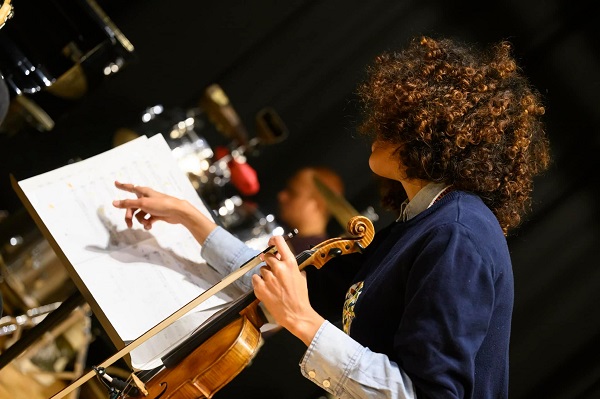
Upon entering, the characteristic sound of the band wrapped up the entire venue, no doubt, captivated us. It was the harmony of an orchestra that played the typical Cuban music: “La Charanga“, which had its maximum exposure in the 20th century. We were all enthralled or if you want to say “delighted”, it was the mixture of wind instruments with percussion instruments but especially with the string instrument that most caught our attention, the Violin.

When we asked for the name of the orchestra, they told us: “Son del Monte”. It’s the ideal name for an orchestra of 12 Latin musicians who project their virtuosity before an audience eager for Caribbean Music that bathes the senses and awakens the joy of living.

Son del Monte
Son del Monte

Son Del Monte is a band based in New York City that presents unique tunes from various artists. This orchestra was born from the musical director and timbalero, Manny Rivera whose aspiration was to create a Charanga band with a hard New York sound that paid homage to the orchestras of the 60s, 70s and 80s. “Our music is captivating for the listeners and dancers. Fans from all over the world have come to love Son Del Monte: Una Charanga Con Algo Más and our incredible musical swing”, said Manny Rivera.

This band that combines the typical sound of Cuba with the mixture of flute, violins and trombones with three singers that create a distinctive harmony of three parts, have performed in so popular Salsa venues, such as: Maryland Live Casino, the Baltimore´s Latino Festival, the boardwalk of Coney Island, SOB’s, Empire City Casino in Yonkers, Gonzalez y Gonzalez, La Marqueta, the Latina Hats Society, Industry City, Harlem Mist, among other recognized Salsa venues.

The members of this Charanga orchestra with “Sabor” and electrifying sound are: Mauricio Smith Jr. (Flute), Eric Roberto Salazar and David Rimelis (Violins), Michael Pallas, Juanga Lakunza and Charlie Garcia (Trombones), Eli Rivera (Piano), Bert Castro (Bass), Joe Gonzalez (Conga), Manuel Rivera (Timbales / Musical Director / Leader) and Luis Ayala, Armando Jiménez Sonji and Luis Soto (Singers).

Since the beginning of this year (2019), Son del Monte has been working on their record proposal for the Latin market with unpublished themes, rhythmic and unique sound – contemporary. To date they already have two singles: “Rumba Omelenko” and “Vengo de Nueva York” availables in: CD Baby, Deezer, iTunes, Apple Music, and Spotify. Likewise, the song “Herman” is in the process of recording. So, get ready because this Charanga orchestra promises their CD ended with great compositions for the public later this year.

Undeniable, the acceptance of Son del Monte has been so extensive on the part of New Yorkers and all who are Salsa lovers that they were recently awarded with the TANAE Digital Media Award for Band of the Year 2018, giving recognition to an arduous musical performance, but above all of great cultural value that keeps alive our Latin idiosyncrasy.

Son del monte - Premios Tanae
Son del monte – Premios Tanae

Manuel Rivera (Musical Director / Manager/  Timbales):

Manuel Rivera, have been a professional musician for more than 40 years and now Son Del Monte’s Leader/ Musical Director.  His musical career started playing Bongo in a Latin Workshop band which eventually became Orchestra Yambu.  Yambu was known for its Latin Jazz style and Disco Hit “Sunny”, his first recording.  Subsequently, I joined the original Charanga Orchestra Sublime of New York City, doubling up on Bongo and Timbales. He recorded on Sublime’s first two albums in 1977 and 1979.

In 2001, he rejoined Orchestra Sublime now known as “Sonsublime”. Manuel recorded on Sonsublime’s Gran Reserva and Bailando Con Sonsublime, their latest CDs. He studied various folkloric rhythms, Bata drums and sight reading at the Harbor’s Conservatory of Music in El Barrio in New York City under the guidance of the Master Louie Bauzo.

Manuel Rivera has performed with the Bassist: William Millan, of the original Conjunto Saoco, singers: Henry Fiol, Ray Ramos, and Luis Ayala.  Also, he performed with Yerason and the MTG All Stars Orchestra under the direction of Hector Leguillow, Joe Quijano at Lincoln Center and other various artists throughout his musical career.


Next Shows:

Monday, Jult 15TH   

Venue: Cunanele Restaurant and Lounge. 1 Route 46 W, Totowa, NJ 07512

Saturday, August 17TH   

Venue: La Placita de la Marqueta.  North trains between 111th and 112th Streets in East Harlem, “El Barrio” and uptown Manhattan, NY.


For more information, please visit:

https://www.SONDELMONTE.com

Or Follow them for their Social Channel:

https://www.facebook.com/MRSONDELMONTE/

Roberto Quintero

North America / United Stated / New York

Roberto Quintero, The Master in the Congas, Bongo & Timbales NY

Roberto Quintero was born in Caracas, Venezuela, surrounded by Afro-Venezuelan and Afro-Cuban rhythms and music.

Roberto Quintero
Roberto Quintero – New York

His father, a respected composer, singer and percussionist, tutored and encouraged Roberto Quintero on percussion throughout his adolescent years.

Roberto Quintero comes from a long line of outstanding musicians, including his Uncle Carlos Nene Quintero and cousin Luisito Quintero.

Roberto Quintero and his congas

Roberto Quintero studied at the Conservatory of Music in Caracas, Venezuela and Sinfonica Orchestra Juvenil from Venezuela.

Besides his skillful Congas work, Roberto is also well known for his work on Bongos, Drum set, Djembe, Timbales and a wide variety of assorted percussion instruments.

He (Roberto Quintero) has played with Dave Samuels, Dave Weckl, Chicago, Gato Barbieri, David Sanchez, Roy Hargrove, David Sancious, Eddie Palmieri, Jack DeJohnette, Roy Haney, Marc Anthony, Timbalaye, Celia Cruz and countless other high-profile music acts in all genres, from symphonic to Jazz, Latin Jazz and Latin House.

Roberto Quintero
Roberto Quintero

Mimi Ibarra singer-songwriter from Colombia to the world

Latin America / Colombia / Bogota

Mimi Ibarra Colombian singer-songwriter. Her talent makes Latin American women proud

Elizabeth “Mimi” Ibarra was born in Colombia in the department of Choco. Since she was a child she dreamed of being able to venture into music as a performer, but “Mimi” was far from imagining that she would first become known internationally as a composer.

It all started when “Mimi” Ibarra dedicated herself to writing melodies, she felt happy doing it and as she describes it “it was definitely a gift from God” she kept the songs she wrote. She composed some songs for a record label in her native Colombia.

Mimi Ibarra - Tu no me mandas
Mimi Ibarra – Tu no me mandas

Her first song as a composer “Amor ingrato” was recorded in Puerto Rico by Milly, Jocelin y los Vecinos for the Musical Productions label.

“Mimi” Ibarra wrote songs that were definitely hits such as: “Señora”, “Nobody’s Toy”, “Déjala”, “Morena Linda”, “Tell him” and “Te Propongo” in the voices of well-known salsa performers like Tito Rojas, La Puerto Rican Power, Tito Gómez, Anthony Cruz, Maelo Ruiz among others.

“Mimi” Ibarra, romantic par excellence… a woman who has the virtue of writing beautiful songs dedicated to love, but who in turn considered that it was time to offer the public songs with romantic lyrics that were also danceable.

After becoming known as a composer “Mimi” Ibarra, she makes her most cherished dream come true… to become a performer. In the first production, the eight songs are of his inspiration, among them “así”, “que tiene ella”, “Para Quererte” and “No puede ser” in duet with Anthony Cruz.

In the second production the themes “hurts” (a duet with Tito Rojas), “I love you like this”, “Private Property” were heard.

These productions have taken her with her music to different places such as Panama, Colombia, the Dominican Republic, Puerto Rico; and cities like New York, Houston and Los Angeles, among others.

Now, he presents us with his fourth record production, with a very varied repertoire to satisfy all his followers.

The bachata “because I loved you so much” stands out, a theme that in turn was recorded as a ballad, in addition to “the Tun Tun dance, which is an indigenous rhythm of Colombia.

All songs are authored by Mimi Ibarra, arranged by Rafael “Bodo” ​​Torres, Ramón Sánchez and Julio “Gunda” Merced.

Mimi Ibarra singer-songwriter
Mimi Ibarra singer-songwriter – Colombia

Hit compositions by Mimi Ibarra

  • Nobody’s Toy – Puerto Rican Power
  • Déjala – Tito Rojas in duet with Tito Gómez
  • I propose – Hector Rey
  • I need you my love – Maelo Ruiz
  • Why do I love you so much – Tito Rojas
  • For that woman – Tito Rojas
  • Lady – Tito Rojas
  • It also hurts us – Tito Rojas
  • I will cry – Tito Rojas
  • Why do you refuse – Roberto Roena
  • Compare me – Roberto Lugo
  • If you let me love you – Roberto Lugo
  • I couldn’t help it – La Mulenze Orchestra
  • Blame Me – Luisito Carrion
  • Your way of loving – Pedro Conga
  • You are the only one – Nino Segarra
  • Win – Tito Gomez
  • Never let you down – Anthony Cruz
  • Tell Him – Anthony Cruz
  • « Go to Previous Page
  • Page 1
  • Interim pages omitted …
  • Page 87
  • Page 88
  • Page 89
  • Page 90
  • Page 91
  • Interim pages omitted …
  • Page 149
  • Go to Next Page »

International Salsa Magazine (ISM) is a monthly publication about Salsa activities around the world, that has been publishing since 2007. It is a world network of volunteers coordinated by ISM Magazine. We are working to strengthen all the events by working together.