• Skip to primary navigation
  • Skip to main content

International Salsa Magazine

  • HOME
  • Previous editions
    • 2026
      • ISM / April 2026
      • ISM / March 2026
      • ISM / February 2026
      • ISM / January 2026
    • 2025
      • ISM / December 2025
      • ISM / November 2025
      • ISM / October 2025
      • ISM / September 2025
      • ISM / August 2025
      • ISM / July 2025
      • ISM / June 2025
      • ISM / May2025
      • ISM / April 2025
      • ISM / March 2025
      • ISM / February 2025
      • ISM / January 2025
    • 2024
      • ISM / December 2024
      • ISM / November 2024
      • ISM / October 2024
      • ISM / September 2024
      • ISM / August 2024
      • ISM / July 2024
      • ISM / June 2024
      • ISM / May 2024
      • ISM / April 2024
      • ISM / March 2024
      • ISM / February 2024
      • ISM / January 2024
    • 2023
      • ISM / December 2023
      • ISM / November 2023
      • ISM / October 2023
      • ISM – September 2023
      • ISM – August 2023
      • ISM July 2023
      • ISM Edition June 2023
      • ISM – May 2023
      • ISM April 2023
      • ISM March 2023
      • ISM February 2023
      • ISM January 2023
    • 2022
      • ISM December 2022
      • ISM November 2022
      • ISM October 2022
      • ISM September 2022
      • ISM August 2022
      • ISM July 2022
      • ISM June 2022
      • ISM May 2022
      • ISM February 2022
      • ISM January 2022
    • 2021
      • ISM December 2021
      • ISM November 2021
      • ISM October – 2021
      • ISM September 2021
      • ISM August 2021
      • ISM July 2021
      • ISM May 2021
      • ISM April 2021
      • ISM June 2021
      • ISM March 2021
      • ISM February 2021
      • ISM January 2021
    • 2020
      • ISM December 2020
      • ISM November 2020
      • ISM October 2020
      • ISM September 2020
      • ISM August 2020
      • ISM July 2020
      • ISM June 2020
      • ISM May 2020
      • ISM April 2020
      • ISM March 2020
      • ISM February 2020
      • ISM January 2020
    • 2019
      • ISM December 2019
      • ISM November 2019
      • ISM October 2019
      • ISM Septembre 2019
      • ISM August 2019
      • ISM July 2019
      • ISM June 2019
  • Spanish
  • Download Salsa App
    • Android
    • Apple

Search Results for: Salsa en Venezuela

Jesús Algarín is a Puerto Rican bassist who, at the age of 25, landed in the salsa scene

A graduate of Berklee College of Music, with his college degree in hand, the young bassist returned home to make his homeland in salsa time.

Jesús Algarín is a Puerto Rican bassist who, at the age of 25, landed in the salsa scene to make music his life project.  The young musician already walks with a firm step accompanied by the forceful interpretation of his bass, leading his own orchestra with confidence.

From the time he was born, according to what his parents told him, they used to party, so it was not surprising that at the age of 8 he was already the one who was the one who was livening up the parrandas while playing the Puerto Rican cuatro.  Algarín, who was born and raised in the heart of Puerto Rico (Caguas), candidly tells us that as a child, he discovered through our very own parrandera tradition, that music -which he refers to as a wonderful art- had a healing and restorative power.

Well advised by the adults in his family, he recounts that his uncle explained to him early in his life that if he failed to ignite his audience at the Choliseo during a parranda, it would become more difficult for him. Once he understood the advice, he applied it to himself.  Today he concludes that it is necessary to dominate every stage, from a marquee to a public square, and to take it one step at a time.

Through Puerto Rican folk music, studying and interpreting the seis, the aguinaldo, the bomba, and the plena, he was entering into what without planning it became his life project.  Later, playing the Puerto Rican cuatro purely by ear, he was able to enter the “magical” world of music, as he himself describes it.

Already in the sixth grade of elementary school, he began his formal apprenticeship at the Escuela Libre de Música de Caguas.  Before that time, he played the cuatro but did not read music.  Once he learned to read music, he decided to continue growing musically in his instrument.

Six years later, in grade 12, about to finish high school, he took part in the camps that Berklee College of Music brings to Puerto Rico every year. He auditioned for the Puerto Rican cuatro.  However, at the time, he did not achieve his goal of positioning himself. Determined not to give up, the following year he returned to the Berklee camp but changed tactics. He showed up to the workshops with a bass because he understood that the cuatro was not a good fit.  When he filled out the registration form for the workshops, he reported that his bass playing was at the advanced level, even though he knew it wasn’t true.  This adolescent idea, which added a good deal of pressure and stress to his musical performance, helped him get into the ensembles he aspired to qualify for. Today he admits that at that time, which today seems far away, he could not handle the bass because, as an instrument, it was still unknown to him.

In any case, Algarín qualified because, as we know, you have to take your chances with life.  The rest is history. 

With the bass as his main instrument, Algarín got Berklee to give him a scholarship and after four years in Boston, Massachusetts he graduated with a degree in Music Business. In other words, he spent four years making music while learning to see music as a business.

The young bass player confesses that he had not planned to be a musician nor had he thought he would make a living from music.  He did not see music as a possibility, since although it was always an integral part of his life, music was a hobby or a way to serve God in the church.  And that’s what he limited himself to until he came to Berklee’s summer workshops.  Before that, he saw himself as a lawyer and when it was his turn to enter college, he initially enrolled at Ana G. Mendez University.  There he attempted to complete a bachelor’s degree in accounting. However, from the very first accounting class he knew that accounting was not for him.

Algarín capitalized on what he learned, and has been able to stick to music as a way of life; from a more realistic and less idealistic perspective. Of course, all without losing the artistic focus of musical interpretation.  Along with his musical training, he has been preparing himself in legal issues, maintaining business awareness, focusing on the protection of music and copyrights.  He has also been responsible for making other musicians aware of the importance of registering their music with the Library of Congress and thus making the most of their work.  There is no doubt that Algarín knows his worth as a musician and from his space he has decided to serve and guide his counterparts to protect their work.

Before entering the studio to record his project, Algarín had recorded with Manolito Rodríguez.  During his student years in Boston, he was a musician in the Eric German Orchestra, the orchestra that accompanies visiting solo singers in the New England area.

Today, his main instrument is the bass, double bass, baby base or electric bass.
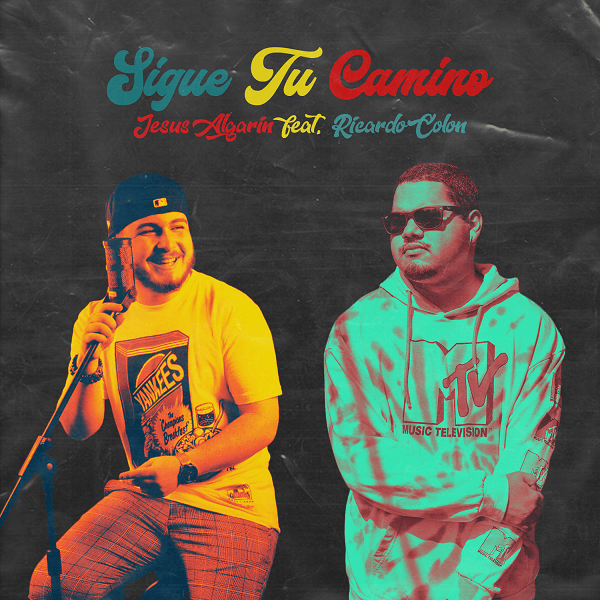
The bassist, a native of Caguas and graduate of Berklee College of Music, class of 2020, returned to Puerto Rico to lead his own musical project.

Two years after Algarín’s return home, the orchestra is already promoting its first production entitled “Dímelo Algarín”, which is part of his project “Jesús Algarín”. The format of the base orchestra of the project is as follows: winds (trumpet, trombone and baritone saxophone), bass, piano, conga, timbal, bongo and bell; backing singers and choirs. This, his first production, contains 5 songs, with contemporary themes in its lyrics. This lyric, however, embraces the nostalgic sonority of the sextet, complementing some of the songs with the Cuban tres. The bassist leader of his project arranged and composed these 5 unreleased tracks, which are merged in a production for which Jesús Algarín is also responsible.

The production is available in digital format on all platforms. The promotional cut is Sigue tu camino performed by Ricardo Colón, who also sings in the Willie Rosario Orchestra. The other four tracks included in the production are:  Playita, Cadencia y sabor and La calle se prendió; performed by vocalist José Luis De Jesús and Caribeña, in the voice of Marisabel Vázquez Varela.

The recording studio musicians who participated in the production are from the Caribbean.  Puerto Ricans, Cubans and Venezuelans merge in a salsa embrace; as is to be expected.

Vocals: José Luis De Jesús, Ricardo Colón and Marisabel Vázquez Varela.

Backing vocals: Jorge Yadiel Santos, Carlos García, Ricardo Colón, José Luis De Jesús, Manolo Ruiz and Carloscar Cepero.

Bass: Jesús Algarín

Piano: Aníbal Cruz and Juan Rivera

Tres: Renesito Avich

Percussion: Miguel Martínez

Trumpets: Luis Arnaldo Ramos, Angel Segarra y Nicolás Benítez

Trombone: Johan Escalante y Carloscar Cepero

Baritone saxophone: Efraín Martínez

Cuatro: Jesús Algarín.

As the son of documentary filmmaker Juan Félix Algarín, Jesús considers himself blessed to have been mentored by a father with first-hand knowledge.  His father always instructed him to be aware of music as a business in the entertainment world. Jesus knows his worth and has kept himself informed as to the costs of production and is clear as to the rates of his work.  He identifies himself as a Puerto Rican and Caribbean musician. He is in every sense of the word, a music worker.

As it is, we are still in salsa.  Yes, salsa lives! The effort, discipline and talent -in that order- of this young bandleader attest to that. Congratulations, and may you continue to “catch the ride”.

For bookings, Ángel Ilarraza: 787-347-4662 or e-mail: [email protected]
How talented Puerto Rican singer Fernandito Rentas started his career

How his career started

We have here Fernandito Rentas, who is a Puerto Rican salsa singer. Good afternoon, Mr. Rentas, how do you do?

Good afternoon. Thank goodness, i’m doing just fine right in good health and working hard. We are doing what is done daily, which is my regular job, but on the other hand, we are making the music that I would be able to do up to the present time, or rshould I say, musical projects.

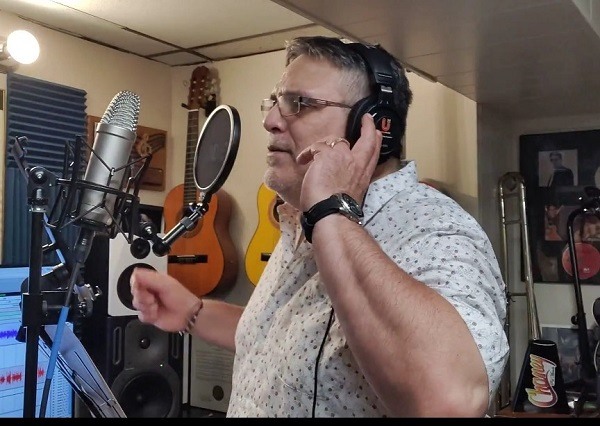
Fernandito Rentas recording one of his songs

You come from Ponce. This is a city from which many famous Puerto Rican artists come, especially in the salsa genre. Do you think that coming from that city had something to do with the road you would take later on?

Ar some point, yes because that influence was around me since I was a little boy. I have always been interested in music and sports, but I enjoyed more of music. I don’t come from a family of musicians as far as I know, but my biggest influences come from distant relatives like, for example, Mr. Esteban Tato Rico Ramírez, who was a singer in the orchestra La Solución.

Basically, what I remember most about my childhood is that it was from there that I became interested in music. At the same time, I would see my parents dancing at parties and there was all that excitement and feeling of celebration. The church and its chants were also important in that regard.

Those were earlier influences, but it was from the age of 7 that I began to understand tropical music. As time went by, I got more interested in it. I couldn’t take music lessons due to economic problems at that time, so I did everything by ear. I do remember that there was an instrument I liked a lot when I was in elementary school, which was marimba. I was strock by it, which led me to join a group of classmates at school who practiced in the school canteen in the afternoon. I also remember my music teacher, Mr. Fermín Torres, who was from the Adjuntas or Coamo area in Puerto Rico, but he was well known in the musical area of the school system.

I didn’t really jump right into music until a few years later because our family moved to Florida, where I began to look out for other interests such as the US Armed Forces. When I graduated from high school, I joined the army and there I met other colleagues from my homeland, which made me reconnect to Latin music. I was not only focused on music of Puerto Rico, but also from Colombia, Venezuela and other countries.

Fernandito Rentas singing on stage

My idol as an artist in the genre has always been Oscar D’ León since the first time I saw him when I was 7 or 8 years old during the patron festivities in my village. When I went into the army, many colleagues who were already veterans in this issue helped me to train me. The first person I met was bass player Héctor Cruz, who I say was my godfather in music. That was in Germany when I served on the force in 1989. When I returned to the United States, I went to North Carolina and began to succeed in music step by step.

I spent nine years serving in the South Korean peninsula, where I was blessed to pull together a group of musicians and perform live music with many fellow musicians, including Korean friends I made there. I returned to the United States in 2011 and thank goodness I stay on this. These days, I had the opportunity to connect or lift me up from where I were and do something different. What I was looking for was to create my own productions with the music that I like, so that’s what I’ve been doing these last two years.

His groups

You were part of various groups including Orquesta Mambo Son, Grupo Descarga, among others. When did you decide to go solo and create your own productions?

I decided to do it in 2020. I had already had this interest for many years and was always seeking the opportunity to break the ice through groups. I was looking to take part in the production of a group I was with and start from that point, but unfortunately none of my groups managed to get into production.

I finally got the chance with the pandemic, as I started to be able to be interacted with colleagues and friends through Facebook and connect with musicians from around the world. Then, other comrades who were also in the armed forces told me about Mr. Robert Requena, who is a Chilean who lives in Medellin, Colombia.

Fernandito Rentas in his military uniform

When I wanted to do things differently adapting myself to the new era, they put me in touch with Mr. Requena and I expressed my ideas. Then, he was the one who showed me the first composition for my first song, which we titled Bailando debajo del agua (Dancing under the water). The thing is that this song is based on an event that happened here in my house, which I told Requena about and we used it for the song. Then, we talked about its musical bases and what I was looking for in my future songs, so he came up with the formula. Today, we are working on my sixth record and thinking about releasing it in June, but there are seven others that are being created right now.

Seeing as your career practically started with Covid-19, do you think the pandemic precipitated what you had in mind?

Well, in a way, yes. My desire to make a solo album is very old, but the 20 years in which I was serving in the armed forces limited me, thing that also happened to other colleagues who are also launching their own albums today, such as Arnaldo LaFontaine, Edwin El Calvito Reyes, Josean Rivera, José Rivero, among others. Arnaldo La Fontaine, Jose Rivero and I were singers in the same orchestra in the southeastern United States during the 1990s.

My interest in being a soloist was present for a long time, but the opportunity to do so did not come until I made use of technology. I can tell you that all my albums are being made in Medellin, Colombia. All I do here in New Jersey is go to the studio and record the voice. That advantage that we have today really helped us and, at the same time, the arrival of the pandemic has prevented us from going to other places to bring our talent. I have accumulated unimterrupted 33 years of career, but the pandemic prevented us from going out and locked us up at home. It was there when many other artists began to take alternate measures to be able to continue reaching people.

In any way, I think we have turned this situation to our advantage in the best way that the Lord has not allowed.

Art of his last song Qué difícil es

An artist I interviewed told me that many musicians were preferring to release single songs instead of full recordings. Are you makings full recordings or single songs?

Based on advice that Mr. Requena gave me, I am releasing single songs. Nowadays, the matter of full albums has become complicated due to the lack of record labels and factories where these materials are produced. I would say that the idea of releasing singles was the best because you want to know if the public is going to accept or like the album. Instead of releasing all the songs at the same time, releasing one song at a time is more comfortable, less expensive and easier to work with. For the time beingt, I have no plans to release a CD.

How did you balance your musical and military activities?

I had to balance them because our obligations and priorities in the military service are focused on the mission and commitment to the defense of the country. During our free time, we liked to clear the mind and do different things. We went to parties.

We felt great making music for our fellow soldiers, their communities and families. We were able to bring our Latin culture to the countries we went to.

Music was our main hobby and the to entertain ourselves on the weekends.

Social networks and website

Facebook: Fernandito Rentas II

Instagram: Fernandito Rentas

YouTube: Fernandito Rentas

Memo Arroyave, entre las voces más importantes e impecables del Caribe

Considered as one of the faithful representatives of Venezuelan salsa, the young vocalist Guillermo José “Memo” Arroyave, born on July 22nd in the city of Caracas, arrives to “Salsa Escrita” for an exclusive interview.

Memo Arroyave, continues to project himself with more and more quality and professionalism, characteristics that define him in the Caribbean music genre at the national and international levels.

In a pleasant and enjoyable conversation with Memo, he told us about his career and his current and future projects.

Memo Arroyave, welcome to Barquisimeto’s salsa column “Salsa Escrita”; it is a great pleasure for us to have you as our special guest and we would like you to tell us about your beginnings in your artistic career.

-Thank you Carlos for the opportunity you are giving me to reach your readers in a direct and fraternal way.

Memo Arroyave

Memo Arroyave, among the most important and impeccable voices of the Caribbean

My beginnings in the world of music and show business date back approximately to 1996, when I was a student of the successful Venezuelan Rafa Galindo (R.I.P.D.), the musical legend of our country.

Then I ventured into the stages forming part of different groups in Caracas, such as Partitura Latina, Orquesta Gente Novel, Orquesta Ensueños, Galaxy Latin Band, El Código Salsero, among others.

-Memo, which artists have you shared the stage with, what can you tell us about them? Professor Carlos, I have had the opportunity to share the stage and accompany, on occasions, as a soloist and others as a backing vocalist, national and international artists of the stature of: Andy Montañez, Ismael Miranda, Viti Ruiz, Christian Fernandez, Adalberto Santiago, Pupy Santiago, Paquito Guzman, Roberto Blades, Jose Mangual Jr, Max Torres, Wichy Camacho, Willman Cano, Nino Segarra, Nelson Arrieta, Marcial Istúriz, Mandinga Star Band, Wílmer Lozano, Wiwi Buznego, Wílmer Cobos, Cheo Valenzuela, Miguel Araujo, Erick Franchesky, Irving Manuel, Ángel Flores, Samir Bazzi, Manuel Guerra y su Orquesta, and in December 2019, I shared the stage with Hermán Olivera, Luisito Carrión and Frankie Vásquez.

-Regarding current projects, what can you tell us about them? I am part of several projects simultaneously my friend Carlos, among which stand out: Orquesta Puma Band, Victor Cardona y la Máquina de la Salsa, La Rumba Sonora de New York, Afro Códigos and recently I was invited to participate in the 10th Anniversary album of “Los Rumberos del Callejón”.

Well Memo, for all that you have given us to know about your talent and dedication, you are an obligatory reference of the salsa show and we would like to know about your most recent and future projects.

-In fact, I recently recorded and released the song “Si falta el Aire”, a composition by the Spaniard David Santisteban, with arrangements by Enmanuel “Cerebro” Romero and under my production.

 Memo Arroyave
Memo Arroyave, continues to project himself with increasing quality and professionalism.

It was recorded in Caracas, Mexico, Miami, and New York, mixed and mastered in the Venezuelan capital, as part of my first musical production. Other of my hits are: “Y lloré”, “No Puedo estar sin ti”, which I did a duet with Rafael “El Pollo” Brito. And as a scoop for your salsa column “Salsa Escrita”, I already have the next promo ready and it is a duet with NG2 from Puerto Rico and last week was the release of the song with José Madera Niño “3º Mundo”, titled: “Me gustas pero…”, which is sounding strong and last year I recorded for a Colombian pianist, but he is based in Washington, United States, which made an album called “10” and among other singers participate: Rodrigo Mendoza, Mariana “La Sonora de Venezuela”, Marcial Istúriz, Gonzalo Díaz, Mike Barrios, which is a talentazo of Zulia state, who is currently in Mexico, my person and other people from other countries.

Soon I will be in the production that is in the process of mixing and where Argenis Carruyo, Oscar Arriaga, Wichi Camacho, and others also participate.

-Excellent Memo, I understand that in addition to your facet as a singer, you also dabble in the media?

That’s right professor, let me tell you that I am the nephew of Fernando Sosa Leal, I have done radio and television since 2002; I started with a radio program in the state of La Guaira, I was the director of the musicalization of Azul 95. 9 FM, then we did “Mundo Latino”, there I was as an animator with Fernando Sosa Leal and Luis Arturo in CMT, then in TVES, but I leave the project to devote myself more to my singing career and also went several times to Puerto Rico to the editions of the National Salsa Day, World Salsa Congress, to give coverage from there for all Venezuela and the Caribbean and recently as the producer of Strike 13 with Fernando Sosa Leal in his Bowling program for Meridiano TV.

Carlos, I wanted to thank you for the focus you give to the singer through your salsa column, if I may say individually and not so much as choristers, which of course is important, but in your work and interviews we have read the support and contribution you give to our musical productions and recordings with orchestras, since this way we make ourselves known to music lovers as well as to the public.

Finally, I want to thank you for your time and congratulate you for this work that you do with a lot of enthusiasm, with desire and that should be appreciated not only by me but by all musicians, artists who are giving it their all and that, if it were not for people like you, it would be even more difficult.

-Your social networks? Through @memomedicen, they are my accounts in R.R.S.S. Thanks, Memo for this connection we had and thank you for accepting the invitation to Salsa Escrita “La Columna Salsera de Barquisimeto”, through International Salsa Magazine, www.salsaGoogle.com, we would also like to have you performing in our twilight city and musical capital of Venezuela and remind all artists that we are to serve them in an unconditional way in favor of our Latin music and obviously the Venezuelan talent that is unquestionably superior every day.

See you next time and let’s keep salseando!

Article of Interest: Henry Valladares, a brilliant, versatile, and disciplined percussionist

Maestro Jorge Anselmo Barrientos Silva, conductor, arranger and composer

He is one of Mexico’s most important musicians and cultural heritage, recuerdos del Son with Jorge Anselmo Barrientos Silva.

Jorge Barrientos was born on November 14, 1953 in Mexico City. He studied music at the Escuela del Sindicato Único de Trabajadores de la Música del Distrito Federal. Groups and orchestras in which he has worked: Mocambo, Horóscopo Tropical, Jorge y su Boogaloo, Sonora Brasilia, Sonora Mayoral, Yímbola Combo, La Justicia, Sonora.

In 1980 he founded Recuerdos del Son (director, arranger, and composer), whose group is already part of our cultural heritage of Afro-Caribbean music in Mexico. This group has participated in festivals, conferences, concerts, and courses, in the most important auditoriums and theaters of the CDMX and the interior of the country. It is worth mentioning that it has been the only Mexican group invited to Nicaragua.

Within his musical career he has been a commentator on radio stations such as Radio D, Radio Educación, La Tropi Q and XEB. He has published several works on Afro-Antillean music and especially on Cuban Son -among others- El Son Raíz y evolución, La Clave en el Son cubano, Método de Tres and a didactic disc on the variants of Son.

 Jorge Anselmo Barrientos Silva y Erika Muñoz

Jorge Anselmo Barrientos Silva y Erika Muñoz

Regarding pre-Hispanic music, he published the research: ANALOGÍA ENTRE LOS INSTRUMENTOS DE PERCUSIÓN PREHISPÁNICOS Y LOS DEL SON CUBANO (ANALOGY BETWEEN PRE-HISPANIC PERCUSSION INSTRUMENTS AND CUBAN SON). He has given conferences, concerts and workshops in several cultural spaces such as Faculties of the Universidad Autónoma de México, Cultural Centers in Mexico City, as well as in the interior of the Republic.

He has participated in the Cervantino Festival twice, the Caribbean Festival in Managua, Nicaragua in 1984, Festival de las Artes in Monterrey, Nuevo León, Tabasco, Querétaro, San Luis Potosí, etc, etc. Jorge A. Barrientos Silva was an advisor in the Chamber of Deputies, and commissioner of the Musicians Union.

He has been Secretary of Political Action and in charge of the Legal Department. In the Musicians Union, he was a founder of the Afro-Antillean music workshop, besides having given countless lectures on the Cuban Son and its variants.

Jorge, how many productions have you recorded?

FIRST PRODUCTION OF MR. GENARO ÁLVAREZ (R.I.P.D.)

Jorge Anselmo Barrientos Silva
First production of Mr. Genaro Álvarez (Q.E.P.D.)

He is one of Mexico's most important musicians and cultural heritage

INDEPENDENT PRODUCTION, OWN BRAND, EL SON RECORDS

Record pressed in Pentagrama brand, production Jorge Barrientos
Independent production for the company's own brand, discs Son
Independent production for the company’s own brand, discs Son
Record pressed at the pentagram brand, production Jorge Barrientos

Among those productions, which is the one that has left a mark in your musical history?

All of them have been important and, for example, the album HOIMENAJE PEREGRINO, is a product that record collectors look for and has a special value.

The album, recorded live at the Teatro de la Ciudad, is a document that contains compositions and arrangements by the members, including music and piano solos by Mexican jazzman Héctor Infanzón.

We know that you participated in a festival in Nicaragua, can you share with us about that great experience?

It was something special, since several groups from all over the world participated, among them, Italians, Venezuelans, Cubans, etc. and when playing “al tocar al tú por tú”, the Mexican musicians did not shrink.

You participated in several recordings of your musical partners, to mention a few Tony Camargo, Linda Vera, Wuelfo Gutiérrez, (former member of the legendary Sonora Matancera), what did these great musicians leave you as a musician?

Participating with great music legends is an unforgettable experience since they ask you to interpret the scores, according to the recordings that have left their mark.

Were you in the golden age of Afro-Antillean music, how did Afro-Antillean music develop in those years?

Without underestimating the work of today’s musicians, the era I lived in was very special, because each group tried to put its “stamp” on each performance, nowadays, regularly and with honorable exceptions, most of them “sound the same”.

In the present time, do you consider that Afro-Antillean music has transcended?

Yes, it has transcended, but, with the globalization of culture, sometimes there are few novelties.

Jorge, which show do you remember that alternated with the salseros from abroad?

In the fever of the ’80s, fortunately, the businessmen looked at us to alternate with the great figures, among these I can mention: Irakere, Orquesta Aragón, Gran Combo, Sonora Matancera, Sonora Ponceña, Son 14, Adalberto y su Son, etc.

In the fever of the 80's, fortunately, businessmen looked at us to alternate with the great figures
In the fever of the 80’s, fortunately, businessmen looked at us to alternate with the great figures

¿Recuerdos del Son is already a cultural heritage of the CDMX did you imagine that someday it would happen?

The work in the cultural area has been the goal of our efforts. How nice to receive the affection and recognition of the people, who are ultimately the ones who make our career.

As director and musician of your own orchestra, has it been difficult to get to where you are?

Music and being in the show business is a daily battle, and if it has been difficult, of course, no one has the formula for success, we will continue in the daily struggle, preparing ourselves and presenting our new productions,

How did your love for the guitar, the bass and the Cuban tres come about?

First, I am a descendant of a bohemian family, where the guitar was never missing, then with time my love for the bass and then the Cuban tres began.

Are you still performing?

I’ve been performing on Saturdays at the Salón Caribe and other dance halls for 4 years. The cultural activities have been suspended for some time now (by covid) but, hopefully, the presentations in festivals and theaters will be reactivated.

Do you still feel the same adrenaline rush when you step on a stage?

Fortunately, it’s the same emotion, you never know if the public is receptive or ignores your efforts.

In your musical career, have you been honored or received recognition?

Yes, I have received countless recognitions, both for the trajectory of RECUERDOS DEL SON and for the research work I have done.

Jorge before saying goodbye we want to thank you for being and existing as the cultural heritage of the CDMX.

Would you like to close this talk with a few words?

Some say that Son is dead, Don Ignacio Piñeiro used to say: “Son is the most sublime thing for the soul to have fun, it should die, who for good does not judge it.

MAY THE SON NOT DIE, WITH CLAVE AND BONGO, MEMORIES OF THE SON.

Facebook: Jorge Anselmo Barrientos Silva

Article of Interest: Fabián Rosales Araos Chilean singer-songwriter, native of the city of Valparaíso

Henry Valladares, a brilliant, versatile, and disciplined percussionist

Our special guest this week is Henry Valladares, a brilliant, versatile, and disciplined percussionist, born on October 22nd in Barquisimeto, Lara State, to a mother from Caracas and a father from Yaracuyo.

Welcome Henry to Salsa Escrita, we would like to know how were your musical beginnings? Thank you Professor Carlos for your invitation to your well-read column. My interest in music began when I was 6 years old since I was very young I listened to salsa records by artists such as Héctor Lavoe, Willy Colón, Rubén Blades, Gran Combo, Sonora Ponceña, and all those acetate records of the time that arrived from Caracas, thanks to my mother who bought them, and in particular the record by José Mangual Jr. (Tribute to Chano Pozo) where at the end of the record there were some tracks where they taught the basic rhythms of salsa percussion (conga Milton Cardona, timbal Jimmy Sabater and the bongo José Mangual Jr.)

That would be my first influence in percussion. I remember that in those years there was a church very close to my house and I listened to the drums and bagpipe drums and I wanted to play and I built my own drum, I made it with a paint dipper and I put a piece of plastic with wick string (that was my first instrument hahaha).

born on October 22nd in Barquisimeto, Lara State, to a mother from Caracas and a father from Yaracuyo
Henry Valladares, a brilliant, versatile and disciplined percussionist

Very good maestro Valladares and at what age did you begin to acquire musical knowledge in a formal way?

At the age of 8, I started my first percussion classes formally dictated at the CEPAS cultural center in San Jacinto, with professor Francisco Escalona in congas and for bongo with professor Wálter Yaguas, later I received training at the BIGOTT foundation (Afro-Venezuelan percussion) in the city of Caracas with professor Jesús Paiva and music and rhythmic reading classes with professor Jesús Blanco (Totoño), as well as different workshops and courses.

I remember one in particular dictated by the percussionist Wílmer Albornoz from Caracas and the percussionist, Pausides Jiménez, from Barquisimeto, there I learned a lot and in the Conservatory of Music Vicente Emilio Sojo of Barquisimeto with professor Tonny González, without forgetting the videos made for the years 1996, 1997 and 1998 by the teachers Giovanni Hidalgo and José Luis Quintana (Changuito), who raised my level of knowledge in the conga, timbal, and bongo.

Much of the training of a percussionist is by his own research and the training is never lost, you continue learning every day.

In what year did you start playing at the orchestral level?

Professor Carlos, in 1994 I started playing in nightclubs with regional groups, playing in groups such as Orquesta la Playa, Nino y su Orquesta, Orquesta Líder, and with most of the dance groups in the city.

Have you accompanied national artists?

Yes, friend Colmenárez, I have accompanied artists such as Billo Caracas Boys, Wladimir Lozano, Néstor Rivero (former teenagers), Betsy Núñez (bolerista), Eli Méndez, Rafa Galindo, Verónica Rey, Memo Morales, Édgar Rodríguez (El Abuelo), Wílmer Lozano, Rodrigo Mendoza, Benjamín Rausseo (Conde del Guacharo), Fabián Santa María, among others.

Have you recorded? I have recorded in different musical productions and artists of different genres.

Henry Valladares, a brilliant, versatile and disciplined percussionist
His interest in music began at the age of 6

Since 2003 to date I am a percussionist and assistant musical director of the Latinocaribeña orchestra, belonging to the Maestro Antonio Carrillo Concert Band, the heritage of the state of Lara (135 years old) making presentations in theaters and different places inside and outside the city.

I continue to study Afro-Caribbean instruments and teach in-person and online classes, also giving workshops.
In 2019 I celebrated my 25 years of a musical career, which I celebrated with a very special workshop held at the Conservatory of Music in Barquisimeto.

Henry, what are your next goals? To finish putting together my Latin jazz group.
Well Henry Valladares, for us it was an immense pleasure to have you in our salsa column praising your dedication and discipline in the Afro-Caribbean genre in the percussive part.

And on behalf of International Salsa Magazine www.salsagoogle.com, we congratulate you for your performance representing Barquisimeto.

Thank you very much Professor Carlos for the invitation, long live percussion, and keep on supporting musicians from Barquisimeto and Venezuela.

What are your social networks? Email: [email protected]; Facebook: Henry Valladares and Instagram: @valladarespercusion.

See you next time and let’s keep salseando!

Article of Interest: Cheo Valenzuela, “El Sonero de la Dulzura”

  • « Go to Previous Page
  • Page 1
  • Interim pages omitted …
  • Page 29
  • Page 30
  • Page 31
  • Page 32
  • Page 33
  • Interim pages omitted …
  • Page 95
  • Go to Next Page »

International Salsa Magazine (ISM) is a monthly publication about Salsa activities around the world, that has been publishing since 2007. It is a world network of volunteers coordinated by ISM Magazine. We are working to strengthen all the events by working together.