• Skip to primary navigation
  • Skip to main content

International Salsa Magazine

  • HOME
  • Previous editions
    • 2026
      • ISM / March 2026
      • ISM / February 2026
      • ISM / January 2026
    • 2025
      • ISM / December 2025
      • ISM / November 2025
      • ISM / October 2025
      • ISM / September 2025
      • ISM / August 2025
      • ISM / July 2025
      • ISM / June 2025
      • ISM / May2025
      • ISM / April 2025
      • ISM / March 2025
      • ISM / February 2025
      • ISM / January 2025
    • 2024
      • ISM / December 2024
      • ISM / November 2024
      • ISM / October 2024
      • ISM / September 2024
      • ISM / August 2024
      • ISM / July 2024
      • ISM / June 2024
      • ISM / May 2024
      • ISM / April 2024
      • ISM / March 2024
      • ISM / February 2024
      • ISM / January 2024
    • 2023
      • ISM / December 2023
      • ISM / November 2023
      • ISM / October 2023
      • ISM – September 2023
      • ISM – August 2023
      • ISM July 2023
      • ISM Edition June 2023
      • ISM – May 2023
      • ISM April 2023
      • ISM March 2023
      • ISM February 2023
      • ISM January 2023
    • 2022
      • ISM December 2022
      • ISM November 2022
      • ISM October 2022
      • ISM September 2022
      • ISM August 2022
      • ISM July 2022
      • ISM June 2022
      • ISM May 2022
      • ISM February 2022
      • ISM January 2022
    • 2021
      • ISM December 2021
      • ISM November 2021
      • ISM October – 2021
      • ISM September 2021
      • ISM August 2021
      • ISM July 2021
      • ISM May 2021
      • ISM April 2021
      • ISM June 2021
      • ISM March 2021
      • ISM February 2021
      • ISM January 2021
    • 2020
      • ISM December 2020
      • ISM November 2020
      • ISM October 2020
      • ISM September 2020
      • ISM August 2020
      • ISM July 2020
      • ISM June 2020
      • ISM May 2020
      • ISM April 2020
      • ISM March 2020
      • ISM February 2020
      • ISM January 2020
    • 2019
      • ISM December 2019
      • ISM November 2019
      • ISM October 2019
      • ISM Septembre 2019
      • ISM August 2019
      • ISM July 2019
      • ISM June 2019
  • Spanish
  • Download Salsa App
    • Android
    • Apple

Search Results for: Salsa music

The Great Pichie Pérez and his brilliant career

There have been many artists who have supported the Spaha Salsa Gallery due to the multiple contributions made to salsa since its foundation. One of them has been the great Pichie Perez, who gave a fabulous interview to the founder and president of the famous salsa museum in New York, Johnny Cruz.   

During the video on the Johnny Cruz’s Facebook account, Piche talks about some of the most important aspects of his professional life and, of course, gives his unconditional support to the Spaha Salsa Museum and the labor it has been fulfilling in recent years. Below are some of the most outstanding details of the artist’s life.   

Pichie performing live
Pichie Pérez performing live in Peñuelas, Puerto Rico

Youth   

Héctor ”Pichie” Pérez was born on September 24, 1960 in El Bronx, New York, the youngest of three brothers whose parents were Ramón Pérez Rodríguez and Haydée Casiano González, both of Puerto Rican nationality.   

After the age of seven, he moved with his family to Ponce, a place where a genre called bugalú became increasingly popular and the boy’s father enjoyed that kind of music, which made Piche begin to be interested in certain artists, especially Pete Rodríguez with his song ”I Like It Like That”.   

At the age of 10, his parents decided to move again, but this time to Cañaboa Encarnación, Peñuelas. Some time later, he became part of what would be the first band of his career, Los Metálicos Steel Band, with which the artist began to gain a lot of knowledge about merengue and calypso. When this same group became a sextet under another name, Pichie started singing and playing maracas and güiro.   

Pichie was working in several orchestras that gave him the experience he has today such as the Adolfo Grana school orchestra, Orquesta La Intelectual, Orquesta La Preferida, among others.   
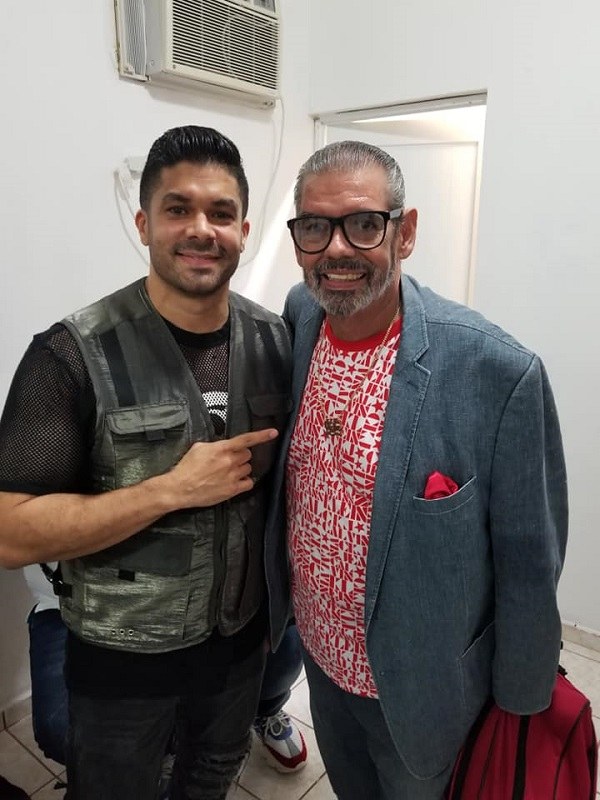
Pichie and Jerry
Jerry Rivera next to Pichie Pérez

Orquesta La Terrífica and Orquesta La Primerísima 

However, his big moment would come when he was part of Orquesta La Terrífica, in which he worked as a vocalist between 1976 and 1981. Additional to this group, Pichie would be in six recordings, among them stands out ”La Terrífica. Sabor a Pueblo”. 

Some time later, he would sing in Tommy Valencia’s Orquesta La Primerísima, which would give him the opportunity to share the stage with world famous and acclaimed singer Frankie Ruíz, of whom he cherishes very good memories. Although this is one of the groups for which Pichie would be best known, it was not the last one he was in.   

For more than 30 years, he was in La Sonora Ponceña, to which he thanked for all that he achieved and learned during those years. However, there came a point when the singer wanted to make his own way and had to make the tough decision to leave the orchestra and start a solo career, which had ”El Sonero del Bailador” as its starting point in 2016. 
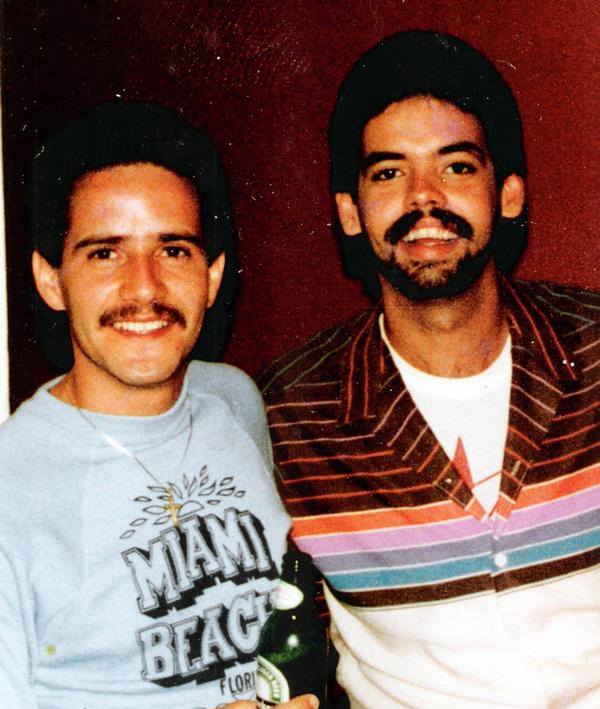
Pichie and Frankie
Frankie Ruiz next to Pichie Pérez when they were in La Primerísima

Pichie was expectant before the audience reaction to his solo material, but fortunately, the overall response was very positive, which motivated him to release a new album entitled ”Alegrando La Navidad”.   

Nowadays, he has an extraordinary reputation as a solo singer and in orchestral formations, but he also obtained great merits as a güirero and maraquero throughout his artistic career. He also had a great participation as a backing vocalist in many productions and recording sessions to which he added his unique touch. 

Read also: Willito and Japhet from La Sonora Ponceña 

Johnny Cru ISM corresponde in New York City

ISM / October 2023

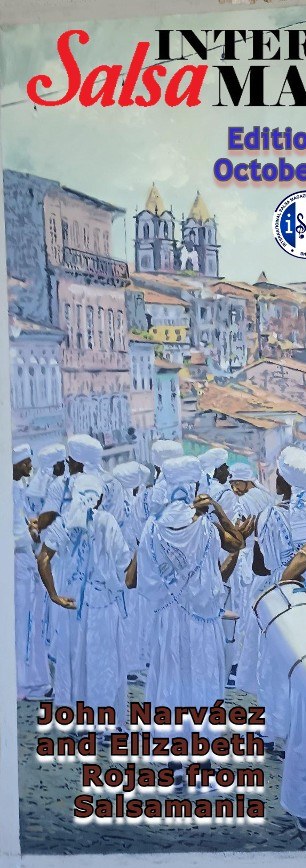
Drummer in white by Michael Joseph (L) Drummer in white by Michael Joseph (R)

North America October 2023Latin America October 2023Europe October 2023

Asia October 2023

Australia October 2023

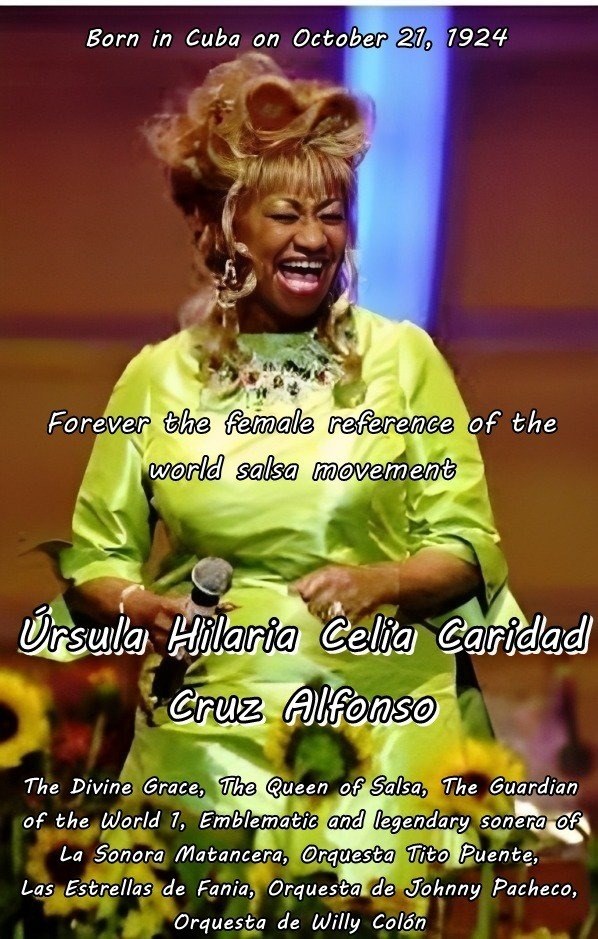
Celia Oct-23
THE EPHEMERIS OF THE MONTH
http://vocesyritmosdelcaribe.blogspot.com/

Artist October 2023 by Michael Joseph

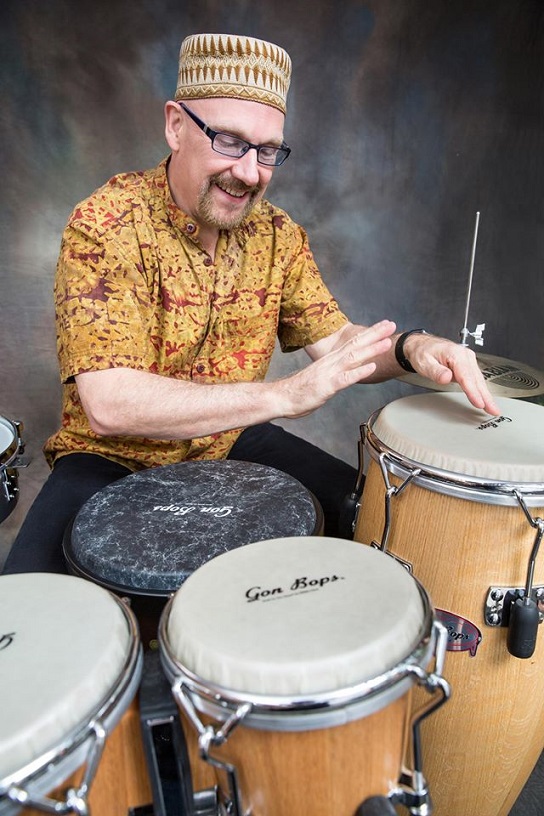
Tom Teasley, described in the Washington Post as “a multi-instrumental genius”

Tom Teasley, described in the Washington Post as “a multi-instrumental genius,” maintains a unique career as a solo percussionist, composer and collaborator. Tom is a 2010 and 2011 Helen Hayes Theater Award recipient for outstanding sound design (nominations in 2012 and 2014).

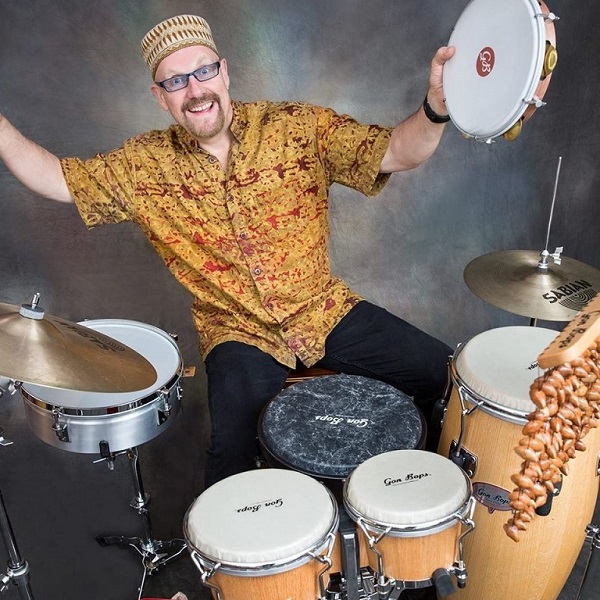
Tom Teasley playing the drums

Tom tours frequently throughout the world performing and presenting clinics for the instrument companies he endorses including Yamaha, Vic Firth, Sabian, Remo, Gon Bops and others.

He is the 2012, 2013 and 2014 WAMA (Washington Area Music Award) World Music Instrumentalist of the year. A four-time recipient of a Fulbright-Hayes grant for performances in the Middle East, Tom collaborated with indigenous musicians and gave historic performances in Saudi Arabia, the West Bank and Jerusalem.

Tom Teasley in concert

He has been an artist-in-residence at the John F. Kennedy Center for the Performing Arts and has collaborated with the National Symphony as both a soloist and composer.

As an international collaborator he has performed by invitation in Europe, South America, New Zealand and Samoa. Tom earned the Artist-of-the-year award from Young Audiences of Virginia for his creative and educational presentations.

Tom Teasley
Tom Teasley


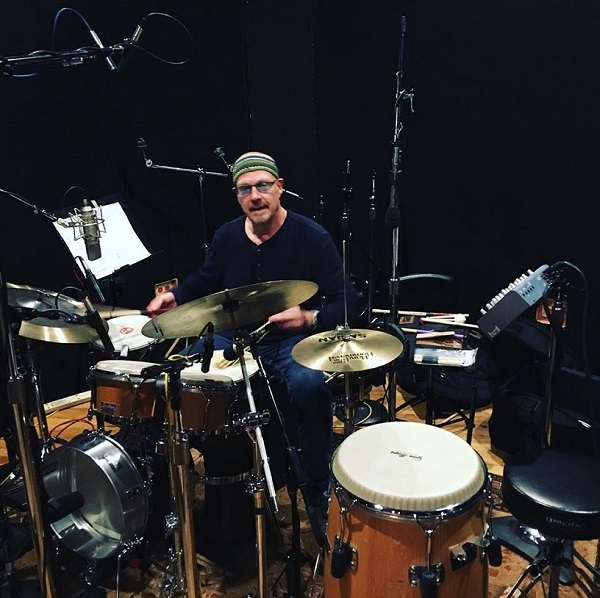
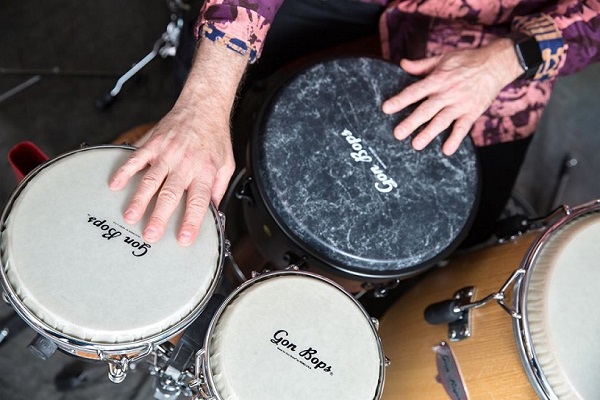
Tom Teasley's Drums
Tom Teasley’s Drums

His seven CDs have been greeted with international airplay and acclaim.

He has been the subject of feature articles in both “Modern Drummer” and “Drum!” magazines.

Please visit: www.tomteasley.com and for more information.

Tom Teasley
Tom Teasley

https://www.facebook.com/TomTeasleyMusic/

https://www.facebook.com/tomteasley

We welcome Patricio Angulo from Rumbaché to ISM

The San Francisco Bay Area, California, has a lot of talented artists, many of which we have had the privilege to interview in this section to learn all kinds of details about the Latin music scene in this area of the United States. This time, we managed to have an interesting conversation with Patricio Angulo, leader and founder of the orchestra Rumbaché, who kindly answered all the questions we had.

Rumbaché is one of the most important salsa and timba bands in the Bay Area and has a varied repertoire of salsa and contemporary Cuban music that enchants any audience that hears the group perform. 

The following are some of the most important issues related to this Latin band and its history.

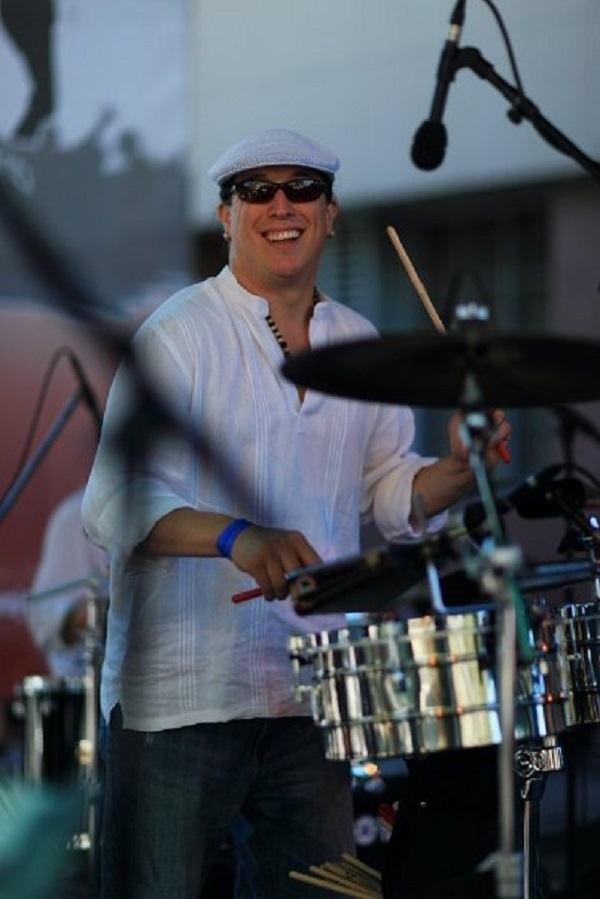
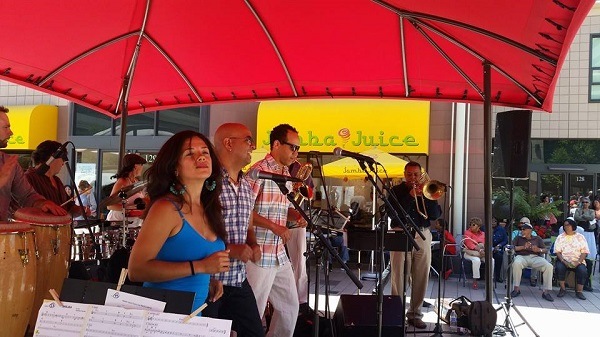
Patricio playing the timbales
Patricio Angulo playing the timbales on stage

Patricio Angulo’s beginnings in the music world

Patricio has had a long interest in music, which he developed by himself, since he did not have family musicians to encourage these activities in the little boy.

He started playing violin and trumpet, but it was not long before the young boy found he liked drums and orchestral percussion better. He also played some classical music and learned a lot about instruments used in this genre.

When he went to high school, there were several music programs from which Patricio could choose to develop this branch of art depending on his tastes and finally decided on a jazz group with which he started learning to play congas and timbales. This group wanted an extra Latin touch in their music and the boy was chosen for the role. 

The musician was very inclined to Latin Jazz at the time, but then, he was listening to other Latin genres until he discovered Cuban and Caribbean Salsa, which would be very important in the musical future of the artist.

Recruiting talent for Rumbaché

For years, he group Rumbaché, previously called Quimbombó, was forming from musicians Patricio considered played well, since for him this is most important. 

However, he emphasized that each orchestra has its own needs and highlighted the vocals as an example of that, as they are very necessary for dance music like the one they play. Likewise, professionalism and experience are two aspects taking into account by him when evaluating a candidate. 

In another order of ideas, the musician considers that Latin roots are not a key element in playing salsa or other genres of this type very well, since there are many singers and musicians who have never had contact with Latin genres or instruments can learn to play them without any problem. It is a matter of effort and discipline. 

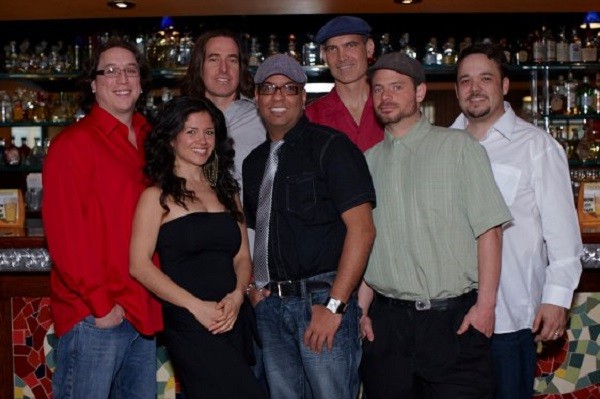
Whole orchestra Rumbaché
This is the whole orchestra Rumbaché posing for the camera

Origin of the name Rumbaché and the Yoruba Religion

From what we have read about Rumbaché, the origin of the name and its relation with the Yoruba religion caught our attention. Rumbaché is a combination of the words ”rumba” (This word can mean ”party” and ”celebration”) and ”ache” (in the Cuyuní language, ”ache” is something very good and pleasant).

Something that Patricio wanted to clarify is that the music of his orchestra is not religious and has nothing to do with the Yoruba religion beyond some choruses and words as there are in many Cuban songs. In fact, they try to have a varied repertoire so as not to bore the audience.

Rumbaché’s activity in clubs

Rumbaché has featured heavily in festivals and renowned clubs in the San Francisco Bay Area such as Sausalito Seahorse, The Cigar Bar & Grill, Rassela’s Jazz Club, Moe’s Alley, Blue Note, among others. It is undeniable that the group has ample experience in performing in these types of venues. 

That is why we took this opportunity to ask Patricio how the movement is going in these places when it comes to hiring orchestras in recent years, to which he replied that the presence of orchestras in local venues has decreased dramatically in recent years, especially after the pandemic.

Likewise, because of this same situation, there were many clubs that began to close their doors indefinitely, making it very difficult for Rumbaché to play live regularly. 

Once the pandemic was relaxed, Patricio says that a few venues survived, but there were too many orchestras for the few available stages. This led them to opt for festivals, concert series and private shows. 

Every night there was a pen club, but that has changed radically and Patricio and the other members of Rumbaché have had to adapt to the circumstances. 

Rumbaché live
Rumbaché performing live

Oye Productions

In addition to Rumbaché, Patricio also has his own entertainment company called Oye Productions, with which he is responsible for providing live music for all kinds of events. Obviously, he gives priority to Rumbaché, but he also offers the services of guitarists, trios and all sorts of musicians.

What the company seeks to focus on is providing musical entertainment for private parties such as a business meeting or something more personal such as a wedding.

He always tries to hire musicians who play all kinds of instruments and genres to perform varied shows for each event. He also seeks to look for artists he knows beforehand and who he is sure will do an excellent job. 

Activities outside Rumbaché

Patricio also indicated that one of his most important occupations outside Rumbaché was teaching congas, timbales and drums. He also teaches drums to children once a week. 

These activities bring happiness to the musician and he always looks for the opportunity for these youngsters he teaches to have some knowledge of Latin percussion and get to know our music much better.

Read also: René Latin Soul and his journey into music from his home country

Four nationalities united in Ladama

Talent can come from the most amazing and unexpected origins and more when we are talking about music, a branch of art from which always emerges people with a lot of potential who can completely break our schemes. This leads us to introduce the topic of a group of four young musicians and singers who joined their skills despite their apparent differences. They are the musical group Ladama.

Ladama is an alternative Latin music band composed of four members of different nationalities: Venezuelan Maria Fernanda Gonzalez, Brazilian Lara Klaus, Colombian Daniela Serna and American Sara Lucas. 

Three of the four members of the group spoke exclusively with International Salsa Magazine and this report will show some of the topics covered during this pleasant conversation. 

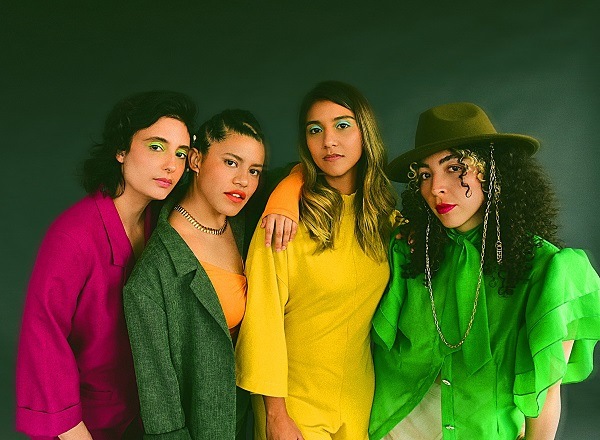
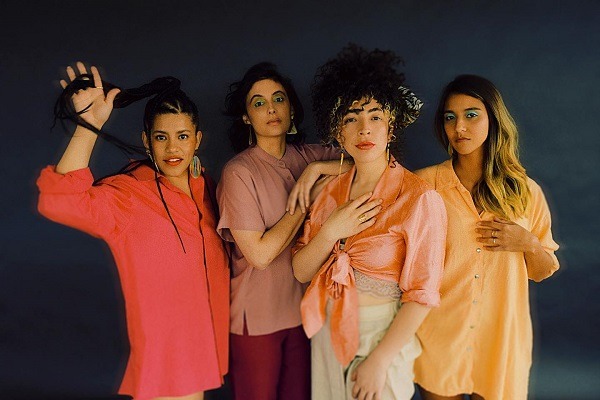
Sara, María, Lara, and Daniela from Ladama
From right to left, Sara Lucas, María Fernanda González, Lara Klaus and Daniela Serna

Origins of Ladama as a group 

The conversation was started by Lara and Dani, who explained a bit about the rise and concept of the band. The group was created in 2014 while the girls were doing an artistic residency known as OneBeat, which was sponsored by the U.S. Department of State. They were selected to represent their respective countries, which led them to socialize with each other and discover the great chemistry between them because of the language and genres they played. 

Since OneBeat was an initiative towards cultural exchange between artists and offered the necessary technical equipment to record music, they took full advantage of this space to get to know each other’s styles and see what they could do together. 

Once the month-long residency was over, each went their way, but they kept in touch via Skype a year after having met. The motivation to create a project that would encompass a musical band and teaching classes to minority communities remains intact.

They wanted to create an initiative in which community, creativity, social impact and cultural exchange would be the fundamental pillars of Ladama. It was always clear that they not only wanted to make music, but also do something that would positively impact upon society and they think they have succeeded so far. 

As for the name Ladama, it is simply a combination of the first two letters of the names of each one: ”la” comes from Lara, ”da” comes from Dani and ”ma” comes from María Fernanda. At the same time, ”La dama” in Spanish means ”The lady”, which also refers to the fact that it is an all-women group.

Ladama in a residency called OneBeat
They first met in an artistic residency known as OneBeat

How did these different origins coexist in Ladama? 

We were very impressed by the fact that all Ladama members came from different countries, so we wanted to know how this impacted the group. Lara answered that the only thing they needed was the desire to play together and move this initiative forward, which means that the origin of each one was not a problem to found the group.  

Just like every other band, each one had her own ideas and they discussed them together to know which one to choose or not. 

Their major test was given during the Rec-Beat Festival in Brazil. They arrived only a few days before the event, so they could barely rehearse and set up the repertoire. Despite the haste, they feel that everything went very fluidly, as they spent time meeting with each other and writing some songs for an occasion like this.

Given that Lara, Dani and Maria Fernanda come from Latin and tropical countries, there are certain rhythms that sound so much alike, which they took advantage of to unify them and create completely new rhythms that sound good at the same time. Lara also pointed out that these mixes are in constant change and they always try not to get stuck in the same styles.  

In addition to that, Ladama has left traditional music behind a little bit and has focused on alternative music and other genres such as pop, soul and R&B. 

Dani addressed the topic of genres by saying that they do not follow a plan in which they have something specific to play or mix. Any of their songs can go from Dominican merengue and Colombian cumbia to trap and reggaeton without any problems. They do not like to limit themselves and always seek to reach all audiences.   

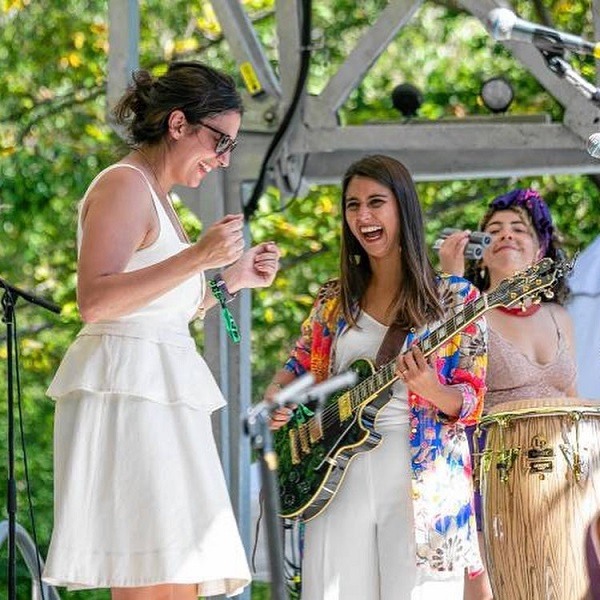
Ladama live
Ladama performing live

Ladama in a Tiny Desk concert series

Playing on Tiny Desk (a series of live concerts organized by the radio program All Songs Considered in the United States) is always a prestige for any artist or group that performs on that platform, which is inviting Latin singers more frequently every time.  

The girls were at a festival in Albuquerque, New Mexico, where they had the opportunity to meet the curator of Tiny Desk, who would invite Ladama to record their session in Washington D.C. shortly thereafter.

Lara considers that this was a great opportunity to spread their work due to the large number of people who always tune in to Tiny Desk, in addition to the many artists they knew after their appearance on the platform. 

For her part, María Fernanda commented that, on that same occasion, they took the opportunity to bring instruments from their own countries so that the Tiny Desk audience could get to know them. She also stressed that this session will be an important audiovisual document for history that will serve as an inspiration for other musicians in the future.

It was a great achievement after all that hard work.

Ladama on Tiny Desk
Ladama performing on Tiny Desk

Music classes for the community

The members of Ladama have also been focusing on music classes for the community at large, mostly in schools and universities. In their four countries, they have given workshops of all kinds related to music in the languages they speak, which are, English, Spanish and Portuguese. 

the artist emphasized that they always try to do this type of activities together in the very countries where they offer live performances. They have total freedom to do things separately, but they prefer to carry out these activities supporting each other.

Although they offer classes to anyone who is interested, Latino children are a very important group for Ladama, as many of them often have some problems of identity and adaptation to the United States. When they arrive at school in this country, they often disguise or even hide their Latino roots in order to fit in with their peers, so these classes are an opportunity for them to reconnect with that identity they begin to leave behind. 

These workshops and classes also serve as additional income for the group, as they can not only support themselves through tours and festivals. These educational activities are another way to diversify their earnings and have more stable inflows of money.

Read also: Juan Antón ”El Blanco” from La Clave Del Blanco

  • « Go to Previous Page
  • Page 1
  • Interim pages omitted …
  • Page 181
  • Page 182
  • Page 183
  • Page 184
  • Page 185
  • Interim pages omitted …
  • Page 293
  • Go to Next Page »

International Salsa Magazine (ISM) is a monthly publication about Salsa activities around the world, that has been publishing since 2007. It is a world network of volunteers coordinated by ISM Magazine. We are working to strengthen all the events by working together.