• Skip to primary navigation
  • Skip to main content

International Salsa Magazine

  • HOME
  • Previous editions
    • 2026
      • ISM / March 2026
      • ISM / February 2026
      • ISM / January 2026
    • 2025
      • ISM / December 2025
      • ISM / November 2025
      • ISM / October 2025
      • ISM / September 2025
      • ISM / August 2025
      • ISM / July 2025
      • ISM / June 2025
      • ISM / May2025
      • ISM / April 2025
      • ISM / March 2025
      • ISM / February 2025
      • ISM / January 2025
    • 2024
      • ISM / December 2024
      • ISM / November 2024
      • ISM / October 2024
      • ISM / September 2024
      • ISM / August 2024
      • ISM / July 2024
      • ISM / June 2024
      • ISM / May 2024
      • ISM / April 2024
      • ISM / March 2024
      • ISM / February 2024
      • ISM / January 2024
    • 2023
      • ISM / December 2023
      • ISM / November 2023
      • ISM / October 2023
      • ISM – September 2023
      • ISM – August 2023
      • ISM July 2023
      • ISM Edition June 2023
      • ISM – May 2023
      • ISM April 2023
      • ISM March 2023
      • ISM February 2023
      • ISM January 2023
    • 2022
      • ISM December 2022
      • ISM November 2022
      • ISM October 2022
      • ISM September 2022
      • ISM August 2022
      • ISM July 2022
      • ISM June 2022
      • ISM May 2022
      • ISM February 2022
      • ISM January 2022
    • 2021
      • ISM December 2021
      • ISM November 2021
      • ISM October – 2021
      • ISM September 2021
      • ISM August 2021
      • ISM July 2021
      • ISM May 2021
      • ISM April 2021
      • ISM June 2021
      • ISM March 2021
      • ISM February 2021
      • ISM January 2021
    • 2020
      • ISM December 2020
      • ISM November 2020
      • ISM October 2020
      • ISM September 2020
      • ISM August 2020
      • ISM July 2020
      • ISM June 2020
      • ISM May 2020
      • ISM April 2020
      • ISM March 2020
      • ISM February 2020
      • ISM January 2020
    • 2019
      • ISM December 2019
      • ISM November 2019
      • ISM October 2019
      • ISM Septembre 2019
      • ISM August 2019
      • ISM July 2019
      • ISM June 2019
  • Spanish
  • Download Salsa App
    • Android
    • Apple

Search Results for: Salsa music

Life, Career, and death of Juan Carlos Formell

Juan Carlos Formell

Latin entertainment is in mourning the departure of one of its most talented figures, who leaves a very big void in all his followers and fans. We are talking about former composer, bassist, guitarist and member of Los Van Van Juan Carlos Formell, who sadly departed from this world on Friday, May 26th after a live performance in New York City.

In view of such an unfortunate loss for those of us who have spent years of experience promoting Latin music in all four corners of the world, we consider it appropriate to recall the most important moments in the life and career of this extraordinary artist and all that he contributed to the salsa movement during his lifetime.
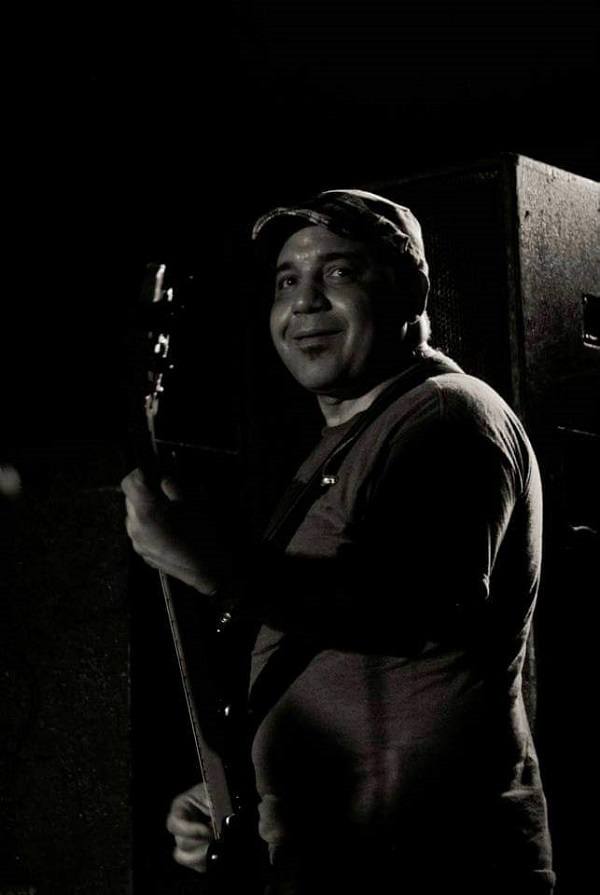
Juan Carlos Formell died on May 26th
Juan Carlos Formell died on Friday, May 26th after a live performance in New York City

Story of Juan Carlos Formell

Juan Carlos Formell was born in the city of Havana on February 18, 1964 and was the son of Juan Formell and Natalia Alfonso. He was the oldest of three brothers who would also dedicate themselves to music.

Contrary to what people might think, the fact of belonging to the fourth generation of a musical family and being the son of world famous bassist Juan Formell did not make things easier for him on the path with music. When he was barely three weeks old, he was sent to live with his grandparents in the outskirts of the Havana city.

They were through many financial needs and Juan Carlos himself would admit in an interview years later that other children used to make fun of him for having holes in his shoes, but that did not make him desist from his dreams, far from it. He became interested in music at a very young age, which led him to train professionally at the Alejandro García Cartula Conservatory and the Amadeo Roldán Conservatory. 

In the 1990s, he concluded his studies at the National School of Arts in Cuba with almost three decades of life, so he made the decision to move to New York City to fully exercise his career as a musician. Before this, Juan Carlos had already accompanied several jazz orchestras on stage, but Cuban authorities banned him from traveling due to his regular yoga practice (considered subversive in his native country).

Since he could not leave Cuba directly, he had to use a tour with the Rumbavana orchestra in Mexico to cross the Rio Grande in Texas and later settle in New York. His process of adapting to this new country was not easy from any point of view, but it was all so worth it.

From then on, what came was success for the artist. During the course of his solo career, he recorded some five solo albums, one of which earned him a Grammy nomination in the category of Best Traditional Tropical Latin Performance in 2000.

Juan Carlos Formell at PiPiKi Studios
Juan Carlos Formell recording at PiPiKi Studios

Entry into Los Van Van

Los Van Van is one of the most important Cuban musical groups of recent times, which was founded by Cuban bassist Juan Formell, Juan Carlos Formell’s father. After having participated in several son and jazz groups, the musician decided it was time to innovate and change the style he was using until now.

It was then that he decided to incorporate new instruments and voices, which gave rise to a completely different concept baptized as Los Van Van and that gave much to talk about among critics of the time, and for the better.

After a very successful career in the group, Juan Formell died on May 1, 2014 at the age of 71 as a result of a heart attack during a concert in his hometown, Havana.

This unfortunate event is what led his son, Juan Carlos Formell, to join Los Van Van as a bassist. His brother Samuel was on the drum kit and his sister Vanessa was on backing vocals, so it can be said that this was a bit of a family business.

Since that moment, the intense activity that he had together with the rest of the group in performances, concerts and new songs earned him the recognition of the public in a very short time.

In spite of carrying the fame of his father on his shoulders, he did not let this stop him or be a limiting factor for him. On the contrary, he always left his family name and his father’s legacy high.

Unfortunately, 10 years passed before the artist left a huge void among those who respected and loved him.
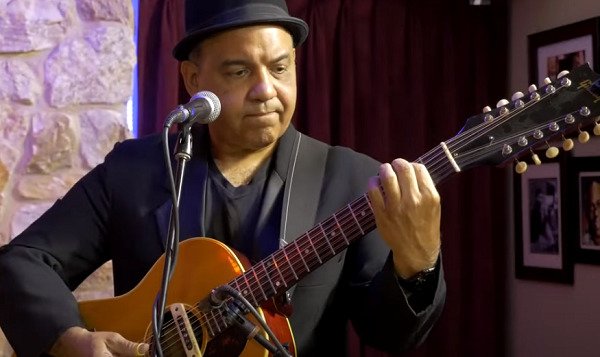
Juan Carlos Formell on stage
Juan Carlos Formell performing on stage

Death

On May 26 of this year, Los Van Van was performing at the Lehman Center for the Performing Arts in New York. About 40 minutes after the start of the concert, Juan collapsed on stage in front of all the attendants.

Minutes later, he was aided by ambulances and a fire truck. He was then taken to the nearest health-care center, but unfortunately the doctors could do nothing for him. This is how his bandmates announced the sad news through their social networks.

At the end of the concert, Eduardo Livia himself confirmed the death when he walked off the stage and greatly regretted what happened. The cause of death was determined to be a heart attack and his life came to an end at the age of 59.

After this, the group continued with the rest of the tour they had planned and the performances they had outstanding were in honor of the great Juan Carlos Formell and all that he gave to music during his life.

Read also: Khary Rios and Mayra Rivera from La Poderosa 360

Festivals in June 2023, Europe, Asia, Australia and New Zealand

Spring in Europe


The next beginning of rest in summer, pleasant temperatures at night and heat during the day, the work of the year has its rewards in holidays and is traveling, knowing places and people, cultures and languages and all this leads us to have fun as a couple or alone and thus meet nice people with whom to share, and at this point we want to captivate you by enjoying tropical dances, commonly called Latin music, as it is Salsa, Bachata, Kizomba among other variables are sensual and exotic rhythms in many cases, that make us experience pleasant bodily and sensory, for this incredible experience we have festivals in the European continent and Asia with some ease of transport according to our budgets but if we want to go further let’s not forget the beautiful beaches and active life of New Zealand very few hours by plane

This month of June we have festivals in the following countries and do not forget that next month comes Tempo Latino, a festival like no other, about which I will be informing you.

Germany

Cologne Salsa Congress
Jun 02 2023 – Jun 04 2023
Hurth, Germany
http://colognesalsacongress.com/en/

Spain

Estilos Unidos Dance Festival
Jun 02 2023 – Jun 04 2023
La Zenia, Alicante, Spain
https://estilosunidos.com/

Latin Dance Festival & WTP European Meeting Summer Edition
Jun 02 2023 – Jun 04 2023
Lloret de Mar, Spain
https://www.facebook.com/LatinDanceFestivalWTP
CROACIA

Summer Sensual Days

Jun 05 2023 – Jun 12 2023

Rovinj, Croatia

https://www.summersensual.com/

Croatian Summer Salsa Festival 2023

Jun 12 2023 – Jun 19 2023

Rovinj, Croatia

https://www.crosalsafestival.com/

NEW ZEALAND

NZ Salsa Congress

Jun 02 2023 – Jun 04 2023

Wellington , New Zealand

https://www.nzsalsacongress.co.nz/

FRANCE

Kizomba Gala Challenge Festival

Jun 08 2023 – Jun 12 2023

Saint Herblain, France

https://www.facebook.com/events/555875292933107

PORTUGAL

Estrutura Kizomba Summer Festival

Jun 15 2023 – Jun 18 2023

Chaves, Portugal

https://www.estruturakizomba.com/en

Aquae Flaviae International Congress

Jun 16 2023 – Jun 18 2023

Chaves, Portugal

https://www.facebook.com/events/452697403072900

KOREA

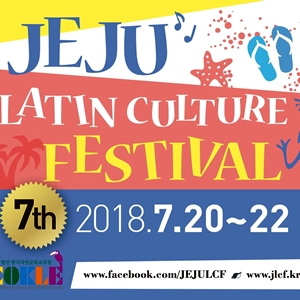
Jeju Latin Culture Festival

Jun 22 2023 – Jun 25 2023

Jeju-si, South Korea

http://www.jejulcf.com/

MALAYSIA

Afro Latin Fest Asia

Jun 23 2023 – Jun 25 2023

Kuala Lumpur, Malaysia

https://www.alfa-asia.net/


ROMANIA

Carpathian Latino Fest

Jun 24 2023 – Jun 26 2023

Ramnicu Valcea, Romania

https://www.facebook.com/events/661474741321475


ISM Edition June 2023

titule salsagoogle.com is International Salsa Magazine

Cover edition 150 june 2023 International Salsa Magazine

Image Map

International Salsa Magazine

Banner yellow and blue, couple dancer latin music in north america edition 150 June 2023 International Salsa Magazine

banner yellow and blue, couple dancer latin music in europe edition 150 June 2023 International Salsa Magazine

Banner couple dance latin music in latin america, yellow and blue edition 150 June 2023 International Salsa Magazine

Back Cover Woman chinasse dj edition 150 June 2023 International Salsa Magazine

The legacy of Leopoldo Pineda, the ambassador of the trombone in La Maquinaria Fania All Stars

The Dominican trombonist was part of Las Estrellas de Fania and stood out for his virtuosity on his instrument, as commented by musicians Joe de Jesús and Willie Álvarez.

Leopoldo Pineda, “Palma Sola” was born on May 8, 1939 in a small batey called Palma Sola, in Barahona, southern province, Dominican Republic.

El legado de Leopoldo Pineda, el embajador del trombón en La Maquinaria Fania All Stars

He passed away on June 27, 2019 in New York City. Due to his solvency on the instrument, Leopoldo was a participant in hundreds of salsa recordings for more than three decades.

At 80 years of age, Leopoldo Pineda, the Dominican trombonist who earned the respect of his colleagues in the most courageous years of salsa, has passed away.

A case of diabetes had undermined his health in recent years and the fatal outcome came on Thursday, June 27 in New York City.

In recent years, Pineda had been retired from musical activity, due to health problems and diabetes.

Willie Álvarez y Leopoldo Pineda (Foto Willie Álvarez)

He began at a very young age to seek out musical instruments. In his hometown, Pineda would often visit a neighbor’s house to watch him rehearse different instruments.

There he began his first lessons, learning to play trumpet and tambora.

He studied music at school for compulsory education and there he developed certain tropical rhythms.

In Barahona, there was a music school where Leopoldo graduated and later, because of his talent, he was referred to the National Conservatory of Music in Santo Domingo.

As he grew in knowledge, musically speaking, he learned to play several instruments, among them, the Saxophone and the Trombone, the latter being his weapon of choice for the rest of his life.

Leopoldo Pineda
Leopoldo Pineda

In his native Barahona, he was known as “Chanchito”, but it was at the Conservatory where the nickname “Palma Sola” was born, identifying him to his classmates by the name of the town where he was born.

After participating in various groups in the Republic, Leopoldo went to New York City and there he started playing with Tito Rodriguez’s orchestra in the 60’s.

He also recorded with Los Cachimbimbitos and Los Cachimbales.

He also recorded with Ismael Rivera’s Los Cachimbos and was producer of one of Milly Quesada’s first albums.

Musician Jimmy Bosch used to include Leopoldo Pineda in the select group of trombonists from whom he learned. Willie Colón, el Malo del Bronx, had emotional words for don Leo. Indeed, the Dominican Pineda is part of the glorious history of the best salsa, the one that was born in the neighborhood and that has deeply penetrated in this part of South America.

Alfredo de la Fe posted on his Facebook account: “Leopoldo Pineda, great musician, we played together with Típica 73 and Fania All Stars.

Lepoldo Pineda Trombonita de la Típica 73 y Fania All Stars

Then he began to walk the best paths of Salsa, being part of orchestras such as Típica 73, Orquesta Harlow, Willie Colón, Fania All Stars, Sar All Stars, Jose Mangual Jr, La Conquistadora, Jose Alberto “El Canario”, Rubén Blades, Orlando Watussi, Laba Sosseh, Monguito El Único and Héctor Lavoe, among others.

Fania Records

Read Also: Orestes Vilató is one of the most influential figures in the world of Latin percussion.

Mayito Rivera “El Poeta de la Rumba” was the distinctive voice of Los Van Van de Cuba

Mario ‘Mayito’ Rivera is, without a doubt, one of Cuba’s most outstanding contemporary singers.

For more than 20 years he was the distinctive voice and recognizable face of Cuba’s most famous musical group, Los Van Van.

Regardless of the musical genre he performs -rumba, son, salsa, bolero or timba, modern or traditional style, with strength and dynamism or with delicacy and tenderness, Mayito Rivera’s performances, with passages adorned with tremors and coloraturas, are always stellar.

Mayito Rivera “El Poeta de la Rumba”

Mario Enrique Rivera Godínez was born on January 19, 1966 in Pinar del Río, a province located in the westernmost part of Cuba and famous for its handmade Havana cigars.

It was there that ‘Mayito’ began his musical training as a child. Later, he moved to Havana, where he studied percussion at the renowned National School of Art (ENA), which he later extended with advanced studies at the Higher Institute of Art (ISA).

After completing his training, which lasted a total of 15 years, Mayito Rivera joined the musical ensemble of the well-known Cuban singer Albita Rodríguez.

Later, he played bass in the Moncada Group, a formation belonging to the Nueva Trova Cubana movement, whose renovating spirit is firmly rooted in traditional Cuban rhythms.

At the age of 26, Mayito was discovered by Juan Formell, the director of Los Van Van, an orchestra that by then had already become a legend. Initially hired to play bass and sing backing vocals, he soon established himself as the group’s lead vocalist.

Over the next 20 years, Mayito Rivera, more than any other musician, put his stamp on Los Van Van.

He burst onto the scene as the representative of a new generation of musicians, and his fresh style contributed to the group’s endurin Singer of the group’s countless salsa hits that were played in the discotheques, he has been nominated twice for a Grammy and won it once.

Mario ‘Mayito’ Rivera es, sin duda, uno de los cantantes contemporáneos más destacados de Cuba

At the same time, he was also working on other projects: in 1999 he released his first solo album, Pa’ bachatear.

Chappotín, in which he transports the past to our days with a brilliant interpretation of traditional Conjunto Chappotín songs.

But Mayito Rivera is not only a singer and percussionist. In 2005, he released Negrito Bailador, his second solo album, produced by the Timba label of the German music publisher Termidor, in which he performs only songs of his own composition.

The music, with a rumbero tinge, is fresh, lively and of timeless quality. Subsequently, Negrito bailador was marketed in the United States under the title Llegó la hora and was immediately nominated for a Grammy in the Best Salsa Album of the Year category.

Mayito Rivera is probably the most requested special guest by other Cuban orchestras; so much so, that in recent years he has sung with almost all of Cuba’s star casts.

Nor has his career suffered any interruptions since he left Los Van Van in 2011: currently, Mayito Rivera tours the whole world relentlessly, giving concerts in countries as diverse as the United States, Canada, Venezuela, Colombia, Mexico, Peru, Argentina, France, Germany, Denmark, Spain and Italy.

The great popularity and multiple talents of this ‘poet of rumba’ are reflected in his performances as guest singer for salsa greats such as Oscar D’Leon, Gilberto Santa Rosa, Issac Delgado, Adalberto Alvarez, Mayimbe, Son Como Son, Timba Live, Pupy y Los que Son Son, Charanga Latina, Havana D’Primera, Tumbao Habana and Elio Reve Jr, to name just a few.

In 2012, Mayito Rivera established himself as a permanent member of Los Soneros de Verdad, the most successful orchestra of the moment dedicated to son and its related rhythms, led by singer Luis Frank Arias.

Two sold-out world tours of three months each in Europe, Asia, Russia and the United States attest to the high quality and great interest in this amalgam of traditional son and the vocal artistry of Cuba’s most dynamic rumbero.

Mayito Durante más de 20 años fue la voz distintiva y el rostro reconocible del más famoso grupo musical cubano, Los Van Van

In 2014, the superstar will be touring with his own orchestra. But before that, from June to September 2013, he will give a series of concerts with Los Soneros de Verdad performing songs from his as yet unreleased album Alma de Sonero.

During this project he will return to his musical roots: son and rumba, bolero and guaguancó, both in their traditional interpretation and in their more modern variants.

The album Alma de sonero includes 11 tracks and will be released in September 2013 worldwide success.

The musicians include Alexander Abreu (Havana D’Primera) on trumpet, San Miguel Pérez on tres and Luis A. Chacón ‘Aspirina’ Bruzón on bongos and cajón.

Website: Mayito Rivera

Read Also:   Carlos “Patato” Valdés one of the best percussionists in the history of Latin Jazz.

  • « Go to Previous Page
  • Page 1
  • Interim pages omitted …
  • Page 196
  • Page 197
  • Page 198
  • Page 199
  • Page 200
  • Interim pages omitted …
  • Page 293
  • Go to Next Page »

International Salsa Magazine (ISM) is a monthly publication about Salsa activities around the world, that has been publishing since 2007. It is a world network of volunteers coordinated by ISM Magazine. We are working to strengthen all the events by working together.