• Skip to primary navigation
  • Skip to main content

International Salsa Magazine

  • HOME
  • Previous editions
    • 2026
      • ISM / April 2026
      • ISM / March 2026
      • ISM / February 2026
      • ISM / January 2026
    • 2025
      • ISM / December 2025
      • ISM / November 2025
      • ISM / October 2025
      • ISM / September 2025
      • ISM / August 2025
      • ISM / July 2025
      • ISM / June 2025
      • ISM / May2025
      • ISM / April 2025
      • ISM / March 2025
      • ISM / February 2025
      • ISM / January 2025
    • 2024
      • ISM / December 2024
      • ISM / November 2024
      • ISM / October 2024
      • ISM / September 2024
      • ISM / August 2024
      • ISM / July 2024
      • ISM / June 2024
      • ISM / May 2024
      • ISM / April 2024
      • ISM / March 2024
      • ISM / February 2024
      • ISM / January 2024
    • 2023
      • ISM / December 2023
      • ISM / November 2023
      • ISM / October 2023
      • ISM – September 2023
      • ISM – August 2023
      • ISM July 2023
      • ISM Edition June 2023
      • ISM – May 2023
      • ISM April 2023
      • ISM March 2023
      • ISM February 2023
      • ISM January 2023
    • 2022
      • ISM December 2022
      • ISM November 2022
      • ISM October 2022
      • ISM September 2022
      • ISM August 2022
      • ISM July 2022
      • ISM June 2022
      • ISM May 2022
      • ISM February 2022
      • ISM January 2022
    • 2021
      • ISM December 2021
      • ISM November 2021
      • ISM October – 2021
      • ISM September 2021
      • ISM August 2021
      • ISM July 2021
      • ISM May 2021
      • ISM April 2021
      • ISM June 2021
      • ISM March 2021
      • ISM February 2021
      • ISM January 2021
    • 2020
      • ISM December 2020
      • ISM November 2020
      • ISM October 2020
      • ISM September 2020
      • ISM August 2020
      • ISM July 2020
      • ISM June 2020
      • ISM May 2020
      • ISM April 2020
      • ISM March 2020
      • ISM February 2020
      • ISM January 2020
    • 2019
      • ISM December 2019
      • ISM November 2019
      • ISM October 2019
      • ISM Septembre 2019
      • ISM August 2019
      • ISM July 2019
      • ISM June 2019
    • 2016
      • ISM December 2016
  • Spanish
  • Download Salsa App
    • Android
    • Apple

Search Results for: Salsa music

The void left by Felix ”Pupi” Legarreta

Pupi’s life  

Cuba has given the world a large number of artists who have left the name of the country very high, so it is always a good moment to talk about them. Such is the case of arranger, composer, singer and musician Felix ”Pupi” Legarreta, who sadly left this world last month.   

Given that this great exponent of Cuban music and the charanga genre is no longer with us, we think it is a great opportunity to remember a little of his career and all the way to becoming the great artist he was.    
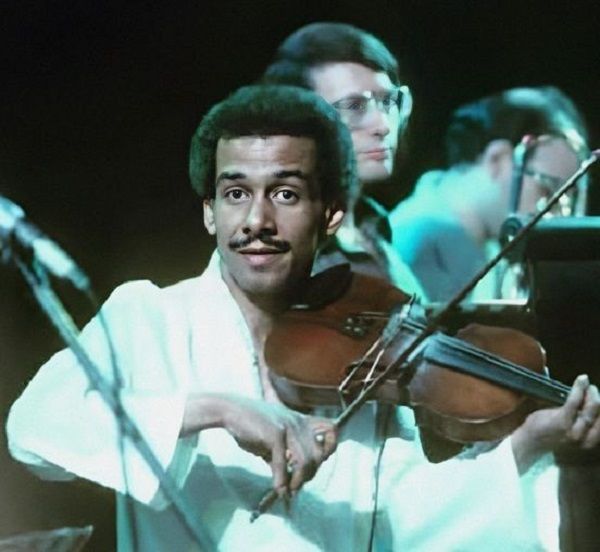
Pupi playing the violin
Pupi Legarreta playing the violin on stage

Pupi’s childhood   

Felix Legarreta was born in 1940 in the city of Cienfuegos, Cuba, and from the very early age, his father nicknamed him ”pupi”, as he would be called for the rest of his artistic life. ‘’Puppy in Spanish means ”cachorro” (a very young dog), so this pronunciation was very interesting to Americans.   

Around this same time, Pupi was not really interested in music as a profession, as his thing was carpentry at the time. However, he began being affected by severe asthma attacks due to the dust used in his daily work, so it was recommended to his father to take him away and make him dedicate himself to something else that would not damage his health. 

This is how the young boy decided to become a barber and met a friend with whom he started taking music lessons, which could be considered as the first contact he would have with music. 

The first instrument Pupi played was the violin. He admits it was not easy to learn how to play it, but with effort and dedication, he managed to become really good at music. However, he was faced with another challenge that would complicate the realization of his new dream: lack of money.    

Like the majority of families in Cuba at that time, Pupi’s was also going through a complex economic situation, so buying everything he needed for his musical training was very difficult. However, it did not stop his father from getting down to work and raising the money necessary to buy his son his first violin. 

In a 2010 interview, Pupi revealed that it took his father more than two years to raise 60 pesos to buy a used violin at a pawn shop, as it was the only way he could afford the instrument for the young boy.    
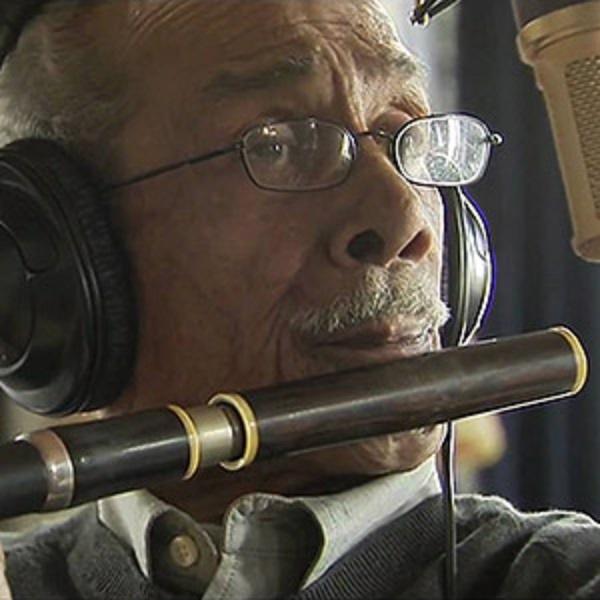
Pupi playing a flute
Pupi Legarreta playing a flute in a studio

Formal beginnings in music 

When he decided to travel to Havana, he was given the opportunity to play Orquesta Sensación, with which he earned about eight pesos a month to cover some of his basic expenses. It was very difficult for him to live with that little, but music helped him to support himself.     

However, little by little he worked his way up and earned the respect of his fellow musicians, who consider him for their own projects.    

In 1959, music also allowed him to travel to the United States, specifically to the state of California, but it would not be too long before he decided to try his luck in New York. Once there, he collaborated with artists such as Mongo Santamaría, Charlie Palmieri, Johnny Pacheco, Machito, Tito Puente and many more.    

Fania All Stars   

In 1964, he started collaborating with the Fania All Stars, which had more than 24 instruments, including trumpets, pianos, basses, singers and more. Pupi was so shocked that he could not refuse to work with the world-famous orchestra, as this number of musicians was something he had never seen before. 

In total, he recorded between five to seven albums with La Fania on which Pupi was taken into account when issuing opinions about his work. If the artist considered something was not quite right and wanted to change it, the orchestra did whatever was necessary to satisfy him with the results of the recordings. 

The only criticism that the Cuban issued towards the orchestra is regarding the excessive focus on the Puerto Rican market, in fact, the vast majority of musicians were Puerto Rican. This caused them to neglect other markets that may be useful for Fania. However, this does not exclude all the positive things that came for those involved during the time this union lasted. 

When his time in the orchestra ended, he was working for an electricity company in New Jersey, but his family was in Philadelphia, so he decided to move permanently to this city, where he remained till the day he died.   

Album cover for Pupi
Album cover for ”Pupi Legarreta Y Su Charanga”

Death 

In the afternoon of July 3, 2023, Félix ”Pupi” Legarreta’s relatives issued a statement giving the deplorable news of the artist’s death the day before at the age of 83.    

His daughter Frances Legarreta posted the following on her social networks on the already mentioned day: “I announce with great sadness the death of my father, Pupi Legarreta, on July 2, 2023, in Philadelphia, Pennsylvania. He is survived by his wife Frances, his son Michael, his grandchildren, great-grandchildren and his daughter Otie in Puerto Rico”.   

In addition to the above, he revealed that his father expressed his desire to be cremated and not to be veiled in a memorial service. She also asked that her entire family’s privacy to be respected in view of the pain that its members were going through. 

Read also: Carlos Medrano from Sabor De Mi Cuba tells us about his long musical history 

Jimmy Rodríguez ”El Salsero Mexicano” talked to ISM about his career

El Salsero Mexicano 

Jimmy Rodríguez ”El Salsero Mexicano” is a talented singer born in Mexico City, but spent a lot of his childhood in the city of San Luis Potosí, where he took his first steps as an artist. 

Thanks to his brother and manager, Daniel Rodriguez, we had the opportunity to talk to him and learn more about the interesting career he has had in the world of entertainment. Meet Jimmy Rodriguez and the kind answers he gave to our questions.   


Jimmy on stage
Jimmy Rodríguez singing on stage

Beginnings of Jimmy Rodriguez in music   

By the time he got to high school, his talent for singing and charismatic personality made him the ideal candidate to participate in a talent contest, in which he would come in second place the first year in which he participated.    

Jimmy told us that he entered the contest to live a new experience, but he did not expect to achieve such a high place, so he felt very excited and motivated because of what he could achieve thereafter.    

The following year, he managed to get the first place in the same contest because he had spent a whole year studying and getting ready for that important moment. The previous time, he had only rehearsed the days prior, so he decided to take much more time on this occasion and the effort invested paid off.   

As a result of this achievement, the Group Alfa Omega saw the potential in this young man, so they contacted him and offered him to join them. This would be his first paid job in music, which began to teach him how this business worked. 

He began to play with Alfa Omega in events like weddings, and baptisms, which taught him how to entertain and charm an audience, and he is very grateful for this opportunity he had. Unfortunately, it didn’t last long.   

In the end, Jimmy had to leave the group due to his move to Mexico City to continue his studies.   

During his learning process, he developed their skills in playing the guitar and dancing in order to perform better on stage, keeping inmind that singing was his thing and that was not going to change.   

When Jimmy arrived in the United States, he began taking singing lessons for more than nine years to improve his voice. Today, he continues with his vocal learning, as there is always something new to learn in this field.   

Jimmy and Tito
Jimmy Rodríguez and Tito Nieves

Musical genres   

It is not common to find a Mexican who sings salsa professionally, and more if we take into account that many of the most famous Mexicans sing ranchera, norteño music and corridos tumbados. So, we wanted to know why he chose salsa as the genre he wanted to pursue.   

Jimmy explained to us that the first time he sang with a salsa orchestra on stage, half the musicians were Colombian and the other half were Mexican. At that moment, I felt like I had found my soulmate and I knew that’s what I wanted to do. Besides, dancing is very important in salsa and I have always loved to dance,” Jimmy said.   

He finished by saying ”salsa combines my three most important talents, which are singing, dancing and charisma”.   

When asked whether he would enter more typical genres of his country, he pointed out that he loves ballads and would have no problem in performing fusions and collaborations, but his north is still salsa for the moment.   

The Voice and proceeds from the show 

Being in The Voice has always been one of Jimmy’s biggest dreams, which he finally achieved a few years ago and whose judges were Luis Fonsi, Carlos Vives, Alejandra Guzman and Wisin. The best of all is that he made it to the final and he says that his secret to achieving this feat is to always be focused, to give the best of himself, to have a good relationship with show’s production and his colleagues and, above all, to choose a genre that was not typical for a Mexican.    

This particularity made people call him ”El Salsero Mexicano”, a nickname he has continued using to this day with pride in what has been achieved so far.    

Jimmy and Carlos
Jimmy Rodríguez and Carlos Vives

While he was still participating in the contest, Adolescent’S Orquesta contacted him to have him in the group, which Jimmy accepted and became the first Mexican to be part of this Venezuelan orchestra. In addition to that, Jimmy kept releasing new music in order to stay alive in the public spotlight, as the singer understood that the fame that came La Voz was momentary and he had to take advantage of it.    

Today, he continues touring with Adolescent’s Orquesta, working on an album with Marc Anthony‘s producer and taking singing lessons to further improve his vocal technique.   

And speaking of Marc Anthony, this Puerto Rican artist has been one of the greatest inspirations for the Mexican, who wishes to one day reach that level of talent and fame, although he knows it will not be an easy way. 

In addition to the already mentioned salsero, Jimmy has also been inspired and influenced by the styles of Rubén Blades and El Grupo Niche.   

He has also had the opportunity to share the stage with Tito Nieves, Willie Colón, Jerry Rivera and many others.    

Salsa and comparisons with other genres   

When we wanted to know what Jimmy feels with the current situation of salsa, he says that he is well aware that this musical genre is not going through a good moment due to the popularity of trap, reggaeton and, more recently, corridos tumbados.   

However, he ensures that he does not see this fact as something negative, but as a challenge of bringing salsa back to the place it occupied for years in past decades, so he gives his best every day to offer a fresh sound that appeals to new generations, and not only to fans aged 30 and older. 

Jimmy and Gilberto
Jimmy Rodríguez and Gilberto Santa Rosa


It is what has led the artist to make modifications in regard to the technical aspects, arrangements, lyrics and other details. In the specific case of lyrics, he has opted for simpler words and phrases that can be understood by anyone who listens to them. He continues to maintain the quality and heart that salsa should have, while taking into consideration what new generations are looking for. 

Jimmy understands that everything happens very quickly nowadays due to social media, so he has had to adapt his style to what young people are looking for on digital platforms. That is why when he shows his music on his social networks, he always tries to communicate what he wants from the first second so as not to lose the public’s attention.   

End 

The conversation concludes with a thank-you to all the people who still support the salsa genre and a recommendation to new talents to never give up on their dreams and to work continuously to achieve all what they want. 

Jimmy used his case as an example, remembering that he started singing on buses to help his family and now he assists international awards and reach the level that he has today, so he ensures that dreams come true and we must not lose heart until we achieved them. 

Read also: Life, Career, and death of Juan Carlos Formell 

Redames (Randy) Plaza

Latino America / Puerto Rico / Carolina

Redames Randy Plaza. Salsa Legacy

“It is salsa from yesterday and today for the dancer and the romantic salsero”.

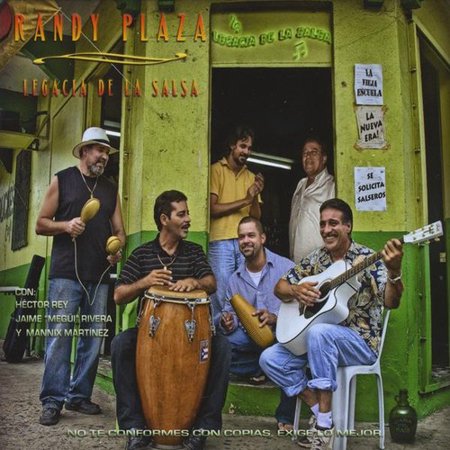
Randy Plaza, a native of Carolina, Puerto Rico, is the producer, composer, publisher and independent label of Legacía de la Salsa. Created in 2007, LS arises under a constant concern of seeing and feeling how the salsa genre has been musically devalued over the years.

Legacy of Salsa is an invention, a concept, a movement, an experiment, which tries firstly to raise the musical quality of salsa to another level, to keep the tradition alive, to demonstrate that if we work together and without interest, everything can be achieved. and proclaim to everyone that the sauce is not over.

That it is not in extinction, that it has not gone out of fashion, nor has it lost its style.

“That all these are tales of the boring.”

Legacy of Salsa is the legacy and teaching received from the great masters of salsa, who have captivated us in various ways and to whom we owe everything that was the development and fusion of this genre to the point of establishing it as a root in the heart of every Latino.

“It is salsa from yesterday and today for the dancer and the romantic salsero”.

Legacy of Salsa manages to incorporate the feeling of some of the greatest salsa institutions in this project, whether it be for the musical sound, for the style, for the arrangements, for the romantic, the singers, etc.

Randy Plaza
Randy Plaza

In this way we can recover a little of what has been lost today, please the entire salsa market, and fill that empty space; orphan of style and rhythm, and musically instructing and educating the disoriented and those who got lost along the way.

“The essence of yesterday in today’s day, traditional sauce without monotony and without fillers. For you salsero, cocolo, rumbero, with flavor and feeling”.

The unexpected, unfortunate and tragic death of Humberto Gómez leaves a huge void in the formation of Legacía de la Salsa.

A week before leaving Tito Gómez was already part of this musical concept.

Due to such loss, it was decided to cancel the first Legacía de la Salsa concert in New York City on July 21, 2007, where he would have participated as a guest star.

At that moment we entered the recording studio insecure and with the enormous concern of wanting to do the best possible on his behalf, never forgetting the person he was and will continue to be for us and without leaving aside his musical legacy.

Randy Plaza - Legacia de la Salsa
Randy Plaza – Legacia de la Salsa

https://www.legaciadelasalsa.com/

Israel “Cachao” Lopez Sobrado in fame and respect in the seventies was dedicated to maintain the tradition at the highest level

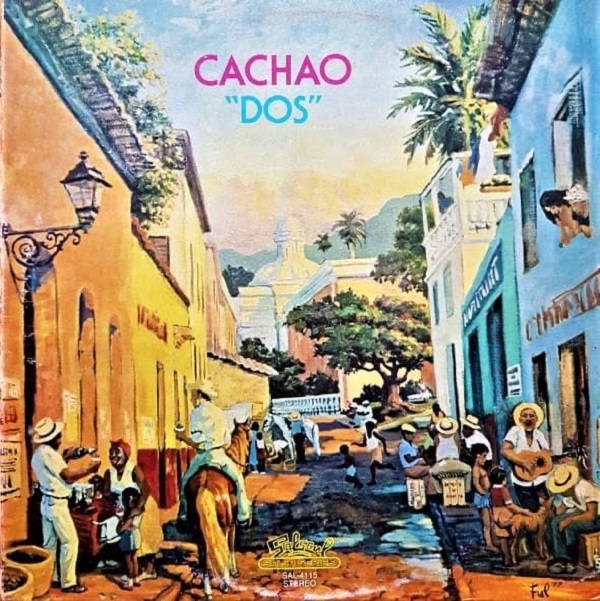
“Cachao Dos” for the year 1977.

It will be enough to mention the name of this celebrity to open a whole range of creativity and genius embodied in what is considered a cult discography.

Since 1931, the year in which he started musically as a member of the Havana Philharmonic Orchestra, the precocious Israel would give a foretaste of the talent he had and that, as time went by, would be consummated hand in hand with his right-hand man and musical accomplice, Orestes “Macho” López, his older brother.

Certainly, music was impregnated in the DNA of the López family, a generating machine of musicians by tradition, something that Lázara Cachao, Israel’s niece and daughter of his deceased younger brother Orlando “Cachaito” Lopez, reaffirms: “The tradition of being musicians comes from the grandparents and great-great-grandparents, all the Cachao are musicians”.

Israel “Cachao” López Sobrado

Regarding his transcendence, he and his older brother Orestes are said to be the creators of the Mambo, a rhythmic variation of the Danzón and a genuine musical expression that would mark a before and after in Latin music.

However, and as it is known, this contribution would change its clothing and would reach worldwide popularity when it reached the hands of another “inventor” born in Matanzas, Cuba, named Dámaso Pérez Prado, who as it is known, gave it another treatment and musical twist reaching surprising popularity.

“Cachao”, after a 31-year stay with the Havana Philharmonic Orchestra, decided to leave Cuba, settling for many years in New York City.

As it is understandable, his presence in this city was more than important for the musical guild and music fans.

He was nothing less than one of the managers and protagonist of the famous Jam Sessions recorded by the Panart whose presence was capitalized among many others by Tito Puente, Tito Rodríguez and Eddie Palmieri.

From the first one we could say, a whole school, a musician with a deep knowledge of his double bass and creator of his own style, bow in hand, and as a prolific composer, with approximately three thousand compositions together with his brother “Macho” López.

The years in New York were musically very good for Israel Lopez as well as in Las Vegas and finally Miami, where he lived until his last days.

Making a discography of him is quite a task and a challenge. However, after his arrival, I remember with great pleasure his collaboration for the album Latin Explosion by Joe Cain and his orchestra in 1964, where among others, Listen dos Trompetas and Mungo, Mungo Baby stand out.

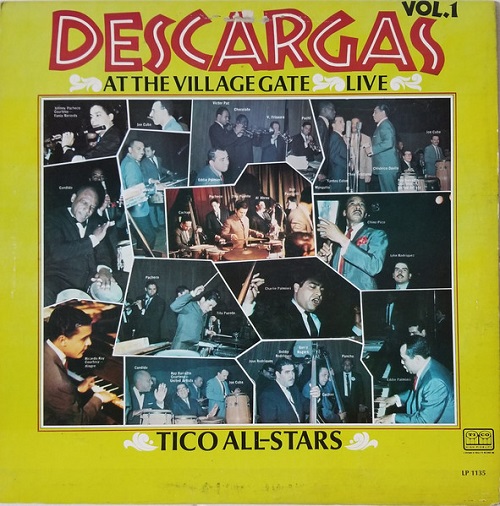
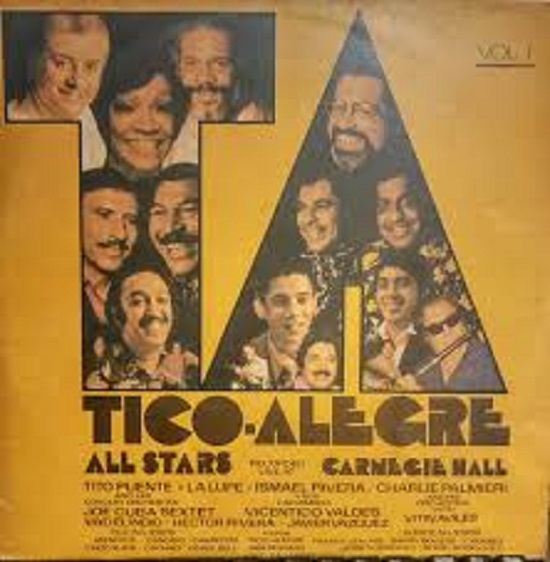
Esta es mi Orquesta, theme/performance of Tito Rodriguez’s musicians emulating what Stan Kent and his Big Band did, or those performances as special guest in the famous Descargas at The Village Gate Live and Tico All Stars, among many others.

The Village Gate Live
Tico All Stars
Tico All Stars

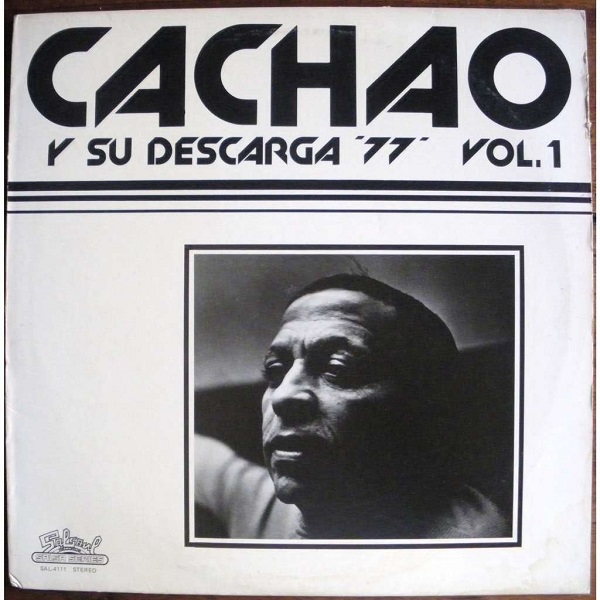
In the seventies, Cachao, with his fame and respect, dedicated himself to maintain the tradition at a supreme level, and from that period, punctually 1977, Cachao will present two epic works, the first one entitled Cachao y su Descarga Vol. 1 and then Cachao Dos, both recorded for Salsoul Records under the production of René López and Andy Kaufman.

Cachao y su Descarga Vol. 1

The latter contains only a total of five tracks, but they are well fulfilled in their purpose of maintaining a fierce defense of the rhythms that Gran Cachao has been proclaiming for years.

This album, like everything else recorded by the double bass player, is genuine and of supreme quality, something that is due to Israel’s responsible and dynamic character, something that the leader Julio Castro can attest to, having not only known him personally but also having worked with his orchestra La Única, which arrived in NYC for a prolonged stay of a little more than half a year.

Cachao Dos
Cachao Dos

Repertory

Ko Wo Ko Wo: (Guiro): Julito Collazo

Israel “Cachao” López: Contrabajo

Julito Collazo: Vocal, Chekere, Conga

Mario Muñoz “Papaito”: Campana

Diane Cardona: Coro

Marcelino Guerra: Coro

Héctor “El flaco” Hernández: Coro

Zunny López: Coro

Frankie Rodríguez: Coro

Fela Wiles: Coro

Jóvenes del Ritmo: (Danzón): Israel López

Israel “Cachao” López: Contrabajo

Julián Cabrera: Congas

Gonzalo Fernández: Flauta de Madera

Oswaldo “Chihuahua” Martínez: Timbales

Charlie Palmieri: Piano

Rolando Valdés: Guiro

Cuerdas:

“Pupi” Legarreta: Violín

Alfredo de la Fe: Violín

Eddie Drenon: Violín

Yoko Matsuo: Violín

Carl Héctor: Violín

Patricia Dixon: Cello

Centro San Agustín: (Danzón-Cha): Israel López

Israel “Cachao” López: Contrabajo

Carlos “Patato” Valdés: Congas

Gonzalo Fernández: Flauta de Madera

Lino Frío: Piano

Rolando Valdés: Guiro

Nelson González: Tres

Mario Muñoz “Papaito”: Percusión

Alejandro “El negro” Vivar: Trompeta

Alfredo “Chocolate” Armenteros: Trompeta

Rafael “Felo” Barrios: Coro

Roberto Torres: Coro

Trombón Melancólico: (Descarga): Israel López

Israel “Cachao” López: Contrabajo

Manny Oquendo: Timbales

Charlie Palmieri: Piano

Barry Rogers: Trombón

José Rodríguez: Trombón

Andy González: Campana

Frankie Rodríguez: Percusión

Gene Golden: Percusión

Milton Cardona: Percusión

Rafael “Felo” Barrios: Coro

Roberto Torres: Coro

Chambelona (Popurrí de Congas): Neri Cabrera

Israel “Cachao” López: Contrabajo

Julito Collazo: Bombo

Lino Frías: Piano

Mario “Papaito” Muñoz: Percusión

Oswaldo “Chihuahua” Martínez: Percusión

Virgilio Martí: Percusión

Eugenio “Totico” Arango: Coro

Rafael “Felo” Barrios: Coro

Read Also: Carlos “Patato” Valdés one of the best percussionists in the history of Latin Jazz

Cachao

Adrian Suarez Composer, arranger, trombonist and percussionist

Trombonist Adrian Suarez’s musical career began when he was very young at a music school.

“From the age of five they put us to study theory and solfège, and four years later I managed to get my hands on an instrument.”

However, once he was able to play an instrument, he took a break to dedicate himself to baseball. “It was at the age of 14 that an uncle took me to some Latin percussion lessons and soon after that I started with the trombone.”

On April 23, 1969, in Caracas, Venezuela, Adrian Suarez was born.

Excellent composer, arranger, trombonist, percussionist and researcher.

Bachelor of Arts (UCV-1994), he studied music, trombone and composition at the Escuela Superior José Ángel Lamas.

He also studied Afro-Caribbean percussion and Afro-Venezuelan percussion (1985-1990). He was a researcher and advisor for the foundation of ethnomusicology and folklore, fundef, between 1993 and 1995.

Adrian Suarez Composer, arranger, trombonist and percussionist

He studied composition at the Cátedra Latinoamericana de Composición Antonio Estévez, with maestro Juan Carlos Núñez from 1994 to 1996. In Germany he obtained a master’s degree in composition.

As a professional, he has collaborated with the Papel Musical Magazine (1992); he has been a researcher and advisor for the Foundation of Ethnomusicology and Folklore (FUNDEF) under the direction of Dr. Isabel Aretz; and he has worked as a documentary advisor for visual arts exhibitions.

He studied composition with Helmut Lachenmann and Marco Stroppa. In 2001 he received his master’s degree in composition from the Staatliche Hochschule für Musik und Darstellende Kunst in Stuttgart, Germany.

Since 1999 he has been a founding member of the international group of composers Aspect, based in Germany, and since 1991 of the Musikós Association in Caracas. He participated in the Latin American Composition Chair Antonio Estévez, under the direction of Juan Carlos Núñez (1994-1996).

He has received numerous awards, including the Unique Prize of the Manuel Enrique Pérez Díaz National Composition Competition (CONAC, Caracas, 1998) for his work “Soledades”, “Hommâge à Octavio Paz”, for two guitars and harp, the Municipal Music Prize (Caracas, 2002 and 2017), the National Culture Prize (2010) as well as the Prize of the Ibero-American Composition Competition for Symphonic Band Ibermúsicas-Oaxaca (2016).

El 23 de abril de 1969, en Caracas, Venezuela, nació Adrian Suarez

He has worked as author and director of musical-dramaturgical shows in Venezuela, including titles such as: “Lamas siempre” (1995), “Proyecto Música e Hipótesis Aleatorias” (1997), “Atavismos del Sol y de la luna” (2000), “Maithuna” (2009), “Watunna” (2010), “Meñé Ruwa, los dueños del canto” (2011) the first musical theater play in the continent for instrumental ensemble and two shamans and “La salsa es trombón” (2012, 2015, 2017).

He led a band integrated by a group of the best musicians of the salsa scene nationwide: Tuky Torres, on piano; Carlos Rodríguez, bass; Víctor Cardona, on timbal and bongo; Freddy Rivas, congas; Johan Muñoz, trombone; Eliel Rivero, trombone. Special guests included soneros Edgar Dolor Quijada, Reinaldo Torcat, as well as a group of batá drummers.

Creator of the Ensemble Lux Aeterna, dedicated to the interpretation of spiritual and sacred works of all times. He is also founder of the Akoustikos New Music Festival in 2009.

As a trombonist, he has cultivated popular music from all over the continent, with special emphasis on Venezuelan and Caribbean music. His work as a researcher, composer and performer has allowed him to take his work and music to several countries in the Americas, Europe, Africa and Asia.

La carrera musical de Suárez inició desde cuando era muy joven en una escuela de música

“It won’t be a master class in history,” says Venezuelan musician and composer Adrián Suárez with a chuckle; in reality it is a musical show, with hints of theater and dance, that will show the public the evolution of the trombone, and its relationship with the salsa genre from prehistoric times to contemporary times.

Adrián Suárez brings sacred sounds and turns them into music.

Suárez won the Second Iberoamerican Composition Contest for Symphonic Band Ibermúsicas, in the Mexican city of Oaxaca, with his work Aerofanía, retumbos místicos para banda sinfónica.

Salsa is trombone, Suárez assures, “It is a beautiful show that is not only educational, but also seeks to inspire the audience through the values and feelings it promotes”.

The artist and researcher’s expectation is that his audience will be completely involved with the sound and ambience: “To completely move the energy, since it is not only music to dance to, it is to sit down and listen to it carefully”.

Víctor Porfirio Baloa Díaz, more commonly known as Porfi Baloa

Adrián Suárez

  • « Go to Previous Page
  • Page 1
  • Interim pages omitted …
  • Page 196
  • Page 197
  • Page 198
  • Page 199
  • Page 200
  • Interim pages omitted …
  • Page 300
  • Go to Next Page »

International Salsa Magazine (ISM) is a monthly publication about Salsa activities around the world, that has been publishing since 2007. It is a world network of volunteers coordinated by ISM Magazine. We are working to strengthen all the events by working together.