• Skip to primary navigation
  • Skip to main content

International Salsa Magazine

  • HOME
  • Previous editions
    • 2026
      • ISM / March 2026
      • ISM / February 2026
      • ISM / January 2026
    • 2025
      • ISM / December 2025
      • ISM / November 2025
      • ISM / October 2025
      • ISM / September 2025
      • ISM / August 2025
      • ISM / July 2025
      • ISM / June 2025
      • ISM / May2025
      • ISM / April 2025
      • ISM / March 2025
      • ISM / February 2025
      • ISM / January 2025
    • 2024
      • ISM / December 2024
      • ISM / November 2024
      • ISM / October 2024
      • ISM / September 2024
      • ISM / August 2024
      • ISM / July 2024
      • ISM / June 2024
      • ISM / May 2024
      • ISM / April 2024
      • ISM / March 2024
      • ISM / February 2024
      • ISM / January 2024
    • 2023
      • ISM / December 2023
      • ISM / November 2023
      • ISM / October 2023
      • ISM – September 2023
      • ISM – August 2023
      • ISM July 2023
      • ISM Edition June 2023
      • ISM – May 2023
      • ISM April 2023
      • ISM March 2023
      • ISM February 2023
      • ISM January 2023
    • 2022
      • ISM December 2022
      • ISM November 2022
      • ISM October 2022
      • ISM September 2022
      • ISM August 2022
      • ISM July 2022
      • ISM June 2022
      • ISM May 2022
      • ISM February 2022
      • ISM January 2022
    • 2021
      • ISM December 2021
      • ISM November 2021
      • ISM October – 2021
      • ISM September 2021
      • ISM August 2021
      • ISM July 2021
      • ISM May 2021
      • ISM April 2021
      • ISM June 2021
      • ISM March 2021
      • ISM February 2021
      • ISM January 2021
    • 2020
      • ISM December 2020
      • ISM November 2020
      • ISM October 2020
      • ISM September 2020
      • ISM August 2020
      • ISM July 2020
      • ISM June 2020
      • ISM May 2020
      • ISM April 2020
      • ISM March 2020
      • ISM February 2020
      • ISM January 2020
    • 2019
      • ISM December 2019
      • ISM November 2019
      • ISM October 2019
      • ISM Septembre 2019
      • ISM August 2019
      • ISM July 2019
      • ISM June 2019
  • Spanish
  • Download Salsa App
    • Android
    • Apple

Search Results for: Salsa music

The Royalty of our Latin Music Pete “El Conde” Rodríguez first singer signed by Fania Records label

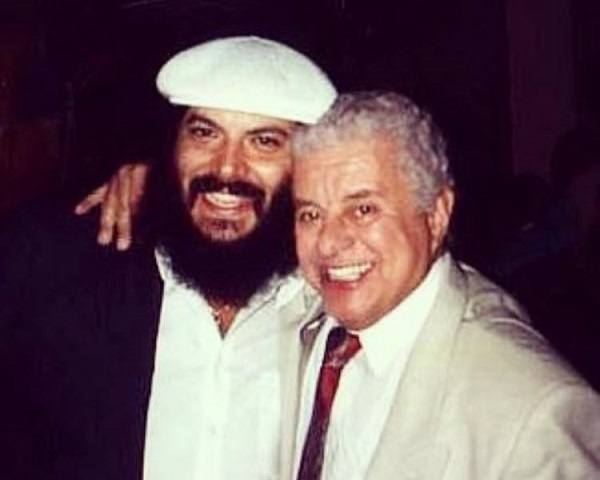
Pedro Juan Rodríguez, Pete “El Conde” Rodríguez “La Realeza de la Salsa” (Born in Ponce, Puerto Rico on January 31, 1933).

First singer signed to the Fania Records label in conjunction with the Johnny Pacheco Orchestra and of outstanding participation with the Fania All Stars and his own orchestra.
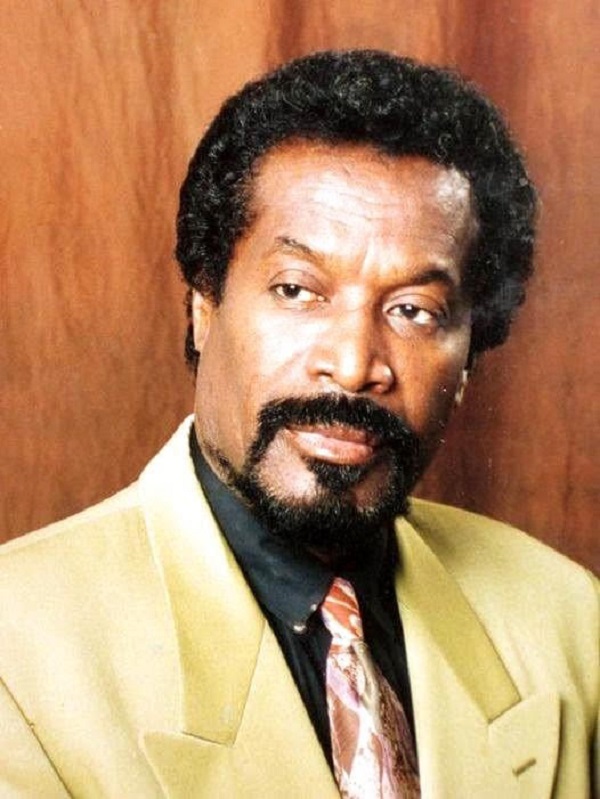
Pete “El Conde” Rodríguez

His father, who made his living as a musician playing in a string quartet that entertained parties and social gatherings, guided him during his first steps as a musician.

By the age of 6, little Pedro was very skilled with the bongo and singing popular Puerto Rican songs of the time.

Things became difficult after the death of his father and as a teenager Pete had to emigrate to the United States (1946) to live with his aunt in New York.

Once in New York, Pete managed to establish himself as a percussionist in the Orquesta Oriental Cubana. Before, long before joining the great Pacheco, Pete had to go through several orchestras among which stand out: Las Jóvenes Estrellas de Cuba (57), the Típica Novel and the Broadway from which he left for personal reasons.

In May 1962 Pete Rodriguez (he was not yet called El Conde), joined Pacheco in a Charanguero orchestra (flute, violin, rhythm and chorus). The first album with Pacheco was Suavito in 1963.

By 64 Jhonny Pacheco and Jerry Massucci founded Fania Records and created the internationally recognized Fania All Stars.

Pete was the first singer that Fania had, and on his shoulders was the responsibility of taking that project forward. On Fania’s first album Cañonazo (1964) Pete performs the song Fania, a composition by Josualdo Bolanos, with which the orchestra was inaugurated.
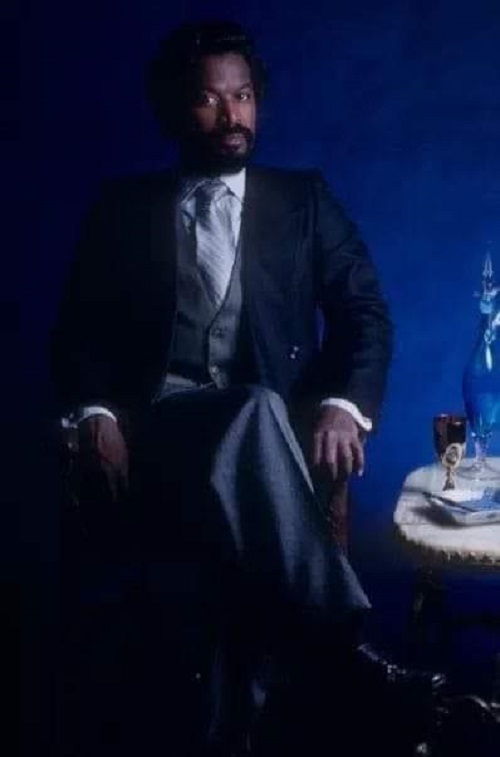
The Realiza of our Latin Music Pete "El Conde" Rodriguez
The Realiza of our Latin Music Pete “El Conde” Rodriguez

Rodriguez’s first appearance with Fania was at the Greenwich Village Red Garter Club in 1968.

For reasons of life Pete had to leave Jhonny Pacheco’s group; the concrete reasons for this separation will remain a mystery, but it seems that his departure was due to personal disagreements with other members of the group.

After Pacheco, Pete packed up his motets and moved with Rey Roig and the Sensación group (1964-1968). From his time with this group w For the years 66-67, Pete returned to the ranks with Pacheco. This was a more mature stage where the marvelous duo achieved their greatest hits: Azuquita Mami, Convergencia, La Esencia del Guaguanco, Sonero, Viralo al Reves and others.

The turmoil of the time, the world events, the new way of dressing and people’s way of thinking made Pete change his appearance; he let his beard grow and changed his hairstyle a little. This change gave him a new image and a new name “EL CONDE”.

The Pacheco-Rodriguez duo lasted approximately 8 years, since in 74 El Conde decided to go solo.

That same year El Conde released his best selling and Grammy award winning album El Conde (1974). Two years later (1976) El Conde became part of the Salsa Hall of Fame immortalizing himself with Catalina la O.

With the appearance of Salsa Romántica and the onslaught of Dominican merengue in the markets, salsa entered a crisis which was reflected in the musical work of El Conde. So between 1983 and 1990 El Conde managed to record only 5 albums of which Salsobita (1987) stands out.

In 1993 El Conde made way for his son Pete Emilio and his daughter Cita Rodriguez who joined the group as second voice and backing vocalist.

The family was already complete because Francis Rodriguez, his wife, was in charge of the administrative and financial part of the group.ere the following songs Salsa, Bailando Conmigo and his hit El Rincón.

El Conde made his last recording on the Masterpiece Album (1999) with Tito Puente (1923-2000) and Eddie Palmieri. This album is considered posthumous because in that same year (2000) Tito and El Conde passed away.
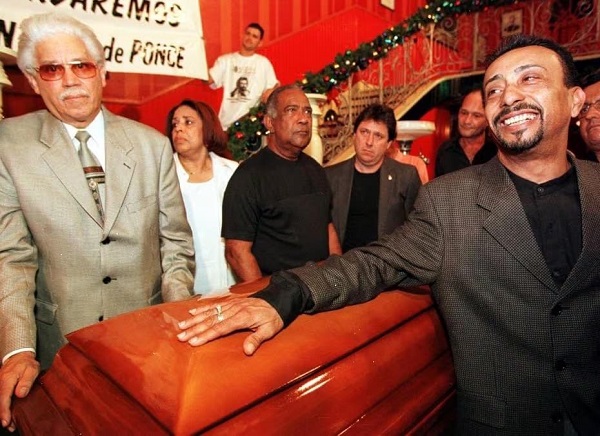
Cepelio de Pete El Conde Jhonny Pachoco, Cheo Feliciano, Ismael Miranda y Papo Lucca

El Conde had suffered from heart problems for many years, but was always reluctant to have open heart surgery. Pete “El Conde” Rodriguez passed away of a heart attack on Saturday, December 2, 2000.

His remains were taken to his native Puerto Rico. He is survived by his wife Francis, his two sons Cita and Pedro Emilio, and his grandchildren.

Remains of Pete “El Conde” Rodríguez finally rest on the island. December 7, 2023 – After his death in 2000, the remains of Ponceño singer Pete “El Conde” Rodríguez were transferred from New York to the National Cemetery for veterans in Bayamón.
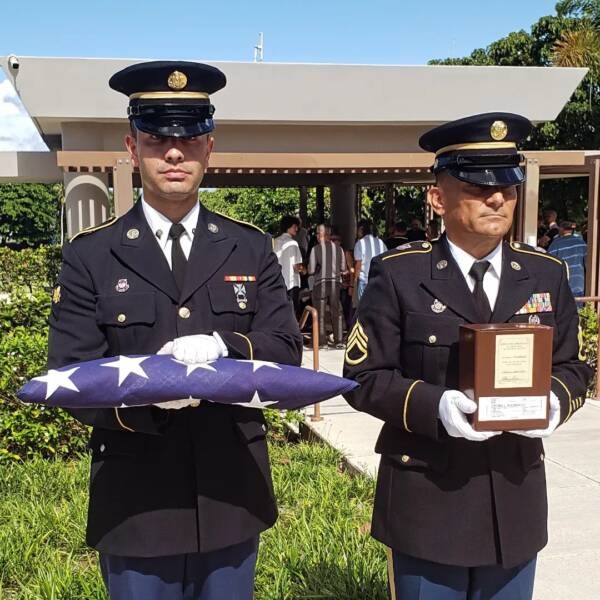
Ashes of Pete El Conde Rodriguez

Source: El Pozo de la Salsa

Also Read: Héctor Martignon has been one of the most sought-after pianists on the Latin jazz scene in New York


Poncho Sanchez visited us at the Salsa Museum

Like every month, we are going to dedicate this edition to a very special name in the Latin music scene and it is about the extraordinary percussionist and conguero Poncho Sanchez, who has given us the honor of donating some of his congas and the suit he wore during the Grammy Awards to the Spaha Salsa Gallery Museum.   

In gratitude to such a generous act, we want to dedicate the following lines to his brilliant career and everything he has contributed to Latin music with his work and talent.    

Poncho playing the congas
Poncho Sánchez playing the congas live

Poncho’s beginnings in music 

Pablo Sanchez, better known as Poncho Sanchez, is currently a percussionist and salsa singer who leads a renowned Latin jazz and Cuban music band. He became such a talented artist after a long journey in the difficult and competitive music industry. 

Poncho is the son of two Mexicans from different cities who had eleven children, the musician being the youngest of them all. From a very young age, he developed an intense love for music, which led him to learn to play instruments on his own.   

Although Poncho was born in Laredo, Texas, he spent all his childhood in Los Angeles with his family. In that place, he began to have a lot of contact with American jazz, Latin jazz and soul. During his adolescent years, his musical tastes were dominated by artists such as Mongo Santamaría, James Brown, John Coltraine, Miles Davis, among many others.   

Poncho at Catalina Bar
Poncho Sánchez performing at Catalina Bar and Grill in Hollywood

When he decided he wanted to take music up professionally, he began to teach himself to play the congas, guitar, drums, timbales and flute. This is how he was preparing for what was to come in his professional life later on.   

When he reached adulthood in his twenties, he was playing in various dance clubs for a while, until finally he got Cal Tjader and his group to notice his talent and invite him to join them.   

Today, Poncho is very grateful to Cal and said that he learned a lot from him during the time he was in the group. In fact, he even recalled in an interview that he gave him some lessons just as he was a teacher and Poncho was a student. This, in order to be on par with his bandmates and be able to put on a good show to the public.   

Poncho and Tito Puente
Poncho Sánchez and Tito Puente ”The King of Timbales”

Poncho as a soloist  

In 1980, Poncho finally managed to form his own group with which he began to carry out certain projects, although he had not completely departed from Cal’s band. In fact, the conguero worked with the musical director till the end of his days in 1982.   

Just a few months later, he signed with the Concord Records label to release his first official solo album, which he titled ”Sonando”, marking the beginning of a partnership that remains intact to this day. So far, Poncho has some two dozen recordings with Concord.  

Following decades of starting his career, Poncho saw his dreams become a reality when he won a Grammy for ”Best Latin Album” in 1999 thanks to the Latin soul album he had recorded at the time. That’s when the artist finally felt that everything he had worked for in the previous years had paid off.   

As for his latest album called ”Trane’s Delight”, Poncho seeks to pay homage to the artists who have inspired him and helped him develop his own art, as he considers that these personalities have been a fundamental basis for his growth as a music professional. 

Johnny Cru ISM corresponde in New York City

Read also: The Great Pichie Pérez and his brilliant career 

If you want to listen to Tasty Salsa tune in to Ritmo Sabor y Salsa with Nesmary J. Gómez

Nesmary J. Gómez H. was born in Venezuela, Miranda state, city of Los Teques on January 9, 1995.

If you want to listen to Salsa sabrosa tune in to Ritmo Sabor y Salsa, there's no other way to listen to it
If you want to listen to Salsa sabrosa tune in to Ritmo Sabor y Salsa, there’s no other way to listen to it

Nesmary is a young student of social communication at the Bolivarian University of Venezuela, Announcer of the Ritmo Sabor y Salsa program.

From an early age she felt attracted to the salsa genre and at 3 years old she sang Pedro Simon (dumb things) of the Colón orchestra when she turned 7 she already danced songs by Oscar D’ León and the Latin Dimension.

Afirma Nesmary  Gómez que gracias a su abuela materna y quién ha sido fiel seguidora del sonero del mundo “Mi abuela Gloria Hueck a ella le debo todo lo que soy una mujer inigualable una madre para mi luego de la trágica muerte de mi mama, fue mi abuela quien me crío y crecí a su lado escuchando desde Óscar D León hasta un Ismael Rivera, Henry Fiol”.

With 12 Years she fell in love with the radio by being a very active listener of all the radios of the town making herself known by almost all the announcers earning the heart and affection for being the number 1 listener of different programs.

Being in the first year of basic education he had the experience of airing an educational program on the community radio Urquia 97.5FM being this radio the first to open its doors to him.

Nesmary Gómez y Carlos Marrero en Radio PLENITUD 90.9FM

After 3 years she is taken into account for a new project as co-producer “El baúl de los recuerdos” on the community radio of Carrizal 91.5FM with the physically disappeared Jhonny Tovar, who with his great support was able to highlight the talent of this young woman, said project had a duration of 2 years.

The opportunities remained present and is called by the director of a commercial radio Carlos Daniel Piñango man who fully trusts this young prospect of broadcasting and is included as a second voice in the El Hormiguero RV program where he was nourished every day more when working with The announcer Mario García is a long-distance man who so far is a reference on Altomirandina radio.

When life began to smile at her a hard blow after the death of her second child made that young woman passionate about the voiceover lose the desire to live “I remember that by that moment I felt the desire to die, depression and pain led me to a bad emotional and physical state.

Thanks to our heavenly father who gave me strength to get up” The best way not to be overcome by pain was a radio booth starting as an audio operator in different live programs, in addition to motivating himself to create a project of the salsa genre called Salsa and Control project that lasted 4 years and was interrupted by situations beyond his will.

This talented young woman continues to prepare herself day by day to be an example of overcoming and show that obstacles can be overcome with perseverance and perseverance “There is no pain that separated us from what we like, on the contrary when you have pain the best thing is to take refuge in what we are so passionate about and mainly in God”.

Nesmary Gómez y Rodrigo Medoza

For 1 year and a half has been airing a proposal that is giving something to talk about Ritmo Sabor y Salsa is Nesmary Gómez’s project on Radio PLENITUD 90.9FM Monday Wednesday and Friday between 2:00 – 4:00pm from where this year 2023.

Has been sharing in exclusive interviews with great exponents of the genre such as Mauricio Silva, Viti Ruiz, Pedro Arroyo, Edgar Joel, Lus “Perico” Ortiz, Gus Colón, Fernando Cancel, Antonio Cartagena, among many other artists.

Who appreciate the existence of this program that gives the audience the opportunity to know their musical trajectory in chronological order.

“I am one of the few people who think and feel that artists must be honored in life, let’s not wait for them to leave this earthly plane to pay tribute and place their songs, let’s give him that great satisfaction that You can enjoy it in life” said space recently premiered the segment “La Clave de la Salsa”.

In honor of that percussion instrument, to those two cylindrical wooden sticks on which many of the music of the Caribbean are built and for this case the salsa known as the key, in this segment the story of 2 songs that sounded insistently and that are still kept in the memories and taste of the public is known.

Nesmary Gómez y Elio Pacheco

Nesmary recently received his speech certificate at the Elac of Santa Rosa University. Being one of the few female voices in Los Teques and all the Altos Mirandinos that has the perfect formula to brighten your afternoons in the company of a great audio operator known as Carlos “Lolo” Marrero the duo that is delighting you and dictating catedra quoting those words of the renowned singer Roberto Lugo “If you want to listen to a tasty salsa tune in to Ritmo Sabor y Salsa there is no hay más na”.

Also Read: Lizna Tovar winner in the category Voice Over of the year 2022 in Canary Islands Tenerife

Juan Valdez Byte Dominican musician, arranger, composer and singer-songwriter.

Juan Valdez Born in San Juan de la Maguana on June 24, 1962. Son of Mrs. Martha Ramona Ybert and Mr. Jose Ignacio Valdez (Kiko), he is the eldest of 6 siblings (all musicians).

Juan Valdez Byte Dominican musician, arranger, composer and singer-songwriter

He started in his father’s band (also a musician) La Gran Dimensión, he was the first saxophonist of the municipal music band of his town where he studied solfeggio and saxophone with maestro Plinio Feliz. Later he studied piano at the school of fine arts of the same town.

Juan Valdez Ybet at the age of 19 he moved to Santo Domingo, capital of the Dominican Republic, where he became a pianist and arranger for the Rosario Brothers Orchestra, Aramis Camilo, Alex Bueno, Sergio Vargas, Alex Mansilla and Canaveral, pianist for Juan Luis Guerra and 440, then director and arranger for Luis Diaz, Michel El Buenon, Asdrubar, Felix Manuel, Big Bang Congreso del Bolero, Felix De Oleo, Jaqueline Estevez, Anthony Rios, Camboy Estevez, Homenaje a Felix del Rosario, among others.

He was also Director of the Television Programs: Buen Provecho with Yaqui Nuñez, Viceversa with Mariela Encarnación and Georgina Duluc, En Resumidas Cuentas and Sábado de Corporan.

Juan Valdez Ybet he has participated as a pianist in concerts and studio recordings with Aramis Camilo, Alex Bueno, Sergio Vargas, Luis Diaz, Michel El Buenon, Asdrubar, Felix Manuel, Felix De Oleo, popular concerts, Orquesta Sinfónica Nacional conductor Jose A. Molina, Grupo Cañaveral, Wilfrido Vargas, Fernando Villalona, Sandy Reyes, Henry Garcia, Grupo Licuado de Crispin Fernandez, Maridalia Hernandez, Milly Quezada, Juan Luis Guerra, Andy Montañez, Paquito Guzman, Tito Gomez, Zacarias Ferreira, Eddy Herrera, Hermanos Rosario, Kaki Vargas, Hector Acosta y Toros Band, The New York Band, Grupo Ilegales, Manuel Tejada, Jorge Taveras, Rasputin, Pablo Martinez, Marcos Hernandez, Luis Miguel del Amargue, Aniversario Telemicro, among others.

He has made Musical Arrangements (Orchestrator) for: Aramis Camilo, Alex Bueno, Sergio Vargas, Luis Diaz, Michel El Buenon, Asdrubar, Felix Manuel, Felix De Oleo, National Symphony Orchestra, Placido Domingo Jr, Grupo Canaveral, Wilfrido Vargas, Fernando Villalona, Sandy Reyes, Henry Garcia, Milly Quezada, Zacarias Ferreira, Olga Tañon, Manny Manuel, Mayra y Celines, Placido Domingo Hijo, Hermanos Rosario, Kaki Vargas, Hector Acosta y Toros Band, The New York Band, La Coco Band, Grupo Ilegales, Rasputin, Pablo Martinez, Jailine Cintron, Grupo La Linea, Premios Casandra, Primera y Segunda del Merengue, Que Viva El Merengue, Dimanchy, Conjunto Quisqueya, Giselle, Isha, Pakole, Manolé, Yanfourd, David Kada, Shadow Blow, Vakero, Gingers for Brugal, Coca Cola and Pastas La Famosa.

Juan he is also a professor of Piano and Popular Latin Orchestration at the National Conservatory of Music (CNM) since 2001 to date. He has been nominated for the Cassandra Awards since 1987 until the last Sovereign Awards.

Juan Valdez ByteBorn in San Juan de la Maguana on June 24, 1962.

Recognized by the green valley foundation in his town, by the city council and the syndic.

Recognized by the Grammy awards as an arranger and musician.

Arranger:

The Rosario Brothers: El Chicharron, Buena Suerte.

Aramis Camilo: Nena, Si la Ven, El Alicate, Hellow, Al Maestro Con Cariño, La india, A La Talalala, I Will Always Love You, Si Yo Pudiera (Salsa), Ya Te Digo Adiós.

Alex Bueno: Como Nadie (lyrics, composition and arrangement), Soy Rebelde, Una Lagrima Por tu Amor, Nuestro Juramento, Quien Soy Yo Sin Ella, Número C.

Quien Soy Yo Sin Ella, Número Cero.

Sergio Vargas: Marola, La Ventanita, La Pastilla, Bamboleo, Perla Negra, Se Acabo, Me Muero, El Merengue Se Baila Pegao, Dias de

Junio, Yo Soy, Muele, Maquina Olandera, Dudas, Por H o por R (Composicion y Arreglo), Perfume de Rosas, En Esta Casa Humilde, A Dar Amor, Tu Vacilandome, Tu Ausencia, Causas y Azares, Lejos, Ciclon, Que No Halla, Mas Fronteras, Amor De A Ratos, Que Linda, Mujeres, Dile Mas, Baile ae, Si Volvieras, Palo Palo, Eres Tu, Ramona, Musica para la fiesta, Soy Sergio, Ay Ombe, El Dolorcito, Jugue sin saber, Aunque mal paguen ellas, Magia, Sin Ella Sufro, Llore Llore, Lucerito.

Benny Sadel: Que pasará, Te He Prometido, Mis manos en tu cintura (Arrangement and Chorus), Homenaje a Wilfrido, Rompamos El Contrato, Quiero Ser, Por Que Yo Quiero, En Esta Navidad, Por Ti, Un Mal Sueño, Así Es La Vida, Yo Te Daba Amor.

Juan Valdez Byte
Juan Valdez Byte

Wilfrido Vargas: El Baile Del Perrito, Por La Plata Baila El Mono.

Fernando Villalona: Yo Soy Aquel, Sin Ti, Que Chuleria, Hoy Le Pido Al Señor, No Te Rindas (Bachata).

Rubby Perez: I Must Do It.

Eddy Herrera: Carolina, Callejón Sin Salida, Vete, Dueno De Nada, Desde Que Te Conoci, Lo Tiene Todo.

Hector Acosta (El Torito): Menos Que Nada, Sin Tu No Me Quieres, Déjala, Si Me Recuerdas (Salsa).

New York Band: Quien Piensas Tu Que Soy, Me Quedé Con Las Ganas.

Pochi y La CocoBand: Olvida Las Penas.

Diomedes: Balsie, Las Estrellas Brillaran, El Negro Chombo, Locos De Amor (Karen Records).

Kaki Vargas: Los Mosquitos Puyan (Complete Album), No Cojas Sola Pa Allá, El Hombre De Mamá, Muchachita De Los Limones, Arisleyda, Mampote, among others.

Juan Valdez Ybet

Also Read: Betsy Colombian Salsa, Bolero and Son Cubano Singer

Producer and saxophonist Martin Franco talks about his passion for music

Martin Franco is a talented New York’s producer, sound engineer, composer, vocalist, percussionist and saxophonist who has had a big trajectory in music, which he shared with us in a half-hour conversation we had.   

The artist of Colombian parents has been kind enough to reveal some of the most important details of his artistic career and the process by which he has managed to become the professional in the music field he is today, so we hope the information revealed here will be liked by those who usually follow our publications.  

Martin, founder of Mambo Soul Band
This is Martin Franco, saxophonist and founder of Mambo Soul Band

Martin’s interest in music while still a child 

Something important we did not know about Martín is that, although both his parents are Colombian, they moved to Mexico when he was little and he spent the first eight years of his childhood in that country, before moving to Laredo, Texas.   

At his new school in the US, he and his classmates were allowed to choose the instrument they liked most to learn to play it and the boy chose the saxophone, as he thought it was ”the most beautiful” at the time.   

When Martin began his training, he discovered that he had a real taste for music and began to see it as a pleasant pastime and not an obligation, which led his mother to buy him his own saxophone and tell him to ”throw forward to music” if that was what he liked. 

When he turned 12, the family moved back to New York, where Martin started to take music more seriously and meet people related to the industry. That was when percussion and tropical music also caught his attention, as Texas was packed with Mexican cumbia and other such rhythms.   

On the other hand, New York had an immense Puerto Rican community and even his own aunts had married Puerto Ricans. Since this was the dominant community in the city in those years, Martin began hearing the conga, the keyboard, the trombone, the timbales and all the music made by the Fania. It was then when his musical tastes and plans began to change.   

Martin and the rest of the group
Martin Franco and the rest of his orchestra Mambo Soul Band

Martín’s beginnings in music in New York City 

When he arrived in New York, Martin was not old enough to start a professional career, so he was engaged to play with friends in the streets, houses, apartments and private parties. However, this time helped him a lot to gain experience and his family was a great support in all this.   

Martín, his family and some of his friends used to go to see live Latin artists and orchestras such as Celia Cruz, Héctor Lavoe, Tito Puente, Eddie Palmieri, Ray Barretto, Mongo Santamaría, among others. This also represented part of his motivation to do salsa in the future, although he also liked American jazz, which features the saxophone, his favorite instrument.   

The mix of Latin and American genres resulted in the music that became popular in those years, and the music Martin makes today has much of what he learned back then. It was a mix of Caribbean tropical rhythms, jazz and American funk.   

The musician considers that American and Latin rhythms have complimented each other over the years and he always tries to unite them in his performances, just like English and Spanish.  

Mambo Soul Band 

The name ”Mambo Soul Band” is a mixture of ”mambo”, which means ”to greet someone” or ”to communicate” in some African dialects, and ”soul” in English. This resulted in something like ”to communicate from the soul”, a concept that fascinated Martin. At the same time, both are the names for well-known musical genres, the one Latino and the other American. 

He selected these genres as the name of his band because they contain what influenced him musically speaking. Latin jazz, soul and funk were the genres on which Martin based his songwriting for the band he was creating and he hired musicians who had experience with these rhythms. And in case they do not master any of them, he teaches them.   

According to Martín, guitarists and bassists are the ones who usually have more problems when playing or learning to play these genres, while a percussionist usually has a greater dominion over these areas. 

Another variant of the same project also led by Martín is Mambo Soul Jazz, which offers music and songs much more inclined to the American way. Mambo Soul Jazz is more aimed at quiet events where people do not usually dance much and just want background music to enjoy the evening. 

The choose of one or the another will vary depending on the public of the day, although the basis of everything is always Latin music.  

Martin performing live
Martin Franco and Mambo Soul Band performing live

The most challenging aspects of the Latin music scene 

In the view of Martin based on his experience, one of the most challenging things for him and his musicians is the economic issue. At the level where they are, they do not make big profits from their work, which contrasts to the high cost of living in California.  

This situation has led many of the musicians to have parallel jobs that allow them subsistence since it is very difficult to make a living from music. The only alternative is to constantly tour with famous groups, but not everyone is willing to do that, so they prefer to work on other things. 

In his particular case, he can afford to live only from music because he is the leader of the orchestra and the one who is in charge of getting contracts and shows for the group.  

What we took from the conversation 

From the beginning, we have noticed that Martin is a man absolutely passionate about his Latin roots and all that comes with them, especially the musical part. He always stressed that everything he does is for his love of music.   

It is our pleasure to have the opportunity to talk with this great exponent of Latin and Afro-Caribbean music and we offer him our best wishes for success from now on. 

Read also: Lengaïa Salsa Brava is killing it in Montréal 

  • « Go to Previous Page
  • Page 1
  • Interim pages omitted …
  • Page 33
  • Page 34
  • Page 35
  • Page 36
  • Page 37
  • Interim pages omitted …
  • Page 293
  • Go to Next Page »

International Salsa Magazine (ISM) is a monthly publication about Salsa activities around the world, that has been publishing since 2007. It is a world network of volunteers coordinated by ISM Magazine. We are working to strengthen all the events by working together.