


Latinoamerica / Argentina / Buenos Aires
It is the Internet radio station of Latin-Caribbean genres that produces interactive programs with top-of-the-line speakers, this is how Dj timbao and Víctor Rodríguez define Latin Saoko, a radio station that since 2016 dictates the rhythm of timba and salsa on the internet .

In a pleasant conversation with his mentors, we were able to learn that it is an idea that arose a long time ago from these two great DJs and dance instructors from Venezuela, for now Dj timbao making life and projecting himself in Argentina and Víctor doing the same in Spain .
The radio is dedicated to spreading the richness of our Latin culture to all the public who want to have an encounter with the magical Caribbean and its music. Our work comes to you from the hand of professionals who strive every day to produce the best programs with true dynamic content through our website, with an excellent technical team and specialized personnel who work 24 hours a day in each one. Of its different spaces, Víctor mentions the director of the Kimbara school from the beautiful island of Tenerife.
There are 24 continuous hours of the best musical themes of Latin-Caribbean genres, we can enjoy premieres that come at the hands of this pair of DJs thanks to their great trajectory around the world. Dj timbao tells us that:
At saokolatino.com we seek to innovate the way in which Internet radio is currently produced so that in this way we can introduce real radio programming with dynamic content, for all local audiences and also worldwide. , offering the best of products so that saokolatino.com becomes the number one reference radio station for Latin American musical genres.
Among its main objectives is to create a space dedicated to the public that loves Latin genres, strengthen and promote Caribbean music and culture worldwide, expand the horizons of Latin radio in the world and reach number 1 in the ranking of radio stations. internet radio.

One of our main missions is to be the first Internet station of Latin-Caribbean genres, with unique production of true and real programs broadcast live and in real time. Spread the true Latin culture through the music that represents us and is loved worldwide, so that everyone who is connected to the radio identifies with its image and content.
Work hard so that our broadcasts, programs, calendars and music reach all possible destinations hand in hand with professionals who strive day after day, week after week and year after year to produce true radio content programs on the web, I emphasize Víctor, in the same way that the production of programs with characters from all over the world will take this radio to another level, they seek not only to delight musically speaking, they also follow the idea of nurturing with programs aimed at substantially improving the offer.
They are currently in the registry of people who want to make programs, they offer excellent benefits and are open to proposals that are presented to promote programs dedicated to Latin music and Caribbean rhythms.
On the website we can also find several interactive sections, the largest of which is a chat room in which all listeners, whether registered or not, can chat with each other, sending messages, images and emoticons on the topics they most want to discuss. and in turn they can talk directly with the announcer who is making the program at that moment.
On the other hand, there is the video section, where you can see the artists of the moment and those that have been successes or classics in their times, which Important to note in this section is that it links you directly to the station’s YouTube channel which has a direct playlist of the channels of each of the artists, this is important because by watching the video you are contributing to the artist directly and growing its popularity.
Similarly, they have a section of biographies where there is the story behind each of the most important orchestras, groups, ensembles or groups in Latin music.

To close, they invite us to download the saokolatinoradio app through playstore and for IOS present at www.tunein.com as saokolatinoradio, in this way they will be able to have 24 hours of good music at hand in any corner of the world where they are. For contacts: +34654723798 and +5491161380106 or by e-mail [email protected], by facebok on Saoko Latino Radio, on Instagram and twitter as @saokolatino and the youtube channel where we can enjoy video premieres of the most popular artists. recognized is Saoko Latino.

For approximately two hours, the bassist was accompanied by his own orchestra, whose musicians traveled from Miami, Florida, USA. Between soneo and soneo, the Oscar of Salsa informed us that the inconvenience causing the delay had to do with a musician, who having stayed in Miami did not have the possibility of reaching Puerto Rican soil on time.
D´León, with more than half a century of musical career and a long list of hits, delighted the audience with the songs that have made him one of the favorite salsa singers of the Island of Enchantment. He started the evening with “Llorarás”, which ignited the passion of the audience gathered at the Coca Cola Music Hall, and who sang the hit at the top of their lungs alongside the bassist. This was followed by the songs “Bravo de verdad”, “Yo quisiera”, “Hechicera”, “Taboga” -from Dimensión Latina-, accompanied by his backing singer, Johnny Silva, “La murga”, “Detalles”, “La cadenita”, “Idilio” -also a duet with Johnny Silva- and “Mi bajo y yo”. During the interpretation of the latter he was accompanied by the instrument with which he achieved fame to recall his beginnings as a bassist, vocalist and dancer.

The historic concert with the bass was followed by ‘Irimó’, ‘Sigue tu camino’, ‘La piragua’, ‘Que buen baila usted’, ‘En mi Viejo San Juan’, ‘La Mazucamba’, ‘El frutero’, ‘El manicero’, ‘Esa mujer’, ‘Juanita Morell’ and ‘Matasiguaraya’.


Also Read: Willie Rosario, El Rey del ritmo by journalist and music researcher Robert Téllez M.
Gabriela studied classical guitar privately, and music and piano at a Conservatory in Buenos Aires.
Adding to the musical medley was her father’s influence (a noted jazz saxophonist and arranger) which became even stronger than her classical studies. After finishing high school, Gabriela decided to move to New York.

There she studied orchestration for brass and strings in a class conducted by Don Sebesky and composition at Hunter College. Gabriela started to write her own material. Her studio and club work took off leading to a record deal with major label Warner Brothers Jazz.
The album elicited much praise for Anders’ vision and impassioned vocal style.
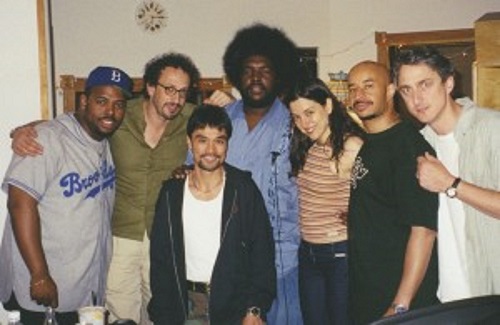
Her unique marriage of Brazilian, Latin and Jazz led to Vogue and People Magazine describing Anders and her music as “exotic and bold”, “wonderfully soulful”, and “one of the most distinctive new voices to hit the music scene in years”.
Her second record for Warner Bros Records was a European release entitled “Gabriela” which featured an array of world-class sidemen, including Christian McBride, Amir “Questlove” Thompson and Kirk Whalum. Again, she contributed ten of the album’s twelve tracks.
Her next CD “Last Tango in Rio” was released in 2005 by major label EMI. “Last Tango in Rio” is a collection of songs closely associated with Billie holiday that have been uniquely transformed by Gabriela’s interpretation and orchestration.
In October of 2009, JVC Japan released her CD “Bossa Beleza“. “Bossa Beleza” blends her own immediately recognizable sound with that of her first musical love, classic Bossa Nova.
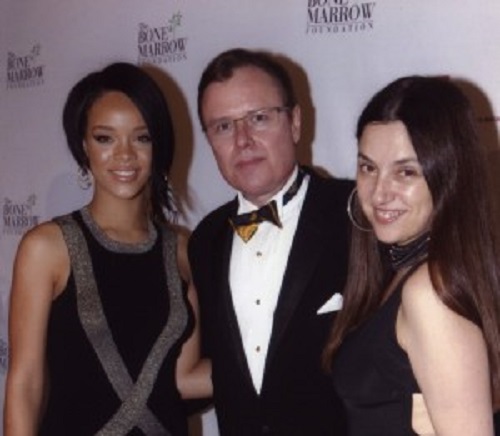
Gabriela Anders‘ 2015 album, “Cool Again”, beautifully displays the significant gifts as singer, vocal orchestrator, songwriter and bandleader she has steadily developed through her previous releases. The mix of original and cover songs on “Cool Again” finds Gabriela at her best.
The soulful funk of the original title track is a classic example. Its message of empowerment can be considered a core theme in Gabriela’s lyrics and a source of her resonating appeal as a performer, entertainer and artist.
The project’s three pianists – Jim Ridl, Jean-Michel Pilc and Jon Cowherd – are radically different stylists from different corners of the world, here each offering their unique sensibilities to Gabriela’s voice and music.
2021 CD release Gabriela Anders’ ‘Los Dukes’! Los Dukes is a new 9 piece band arranged and directed by Gabriela Anders, featuring songs from the Duke Ellington’s catalog done in wildly distinctive Latin American styles. A Latina’s tribute to the music of Duke Ellington.
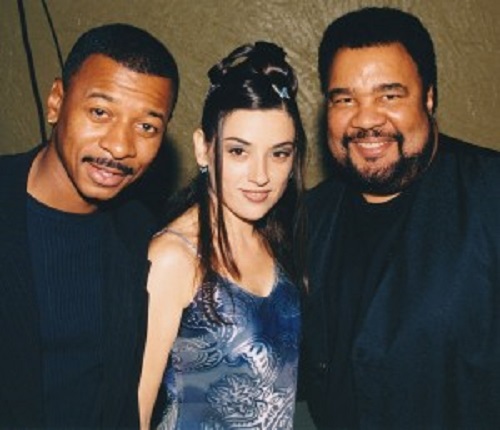
Los Dukes, pays loving tribute to the elegant GENIUS of Duke Ellington and includes some of the best Latin Jazz players on the New York scene.
Gabriela Anders – Último Tango En Rio (2004)

Temas:
Músicos:
Gabriela Anders (Voz, teclados)
Romero Lubambo (Guitarra)
John Benitez (Bajo)
Wayne Krantz (Guitarra)
Portinho (Batería, percusión)
Gabriel Rivano (Bandoneón)
H. Martignon (Teclados)
Tito Castro (Bandoneón)
Donald Edwards (Batería)
Jorge Anders (Saxo)
Jorge Alfano (Flauta, flauta andina, charango)
Información realizada (22 de abril de 2009)
Also Read: Samuel Quinto Feitosa is a Brazilian virtuoso jazz and classical pianist
His musical training took place at the Trinity Laban Conservatoire of Music and Dance in London, where he studied clarinet, piano and harmony, New York and Boston, where he was the first African student and also the first African to earn a PhD from Berklee College of Music; there he was trained in vibraphone and percussion.

Later he combined the influence of jazz and Latin music with traditional Ethiopian music.
My desire to start making Ethio-jazz began in London while I was studying there in the 1950s; then I knew I wanted to be different with my music. I looked for musicians from different African backgrounds and saw that they were successful and promoted the culture of their country.
However, there was very little from East Africa and Ethiopia, so I decided at that point that I would create something unique based on the rich heritage of our music and show how much we have contributed to the world of music in general.
That journey began to take shape at Berklee College in Bastan. I was the first African musician to study there and that period was very important for me.

Ethiopian cultural music is based on four modes tezeta, bati, anchihoy and Ambassel and within my music, I knew that those modes could not be played.
They had to remain at the center of my music or the whole character of the sound would change and become distorted. I began to add beautiful colors with chords, voicings, bass lines and rhythm sections, writing progressions that fit together well. It’s very difficult to write 12-note music around the Ethiopian modes without destroying them.
In the mid-’60s I returned to Addis, but I kept going back and forth to the United States.
At that time, no one was fusing Ethiopian music with jazz.
In my country there was the First National Theater Orchestra, and both the police and the army had their own orchestras.
There were also bands like the Echoes and the Ras Band.
Musicians at that time based their melodies strictly on the four Ethiopian modes, using techniques like the “canon,” with melodic lines echoing each other.
With Ethiopian jazz, I consciously wanted to expand and explore the modes in different ways.

I formed a group called The Ethiopian Quintet in New York, made up of a mix of Ethiopian, Latino, and African-American musicians (there weren’t many Ethiopian musicians in the United States at that time).
The band included trumpeter and pianist Rudy Houston, who later played with Yambu, and Felix Torres, who played with Sonora Ponceña.
So, with the Ethiopian Quintet, I wanted to show the African contribution to Latin music and it was my first opportunity to experiment and start developing my vision of Ethio-Jazz with this band.
With the American and Puerto Rican musicians in the group we created a different atmosphere and arrangements.
It was a great opportunity for me and they loved what I was writing and the direction I was trying to take.
We did quite a few concerts, some Spanish weddings, events upstate New York and in Manhattan.
We played at the Village Gate with Dave Pike, a great friend of mine at the time, one of the world’s greatest vibraphone players. He played a lot with Herbie Mann and I remember sitting in to watch one of his recording sessions.
I saw a lot of other great musicians in concert, from Coltrane to Bud Powell and Bill Evans. On the New York live circuit I met a producer called Gil Snapper.

Gil was a very nice and interesting guy and worked with musicians of many different styles.
He picked up on my music very quickly; we got on well and he invited me to record with The Ethiopian Quintet, so our first albums with him were ‘Afro Latin Soul’ Volumes 1 and 2, both recorded during 1966.
On the first volume, I performed an adaptation of an old Ethiopian warrior song, ‘I Faram Gami I Faram’.
I would have liked to have an Ethiopian singer for the song, but it was sung in Latin and the lyrics were translated to the singer so he could sing it in Spanish.
On this album, one of my favorites is my composition ‘Girl From Addis Ababa’, which worked very well as a fusion of Ethiopian modes and R&R rhythms, an indicator of the more refined Ethiopian jazz sound of my later album for Worthy, ‘Mulatu Of Ethiopia’ (1972). It also included my new arrangement of the 1950s tune ‘Lover’s Mambo’.
Both albums include nice arrangements also by Oscar Garcia, Rudy Houston and Gil Snapper as well.
I feel proud of the recording when I listen to it again. It was an important moment in my career and it was a very interesting and progressive time to be in New York in the mid-60s.
I was there at the same time as Hugh Masekela, Miriam Makeba and Fela Kuti and, each in their own way, we tried to do our part to put Africa on the map of contemporary jazz.

Mulatu Astatke, April 2018
Mulatu Astatke & His Ethiopian Quintet – Afro-Latin Soul (1966, R-2018)
Tracks: Afro Latin Soul: 01. I Faram Gami I Faram (Mulatu Astatke)
02. Mascaram Setaba (Mulatu Astatke)
03. Shagu (Mulatu Astatke)
04. One For Buzayhew (Mulatu Astatke) ke)
05. Alone In The Crowd (Gil Snapper)
06. Almaz (Mulatu Astatke)
07. Mulatu’s Hideaway (Mulatu Astatke)
08. Askum (Rudy Houston)
09. A Kiss Before Dawn (Gil Snapper & Weiss)
10. Playboy Cha Cha (Oscar Garcia) Afro Latin Soul Vol. 2:
11. The Panther (Boogaloo) (Rudy Houston)
Konjit (Pretty) (Oscar Garcia)
Soul Power (Rudy Houston)
Lover’s Mambo (Traditional, Arr. Mulatu Astatke)
Love Mood For Two (Rudy Houston)
Jijiger (Rudy Houston)
Girl From Addis Ababa (Mulatu Astatke)
Karayu (Oscar Garcia)
Raina (Rudy Houston)
Musicians:
Mulatu Astatke (Vibraphone, Piano, Drums)
Rudy Houston (Piano, Trumpet)
Robert Cuadrado (Bass)
Felix Torres / John Perez (Congas / Bongos on Vol. 1)
Pete Iglesias (Congas on Vol. 2)
Tony Pearson (Timbales)
Information provided (October 5, 2024)
Also Read: Flora Purim has earned her two Grammy nominations for Best Female Jazz Performance