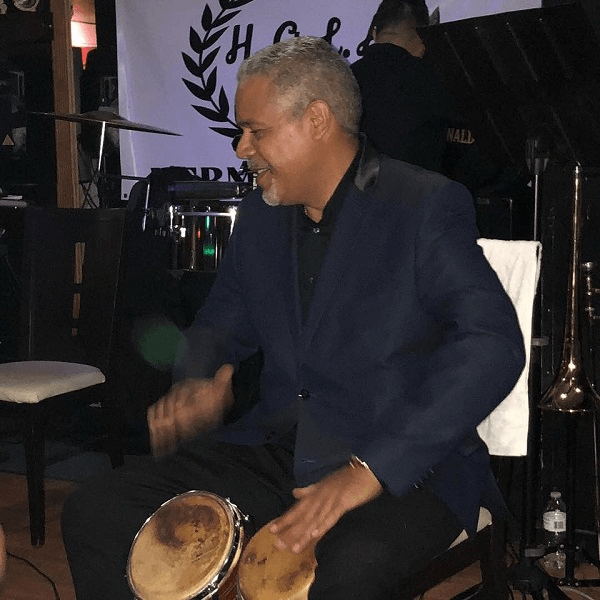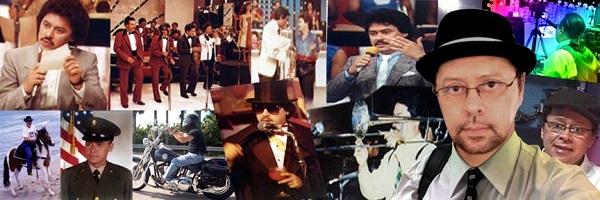

As all our readers already know, this section is always looking for the best Latin talents to give them the exposure they deserve and today is the case of New York producer and musician Edwin Ortiz, who was kind enough to share a bit of his story with us.
Edwin is an artist who was born in the East Harlem section of New York, where he began his musical career with the full works and spent most of his life, but left that city with his pregnant wife to raise their son in a different environment. It was there that they moved to Washington DC, where the musician has continued to live and pursued his career to this day.
Below, we will provide more info about the artist’s career during these moments and how he managed to become the great bandleader and musician he his today.

Just as other great musicians, Edwin studied at the prestigious Johnny Colon Music School, the institution in which he learned a lot of what he knows today. His first lessons are focused to teaching how to play the flute alongside Mario Rivera, which can be said to be the first contact the young man had with music. However, it was not this instrument that would capture his attention, but the bongo.
His brother Edgar Ortiz was an acclaimed bongocero in the Orquesta Las Siete Potencias and the Tito Puente Orchestra, so Edwin already had a lot to learn from. However, it was with acclaimed percussionist Manny Oquendo with whom he turned professional and decided to dedicate himself fully to the bongo as his main instrument, to the point that it is the only one he still plays today.
Outside of his work as a musician, Edwin is in charge of everything about the management of his most recent orchestra Edwin Ortiz Y la Mafia del Guaguancó.
Before even thinking about founding his own orchestra, Edwin was involved in a number groups of different genres throughout the Washington DC Metro area, whose main genre was cumbia at the time. In that sense, the artist wanted a change in his style and to do something different from what he was playing at the time, although he knew it was ging to be hard.
His big break came when the director of the band he was in at the time was going to move to the state of Florida, so he left Edwin in charge of the group in order to make the changes he believed were pertinent. That is when he took the opportunity to introduce salsa, a genre he had always been passionate about, in the metropolitan area with the resources he had on hand at the time. He invested in some 25 salsa arrangements and released a new version of the classic ”Olga Y Margara”, which was the first of many hits to come for his career.

Later, when he was finally creating an orchestra of his own, he took pains to find the best musicians possible, many of whom were recommended by friends and seen playing by Edwin himself. However, he would soon realize that the best musicians were not necessarily the best pieces he required for his band, which made him change his approach a bit when choosing the team that would accompany him in his project.
At first, the project was called Orquesta La Romana, but it was not long before Edwin decided to call it ‘‘Edwin Ortiz y La Mafia del Guaguancó’’. This change was due to the fact that Bobby Quesada, a musician whom Edwin greatly admired, had an orchestra with the same name, but it had already disbanded by that time. He always liked the name ”La Mafia del Guaguancó” so he gave it to his own group. He knew how risky this move was and the displeasure of some of its members with the change, but fortunately it was worth it.
Today, the musicians of the orchestra are affectionately known as ”the mafiosos” in the Washington DC Metro area, so this has become part of the band’s identity.
One of their most recent musical works is entitled ”Diferente A Las Demás” and it is a tribute to women that was released in March, the month dedicated to them.
With respect to this song, Edwin was telling us that he and his partner and the lead singer of the band Vivian Mojica had the opportunity to meet the talented musician Héctor Luis Pagán, who kindly invited them to his home and shared with them part of his repertoire, including the song ”Diferente A Las Demás”. Edwin loved it since the first time he heard it and Pagan gave it to him with pleasure. That is how the orchestra got down to work and recorded their own version of the song.

The first thing the bandleader did was look for the right arranger for it, who was Ramón Sánchez, and the producer he had always wanted to work with, Isidro Infante, whom Edwin has known for more than 30 years.
Then came the recording, mixing and remastering. In the end, the chosen date was 1 March of this year as a tribute to International Women’s Day, achieving a result that made everyone in the orchestra very happy.
Read also: Vocalist of La Moderna Tradición Eduardo Herrera and his fascinating story
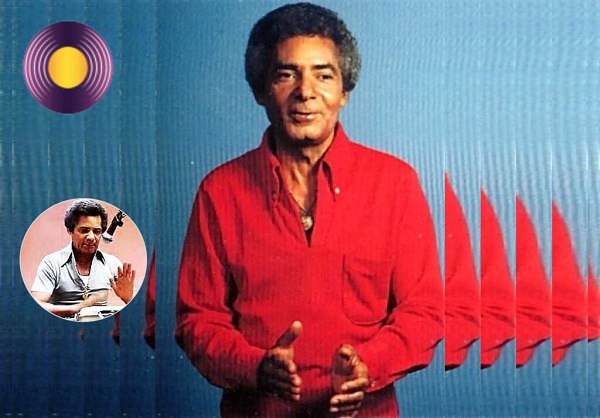
He began touring the world in 1949 and met his later wife in 1960 in Peru.

That same year, he settled in New York, participating in the local scene.
He participated in the LP “Patato y Totico” in 1967, he also participated with his brother Eloy Martí, in a Quintet accompanied by Gene Golden, for the year 1979.
Israel López (Cachao), Arsenio Rodríguez, Héctor Cadavieco, Francisco Valdés, Papaíto, Tony Mayari and Mario Cadavieco also worked on that album.
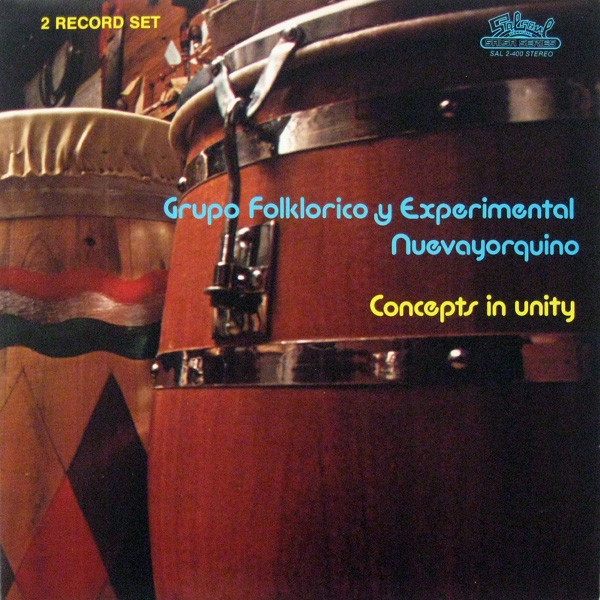
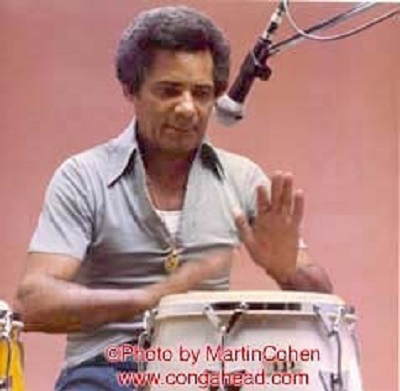
He participated in the “Grupo Folklórico Experimental Newyorkino”, where he was their vocalist and percussionist, in 1975. During his stay with them, he composed the song “Cuba Linda”.


“Iya Modapue”, constitutes in itself, a guaguancó with open rumba being at the same time the favorite number of the “Grupo Folklórico”, and even the first groove that was recorded.
The levels of experimentation and the freedom to unload several rhythms in a single musical performance are the factors producing the attraction of the musicians for “Iya Modupue” (which means Thank You Mother).
The vocal part is in the hands of Virgilio Martí. The trumpet of “Chocolate” Armenteros, the trombones of José Rodríguez and Reinaldo Jorge, the flute of Gonzalo Fernández and the percussion of Frankie Rodríguez stand out.
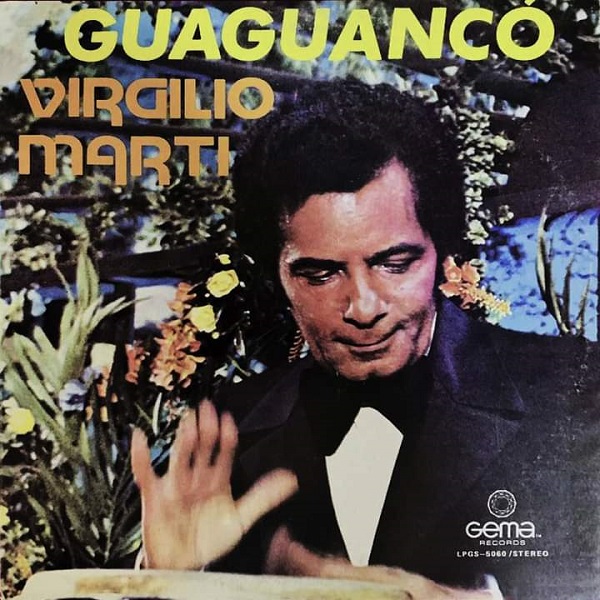
“Se Me Olvidó” – a bolero by Lolita de la Colina – but adapted in guaguancó to the style of the Grupo Folklórico, which, by the way, turned out to be the piece with the greatest radio airplay in the tropical environment and, therefore, the one that would open the doors to the group. The song was performed by Virgilio Martí, who also plays the congas. In “Se Me Olvidó”, the violin of Cuban Alfredo de la Fe, the quinto of Julito Collazo, the street redoblante of Jerry González and a Mexican marimba played by Andy González in counterpoint to the notes of the double bass, also played by Andy, stand out.
In the early 80’s he formed a band with brothers Andy and Jerry González, and percussionist Ignacio Berroa.
It is worth mentioning Virgilio Martí’s 1985 performance in the film by Cuban filmmaker León Ichaso entitled: “Crossover Dreams” (Sueños truncados). In it, the Havana native plays the role of “Cheo Babalú” and sings the song “Llora Timbero”.
In this film production made in New York City, the actor Rubén Blades, who plays the role of “Rudy Veloz”, also participates. There they sing the song “Todos Vuelven”.
In 1990, he contributed to the “Soundtrack” of the movie Azúcar Amarga.
He maintained a great skill in converting songs from other genres into rumba arrangements. We can mention the adaptation of the song by Brazilian composer Jorge Ben, “Más Que Nada”, which appears on the LP with Patato y Totico. Martí died on October 17, 1995. (Tom Data “Facebook”)

Virgilio Marti – Guaguanco (1979)
Tracks:
Information realized (June 1, 2024)
Sources:
Many talented musicians have passed through our orchestra such as Juancito Torres, Mario Ortiz, Rey Santos, Frank Morell, Hugo Dumont and many more that we will mention later.

Singers such as Sergio Cariño, Juan Acosta, Raul Carbonell Jr., Tony Rivas, Cucho Caro, Andres Reyes, Pedro Arroyo, Ricky Ramos, Tito Gomez, Yolanda Rivera, Eddie Rosario and Johnny Maldonado.
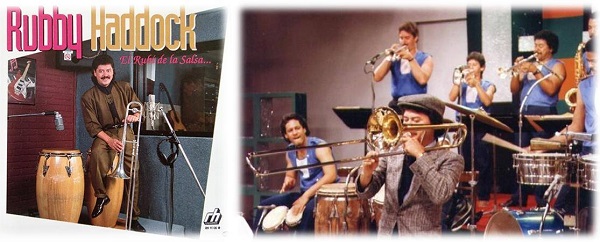
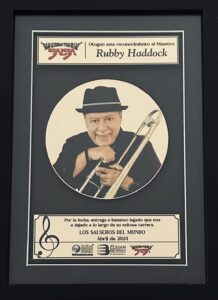
Rubby Haddock is one of the greatest exponents of good Latin music. His orchestra is known as one of the most danceable “Big Bands” on the Island.
He is called “El Maestro” by his followers and fellow artists. Because of his long artistic career, exposed to the world of show business, Rubby has become one of the best connoisseurs in the history of Latin music.
Born in Manhattan, New York on February 6th to Puerto Rican parents. His mother lived in Miami most of her life and in the late 60’s his father, Ruben Haddock who was a musician in New York, founded the most famous Dance Club in Puerto Rico, MIRAMAR CENTER when he owned El Club Coameño in Rio Piedras and El Club Caborrojeño in Bayamon.
A glorious time where his Producer Father brought to the Island of Puerto Rico the biggest stars of Latin music such as: TITO RODRIGUEZ, TITO PUENTE, LA LUPE, EDDIE PALMIERI, RICKY RAY, JOEY PASTRANA, JOE CUBA, WILLY COLON, HECTOR LAVOE, LARRY HARLOW, ISMAEL MIRANDA, CHIVIRICO DAVILA, TNT BAND among others, besides being manager and producer of ROBERTO Y SU NUEVO MONTUNO.

Rubby Haddock studied piano but showed that his passion was playing trombone.
For the years 1972 under the label UNIART, Rubby Haddock launches his first record production, “PRESENTING ORCH HADDOCK” becoming a powerful hit on the Island with the musical cut MONACILLO Y CORREA COTTO as some of the hits of this production.
In this first stage of Rubby’s musical career are among the different recordings: “PRESENTING”, “ASI ME LLAMAN”, “LA LEYENDA”, “DE REGRESO”, “UNLIMITED”, “2ND CONCIERTO FAMILIA TH”, “THE ENTERTAINER”, “THE ENTERTINER 2”, “OTRA VEZ”, “SALSA TROPICAL”, “EL RUBI DE LA SALSA”, “PASAPORTE MUSICAL”, “EL RUBI DE LA SALSA” and “PASAPORTE MUSICAL”.
In the second stage of his career, in 1978, when Rubby was the most popular in Puerto Rico with the song “Son Los Nervios”, one of the songs that propelled merengue on the island, Rubby surprised everyone by joining the U.S. Armed Forces in San Antonio Texas and Washington State, where in addition to completing medical courses, he also completed his Bachelor of Music Education at the Universities of Puget Sound and Pacific Lutheran.
In the 9th Infantry Div. Rubby became a member of the 9th Infantry Division Band where in addition to the Division Military Orchestra, Rubby most enjoyed the experience of being a member of the JAZZ ENSEMBLE BAND and the Big Band Jazz.
It didn’t take long for some of these great musicians to come and join Rubby’s Orchestra… At the request of a great Puerto Rican friend, and high ranking Army officer Eddie Velez, Rubby agreed to form his Orchestra back in Tacoma Washington State.
Remembering beautiful moments lived outside of his homeland until 1980, when he returned to Puerto Rico for a recording contract with the firm TH RECORDS, In this “come-back” in his return to Puerto Rico for the 80’s Rubby produces one of his most successful works: “De Regreso” with songs like: A Mi Jibarita, El Amor, Maria Teresa, Sra. Temptation with singers Raul Carbonell and Tony Rivas.
At the end of the 80’s Rubby Haddock ventured into Puerto Rican television, Wapa TV and Telemundo Channel 2, as producer of shows such as “Un puertorriqueño para la Historia (José Feliciano)”, New Year’s Eve Specials, etc.

By 1992 Rubby Haddock y su Orquesta represented Puerto Rico in the Puerto Rican Pavilion at Expo 1992 in Seville, Spain.
In the mid 90’s, although Rubby still continued as the Director of his Orchestra, he also ventured as an Entrepreneur with his own commercial Advertising Agency, where in addition to directing the entire operation of the agency Haddock & Haddock Adv, he was also the Creative, being in charge of all the production of Radio, Press and Television commercials for all the clients of the Agency.
By that time Rubby had already founded his own Recording Studio (Pentagrama Round), where he produced his three most recent productions of this decade in addition to sharing recordings for artist friends such as: Omar Alfano with Son By 4, it was from this studio that hits such as “A puro Dolor” were released.
His recording engineer was the outstanding engineer Sonny Hernandez. With him he shared works with artists such as: Danny Rivera, Andrés Jiménez, Ismael Miranda, Elvis Crespo, Melina León, Edwin Colon Sayas, Trió Borinquén, and others.
In 2000 Rubby moved to the United States where he currently lives. His fans constantly ask him to re-form his Orchestra because they miss his music and they also ask him for a compilation of his hits and a “Historia DVD” exposing the History of his Salsa, which seems to be Rubby Haddock’s next endeavor as an Artist.
Rubby has 3 sons, the first 2 Reuben Haddock and Rubby Haddock Jr, dedicated their careers to the business world and his youngest son Randy Haddock, who currently lives in New York, is a musician, singer and composer, already demonstrating great talent and the vein that comes from Don Ruben (grandfather) and Rubby (his father).

Sources:
https://www.rubbyhaddock.com/news
Also Read: Jerry Ferrao says in salsa key: “My life is a drum”.
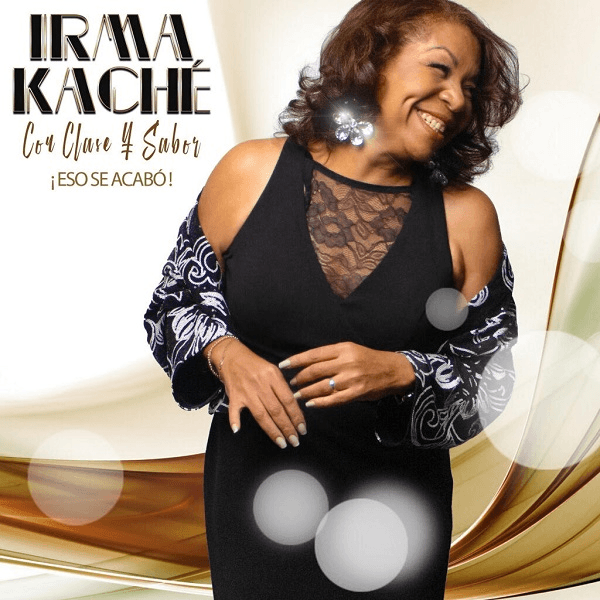
Irma Kaché is a talented singer born in Ponce, Puerto Rico, who has a very interesting story behind her, so we have set about communicating with her to talk about the most important facts of her life and career.
Irma Ortiz, the artist’s real name, shows us that it is possible to achieve a lot with little whenever there is the will and desire to get what we want. What she tells us below proves it.

In her native Puerto Rico, music was always in Irma’s home since she was very young, as her mother was a singer in a radio station and won talent shows, but all that changed when she got married and had children, since it was not seemly for a wife participate in such activities.
However, she and her siblings inherited the taste for music from their mother and she always instilled in them everything related to it. This is how the children began to play and sing the songs they listened to at home, many of which belonged to Los Condes, Los Panchos and other trios from that time.
Although Irma’s mother was proud that her children played music as one of their main hobbies, she did not think they would follow it professionally. Irma’s older brothers already have their own orchestras and one of them calls himself Julio Kaché. That is where she took the name of Irma Kaché.
While it is true that music had a very important place in her life, Irma finished high school and studied social work at the Pontifical Catholic University of Puerto Rico, so she did not practice her great passion at that time. She only limited herself to imitate her favorite artists of the time such as Yolandita Monjes, Ednita Nazario, Sophy, among others.
Upon graduation, she moved to New York with the hope of singing professionally, but she became a single mother and found it difficult to have evening performances with a small child. In addition to that, her son presented certain language problems and had to attend therapy constantly. She only had her older sister’s support, who is also a singer by profession.
On top of that, breaking into salsa as a woman was very complicated in a world dominated by men.

Just as Irma met ”dream merchants” who caused her to lose time and money with empty promises that went nowhere, she also met people who supported her and contributed a lot to her career as the composer and singer Miguel Angel Piñeiro, who is a very prominent figure in the salsa scene.
Piñeiro discovered her on the local TV show Diamante Show, contacted her and they became good friends for a while. At that time, she was working with a record company, but things were not going as she wanted, so she let her new friend guide her in many aspects of her career. Piñeiro accompanied her to the studio, rehearsed with her, introduced her to important people in the industry and many other things that helped her become the singer she is today.
Among those people she met thanks to Piñeiro, we can mention arranger Harry Rios, who was the one who made each and every one of the arrangements for her new album and played a pivotal role in its final result.
In addition to this, he made a small monetary investment in Tumbao Media Productions, which is a marketing and PR agency, which has been highly beneficial for his career and the chance to become known to a wider audience. In addition to this, the work she has done in her own social networks to create her own community around her music.

Irma has been part of the Orquesta Salsa Libre NY since 2008 without uninterrupted, although the group has been through hard times such as the pandemic, which caused the loss of its most important members. This led Miguel, director of this orchestra, to seek new musicians to replace the previous ones.
The pandemic had also prevented them from performing live for a very long time and Irma was anxious to return to sing in front of an audience, so she talked to Miguel to remedy the situation and be back to the stage as soon as possible. This is how Miguel, who was also Irma’s producer, contacted the Sound of Brazil (SOBs) nightclub to study the possibility of performing a small concert there. So, Miguel and Irma accepted the venue’s proposal and got to work.
In fact, the Puerto Rican singer and her orchestra performed a wonderful show at SOBs with renowned producer and vocalist Javier Luis, who was already experienced in singing in that place and many others of its kind, so most of the responsibility fell on his shoulders. He was the one who made the arrangements for the show and sent her copies of the emails so that she could see how the organization of a show like theirs was handled.
In the end, the performance was a success and Irma learned a lot from this experience, which would help her to replicate the right steps on other occasions. In addition, that night opened many doors for both of them.
Read also: The road to success for Venezuelan harpist and cultural entrepreneur Ángel Tolosa