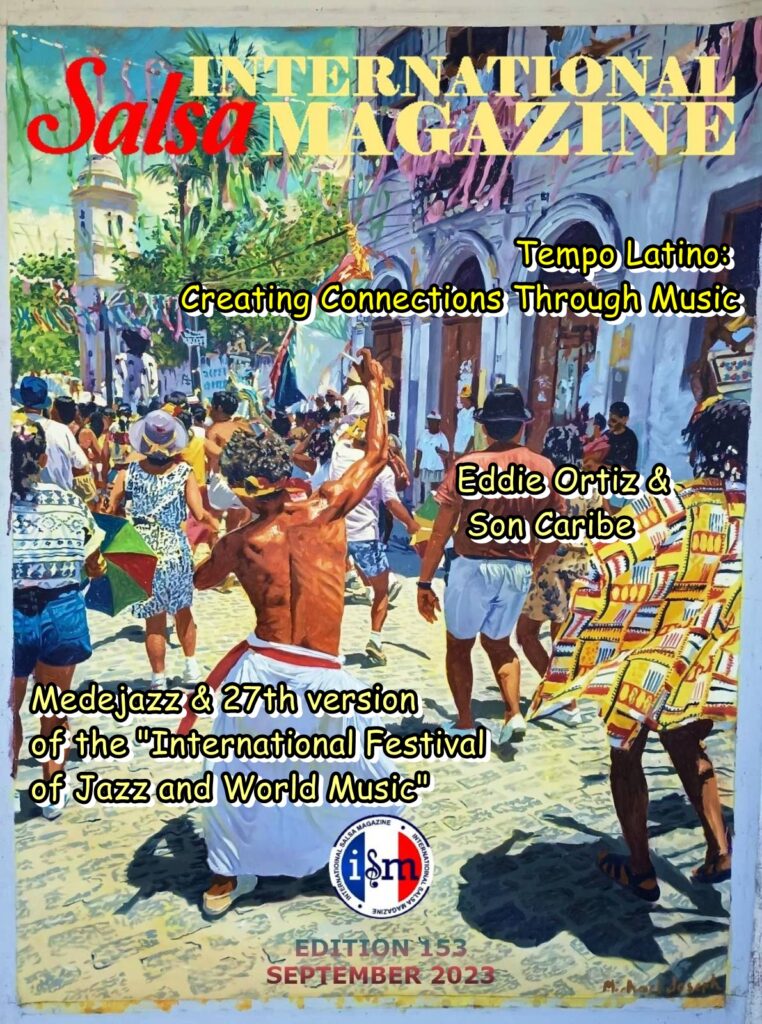

Carruyo He was born in Maracaibo on August 22, 1953 at the Chiquinquira Hospital in Maracaibo, located in the same sector where he grew up.
Argenis Carruyo he had the good fortune of being a neighbor of Los Blanco, who 12 years after his birth hired him as an instrument picker, an experience that served to awaken in him the love for music, a feeling that was nurtured when he discovered in him an unmistakable talent to make singing his life support.
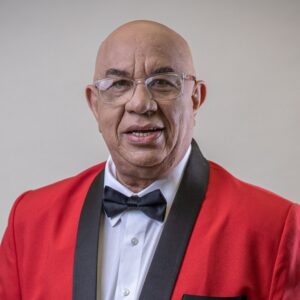
He has stood out as an interpreter of the gaita zuliana and during the 1970s and 1980s belonged to the Dimensión Latina.
The 80’s was a very busy decade for this multifaceted character; he sang with Orlando y su Combo, and did a duet with Ender Carruyo in the orchestra “Los Hermanos Carruyo” and then again with the Super Combo Los Tropicales, until 1985 when he decided to found his own group called “Argenis Carruyo y su Orquesta”.
He began his musical career with the youth group Los Larkings. Later, he was part of Los Juglares and Los Casinos.
In 1973, he joined the ranks of Súper Combo Los Tropicales and in 1977 he was recruited by Dimensión Latina, with whom he sang until 1981. Later he joined the group Los Melódicos.
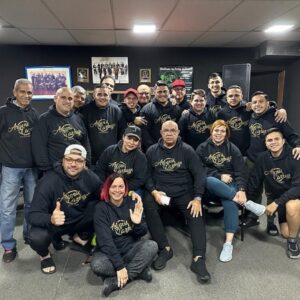
Sabor a Gaita:
Apart from his work with rhythms such as guaracha and salsa, Carruyo has also performed the gaita zuliana.
The Volcano of America has not only stood out among the great interpreters of the Caribbean for playing rhythms such as the guaracha, he has also honored his land by making famous great gaita compositions.
During his time in the genre he worked with groups such as El Número Uno, Rincón Morales, Guaco, Los Morillo and Gaiteros de Pillopo.
He owes part of his fame to the gaita, because the Zulian melody accompanied him on stages and still accompanies him in his veins as it does to anyone who appreciates being a worthy Maracaibero.
During his artistic life he has received numerous recognitions, as well as the publication of a book with his biography.
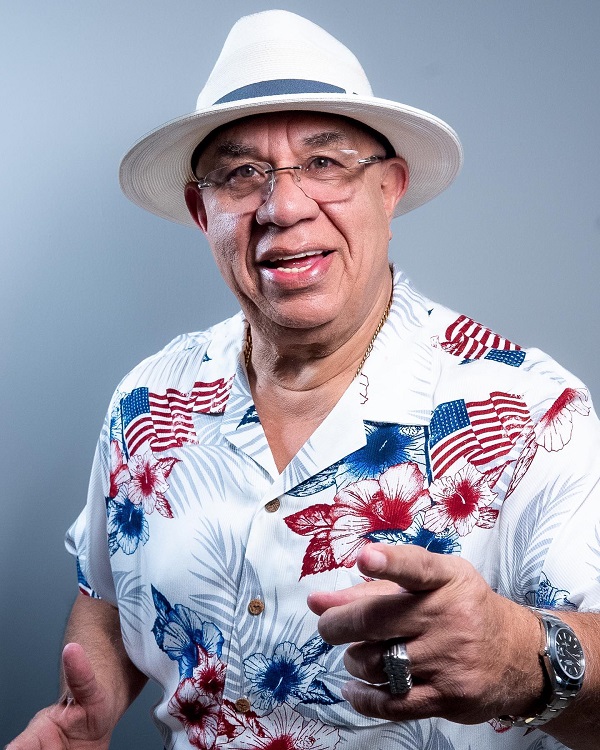
His orchestra received the Orden Ciudad de Maracaibo in its first class as best dance group.
He has performed in the most important nightclubs in Maracaibo, the country and abroad, alternating with the most recognized figures of the song, which is why he is considered one of the most genuine interpreters of tropical Caribbean genres in the Zulian region, such as salsa, guaracha, cumbia, merengue and bolero.
With a prolific career of more than twenty-five years that has served to demonstrate his talents as a vocalist and his own characteristic style, which gives him his most authentic identity.
Argenis Carruyo, with pride from Maracaibo, proclaims that he owes to Zulia the success and fortune that always accompanied him since he discovered the enormous talent he carried in his blood, his homeland became his main fan, to Maracaibo he owes his life and to its inhabitants the affection and the memory that will always keep him alive through his songs.
Luisito Quintero grew up in the Latin and African percussion tradition. His father is as percussive as his uncle Carlos Nene Quintero and cousin Roberto Quintero. He became a member of the Venezuelan Symphony Orchestra, but soon joined ensembles such as Grupo Guaco and El Trabuco Venezolano and toured with Oscar D’León.
He then moved to New York, where he met Latin jazz musicians like Willie Colon, Eddie Palmieri, Tito Puente and Celia Cruz worked. He then turned to the fusion of jazz, funk, salsa and African music and played with George Benson, Herbie Hancock, Ravi Coltrane and Toshiko Akiyoshi, but also with pop musicians such as Gloria Estefan and Marc Anthony. Louie Vega produced his first album with him.
Quintero’s Salsa Project – Tribute To The Latin Dimension
Tracks: Ya Tu Lo Véras; Sin Tu Cariño; Cara de Guabina; Sigue Tu Camino; Irimo; Dulce Cantar; De Quintero a Dimensión; Ahi Nama; Te Conocí; Parampampam; Arroz Con Manteca; Frutas del Caney.
Musicians: Argenis Carruyo; Jimmy Bosch; Marcial Istúriz; Roberto Quintero, Luisito Quintero.
Record labels in which Argenis Carruyo has participated.
Top-Hit (TH), Maracaibo Record’s, Argenis Carruyo, Discos VRZ, SonoVen Records, L. G. Record’s C. A; iMusician | EDGARSARMIENTO, Palacio, among others.

Sources:
La Buena Musica: Argenis Carruyo
La Salsa es mi vida: Quintero´s Salsa Project – Tributo A La Dimension Latina
Also Read: Víctor Porfirio Baloa Díaz, more commonly known as Porfi Baloa
The vibrant salsa nights in Los Angeles offer countless events that make the most unsociable leave home and put the most serious to dance, but there are always some that stand out among the rest for the quality of the groups and shows offered to the public. The case in question is about the series of concerts performed by the Autry Museum, which has been baptized as Sizzling Summer Nights.
After a break due to the pandemic and without the possibility of enjoying good live music, there is still an anxiety to making up for lost time and dancing to the sound of the best hits of the bands preferred by the public from the area.
In the year 2023, the Sizzling Summer Nights are back thanks to some of the best orchestras in California and have proven to be a real success, even more than in previous years.
Join us to see the details of this weekly night of Latin music at the Autry Museum of The American West and the great success it has been since its first day on August 3.
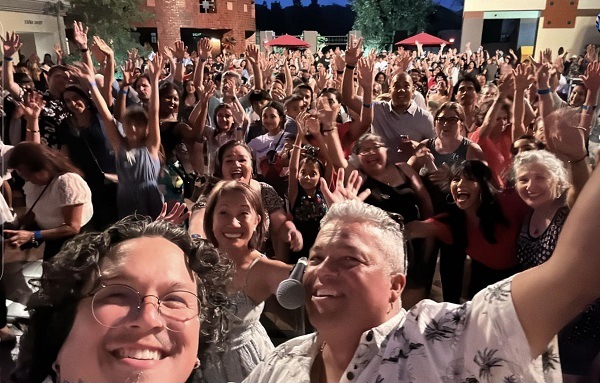
The first group to play in the series of performances offered by the Autry Museum was Chino Espinoza Y Los Dueños Del Son, which had already been there in previous years before the pandemic. This means that its members already know perfectly well how things have been handled at the museum with respect to this type of event.
In the previous days, it could be seen how Chino Espinoza, the central figure in the orchestra, was inviting the public to join the event across the institution’s social media platforms while he was wearing a white shirt with black pants and an enthusiastic smile on his lips.
In any orchestra’s performance, it can be seen that Chino and the rest of his musicians always give the best of them, so we knew that August 3 was not going to be an exception. Hopefully, it will be repeated for other opportunities.
The second date of this series of shows hired a friend from house: Carlos Navarro and his Son Y Clave Orchestra. The artist and the rest of the accompanying musicians have been in charge of sprucing up the night of August 10 this year with their great flavor.
In talks with Carlos, we have learned that the sound quality offered by the venue was simply extraordinary, which made the experience even better for them and those attending the show. The crowd was delighted and wanting more for the coming weeks.

For August 17, Colombian Latin Soul Band was chosen to liven things up and keep the audience engaged at the Autry Museum every week throughout the month.
In the social networks of the group, you can see some photos of the band members while performing on the stage assembled by the Autry Museum for the show they were about to give surrounding themselves with dancing fans eager to see them play on a beautiful, sunny summer afternoon.
Leading up to the show, they also shared a bit of their rehearsals to make sure everything was in place for the special occasion.
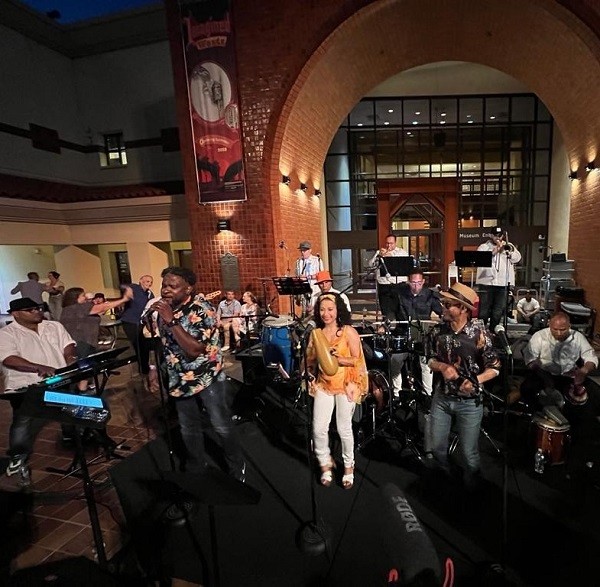
Vibroso ”Salsa With Vibes” is the orchestra that will be performing on the afternoon of August 24 to delight all those present with their talent. As of writing this article, the show had not yet taken place, so we cannot give further details. However, we have no doubts that it will be as successful as the other three salsa afternoons at the museum.
The schedule is expected to be exactly the same under the same protocol.
Ricardo Lemvo & Makina Loca on Sizzling Summer Nights
As was the case of the previous group, this orchestra has not yet performed, which will happen on August 31 at the same time as the previous ones. However, we can highlight that Makina Loca is a group founded in 1990 by Congolese musician Ricardo Lemvo, who came to the United States a few decades ago to pursue a college career and ended up working on Latin music.
Lemvo has said that he seeks to celebrate life and make people forget their worries with his music, so we do not doubt that his show at the Autry Museum will be what many need to relieve themselves of their troubles and daily stress.

As regards details on all these events, they were taking place every Thursday in August from 6 pm to 9 pm at the Autry Museum of The American West. These performances were accompanied by dance classes with the professional instructor April Connella who taught her best moves to the attendees during these days.
In addition, the cost of each general ticket is $25, but members have the opportunity to pay only $5. On this point, it is important to stress that no cash is not accepted at the door, so the best option is to buy directly from the museum’s official website and, thus, avoid bad times when attending any of the concerts.
Finally, attendees are allowed to access the museum galleries and there is a special dance floor, especially for children, so there is entertainment for everyone.
From International Salsa Magazine, we invite the entire Los Angeles community to continue supporting all these Latin music activities so that the Autry Museum and other such institutions can continue to offer activities like these in the future.
Read also: The void left by Felix ”Pupi” Legarreta
Medejazz 2023, to delight the ears, Music and Art in Medellin.
The Medearte Corporation has developed projects where the main objective is the dissemination and promotion of the arts in its various manifestations, the institution is recognized nationally and internationally for its business management in favor of culture in Colombia and to support projects of young musicians and artists in the cultural work of the city of Medellin.

The 27th version of the “International Jazz and World Music Festival” will be held from September 6 to 16. Continuing with the tradition that the Festival has consolidated over the years, our city will host a wide range of artists, performers and groups, who thanks to their talent and creativity, will radiate their music and sounds on the public of Medellin.
The MedeJazz 2023 program, with the support of the Ministry of Culture, the Mayor’s Office of Medellín and La Fiesta del Libro y la Cultura, will offer six in-person concerts, five of which will be free admission. In addition, the Festival will offer four free master classes, as a contribution to the academic-musical training of young musicians.
The Festival will also offer four free master classes as a contribution to academic-musical education, and young people from music schools will have the opportunity to nurture this knowledge. The Festival will be held from September 8 to 17
– Eleven concerts in Medejazz 2023
– Ten concerts with free admission
– Groups and members from France, Holland, Cuba, Brazil, Colombia, the United States, Puerto Rico and Venezuela.
– Four master classes with free admission.
Groups from France, Holland, Brazil, Cuba, Colombia, the United States, New York, Venezuela and Puerto Rico will grace the nights of Medellín.
For Colombia, the six winning groups of the 2023 calls: Sara Elisa Villa, Geografías, Mulatas, Groovato, Luis Bernardo Jazz Project and Tomate’s.
Three large stages will witness these great nights: Tarima Carabobo within the Festival of Books and Culture, Plazoleta del Museo de Arte de Medellín MAMM and the Great Hall of Plaza Mayor.
Starting Friday, August 25, you can visit the updated website with all the information about Medejazz 2023.
MEDEJAZZ 2023 PROGRAM
Sara Elisa Villa (Colombia). Friday, September 8 – 6:30 pm – Tarima Carabobo Fiesta del Libro y la Cultura. FREE ENTRANCE.
Geografías (Colombia). Saturday, September 9 – 6:30 pm. – Tarima Carabobo Fiesta del Libro y la Cultura. FREE ENTRANCE.
Mulatas (Cuba-Colombia). Saturday, September 9- 8:00 pm- Tarima Carabobo Fiesta del Libro y la Cultura. FREE ENTRANCE.
Groovato (Colombia). Sunday September 10 – 6:30 pm- Tarima Carabobo Book and Culture Festival. FREE ENTRANCE.
Luis Bernardo Jazz Project (Colombia). Tuesday, September 12- 8:00 p.m. Tarima Carabobo- Book and Culture Festival. FREE ENTRANCE.
Tomate’s (Colombia). Thursday, September 14- 7:30 pm. Plazoleta Museo de Arte Moderno de Medellín- MAMM. FREE ENTRANCE.
Samy Thiébault (France). Friday, September 15- 8:00 pm. Tarima Carabobo- Book and Culture Festival. FREE ENTRANCE.
New Manteca (Holland). Friday, September 15 – 7:30 p.m. Plazoleta Museo de Arte Moderno de Medellín- MAMM. FREE ENTRANCE.
Eloudie Bouny and Iara Ferreira (Brazil). Saturday, September 16- 6:30 p.m. Tarima Carabobo- Book and Culture Festival. FREE ENTRANCE
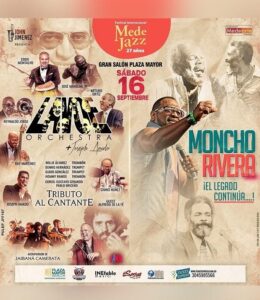
Lavoe Orquesta + Joseph Amado, Moncho Rivera y Mulatas (New York, Puerto Rico, Venezuela, Cuba and Colombia). Saturday, September 16 -8:00 p.m. Gran Salón de Plaza Mayor. Information: Ticket Express.
Havana in the Grand Manner with Ernán López Nussa (Cuba). Sunday, September 17- 5:00 p.m. Plazoleta del Museo de Arte Moderno de Medellín- MAMM. FREE ENTRANCE
INFORMATION
Social Networks
Facebook: (Medearte- Festival Internacional Medejazz)
YouTube: Festival Medejazz
Twitter: (@MedeJazz) https://twitter.com/MedeJazz
Instagram: (@MedeJazz)

Also Read: Henry Benavides surprises with “Por Cuenta Propia,” his new project