Search Results for: Salsa
North America – May 2020
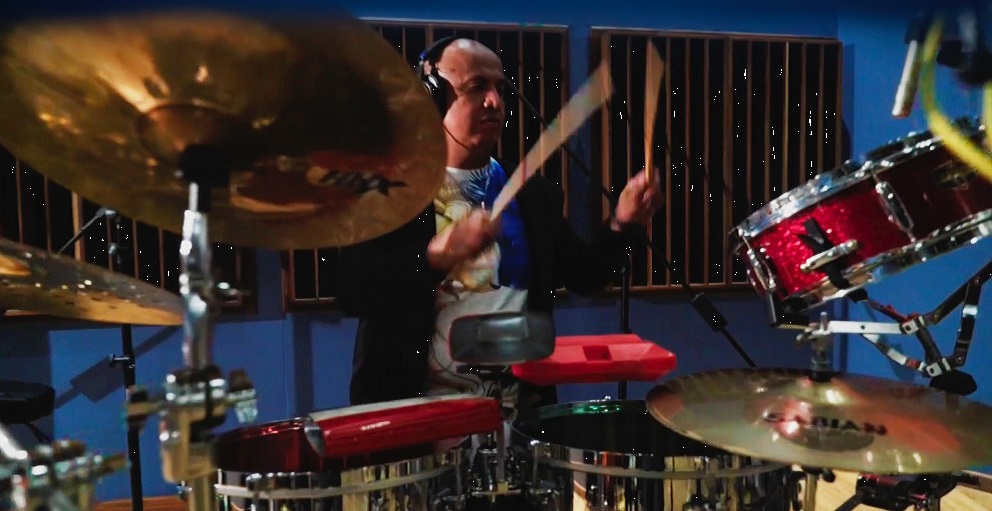
Ignacio Berroa
USA / New York / New York
Ignacio Berroa has been recognized as one of the greatest drummers of our times. He was included in the 2011 Mp3 compilation entitled “Jazz Drumming Legends” which features some of the most renowned drummers in Jazz history.

Ignacio Berroa was born in Havana Cuba on July 8 1953. He began his musical education at age 11 at the National School of Arts and subsequently at Havana’s National Conservatory, beginning his professional career in 1970. By 1975 Ignacio had become Cuba’s most sought after drummer.

In 1980 he left his country during the Mariel boatlift and settled in New York City where he met the great Cuban musician Mario Bauza who introduced him to Dizzy Gillespie. In August 1981 Gillespie invited Ignacio to join his quartet.
Ignacio Berroa also took part of all the important bands Gillespie assembled during that decade such as: The Dizzy Gillespie 70th Anniversary Big Band, The Dizzy Gillespie All Stars Big Band and the Grammy Award winner, United Nation Orchestra. This relation lasted until Dizzy’s death.
Jazz Legend Dizzy Gillespie best defined Ignacio as: “… the only Latin drummer in the world in the history of American music that intimately knows both worlds: his native Afro Cuban music as well as Jazz…”As an author and a renowned educator he made his mark with the instructional video: Mastering the Art of Afro–Cuban Drumming as well as the books: Groovin’ in Clave and A New Way of Groovin’. He also conducts clinics and master classes around the world.

As a leader, his album“ Codes” was released in 2007 under Blue Note Records. In 2007 Codes was Grammy nominated, winning a Danish Music Award as best International Jazz Album.
His second album as a leader “Heritage & Passion” was released in 2014 under 5Passion. Ignacio has recorded and played with musicians of the stature of: McCoy Tyner, Chick Corea, Wynton Marsalis, Freddie Hubbard, Clark Terry, Jackie McLean, Jimmy Heath, James Moody, Jon Faddis, Slide Hampton, Michael Brecker, Milt Jackson, Jaco Pastorius, Ron Carter, Charlie Haden, Tito Puente, Mario Bauzá, Lalo Schifrin, Gonzalo Rubalcaba, Danilo Perez, David Sanchez, Michel Camilo, Chico Bouarque, Gilberto Gil, Ivan Lins, Joao Bosco, Lenny Andrade, Lincoln Center Orchestra, WDR Big Band and BBC Big Band to name a few.

Luis “Papo” Marquez, Musician, singer, songwriter and producer
North America / Miami / Florida
This son of music, born on December 18, 1972, in the Pinar del Río Cuba Province, was raised between notes and chords that led him to be the artist he is today, known as Luis “Papo” Marquez, and considered a complete musician: trumpeter, composer, arranger, singer and music producer.

As a child, he contemplated music as his environment, profession and way of life, thanks to his family who instilled in him all the passion for art and provided him with the tools to develop his knowledge. He began his trumpet studies at the age of 8 (eight) and, at 15 (fifteen), he already practiced professionally as a trumpet player in groups such as the Bella Mar Orchestra, Grupo Cumbre, musical grouping Los Trimmers, Grupo Íreme and Ricardo Hechemendía, in Pinar del Río and Havana.

At 19 (nineteen) he emigrated with his family to Venezuela, a country that opened the doors for his artistic consolidation, where he managed to make art on a large scale with the execution of his instrument and took the first steps within the world of composition and production.
“In Cuba, love and passion for music through the trumpet was born from me, but it was in Venezuela where I had, for the first time, the opportunity to look closely at how the art of composition worked. Suddenly, I was sitting in front of a piano and reading music sheet, trying to understand how they worked and falling in love with the trade. ” LPM

This is how he started a successful career, thanks to his perseverance and permanent study, having the opportunity to play his trumpet with Venezuelan orchestras such as Mauricio Silva, Erick Franchesky, Naty and his Orchestra, Biella Da Costa, Ilan Chester, Sergio Pérez, Porfi Jimenez , Alfredo Naranjo, Orlando Poleo, Los Incorregibles, Mulato, Repicao and Guaco.
He continues forging his path and arrives in Miami, where he expands his international path with artists such as Jon Secada, Bacilos, Willy Chirino, Oscar D ‘León, Juan Gabriel, Gilberto Santa Rosa, Jerry Rivera, Celia Cruz, Cheo Feliciano, Chayanne, José Luís Quintana “Changuito”, Jose Alberto “El Canario”, Víctor Manuel, among others, with whom he has the opportunity to present himself as a trumpeter and in some cases, as arranger and producer.

One of his biggest recognitions has been the delivery of an American Grammy Award for best music producer with the album “Son del Alma” by Willy Chirino; however, for LPM, the recognitions come day by day with the opportunity to make the music that moves and elevates them in their personal and artistic satisfaction.
Luis Papo Márquez defines himself as a “citizen of the world” born in Cuba and with a Cuban-Venezuelan heart. Work and discipline are his pillars to get ahead and his greatest passion will always be “creating music that makes the world move”.
Participation as Trumpeter and Arranger: Jon Secada, Bacilos, Willy Chirino, Juan Gabriel, Gilberto Santa Rosa, Jerry Rivera, Celia Cruz, Guaco, Cheo Feliciano, Chayanne, Edwin Bonilla, Luis Enrique, Victor Manuel, Rafael “El Pollo” Brito, Oscar D´León.

Record Productions:
- Son del Alma (The rhythm of the soul). Willy Chirino. 2004. Grammy winner.
- De corazon a corazon (From heart to heart). Team VIP. Luis Papo Marquez. 2007
- Wireless Telegraphy. José Luis Quintana “Changuito”. 2007
- Puedes volar (You can fly). Luis Papo Marquez. 2011
- Arturo Sandoval tribute. 2016
- Cuban Añejo. 2017
- Firstborn. 2019
Gon Bops
USA / Los Ángeles / California
Gon Bops, Remains one of the oldest and most respected manufacturers of Latin instruments in the world

The Gon Bops legend began in 1954 California when Mexican-American Mariano Bobadilla (born in Guadalajara) – who would go on to become one of the most highly-regarded conga builders in the percussion industry – started designing and building Conga and Bongo drums.
A band instrument repairman and professional trumpet player, Bobadilla launched Gon Bops in his father’s old wooden garage in a downtown Los Angeles neighborhood.
He chose the name Gon Bops because “Gon” was one of the colloquial expressions of the time, as in, “everything is gone, man” – and “Bops” because his friends nicknamed him Bob, which sounded like “Bop” in the Latino dialect.
While Bobadilla’s drums remained true to the classic Cuban shape, he was a genuine innovator in the development of drum hardware. He designed the first teardrop crown with rounded counter hoops, developed to protect players’ hands – a concept that is now universally accepted.
He also gave birth to the first tunable hardware for congas and bongos in the United States. Having witnessed Cuban conga players heating up drums in their kitchens prior to performing, Bobadilla decided there had to be a simpler more reliable method to tension these instruments.
Other innovations from the young company were Taroles (wooden timbales), the first pre-mounted replacement heads for congas, chromatic tuned cowbells and numerous stands, adapters and other hardware.


Gon Bops enjoyed great early success. The instruments were highly sought after by the top players of the era – giants like Alex Acuna, Mongo Santamaria, Francisco Aguabella, Armando Peraza, Poncho Sanchez, Jose Hernandez and Rich Barrientos – all of whom contributed invaluable R&D input. Gon Bops quickly became the undisputed leader in Latin percussion instruments and remained so throughout the 1950’s, 60’s and 70’s.
Mariano remained deeply committed to a hands-on role in production and retained complete control of the design and fabrication of all his products. As a result, Gon Bops instruments were mainstays on the biggest stages around the world, including the massive Woodstock festival in 1969.
But the winds of change were sweeping through the American percussion industry. By the time the 1980’s rolled around, all of the major US percussion manufacturers had moved offshore to manufacture their instruments.
Cheap Asian labor costs meant greater profits. But as manufacturing costs decreased, so did quality, and for that reason Bobadilla refused to mover his production outside of the US. As a result, Gon Bops began to struggle financially. Unable to compete against his larger competitors, Bobadilla had no choice but to close the doors of his highly regarded company.Thankfully, that was not to be the end of the Gon Bops brand.

In 2001 Don Lombardi of US drum manufacturer DW bought the company along with all of its patents and trademarks. Lombardi had met Bobadilla in 1978 when he used Gon Bops Timbale shells to build DW brass snare drums, and subsequently had continued to seek R&D advice from Bobadilla.
It was a great fit, and it was no coincidence that the quality of DW drums and hardware continued to grow after the Gon Bops acquisition.
To run his newly acquired Gon Bops brand Lombardi hired the best drum craftsmen in the US. He even bought San Francisco-based Sol Percussion in order to conscript its founder – drum builder Akbar Moghaddam – to the Gon Bops cause.

Moghaddam brought along fellow drum craftsman Octavio Ruiz, and Lombardi teamed them up with Alejandro Perez, a drum builder who had worked with Mariano Bobadilla in the original Gon Bops factory.
In 2010 cymbal-maker SABIAN Inc. announced that it had purchased the inventory, intellectual property, patents and manufacturing equipment of Gon Bops from DW.
The deep commitment to innovation that SABIAN applied to its own instruments had inspired founder Robert Zildjian and his son, SABIAN President Andy Zildjian, to a search for like-minded instrument companies available for acquisition. And it was a happy circumstance had Lombardi had begun to seek a buyer for Gon Bops.
“We’re excited to begin this new chapter in SABIAN and Gon Bops history”, notes Andy Zildjian. “Gon Bops instruments are a perfect blend of vintage craftsmanship and innovative thinking. Since its founding in 1954, the company has pioneered several features and improvements that have forever changed Latin instruments.
We are excited about not only expanding distribution, but also continuing to focus on groundbreaking designs that represent clear improvements in meeting the needs of musicians. The pursuit of the best sound is what our craftsmen work for every day. We know the fit is perfect, above all, because sound matters.”
Today, Gon Bops remains one of the oldest and most respected manufacturers of Latin instruments in the world.