• Skip to primary navigation
  • Skip to main content

International Salsa Magazine

  • Home
  • Previous editions
    • 2025
      • ISM / November 2025
      • ISM / October 2025
      • ISM / September 2025
      • ISM / August 2025
      • ISM / July 2025
      • ISM / June 2025
      • ISM / May2025
      • ISM / April 2025
      • ISM / March 2025
      • ISM / February 2025
      • ISM / January 2025
    • 2024
      • ISM / December 2024
      • ISM / November 2024
      • ISM / October 2024
      • ISM / September 2024
      • ISM / August 2024
      • ISM / July 2024
      • ISM / June 2024
      • ISM / May 2024
      • ISM / April 2024
      • ISM / March 2024
      • ISM / February 2024
      • ISM / January 2024
    • 2023
      • ISM / December 2023
      • ISM / November 2023
      • ISM / October 2023
      • ISM – September 2023
      • ISM – August 2023
      • ISM July 2023
      • ISM Edition June 2023
      • ISM – May 2023
      • ISM April 2023
      • ISM March 2023
      • ISM February 2023
      • ISM January 2023
    • 2022
      • ISM December 2022
      • ISM November 2022
      • ISM October 2022
      • ISM September 2022
      • ISM August 2022
      • ISM July 2022
      • ISM June 2022
      • ISM May 2022
      • ISM February 2022
      • ISM January 2022
    • 2021
      • ISM December 2021
      • ISM November 2021
      • ISM October – 2021
      • ISM September 2021
      • ISM August 2021
      • ISM July 2021
      • ISM May 2021
      • ISM April 2021
      • ISM June 2021
      • ISM March 2021
      • ISM February 2021
      • ISM January 2021
    • 2020
      • ISM December 2020
      • ISM November 2020
      • ISM October 2020
      • ISM September 2020
      • ISM August 2020
      • ISM July 2020
      • ISM June 2020
      • ISM May 2020
      • ISM April 2020
      • ISM March 2020
      • ISM February 2020
      • ISM January 2020
    • 2019
      • ISM December 2019
      • ISM November 2019
      • ISM October 2019
      • ISM Septembre 2019
      • ISM August 2019
      • ISM July 2019
      • ISM June 2019
      • ISM May 2019
      • ISM April 2019
      • ISM March 2019
      • ISM February 2019
      • ISM January 2019
    • 2018
      • ISM December 2018
      • ISM November 2018
      • ISM October 2018
      • ISM September 2018
      • ISM August 2018
      • ISM July 2018
      • ISM June 2018
      • ISM May 2018
      • ISM April 2018
      • ISM March 2018
      • ISM February 2018
      • ISM January 2018
    • 2017
      • ISM December 2017
      • ISM November 2017
      • ISM October 2017
      • ISM September 2017
      • ISM August 2017
      • ISM July 2017
      • ISM June 2017
      • ISM May 2017
      • ISM April 2017
  • Download Salsa App
    • Android
    • Apple
  • Spanish

Search Results for: Son de Bolero

Gabrielito Y La Verdad shines in Los Angeles

We are so pleased to have spoken with Mexican singer-songwriter and percussionist Gabriel González, who gladly embraced the opportunity to share with us a little of his personal story with music and the beginning of his band Gabrielito Y La Verdad. This project has brought him great joy and personal satisfaction since its foundation, as well as the possibility of meeting some of the today’s largest artists and being on stages where Gabriel never imagined playing.   

Gabriel is the leader of La Verdad
Mexican percussionist Gabriel González,who is the leader of Gabrielito Y La Verdad

Gabriel’s beginnings in music   

Gabriel’s first contacts with music occurred when he was just a seven year old boy in East of Los Angeles. That city had a place called ”El Mercadito” where there were amateur contests the boy always took advantage of to practice his singing and this start his career as a vocalist.   

Being in his native Mexico, he became interested in regional Mexican music, ranchera, guatango, boleros, son and many others. When he moved to the United States with his family, he also began to know son jarocho, son jalicience and son montuno.    

The first group he played and toured with was the Los Angeles Chicano rock band Quetzal, which is the one that gave him his first job opportunity and with which he would stay for some time until his interests shifted definitively.   

As he left Quetzal, Gabriel resumed his interest in son montuno and thereafter in salsa as well. From then on, he became so good at these genres that he played with most of the salsa orchestras in Los Angeles and its nightclubs, which attracted the interest of many promoters who invited him to new places. In fact, he himself says that sometimes he would be called to play at venues without knowing which band he would be playing with that night.   

Gabriel posing for the camera
Percussionist Gabriel González posing for the camera with some of his instruments

Salsa orchestras in which Gabriel participated   

In California, there were many salsa orchestras in which Gabriel participated and one of the most important was Johnny Polanco Y Su Conjunto Amistad. The artist sang with the late Polanco on a few occasions over several years, as they respected each other professionally and never missed any opportunity to show it on stage.   

The singer-songwriter also played with the Orquesta de Ángel Lebrón Y Su Sabor Latino on many occasions. The conguero and orchestra leader also relied heavily on the Mexican and what he had to offer, so he did not hesitate to call him whenever he needed him.   

Gabrielito Y La Verdad 

Gabriel had already gained so much popularity that, one night, he was invited to a concert whose flyer announced him as ”Gabrielito Y Su Orquesta”, meaning that he had already his own importance outside of being a simple element of support for groups and artists better known than him. The best thing about this is that the event was a complete success, leading the musician to think about creating his own orchestra, which he later named ”Gabrielito Y La Verdad”.   

From that moment Gabriel founded Gabrielito Y La Verdad, it has been ten years, in which he has dedicated himself to tour all over California and considers that his journey has been very successful and filled with gratification.    

In view of the success and fans amassed by the orchestra during this time, Gabriel decided it was time to make original music and write his own songs, while acknowledging that his thing is singing and playing percussion because that is at what he excels.   

Gabriel and Bruno Mars
Bruno Mars and Gabriel González during a musical event

Gabriel’s contact with other artists   

Gabriel and his orchestra have also had the opportunity to share with great music luminaries, from whom he has been able to learn many things and apply them to his own career. Among the artists and groups he has shared the stage with are Juan Gabriel, Los Van Van, Cubanismo, Los Cuban All Stars, Silk Sonic and Bruno Mars. 

In every case, Gabriel was impressed with the discipline and professionalism of each of the above-mentioned artists or orchestras, but at the same time, how humble and pleasant they were off the stage. 

In Bruno Mars’ case, he attended one of Gabriel’s shows along with the rest of his musicians without any of them noticing that the singer-songwriter was listening to them play with great interest. The artist was so fascinated with the orchestra that he invited it to open for him at a private party he would soon have in Las Vegas, an experience that was a great honor for the Mexican and the rest of the group.  

From this anecdote Gabriel learned that he must always give his best in his work, since he does not know who may be watching him. 

Read also: Omar Ledezma Jr. and Pacific Mambo on tour in Europe 

Guatemalan group Malacates Trébol Shop enchants with its Latin rock and ska

We have had the opportunity to talk with artists and groups from many Latin American countries and the United States, but so far, we had not had the honor of interviewing anyone from Guatemala. Therefore, it was a pleasure for us to talk to Leonel Fernández and Rodolfo ”Chofo” Fernández, two of the members of the band Malacates Trébol Shop, to whom we dedicate the following lines. 

Malacates drummer Leonel
Malacates drummer Leonel ”Cachu” Hernández, with whom we could talk about the Guatemalan band

How did the members of Malacates Trébol Shop get interested in music?   

The band Malacates Trébol Shop already has more than 27 years of creation in the country of origin of its members, which is Guatemala. They started playing ska, which basically, in the words of Leonel Hernández, has been the backbone of everything they have done during this time, but this has not prevented them from flirting with other Latin genres that they also like very much, such as cumbia, reggae, Latin rock, among others.   

bout this, Rodolfo pointed out that each of the members of the band has very diverse musical tastes including rock, pop, jazz, ska, blues, reggae, funk, salsa, bolero, mariachis, among others. So, all the musicians bring to the table their own musical ideas resulting in the sound that the group has today. However, just like Leonel, he emphasized that ska is always the basis on which they build most of their project.   

Previous experience to Malacates Trébol Shop   

Leonel again took the floor to emphasize that all the musicians in the group had already been in other bands before being part of this project with the illusion that at some point they were going to be music professionals fair and square.   

It was in this same musical environment that Leonel, Rodolfo, Jacobo Nitsch, Francisco Paez and other artists met and began to get together. Over time, they all discovered that their views on music were very similar, so it would not be long before each of them would leave the groups they were in to create something on their own.    

They would all get together regularly on weekends to play music, have fun and drink some beers. With the passage of time, they noticed that they were taking things more and more seriously to the point that they decided they had to lay the groundwork for something more formal in the near future.   

This represented for the youngsters the opportunity to do something serious in music for the first time and they were not going to waste it under any circumstances.    

Malacates guitarist Rodolfo
Malacates guitarist and sound engineer Rodolfo ”Chofo” Hernández, with who we also talked about the band

How did the name Malacates Trébol Shop come about?   

The name Malacates Trébol Shop came about just before the first rehearsal of the group because they wanted to baptize the project from the beginning, but the guys wanted something original and, if possible, humorous for people to remember it upon hearing it.    

So, they all began inventing funny names to identify themselves with, such as ”Conchinflín Godinez” or ”Los Champurradas” (a typical Guatemalan bread). This is how one of the boys suggested the name ”malacates”, which was a word used by grannies to refer to children who misbehaved. In addition to that, there was a club in Guatemala called ”Trébol Shop”. This resulted in the current name of the group which is ”Malacates Trébol Shop”.   

When they started to call themselves this way, people generally took it with humor and it caused curiosity, which was exactly what the musicians were looking for. At that time, musical bands used to have elaborate names with many deep meanings, so ”malacates” broke that mold and stood out from others.   

In its first performances, without a doubt, the name was one of the elements that made its early audiences that enjoyed the band live have it in their memory for a long time.    

First professional experiences   

In order for Malacates Trébol Shop to play live for the first time in a formal presentation, the musicians rehearsed for a whole year to make sure all worked out as best as it could.    

In the process, they managed to be played on the radio and generated a lot of expectation around what they could offer with their talent, so many commercial brands wanted to work and sponsor them. One of them was Pepsi, which published a campaign with a Malacates song in the background, which was a great honor for the boys and resulted in a much larger number of concerts and bookings in general.  

Malacates members
Drummer Leonel ”Cachu” Hernández, trumpeter Jacobo Nitsch, singer Francisco Páez, and guitarist Rodolfo ”Chofo” Hernández

Groups and artists who inspired Malacates 

As for the groups and artists who inspired the members of Malacates, we can mention Los Fabulosos Cadillacs, The Skatalites, Grupo SKA-P, Bob Marley, Cultura Profética, among others. 

In addition to this, one of the founding members of Malacates and the band Bohemia Suburbana, Juan Luis Lopera, is one of the first Guatemalan artists to do some Ska in the country, which made him one of the precursors of the genre in the Central American nation.  

They also used to listen very often to the group Madness, Los Auténticos Decadentes and Versuit Vergarabat.  

It is on these groups that Malacates Trébol Shop has based its sound and repertoire since it was conceived as a serious project by its founders and members. 

Read also: Nanette Hernández promotes the bomba and plena in New Jersey 

Papo Lucca. The Giant of the South

Latin America / Puerto Rico

Papo Lucca born in Ponce, Puerto Rico on April 2, 1946, Enrique ‘Papo’ Lucca began playing the piano at age 11 with his father’s orchestra. Initially, La Ponceña played versions of tropical hits of the moment by bands like Cortijo y su Combo and La Sonora Matancera.

Papo Lucca. The Giant of the South

In the late 1960s, Papo became the orchestra’s musical director, beginning a profound transformation that would eventually establish la Ponceña as one of the most progressive groups in the history of Afro-Caribbean music. Papo’s orchestrations were bold, experimenting with elements of jazz, rock, and Brazilian music. Representing the authentic spirit of Puerto Rican salsa, his piano solos were velvety, displaying elegance, restraint, and infinite swing.

During the mid-’70s, La Ponceña began to enjoy unprecedented success with critics and the public. The band recorded for the Inca label, which eventually became part of the Fania empire. Papo was invited to arrange and play on sessions for the company’s biggest artists, including Johnny Pacheco, Celia Cruz and Cheo Feliciano. He also recorded and toured with the Fania All Stars.

This compilation pays tribute to the art of Papo Lucca through 14 classic songs recorded between 1967 and 1981. Although Lucca has recorded as a solo artist and also collaborated with a multitude of salsa stars, it is his work with La Ponceña that best expresses the clarity of his vision.

The music we make has to make people happy, as well as make them dance. That’s what it’s all about, says Lucca from her home in Puerto Rico. When the public can dance, no matter how complicated the music is. The first theme that this genre had was to divulge the things that happened in the different communities, as if it were a newspaper.

Our journey begins with two fiery songs from the beginnings of La Ponceña: “Hachero Pa’Un Palo” and “Fuego En El 23” are versions of songs by Cuban Arsenio Rodríguez. La Ponceña always had a soft spot for Puerto Rican folklore, but she also found inspiration in the golden age of Cuban music.

La Sonora Ponceña
La Sonora Ponceña

The precise moment in which La Ponceña becomes a mature orchestra in total control of its aesthetics can be found in the six songs from the Musical Conquest/Conquista Musical and El Gigante Del Sur albums. Launched on the market in 1976 and 1977 respectively, they represent the pinnacle of the salsa movement.

These songs combine a musical skill that approaches virtuosity with deep lyrics and a generous sense of humor. “Ñáñara Caí” is a hilarious narrative of pure magical realism, describing a world where everything is turned upside down (my favorite phrase: I saw a cow/Hit with Pacheco). Also included in Musical Conquest, “El Pío Pío” achieves the perfect cross between Afro-Cuban rhythm and contagious pop. This hit is a mandatory part of all La Ponceña concerts.

The opening theme of the El Gigante Del Sur album, “Boranda” seems to offer a salsa version of progressive rock. Its lyrics contain an important sociopolitical message, and the sophistication of its arrangement is a slap in the face for all those who believe that this music is only for dancing. “Soy Tan Feliz” combines bolero climates with an electric piano solo that recalls the psychedelic sound of jazz-rock from the ’70s. “Noche Como Boca ‘E Lobo” creates a tasty collision between salsa fever and Brazilian rhythms.

Lucca was not alone in his mission to reinvent the rules of Puerto Rican dance music. It was also benefited by the prowess of some of the best instrumentalists on the island. Furthermore, his instinct for choosing singers was always irreproachable.

Some of the vocalists of la Ponceña that appear here are Tito Gómez, who would later find fame with the Grupo Niche de Colombia; the inimitable Luigi Texidor, who gave a sense of placidity to all the songs he performed; and Yolanda Rivera, who added variety to the band’s sound with her unique timbre.

One of Rivera’s happiest moments is included here: Coming from 1980’s Unchained Force, Johnny Ortiz’s “Borinquen” is a soulful anthem to Puerto Rico, blessed with a sinuous melody and subtle instrumental arrangement–one of Rivera’s happiest moments. transcendental within the Ponceña canon.

The golden days of salsa are a distant memory in the new millennium, but Papo Lucca hasn’t stopped shining. Perhaps precisely because he continues to record new music, he refuses to idealize the past when I ask him what his favorite album with “La Ponceña.”

The last one, the most recent, he explained in his characteristically introverted tone. All the albums are very important in the career of the orchestra. They all fulfilled their mission at the time, which was to reaffirm the previous one. That’s the way to maintain a pool after 50 years.

Papo Lucca
Papo Lucca

The teacher was a little more direct when I asked him about his favorite concert of all time.

It was my first concert with the Fania All Stars at Madison Square Garden, back in 1974, he said. All the stars of the Fania were still alive. A few years later we played in front of 47,000 people in Cali. My knees always shake before I go on stage, but this time they shook a little more.

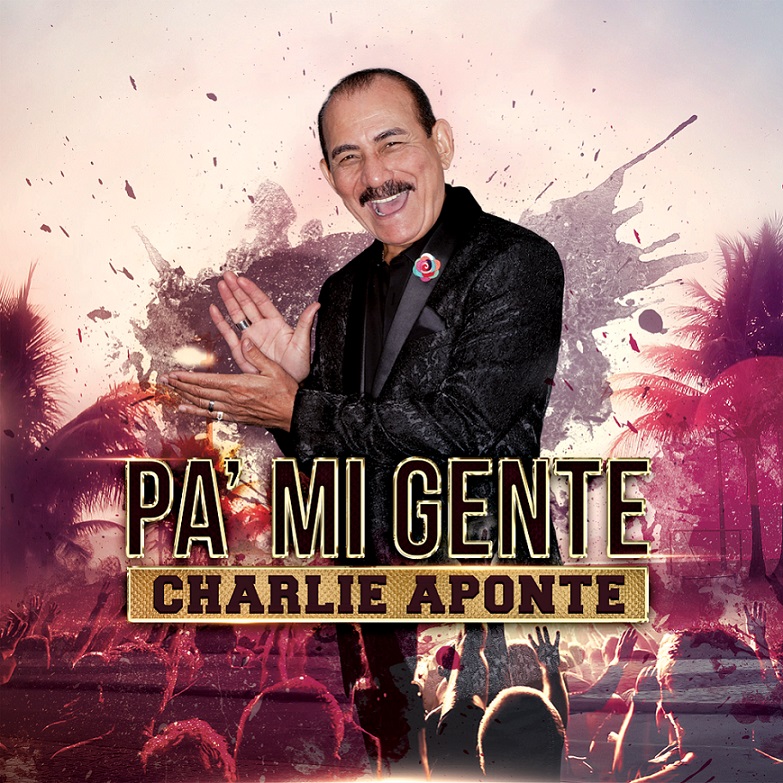
Charlie Aponte presents his best salsa album

North America / USA / Las Vegas

Charlie Aponte presents his best Salsa album. Partying with his first Latin Grammy 2018 nomination

Puerto Rican salsero Charlie Aponte has plenty of reasons to celebrate his first Latin GRAMMY nomination, with his second production

Charlie Aponte Flyer

“Pa’ Mi Gente” which was recognized in the category of “Best Salsa Album” for the nineteenth installment of these prestigious awards that will be delivered on Thursday, November 15 in Las Vegas.

“Very grateful to the Recording Academy, especially its members, for this important support that is definitely one more step to continue reaping success” said the artist who is reaching his five years as a solo artist.

“Pa’ Mi Gente” achieved an important debut, reaching the top of the “record pools” lists, with its songs, “La Salsa se Hizo Pa’ Bailar” and “No se le Presta el Alma”, which have been the most listened to, likewise; “Nobody takes away what you dance”, which was the first promotional single and which contains a video on his official YouTube channel, by this artist who works independently with the Criollisimo Inc. label.

This album is made up of 11 songs, among them one of his own authorship under the guidance of the musical director on the album and all his presentations, maestro Sammy García, who together recorded this production in the MÁS Audio studio of the sound engineer and producer Angelo Torres.

Charlie Aponte, who will soon release his new music video “Besos de Azúcar”, continues with his artistic commitments, including New York, Medellín and various presentations in his native Puerto Rico, and to end the year he will be with the public of Colombia, in the “Heroic City” Cartagena.

Biography Charlie Aponte:

Charlie Aponte
Charlie Aponte

Charlie Aponte, one of the most beloved voices remembered by thousands of salseros around the world, returns to the stage as a soloist in 2015 after 41 years of belonging to the salsa university, “El Gran Combo de Puerto Rico” Now he’s back as a solo artist.

Born in Caguas, PR on February 2, 1951. It was in 1973 when, after the departure of Pellín Rodríguez, he joined the “Mulatos del Sabor”. Since then there have been many successes that have been proclaimed as successes through Charlie’s voice. He has contributed as a vocalist and displayed his capacity as a sonero in hits such as “Brujería”, “Amor Brutal”, “La Loma del Tamarindo”, “Compañera Mía”, “No hay cama pa’ tan tan Gente”, “Hojas Blancas”, “ Rice with Beans”. Among many others.

In 2014, together with the multi-award winning producer, Maestro Sergio George (Top Stop Music), he presented his new musical proposal “Una Nueva Historia”. This new proposal has the best and most recognized composers and arrangers. Presenting the song “Para Festejar” as his new single in promotion, and grateful for the public’s reception of his musical production, which was on the Billboard charts for 10 consecutive weeks, which catalogs it as an excellent piece of music.

He debuts as executive producer of his new proposal “Pa’ Mi Gente”, a production by the best musicians, arrangers, composers, available in all major stores and digital platforms. In this new project he has a bolero composed by the artist, among other surprises for the public that follows him.

Accustomed to leaving his soul in each of his performances, he assures that with this album he intends that his followers listen to him, dance and continue to appreciate the quality with which his music is made.

Meet the Carlos Rodríguez Quintet

Latin America / Venezuela / Caracas

There are many Latin music orchestras worldwide, and our duty is to know and recommend the best orchestras, whether they are known or new talents. On this occasion we had the opportunity to interview Carlos Rodríguez and his orchestra who were playing Jazz, Latin Jazz, Salsa and various mixes of Latin rhythms at the “Café Mi Cosa” located in City Market, Caracas, Venezuela.

Carlos Rodríguez Quintet

At this meeting in the cafe, there was the Carlos Rodríguez Quintet, who make it up: Antonio Davicenzo (Drummer), Darwin Manzi (Trumpet), Pancho Santangelo (Piano), Cesar Bolivar Changu (Percussion) and lastly Carlos himself as soloist.

Carlos mentions that his orchestra has in its themes and/or songs a mixture of Venezuelan music with jazz, Afro-Venezuelan, begin bolero, merengue with a bolerito, among others. Currently for the time they demand the search for new rhythms and stay stuck with the current rhythms, seeking to satisfy and enjoy the public and something that impacts them.

In his first album that was based on Jazz, he made several combinations with various Latin rhythms, such as: Guaguacom, Afro, Bolero, Jazz with Latin rhythm, Jazz with Venezuelan rhythm and other fusions.

It started a long time ago, he tells us that he was with the “National Philharmonic Orchestra”, where he learned and gained experience in the area of ​​music. Of course he not only works with them but with other orchestras and/or artists.

Later he won an international award in Colombia as the best bassist, and his project is to be known as a soloist in his orchestra and not just another accompanist of another orchestra; however, he continues to work with a wide variety of musicians since that is the world of music, living from music not only as his profession but as his greatest passion.

The Carlos Rodríguez Quintet

His recommendation for new talents is that there is always a certainty in their musical career, discipline, gain and perseverance to progress and move forward since the road is hard and with obstacles, therefore one should not be discouraged and continue fighting and progressing to so be recognized.

For more information:

  • Instagram: https://www.instagram.com/carlosrodriguezfalcon6/ @carlosrodriguezfalcon6
  • E-mail: [email protected]
  • Phone: +58 414-2037324


  • « Go to Previous Page
  • Page 1
  • Interim pages omitted …
  • Page 14
  • Page 15
  • Page 16
  • Page 17
  • Page 18
  • Interim pages omitted …
  • Page 30
  • Go to Next Page »

International Salsa Magazine (ISM) is a monthly publication about Salsa activities around the world, that has been publishing since 2007. It is a world network of volunteers coordinated by ISM Magazine. We are working to strengthen all the events by working together.