• Skip to primary navigation
  • Skip to main content

International Salsa Magazine

  • HOME
  • Previous editions
    • 2026
      • ISM / May 2026
      • ISM / April 2026
      • ISM / March 2026
      • ISM / February 2026
      • ISM / January 2026
    • 2025
      • ISM / December 2025
      • ISM / November 2025
      • ISM / October 2025
      • ISM / September 2025
      • ISM / August 2025
      • ISM / July 2025
      • ISM / June 2025
      • ISM / May2025
      • ISM / April 2025
      • ISM / March 2025
      • ISM / February 2025
      • ISM / January 2025
    • 2024
      • ISM / December 2024
      • ISM / November 2024
      • ISM / October 2024
      • ISM / September 2024
      • ISM / August 2024
      • ISM / July 2024
      • ISM / June 2024
      • ISM / May 2024
      • ISM / April 2024
      • ISM / March 2024
      • ISM / February 2024
      • ISM / January 2024
    • 2023
      • ISM / December 2023
      • ISM / November 2023
      • ISM / October 2023
      • ISM – September 2023
      • ISM – August 2023
      • ISM July 2023
      • ISM Edition June 2023
      • ISM – May 2023
      • ISM April 2023
      • ISM March 2023
      • ISM February 2023
      • ISM January 2023
    • 2022
      • ISM December 2022
      • ISM November 2022
      • ISM October 2022
      • ISM September 2022
      • ISM August 2022
      • ISM July 2022
      • ISM June 2022
      • ISM May 2022
      • ISM February 2022
      • ISM January 2022
    • 2021
      • ISM December 2021
      • ISM November 2021
      • ISM October – 2021
      • ISM September 2021
      • ISM August 2021
      • ISM July 2021
      • ISM May 2021
      • ISM April 2021
      • ISM June 2021
      • ISM March 2021
      • ISM February 2021
      • ISM January 2021
    • 2020
      • ISM December 2020
      • ISM November 2020
      • ISM October 2020
      • ISM September 2020
      • ISM August 2020
      • ISM July 2020
      • ISM June 2020
      • ISM May 2020
      • ISM April 2020
      • ISM March 2020
      • ISM February 2020
      • ISM January 2020
    • 2019
      • ISM December 2019
      • ISM November 2019
      • ISM October 2019
      • ISM Septembre 2019
      • ISM August 2019
      • ISM July 2019
      • ISM June 2019
    • 2016
      • ISM December 2016
      • ISM November 2016
  • Spanish
  • Download Salsa App
    • Android
    • Apple

Search Results for: Son de Bolero

Cuban-American dancer and actress Jessica Pacheco presents us her own dance company Flamenco Tropical

The talented and beautiful Jessica Pacheco graces us with her pleasant presence in our July edition, which makes us very happy and delighted. The Cuban-American actress and dancer has given us the great honor of talking for a while about her extensive and varied artistic career and how she has built it over the years.

With the Cuban flavor of her heritage, she shared the most important moments of her story and how she went from one facet to another to become the complete artist she is today

Jessica Pacheco posing
Dancer and actress Jessica Pacheco posing for the camera

Jessica’s beginnings in the world of entertainment and her inspirations

Jessica tells us that she was initiated into the world of entertainment while she was “still in her mom’s womb.” Her mother was a dancer in Cuba and had always been closely linked to art, so not much time passed before she enrolled her little daughter in ballet, drama, and piano classes. Being a very young girl, her parents constantly led her to travel to Spain, where she became so fascinated by flamenco tablaos that she stayed up late just to watch these kinds of shows on TV. 

When returning home in Miami, the city she was born and raised in, she was enrolled in her first Spanish classical dance classes and was introduced to genres such as flamenco and rumba. Being just a 15-year-old teenager, she was hired by her first professional dance company, Ballet Español Rosita Segovia. From there, she is grateful that her professional career has not stopped even since. She has also worked for the dance companies “Ole Ole” and “Flamenco Express.”

As all of this was taking place, she studied psychology at Florida International University in Miami and thought she would work with elderly individuals; in fact, she had her internship at a nursing home. However, she started receiving dance contracts and soap opera projects continuously, so she had to leave her university profession to the point that she never practiced it. 

Mario,Jessica, Marcela, and Jose
Musician Mario Oretea, dancer Jessica Pacheco, dancer Marcela Rodriguez, and musician Jose Oretea

When the work was scarce as in the time of the pandemic, Jessica decided to create for herself, which is when the 13-episode series “Cuban Tales” came about. Her mother has always told her not to leave for until tomorrow what can be done today, so when she realizes that there is not much work in dancing or acting, she seeks to create for herself without waiting for opportunities to fall into her lap.

Theater

Our of all the facets Jessica has worked in, she admits that theater is what he finds most fulfilling as an artist because of the applause from the audience and the importance of getting everything right the first time, not like in soap operas or TV series where she had the opportunity to repeat a scene that did not go well. Among the works in which she appeared are ‘‘La Traviata’’, ‘‘Turandot’’, ‘‘Carmen’’, and ‘‘El Gato Montés’’. She also had the opportunity to work with the opera companies Florida Grand Opera and Los Angeles Opera, which was directed at the time by Plácido Domingo.

Regarding soap operas, she appeared in “Los Teens,” “Lotería,” “Decisiones,” and “Dame Chocolate.” The dynamics in this type of production were radically different from those in theater, since “hurry up and wait” applies here, so she had to remain in her dressing room waiting to shoot her scenes. The wait was so long that, during an eight-hour day, Jessica would only shoot about half an hour or an hour.

Jose Junco and Jessica Pacheco
Dancer and dance teacher Jose Junco, and Jessica Pacheco

All that wasted time was what bothered her a little about working on soap operas, although there are still nice experiences she will remember, such as the opportunity to work on shared projects with great figures like Carlos Ponce, Genesis Rodríguez, and Riczabeth Sobalvarro, among many others.

Flamenco Tropical

By creating her own dance company, “Flamenco Tropical,” Jessica felt she had connected to her roots and found the circle of musicians and dancers with whom she truly identifies. Even the name is a representation of what the artist wanted to portray through her project, as she does not believe in musical puritanism and enjoys experimenting with all kinds of genres. For example, she and the team of musicians and dancers who accompany her love the Gipsy Kings’ rumba, but also Cuban and Caribbean rhythms like the bolero and iconic Cuban songs from other times.

When the artist started the company, she was living in Los Angeles, but she knew musicians she had worked with in Miami for years, and they agreed to collaborate on this project. Some of them were the brothers Mario and José Oretea from the duo Duende Camarón, whom she describes as fantastic musicians, singers, guitarists, and guitar craftsmen. In fact, their guitars are made of such high quality that they have even been played by the Gipsy Kings.

At first, the group just included the two guitarists and Jessica dancing, but as the company grew, she was able to hire a percussionist who plays the cajón, bongos, and congas. Over time, she also hired a violinist, who adds a spectacular touch to what was in the band. In addition to the Oretea brothers, the group features Grammy-nominated composer and singer Fito Espinola, arranger and guitarist Andrés Vadin, percussionist and vocalist Joel Matos, and dancer José Junco.
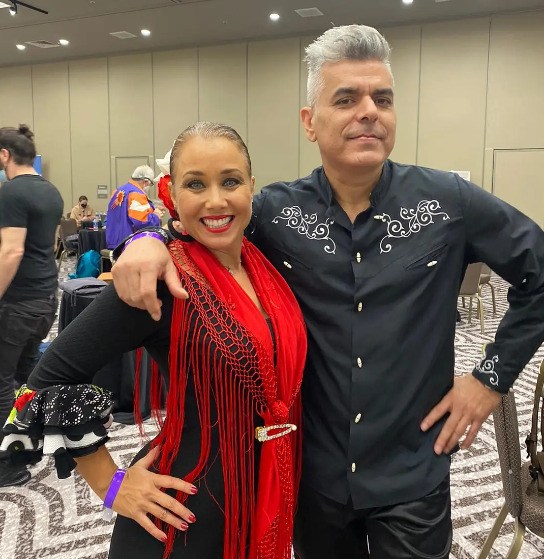
Jessica and Fito
Jessica Pacheco and composer and singer Fito Espinola

Read also: Gafieira Rio Miami brings the best of Brazilian music to Miami

Andrés Cepeda & Mike Bahia Artists in November of HTV

North America / USA/ Miami
Andrés Cepeda & Mike Bahia

With a history of over 15 years, Colombian singer- songwriter Andrés Cepeda and Mike Bahia, representative of the urban genre, exclusively relate their experiences with each of their productions and the musical genres for which they have traveled.

Andrés Cepeda

Andrés Cepeda
Andrés Cepeda

The Colombian singer Andrés Cepeda, has been one of the most renowned artists of Latin American music scene. This Latin Grammy winner has been wowing his audience with his successes year after year since he began his career. The Colombian began his single career in 1999 releasing a first album: “Sé morir” disc in just one month received platinum status, framing in nearby rhythms like pop, bolero and the ballad.

In 2001 he released his second production, “El Carpintero”, for which he received double platinum.

In 2002 he published “Para amarte mejor”. This production was the first of that kind in Colombia. In 2005 he presented his work “To better love”. This album received platinum disc for sales in Colombia.

1- Andrés Cepeda
1- Andrés Cepeda

In 2007 he released a remake of “Para Amarte Mejor” in which two new songs he composed with master Jorge Luis Piloto included: “Pronóstico” and “Si fueras mi enemigo” songs that gave him international recognition and won him Latin Grammy nomination for Best Male Pop Album … “Día tras día” became after its launch in 2009, one of the most successful albums of his career, receiving gold and platinum discs.

This gave rein to that was nominated this year in three of the most important categories of the Latin Grammy Awards: Song of the Year, Album of the Year and Best Male Pop Vocal Album.

2- Andrés Cepeda
2- Andrés Cepeda

In 2012 Andrés Cepeda presented to the public his seventh album “Lo major que hay en mi vida.” Cepeda received four nominations for this album by The Latin Recording Academy, taking for the first time Latin Grammy in the category “Best Traditional Pop Vocal Album”.

He was joined for this award three prizes that gave the Nuestra Tierra 2013 Awards in the categories Best Album of the Year, Best New Artist and Best Pop Performance. Additionally, he received double platinum. In 2015 he released his latest production, “Mil Ciudades” album that featured the participation of leading industry figures.

Andrés Cepeda flyers

Mike Bahia

Mike Bahia
Mike Bahia

Meanwhile, in the second installment of HTV En La Mira of the month arrives on Thursday, November 17 the reggaetonero, Mike Bahia, one of the great musical promises of the moment.

1- Mike Bahia
1- Mike Bahia

Bahía had already begun his career by participating in the reality show “La Voz Colombia” (second edition), where he was a pupil of Fanny Lu. Then he debuted as a soloist in 2014 with the single ‘Buscándote’, a song produced by Montana The Producer (who worked for J Alvarez and Chris G), Juan Jhail (who collaborated on projects Kevin Roldan and alkylated) and Ronny Watts (alkylated and Hernán Saraza).

2- Mike Bahia
2- Mike Bahia

Later in his still brief career, Mike Bahía launched four singles: “Estar Contigo” (2014), ‘Buscándote (remix)’, ‘Tarde’ and ‘La Muñeca’ (all 2015). The latter will integrate the first album of Mike, which will be called ‘Soy Yo’. Mike himself wrote ‘La Muñeca’ in collaboration with Juan Jahil and Juan Gálvez, alkylated vocalist.

3- Mike Bahia
3- Mike Bahia

4- Mike Bahia
4- Mike Bahia

For his part, the director Nuno Gomez, who worked with alkylated in several videos, directed the clip in various locations in Venezuela. So you know, do not miss these two artists and enjoy their confessions in HTV because HTV it gets good!

Mike Bahia flyers
Mike Bahia flyers

The Jeque and his Band present: “Ultimatum”, a musical gem with Hermán Olivera

A masterful fusion that redefines Guaguancó and Cha-Cha, celebrating the group’s tenth anniversary.

El Jeque y su Banda is a salsa ensemble based in Venezuela.

Under the direction of its founder and general manager, Lic. Ángel Martínez “El Jeque,” and with the impeccable musical direction, arrangements, and piano work of the renowned William “Willie” Melo, the band has established itself as a benchmark in the genre.

El Jeque y su Banda presenta “Ultimátum”, una joya musical junto a Hermán Olivera

Approaching ten years of professional trajectory, maintaining their momentum through persistence, passion, and dedication to their craft, the group celebrates this anniversary with the release of their fourth studio production: Evolución…El Jeque y sus Estrellas.

The Launch: “Ultimátum”

The purpose of this release is to announce the launch of their second promotional single, a piece crafted for the true music connoisseur: “Ultimátum.”

This musical gem features a collaboration with a legend of the genre, a world-renowned sonero and vocalist: Hermenegildo Olivera Suárez, globally known as “Hermán Olivera, El Sonero del Siglo XXI.”

Herman Olivera El Sonero del Siglo XII y Dj. Augusto Felibert

History and Evolution

This romantic-style track was originally recorded in 1981 by the great Puerto Rican interpreter Felipe “La Voz” Rodríguez.

The song was written by the legendary Puerto Rican composer Luz Celenia Tirado, who was the first woman recognized in the island’s challenging guild of troubadours and also performed on that original production.

On this occasion, El Jeque y su Banda takes the work in a new direction, transforming it into an aggressive Guaguancó fused with an elegant Cha-Cha.

The concept for this version was a creative endeavor led by Hermán Olivera, who defined the essence and intent of the track.

Ángel Martínez “El Jeque” y Dj. Augusto Felibertt

Subsequently, Luis Alberto and Willie Melo shaped the project, solidifying the final musical structure under the pen and direction of William “Willie” Melo, with the co-production of Luis Alberto “Redlouis” (Manager, Producer & Booking for Hermán Olivera).

Musical Virtuosity

It is remarkable how these music aficionados manage to mesh Guaguancó and Cha-Cha originally fused with a bolero with a versatility that preserves the essence, cadence, and appeal of the piece.

Herman Olivera Soneando Luis Rojas y Augusto Felibertt prueba de Sonido en el marco del evento Salsa Bajo la Cúpula Poliedro de Caracas.

Willie Melo masterfully integrates Hermán Olivera’s characteristic sound, marked by the influences of Manny Oquendo’s Conjunto Libre and the maestro Eddie Palmieri.

The arrangement, loaded with dissonant notes and power, softens its impact with the magic of the Cha-Cha, allowing Hermán to display his artistry in the soneo.

This interplay between the irreverent, the melodic, and the elegant makes “Ultimátum” a mandatory addition to any quality music lover’s playlist.

Production Credits

The excellence of this single is made possible by the participation of these great Venezuelan musicians:

  • Musicians: Yomar “Caballo” Méndez, Julito Antillano, Luis Ruíz, Joel “Pajarraco” Rivas, Frank Haslam, and Willie Melo.

  • Backing Vocals (Cha-Cha): Maestro Nino Segarra, accompanied by Rodrigo Mendoza and Wilmer Lozano.

  • Recording (Lead and Backing Vocals): Nino Segarra Studios (Puerto Rico).

  • Musical Recording, Mixing, and Mastering: Dale Cerebro Estudio, led by engineer Emmanuel “Cerebro” Romero.

Everything stated above summarizes a work with all the necessary elements to become a radio hit and, above all, an essential piece in your music library.

El Jeque y su Banda
El Jeque y su Banda

Sincerely,

Lic. Ángel Martínez “El Jeque”

Collaborations:

Luis Alberto “Redlouis” (Manager, Producer & Booking for Hermán Olivera)

Dj. Augusto Felibertt

Also Read: Hermán Olivera “El Sonero del Siglo XXI”

Rafaelito and his career between Munich and New York

We had a very personable and honest conversation with Rafael Pareja Ibañez, who via WhatsApp has given us a few minutes of his busy schedule to tell us a bit about his fascinating career to date and the group he currently leads, Rafaelito Y Su Tumbao. 

The artist, born in Lima, Peru, has a huge love for music and remains intact to date, so he says it is a pleasure to share the story of how he came to pursue it professionally, no matter how many times he tells it.

Rafaelito playing
Rafaelito playing the guitar live

Rafael’s beginnings in music

Rafael was first inspired by the artists his parents used to listen to at home, including La Sonora Matancera, Celia Cruz, Tito Puente, and many others. Family social gatherings always featured iconic songs by these stars, so he could not help but be interested in music at the early age of 10.

It all started when his father caught him beating some paint buckets to make it look like he was playing a drum set on the roof of their house, which led him to enroll his child in a music school to take guitar lessons. While it is true that this was the first instrument he learned to play, he also plays the baby bass in salsa and the piano together with all the percussion instruments.

At that time, what the young man played the most was rock and pop because the radio and other media left little room for Latin music. In fact, Rafael formed his first rock band at 16, as this was the genre with which young people identified the most in the 1980s.

Move to Germany

At 20 years of age, Rafael decided to move to Germany, specifically to Munich, where he lived for more than 27 years. It was there that he came into contact with people of other nationalities and had far more access to Latin music, especially Peruvian music, which surprised him greatly. He also got to listen to international stars such as Eddie Palmieri, Miguelito Cuní, and Arsenio Rodríguez.

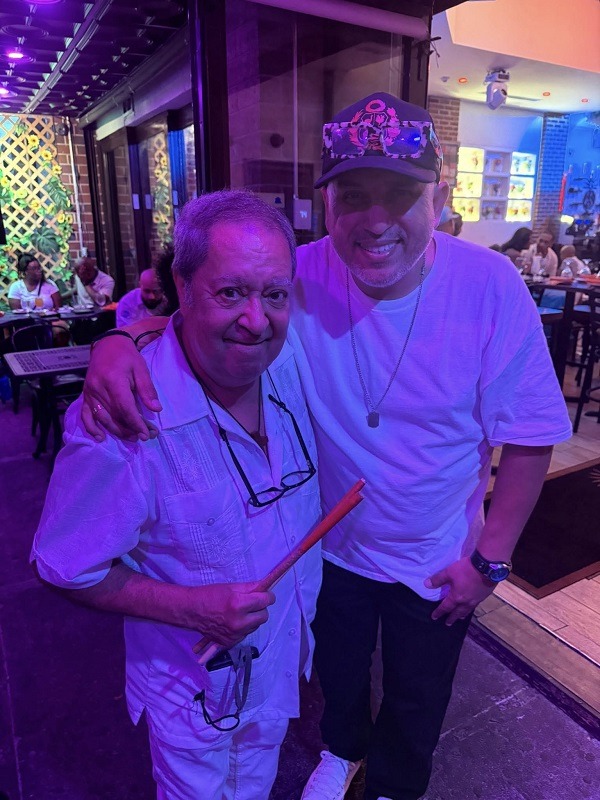
Rafaelito and Nicky Marrero
American Latin jazz percussionist Nicky Marrero and Rafaelito at Mamajuana Cafe in the Bronx

It was also in Munich where he began to have his first professional experience together with major musical groups from there such as the Sexteto Melaza, where he played alongside musicians from different parts of the world. At a student barbecue, Rafael was hanging out with many Latinos, and they began to sing and play instruments together, leading them to form a group, which they named Melaza. During that time, he dedicated himself to play salsa, guaracha, son, bolero, and cha-cha-cha in a sextet format.

The group featured a guitarist, a bassist, a conga player, a timbalero, a bongo player, and a singer. This sums up his first musical experience in Germany, which lasted about a year and a half. It also helped him draw the attention of other musicians in the city’s music scene, who convinced him to join other projects that were being created.

Another of those projects included a trio of young musicians called Madera Limpia which was founded in 2005, when rap, reggaeton, reggae, and many other genres mixed with Latin rhythms such as changüí or kiribá were super trendy. It turns out that a Romanian couple traveled to Cuba, produced a film called “Paraíso,” and went on a concert tour through Europe and North Asia. Therefore, they needed to hire many musicians, including the members of Madera Limpia, who contacted Rafael through connections and asked him to be their bassist. The Peruvian accepted the offer and toured all those places with these musicians, an experience he talks about with great affection.

Back in Munich, he met Lou Bega, the creator of the hugely popular swing-pop cover of Pérez Prado’s “Mambo No. 5,” which stayed at number one for 36 consecutive weeks in the United States. When his producer wanted to find a band to accompany him, there were very few Latin musicians in the city and Rafael was one of them. Obviously, they called him and his colleagues to work on some demos featuring Bega’s vocals and trumpet samples. After being selected, he became the director of his live band and accompanied him on many concerts in Europe between 2007 and 2008.

El Canario and Rafaelito
José Alberto ”El Canario” and Rafaelito

Rafaelito Y Su Tumbao

Right there in Munich, Rafael finally made up his mind and formed his own musical group, Rafaelito Y Su Tumbao, which currently has branches in Munich, Lima, and New York, where the artist currently resides. Rafael arrived in this city as early as 2020, which is when he got to perform with stars such as Charlie Aponte, Andy Montañez, Jose Alberto “El Canario,” Hildemaro, and many others. When he saw how good the human material was in his new place of residence, he also founded Rafaelito Y Su Tumbao in New York with musicians from there. 

What is striking about his move to New York is that it was motivated by Rafael’s reunion with his childhood sweetheart in Peru, whom he reconnected with in 2019. It turns out that his partner was living in New York, so he jumped on this new opportunity that life offered him and made the romantic decision to cross the Atlantic again and marry her. This radically changed his life both personally and professionally, but he’s glad he did.

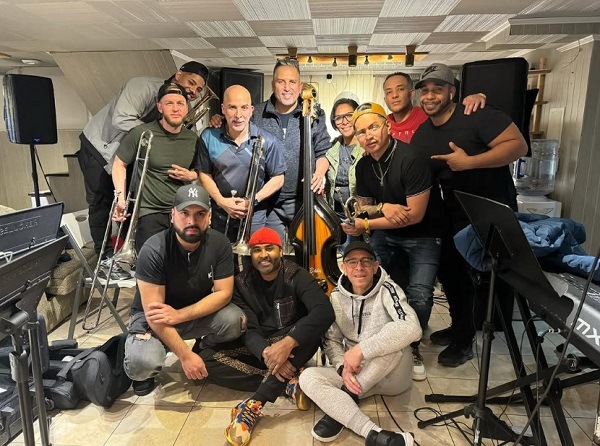
Members of Rafaelito Y Su Tumbao
Members of Rafaelito Y Su Tumbao in New York
Line Up :
Rafael Pareja – Baby Bass
Ray Cabrera – Piano
Andres Garces – Vocal
Karla Olivo Moreno – Vocal
Dennis Hernandez – Trumpet
Christian Gomez – Trumpet
Jimmy Bosch – Trombone
Andre Carpio – Timbal
Hector “ Jereto “ Ferreyra – Congas
Chuito Quintero – Bongo

Read also: Dominican bandleader and musical director Orlando Santana talks about La Makina and his career in general

Actress, comedian, and singer Carmen Nydia Velázquez tells us about the best of her career

Through a very kind friend of our editor Eduardo Guilarte, María del Carmen, we have been fortunate to make contact with the extremely talented Puerto Rican actress, comedian, and singer Carmen Nydia Velázquez, with whom we had the opportunity to talk with for our report on Bad Bunny’s Super Bowl halftime show.

It turns out that her career is so fascinating that we obviously had to talk to her and know much more about her artistic journey, both in her native Puerto Rico and abroad. Without further ado, these are the highlights of our conversation.

Carmen Nydia cantando
Carmen Nydia Velázquez singing live

Carmen’s education and start in acting

When it came to her academic background, theater always caught her attention, but she also loved to sing. These tastes led her to study drama at the University of Puerto Rico, where she brought out her histrionic talent and showed just how good she would be at doing comedy in the future.

Even before graduating, she already worked in theater and appeared in Francisco Arrivi’s play *Vejigantes*. At that time, she was in her last academic year, and the play was a tribute to the great Puerto Rican actress Lucy Boscana, who had died back then. For many years, Boscana played the character of Toña, and Carmen did the same when it was her turn in this new version, which had so much impact that it led to a film based about the same story.

Then, in the 1970s, she joined the musical group Moliendo Vidrio, led by Gary Núñez, and was there for about 11 years, while doing theater and television. The group took up a lot of Carmen’s time and was part of the New Song movement in those days.

Kiosko Budweiser and Susa Cruz

In 1983, Carmen first portrayed who is still considered one of her most iconic characters to this day, Susa Cruz. Channel 7, known at the time as Teleluz, first aired the comedy segment Kiosko Budweiser, featuring the beloved Susa alongside other iconic characters such as Epifanio, Johnny El Men, Humberto, and El Negrito.

Carmen Nydia and Victor
Carmen Nydia Velázquez (Susa) and Víctor Alicea (Epifanio)

When Teleluz ceased to exist, Carmen took a break from the character to continue her theatrical activities and start singing professionally. However, later, Channel 4, Guapa Televisión, called the actors back to do the segment again, which is when it became a media phenomenon and gave immense fame to the characters, especially Susa and Epifanio.

The high popularity of the show and its stars made them appear on TeleOnce, which continues to air today, and Telemundo, where they are recurrent figures during the regular programming.

People enjoyed Susa and Epifanio so much that they have even hosted a radio show, and both Carmen and Víctor Alicea (Epifanio) will soon celebrate their 38th anniversary as an artistic couple, though they have not yet decided what to do for that day. 

Tiempo de Cantar

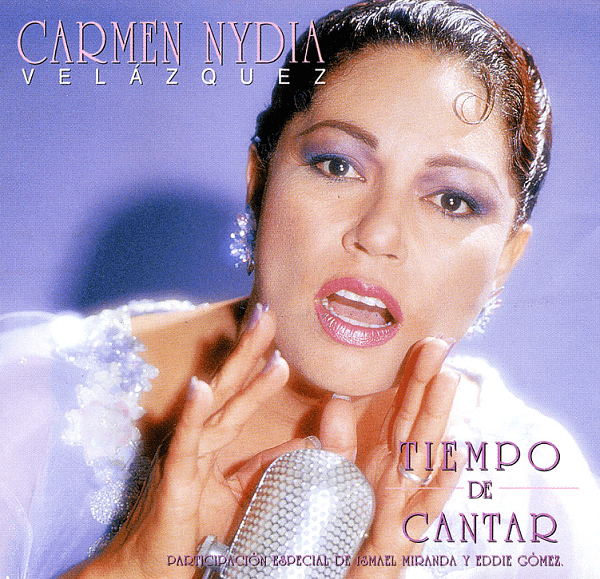
By the late 1990s, she released an album of boleros titled “Tiempo de Cantar,” which was her first solo production. It all started with a show by Susa and Epifanio in the south of Puerto Rico, where they met a musician friend of hers named Cacho Montalvo. 

He has spent many years urging her to go back to singing, but she ws not entirely sure due to all the professional commitments she already had, added to the fact that she did not have very fond memories from the time in which she had to promote her own music of the New Song movement which, being so traditional, did not receive the media coverage it deserved. This killed Carmen’s enthusiasm, as she took for granted that she would never sing professionally again.

However, Montalvo and Carmen’s husband “conspired” to some extent to convince her, and they succeeded. On the album, the artist pays tribute to the songs she grew up with and used to hear on the radio as a child, achieving a result she loved. 

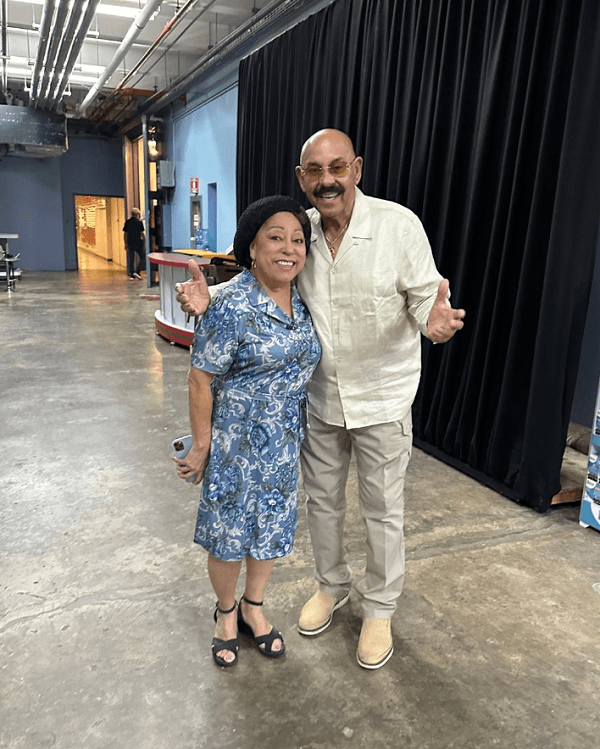
Carmen Nydia and Oscar
Carmen Nydia Velázquez y Oscar D’ León

Her solid background in theater gave her the ability to convey her feelings through her voice and expressions, which made her have a wide acceptance. In fact, she is now a member of the Music Hall of Fame in Puerto Rico, a venue dedicated to romantic and bohemian music that hosts live events featuring artists associated with those genres. 

Hacienda Susa

Among the many projects she was involved in, Carmen also ran a restaurant and activity center called “Hacienda Susa.” She describes this stage of her life as interesting, yet exhausting and demanding at the same time.

Due to the success she had on television, the project did very well, so she and her team were there doing shows for visitors from all over the island practically every day. The problem was that it was too much work for her at the time, and she told us that sometimes, she had to leave the hacienda to perform a show outside, return to meet her commitments there and then close the venue. 

The above, added to the fact that everyday fewer people were coming to the venue and the extremely high rent Carmen had to pay, made her ask herself if it was really worth continuing with the project in exchange for those dividends. That was when she finally got tired of it and decided to close the venue indefinitely to focus on what she was truly passionate about: acting.

Album by Carmen Nydia
Cover of the album ”Tiempo de Cantar” by Carmen Nydia Velázquez

Read also: Background and reactions to Bad Bunny’s halftime show in The Super Bowl

  • « Go to Previous Page
  • Page 1
  • Interim pages omitted …
  • Page 12
  • Page 13
  • Page 14
  • Page 15
  • Page 16
  • Interim pages omitted …
  • Page 32
  • Go to Next Page »

International Salsa Magazine (ISM) is a monthly publication about Salsa activities around the world, that has been publishing since 2007. It is a world network of volunteers coordinated by ISM Magazine. We are working to strengthen all the events by working together.