• Skip to primary navigation
  • Skip to main content

International Salsa Magazine

  • Home
  • Previous editions
    • 2025
      • ISM / November 2025
      • ISM / October 2025
      • ISM / September 2025
      • ISM / August 2025
      • ISM / July 2025
      • ISM / June 2025
      • ISM / May2025
      • ISM / April 2025
      • ISM / March 2025
      • ISM / February 2025
      • ISM / January 2025
    • 2024
      • ISM / December 2024
      • ISM / November 2024
      • ISM / October 2024
      • ISM / September 2024
      • ISM / August 2024
      • ISM / July 2024
      • ISM / June 2024
      • ISM / May 2024
      • ISM / April 2024
      • ISM / March 2024
      • ISM / February 2024
      • ISM / January 2024
    • 2023
      • ISM / December 2023
      • ISM / November 2023
      • ISM / October 2023
      • ISM – September 2023
      • ISM – August 2023
      • ISM July 2023
      • ISM Edition June 2023
      • ISM – May 2023
      • ISM April 2023
      • ISM March 2023
      • ISM February 2023
      • ISM January 2023
    • 2022
      • ISM December 2022
      • ISM November 2022
      • ISM October 2022
      • ISM September 2022
      • ISM August 2022
      • ISM July 2022
      • ISM June 2022
      • ISM May 2022
      • ISM February 2022
      • ISM January 2022
    • 2021
      • ISM December 2021
      • ISM November 2021
      • ISM October – 2021
      • ISM September 2021
      • ISM August 2021
      • ISM July 2021
      • ISM May 2021
      • ISM April 2021
      • ISM June 2021
      • ISM March 2021
      • ISM February 2021
      • ISM January 2021
    • 2020
      • ISM December 2020
      • ISM November 2020
      • ISM October 2020
      • ISM September 2020
      • ISM August 2020
      • ISM July 2020
      • ISM June 2020
      • ISM May 2020
      • ISM April 2020
      • ISM March 2020
      • ISM February 2020
      • ISM January 2020
    • 2019
      • ISM December 2019
      • ISM November 2019
      • ISM October 2019
      • ISM Septembre 2019
      • ISM August 2019
      • ISM July 2019
      • ISM June 2019
      • ISM May 2019
      • ISM April 2019
      • ISM March 2019
      • ISM February 2019
      • ISM January 2019
    • 2018
      • ISM December 2018
      • ISM November 2018
      • ISM October 2018
      • ISM September 2018
      • ISM August 2018
      • ISM July 2018
      • ISM June 2018
      • ISM May 2018
      • ISM April 2018
      • ISM March 2018
      • ISM February 2018
      • ISM January 2018
    • 2017
      • ISM December 2017
      • ISM November 2017
      • ISM October 2017
      • ISM September 2017
      • ISM August 2017
      • ISM July 2017
      • ISM June 2017
      • ISM May 2017
      • ISM April 2017
  • Download Salsa App
    • Android
    • Apple
  • Spanish

Search Results for: Son de Bolero

Benny More

Latin America / Cuba

Benny More. The story of the biggest crowd idol that Cuba has given.

Benny More. He is not just another musician, he is unanimously the greatest popular artist that has ever existed in Cuba. It is the symbol, the myth, the legend, as the summary of Cuban popular music that is very rich and abundant. Benny symbolizes the peasant party, the sarao, the bohemia, the download, the coffee, the bar, the theater, the party, the carnivals, the show. El Bárbaro del Ritmo is the best of popular music.
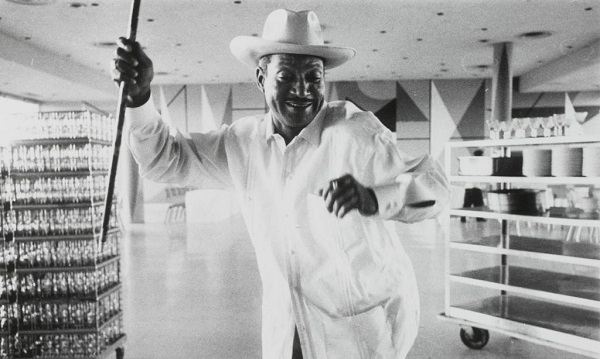
Benny More
Benny More

Born on August 24, 1919 at 7:00 a.m. m. in the Pueblo Nuevo neighborhood of the town of Santa Isabel de las Lajas, belonging to the Cienfuegos province. His parents were named Virginia Moré and Silvestre Gutiérrez, and Benny was the oldest of 18 siblings. His surname Moré came from Ta Ramón Gundo Moré (a slave of Count Moré), who according to the tradition of the Congos, was their first king in Santa Isabel de las Lajas.

He was gifted with a flowing tenor voice that he colored and phrased with great expressiveness.

This context was definitive for his future career in music, he learned to play the insundi, the yuka drums, those of Makuta and Bembé, invokers of deities, with whom he sang and danced perfectly, but also to interpret the son, the guaracha and the rumba.

Since he was a child he manifested his great vocation for music, as he would spend all day humming a popular song or improvising and directing ensembles made up of machetes, bongos made from milk cans, guitars made from a board and nails made from strings of string. sew, two sticks as keys, etc. And when he was ten years old, he “grated” a “real” three that had been lent to him, with which he would escape from his mother to the parties near his house.
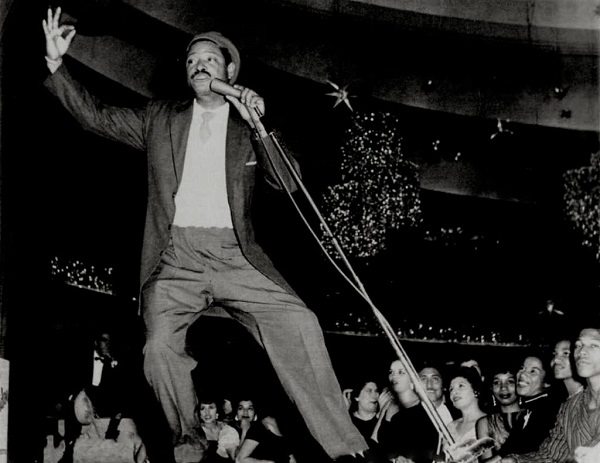
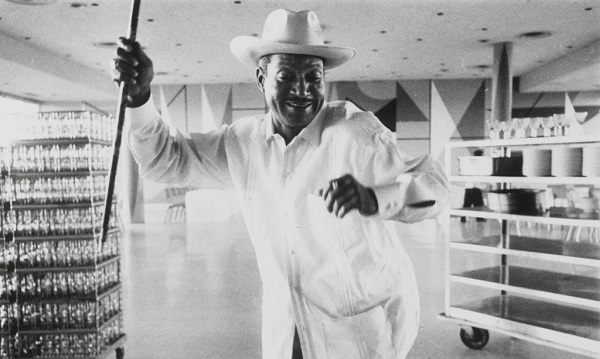
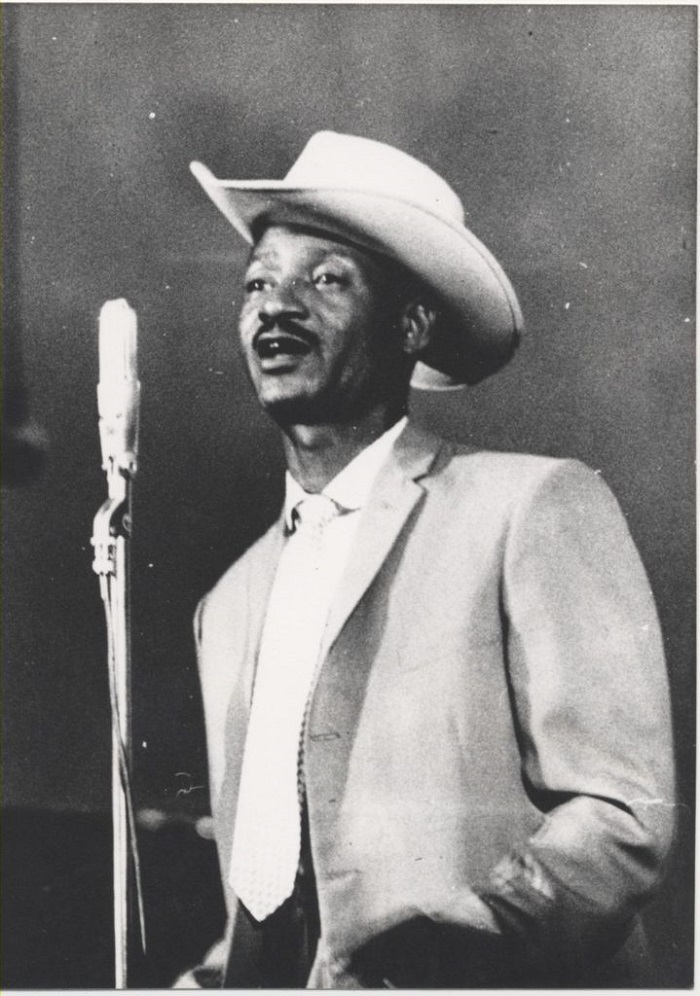
Benny More in concert

Moré was a master in all genres of Cuban music.

He could always be found standing on a table singing and reciting a son manigüero, surrounded by listeners. He spent his childhood and adolescence as Bartolomé, without the opportunity to study or get a permanent job. Like his brother Teodoro, Bartolomé was enrolled in the José de la Luz y Caballero School of Public Instruction, where he always stood out for his conduct and application.

He was gifted with a flowing tenor voice that he colored and phrased with great expressiveness.

This context was definitive for his future career in music, he learned to play the insundi, the yuka drums, those of Makuta and Bembé, invokers of deities, with whom he sang and danced perfectly, but also to interpret the son, the guaracha and the rumba.

Since he was a child he manifested his great vocation for music, since he would spend all day humming a popular song or improvising and directing ensembles made up of machetes, bongos made with milk cans, guitars made with a board and nails with strings of thread. cook, two sticks as keys, etc. And when he was ten years old, he “grated” a “real” three that had been lent to him, with which he would escape from his mother to the parties near his house.

Why is the Bacardi symbol a bat?

Moré was a master in all genres of Cuban music.
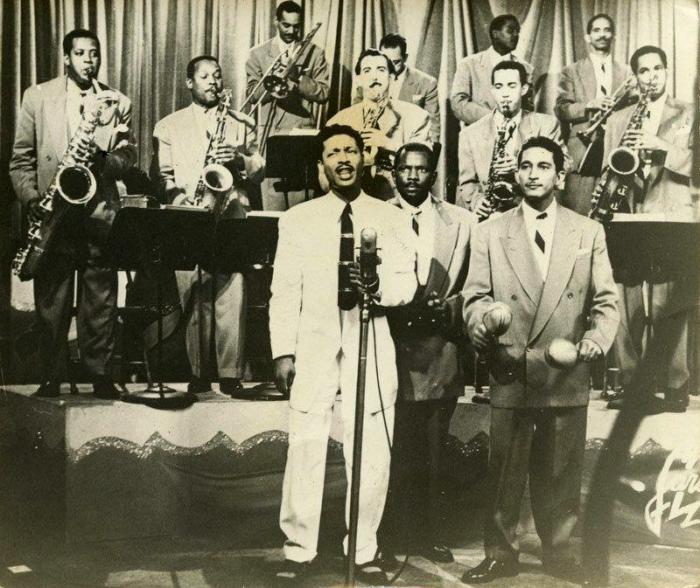
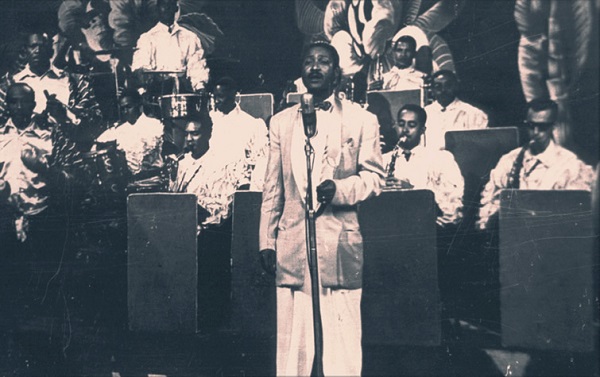
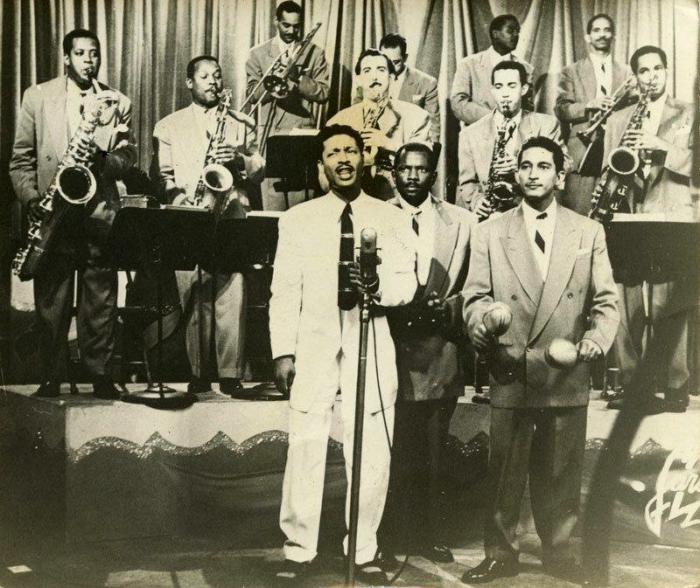
Benny More with the orchestra

He could always be found standing on a table singing and reciting a son manigüero, surrounded by listeners. He spent his childhood and adolescence as Bartolomé, without the opportunity to study or get a permanent job. Like his brother Teodoro, Bartolomé was enrolled in the José de la Luz y Caballero School of Public Instruction, where he always stood out for his conduct and application.

His voice particularly stood out in the son montuno, the mambo, and the bolero.

Since he was a child, his aptitude for singing and improvisation stood out, which he demonstrated when, barely seven years old, he escaped to entertain Guateques and parties nearby and stayed singing notes with his mother to prevent him from sleeping while ironing until late at night. .

Benny went through a complicated life, but he was willing to do anything to achieve his dreams of success. With almost twenty years of age, in 1940 Bartolomé said goodbye to his mother at the Ritz Hotel in Central Vertientes, where she worked, and traveled hidden, indistinctly, on a train and in a truck, to the City of Havana. He was definitely coming to try his luck in the bustling city. Since then he would be seen in the famous neighborhood of Belén, with a guitar acquired in a pawnshop, wandering through cafes, bars, hotels, restaurants, and even brothels.

That same year he told his cousin, a fellow downloader: “I’ll stay in Havana, here I get up or I sink.” From then on the saga of the downloads began in the bars on the avenue of the port. Once, recalling those times, he confessed: “I went out into the street with a guitar on my shoulder to sing to the tourists. I am not ashamed of it; Carlos Gardel also did it in Argentina and he is the king of tango”

At that time, the Supreme Court of Art began to be broadcast on the CMQ station. Bartolomé Maximiliano Moré appeared on that program animated by Germán Pinelli and José Antonio Alonso. After presenting it and at the moment of starting his presentation, the bell rang for him. Later Bartolomé returned to Monte y Prado to the Supreme Court and on this second occasion he won the first prize. Possessor of a fresh voice, with a beautiful timbre, sensual and evocative, of a black peasant, despite his misery, Bartolo continued to sing with all the inner strength that Cuban rhythms demanded of him.

One of his escapades Siro Rodríguez, a member of the famous Trio Matamoros, heard him sing in the bar of El Templete restaurant, on Avenida del Puerto, and was very impressed by the boy’s voice and tuning. Bartolomé’s entry into the group led by Miguel Matamoros can be considered his true debut as a professional singer, since with said group he had a stable job for the first time as a musician and made his first recordings on 78 revolutions per minute records.

Benny knew he had a voice, an atche (luck), and a destiny. Perhaps he sensed it, intuited it, or simply trusted in his triumph. When he started with Miguel Matamoros and his group, he already wanted to make changes to the picket line. In Mexico, when Miguel got sick, he was able to direct the group, took command and made the friends enjoy themselves at the El Patio cabaret.

When the contract ended, the Matamoros group returned to Havana, but without Bartolomé, who decided to try his luck alone in Mexico. When communicating his decision to the famous author of the son El que sowing his corn, Miguel Matamoros would reply: “It’s very good, but you have to change your name from Bartolo, which is very ugly. You’re not going anywhere with him. You’re right, Bartolo replied, from today I’ll be called Benny, yes, Benny Moré.

The owner of the business was hypnotized by the tasty atmosphere that Benny created as a manager. After singing with several leading orchestras in Mexico, he stood up nicely with the most famous band of the 20th century: Pérez Prado and the Cuban mambo.

With this meeting, two geniuses came together: in Benny Moré there was talent and natural intuition; in Pérez Prado, in addition to all that, mastery of technique and an enormous facility for making music.
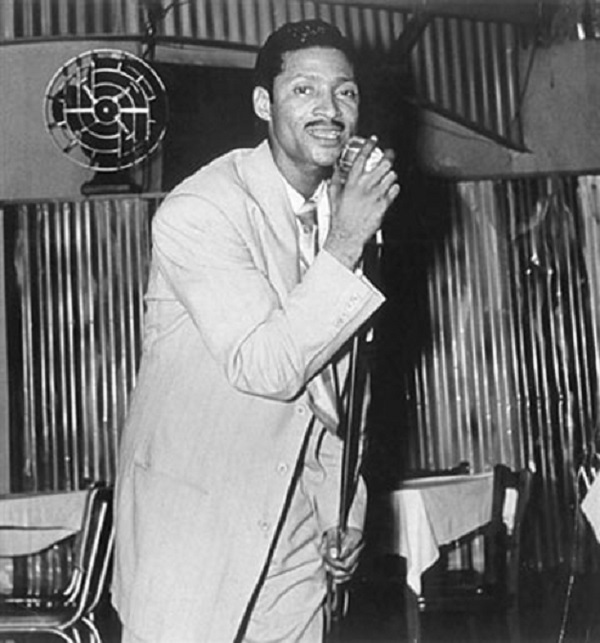
Benny More singing
Benny More singing

With Pérez Prado he conquered the noble Aztec people on tours of different states of that sister country. Due to the success achieved by Benny, the town awarded him the title of “Prince of the mambo” and Pérez Prado that of “King of the mambo”. He sang like no one else in the world and began his international rise.

By that time Benny’s voice was already known in Panama, Colombia, Brazil, Puerto Rico, Haiti, Venezuela, and of course, in his native Cuba. In the lively world of nightlife in Mexico City, the Cuban singer performed in countless theaters, among others the Margo, the Blanquita, the Folliers and the Cabaret Waikiki, alternating with renowned artists such as the legendary vedette Yolanda Montes (Tongolele ), the Mexican Toña la Negra, and the prominent Cuban pianist and composer Juan Bruno Tarraza, for whom Benny sang the bolero Ya son las doce. He participates in many films and upon his return to Cuba, he was already sure that he had to be counted on.

Nostalgia for his family, friends, for the Homeland, and the desire to obtain laurels on his Island, where he considered that he was not well known, made him return to his beloved Lajas at the end of 1950. The older sonero was definitely in Cuba, he had left behind comforts, material and spiritual satisfactions, friends and even the loves that winners usually do not lack.
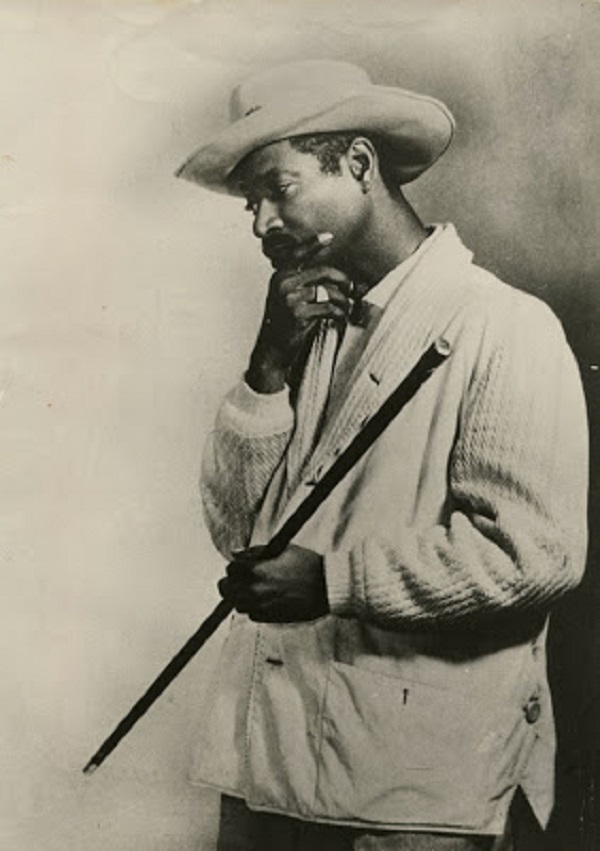
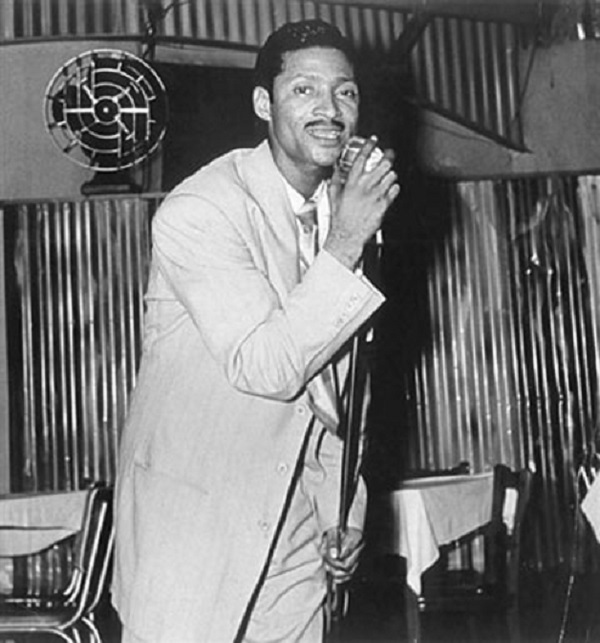
Benny More Photo
Benny More Photo

For the next two years, he performed by contract for a program called “De fiesta con Bacardi”, which aired on the Cadena Oriental radio station with the Mariano Mercerón orchestra, and the singers Fernando Álvarez and Pacho Alonso.

As Benny Moré was an exclusive artist for RCA Víctor, this firm demanded his presence in Havana to make different recordings. To fulfill this commitment, he made alternate trips to Havana and thus maintained his commitment to the eastern radio network. After the engagement at Casa Bacardí and master Mercerón, in 1952 Benny Moré returned to Havana.

Certainly Benny concluded an era, closed a chapter of Cuban musical life, that stage of nightlife that was already declining. Benny’s life was related to a world that has already disappeared. Then everything became myths and legends. Benny kept singing, but now it would be on scratch records, which were digitized.

Today’s “oidores” (listeners) must travel back in time, abstract themselves, imagine those seedy bars in the Havana port full of curious tourists. Of Chinese inns that sold “complete” for poor people who passed the hat, after singing through the streets of Havana.
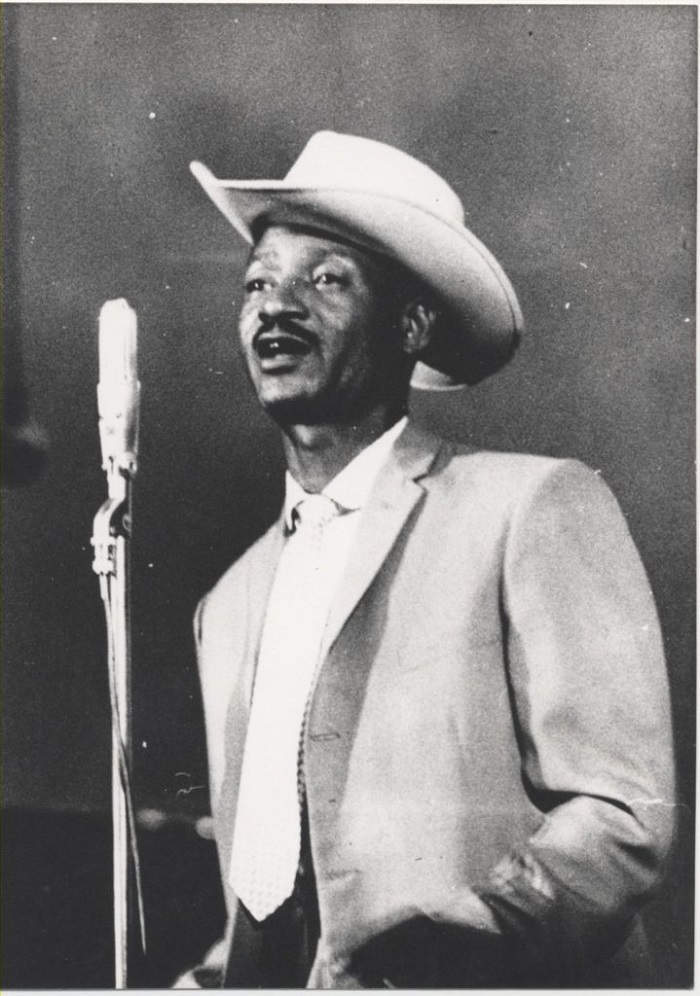
Benny More
Benny More

Nicaraguan singer and guitarist Yelba Heaton in an exclusive interview

Yelba Heaton is a Nicaraguan-born bandleader, singer and guitarist whose strong musical heritage coming from her family has made her have close contact with music since before she could say her first words. 

The artist based in The Woodlands, Texas has been kind enough to answer a few questions for us in order to know more about her musical beginnings, the creation of her band, her projects outside of music, among other topics.    

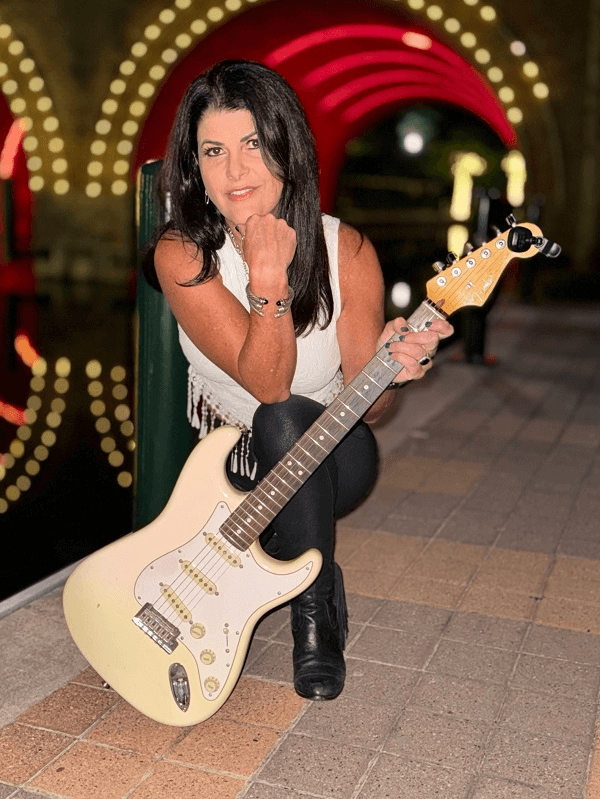
Yelba posing for pics
Singer and guitarist Yelba Heaton posing for pictures with her instrument

Yelba’s musical family   

For many generations, Yelba’s family had become very popular among her acquaintances for knowing how to carry a tune properly and having some guitarists and pianists in this melodic family tree.   

In her case, as she grew older, she and her siblings saw their father constantly serenading their mother and playing romantic boleros on his guitar, so this instrument was a day to day affair for the children. This is how the couple’s children began to experiment with music both together and separately, which little by little sparked Yelba’s interest in this branch of the arts.   

This interest reached such a point that both she and her sister Thelma began to compete in every talent show that was held at the school they attended, Yelba played the bandurria and Thelma played the guitar. Both of them were very good with each other on stage and their voices joined together in a very harmonious and pleasant way for the audience that heard them.   

When she turned nine, she participated in the tv show ”Junior Patherns”, which was very popular in her country at that time. Already at that time, she showed her great skill as an performer and the way she would follow later on.    

As she got older, she began to sing in the church she was attending at the time, but could not start her career formally until she became an adult after her divorce in the United States. This was a very stormy phase of life for Yelba, as she had recently separated from her husband and father of her five young children, leading her to suffer from depression and believe that her life was over. However, it was just beginning.    

At the same church, she met another guitarist, who when saw the bad stuff that she had gone through, decided to invite her to participate in an open mic night at a nightclub, which Yelba did not even know what it was at the time. Although she confesses to being extremely intimidated by the great artists with whom she shared that night, it was an experience that she is grateful to have had, as it gave her the opportunity to put aside her sadness for one night and experiment with music like she had never done before.   

After sitting down with her guitar and performing ”Besame mucho” to the audience that night, having heard those present applause and ask for more songs made her be truly happy and blissful. Immediately, she knew she wanted to experience that feeling again and again.   

music brought Yelba back to life
After her divorce, music brought Yelba back to life

Formal beginning of Yelba in music

That same night that Yelba performed at that venue, Jeremy Garcia, a flamenco guitarist accompanied her with his instrument and resulted in a beautiful combination of melodies that left all those present delighted, including the owner of the place, who proposed to both of them to make a paying gig for next Saturday, to which they replied ”of course”. That was how Yelba, Jeremy and bongo player Benny Rod (Yelba’s friend from church who joined later) started their paid musical careers as a trio.   

Over time, the three artists caught the attention of critically acclaimed guitarist Mark Towns, who invited Yelba to sing with him at an event in Clear Lake and also gave him some copies of their CDs. Towns was a key piece in the formal creation of the band and the trust that she was gaining to sing in public. 

Over the next few years, she was performing at larger and larger events and learning all she could about clave, song forms of various genres, stage presence and other important aspects of her nascent career.   

Creation of Yelba Variety’s Band and Latin Fire  

Although Yelba, Jeremy and Benny were already a trio, they still could not find a name that perfectly defined what they stood for, but that changed when one day they performed songs Yelba had learned to sing on her father’s knee when she was little. That night, everything went great and they received very positive feedback from the audience and the media who covered the concert.   

As a result of this performance, a reporter from the Houston Chronicle wrote an article about the band in which he was very complimentary about their show and described what he saw that day as ”Latin fire”. The first line of the article said that: ”Latino fire is what I heard last night…”. Yelba liked this opinion so much that she decided to baptize her band as ”Latin Fire”.   

Such was the impact this report had on her career that the Nicaraguan still keeps a copy of it and can be found on her website to this day. This was undoubtedly a very important event for her and her band mates.   

 Yelba and her husband
Yelba next to her husband and part of her band Roy Heaton

Yelba as a wedding planner and motivational speaker   

Just like Yelba performs very well in music, she has also found time to work as a wedding planner, a hobby for which she found out she is talented. The artist has assisted numerous marriages with minimum budget, but with her help, she was able to achieve great things with very little money. This is how she has made engaged couples ask for her help and she is always happy to collaborate with them.   

Another area in which she works on very well is motivational speaking. She found out she had a talent for this while doing her master’s degree in finance and learned to move in the corporate world, which gave her the necessary experience to address an audience properly. In addition, her career as an artist requires her to sing, play and dance in front of crowds, which also gives her the confidence she needs to speak to all kinds of audiences at a given time.   

Without a doubt, Yelba Heaton is a multifaceted Latina who leaves our culture on high and we are proud to have had her in this edition of International Salsa Magazine. 

Read also: Julio Vilchez and his orchestra conquer Miami 

The Soul of Latin American culture – Salsa, Merengue y Lambada

Latin American / Venezuela / Caracas

Did you know that Salsa, Merengue and Lambada are rhythms that have been enjoyed in the last decade? Well, this link that unites them is the energy and passion for life, expressing itself in music, showing itself in the romance of couples dancing in harmony and with dance it unites them even more in a sentimental way as in fellowship.

These rhythms were born from a very urban environment, where each dancer can freely show their personality in the movement, however, following certain rules that each genre has, where one can follow each step and technique or do it spontaneously. For example:

✓ Never use the same foot twice, it must be alternated (right, left, right…).

✓ Dance with your partner as a mirror, that is, if you go to the right, your partner goes to the left.

✓ Transfer of weight from one foot to another as steps are performed.

Salsa is a rhythm that originates from the synthesis of Cuban son and other Caribbean music genres, with jazz and other American rhythms. One of the main contributors comes from the African rumbas along with the cumbia, the guaguancó, the guajira, the Cuban son, the mambo, the montuno son, the cha cha cha, among others.

It can be said that salsa is one of the most important rhythms in the music industry where it has many characteristics of its contributors, for example, “salsa” is close to “mambo” due to the steps executed in counts of eight, its movements and patterns are unique, however, it is a side-by-side dance with different turns.

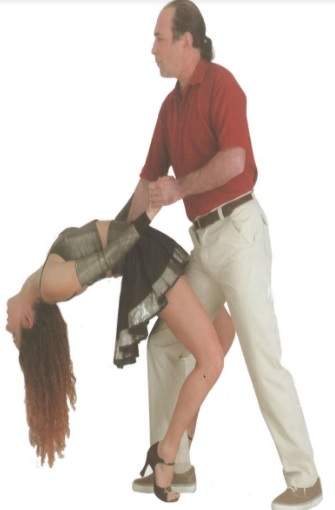
Couple dancing Salsa

The Merengue has its origin in the Dominican Republic and has a huge degree of popularity in the Caribbean area, it is a slow rhythm that increases its speed at the end of the dance, it is similar to the bolero but it is danced more than anything in groups than with a partner.

The secret of the dance is based on the transfer of weight from one foot to another, where each Latin genre has a characteristic that differentiates them, the best example is the similarity that everyone believes that “salsa” has with “merengue”, where Salsa has 4 beats, where the first beat touches the floor lightly with the tip of the foot quickly, which is known as “TAP” and this is repeated in four “4” and eight “8”, instead The merengue does not exist, this “TAP” is only 2 beats, it is a constant rhythm, very simple, whose speed of steps is marked by the musical rhythm.

But both genres have to have in the dance a movement of the hip, shoulders and position of the hands that characterizes them, marking the sensuality of Latin rhythms.

The “Lambada, a Brazilian genre that originated from the small cafes and bars that came from the garrafa dance, is believed to have been the product of rhythms such as the “Carimbo” and the “Merengue” with influences brought from the “Forro” and the “Samba” so it has a lot of Caribbean music influences, but the melody is the combination of Caribbean drums, brass and electric guitars with an added touch of Spanish elements and the flavor of the local indigenous people. It first spread to Bahia, Europe, Japan, the USA and the Middle East. It is currently danced in nightclubs and dance clubs, since its creation its jiv, merengue, rumba, even sevillanas and acrobatic maneuvers have evolved.

It is a 3-beat dance (fast – slow – fast) where the first step is taken with the first beat of the music, the second is the movement of one of the 2 senses and the third is the transfer of the weight back to the center moving the leg more slowly.

This dance is danced with the whole body, women dance pointe, flex the knees and the trunk moves in the opposite direction to the lower part of the body, if the hip rotates in one direction the rib cage rotates in the opposite direction. It can be danced alone or as a couple (they dance very close together giving the impression that it is one person), where the man molds his partner in the dance and the woman can embellish the dance with head movements or a controlled intentional fall producing a wave from the knee to the hips and shoulders.

If you want to know and learn some basic steps of the mentioned rhythms, look for the book in movement Latin Dance Dessi and Orod Ohanian and get passionate with these three “3” hot dances. Or follow us and watch the following videos to learn how to dance merengue, salsa and lambada.

Benny Moré. The story of Cuba’s biggest crowd idol

Latin America / Cuba / La Habana

Who is Benny Moré? He is not just another musician, he is unanimously the most brilliant popular artist that has existed on the Afro-Cuban island. He is the symbol, the myth, the legend, it is undoubtedly the summary of the popular, rich and abundant music of Cuba.

Benny Moré symbolizes the peasant “Guateque”, the “Sarao”, the bohemian, the coffee, the bar, the theater, the party, carnivals, the show. “El Bárbaro del Ritmo” was the most popular in Afro-Cuban music.

Benny Moré
Benny Moré

He was born on August 24, 1919 at seven in the morning in the Pueblo Nuevo neighborhood of the town of Santa Isabel de las Lajas, belonging to the Cienfuegos province. His parents were Virginia Moré and Silvestre Gutiérrez, and Benny was the oldest of 18 siblings. His last name Moré came from Ta Ramón Gundo Moré (slave of the Count Moré), who, according to the tradition of the Congos, was his first king in Santa Isabel de las Lajas.

Benny was gifted with a fluent tenor voice that gave life with great expressiveness and this context was definitive for his future career in music. He learned to play the insundi, the yuka drums, the Makuta and Bembé, invocators of deities, with whom he not only sang and danced to perfection, but also played the son, the guaracha and the rumba.

Since he was a child he expressed his great vocation for music, he would spend all day humming a song or improvising and directing ensembles composed of machetes, bongos made with milk cans, guitars made with a board and nails with strings of string sew, two sticks as keys, and so on.

Benny Moré singing
Benny Moré singing

Moré was a teacher in all genres of Cuban music

The “Bárbaro del Ritmo” could always be found standing on a table singing and playing, surrounded by listeners. Bartolomé spent his childhood and adolescence, with no opportunity for study or permanent employment. Like his brother Teodoro, Bartolomé was enrolled in the School of Public Instruction “José de la Luz y Caballero”, where he always stood out for his conduct and application.

Why is the Bacardi symbol a bat?

Since he was a child, Moré had skills for singing and improvisation, which he demonstrated when he was barely seven years old, when he would run away for a few hours to entertain parties in the neighborhood and loved singing notes with his mother, to prevent her from sleeping while ironing late into the night.

His voice was particularly highlighted in the Son Montuno, the Mambo, and the Bolero

Benny Moré live
Benny Moré live

Benny went through a complicated life, but he was willing to do anything to achieve his dreams of triumph. With almost 20 years of age, in 1940 Bartolomé said goodbye to his mother at the Hotel Ritz in the Central Vertientes, where she worked, and traveled hidden, indistinctly, by train and truck to the City of Havana. He was definitely in the mission to try his luck in the bustling city!

Since then, he was seen by the famous neighborhood of Belen, with a guitar acquired in a pawnshop, wandering through cafes, bars, hotels, restaurants, and even brothels. That same year he told his cousin: “I stay in Havana, I rise up here or I sink”. From that moment began the saga of concerts at the bars of the port avenue … Once remembering those times, he confessed: “I threw myself into the street with a guitar on my shoulder to sing to tourists. I am not ashamed of it; Carlos Gardel also did it in Argentina and is the king of tango. ”

At that time, the CMQ station began broadcasting the Supreme Court of Art. Bartolomé Maximiliano Moré appeared in that program that Germán Pinelli and José Antonio Alonso encouraged. After presenting it and at the moment of beginning his presentation, they rang the bell.

Later Bartolomé returned to Monte and Prado to the Supreme Court and on this second occasion he won the first prize. Possessing a fresh voice, beautiful timbre, sensual and evocative. Bartolo sang with all the inner strength that claimed the Cuban rhythms.

In one of his raids, Siro Rodríguez, member of the famous Matamoros Trio, heard him sing in the bar of El Templete restaurant, on Avenida del Puerto, and was very impressed by the boy’s voice and tuning.

The entry of Bartolomé to the group of Miguel Matamoros was a fact and can be considered as his real debut as a professional singer, because with this group he had for the first time a steady job as a musician and made his first recordings on 78 revolutions per minute discs.

Benny knew he had a voice, the luck and a destiny. Perhaps he sensed it, intuited it, or simply trusted his triumph. When he started with Miguel Matamoros and his group, I already wanted to make changes in the picket line.

In Mexico, when Miguel became ill, he was able to direct the group, took control and enjoyed the “Cuates” in El Patio cabaret. When the contract ended, the Matamoros group returned to Havana, but without Bartolomé, who decided to try his luck by himself in Mexico.

When he communicated his decision to the famous author of El Son Siembra Su Maíz, Miguel Matamoros said: “It’s very good, but you have to change the name of Bartolo, which is very ugly. With that name you will not go anywhere”, You are right, Bartolo replied, from today I will call myself Benny, yes, Benny Moré. ”

The owner of the business was hypnotized by the very tasty atmosphere that Benny led as director. After singing with several push orchestras in Mexico, he planted himself beautifully with the most famous band of the 20th century: Pérez Prado and the Cuban mambo.

With this meeting two geniuses joined: Benny Moré had talent and natural intuition; in Pérez Prado, in addition to all that, the mastery of technique and an enormous facility to make music. With Perez Prado he conquered the noble Aztec people on tours of different states of that sister country.

Benny Moré
Benny Moré

Due to the success achieved by Benny, the town gave him the title of “Prince of Mambo” and Pérez Prado, “King of Mambo“. He sang like nobody else in the world and began his international promotion.

By that time, Benny’s voice was known in Panama, Colombia, Brazil, Puerto Rico, Haiti, Venezuela, and of course, in his native Cuba.

In the joyful world of nightlife in Mexico City, the Cuban singer performed in many theaters, including Margo, Blanquita, Folliers and Cabaret Waikiki, alternating with renowned artists such as the legendary star Yolanda Montes (Tongolele), the Mexican Toña la Negra, and the outstanding cuban pianist and composer, Juan Bruno Tarraza, of whom Benny sang the bolero “It’s already twelve o’clock”.

Benny participates in many films and upon his return to Cuba, he was already certain that he had to be counted on.

The nostalgia for his family, friends, for the Homeland, and the desire to obtain laurels on his Island, where he considered that he was not known enough, made him return to his beloved Lajas at the end of the year 50. The ‘sonero mayor’ was definitely in Cuba, where he had left behind comforts, material and spiritual satisfactions, friends and even the loves that the successful do not usually lack.

During the following two years he acted by contract for a program called “De fiesta con Bacardí”, which was aired by the Eastern radio station with the orchestra of Mariano Mercerón, and the singers Fernando Álvarez Pacho Alonso.

Benny Moré
Benny Moré

As Benny Moré was an exclusive artist of RCA Víctor, this firm claimed his presence in Havana to make different recordings. In order to fulfill this commitment he gave alternative trips to Havana and thus maintained his responsibility with the eastern radio station.

After the commitment at Casa Bacardí and maestro Mercerón, in 1952 Benny Moré returned to Havana.

Certainly, Benny concluded an era, closed a chapter of Cuban musical life, that stage of nightlife that was already declining.

Benny’s life was related to a world that has already disappeared. Then everything became myths and legends … Benny kept on singing, but now it would be on scratch discs, which were digitized.

The “oidores” (listeners) will be transported in time, imagine the bars of the Havana port full of curious tourists. From Chinese restaurants selling “complete” to poor people who passed their hats, after singing through the streets of Havana – Cuba.

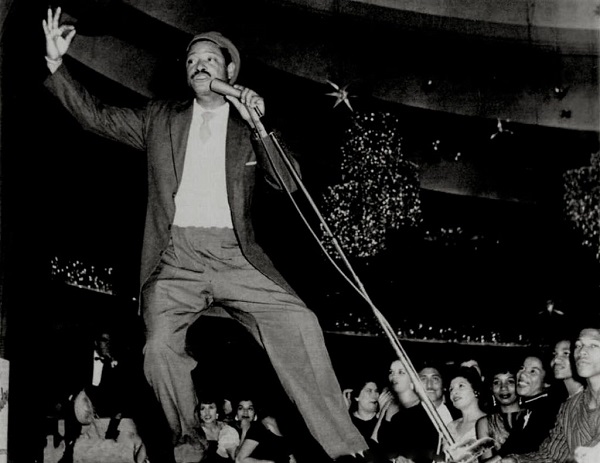
Benny Moré in concert

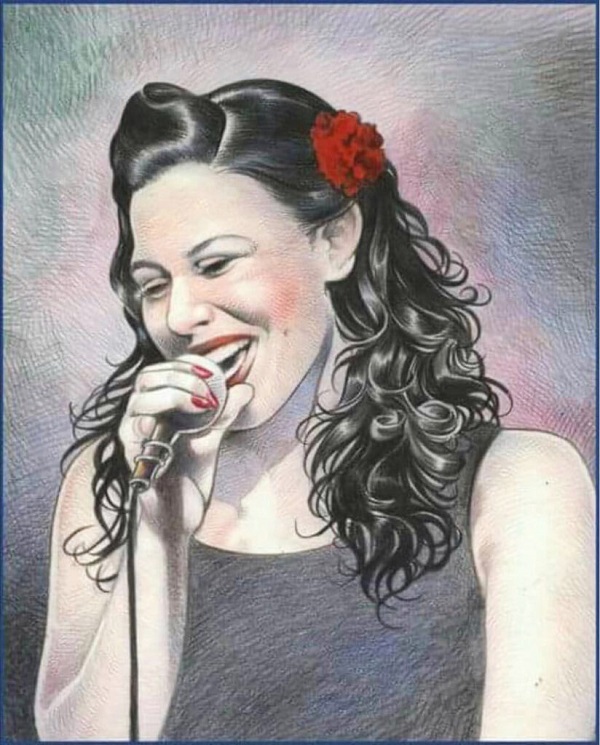
Eva Cortés at present, her music reflects the influences received from her cultural miscegenation

Fragile voice, delicate and powerful at the same time, that moves with devotion and good work through the multiple paths of jazz.

Eva Cortés, born in Tegucigalpa (Honduras), 1972, is a Honduran jazz singer and composer.

Eva Cortés en la actualidad, su música refleja las influencias recibidas de su mestizaje cultural
Eva Cortés at present, her music reflects the influences received from her cultural mestizaje.

More than a voice, she is our jazz star in the world.

She is part of the fusion movement, incorporating in her music the influences of traditional Latin American music (zamba, bolero), blues, traditional Andalusian music and jazz.

He sings with a Latin American Spanish cadence and Andalusian echoes and accent.

He grew up in Seville and currently resides between Madrid and New York.

He became known in 1980 after recording an album of children’s songs entitled Cosas de niños with singers such as Ana Belén, Víctor Manuel, Mocedades and Miguel Bosé.

Eva Cortés born in Tegucigalpa (Honduras), 1972 is a Honduran jazz singer and composer.

Nowadays, his music reflects the influences received from his cultural miscegenation, as well as from the different musical genres developed throughout his career.

Growing up in a family of great musical tradition, she was exposed to Latin American music. Although we hear in her first compositions, at the age of 16, a strong influence of blues.

In January 2006 she flew to Santiago de Chile to record and co-produce Sola Contigo, her first solo album, which was later mixed and mastered in Paris.

In this work we can find South American rhythms fused with jazz and a soft touch coming from the south of Spain.

Eva feels honored to have had the collaboration of musicians with great international prestige: Jerry Gonzalez,

Antonio Serrano, Pepe Rivero and Nono Garcia among others.

In April 2008 Eva recorded her second album Como Agua entre los Dedos, which is an album of original songs composed mostly by Eva Cortés, although they also stand out in the two Spanish adaptations of two standards such as You don’t know what love is and La Vie en Rose.

Fotos Eva Cortés – Instagram @evacortes777

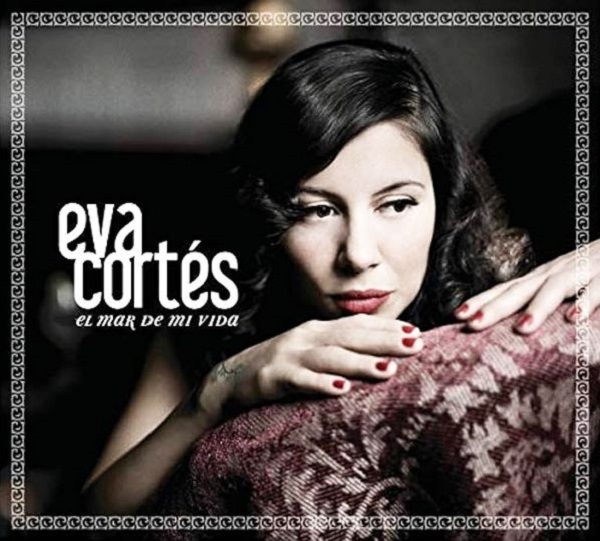
They released their third album El Mar de Mi Vida on April 6, 2010. With his personal jazz fusion, he has managed to carve a niche for himself among the most interesting and promising proposals of the Spanish jazz scene. [El Mar de Mi Vida brings together 12 songs that are maximum exponents of cultural crossbreeding.

On this occasion, in addition, the flamenco great Miguel Poveda joins in the version of the song C’est si bon, Perico Sambeat, Lew Soloff (considered one of the most brilliant trumpet players of recent times and who has collaborated with Marianne Faithfull or Frank Sinatra, among others), Santiago Cañadada, Rémy Decormeille, Georvis Pico, the electric bassist of the moment Hadrien Feraud and the English drummer Mark Mondesir (both musicians of John McLaughlin).

Eva once again signs most of the tracks and shares authorship in a couple of songs with Brazilian guitarist Kiko Loureiro.

In addition, we find tracks such as Alfonsina y el Mar (Ariel Ramírez-Felix Luna), Une chanson Douce (Henrie Salvador- Maurice Pon), C’est si bon (André Hornez-Henri Betti) and Que reste-t-il de Nos Amours (Charles Trenet-Leo Chauliac).

Eva Cortes - El Mar De Mi Vida (2010)
Eva Cortes – El Mar De Mi Vida (2010)

Eva Cortes – The Sea Of My Life (2010)

Tracks:

  1. The Sea Of My Life
  2. Casi
  3. C’es Si Bon / What’s Better? (Feat. Miguel Poveda)
  4. Desterrado
  5. Valsa Da Menina
  6. Remembering Tomorrow
  7. Little Matter If Later
  8. Que Reste-T-Il De Nos Amours / I Wish You Love
  9. Woman
  10. Alfonsina And The Sea
  11. Da Igual
  12. Une Chanson Douce

Information realized (January 13, 2024)

Sources:

L’Òstia Latin Jazz 

Iconos Mag

Also Read: Orquesta la Identidad is one of the most nationally and internationally recognized groups in the salsa genre

  • « Go to Previous Page
  • Page 1
  • Interim pages omitted …
  • Page 15
  • Page 16
  • Page 17
  • Page 18
  • Page 19
  • Interim pages omitted …
  • Page 30
  • Go to Next Page »

International Salsa Magazine (ISM) is a monthly publication about Salsa activities around the world, that has been publishing since 2007. It is a world network of volunteers coordinated by ISM Magazine. We are working to strengthen all the events by working together.