• Skip to primary navigation
  • Skip to main content

International Salsa Magazine

  • Home
  • Previous editions
    • 2025
      • ISM / November 2025
      • ISM / October 2025
      • ISM / September 2025
      • ISM / August 2025
      • ISM / July 2025
      • ISM / June 2025
      • ISM / May2025
      • ISM / April 2025
      • ISM / March 2025
      • ISM / February 2025
      • ISM / January 2025
    • 2024
      • ISM / December 2024
      • ISM / November 2024
      • ISM / October 2024
      • ISM / September 2024
      • ISM / August 2024
      • ISM / July 2024
      • ISM / June 2024
      • ISM / May 2024
      • ISM / April 2024
      • ISM / March 2024
      • ISM / February 2024
      • ISM / January 2024
    • 2023
      • ISM / December 2023
      • ISM / November 2023
      • ISM / October 2023
      • ISM – September 2023
      • ISM – August 2023
      • ISM July 2023
      • ISM Edition June 2023
      • ISM – May 2023
      • ISM April 2023
      • ISM March 2023
      • ISM February 2023
      • ISM January 2023
    • 2022
      • ISM December 2022
      • ISM November 2022
      • ISM October 2022
      • ISM September 2022
      • ISM August 2022
      • ISM July 2022
      • ISM June 2022
      • ISM May 2022
      • ISM February 2022
      • ISM January 2022
    • 2021
      • ISM December 2021
      • ISM November 2021
      • ISM October – 2021
      • ISM September 2021
      • ISM August 2021
      • ISM July 2021
      • ISM May 2021
      • ISM April 2021
      • ISM June 2021
      • ISM March 2021
      • ISM February 2021
      • ISM January 2021
    • 2020
      • ISM December 2020
      • ISM November 2020
      • ISM October 2020
      • ISM September 2020
      • ISM August 2020
      • ISM July 2020
      • ISM June 2020
      • ISM May 2020
      • ISM April 2020
      • ISM March 2020
      • ISM February 2020
      • ISM January 2020
    • 2019
      • ISM December 2019
      • ISM November 2019
      • ISM October 2019
      • ISM Septembre 2019
      • ISM August 2019
      • ISM July 2019
      • ISM June 2019
      • ISM May 2019
      • ISM April 2019
      • ISM March 2019
      • ISM February 2019
      • ISM January 2019
    • 2018
      • ISM December 2018
      • ISM November 2018
      • ISM October 2018
      • ISM September 2018
      • ISM August 2018
      • ISM July 2018
      • ISM June 2018
      • ISM May 2018
      • ISM April 2018
      • ISM March 2018
      • ISM February 2018
      • ISM January 2018
    • 2017
      • ISM December 2017
      • ISM November 2017
      • ISM October 2017
      • ISM September 2017
      • ISM August 2017
      • ISM July 2017
      • ISM June 2017
      • ISM May 2017
      • ISM April 2017
  • Download Salsa App
    • Android
    • Apple
  • Spanish

Search Results for: Son de Bolero

The Lehman Center Performing Arts Series Presents Andy Montañez’s 55TH Anniversary

North America / USA / New York

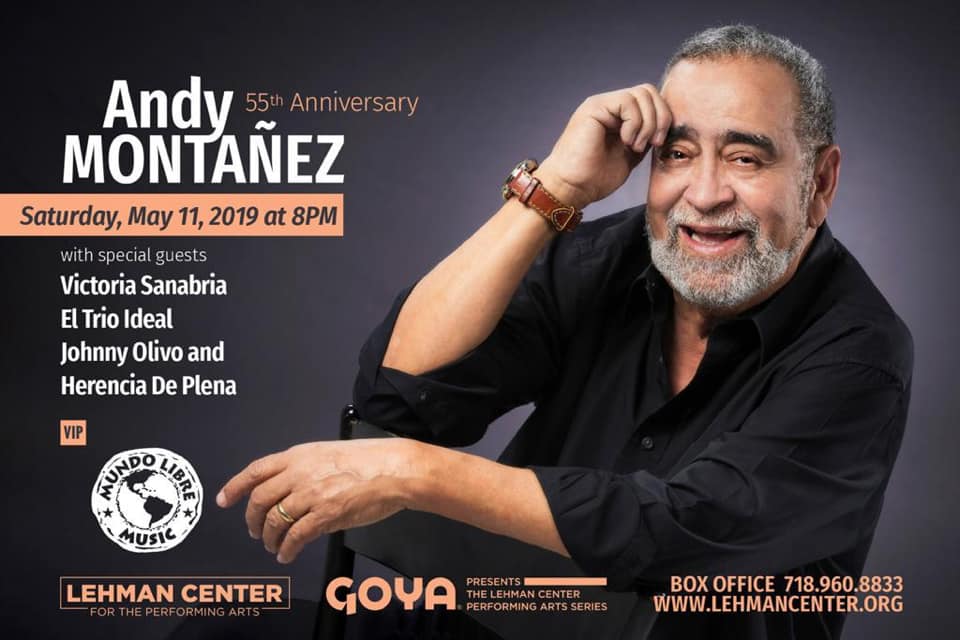
Lehman Center for the Performing Arts Presents Andy Montañez:

Enjoy this Puerto Rican star recognized as one of the best and most influential singer in Latin America in a Special Show with special guests: Victoria Sanabria, El Trio Ideal and Johnny Olivo & Herencia de Plena

Date: Saturday, May 11th

Show: 8:00PM

Cost: $65 – $100

Venue: 250 Bedford Park Boulevard West Bronx, New York 10468


Lehman Center for the Performing Arts is proud to present the Latin GRAMMY Lifetime Achievement Award winner, Andy Montañez as he celebrates his 55th Anniversary with special guest: Victoria Sanabria on Saturday, May 11th. In addition to this, enjoy EL TRIO IDEAL and the exciting dance rhythms of JOHNNY OLIVO Jr. & HERENCIA DE PLENA’s performance of their afro-rich folkloric musical traditions of Puerto Rican Bomba and Plena in a Salsero Show never before seen in New York City.


BIO: The Andy Montañez ’s beginnings go back to 1962 with the orchestra: El Gran Combo de Puerto Rico. It was 15 years of success. El Niño de Trastalleres recorded 37 LP’S with this great Latin orchestra. There he created and sealed the luggage that would accompany him always: “El Barbero Loco”, “Julia”, “Guaguanco del Gran Combo”, Un Verano en Nueva York”, “Vagabundo”, “Milonga Sentimental”, “Las Hojas Blancas”, “La Soledad” and the now classic “A mí manera”, a song that he recorded with Paquito Guzmán and with Pellín Rodríguez originally.


In 1977, Andy Montañez decided accepts the irresistible offer made by the popular Venezuelan orchestra “La Dimensión Latina” to replace Oscar D’ León. With this important orchestra, Andy Montañez recorded eight LPs that placed the Venezuelan band at the popularity top and sales. The first album with Dimension Latina marked big hits, such as: “El Eco Del Tambor”, “Mujer Impura”, “Ritmos Cubanos”.  Then, the triumphs continued with the themes: “Las Perlas de tu Boca”, “Como Canto Yo “, “Nuestra Tierra”, “Vuelve”, “Rumberos de Ayer”, “Son del Bohío”, “Ave María Lola”, “Mi Son Oriental”, “Cantante Errante”, and others.
Andy Montañez
Andy Montañez

For 1980, Andy Montañez recorded with the group “Puerto Rico All Stars” three LPs that were the prelude to his return to Puerto Rico. “Reunión en la Cima”, “Isla Bonita”, “Homenaje al Mesías” dedicated to Eddie Palmieri, outlined the growth process in which the Salsero still remains.

Returning Puerto Rico, Andy Montañez forms his own orchestra. By 1981, he recorded his first solo LP titled “Salsa con Caché” with record label LAD (TH Rodven’s subsidiary). His third LP “Simplemente Andy Montañez” rang with the hits: “Dulce Veneno” and “Payaso”. This album stayed 30 weeks in the magazine, Bilboard, inside its pages Tropical Music with five themes.

For 1998, he finally created his first independent production as a Salsero artist. Guided by his feelings, his proven experience and his artistic spontaneity was released the album: “Soy Como Soy”. This production is a tribute to his people to whom Andy Montañez responds with commitment of national pride wherever he goes.

In 2002, this worldwide multifaceted artist sees the support of his people materialized by filling the Centro de Bellas Artes’ Festival Hall for three consecutive days, where he captivated three generations with an unforgettable musical tour in which El Bolero, la Música de Tríos, La Salsa and La Plena harmonized that unparalleled Salsa experience. For more details, please, visit him through http://www.andymontanez.net

BIO: Victoria Sanabria was born on October 6, 1976 in Guayama (Puerto Rico). This woman with a sublime voice who carries in her throat all the essence of singing peasant, is one of the most impressive talents that has given the Trova Jíbara of the island of enchantment.

In 1992, she won the third prize in the category of singing in the competitions “Juventud Vibra”. The following year she won first place in the Troubadour Contest of the Institute of Puerto Rican Culture, becoming the national troubadour per excellence. Later, Victoria was part of the Choir of the University of Puerto Rico, Ponce Campus.

Continuing her ascending path in the arts, in December (1995) she made her debut in Bellas Artes with the Puerto Rico’s Symphonic Orchestra. That same year this talented artist managed to be crowned as the first female to win the Bacardí Troubadour Contest, proving to be the best improviser of Puerto Rico at the end of the century.

Andy Montañez
Victoria Sanabria

Her first album as a soloist, Cánticos de Serrania, was recorded in 1999, and in the next eight years she released three more in Puerto Rico including 2008’s Celebra Conmigo that featured Andy Montañez and Andrés Jiménez as guest artists. That same year, she joined the world-wide Tribute to Hector Lavoe concert tour.

In December 2009, Sanabria released her international breakthrough album Criollo Con Salsa, in which she had combined Puerto Rican folk music with salsa. The album contained several hits including “10 Dias”, “No Lavo, No Plancho, Ni Cocino”, “Jibara Natural” that featured Luis “Perico” Ortiz, and “No Te Quiero” sung with reggaeton star Ivy Queen. 2011 saw the release of the highly successful album Boleros which established Victoria as a major singer, and a year later she followed up with the release of Boleros II, which is now considered a classic.

The Sanabria’s most recent releases are her live concert album Trayectoria that was recorded in Santurce in 2012, and 2016’s Música Mía. In addition to her own recordings, Victoria has been featured as a guest on works by Domingo Quiñónez, Olga Tañon, Richie Ray, Bobby Cruz, Gilberto Santa Rosa, El Gran Combo, Danny Rivera, Charlie Aponte, and Willie Colon, among others.


Purchase your Tickets NOW at:
https://lehmancenter.org/ANDY-MONTANEZ-VICTORIA-SANABRIA/

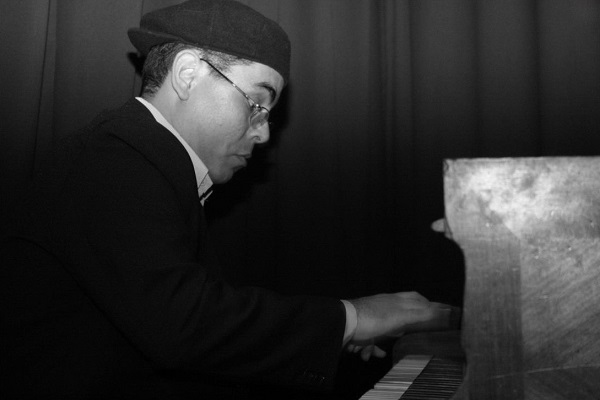
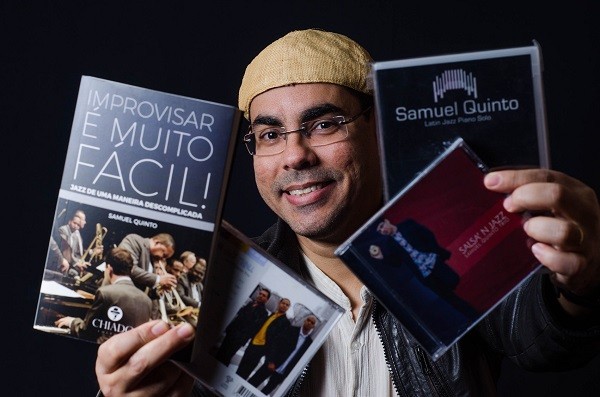
Samuel Quinto Feitosa is a Brazilian virtuoso jazz and classical pianist

Samuel Quinto Feitosa, FRSA (born September 5, 1973) is a Brazilian jazz, pop, gospel and classical pianist, as well as music producer, composer, arranger, educator and writer living in Portugal since 2004.

Quinto grew up in Salvador, where he developed his art mainly with the piano. Samuel Quinto was born in Belém, Pará, but grew up in Salvador, Bahia.

Samuel Quinto Feitosa is a Brazilian virtuoso jazz and classical pianist.

Since the age of seven, he developed his musical talent by virtue of the contact with the piano through the gospel, accompanied by the Baptist Church that he studied during his childhood with his family in Salvador.

Then Samuel took the first steps on the piano in the family home, always without accompanying teachers, and developed his piano skills learning also, as self-taught, harmony, reading and writing music and orchestration, musical composition, arrangements for the church choir, which begins to play as a pianist at the age of 12 years. In Europe.

Samuel Quinto released his first CD “Latin Jazz Thrill” in 2007, in Portugal, with trio formation (Bass, Piano and Drums), which formed the core of his repertoire in various festivals and concerts during the years 2007 and 2008 in Portugal.

During his 2008 tour he performed in cities such as Hamburg, Berlin, Cologne, Heilbronn, Liège and Limoges; in addition to a special concert held in Salvador in collaboration with the Catholic University of Salvador in June 2008. His compositions are used at the University of Porto (ESMAE) in the Jazz degree, as study material in the training of Jazz students.

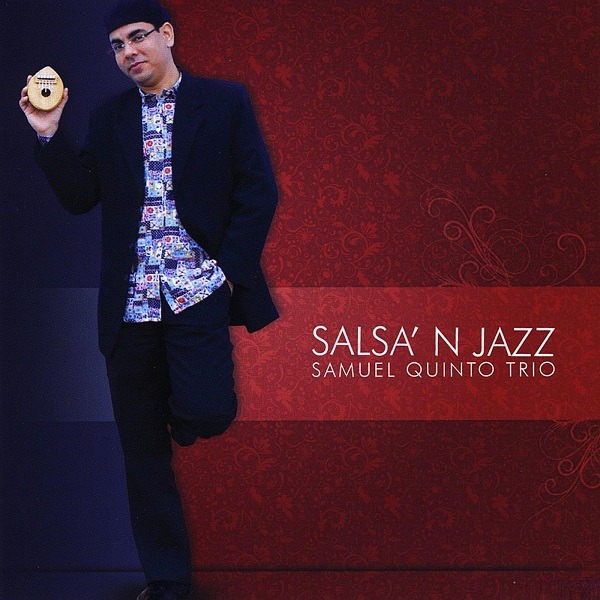
The second CD entitled “Salsa ‘n Jazz”, containing eight original compositions by Samuel Quinto, and the standard Stella by Starlight, is released in June 2009 with a concert in the city of Porto, and the concomitant launch of his new tour.

Samuel Quinto Trío Salsa'N Jazz (2009)
Samuel Quinto Trío Salsa’N Jazz (2009)

Even more extensive, which passed through Belgium, Germany, Portugal, Spain, France, Luxembourg, Netherlands and England. In this second work, Samuel was accompanied by another Brazilian, classically trained, Marcos Borges on bass and Manuel Santiesteban, Cuban, graduated in drums in Havana, Cuba.

He founded the first Latin Jazz course at the North Jazz School, Porto – first professional Jazz school accredited in Portugal and one in the Iberian Peninsula to have the Professional Jazz Instrumentalist course until then.

Besides being invited to be the artistic director of one of the most traditional Portuguese jazz clubs, Si bemol.

Samuel has also been invited to conduct workshops in the field of Jazz, Latin Jazz Composition and Arranging both in Brazil and Europe. But his musical talent is not only to jazz, after having been a pianist of the corps de ballet, he began to develop the scholar side of his music.

Inspired by great composers such as Beethoven, Mozart, Bach, Tchaikovsky, Brahms and others, he began compositions to accompany ballet in performances, as well as for orchestra and choir. _ (allaboutjazz)

There is something about Brazilian-born pianist Samuel Quinto that strikes a vibrant chord in the inner ear. Perhaps it has to do with his wonderful grasp of the joy that abounds in the Brazilian northeast.

His sense of “joy”. Perhaps it also has to do with his mature approach, his wonderful use of dynamics, his expression and his innate ability to allow the tonal center of his music to shine.

He has an exquisite ear and his hands are independently controlled by his mind, which separates melody and harmony when necessary.

Quinto, as a result, makes his fingers tingle on the keys, rumble and guffaw and cry with chords from which he wrings laughter and sadness and pure joy.

In Salsa’ N Jazz he plays with a primal hypnotic rhythm that calls to the roots of his music, which reach all the way to deepest Africa, through the folk corners of Brazil and Spain, which means the Mediterranean nooks and crannies of the Middle East, India and Europe.

Samuel Quinto Feitosa is a virtuoso pianist.

The result is a discotheque where these cultures converge in a point of ignition that warms the blood of the soul. His playing is muscular and intuitive and smacks of an artist who likes to invent on the fly, to constantly evolve.

The starting point of Quinto’s playing is also a deeply symbiotic relationship with forro music in all its vibrant splendor-baiao, xote and arrasta-pe-all elegantly captured and sparkling as his fingers touch ebony and ivory.

The most joyous and memorable display of this is her rendition of Victor Young’s “Stella by Starlight,” which gets a rousing liner treatment and reaches its climax as the song’s choruses unfold.

It is worth mentioning that on this song – as on the others on this album – Brazilian bassist Marcos Borges and Cuban drummer Manuel Santiesteban shine with their wonderful interplay.

Samuel Quinto is also an accomplished composer and demonstrates maturity and a sense of adventure with the rhythmic variety he presents here in a rumba, “Quinto’s Rhumba” which, by the way, is played in a deliciously choppy style reminiscent of Thelonious Monk.

“Jaci” is an exciting, danceable song that crosses Cuban rhythms with a touch of Brazil.

“Bolero To Preta,” an affectionate semblance of the pianist’s mother, suggests that the pianist has a lot of inner clave.

“Ficou No Meio” is simply a marvelous forro that becomes dizzying as Quinto, Borges and Santiesteban gloriously rumba in harmony and rhythm.

Santiesteban gloriously ruminate the harmony and rhythm.

“Voo Da Andorinha” is a chorinho that, quite simply, reveals Quinto’s “Alma de Nordeste”. And “Isabel (Para Voce)” is a beautiful ballad that shimmers and shines as its emotive tonal colors begin to unfold.

“Salsa’ N Jazz” is an emblematic song that captures everything unforgettable about this album: a pianist with the ability to dazzle in silence while the right hand flies exotically and the left constantly invents harmony and rhythm.

Here is a very promising pianist, who brings with him his rich Brazilian tradition and, indeed, all of Latin America, a new and exciting musical landscape. _

Raul D’Gama Rose

                                                             Samuel Quinto Trio – Salsa’N Jazz (2009).

Musicians:

Samuel Quinto (Piano)

Marcos Borges (Bass)

Manuel Santiesteban (Drums)

Information provided (September 16, 2023)

Samuel Quinto

Samuel Quinto Feitosa  (Neuroscientist and Musician)

Orquesta la Identidad is one of the most nationally and internationally recognized groups in the salsa genre

La Topa Tolondra & its Salsa with Criterion – Colombia

Latin America / Colombia / Cali

Something magical happens in a unique space in Cali – Colombia: Topa Tolondra

La Topa Tolondra & its Salsa with Criterion ¨ A magical place in a unique space in Santiago de Cali¨

Because what matters is the music and its only and great protagonist “la salsa” a whole universe of happy individuals united by the melody, and all this happens because the salsa is tattooed in the hearts of many caleños and visitors to the area who It becomes evident on the dance floor, where you can find that visiting salsa public from all over the world that dances professionally, there are also those who dance well and those who don’t dance, but who doesn’t give a damn? “nothing”.

Those who are stung or guilla of dancers, those who go in sandals, those who go with tennis, those who go with heels, those who go elegant, those who go relaxed, the dreadlocks with long hair, those with afros, the gentleman and the lady, the chickens, the urban cyclists and even the rockers… and the list is endless because what matters is the music and its only and great protagonist “salsa”

“Lovers of Salsa and Bolero romantics attend weekly without age limits” To the rhythm of the Charanga, the Pachanga, the Boogaloo, the Guajira and the Son Cubano, it is enjoyed every night at the Topa Tolondra. Something unique happens in that magical place and that is that everyone forgets what they will say and they enjoy it from start to finish. In addition, local and international artists such as:

Esteban Copete y su Kintelo Paci co, Habana con Cola, Los Hermanos Lebrón, Clandestina Orquesta, Africali, Ebano y Marl, Bailatino, La Negramenta, Bobby Valentín and among others. For special dates ¬these and events such as Halloween that is approaching are organized. In “La Topa” as it is already known in Cali, sounds resound that arrived in the city between the 50s and 70s, where Salsa shapes the body and bolero its spirit, and going a little deeper we also perceive inclusive energies.

“Having fun is the only requirement to attend” “The Environment” For an unforgettable night you need two halves. The first is a table, chairs, water and drinks. And the second, and perhaps the most important: music and hit.

In Topa Tolondra there is plenty of space for gozadera, to sit down, to toast. Time does not run and there is no decache… “La Música” Here they marry the old guard of Los Hermanos Lebrón, Ángel Canales, La Sonora Ponceña, Frankie Dante and La Flamboyán.

The curatorship of its owner Carlos Ospina, its disc jockey and owner, is to learn it. It is not at all about impressing, it is about knowing how to find the subject at the right time.

¨Variety¨ Mondays are for foreigners. On Tuesdays there is a cinema-forum space and separate classes that are included with the 3 for 1 promotion (for every 3 Salsa songs, one bolero). Wednesdays are the best dancers in the city, Thursdays are dedicated to live salsa.

Finally, Fridays and Saturdays are reserved for these traditional Topa. “To Many Degrees” If your hair is long, bring something to tie it up with. If you are wearing a long-sleeved shirt, roll up the sleeves. If you are one of those people who is not used to consuming water, be prepared to drink what has not been drunk in a year. In La Topa you feel the harsh heat, so it is necessary to establish breaks to go outside to cool off “the heat outside will seem cool to you.”

For a round night, the ideal combination is beer, brandy and water, in dosed sips. Does the temperature exhaust? Yes, but it doesn’t matter if the song that is playing touches your ¬bras and reaches your heart. If you don’t know La Topa Tolondra, be sure to go and if you want to get a clearer idea before visiting, visit their fan page on Facebook www.facebook.com/Latopabar but don’t stay intrigued! Location of La Topa Tolondra. Cl. 5 #13-7, Cali, Valle del Cauca, Colombia Telephone: +57 323 5972646

Mura Peringa Orchestra

Europe / France / Strasbourg

Mura Peringa Orchestra, A tribute to Salsa culture, given by 9 crazy musicians of Latin music

Since 2006, the group (Mura Peringa) brings together 9 musicians (20 – 34 years old) united by their passion for Latin music.

Their influences are important musicians and orchestras such as: Sierra Maestra, Mercado Negro, Eddie Palmieri, Oscar D Leon, Maraca Valle, Chaparro y su Orquesta, Orlando Poleo, Fania All stars, Willie Colon and Hector Lavöe.

From the creation of the project, the heart of repertoire focuses on a color Salsa Dura 70’s, embellished with Bolero, Merengue, Chachacha, Son, Cuban Rumba, Timba.  The compositions and rearrangements of Mura Peringa, faithful or transfigured, were able to invite the crowds to dance on the stages of the French grand-est, and during the summer tours in Switzerland and in the south of France.

Mura Peringa’s music, tasty, throbbing, intoxicating, is supported by rich arrangements, and by the solid instrumental and stylistic mastery of her musicians.  The strength of Mura Peringa is her ability to metamorphose. The lead vocals on the front of the stage go from one musician to another, causing so many reversals of point of view.

The staging of the game and the transitions are served by a light creation that finishes training the audience at the rhythm of the clave and syncopations.  Get ready to swing; it will be hard to resist the call of the dance Mura Peringa, a tribute to Salsa culture, given by 9 crazy  musicians of Latin music. 

United in the most vibrant Salsa orchestra of the Great East, songs, brass and percussion invite you to dance to Afro-Caribbean rhythms and music.  Listening to the surprising compositions and rearrangements of Mura Peringa, you will not sit for long.

MusiciansCongas: Paul StengerTimbales: Nicolas SchmidtBass : Theron FuhrmannClavier : Sebastien ValleTrombone : Fabrice ToussaintSaxophone: Adrien LabordeFlute / Percus : Camille EvrardTrompet : Alexandre BrandTrompet: Adrien Arnaud

To enjoy, and to dance

Know the connections of tropical dances

Latin America / Venezuela /Caracas

Tropical Dances:

Did you know that people have several ways of communicating?

Oral communication is what we normally use to communicate in such a way to establish and maintain personal relationships, and to show not only words and express emotions and/or feelings, body communication is used, which can be said in a few words that it is a form creatively expressing through gestures, eye contact, poses, and arm and leg movements; turning this form of communication into something more intimate and accurate without the need for the use of words.

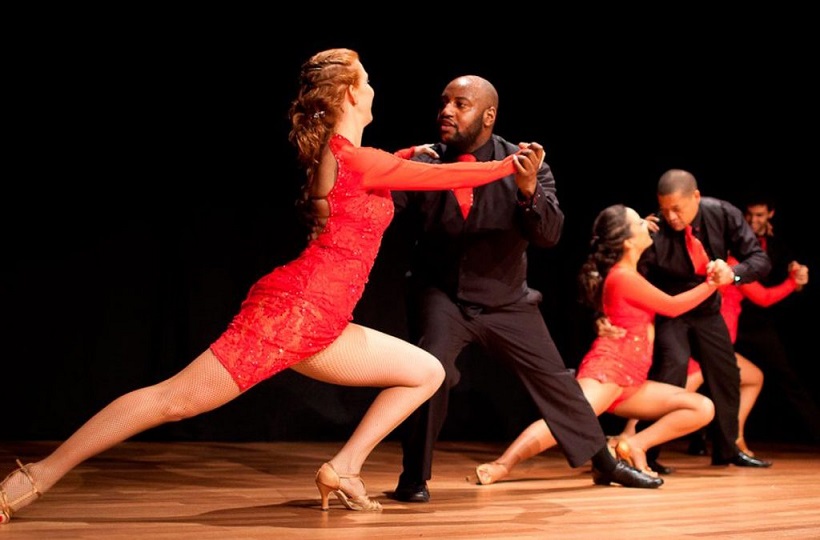
Salsa dancers

In social activities, one of the most popular is dancing, where body communication is very important since the couple or group needs to know certain signs that indicate “when” or “how”, in order to perform the steps and how. As a result, the success of said interpretation will test the quality, maturity and growth of the dancers in the rhythms they dance.

dancers dancing in a club tropical

Of course, it should be noted that each musical genre has its own rules, especially in the counting of steps in music, which gives grace, stability and rhythm to the dancers in the song played either in a musical event and is of vital importance not only for a casual event but for a competition. For this reason, it is important to know the steps and turns to perform and have excellent body communication (especially if it is as a couple) to know what they are going to do.

dancers dancing salsa, bachata and other tropical dances

In Latin rhythms, this type of communication is really important, otherwise the grace of the dance is lost. Among the most important Latin rhythms that are essential and/or significant are:

  • Salsa: a Latin tropical rhythm that, although it was born in Cuba due to the mixture of “Guaracha”, “Son”, “Mambo”, “Cha Cha Chá” with a unique style, through time several types emerged ( Salsa Cubana, Salsa en Linea, Salsa Casino, Salsa New York or Mambo style, Salsa Cali style, Salsa Puerto Rican and Venezuelan sauce). In this dance it is very important to pay attention to the look, the hands and arms (the latter in the case of the man since with him he dominates and/or controls the woman in the dance and she must interpret what the next movement is) to thus being able to perform either a simple step or a few laps, of which there is a great variety of them.
  • Bachata: is a danceable musical genre originating in the Dominican Republic, within what is called urban folklore. It is considered a derivative of the rhythmic bolero, with influences from other styles such as the Cuban son and merengue. This dance has great sensuality like the rest of the Caribbean rhythms, where it requires an unbeatable appearance on the part of the dancers when performing it, where that connection with the couple is important so that it can impress the public.
  • Merengue: is a dance music genre originated in the Dominican Republic at the end of the 19th century. It is very popular throughout the American continent, where it is considered, along with salsa, as one of the great dance musical genres that distinguish the Latin American genre.
  • Kizomba: a very sensual rhythm that emerged in Angola, which resulted from the mixture of 3 cultures (Angolan colony, Portuguese colony and part of Cape Verde “Brazil” as well as the French Caribbean of Martinique and Guadeloupe.). In this rhythm, the connection of the couple, especially the woman, is of vital importance, since the movement of the hips is slow and sensual, as are their steps. Did you know that many people have the prejudice that it is a very sensual dance, however, it is as sensual as you want to project it, in the same way it happens with Bachata and Merengue, they can be as sensual as you want to project them or as normal how you want to do it.”

So, if you want to give life, grace, elegance and popularity to your dance, keep in mind, keep in mind these characteristics and how you manage to synchronize with your partner and show your spectators either in a personal party, competition, event and/or or congress, whether national or international, which is a true dance.

dancers pre-performing tropical dances
  • « Go to Previous Page
  • Page 1
  • Interim pages omitted …
  • Page 16
  • Page 17
  • Page 18
  • Page 19
  • Page 20
  • Interim pages omitted …
  • Page 30
  • Go to Next Page »

International Salsa Magazine (ISM) is a monthly publication about Salsa activities around the world, that has been publishing since 2007. It is a world network of volunteers coordinated by ISM Magazine. We are working to strengthen all the events by working together.