• Skip to primary navigation
  • Skip to main content

International Salsa Magazine

  • Home
  • Previous editions
    • 2025
      • ISM / November 2025
      • ISM / October 2025
      • ISM / September 2025
      • ISM / August 2025
      • ISM / July 2025
      • ISM / June 2025
      • ISM / May2025
      • ISM / April 2025
      • ISM / March 2025
      • ISM / February 2025
      • ISM / January 2025
    • 2024
      • ISM / December 2024
      • ISM / November 2024
      • ISM / October 2024
      • ISM / September 2024
      • ISM / August 2024
      • ISM / July 2024
      • ISM / June 2024
      • ISM / May 2024
      • ISM / April 2024
      • ISM / March 2024
      • ISM / February 2024
      • ISM / January 2024
    • 2023
      • ISM / December 2023
      • ISM / November 2023
      • ISM / October 2023
      • ISM – September 2023
      • ISM – August 2023
      • ISM July 2023
      • ISM Edition June 2023
      • ISM – May 2023
      • ISM April 2023
      • ISM March 2023
      • ISM February 2023
      • ISM January 2023
    • 2022
      • ISM December 2022
      • ISM November 2022
      • ISM October 2022
      • ISM September 2022
      • ISM August 2022
      • ISM July 2022
      • ISM June 2022
      • ISM May 2022
      • ISM February 2022
      • ISM January 2022
    • 2021
      • ISM December 2021
      • ISM November 2021
      • ISM October – 2021
      • ISM September 2021
      • ISM August 2021
      • ISM July 2021
      • ISM May 2021
      • ISM April 2021
      • ISM June 2021
      • ISM March 2021
      • ISM February 2021
      • ISM January 2021
    • 2020
      • ISM December 2020
      • ISM November 2020
      • ISM October 2020
      • ISM September 2020
      • ISM August 2020
      • ISM July 2020
      • ISM June 2020
      • ISM May 2020
      • ISM April 2020
      • ISM March 2020
      • ISM February 2020
      • ISM January 2020
    • 2019
      • ISM December 2019
      • ISM November 2019
      • ISM October 2019
      • ISM Septembre 2019
      • ISM August 2019
      • ISM July 2019
      • ISM June 2019
      • ISM May 2019
      • ISM April 2019
      • ISM March 2019
      • ISM February 2019
      • ISM January 2019
    • 2018
      • ISM December 2018
      • ISM November 2018
      • ISM October 2018
      • ISM September 2018
      • ISM August 2018
      • ISM July 2018
      • ISM June 2018
      • ISM May 2018
      • ISM April 2018
      • ISM March 2018
      • ISM February 2018
      • ISM January 2018
    • 2017
      • ISM December 2017
      • ISM November 2017
      • ISM October 2017
      • ISM September 2017
      • ISM August 2017
      • ISM July 2017
      • ISM June 2017
      • ISM May 2017
      • ISM April 2017
  • Download Salsa App
    • Android
    • Apple
  • Spanish

Search Results for: Son de Bolero

Betsy Colombian Salsa, Bolero and Son Cubano Singer

Betsy, Colombian singer who began her career at the age of 17, in Bucaramanga in the tropical genre.

She is part of the most recognized orchestras of her region, standing out as one of the most powerful voices of the genre.

Betsy Colombian Salsa, Bolero and Son Cubano singer

She recorded with local orchestras, tropical productions and at the same time consolidated as a commercial voice.

Her love for salsa, bolero and son has led her to belong to important orchestras such as RUMBATA directed by maestro Edwin Rey and LA JOHND BAND directed by JOHN DENNIS ESCOBAR from Cali.

Betsy records with the maestro Edwin Rey, the album “SINCERIDAD”, interpreting in the single PROMESAS, she a song called MI CUMBIA, composed by MARIO ENCALADA, CHILENO and Colombian folklor is heard again with a young and modern oxygen.

In 2020, she recorded the single “SENTIR”, original arrangements of You Salsa de Perú, generating a very positive result to the ear of the public lover of romantic salsa.


In 2021, with the help of producer ALBERTO RUEDA and MS PRODUCCIONES, he releases the album “Una vida de Son”, composed of 10 salsa hits, among which stand out: (Los olores del amor, Siempre Seré, Si te Preguntan, Caretas), in a new, fresh version with that wonderful Cuban touch.

Betsy, Colombian singer who began her career at the age of 17 in Bucaramanga in the tropical genre.
Betsy Colombian singer who began her career at the age of 17 in Bucaramanga in the tropical genre.

With this album, she was nominated as best female singer SALSA, in the last edition of the CRISTO REY Awards, in the city of CALI, which took place on October 21, 2021.

In 2022, she released the album esencia, sabor y son, which contains 10 tracks of emblematic salsa songs, in Cuban son version, such as DIME POR QUÉ, CASI TE ENVIDIO and with an interesting bet on the songs YA LO SE and UN SUEÑO y NADA MÁS, by Calle Real and Polo Montañez respectively.

At the end of 2022, she won the PANORAMA DE PLATA AWARD, as PERSON OF THE YEAR IN SANTANDER, for her outstanding musical performance during the year and for taking the Department to other regions of the country.

Betsy At the end of 2022, she was awarded the SILVER PANORAMA AWARD.

For 2023, the album “YO SOY” is released, which contains the title “Si ya no estás”, written by maestro Jorge del Valle, Cuban composer, with arrangements by maestro Alberto Ardila Rueda and recorded in the studios of MS PRODUCCIONES in Bucaramanga.

In addition, this musical cut is part of the new record production entitled “Yo Soy Betsy”, which has several songs such as: “Caballo Viejo”, “Cuando”, “El Me Mintió”, “Manantial de Corazón”, “Mentira”, “No Sabes Como Duele”, “Que Suene Mi Campana”, “Que Vas Hacer”, “Yo Quisiera” and “Si Ya no Estas”.

Betsy, Colombian singer of SALSA, BOLERO Y SON CUBANO presents her album “YO SOY BETSY”.

By 2023, the album "YO SOY" is released, which contains the title "Si ya no estás".
By 2023, the album “YO SOY” is released, which contains the title “Si ya no estás”.

Betsy Moreno, Colombian singer, specialist in Bolero, Salsa and Son Cubano, launches her album: “YO SOY”, which contains the title: “Si ya no estas”, written by maestro Jorge del Valle, Cuban composer, with arrangements by maestro Alberto Ardila Rueda and recorded in the studios of MS PRODUCCIONES Bucaramanga – Santander – Colombia.

“Si Ya No Estas” is a romantic song arranged by Alberto Ardila Rueda, a song for lovers of romantic son.

In addition, this song is part of the new record production called “Yo Soy Betsy”, which has several songs such as: “Caballo Viejo, “Cuando”, “El Me Mintió”, “Manantial de corazones”, “Mentira”, “No Sabes Como Duele”, “Que Suene Mi Campana”, “Que Vas Hacer”, “Yo Quisiera” and “Si Ya No Estás”. This is a highly recommended production for lovers of good music and is already available on all streaming platforms.

Follow BETSY MORENO’s career on her social networks and all digital platforms.

Instagram: @betsycantanteoficial

Facebook: betsycantantebucaramanga

Youtube: Betsy Cantante Oficial

Tik Tok:   @betsycantanteoficial

Twitter:  @betsycantanteoficial

E-mail:  [email protected]

Contacts and Bookings: + 57 316 6348316

Also Read: Henry Benavides surprises with “Por Cuenta Propia,” his new project
Argenis Carruyo is known in the music scene as “El Volcán de América” (The Volcano of America) due to the power of his voice

Carruyo He was born in Maracaibo on August 22, 1953 at the Chiquinquira Hospital in Maracaibo, located in the same sector where he grew up.

Argenis Carruyo he had the good fortune of being a neighbor of Los Blanco, who 12 years after his birth hired him as an instrument picker, an experience that served to awaken in him the love for music, a feeling that was nurtured when he discovered in him an unmistakable talent to make singing his life support.

“The Volcano of America” because the power of his voice makes the senses of those who have the opportunity to listen to him rumble; so sings Argenis Carruyo, from Zulia, who from a very young age began to demonstrate the vocal quality that characterizes him.

Argenis Carruyo is known in the music scene as "El Volcán de América" (The Volcano of America) due to the power of his voice
Argenis Carruyo is known in the music scene as “El Volcán de América” (The Volcano of America) due to the power of his voice

He has stood out as an interpreter of the gaita zuliana and during the 1970s and 1980s belonged to the Dimensión Latina.

The 80’s was a very busy decade for this multifaceted character; he sang with Orlando y su Combo, and did a duet with Ender Carruyo in the orchestra “Los Hermanos Carruyo” and then again with the Super Combo Los Tropicales, until 1985 when he decided to found his own group called “Argenis Carruyo y su Orquesta”.

He began his musical career with the youth group Los Larkings. Later, he was part of Los Juglares and Los Casinos.

In 1973, he joined the ranks of Súper Combo Los Tropicales and in 1977 he was recruited by Dimensión Latina, with whom he sang until 1981. Later he joined the group Los Melódicos.

During the 1980s he had an intense artistic activity in which he sang with Orlando y su Combo, duetted with Ender Carruyo in the orchestra Los Hermanos Carruyo, worked again with the Súper Combo Los Tropicales and, in 1985, formed his own group: Argenis Carruyo y su Orquesta.

Argenis Carruyo and his Orchestra

Sabor a Gaita:

Apart from his work with rhythms such as guaracha and salsa, Carruyo has also performed the gaita zuliana.

The Volcano of America has not only stood out among the great interpreters of the Caribbean for playing rhythms such as the guaracha, he has also honored his land by making famous great gaita compositions.

During his time in the genre he worked with groups such as El Número Uno, Rincón Morales, Guaco, Los Morillo and Gaiteros de Pillopo.

He owes part of his fame to the gaita, because the Zulian melody accompanied him on stages and still accompanies him in his veins as it does to anyone who appreciates being a worthy Maracaibero.

During his artistic life he has received numerous recognitions, as well as the publication of a book with his biography.

In 1975 he won the Festival de Cantantes y Compositores Zulianos and has received the Mara de Oro (1993, 1994, 1995) and Gran Cacique de Oro awards as best singer, the Gran Aguila de Venezuela as best singer and dance orchestra (1995, 1996, 1997, 1998, 1999, 2001), and the Catatumbo de Oro as best popular singer (1993) among others.

"The Volcano of America"
“The Volcano of America”

His orchestra received the Orden Ciudad de Maracaibo in its first class as best dance group.

He has performed in the most important nightclubs in Maracaibo, the country and abroad, alternating with the most recognized figures of the song, which is why he is considered one of the most genuine interpreters of tropical Caribbean genres in the Zulian region, such as salsa, guaracha, cumbia, merengue and bolero.

With a prolific career of more than twenty-five years that has served to demonstrate his talents as a vocalist and his own characteristic style, which gives him his most authentic identity.

Argenis Carruyo, with pride from Maracaibo, proclaims that he owes to Zulia the success and fortune that always accompanied him since he discovered the enormous talent he carried in his blood, his homeland became his main fan, to Maracaibo he owes his life and to its inhabitants the affection and the memory that will always keep him alive through his songs.

For 2023 Argenis was specially invited to participate in the excellent group Quintero’s Salsa Project – Tributo A La Dimension Latina directed by New York based percussionists Luisito Quintero and Robert Quintero.

Luisito Quintero grew up in the Latin and African percussion tradition. His father is as percussive as his uncle Carlos Nene Quintero and cousin Roberto Quintero. He became a member of the Venezuelan Symphony Orchestra, but soon joined ensembles such as Grupo Guaco and El Trabuco Venezolano and toured with Oscar D’León.

He then moved to New York, where he met Latin jazz musicians like Willie Colon, Eddie Palmieri, Tito Puente and Celia Cruz worked. He then turned to the fusion of jazz, funk, salsa and African music and played with George Benson, Herbie Hancock, Ravi Coltrane and Toshiko Akiyoshi, but also with pop musicians such as Gloria Estefan and Marc Anthony. Louie Vega produced his first album with him.

Quintero’s Salsa Project – Tribute To The Latin Dimension

Tracks: Ya Tu Lo Véras; Sin Tu Cariño; Cara de Guabina; Sigue Tu Camino; Irimo; Dulce Cantar; De Quintero a Dimensión; Ahi Nama; Te Conocí; Parampampam; Arroz Con Manteca; Frutas del Caney.

Musicians: Argenis Carruyo; Jimmy Bosch; Marcial Istúriz; Roberto Quintero, Luisito Quintero.

Record labels in which Argenis Carruyo has participated.

Top-Hit (TH), Maracaibo Record’s, Argenis Carruyo, Discos VRZ, SonoVen Records, L. G. Record’s C. A; iMusician | EDGARSARMIENTO, Palacio, among others.

Argenis Carruyo y Dj. Augusto Felibertt

Sources:

La Buena Musica: Argenis Carruyo

La Salsa es mi vida: Quintero´s Salsa Project – Tributo A La Dimension Latina

Also Read: Víctor Porfirio Baloa Díaz, more commonly known as Porfi Baloa

José Madera Niño & his 3rd his World

Latin América / Venezuela / Caracas

José Madera Niño “The records and the radio were my first teachers”

Soon he will premiere his second production entitled Matices, with the promotional song Canta Sonero.

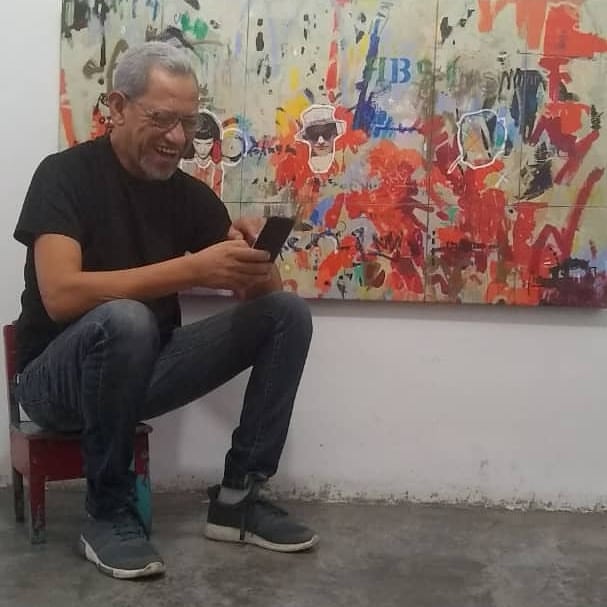
José Madera Niño
José Madera Niño

A creator, a great human being, this is José Madera Niño, this Colombian-Venezuelan musician, self-taught, percussionist, composer and plastic artist; who after participating in different groups decides to form his own Orchestra, José Madera Niño & 3er Mundo, assures that his passion for music began when he was very young, following the example of his father, uncle and his older brothers, defines his songs as “simple and diaphanous”. He confesses that our salsa genre, “needs to feed on new things, unpublished songs, in short, proposals, and that the music lover is the one who decides if it is good or not”; As the chorus of one of their songs says, let them be the ones to speak and express their emotions.


His first record production De amor, desamor y rumba, contains 8 songs, of which 6 are his own, with the participation of leading Venezuelan musicians; in this work he presents us with an innovative style, where he sings to love, to spite and invites us to dance to the rhythm of the conga that is in fashion. In each composition, everyday life is reflected, the adventures and misadventures that music lovers make their own, a work made of guava trees and poetic joys.

Soon he will launch his second record production with a very striking name; Nuances, something that in his words “makes him very happy”, where there is no doubt, his gift as an artist will be present and a motley of musicians with a great career who will put the final touch on his new production.


How did you start in music?


“I remember that at the age of seven, I was drawing a lot, on paper, on the walls and on whatever came my way. My older brothers already showed an interest in music, so instruments began to arrive at the house. While I drew they practiced and when they went to school I took possession of a drum and a radio, I tried to accompany all the rhythms I heard on the stations”.

Was your training professional or are you a self-taught musician?


“Autodidact. I entered the school of plastic arts, to study drawing and painting, at the age of fourteen. There I saw nine subjects, also I started at the high school where I saw nine more subjects, so there was no space to study music. I listened to a lot, yes. Records and the radio were my first teachers”.


Tell us about your experience with Orlando Poleo?


“In a self-taught way, almost without realizing it, I began to play with different groups and orchestras, I was already in trouble, so on the fly, I decided to take theory and solfeggio classes at the headquarters of the Musical Association. On a Caracas night I was playing with La Orquesta Ideal and there I met Williams Hernández -Percussionist and manufacturer of Latin percussion instruments-. It was he who recommended that I attend the workshop in Sarria where the teacher Orlando Poleo taught. The experience there at the beginning was a bit traumatic because although I already had time playing congas, I didn’t have the ideal technique. I had to get rid of what I learned on my own and put new ways into practice. It was not easy but I am very grateful to have passed through the school of Grand Master Poleo”.


Where does your musical vein and passion for painting come from?


“My father was a bolero singer back in his native Colombia, my uncle was a guitarist. That’s where the taste for music comes from.”


What motivated you to make your first production, in a market so Competitive and often poorly supported by the media?


“I was motivated by a passion for music and by that need to contribute at least one point of view, a way of doing things. For example, I think that this genre that we love, called Salsa, needs to feed on new things, unpublished songs, in short, proposals and that it is the music lover who decides if it is good or not”.


What is the reason for the name of the group; 3rd world?


“That’s where we are, that’s where we come from. This is how they classified the countries of our region and we assumed them without complexes or pride. I think it’s just a title that doesn’t detract from our ability to do great things. Baptizing the band with that name was an act of rebellion, it shows a little that despite many limitations we are capable of making quality music”.


Why the name De Amor, Desamor y Rumba?


“There were many hours of recording, then editing, then came the art of the album and when we were already finalizing details, a doubt assailed me, I thought: Isn’t the selection going to be very rockolera? I started to review the production and I realized that it was balanced. We sing to spiteful love and I think it’s very danceable. From there the title was born: “Of love, lack of love and rumba”.


What inspired you to write 6 songs of your first production?


“The need to do unpublished things, on the other hand I didn’t know so many composers who wanted to risk their songs in a novel production. The language of my songs is simple and diaphanous”.


Which of the themes do you identify with, and why?


I like them all.


How would you define the 3rd world style and how do you get there?


“It’s just Salsa, without a “surname”, as it was before. It’s not erotic Salsa or hard Salsa or Nothing Salsa… Just dance music”.


Any relationship with the percussionist José Madera -the one from Tito Puente-?


“Only immense admiration for his work and the fact that like him I play percussion and have the same first and last name.”


Have you ever been interested in another musical style?


“I listen to almost everything and in my career I have had the opportunity to play other popular music rhythms such as merengue, cumbia, vallenato.”


An artist you admire?


“There are many whom I admire, it would be unfair to name just one.”


What inspires you to write a song about love or heartbreak?


“Both, in addition to the simple, everyday things.”


Define yourself in one sentence?


Creator


How does the soul see through painting or music?


The soul sees and manifests itself in the purest and most honest way through art. Call it painting, music or another related manifestation.


Tell us about your 2nd production, who participates in it?


This is something that makes me very happy because we are giving the last brushstrokes, soon, very soon my dear friends will know about this work. There are many guests.


Why nuances?


Precisely because of the variety of its guests.

Puerto Rican singer and talented sonero Charlie Maldonado

Interview with Charlie Maldonado 

José Charlie Maldonado Rodríguez, artistically known only as Charlie Maldonado, is a Puerto Rican singer who has a great talent as a backup singer and sonero, which he has been developing throughout a prominent and very successful career in the world of music.    

After having read his biography and being interested in the journey he has been on in salsa, we decided to contact him and arrange a conversation in which we could learn more about him and everything he has done to get here. Next, is a little bit of Charlie’s beginnings and, later on, everything he told us.   

Charlie talked to us
Talented Puerto Rican singer Charlie Maldonado, who kindly accepted to talk to us

Beginnings                                                                                          

Charlie was born on October 4, 1964 in the city of San Juan, Puerto Rico. At a very young age, he was always exposed to boleros and salsa music, as his father belonged to a musical trio that was very popular at the time.    

For those years, he listened to Ismael Rivera, Cheo Feliciano, Gilberto Monroig, Danny Rivera, Marco Antonio Muñiz, among others. Charlie said that, with such references at that time, it was impossible not to be enchanted by the music, so his interest in this branch of the arts grew and grew over time.  

His interest got to the point where he wanted to learn to play percussion instruments such as the tambourines, the maracas, the drums and, most especially, the bongo (it was the first instrument Charlie learned to play).    

Although he does not consider himself as the best bongo player of the world, he is believed to be very capable of playing it efficiently and delighting the listening audience. Most interestingly, he did not achieve this level through formal academic training at an institute, but through constant practice at ”rumbones de esquina” (congregation of people who play music, dance and drink alcohol on a street corner), school activities, family gatherings and Christmas parties. 

These informal activities in which he was able to participate gave him the opportunity to develop as an artist from a very young age. In addition, his father and other musicians in the family helped him a lot in this process. The magic you feel when you play music, the family warmth and interaction with the public are not learned in any academy,” said Charlie.   

Charlie at rumbones
Charlie Maldonado practiced his skills at ”rumbones de esquina”, school activities, family gatherings and Christmas parties

 The Saljaztet 

The first opportunity for Charlie to play in a professional group came with The Saljaztet in 1990 thanks to its founder Bobby Concepción, who saw him singing in one of those street parties and believed in his talent and what could be done with it. 

Bobby is an industry veteran who has worked with many orchestras such as Orquesta Panamericana and La Orquesta del Maestro Willie Rosario. Being around him taught him a lot and he gained a lot of experience by seeing him in action on stage.    

He even taught him some vocal and instrumental techniques to apply in his performances.   

Charlie keeps the best memories of this group, its director and his colleagues. He is extremely grateful for everything he learned from them and continues to apply many of these things today.   

Osvaldo Núñez, Sammy Marrero, La Selecta and more   

”Every human being who comes into our lives has a lot to contribute and teach us. Lord made is different, so all the musicians I’ve worked with have taught me different things” said the artist. 

Osvaldo ”Cuchón” Núñez is a brilliant musician who was very dynamic on stage. He was able to play the trumpet, do chorus and lead at the same time. He performed all of these functions excellently, which is why Charlie paid too much attention to what he was doing and copied him.   

Raphy Levitt from La Selecta de Puerto Rico was an extremely regimented person who ran the orchestra very well and was excellent for business. He had an almost military discipline and was extremely picky about his musicians and vocalists, to the point that he made them rehearse separately depending on their roles on stage.    

Levitt, Marreno, ,Núñez, and Charlie
Levitt, Marrero, and Núñez were very important in his career

In the case of Sammy Marrero, he was always at the height of Levitt’s demands and sometimes exceeded them. In addition to being extremely disciplined, he always lived up to what was required of him on each project and even a little more. He even worked with him when he had his own orchestra, a period in which Charlie learned even more from him.   

On this subject, the singer concludes that ”The personalities mentioned have taught me three fundamental things: discipline, perseverance and respect for the public”.   

Solo career 

The idea of becoming a soloist was always on his mind, but it was not until 2016 that he was able to carry it forward. The previous year, in 2015, the maestro Raphy Levitt unfortunately passed away, at which time Charlie had some songs recorded.   

He was already thinking about becoming independent and creating his own musical project, but had not decided to leave the orchestra until the death of Levitt. That is when he got hands on work and finished the record production he had already started. 

In 2016, he launched his first solo project entitled ”Dueño de Nada”, whose songs are mostly written by Charlie Ramos. The only cover in the album is precisely ”Dueño de Nada”, which was written by Manuel Alejandro and masterfully played by José Luis Rodríguez ”El Puma” in the 1980’s. 

His most recent album is entitled ”Vida Artificial”, which was released in September last year and addresses very interesting and current issues. The single that gives its name to the whole album, ”Vida Artificial”, ”is perfect for today. Phones, tablets and computers are damaging everyone’s mind. There are families who sit at the table, but don’t even talk to each other focus their attention to electronic devices. Technology is important, but we can’t be connected to it all the time. That was the message we wanted to bring with Artificial Life” said Charlie.  

Charlie on stage
Charlie Maldonado singing on stage

Future projects 

Charlie is about to release a song titled ”Señora Rumba” written by Eduardo Saya. The material has already been recorded and Charlie and his team are working on the video clip, which has a few shots filmed. It is expected to be released this August. 

Likewise, he is working on his concerts and private presentations in Puerto Rico, but some opportunities are opening up in Colombia in the future. 

También lee: We spoke with Andrea Chaparro from Lulada Club 

Mayito Rivera “El Poeta de la Rumba” was the distinctive voice of Los Van Van de Cuba

Mario ‘Mayito’ Rivera is, without a doubt, one of Cuba’s most outstanding contemporary singers.

For more than 20 years he was the distinctive voice and recognizable face of Cuba’s most famous musical group, Los Van Van.

Regardless of the musical genre he performs -rumba, son, salsa, bolero or timba, modern or traditional style, with strength and dynamism or with delicacy and tenderness, Mayito Rivera’s performances, with passages adorned with tremors and coloraturas, are always stellar.

Mayito Rivera “El Poeta de la Rumba”

Mario Enrique Rivera Godínez was born on January 19, 1966 in Pinar del Río, a province located in the westernmost part of Cuba and famous for its handmade Havana cigars.

It was there that ‘Mayito’ began his musical training as a child. Later, he moved to Havana, where he studied percussion at the renowned National School of Art (ENA), which he later extended with advanced studies at the Higher Institute of Art (ISA).

After completing his training, which lasted a total of 15 years, Mayito Rivera joined the musical ensemble of the well-known Cuban singer Albita Rodríguez.

Later, he played bass in the Moncada Group, a formation belonging to the Nueva Trova Cubana movement, whose renovating spirit is firmly rooted in traditional Cuban rhythms.

At the age of 26, Mayito was discovered by Juan Formell, the director of Los Van Van, an orchestra that by then had already become a legend. Initially hired to play bass and sing backing vocals, he soon established himself as the group’s lead vocalist.

Over the next 20 years, Mayito Rivera, more than any other musician, put his stamp on Los Van Van.

He burst onto the scene as the representative of a new generation of musicians, and his fresh style contributed to the group’s endurin Singer of the group’s countless salsa hits that were played in the discotheques, he has been nominated twice for a Grammy and won it once.

Mario ‘Mayito’ Rivera es, sin duda, uno de los cantantes contemporáneos más destacados de Cuba

At the same time, he was also working on other projects: in 1999 he released his first solo album, Pa’ bachatear.

Chappotín, in which he transports the past to our days with a brilliant interpretation of traditional Conjunto Chappotín songs.

But Mayito Rivera is not only a singer and percussionist. In 2005, he released Negrito Bailador, his second solo album, produced by the Timba label of the German music publisher Termidor, in which he performs only songs of his own composition.

The music, with a rumbero tinge, is fresh, lively and of timeless quality. Subsequently, Negrito bailador was marketed in the United States under the title Llegó la hora and was immediately nominated for a Grammy in the Best Salsa Album of the Year category.

Mayito Rivera is probably the most requested special guest by other Cuban orchestras; so much so, that in recent years he has sung with almost all of Cuba’s star casts.

Nor has his career suffered any interruptions since he left Los Van Van in 2011: currently, Mayito Rivera tours the whole world relentlessly, giving concerts in countries as diverse as the United States, Canada, Venezuela, Colombia, Mexico, Peru, Argentina, France, Germany, Denmark, Spain and Italy.

The great popularity and multiple talents of this ‘poet of rumba’ are reflected in his performances as guest singer for salsa greats such as Oscar D’Leon, Gilberto Santa Rosa, Issac Delgado, Adalberto Alvarez, Mayimbe, Son Como Son, Timba Live, Pupy y Los que Son Son, Charanga Latina, Havana D’Primera, Tumbao Habana and Elio Reve Jr, to name just a few.

In 2012, Mayito Rivera established himself as a permanent member of Los Soneros de Verdad, the most successful orchestra of the moment dedicated to son and its related rhythms, led by singer Luis Frank Arias.

Two sold-out world tours of three months each in Europe, Asia, Russia and the United States attest to the high quality and great interest in this amalgam of traditional son and the vocal artistry of Cuba’s most dynamic rumbero.

Mayito Durante más de 20 años fue la voz distintiva y el rostro reconocible del más famoso grupo musical cubano, Los Van Van

In 2014, the superstar will be touring with his own orchestra. But before that, from June to September 2013, he will give a series of concerts with Los Soneros de Verdad performing songs from his as yet unreleased album Alma de Sonero.

During this project he will return to his musical roots: son and rumba, bolero and guaguancó, both in their traditional interpretation and in their more modern variants.

The album Alma de sonero includes 11 tracks and will be released in September 2013 worldwide success.

The musicians include Alexander Abreu (Havana D’Primera) on trumpet, San Miguel Pérez on tres and Luis A. Chacón ‘Aspirina’ Bruzón on bongos and cajón.

Website: Mayito Rivera

Read Also:   Carlos “Patato” Valdés one of the best percussionists in the history of Latin Jazz.

  • « Go to Previous Page
  • Page 1
  • Interim pages omitted …
  • Page 5
  • Page 6
  • Page 7
  • Page 8
  • Page 9
  • Interim pages omitted …
  • Page 30
  • Go to Next Page »

International Salsa Magazine (ISM) is a monthly publication about Salsa activities around the world, that has been publishing since 2007. It is a world network of volunteers coordinated by ISM Magazine. We are working to strengthen all the events by working together.