• Skip to primary navigation
  • Skip to main content

International Salsa Magazine

  • Home
  • Previous editions
    • 2025
      • ISM / November 2025
      • ISM / October 2025
      • ISM / September 2025
      • ISM / August 2025
      • ISM / July 2025
      • ISM / June 2025
      • ISM / May2025
      • ISM / April 2025
      • ISM / March 2025
      • ISM / February 2025
      • ISM / January 2025
    • 2024
      • ISM / December 2024
      • ISM / November 2024
      • ISM / October 2024
      • ISM / September 2024
      • ISM / August 2024
      • ISM / July 2024
      • ISM / June 2024
      • ISM / May 2024
      • ISM / April 2024
      • ISM / March 2024
      • ISM / February 2024
      • ISM / January 2024
    • 2023
      • ISM / December 2023
      • ISM / November 2023
      • ISM / October 2023
      • ISM – September 2023
      • ISM – August 2023
      • ISM July 2023
      • ISM Edition June 2023
      • ISM – May 2023
      • ISM April 2023
      • ISM March 2023
      • ISM February 2023
      • ISM January 2023
    • 2022
      • ISM December 2022
      • ISM November 2022
      • ISM October 2022
      • ISM September 2022
      • ISM August 2022
      • ISM July 2022
      • ISM June 2022
      • ISM May 2022
      • ISM February 2022
      • ISM January 2022
    • 2021
      • ISM December 2021
      • ISM November 2021
      • ISM October – 2021
      • ISM September 2021
      • ISM August 2021
      • ISM July 2021
      • ISM May 2021
      • ISM April 2021
      • ISM June 2021
      • ISM March 2021
      • ISM February 2021
      • ISM January 2021
    • 2020
      • ISM December 2020
      • ISM November 2020
      • ISM October 2020
      • ISM September 2020
      • ISM August 2020
      • ISM July 2020
      • ISM June 2020
      • ISM May 2020
      • ISM April 2020
      • ISM March 2020
      • ISM February 2020
      • ISM January 2020
    • 2019
      • ISM December 2019
      • ISM November 2019
      • ISM October 2019
      • ISM Septembre 2019
      • ISM August 2019
      • ISM July 2019
      • ISM June 2019
      • ISM May 2019
      • ISM April 2019
      • ISM March 2019
      • ISM February 2019
      • ISM January 2019
    • 2018
      • ISM December 2018
      • ISM November 2018
      • ISM October 2018
      • ISM September 2018
      • ISM August 2018
      • ISM July 2018
      • ISM June 2018
      • ISM May 2018
      • ISM April 2018
      • ISM March 2018
      • ISM February 2018
      • ISM January 2018
    • 2017
      • ISM December 2017
      • ISM November 2017
      • ISM October 2017
      • ISM September 2017
      • ISM August 2017
      • ISM July 2017
      • ISM June 2017
      • ISM May 2017
      • ISM April 2017
  • Download Salsa App
    • Android
    • Apple
  • Spanish

Search Results for: Son

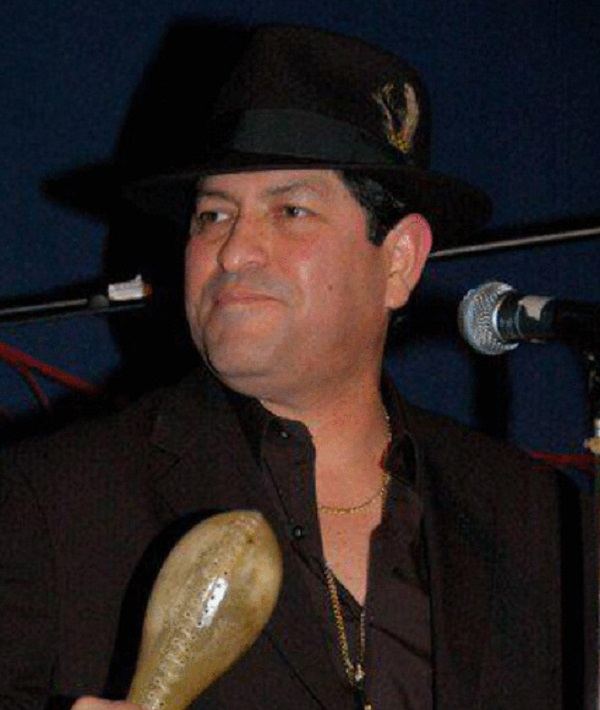
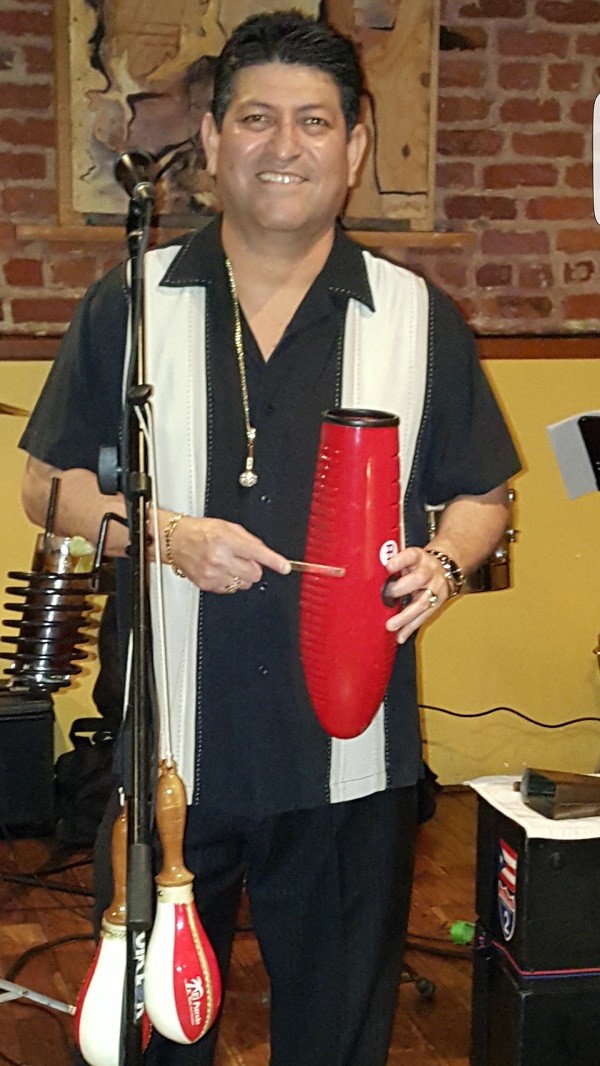
Carlos Medrano from Sabor De Mi Cuba tells us abut his long musical history

There is a tremendous amount of Cuban artists who have had to fight against economic adversity there is in their country, but this has not prevented them from getting ahead and fulfilling their dream of making a living from their art. One of them is the bandleader of Sabor De Mi Cuba Band, Carlos Medrano, with whom we had the pleasure to talk for this report.    

Carlos Medrano was born in the city of Havana, Cuba, and became interested in music when he was very young. The first instruments with which he began experimenting were the bongo and the conga, which had a huge importance in the training the artist would follow until he became the professional musician he is today. Here are some of the topics we cover in a long but pleasant conversation via Zoom.   

Bandleader Carlos Medrano
Carlos Medrano, bandleader of Sabor De Mi Cuba

Topics covered with Carlos Medrano 

When talking about his first experiences with music, Carlos told us he has always been surrounded by musical sounds since his childhood, which was spent in the neighborhoods of El Vedado and Old Havana.    

When he lived in El Vedado, his grandfather used to make poetry and do recitations, while he accompanied him with the drum, but he was in more direct contact with the musical world in Old Havana, a place where there were many rumberos and renowned musicians who were always playing in those parts.   

A very young Carlos always saw comparsas and street concerts from her home window and people always joined them making sounds with bells, pans or anything they had. 

During the decade of the 90’s, Cuba saw a big boom in tourism, resulting in the appearance of numerous traditional Cuban music groups and the cafes and clubs in the area were filled with sextets with professional musicians. They were looking to play in these places to get tips from tourists and have travel and employment opportunities,” said Carlos.    

I always looked at the work these artists were doing, especially tres players and bongos players. That’s how I learned to play the bongo: by watching and listening to what others were doing. I tried to imitate the sounds they made with a metal bucket or whatever I had at home to learn”, he continued.    

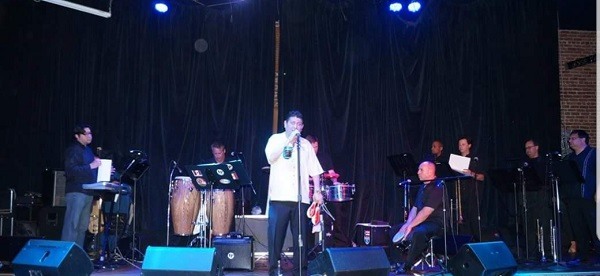
Carlos Medrano on stage
Carlos Medrano performing on stage with his band

Professional training of Carlos Md¡edrano and and limitations found 

After junior high school, he met a friend of his father who would be key in his training as an artist and his name is José Antonio Oviedo. Although his father saw no problem in this fascination of Carlos with music, he always told him not to drop out of school and to pursue a university career. 

When he began taking lessons with José Antonio, the level of demand was such that he felt he was in a formal school. He taught him to read music in a way that had nothing to envy to an art institute, which Medrano will always be very grateful for. 

In addition to that, near his home, there is a sector called ”Cueva De Humo” where there are excellent musicians and rumberos. It was there that Carlos got to meet Juan Ernesto Santana, Ernesto Gatel Coto from Rumberos de Cuba and many more. ”I was lucky that most people liked me and they always explained to me everything I needed to play as it should be” he added.   

With all these insights, there came a point when he decided to devote himself to the world of music and put aside other ambitions he had such as studying law, which was a shock to his family at the time. 

That is when his mentor José Antonio did the necessary procedure for him to present the Escuela de Superación Profesional de Arte “Felix Varela y Morales” admission exam, which he passed without major setbacks thanks to his training up to that point. 

Although his admission to the institution was relatively simple, it was not long before Carlos faced another equally difficult challenge: getting the necessary resources and instruments to receive a good training. 

”I didn’t have my own instruments until I started playing professionally with maestro Orlando Sánchez. I had my first bongo thanks to my father’s friends, who helped me to have my own things, but that never limited me” said the percussionist on this topic. 

In a time of so many shortages, it was clearly not easy to study, but Carlos was always looking for ways to fulfill his activities, whether it was raising money, borrowing instruments, practicing with other similar implements, sharing school instruments with his classmates, among other things.    

Carlos Medrano paying the drums
Carlos Medrano playing the drums on stage

Great inspirations and mentors   

One of his biggest inspirations was his cousin Stanley, who was a professional percussionist. He always advised Carlos to never classify himself in one instrument, but to always learn to play a little bit of everything to become a needed man, so that bands would always consider him for their tours and projects.    

Another of the great mentors he had has been Ignacio Jarabe, who has taught him many of the best ”tricks” a percussionist may need when playing one of these instruments. ”I still have solo sheet music that he wrote and some of his book manuscripts, which I don’t know if they were ever published, but they are still important reference sources for me”, said Carlos about Jarabe. 

We cannot forget to mention percussionist Eliel Lazo, with whom Carlos had amazing chemistry from the beginning. Lazo had contact with the best AfroCuban jazz musicians of the time and came to travel to many places thanks to his training in percussion instruments, which inspired Medrano to follow in his footsteps. After about one year of studying with this great musician, he was able to perform at La Fiesta Del Tambor and went on to be a finalist in several categories.   

Once he started plating professionally, the first person to call him was the maestro Orlando Sanchez, who in addition to offering him his first formal opportunity in this field, taught Carlos many other things which he had not learned so far. He has him up on a pedestal and thanks him for everything he has learned. 

Another person to whom the artist is very grateful is José Luis Quintana, better known as Changuito, who told him that ”the good conga player has to listen to the orchestra. You have to be able to hear the piano, the bass and the other instruments. You have to look for your space between the rest of the musicians”.   

Another important figure who cannot be left out is Yaroldy Abreu, a mmusician who spent hours rehearsing with Carlos at his house. They focused a lot on technical and creative resources during these classes. Medrano considers him one of the best percussionists and musicians in the world due to his extensive knowledge in every field of music.  

Carlos recording at home
Carlos Medrano recording music at home

Sabor De Mi Cuba   

It all started with a contest called ”Joyas” which specializes in promoting young Cuban talents who present their art to a qualifying jury and seek to carve a name for themselves in the industry.    

Carlos was fortunate that one of the judges told him and drummer Pablo Calzado ”you two shall go along with me”. The artist spent some time working with this person, who took him to play in other orchestras so that he could learn from the best until developing his own style.  

This happened after he moved to the United States and was still acquiring experience with other musical groups. That is when he realized he wanted to do things in a different way and get involved in other genres and rhythms that he had not tried before.    

There came a day when a bass player friend of his told him that if he wanted to come up with his original ideas, he had to embody them himself and not wait for others to do it. Carlos never saw himself creating his own band, but he decided to began composing his own music and he succeeded. 

Then, he started writing usic, contacting great arranger friends of his who helped him reassemble the idea of what he wanted to do. Once he had a repertoire, they advised him to record an album and give life to everything he had done, which gave birth to his first album ”Sabor De Mi Cuba”. 

The first song he wrote in his life was called ”La Habana” and was basically inspired by everything Carlos lived in his country and the longing he feels for not being able to be in his country, walk its streets, party with his friends, visit its special places, among other things. What he relates there is his life in the city where he was born and his desire to be able to go back there. 

His main motivation to make the album was the possibility of doing something different from anything he saw in the music scene around him at the time.   

Carlos does not think of himself as a professional composer, far from it, as he feels he still has a lot to learn in that field, but he hopes to reach the level of the artists who inspired him in his youth.   

Read also: Héctor “Rudy” Regalado and his great career 

Jerry Rivas, career, and support for the Spaha Salsa Gallery Museum

The Spaha Salsa Gallery Museum has been the recipient of a good number of objects donated by artists and their families after they had died. This time, it is the turn of Jerry Louis Díaz Rivas, better known as Jerry Rivas in the music scene, who is one of the main singers of El Gran Combo de Puerto Rico.   

We want to use his pleasant visit to our museum and his forty-sixth anniversary with El Gran Combo to talk a little about his great career and everything achieved in his long musical career over the past decades.   

Jerry with Johnny
El Gran Combo De Puerto Rico singer Jerry Rivas and Johnny Cruz

Life and career of Jerry Rivas   

Jerry Diaz was born in the city of Tampa, United States, on August 25, 1955 and his parents were of Puerto Rican origin, so it is undeniable that Puerto Rican heritage greatly influenced the path he would take later on.   

About five years later, Jerry and his family moved to the city of Bayamón, Puerto Rico, where he began to take his first steps in the world of music with the guitar, the Puerto Rican cuatro and the Cuban tres, counting on the support of professor Carlos Seguí to learn to play the latter. However, shortly after, he would decide that singing was his thing. 

While still a young teenager, he was part of various groups such as Grupo Complicación, Conjunto Cojoba and Grupo Chaney, being in all cases a very important part of the body of musicians who were in these bands.   

His big great came in 1976 when Don Rafael Ithier, who was interested in the artist to be part of El Gran Combo De Puerto Rico, after he was recommended by Don Quique Lucca, who thought of this boy as replacement of the legendary Andy Montañez, singer of the group for more than 14 years.   

Jerry signing a tres
Jerry Rivas signing the Cuban tres he donated

Although it was not believed that Jerry could fill the shoes of his predecessor, his talent, effort and support from the music director of the orchestra, made him consolidate in the institution along with the rest of his colleagues and become one of the longest-serving members of El Gran Combo. 

International fame came with the album ”El Gran Combo En Las Vegas” thanks to the song ”La Clave”, in which he proved his vocal abilities to new levels. After that, he achieved his consecration as an international star with the album ”Happy Days” thanks to the song ”El Menú”.   

After that, everything that followed for Jerry was success with the orchestra, which resulted in approximately 30 recordings in a span of 45 years with El Gran Combo de Puerto Rico, his musicians and the extraordinary team behind the group.    

Other details of his life and support to the Salsa Museum  

In addition to being a vocalist for El Gran Combo de Puerto Rico, Jerry also participated in backing vocals with other great musicians for their respective musical works such as Willie Rosario, Bobby Valentín, Yuri Buenaventura, Gilberto Santa Rosa, La Sonora Ponceña, Adalberto Santiago and many others.   

Jerry with Johnny and the tres
Jerry and Johnny with the tres and the jacket Jerry donated to the museum

In each of these projects, the Puerto Rican artist has always given his personal touch and his unmistakable vocal chords, so it is normal that he is considered a legendary voice within the salsa movement not only in his country, but also worldwide.   

Due to all of the above, it is a true honor for the Spaha Salsa Gallery Museum to receive this great musical luminary in its facilities, where he was welcomed by its president and founder, Mr. Johnny Cruz. 

Some photos on the Cruz’s official Facebook page, it is evident that both shared a very pleasant time remembering things from the past and talking about music. In addition, Jerry donated one of his shirts and a Cuban tres to the museum so that they can be exhibited to the public along with the rest of the objects in its collection.   

We thank Jerry for his kindness, generosity and great talent, which we hope will continue to accompany us in the years to come. 

Read also: Tommy Olivencia Jr’s career and support for the salsa museum 

“My best inspiration and my best teacher is my dad.” Inheritance, discipline and academic training forged the Padilla dynasty that empowers salsa.

Robert and Ricardo Padilla have a fundamental importance within the musical movement we know as salsa. The father is a historian, curator and consultant. The son is a journalist, producer and broadcaster.

The role of Robert Padilla, who tropical music connoisseurs consider the most important salsa collector in the world, is unrepeatable, as he weaves together history, characters, facts and archives; delivering a holistic approach to salsa as a concept.  His motivation is pure interest in preserving and spreading the culture.

The relevance of the museum that he conceived and guarded is unquestionable. He acquired the property and fitted out the building with the required specifications and ambience with the purpose of having a repository that keeps the salsa memory alive and in force.

When Ricardo was asked if his father influenced his training in the preservation of the musical archive, his successor answered: “That’s right. My dad and I have many things in common; among them, we love salsa. I grew up watching my dad play records and listen to music. But, my grandfather also had an influence because during the 1940s and 1950s, (the golden era of the Palladium, with Tito Rodriguez) Don Hector Padilla Rosado (RIP) had bodegas in New York.

My grandfather was part of what was happening there and danced mambo in that environment. My grandfather told me all that story and my father repeated it to me (…) the Padilla family would not be the Padilla family if we did not talk about my grandfather, Don Héctor. So we are three generations that in one way or another have dedicated ourselves to supporting music because it has changed our lives for the better.”

Robert Ricardo
My best inspiration and my best teacher is my dad.” Inheritance, discipline and academic training forged the Padilla dynasty.

Ricardo considers his father the biggest fan of salsa.  “Beyond being a historian, he is the number one salsa fan. My dad has the largest collection of tropical music in existence.” That collection includes records in different formats, photographs, memorabilia, videos and audios of live shows, all documented and classified. Recently to his already incalculable collection was added that of Don Mariano Artau (RIP), who was collecting and curating unique musical treasures for more than seventy years.

In Ricardo’s case, he studied Journalism at the University of Puerto Rico, Rio Piedras Campus. What the father began as a hobby, the son saw as a profession. The gratitude and admiration he has for his father is evident when he says: “I thank my dad (…) all those concerts he took me to as a child formed me. And all those people he connected me with, later became mentors for what I do today as a Salsoul programmer.” And he adds: “my greatest inspiration and my best teacher is my dad; and he will continue to be so in every sense of the word”.

Speaking of orchestras, the salsa sound that Robert favors is that of the duo that popularized Willie Colón and Héctor Lavoe. For his part Ricardo affirms: “I say that Willie Rosario doesn’t have a bad album. He is a role model; being true to himself, molding a sound supported by great arrangers that he himself chose to refine that style.

He is so special in so many areas (…) So much so that even his life has been compiled in a book, and at 99 years of age, without having the need to play, he continues to do so because music is not necessarily something that only generates money for him; it is something that generates motivation to continue living. Without detracting from Don Rafael Ithier with his mulatos, or Don Papo Lucca with that southern giant, or the orchestra of the King of the bass, Don Willie transcends music and is an example of how to live”.

Robert Ricardo
Robert and Ricardo Padilla have a fundamental importance within the musical movement known as salsa

The Padilla’s, organically; to the succession they added a good dose of discipline and polished themselves with the commitment to take their musical training -which has not yet culminated- seriously, becoming the most admired influencers of salsa.

This dynasty is committed to their self-imposed mission of excellence. They say goodbye as a team and almost in unison affirm: “we are at your service”. I responded gratefully with “we’re still in salsa”, knowing that neither Puerto Rico nor the salsa world can repay this dynasty for the monumental contribution to the culture and musical history of this archipelago that has been the cradle of the greatest exponents of salsa, which the Padillas empower by sharing these stories of Puerto Rico with the world.

Robert Ricardo
Ricardo Padilla Award

Read Also: 45 years of salsa career of ‘el más que canta’ was in style

Bella Martinez ISM correspondent – Puerto Rico

When it comes to compositions, Luis “Tata” Guerra is widely known internationally

On June 9, 1934, in Guanabacoa, Cuba, Luis “Tata” Guerra was born. Excellent Percussion Master with a Guinness World Record for having accompanied more orchestras live and in recordings.

A virtuoso musician, Luis Tata Guerra, member of a humble and hard-working family, is the last of 4 brothers, born of a musical tradition, his father played guitar, and his older brother Emerio Guerra is a guitarist in Havana.

He studied music and saxophone at the Salesian School of Guanabacoa. He learned to play the tumbadora, and the rhythms of Rumba and Guaguancó in his neighborhood in the 50s.

Luis “Tata” Guerra
Luis “Tata” Guerra

He joined the Almendra Orchestra in 1954, performing in the best nightclubs of the island. He rehearsed with Conjunto Casino and Conjunto Arsenio Rodríguez.

In 1956 he arrived in Colombia with the Cuban Swing Orchestra, he stayed for 4 years working with the groups Sonera del Caribe and the Pepe Reyes Orchestra (Cuban singer). From there he went to Venezuela where he has lived since 1960.

Maestro Guerra has an extensive career as a musician for his activity in different groups such as: Los Melódicos, Víctor Piñero y sus Casiques, Aldemaro Romero, Chucho Sanoja, El Pavo Frank, and accompanying on percussion in Caracas Tito Rodríguez, Miguelito Valdez, Rolando Laserie, Daniel Santos, Olga Guillot, Rubén Blades, Paco de Lucia, including the Timbal King Tito Puente and many Others.

Recognition for Luis "Tata" Guerra
Recognition for Luis “Tata” Guerra

His compositions have been played in the media in Santo Domingo, Spain, Cuba, Puerto Rico, Colombia, Venezuela.

The composition “Son Matamoros” dedicated to this famous Cuban trio, was included in the movie “Salsa” with the participation of Celia Cruz, Tito Puente, Mongo Santamaria, Grupo Niche and other values. He was a member of the VTV Orchestra (channel 8) for 23 years (1965-1991).

Member and Director of the trio Hermanos Rodriguez, in 1994 they traveled to the Canary Islands invited by President Hermoso, and are well known there for the hit “Son Canario” (composition by Guerra himself).

Again in 1999, they returned to the Canary Islands for more than 2 months, in addition to performing at the fabulous The Trump Taj Mahal Casino Resort in Atlantic City, New Jersey.

He presented his program “RAICES CARIBEÑAS” on ANTV.

When it comes to compositions, Luis "Tata" Guerra is widely known internationally.
When it comes to compositions, Luis “Tata” Guerra is widely known internationally.

His fondness for acetate collection was recognized throughout Venezuela. A work with his conjunto became very popular and the voice of “Kiko” Mendive reminded us of the grilles and discómanos of Cali in the 80’s. “Barara Bururu”.

We also remember the time he shared with his compatriot Rafael “Felo” Bacallao Hernandez, who had retired from the Aragon orchestra.

With great regret we recorded on February 24, 2015, the unfortunate news of the death of Tata Guerra, four months shy of his 81st birthday, he had been suffering from an accelerated affection in his respiratory system, remaining hospitalized at the Florida Clinic in the city of Caracas, where in the early morning of that day he left us.

“When I listen to reggetón/ my heart stops/ because my thing is rumba and son”.

Maria Luisa Guerra

Read Also:  Stelio Bosch Cabrujas a remarkable musician, but completely forgotten by the new generations

Source:

Por: Carlos Molano Gómez

Bogotá – Colombia
Derechos Reservados de Autor -primera publicación – 2016
Actualizado 2021.


Tempo Latino 2023

Tempo Latino 2023
Tempo Latino 2023

Tempo Latino is a music festival held in Vic-Fezensac, France, in the region of Gers in Gascony it is the first and the greatest Latin American and Afro-Cuban music festival of the summer in Europe. The festival was founded in 1994 and has been held annually since then.

“In 2020 and 2021, the festival was only interrupted for two consecutive years due to the containment of the new crown pneumonia (COVID-19) epidemic.”

With around 600 volunteers from all over the city for four days of intense activities and an audience of around 60,000 people from all over the world.

Tempo Latino offers a variety of Latin American and Afro-Cuban music, including Salsa, Bachata, Kizomba, Cumbia, Merengue, Rumba, Latin-jazz, Reggaeton and more. The festival also features dance workshops, food stalls and other cultural events.

International performers and instructors from Cuba, Puerto Rico, Colombia, Venezuela, Panama, Africa, the United States (primarily New York, Miami, and California), and Europe have participated in a number of concerts and workshops

Tempo Latino has grown from a small festival to one of the most important Latin American music festivals in Europe. The festival hosts some of the biggest names in Latin music, including Celia Cruz, Ruben Blades,  Eddie Palmieri, Oscar D’ León, Johnny Pacheco, Adalberto Álvarez, El Gran Combo de Puerto Rico, Kassav, Totó la Momposina,  and Los Van Van. Tempo Latino has also helped advance the careers of many new artists.

Here’s more information on Tempo Latino:

  • The festival takes place in a beautiful setting in the heart of the French countryside.
  • The festival is family friendly and has activities for all ages.
  • The festival is a great opportunity to experience a different culture and learn about Latin American and Afro-Cuban music.

A festival of concerts takes place in the square and, at the same time, many free outdoor events for those who want to discover music in the city’s dance halls in the afternoon and evening. In the second edition, they have integrated dance, music, and percussion lessons.

The 28th edition of Tempo Latino will take place from July 27-30, 2023.

The lineup includes:

La Conga

27 July – Ana Tijoux (France)

Les Arenes

28 July 2023

21:00 – Orchestra Baobab (Senegal)

23:00 – Grupo Compay Segundo (Cuba)

29 July 2023

21:00 – Lila Downs (Mexico)

23:00 – Cimafunk (Cuba)

30 July 2023

21:00 – Bernard Lavilliers (France)

23:00 – La Excelencia (USA)

and many more!

Pass Concert: 

On the official website, tickets for four days are available for 120 € (during the festival, they cost 150 €).

Eric Duffau

The current director of Tempo Latino is Eric Duffau from Toulouse, France. He is also the founder of the music festival which he started in 1994. A passionate lover of Latin American and Afro-Cuban music, Dufour devoted his life to promoting this music to a wider audience and serves on the board of the French Association for the Promotion of Latin Music (AFMPL).

Director of Tempo Latino is Eric Duffau from Toulouse

Dufoe was a tireless promoter of Latin American and Afro-Cuban music. He travels the world in search of new talent and works hard to make Tempo Latino a major cultural event. He is a passionate advocate of Latin music and works to bring this music to a wider audience.

Dufour graduated from the National School of Arts and Crafts (ENSAM) in Paris. In the early 1980s he worked as a DJ, during which time he became interested in Latin American and Afro-Cuban music. In 1989, he decided to create a festival to showcase this music and Tempo Latino was born.

https://www.tempo-latino.com/

https://www.youtube.com/user/TempoLatinoFestival

The Tempo Latino Festival is Back

  • « Go to Previous Page
  • Page 1
  • Interim pages omitted …
  • Page 124
  • Page 125
  • Page 126
  • Page 127
  • Page 128
  • Interim pages omitted …
  • Page 247
  • Go to Next Page »

International Salsa Magazine (ISM) is a monthly publication about Salsa activities around the world, that has been publishing since 2007. It is a world network of volunteers coordinated by ISM Magazine. We are working to strengthen all the events by working together.