• Skip to primary navigation
  • Skip to main content

International Salsa Magazine

  • HOME
  • Previous editions
    • 2026
      • ISM / March 2026
      • ISM / February 2026
      • ISM / January 2026
    • 2025
      • ISM / December 2025
      • ISM / November 2025
      • ISM / October 2025
      • ISM / September 2025
      • ISM / August 2025
      • ISM / July 2025
      • ISM / June 2025
      • ISM / May2025
      • ISM / April 2025
      • ISM / March 2025
      • ISM / February 2025
      • ISM / January 2025
    • 2024
      • ISM / December 2024
      • ISM / November 2024
      • ISM / October 2024
      • ISM / September 2024
      • ISM / August 2024
      • ISM / July 2024
      • ISM / June 2024
      • ISM / May 2024
      • ISM / April 2024
      • ISM / March 2024
      • ISM / February 2024
      • ISM / January 2024
    • 2023
      • ISM / December 2023
      • ISM / November 2023
      • ISM / October 2023
      • ISM – September 2023
      • ISM – August 2023
      • ISM July 2023
      • ISM Edition June 2023
      • ISM – May 2023
      • ISM April 2023
      • ISM March 2023
      • ISM February 2023
      • ISM January 2023
    • 2022
      • ISM December 2022
      • ISM November 2022
      • ISM October 2022
      • ISM September 2022
      • ISM August 2022
      • ISM July 2022
      • ISM June 2022
      • ISM May 2022
      • ISM February 2022
      • ISM January 2022
    • 2021
      • ISM December 2021
      • ISM November 2021
      • ISM October – 2021
      • ISM September 2021
      • ISM August 2021
      • ISM July 2021
      • ISM May 2021
      • ISM April 2021
      • ISM June 2021
      • ISM March 2021
      • ISM February 2021
      • ISM January 2021
    • 2020
      • ISM December 2020
      • ISM November 2020
      • ISM October 2020
      • ISM September 2020
      • ISM August 2020
      • ISM July 2020
      • ISM June 2020
      • ISM May 2020
      • ISM April 2020
      • ISM March 2020
      • ISM February 2020
      • ISM January 2020
    • 2019
      • ISM December 2019
      • ISM November 2019
      • ISM October 2019
      • ISM Septembre 2019
      • ISM August 2019
      • ISM July 2019
      • ISM June 2019
  • Spanish
  • Download Salsa App
    • Android
    • Apple

Search Results for: Son

Kirk Douglas

North America / United Stated / New York

Kirk Douglas “My greatest achievement un my long career was to help end the blacklist at the movies”

Kirk Douglas
Kirk Douglas

At the age of 103, Isuur Danielovitch Demsky, on February 5th, 2020 passed away. He was better known as Kirk Douglas. At the Sarah Lawrence College in Canton, new York. He discovered acting. He was rejected from the fraternities for being Jewish. However, eventually, Douglas became the president of the Student Council, the first time a Jew help that position. In his career he made over 90 film. He brought a certain air of powerful rebellion in his characters and left a legacy. A part of that legacy is the recognition for his humanitarian sense and “commitment to justice”

Coercion of opinion in Un-American


Senator McCarthy
Senator McCarthy

Douglas said that his greatest achievement was in helping to end McCarthyism. People from the industry were persecuted for their alleged communist affiliation. Artistic creativity was being censured. Douglas had hired screenwriter Dalton Trumbo to do the screenplay for Spartacus.

Dalton Trumbo HUAC 1948


Dalton Trumbo in jail

Trumbo was one of the highest paid screenwriters of this time, accredited with works like Oscar winning The Brave One, Exodus, Spartacus and Roman holiday and many other famous works. In 1950 Dalton spent 11 months in prison as one out he Hollywood 10. The Junior senator from Wisconsin Joseph McCarthy wanted to make a name for himself, along with attorney Roy Cohn, senator (later president) Richard Nixon, and Hollywood gossip columnist Hedda Hopper. The committee assured that Blacklisted individuals wound’s work for years to come. Hedda Hopper organized a picket line at the opening of the film, urging her 35 million reader toy boycott the movies Spartacus.

Spartacus
Spartacus

Spartacus - film

Otto Preminger was the first to fight back against Joseph McCarthy and his witch-hunt, recognizing the work of Trumbo for Exodus. In 1955 Kirk Douglas had established his own production company. If Spartacus was boycotted, it would cause financial chaos for Douglas, and after being placed in the backlist, no one would work with him and Hollywood would ostracize him.

Otto Preminger
Otto Preminger

It took a great deal of courage for Mr. Kirk Douglas to stand up for his beliefs and fight to abolish blacklist and all that it meant. He joined the ranks with Otto Preminger. One of the first persons to cross Hedda Hopper’s picket line and give his support to Kirk Douglas was president elect John F. Kennedy.

Helda Hopper
Helda Hopper

Undoubtedly, the death of Kirk Douglas server for us to reflect on our role in society, and how we can contribute for our spaces, whether from art, film or music: and in different directions, beyond religion or politic. That sense of justice in the real legacy of Kirk Douglas. Some articles mention tha his already successful son Michael Douglas, how is married to actress Catherine Zeta Jones was left out o the will. Mr kirk Douglas left a vast part of his fortune to charity, His successful son Michael Douglas already is reputed to have a fortune in excess of $ 300,000,000 dollars.

Kirk Douglas
Kirk Douglas

Salsa: From New York to the world!

North America – United States – New York

Last February we actively participated in different activities in New York, promoted by different instances and always supported from the Spanish Harlem Salsa Gallery Museum and The Johnny Cruz Show.

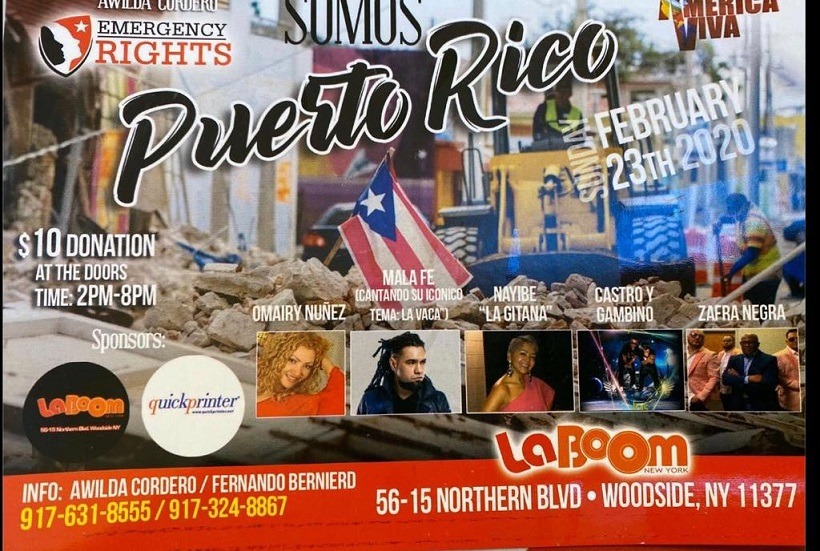
Johnny Cruz: We were part of the Somos Puerto Rico event, together with more than 25 artists and with the collaboration of La Boom, which allowed thousands of people to work for our island: Puerto Rico. There was a lot of music, and we were accompanied by artists such as Jova Rodríguez, Arlene, Roberto Vásquez, Anissa Gatners, Fernando Berniero, Alex Bautista, Jen Carrasco and Kevin Tapia, among others.

We also had typical food for sale and many initiatives aimed at saving so many lives in need. From this event we want to continue bringing families to the United States and they can be calm until they stop shaking in the south west of Puerto Rico. You are not alone!

In addition, we are working hard on a documentary about Frank Ferrer, always thinking of immortalizing figures that have consolidated Salsa in the world as a Latin genre of world projection.

Salsa, as you know, is a typically New York musical genre, the result of the influence of great Latin jazz musicians, and the existence of a youth of Latin origin born, or resident in New York, in slums where Salsa is the best expression, spiced up by the exile produced by the Cuban Revolution and the awareness of American racial minorities.

In 1964, Johnny Pacheco, a flutist of Dominican origin, and Jerry Masucci, a young businessman, founded the Fania label, which gave the old Latin labels, a more modern sense of Caribbean music. Musicians and singers of the previous generation were reinvented, but others were incorporated as a young Willie Colon, the Palmieri brothers, Eddy and Charlie; Papo Luca, Ray Barreto, Larry Harlow. And, there were also singers who put their voice to Salsa to tell stories of the street, daily or reflexive, that were the mirror of the life of the neighborhoods: Cheo Feliciano, Adalberto de Santiago, Andy Montáñez, the Ismaeles -Miranda and Ribera-, Justo Betancourt, Héctor Lavoe or Rubén Blades.

Johnny Cruz Salsa: From New York to the world!

The influence of the Cuban revolution had led composers and salsa musicians to become aware that it was necessary to compose songs that talked about what was happening in the streets from a critical perspective, giving way to a new salsa and foot reality for characters as Frank Ferrer started from folklore and protest to arrive at salsa mixing both concepts in an exemplary album: Yerbabuena. All this and much more can be enjoyed very soon.

For this month of March, Puerto Rico will organize the 1st World Salsa Collectors Meeting and of course we will be there representing New York with the Salsa Museum (SPAHA Salsa Gallery Museum). From March 7th, at least 15 organizations of this type of collector from seven countries will exhibit their collections of the Caribbean genre.

The collectors meeting will take place at the Sheraton Hotel, in Miramar, under the theme “La Salsa se baila así” and will be free admission. It will be attended by collectors from Puerto Rico, Colombia, Panama, Peru, Ecuador, Mexico and several cities in the United States.

That day will be the official release in LP format of the album “Mario Ortiz, 55 Aniversario”, nominated for the last edition of the Latin Grammys.

The event includes memorabilia exhibitors of legendary salsa artists such as Willie Rosario, Bobby Valentín, Roberto Roena o la Sonora Ponceña, as well as the Museo de la Salsa de Puerto Rico or the Fundación Nacional para la Cultura Popular.

Pieces from the Jairo Varela Museum, renowned deceased Colombian musician, whose orchestra Grupo Niche is still active and triumphing around the world will be presented. The writer Daniel Nina, will give a lecture about Salsa, and Puerto Rican dancer Tito Ortos will talk about the history of salsa dancing. We can enjoy live music with the group Cubaneo 54, and a great closing with the several times awarded Big Band of the Free School of Music of San Juan, directed by Professor Manuel García. See you there!

As always, remember that Spanish Harlem Salsa Gallery is in 1708 Lexington ave New York N.Y. 10029. Open free to the public all Thursdays & Fridays from 4 to 7 pm and Saturdays from 1 to 8 pm. Check the updates in our website: spahasalsagallery.com.

Johnny Cruz - Spaha Salsa Gallery
Johnny Cruz – Spaha Salsa Gallery

Also, The Johnny Cruz Show, the #1 Salsa Show on television on all 5 Boroughs of New York on CH67.  Saturdays from 3:30 to 4:30 pm.

Contact: Johnny Cruz. 917-747-8505.  [email protected].


By Johnny Cruz Correspondent, New York City, New York

Joe Bataan’s music remains in force

Joe Bataan in the Spaha Salsa Gallery

There are many artists of international stature have been in the Salsa Museum and left some valuable object in our facilities, and this month, it was the turn of American singer and musician Joe Bataan, who was kind enough to share with producer Johnny Cruz and his show partner Boris Calderón. 

Joe Bataan and Johnny Cruz in the Spaha Salsa Gallery

In one of the videos taken during the visit, the artist mentioned that the place was awesome and had expanded so much that another building would have to be made soon for so many valuable acquisitions. Let’s remember that both the artists and their families have been donating all kinds of garments, instruments and things related to their careers to be exhibited in the museum with the purpose of showing the public this valuable part of our culture.

After such an extraordinary exchange, we believe it believe to talk a little about the story of this talented man and how he has reaped all the success obtained at the time.

Story of Joe Battan

Bataan Nitollano is a New York singer of African-American and Filipino origin from his parents, but he grew up in the neighborhood of Harlem, where he got in trouble with the law and was trained in music.

Joe Bataan signing a jacket in the Spaha Salsa Gallery

While he spent a short time in prison, he studied music, and trained in playing the piano, something that would be extremely important for his artistic career. Once he was released, he formally began his career as a singer and formed his first group, which he named ”Joe Bataan and the Latin Swingers”. At that time, the young man was heavily influenced by two genres that were very fashionable at the time, which are boogaloo and Afro-American Doo-wop.

Although Bataan was not the first to enter the aforementioned genres, his very particular talent made him worthy of the attention of the newly created record label Fania Records, which signed the artist in 1966 and released his first single ”Gypsy Woman” the following year. The song ended up being a huge hit in the Latin community in New York City and laid the foundation for what would end up becoming what we know today as Latin Soul.

During the time Joe worked with Fania, he recorded about eight albums, which became a true sensation due to their mix of Doo-wop in Latin rhythms with English soul, which was quite new at the time. Everything was going well until he had some frictions with the label manager Jerry Masucci concerning the economic issue, so the singer ended up leaving the company to launch his own label Ghetto Records.

The artist's signature
The artist’s signature

In the 1980s, he spent a long time away from music to devote himself to teaching at the same center where he was held and experienced some health declines that kept him silent for quite some time until he ws back in play in 2005, when he released his album ”Call My Name” whose rhythms were based on Latin soul and got many positive reviews. This album proved that Bataan was still a talented artist even though his genres are no longer the most popular.

Today, he is a person with extensive experience in the world of music who is always willing to give his everything to any fan who wants to listen to him. The Spaha Salsa Gallery team is pleased to have had his presence in recent days, so we hope that meetings like this one can be repeated.

Read also: Life and career of Ernie Acevedo

Contact: Johnny Cruz. 917-747-8505. [email protected].


By Johnny Cruz, ISM Correspondent, New York, New York City


The Conjunto Bailatino “La Resistencia Salsera” again “Antes los ojos del Mundo” and here, “No hay quinto malo”

On April 21, 1991, in Venezuela, Bailatino “La Resistencia Salsera” was founded.

The Bailatino Ensemble, was born as a need to revalue and revitalize the Caribbean musical heritage so diverse and original; a heritage that refuses to die because it is part of our Cultural Identities, that is to say, it does not obey the dictates of fashion, nor the whims of the record companies, but our sense of belonging and our pride for the cultural contribution we have given to the world.

Bailatino represents the Salsa Resistance, Salsa without Concessions; it expresses the influences of the best musical groups that interpret the “Salsa Dura”, but, with its own identity.

Bailatino Llegó... Con Todo!!! 2003
Bailatino Llegó… Con Todo!!! 2003

The versatility, trajectory and professionalism of each of its members are known and recognized not only in the salsa world, but also in the wide range of Venezuelan music.

The musicians that make up Bailatino are constantly invited to accompany the best national and foreign orchestras that visit Venezuela; they are also requested in important international stages;

They have recorded different musical genres and are members of various Venezuelan orchestras. José “Cheo” Navarro, Marcial Istúriz, Edgar “Dolor” Quijada, Felipe Blanco, Johan Muñoz, Eliel Rivero, Alberto Crespo, José “Mortadelo” Soto, and Alexis Escobar (R.I.P) and replaced by Leo Pérez, make up a compendium of talent, knowledge and experiences whose result cannot be other than excellence and quality expressed in each of their interpretations.

Bailatino Llegó... Con Todo!!! 2005
Bailatino Llegó… Con Todo!!! 2005

Bailatino is the result of national and international musical influences, such as: La Dimensión Latina, Federico y su Combo Latino, El Grupo Mango, La Salsa Mayor and Tabaco y sus Metales, just to mention a few Venezuelan groups; likewise, Eddie Palmieri, Charlie Palmieri, Grupo Libre, Grupo Experimental Newyorkino, Ricardo Ray, Sonora Ponceña, Fania All Star , Mon Rivera, among others.

In 1995, Bailatino debuted in the framework of the International Theater Festival of Caracas, coincidentally in the spaces that previously was one of the temples of salsa and dance, the now disappeared “Sabor Latino”, formerly called “La Pelota”, sacred contexts of salsa and the nightlife of Caracas.

Bailatino has become one of the most popular and requested groups by the legion of “rumberos” and “rumberas”; salsa men and women, true experts and connoisseurs in the matter.

La Resistencia 2008, Bailatino
La Resistencia 2008

Who organize throughout the year the best salsa parties in Caracas, promoted and spread by means of oral tradition or selling tickets in the famous “Tío Pepe” of Sabana Grande, in Caracas.

These CDs are dedicated to all of them, because with their encouragement we were able to make our dream come true.

Bailatino has also performed on various stages in our capital and internationally:

Museo de Bellas Artes, Corp. Group, Espacios Unión, Trasnocho Cultural del Paseo Las Mercedes; Banco Central de Venezuela, Colegio de Ingenieros, Colegio de Médicos, El Maní es Así; “El Rincón Caribeño (currently “Rumba Aché”), Hawai Kai, El Atrio, Centro de arte la Estancia, celebrated its tenth anniversary at Casa del Artista, Aula Magna, first Metropolitan Salsa Festival, Herman among others. Internationally Bailatino makes his first presentation at the Jorge Isaac theater in Cali Colombia, he was invited to the festival “Salsa al parque” in Bogota Colombia, in 2007 he travels to the city of Dax France for the festival “Toros y Salsa”, in 2008 he travels to Mexico and that same year he performed at the Salsa summer festival in Cali, in that city, he also performed at the prestigious Changó nightclub; in 2009 we were in Australia; all these presentations with resounding success and acceptance.

Bailatino is a network of alliances, solidarity and complicity between musicians, composers, arrangers and friends from different professions and trades, who have contributed their grain of sand so that the Bailatino project, once the proposal was approved by music lovers and dancers, would not remain only in multitudinous presentations and excellent comments from its heterogeneous audience that multiplies every day.

Aniversario 2012
Aniversario 2012

Bailatino, is musical memory transmitted from one generation to another, reinterpreted with all the care and respect that the great masters deserve, who have contributed to design the musical map of Latin America.

The Bailatino group vindicates, once again, the place of honor that Latin Music deserves, not only for the Caribbean, Andean and Afro-American countries; it is a proposal within the framework of a globalized society, but also in a historical moment in which our cultural identities have a great capital to contribute in this multicultural and multiethnic counterpoint that currently exists in the world, in diverse fields and of course in the musical plane.

Currently they are preparing their fifth production entitled “No hay quinto malo”, and at the same time they have released two excellent songs with the brand of “Bailatino”, “Lo mismo de siempre” from the pen of José “Cheo” Navarro and a masterful arrangement José Soto “Mortadelo” in the vocal part Edgar “Dolor” Quijada, the second song entitled “Salsero Soy” composition and arrangements by pianist Alberto Crespo in the voice of the talented young Francisco Rojas and as special guest in this production the Sonero del siglo XXI Herman Olivera performing the song “El que te ama” another excellent composition and arrangements by Alberto Crespo.

Bailatino y Herman Olivera el Sonero del Siglo XXI
Bailatino and Herman Olivera el Sonero del Siglo XXI

For next Friday May 5, 2023 from 8:00 PM they will be performing at the public works club of Maracay in Venezuela with the help of “Taylor Productions” celebrating their 28th anniversary, an event that promises for the public of Maracay since La Ciudad Jardín is their second home.

El Conjunto Bailatino “La Resistencia Salsera”

Read also: Ronald Gòmez One of the most respected young soneros of the New Generation

Great conversation with New York singer Ralphy Ray

All about Ralphy Ray

Ralphy Ray is a New York songwriter and vocalist who spent a lot of his childhood in Barranquilla until he went to Miami to seek new horizons for his personal and professional life. As well as the vast majority of Latin artists who have found their way little by little, he has a very interesting story to tell to all his audience.

Ralphy Ray was born in New York, but grew up in Barranquilla

In International Salsa Magazine, we have been very interested in his story, so we decided to contact him and both he and his manager and friend John Caicedo have been very open to all the communication we did. Here are the issues we touched on during the conversation.

How his childhood influenced his music

Ralphy Ray was born in the United States, but his parents decided to return to Barranquilla when he was six years old, so he studied his primary and secondary in Colombia.

It is there where his interest in music began due to the great diversity of rhythms heard in that country such as vallenato, salsa, merengue, champeta and much more. What most got his attention to this branch of art was a certain group of tropical artists who aparked his love for this great profession to which he would dedicate his life.

When he turned nine years old, he began to study accordion for a short time, as he began to focus his mind on other areas such as singing and ballads. Whenever events were held at school, he was always included or he himself signed up to participate in them, so this curiosity for music continued to grow as the years went by.

His move to Miami

His move to Miami was due to personal reasons at first, since his uncle lived in that city and offered him to go live with him and count on his support once he decided to move to the United States definitely.

Today he says that it was one of the best decisions he could make in the professional field, as he had the opportunity to communicate and interact with local and very important groups in the industry, that’s when he met John Caicedo, who is now his manager and one of his greatest friends since then.

Now Ralphy lives in Miami, which has been very important in his carrer
Now Ralphy Ray lives in Miami, which has been very important in his carrer

He also began to interact and sing with great artists such as Celia Cruz, Eddie Santiago, Rey Ruiz, Luis Enrique, José Alberto ”El Canario” and many more. That is what has given him the experience he has today and made him take the risk of pursuing a solo career with his own style.

Solo career

Ralphy Ray was part of Los Babies De La Salsa, Los Hijos de La Arenosa, Grupos K-Oba, Sonora Carruseles, among others. When asked how he felt about the moment to launch as a soloist, he told us that the experience acquired with the aforementioned artists gave him the confidence he needed to take such an important step.

This decision was made in 2001, which is when he began to record solo. This path began with the single ”Mírala” of his own authorship.

Learning from other artists

Something Ralphy Ray says he has learned from all the artists he has worked with is discipline and the importance of being focused on what he does. Similarly, he also pointed out that you should never stop learning or mastering the technique needed to find the best version of yourself. ‘

‘The artists with whom I shared the stage taught me to give the best of myself at all times and to always be prepared to offer our talent with love and respect to the public”.

As far as things tat he advises not to do, he says that he has seen many artists being overwhelned by stress, fights and inconveniences. He points out that you have to know how to handle all these details and situations in front of the public no matter how difficult it could seem.

”There are also other cases in which some artists end up having friendships and relationships that are not good for them, which can lead them to lose their career and even their life. Many turn to drugs and other vices, but you always have to try to stay away from all that and focus on your own career” said the artist.

He also had memorable experiences and his conversations with Celia Cruz were very meaningful to him. ”La Guarachera de Cuba” always had good advice for new talents such as professionalism, punctuality, good physical image, vocal technique, among other details. ”I had great respect for Celia and I always keep in mind all the advice she gave me” he concluded on this topic.

Now Ralphy lives in Miami, which has been very important in his carrer
Now Ralphy Ray lives in Miami, which has been very important in his carrer

Es El Amor

When we wanted to know the ins and outs of his latest single ”Es El Amor”, he told us that it is part of a group of songs presented to him by a great friend and colleague.

He said to have fallen in love with the lyrics because they are very romantic and do not degrade women, in fact, they speak of a feeling that is being lost in the world: love. ”I want to let my fans and people who follow me know that we must always go with love and live in that beautiful story” said the artist.

As for the music video, he said he chose the beaches of Miami as the location to record his material because of the beauty of the place and that was what he wanted to show to the public. Besides, this city has been very important in his career and he thinks it is one of the most beautiful in the United States.

Read also: Larry Harlow ”El Judío de la Salsa”: innovative and irreverent

  • « Go to Previous Page
  • Page 1
  • Interim pages omitted …
  • Page 144
  • Page 145
  • Page 146
  • Page 147
  • Page 148
  • Interim pages omitted …
  • Page 260
  • Go to Next Page »

International Salsa Magazine (ISM) is a monthly publication about Salsa activities around the world, that has been publishing since 2007. It is a world network of volunteers coordinated by ISM Magazine. We are working to strengthen all the events by working together.