• Skip to primary navigation
  • Skip to main content

International Salsa Magazine

  • Home
  • Previous editions
    • 2025
      • ISM / November 2025
      • ISM / October 2025
      • ISM / September 2025
      • ISM / August 2025
      • ISM / July 2025
      • ISM / June 2025
      • ISM / May2025
      • ISM / April 2025
      • ISM / March 2025
      • ISM / February 2025
      • ISM / January 2025
    • 2024
      • ISM / December 2024
      • ISM / November 2024
      • ISM / October 2024
      • ISM / September 2024
      • ISM / August 2024
      • ISM / July 2024
      • ISM / June 2024
      • ISM / May 2024
      • ISM / April 2024
      • ISM / March 2024
      • ISM / February 2024
      • ISM / January 2024
    • 2023
      • ISM / December 2023
      • ISM / November 2023
      • ISM / October 2023
      • ISM – September 2023
      • ISM – August 2023
      • ISM July 2023
      • ISM Edition June 2023
      • ISM – May 2023
      • ISM April 2023
      • ISM March 2023
      • ISM February 2023
      • ISM January 2023
    • 2022
      • ISM December 2022
      • ISM November 2022
      • ISM October 2022
      • ISM September 2022
      • ISM August 2022
      • ISM July 2022
      • ISM June 2022
      • ISM May 2022
      • ISM February 2022
      • ISM January 2022
    • 2021
      • ISM December 2021
      • ISM November 2021
      • ISM October – 2021
      • ISM September 2021
      • ISM August 2021
      • ISM July 2021
      • ISM May 2021
      • ISM April 2021
      • ISM June 2021
      • ISM March 2021
      • ISM February 2021
      • ISM January 2021
    • 2020
      • ISM December 2020
      • ISM November 2020
      • ISM October 2020
      • ISM September 2020
      • ISM August 2020
      • ISM July 2020
      • ISM June 2020
      • ISM May 2020
      • ISM April 2020
      • ISM March 2020
      • ISM February 2020
      • ISM January 2020
    • 2019
      • ISM December 2019
      • ISM November 2019
      • ISM October 2019
      • ISM Septembre 2019
      • ISM August 2019
      • ISM July 2019
      • ISM June 2019
      • ISM May 2019
      • ISM April 2019
      • ISM March 2019
      • ISM February 2019
      • ISM January 2019
    • 2018
      • ISM December 2018
      • ISM November 2018
      • ISM October 2018
      • ISM September 2018
      • ISM August 2018
      • ISM July 2018
      • ISM June 2018
      • ISM May 2018
      • ISM April 2018
      • ISM March 2018
      • ISM February 2018
      • ISM January 2018
    • 2017
      • ISM December 2017
      • ISM November 2017
      • ISM October 2017
      • ISM September 2017
      • ISM August 2017
      • ISM July 2017
      • ISM June 2017
      • ISM May 2017
      • ISM April 2017
  • Download Salsa App
    • Android
    • Apple
  • Spanish

Search Results for: Son

Orlando José Castillo: The Venezuelan sonero graduated in New York

Orlando José Castillo “Siempre Pa’lante”

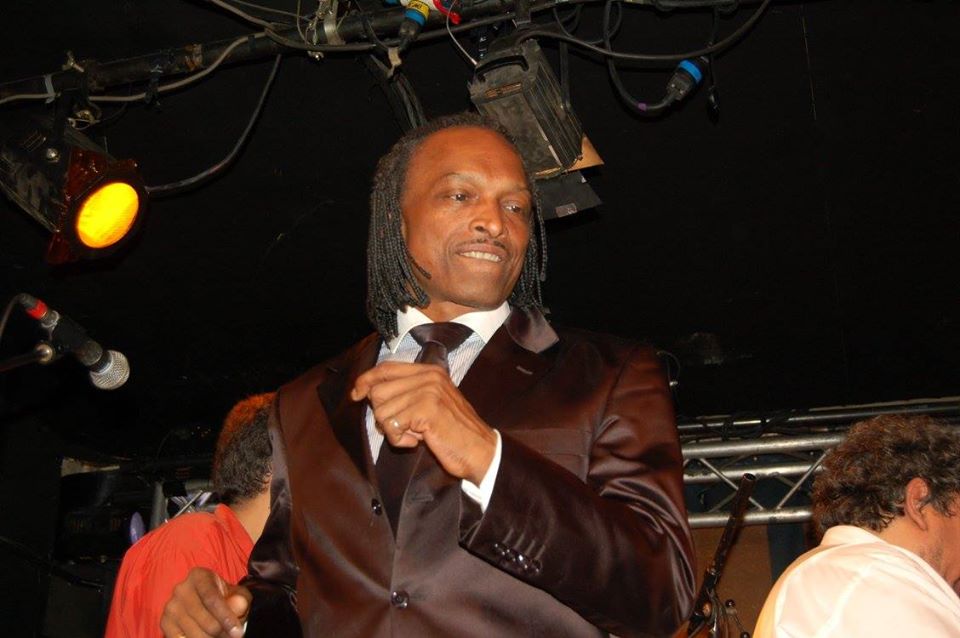
He (Orlando José Castillo) is catalogued as one of the most important soneros that Venezuela has given to the world and considered a living legend of Afro-Caribbean music for his extensive, successful and extraordinary career during many years; for “International Salsa Magazine”, it is a great honor to have as a special guest on this occasion Orlando José Castillo “Watussi”, born in Marín, Yaracuy state, on March 23, 1949, who, since he was a child, moved with his parents to live in the parish of La Pastora in the city of Caracas.

Welcome Master Watussi and we hope that all salsa lovers through International Salsa Magazine, www.salsamundi.com, will know part of his life.

Thanks to all the staff for giving me the opportunity to read your magazine, which is already observed in Latin America, USA and Europe.

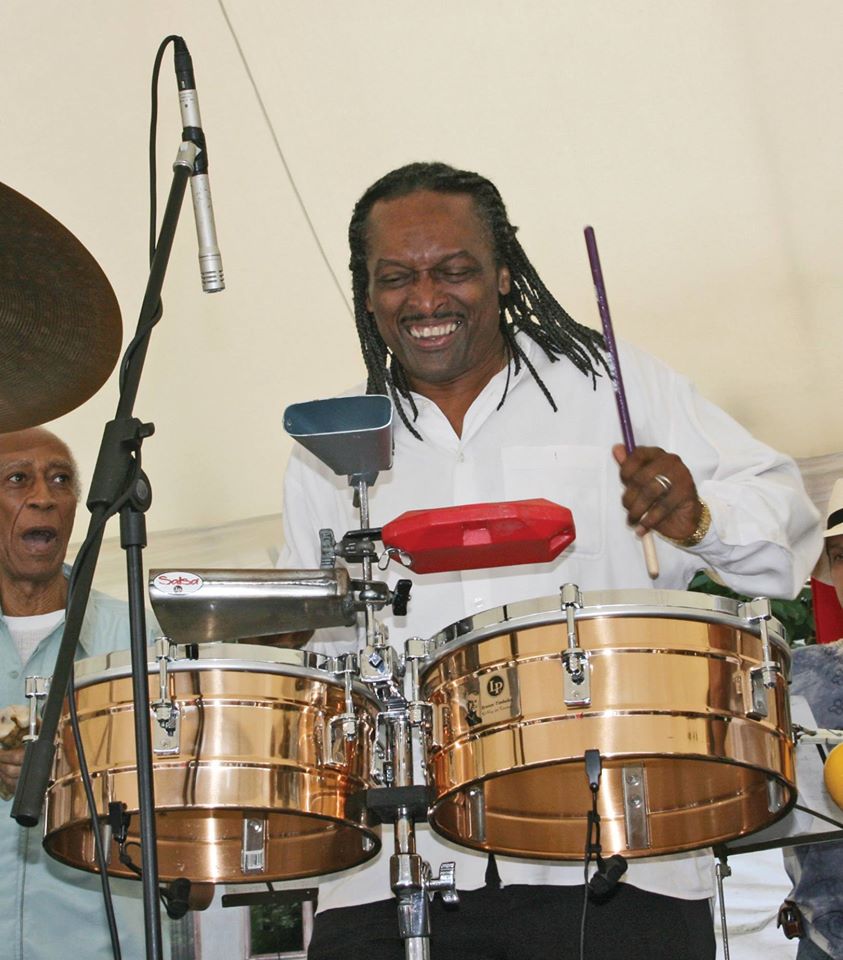
Orlando José Castillo "Watussi" The Venezuelan Sonero graduated in New York
Orlando José Castillo “Watussi”

And well, I am currently living in the city of Milan, Italy and let me tell you that I have beautiful and unforgettable memories of Barquisimeto, so for me it is a pleasure and an honor at the same time, to be sharing with all those people and my country.

To begin with, Maestro Watussi, which were the first groups and orchestras you were part of? Let me tell you that I started with Los Satélites, Federico y su Combo Latino, Porfi Jiménez, Príncipe y su Sexteto and that was super important, since they were the Venezuelan orchestras with which I began to form my career, especially with Los Satélites, Porfi, Federico; I sincerely owe the present of my life to all of them and that is why I do not want to leave them out of the picture.

"Watussi" The Venezuelan Sonero graduated in New York
Orlando José Castillo “Watussi”

Very good teacher, we would like to talk about your career in Puerto Rico and in the United States, with the various groups with which you were part.

Well, I tell you that I left Venezuela in 1979 definitely because I traveled for the first time in 1971, musically speaking, and it was my first international tour to the island of Santo Domingo with Los Satélites and then we returned in 72 and in 1974 we were the first Venezuelan orchestra to set foot on American soil in New York City.

NY being on the most important stage in the world at that time as it was Madison Square Garden and the importance of imposing a hit of musical salsa in the Big Apple, with a song I recorded called “Traicionera”, by the master Carlos Guerra and recorded with “Los Satélites”, after that experience I was founder of the “Renovación”, from there I went to be part of “Federico y su Combo Latino”; Then I worked with Rafael Cortijo and his Combo in Puerto Rico in 1977.

Later, in 1979, I went to the island of Borinquén, Cortijo was already traveling to New York and because I could not accompany him, I was lucky enough to be asked by the maestro Bobby Valentín to be part of his band. I stayed with him for three months and at one point I went to New York, The strike of Puerto Rican musicians, as many Dominican musicians were entering the island, led to Bobby being criticized for having a Venezuelan singer instead of a Puerto Rican one.

Later, in New York, I joined Cortijo and Kako Bastar again, who was another teacher in my career and with him I learned to know that great city and at that time almost all the singers of the orquestas bravas, were beginning to do their own work as soloists and I began to work with Joe Cuba and his Sextet, Eddie Palmieri, Larry Harlow, La Típica 73, until I arrived at the “Conjunto Libre”, I was there for about a year and a half, I recorded with them “El changó de María”.

After I had signed with the Fania label, which was a mistake I made, because Cortijo and Kako were telling me not to do it, since I had Fania in my brain, I rushed and was with them for a year practically inactive in the discography and that cost me not to have recorded the last album with Rafael Cortijo and others.

I recorded with Fania “Mi rumba y yo” and told them to leave me alone, they let me go and I joined the orchestra of “Bobby Rodríguez y su Compañía” for three years, I recorded a very good album, including the songs “María Cristina”, “El Pintor”, “Homenaje a Cortijo”.

In fact Carlos, then I continued with Palmieri in 1987, when I had already recorded the album “Las Calaveras” with José Mangual Jr. and there I began my career as a soloist.

Later on I set up my orchestra in New York, but unfortunately work began to decline due to the closure of venues such as El Corso, Casablanca, Copacabana, El Palladium and that brought as a consequence much less work, but thank God, in 1988 I had the opportunity to go to Paris, invited by my compadre Alfredo Cutuflá, in the place of Cheo Feliciano, to do the dance of December 31st at the New Morning.

Excellent, master Watussi, and it must have been a great commitment to replace Cheo at that time, tell us about this experience. Yes, I was fortunate to take his place because he did not travel at that time without his orchestra and Alfredito Cutuflá told me to get Cheo, I had his telephone number, I gave it to him and he told me that if Cheo did not go, I would go, and well it was a tremendous success with Cutuflá and that opened the doors for me in Europe and specifically in Italy, where my friend Carlos Ugueto was based, who brought salsa to that country.

Orlando José Castillo "Watussi"
Orlando José Castillo “Watussi”

Ugueto played the first album of this genre on his radio program, in his club and after he found out that I was in France, he sent for me and facilitated a tour in Milan in 1990, since in 1989 I was in Panama, singing to my compadre’s daughter Roberto “Mano ‘e Piedra” Durán, his 15 year old party, together with Camilo Azuquita, exactly on December 16, 1989,

but on December 19 the invasion of Panama began and I had to stay there until January 5 and well Carlos, I go to Europe and start my tour in Holland, then London, where I did a show with the master Tito Puente, on December 30, 1990, there I was 2 months in the old continent; I returned to New York, where I was residing, and in 1991 I returned to Europe and that’s when I stayed here for good with my family in Milan.

Orlando José Castillo, when you come to Venezuela, we imagine you will feel very well because you are visiting your homeland?

Of course I do, professor, when I go to my country I recharge my batteries, because there is no place like Venezuela, no matter what happens and I tell you honestly, I hope one day to be able to be in Barquisimeto with you, especially to personally show my appreciation for this gesture of having given my name to that “Peña Salsera Orlando Watussi”, in the middle of 2019, being the first time in Venezuela, to give me an honor of that size; especially my thanks to Dany Castillo and my family there, precursors of that idea, and to all the musicians of the musical capital to whom I send a cordial greeting.

Master Watussi, I am remembering that you were integrating the “Clan of Salsa” here in our city, do you remember that too?

Obviously, my friend Carlos, I was there with one of the bravest singers that Venezuela has given, my little brother Willy Rodriguez, who unfortunately is no longer with us.

Willy “El Guaro”, took care of me in his house for a few days, until I got my house in Barquisimeto; I am going to take advantage of this interview professor, to thank the family of Aldemar Barrera, the family of Honorio, tremendous bass player, Coromoto, who was the engine of that movement; greetings equally to Egidio and to all those panas.

Carlos, I want to greet especially the people of the Orquesta Malecón, I hope that one day we can meet on a stage and make a little effort, or perhaps in the Peña itself.

Orlando José Castillo, what can you tell us about Maestro Baquedano? Santiago Baquedano is one of the best musicians Venezuela has ever given and with him I worked on Margarita Island for a few months and from there I went to “La Salsa Mayor” and then I went to Puerto Rico, but I feel proud to have shared with so many valuable people from my country in my 50 year artistic career.

And let me tell you Carlos, just to finish, I reiterate my congratulations and good wishes for you to continue always with the work you do with this salsa column and your radio program, which aims to support and encourage musical talent in salsa.

Thank you Carlos and God bless you, take care all of you in my country and don’t leave the house! Cool…!.


Home

The Club de los Soneros Dorados The Orchestra of the Stars

The Club de los Soneros Dorados The Orchestra of the Stars, where great stars and legends of Cuban music meet

Two years ago, an orchestra made history. For the first time in Cuban music, the greatest legends, singers, and instrumentalists were united in a single project, their songs quickly transcended the world and occupied places in the charts.

The Cuban’s Golden Club

The Golden was born from the hand of the young composer Carlos Sanabia from Santiago de Cuba. The Golden Soneros club  (La Orquesta de las Estrellas) was one of the most awaited realities for all of Cuba.

The news of its 3rd record production is one of the best news in the musical world, its title will be MAESTROS DEL SABOR and it will count with the presence of several international guests, among them the living legend of Salsa Bobby Cruz, will consist of 21 themes in total divided into 3 volumes of 7 Songs Individually.

With a more modern and youthful style, the songs were specifically designed by Sanabia to capture the attention of the dancing public by inserting them in the popular taste.

The Cuban’s Golden Club

With elements of Rumba, Salsa, and Timba and Occurring and Sticky Phrases from the day to day life of the Cuban people.

With the presentation of new talents, singers, and musicians in the Orquesta de las Leyendas, Sanabia insists on the purpose of bringing the secrets of its music to the new generations and thus guarantee the new formation of future stars in the new talents that abound on the island.

They have not yet entered the studio to record and this third album by EL GOLDEN has already made the news. Thanks to Carlos Sanabia and his Soneros Dorados, “Salsa is in fashion again.

The Cuban’s Golden Club
USA Tour The Cuban’s Golden Club

Several established musicians played at the club during the 1930s and 1940s, including bassist Cachao López and bandleader Arsenio Rodríguez.

According to Ry Cooder, “Cuban and Caribbean society and even New Orleans society, as far as I know, was organized around these social clubs.

There were cigarette wrappers clubs, baseball players clubs, and they played cards and sports and had their pets, like dogs.

In the case of the Buena Vista Social Club, there were musicians there, like in the clubs in the United States.

Rodriguez’s pianist, Ruben Gonzalez, who played the piano on recordings in the 1990s, described the 1940s as “an age of true musical life in Cuba, where there wasn’t much money to be made, but they played because they really wanted to.

That era saw the birth of jazz-influenced mambo, charanga, and dance forms such as pachanga and cha-cha-cha, as well as the development of traditional Afro-Cuban musical styles such as rumba and son, which was later modified by Arsenio Rodríguez’s use of additional instruments to become son montuno.2 Son, described as “the foundation of Cuban music,” has transformed much of Latin American music in the 20th century.

Home

Rónald Gómez Original Venezuelan Sonero for the World

Rónald Gómez, One of the most respected young soneros of the New Generation

He belongs to the new legion of young soneros and projects himself as one of the greatest exponents of Venezuelan salsa at the national and international level; I am referring to Rónald Eduardo Gómez Ávila, known artistically as Rónald Gómez, born in Caracas on March 11, 1995, son of Sonia Ávila and Rónald Gómez; his brothers: Jesús Eduardo and Rónner Eduardo.

He completed his high school studies at the Orinoco High School and his university studies at UNEARTE in Caracas.

He has been living in Los Teques for some time and is currently living in Valencia.

The singer and sonero Rónald, started in music since he was 4 years old, when his father, also a musician, invited him to sing the song “Llorarás”, with the free orchestra of the UCV and from that moment he won people over with his charisma and his swing. At the age of 6, he joined the Chiky Salsa orchestra and due to his versatility, he later joined the Porfi Baloa Teenagers, first as a musician and then as a vocalist, and later as a member of the Porfi Klan staff.

Rónald Gómez soneros of the New Generation
Rónald Gómez One of the most respected young soneros of the New Generation

It is worth mentioning that Rónald Gómez, besides being one of the most respected young soneros in our country, has stood out as an excellent sportsman, being a member of the Miranda State Volleyball Team in various national competitions.

Gómez has had the honor of sharing the stage with salsa greats such as: Tony Vega, Maelo Ruiz, El Gran Combo de Puerto Rico, Cheo Feliciano, Ismael Miranda, Hermanos Lebrón, Frankie Vásquez, Hermán Olivera, Adalberto Santiago, Oscar D’León and was a special guest to sing along with Sonora Ponceña and La India from New York.

Rónald has worked with the orchestras La Dimensión Latina, the Dance Orchestra “La Resistencia Salsera de Venezuela”, the Cheo Navarro Tribute Orchestra and currently Los Adolescentes.

Ronald Gòmez One of the most respected young soneros of the New Generation
Orchestra los Adolescentes

Among the countries where Rónald Gómez has represented Venezuela are United States, Peru, Canada, Colombia, El Salvador, Ecuador, Mexico and Cuba.

Some of the songs he has recorded are: “No puedo vivir sin ti”, “Ya la vi” with Bailatino and “No temas al amor” and “Tengo un amor” with Los Adolescentes, which are played on radio stations and social networks.

What are your current projects, Rónald? Carlos, I am currently continuing with the Teenagers and I also have projects as a soloist; I am recording some things on the fly individually, obviously without leaving the orchestra and at the same time I have in mind to enhance the image as Rónald Gómez. Have you recorded any new songs? Indeed, professor, I have recorded some with the Teenagers and as I told you, I am going to record with some guests together with myself; that is going to be good and I hope you enjoy it; in due time I will make them known.

Ronald, where are you currently with the Teen Orchestra? At the moment I am in Miami, last week we were in Los Angeles, San Francisco and Santa Ana.

What can you tell us about your next tour? We are going to Colombia at the beginning of March, we will be alternating with Diego Galé and Maelo Ruiz, then we will be on a break there in Venezuela and then we will continue with the full tour in the United States, having concerts in: Houston, Utah, Ohio, among many other cities.

Finally, Rónald tells us that he feels satisfied by his successes at a professional level and wishes to continue to succeed inside and outside our country, with the support of all his family, musicians, friends and all the salsa musicians who enjoy his presentations.

It is important to emphasize that Rónald Gómez is characterized by his simplicity, professionalism and gift of people who will surely make him one of the greats of Latin music.

From “Salsa Escrita” and International Salsa Magazine, we wish Rónald the best performance and he always counts on us.

To contact Rónald Gómez, you can do it through the Instagram: Ronaldadolescentes.

Ronald Gomez soneros of the New Generation
The singer and sonero Rónald Gòmez


Home

What Adalberto Santiago represents for Latin music

Our great friend Adalberto Santiago is one of the biggest references of Latin music despite his long career, so it is always appropriate to remember the greatest moments of his career. Today, he is experiencing some health difficulties, so we hope he enjoys this article and it makes him feel better.

This is Adalberto Santiago
This is Puerto Rican composer and singer Adalberto Santiago many years ago

Adalberto Santiago’s beginnings in music

Adalberto Santiago Berríos was always possessor of an extremely powerful and deep voice, making him a lyric tenor and one of the best performers of Afro-Cuban music in the United States. Some of his most important influences from an early young age were Miguelito Cuní and Benny Moré, who served as a source of inspiration for what was to come in his future career.

The artist began in music by lending his voice to trios and playing the guitar and bass, although he often accompanied these activities with some dance steps. In the eyes of many, this makes him one of the first singers to play, dance, and sing in the same concert. In addition, in this early stage of his career, he was nicknamed “The Latin Elvis Presley” due to his tall stature, thick hair, blue eyes, and elegant demeanor. 

Turning point in his career

After having had the opportunity to play with great orchestras at the time, what really made his career take off was his joining Ray Barretto’s Orchestra, prompting him to go international with albums such as “Acid” and “Rican Struction.” These albums continue to be a reference for salsa and Latin music fans in general.

Johnny and Adalberto at the museum
Johnny Cruz and Adalberto Santiago at the Spaha Salsa Museum in New York

Some time later, Santiago and other members of the aforementioned orchestra created La Típica 73, but unfortunately time did not pass much when the artist and some of his colleagues split up again over religious differences with the rest of the members and founded Los Kimbos on their own. Along with this group, of which he was the lead singer, he recorded ”Los Kimbos” and ”This Big Kimbos With Adalberto Santiago” in 1977, the year in which he dared to release his first solo album called ”Adalberto”. 

One interesting thing about that album is that it was produced by Ray Barretto, who contributed two of his compositions to his old pupil.

Solo career 

From 1977 onwards, everything that came for Alberto was nothing more than success and recognition. One of those great successes was his famous participation in “Hommy, A Latin Opera,” a work produced and directed by Larry Harlow, which was an assured stamp of excellence. Soon after, he was asked to be one of the lead singers for “Louie Ramírez y sus Amigos.” He co-produced the song “Adalberto Featuring Popeye El Marino” with Ramírez and joined Barretto on “Rican/Struction.”

In the 1980s, Adalberto and Roberto Roena came together to release ”Super Apolo 47:50”, which included songs such as ”Yo Tenía Una Mujer” and ”Vigilándote”. Around the same time, he also co-produced the album ”Calidad” with Papo Lucca, who was also very involved in the musical direction. 

Adalberto and Johnny en un homenaje
Adalberto Santiago and Johnny Cruz during a tribute to the Puerto Rican singer

Another international explosion of popularity

Another milestone in his career was his salsa version of the classic “Sex Symbol,” which has since become a cult album for fans from many countries, including Colombia, Peru, and Venezuela. It turned out to be one of the most successful albums of his entire career and practically established a new style known as “salsa monga.”

The composer has also written songs for albums in which he himself has been involved as both a bandleader and singer, and his success has in no way prevented him from staying true to his Latin roots.

Adalberto Santiago’s current situation

We have learned that Adalberto Santiago was about to participate in a tour which aimed to pay tribute to him and other participants, but due to some complications with his health, this concert series will not be able to take place for the time being.

From International Salsa Magazine, we are very sorry for this situation, and the entire team hopes that this living legend of music will be able to get out of this situation and continue to give us joy with his talent.

Johnny Cru ISM corresponde in New York City


Read also: Cache Live Music puts Miami to dance to traditional Latin music

Latin America / January 2026

Dámaso Pérez Prado 01 2026

Compay Segundo 01 2026A Bayamo 01 2026Toña La Negra 01 2026Bella MartinezCalibrated maracas

DIRECTORY OF NIGHTCLUBS

Argentina flag
ARGENTINA

Aruba circular flag
ARUBA

Belize circular flag
BELIZE

Bolivia circular flag
BOLIVIA

Brazil flag
BRAZIL

Chile circular flag
CHILE

Colombia
COLOMBIA

Costa Rica circular flag
COSTA RICA

Cuba circular flag
CUBA

Dominican Republic
DOMINICAN REPUBLIC

Ecuador circular flag
ECUADOR

Guatenala circular flag
GUATEMALA

Mexico Circular flag
MEXICO

Panama circular flag
PANAMA

Peru circular flag
PERU

Puerto Rico circular flag
PUERTO RICO

Venezuela circular flag
VENEZUELA


  • « Go to Previous Page
  • Page 1
  • Interim pages omitted …
  • Page 22
  • Page 23
  • Page 24
  • Page 25
  • Page 26
  • Interim pages omitted …
  • Page 247
  • Go to Next Page »

International Salsa Magazine (ISM) is a monthly publication about Salsa activities around the world, that has been publishing since 2007. It is a world network of volunteers coordinated by ISM Magazine. We are working to strengthen all the events by working together.