• Skip to primary navigation
  • Skip to main content

International Salsa Magazine

  • HOME
  • Previous editions
    • 2026
      • ISM / May 2026
      • ISM / April 2026
      • ISM / March 2026
      • ISM / February 2026
      • ISM / January 2026
    • 2025
      • ISM / December 2025
      • ISM / November 2025
      • ISM / October 2025
      • ISM / September 2025
      • ISM / August 2025
      • ISM / July 2025
      • ISM / June 2025
      • ISM / May2025
      • ISM / April 2025
      • ISM / March 2025
      • ISM / February 2025
      • ISM / January 2025
    • 2024
      • ISM / December 2024
      • ISM / November 2024
      • ISM / October 2024
      • ISM / September 2024
      • ISM / August 2024
      • ISM / July 2024
      • ISM / June 2024
      • ISM / May 2024
      • ISM / April 2024
      • ISM / March 2024
      • ISM / February 2024
      • ISM / January 2024
    • 2023
      • ISM / December 2023
      • ISM / November 2023
      • ISM / October 2023
      • ISM – September 2023
      • ISM – August 2023
      • ISM July 2023
      • ISM Edition June 2023
      • ISM – May 2023
      • ISM April 2023
      • ISM March 2023
      • ISM February 2023
      • ISM January 2023
    • 2022
      • ISM December 2022
      • ISM November 2022
      • ISM October 2022
      • ISM September 2022
      • ISM August 2022
      • ISM July 2022
      • ISM June 2022
      • ISM May 2022
      • ISM February 2022
      • ISM January 2022
    • 2021
      • ISM December 2021
      • ISM November 2021
      • ISM October – 2021
      • ISM September 2021
      • ISM August 2021
      • ISM July 2021
      • ISM May 2021
      • ISM April 2021
      • ISM June 2021
      • ISM March 2021
      • ISM February 2021
      • ISM January 2021
    • 2020
      • ISM December 2020
      • ISM November 2020
      • ISM October 2020
      • ISM September 2020
      • ISM August 2020
      • ISM July 2020
      • ISM June 2020
      • ISM May 2020
      • ISM April 2020
      • ISM March 2020
      • ISM February 2020
      • ISM January 2020
    • 2019
      • ISM December 2019
      • ISM November 2019
      • ISM October 2019
      • ISM Septembre 2019
      • ISM August 2019
      • ISM July 2019
      • ISM June 2019
    • 2016
      • ISM December 2016
      • ISM November 2016
  • Spanish
  • Download Salsa App
    • Android
    • Apple

Search Results for: Son

Cuban-American dancer and actress Jessica Pacheco presents us her own dance company Flamenco Tropical

The talented and beautiful Jessica Pacheco graces us with her pleasant presence in our July edition, which makes us very happy and delighted. The Cuban-American actress and dancer has given us the great honor of talking for a while about her extensive and varied artistic career and how she has built it over the years.

With the Cuban flavor of her heritage, she shared the most important moments of her story and how she went from one facet to another to become the complete artist she is today

Jessica Pacheco posing
Dancer and actress Jessica Pacheco posing for the camera

Jessica’s beginnings in the world of entertainment and her inspirations

Jessica tells us that she was initiated into the world of entertainment while she was “still in her mom’s womb.” Her mother was a dancer in Cuba and had always been closely linked to art, so not much time passed before she enrolled her little daughter in ballet, drama, and piano classes. Being a very young girl, her parents constantly led her to travel to Spain, where she became so fascinated by flamenco tablaos that she stayed up late just to watch these kinds of shows on TV. 

When returning home in Miami, the city she was born and raised in, she was enrolled in her first Spanish classical dance classes and was introduced to genres such as flamenco and rumba. Being just a 15-year-old teenager, she was hired by her first professional dance company, Ballet Español Rosita Segovia. From there, she is grateful that her professional career has not stopped even since. She has also worked for the dance companies “Ole Ole” and “Flamenco Express.”

As all of this was taking place, she studied psychology at Florida International University in Miami and thought she would work with elderly individuals; in fact, she had her internship at a nursing home. However, she started receiving dance contracts and soap opera projects continuously, so she had to leave her university profession to the point that she never practiced it. 
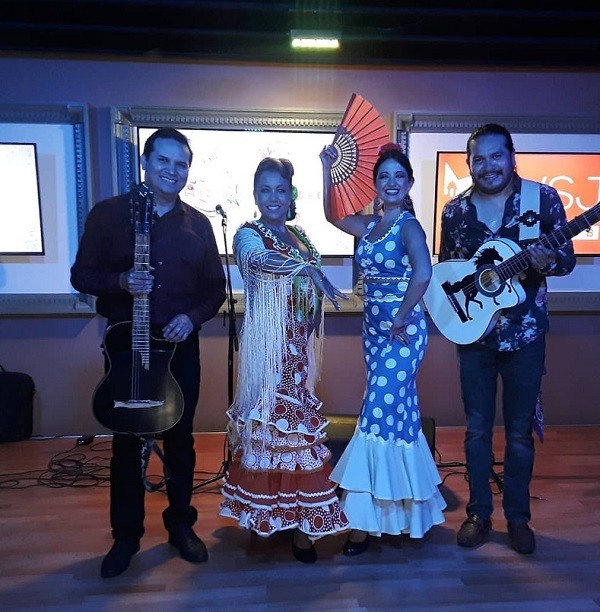
Mario,Jessica, Marcela, and Jose
Musician Mario Oretea, dancer Jessica Pacheco, dancer Marcela Rodriguez, and musician Jose Oretea

When the work was scarce as in the time of the pandemic, Jessica decided to create for herself, which is when the 13-episode series “Cuban Tales” came about. Her mother has always told her not to leave for until tomorrow what can be done today, so when she realizes that there is not much work in dancing or acting, she seeks to create for herself without waiting for opportunities to fall into her lap.

Theater

Our of all the facets Jessica has worked in, she admits that theater is what he finds most fulfilling as an artist because of the applause from the audience and the importance of getting everything right the first time, not like in soap operas or TV series where she had the opportunity to repeat a scene that did not go well. Among the works in which she appeared are ‘‘La Traviata’’, ‘‘Turandot’’, ‘‘Carmen’’, and ‘‘El Gato Montés’’. She also had the opportunity to work with the opera companies Florida Grand Opera and Los Angeles Opera, which was directed at the time by Plácido Domingo.

Regarding soap operas, she appeared in “Los Teens,” “Lotería,” “Decisiones,” and “Dame Chocolate.” The dynamics in this type of production were radically different from those in theater, since “hurry up and wait” applies here, so she had to remain in her dressing room waiting to shoot her scenes. The wait was so long that, during an eight-hour day, Jessica would only shoot about half an hour or an hour.

Jose Junco and Jessica Pacheco
Dancer and dance teacher Jose Junco, and Jessica Pacheco

All that wasted time was what bothered her a little about working on soap operas, although there are still nice experiences she will remember, such as the opportunity to work on shared projects with great figures like Carlos Ponce, Genesis Rodríguez, and Riczabeth Sobalvarro, among many others.

Flamenco Tropical

By creating her own dance company, “Flamenco Tropical,” Jessica felt she had connected to her roots and found the circle of musicians and dancers with whom she truly identifies. Even the name is a representation of what the artist wanted to portray through her project, as she does not believe in musical puritanism and enjoys experimenting with all kinds of genres. For example, she and the team of musicians and dancers who accompany her love the Gipsy Kings’ rumba, but also Cuban and Caribbean rhythms like the bolero and iconic Cuban songs from other times.

When the artist started the company, she was living in Los Angeles, but she knew musicians she had worked with in Miami for years, and they agreed to collaborate on this project. Some of them were the brothers Mario and José Oretea from the duo Duende Camarón, whom she describes as fantastic musicians, singers, guitarists, and guitar craftsmen. In fact, their guitars are made of such high quality that they have even been played by the Gipsy Kings.

At first, the group just included the two guitarists and Jessica dancing, but as the company grew, she was able to hire a percussionist who plays the cajón, bongos, and congas. Over time, she also hired a violinist, who adds a spectacular touch to what was in the band. In addition to the Oretea brothers, the group features Grammy-nominated composer and singer Fito Espinola, arranger and guitarist Andrés Vadin, percussionist and vocalist Joel Matos, and dancer José Junco.
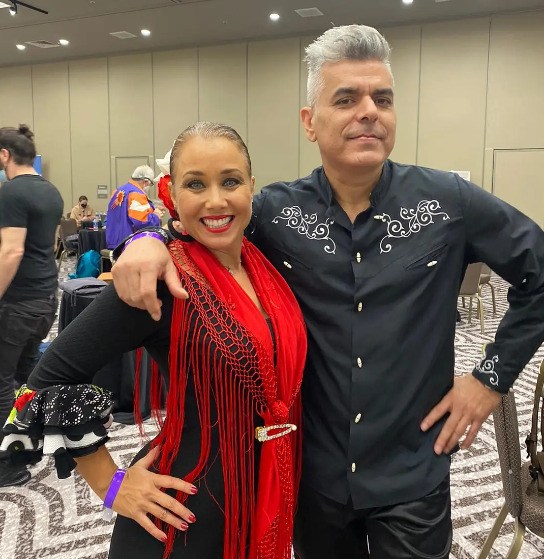
Jessica and Fito
Jessica Pacheco and composer and singer Fito Espinola

Read also: Gafieira Rio Miami brings the best of Brazilian music to Miami

Edgardo Cambon will celebrate his 40-year career at Yerba Buena Gardens

A few years ago, we had the great honor of interviewing Uruguayan bandleader, director, composer, percussionist, and singer Edgardo Cambón, with whom we talked again about his career anniversary as a musician next month.

Obviously, we wanted to recount the most important and interesting details of his wonderful career, but we could not fail to ask him how he has been the last few years, and that is how we wanted to begin our conversation today.

One of the things he revealed is that he recently released his new album, “For Export,” under the record label Latinbaum Records during a show at a venue known as The Fright, an event in which he enjoy the opportunity to celebrate his 65 years of life in April 2025. There were about 450 people present, with whom an excellent music video was filmed and the previously mentioned CD was released. 

At the end of last year, he made about eight radio appearances, one on TV, and another one live in Bogotá, Colombia, which is one of the locations where the producer of Latinbaum Records, arranger, producer, composer, and pianist Israel Tannenbaum, is based. We have also had the opportunity to interview him on other occasions.

He says he is very happy with the five albums he has recorded so far and how active he has been over the past year due to his many promotional trips to places like Puerto Rico.

Edgardo playing
Edgardo Cambon playing live at the Cigar Bar & Grill

How has Edgardo Cambón managed to remain relevant after so many decades?

After being performed for nearly 40 years continuously, it is important to know how Edgardo has managed to remain relevant for such a long time, which in his own words, has been possible thanks to the originality of his sound and lyrics. He has never stopped writing original material, but that does not mean he has not dared to experiment with other people’s compositions, as was the case with “Imagine” by John Lennon. The artist created his own salsa version of this classic, which is an extremely risky thing due to how different salsa is from the soft rock we all remember from the original song.

More importantly, he has never been afraid of changes, and that can be seen in all the genres with which he has experimented, except for reggaeton, since he cannot support many aspects of culture that accompanies this type of music and its leading artists.

He made romantic salsa songs when that genre was very fashionable, but he always tried not to be swayed by the thing of the moment, but to seek himself in each style. Something to acknowledge Israel Tannenbaum is to be the first producer to mold him as an artist and give him so much valuable advice such as reducing the duration of a song or how to keep the message with a shorter length of time.

Another big change to which he had to adapt over the years was the fact that his understanding of the local scene could no longer be the same. One of the many things that changed was the appearance of salsa congresses where DJs, who usually played the hottest tracks of the moment, took center stage. This led Edgardo and many other artists to adapt their repertoire and include covers of much better-known songs, as that was what a whole segment of the public demanded most.

Edgardo and his parents
Edgardo Cambon with his parents Blanca Fraga and Jose Maria Cambon in 1981

Performance at the San Francisco Salsa Festival

One of the festivals he has attended was the 2026 edition of the San Francisco Salsa Festival, organized by John Narvaez and Elizabeth Rojas, who had previously hired him to offer percussion classes. Edgardo & Candela had an extremely successful performance on Thursday, March 26, which was the day of the opening.

The artist took the opportunity to remind us that he has also been performing for years at the San Jose Jazz Festival and the Monterrey Jazz Festival, the first time the organizers hired a Uruguayan bandleader, and he was one of the few to perform salsa that day. In addition, he had the honor of introducing candombe (a traditional Uruguayan rhythm) mixed with salsa and traditional drums.  

Top moments of his career

After such a long career, he has logically experienced moments that marked a watershed that forced him to adapt to the new trends. One of those changes was the replacement of the vibraphone (a very delicate instrument) by the trombone, which represented a significant sonic leap, as the musicians had to switch from a percussion instrument played with drumsticks to a brass instrument that runs on air and lip pressure.

With the arrival of Karl Perazzo, he proposed to Edgardo that they start using trombones, and he agreed to when seeing the potential of the instrument. So, that was when the group became a septet, having previously been a small ensemble in which the three percussionists played and sang simultaneously, making the band sound bigger than it really was.

Edgardo and Israel
Edgardo Cambon and Israel Tannenbaum

Some time later, Edgardo made a series of trips to Cuba that completely transformed his mind and his way of seeing and playing music, since anyone could not go on stage in that country. It was then that he felt inspired to release his album “Madre Rumba, Padre Son,” in which he gives all credit to what he learned from Cuban music and its greatest exponents. He also took the opportunity to mention some of his other biggest influences, such as the politicized lyrics of Ruben Blades in the 1970s, Los Van Van, Isaac Delgado, and many others.

Another aspect that changed over the course of his career was the way the media, radio specifically, was transforming as the years went by. However, there were always communicators willing to promote his work, such as Chuy Varela, Louis Medina, and Chata Gutiérrez, who supported him at the time despite being a local artist from Uruguay playing salsa in such a competitive environment.

Thanks to all those moments and the support he received, Edgardo managed to meet his biggest dreams such as making great music, continuing to live from music, and achieving international popularity. Although he hopes to continue reaping the fruits, he feels he has already achieved what he set out to do early in his career.

Edgardo traveled to Bogota
Edgardo Cambon during his last trip to Bogota

40 Anniversary of Edgardo Cambon’s career

Before telling us of his plans for his 40-year career, he reminded us how he celebrated his 20-year career at Yerba Buena Gardens, where he released his album “20 Años de Sabor.” The event was so successful that he will use the same venue to celebrate his 40th anniversary on August 6 this year. The concert will be completely free, suitable for all ages, and outdoor from 6:00 p.m. to 7:30 p.m.

That day, he will perform the best of his repertoire together with special guests who will make it a very special night, especially for Edgardo and his team.

And Edgardo also wanted to thank International Salsa Magazine, its editor Eduardo Guilarte and me for such a very positive interview on the occasion of celebrating the anniversary of his amazing career. The honor is all us and it is what a first-class artist deserves for leaving our heritage high. 

Read also: The Latin Ensemble enchants the United States and Spain with its talents

Rumbon de Caracas

Latin America / Venezuela / Caracas

“El Rumbon de Caracas” is a party that brings together a variety of genres to kick off the holiday season, starting November 12th at the Ciudad Tamanaco Shopping Center (CCCT) in Caracas, Venezuela. The lineup includes Salserin, Francisco Pacheco y su Pueblo, Jonathan Moly, Guaco, and special guest El Gran Combo de Puerto Rico. The event begins at 4:00 pm (16:00). Tickets are available through TicketMundo, with prices ranging from 15,000.01 Bs to 45,000 Bs.

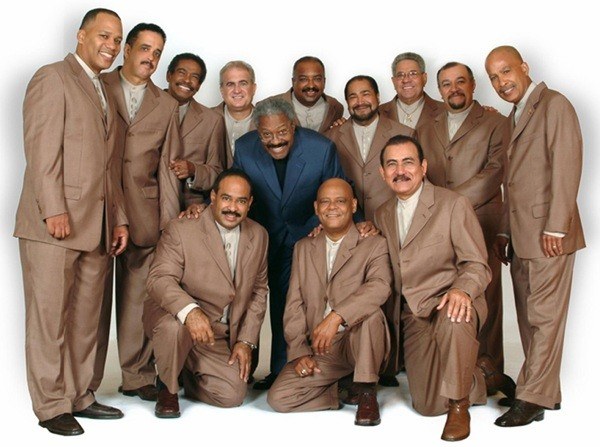
El Gran Combo de Puerto Rico is a Puerto Rican salsa band that is as successful in its home country as it is one of the most well-known throughout Latin America. Unlike other salsa orchestras, particularly those that emerged in New York from the 1960s onward, this group, known as “Mulatos del Sabor,” has always protected its musical timbre from complex innovations and experiments, safeguarding the unique, simple, and rhythmic sound that has characterized it since its founding on May 26, 1962.

Rumbon de Caracas
Rumbon de Caracas

We also have “Guaco,” the Venezuelan orchestra born in the city of Maracaibo, Venezuela, which evolved to become recognized as a Super Band of Venezuela. Influenced by rhythms such as salsa, pop, funk, jazz, and gaita zuliana, its rhythm remains unique and constitutes a style in itself.

Similarly, we have “Salserin,” known as the children’s and youth salsa orchestra formed in Venezuela in 1993, where the musical genres are pop, ballad, Latin, and primarily salsa. This orchestra boasts over 7 million copies of its albums sold worldwide, as well as 11 productions, 6 novels, 1 feature film, 1 radio drama, and more than 50 gold and platinum records.

For more information about tickets, please contact:

  • http://venezuela.ticketmundo.com/Evento/Rumb%C3%B3n-de-Caracas/4574
  • http://clasesdesalsa.net/wp-content/uploads/2011/01/El-Gran-Combo.jpg


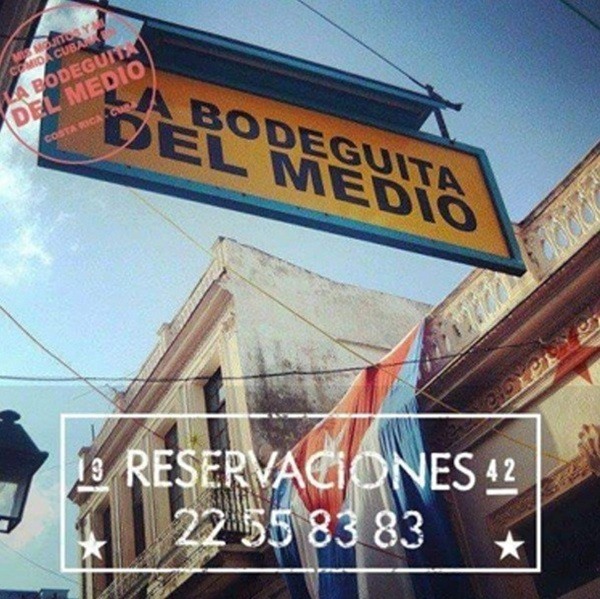
La Bodeguita del Medio Costa Rica

Latinoamerica / Costa Rica
La Bodeguita del Medio Costa Rica Photo with Eduardo Guilarte

One of the most renowned and famous establishments is “La Bodeguita del Medio” in Havana, Cuba. And in San José, Costa Rica, there’s a branch that offers great live music and excellent mojitos. This is because this Cuban restaurant is the most famous in the world for being the creator of the authentic Mojito.

“La Bodeguita del Medio” was officially named at the Martínez house on April 26, 1950. It’s worth noting that the original Bodeguita del Medio is located at Empedrado 207, in Old Havana, just 40 meters from the Havana Cathedral.

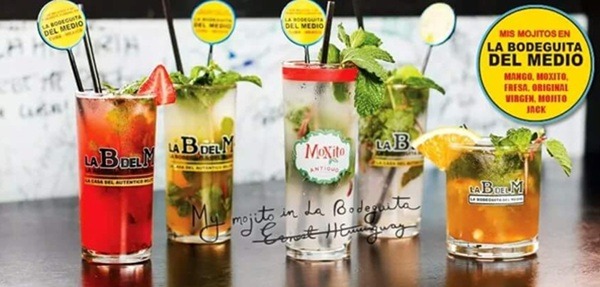
La Bodeguita del Medio Costa Rica - Drinks
La Bodeguita del Medio Costa Rica – Drinks

This restaurant provides excellent quality Cuban food, and there’s never an entrance fee. Opening hours are from 12 noon until midnight, depending on the number of customers at that time. One of the groups that plays at this venue is “Grupo Chocolate los hijos del Son,” who perform live, playing original music and traditional Cuban songs for all audiences daily, from Monday to Saturday, starting at 8 pm. This group has been playing at the Bodeguita since the restaurant opened.

This restaurant is also known as an ideal place to enjoy excellent afternoons and evenings full of flavor, with live music and an unbeatable Cuban atmosphere—in short, a very cheerful atmosphere with a true Latin flavor. Our Editor-in-Chief, Mr. Eduardo Guilarte, visited and enjoyed the quality of both the service and the company.

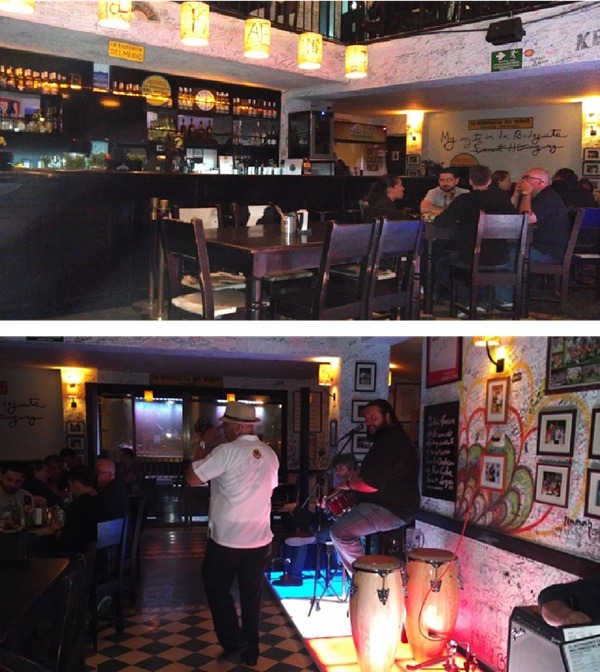
La Bodeguita del Medio Costa Rica - Photo 1
La Bodeguita del Medio Costa Rica – Photo 1
La Bodeguita del Medio Costa Rica - Photo 2
La Bodeguita del Medio Costa Rica – Photo 2

For more information, please contact:

  • Phone: +506 2255 8383
  • Location: 200 meters south of BCR Paseo Colón, San José, Costa Rica
  • Email: [email protected]
  • Facebook: LaBodeguitadelMedioCostaRica https://www.facebook.com/LaBodeguitadelMedioCostaRica/
  • Instagram: labodeguitadelmediocr
La Bodeguita del Medio Costa Rica

World Bachata Festival 2016

Europe / Malaysia / Kuala Lumpur

World Bachata Festival 2016

18th – 20th November Kuala Lumpur, Malaysia

Press Release: Liitha Krishnan

World Bachata Festival 2016

There will be Bachata dance enthusiasts from all over the world to experience fun in Asia!

The ever popular and enchanting Latin dance congregation is about to happen again in Malaysia. The 4th World Bachata Festival (WBF) is scheduled for November 2016 and will feature a true celebration of Bachata and other Latin dances, in line with similar events in other major cities in USA, Australia, Spain, Philippines, Japan, India, Singapore, Germany, etc. The WBF has been held since 2010 with each year’s event growing in participation and performances.

Liitha Krishnan, the organizer of WBF is confident this year’s turnout is going to be a raving event for all to enjoy.

Liitha only started learning salsa when she was about 32, which was also after the birth of her three children. A little later, she came across Bachata by chance and realizing it was easier and more sensual than salsa, switched her focus and passion to this new hobby that eventually became a vocation through her founding of her dance school, Shamballa Tribeni Dance in Klang.

Her passion for dance was also taken up seriously by her daughter Kalnish Schubert who, having completed a year’s course at Shiamak Davar’s Dance Academy in Mumbai, is currently pursuing her diploma in dance in Australia. She would be performing and conducting a Bollywood workshop at the WBF since its popularity especially with the foreign participants.

World Bachata Festival 2016 - Kuala Lumpur, Malaysia - Photo 1
World Bachata Festival 2016 – Kuala Lumpur, Malaysia – Photo 1

The WBF was initially organized to provide local enthusiast access to accomplished dancers from other countries and an avenue to improve local talent and performances. After 3 successful festivals, the event has surpassed its objectives and gained much popularity and enthusiasm both locally and internationally thus creating and enlarging the fraternity of Latin dancers as well as creating public awareness and appreciation. While the contributions of accomplished dancers from Spain, Brazil, Cuba and such countries that are home to Latin dances have enchanted all the past festivals, the performances by dancers from Australia, Philippines, Singapore, Japan, Vietnam, etc have also made their presence felt in past years.

This year’s event in its 4th successful year will consists of 3 days and 2 nights of performances, workshops and dance parties providing an avenue to enjoy, learn, practice and socialize within the Latin dance fraternity. The festival has attracted Latin dancers from Australia, Philippines, India, Romania, Cuba, Columbia, Thailand, Singapore, Japan, Kenya, Vietnam and more while performances and workshop are presented by accomplished dancers from these countries as well. Everyone will also be feasted with the best of Latin music by the finest Malaysian and international Latin DJs at the state-of-the- art Bentley Music Auditorium at Wisma Bentley, Petaling Jaya.

The festival that celebrates Bachata, a sensual partner dance from the Dominican Republic, will also include other popular Latin dance forms like Salsa, Merengue, Zouk and Kizomba. More than 30 workshops have been lined up for anyone and everyone interested in trying a hand, or rather a foot, in Kizomba, Salsa, Bollywood, Son Cubana, Pachanga, Afro Cuban and Zumba. A few boot camps have also been slotted in for those with basic dancing skills to learn and have a chance to perform on one of the nights. The workshops and boot camp will be conducted by renowned international dancers.

World Bachata Festival 2016 - Kuala Lumpur, Malaysia - Photo 2
World Bachata Festival 2016 – Kuala Lumpur, Malaysia – Photo 2

This year’s lineup includes Nestor Manuelian, a strong supporter of the WBF and 3 times World Salsa Champion, partnering with an equally accomplished Rebecca Vallejo and featuring for the first time, Coco and Vyara, 10 time National Champions of NZ with over 40 years dancing experience. Some of the other prominent dancers who will be there to spice up the event are Ana Palma & Basil Nadela from Philippines, Ryu from Japan, Dorin & Niko from Romania, Lam & Kas from Australia and Kalnish Schubert, Amar Singh, KL Son Project, Sam Sopiee from Malaysia.

To add a little fire to all the dance, music will be spinned by an array of Deejays comprising DJ Selva, DJ Dorin, DJ Ryu, DJ Sofrito and DJ Gupson who will also be an MC for the WBF. Gupson Pierre who hails from Montreal, Canada will be also conducting a workshop.

Appreciation goes out to Bentley Music Auditorium for their 2nd year support and sponsorship of the venue, Qliq Damansara for sponsorship and special rates for accommodations and many other companies and individuals who have been continuously contributing in ways totally unexpected.

About Nestor Manuelian & Kalnish Schubert

Spice up the event, World Bachata Festival is having the privilege and participation of Nestor Manuelian from Australia, and collaboration with local Bollywood artist, Kalnish Kashna Schubert, in the Latin dance scene. Both of them will be performing Salsa together on the stage of World Bachata Festival.

Nestor Manuelian is the Director of Latin Dance Australia (LDA) and Modus Vivendi Dance Productions, two of the biggest names in the Australian Latin dance industry. He is also a professional dance instructor, choreographer, mentor, event organizer and master of ceremonies.

Nestor Manuelian
Nestor Manuelian

Nestor is renowned for his world-class teaching methods, choreographies and team performances. He is recognized for his ability to coach, mentor and encourage dancers to excel technically and also have a great time doing so! His amazing teaching style has earned him the honor of teaching at the biggest Salsa and Bachata congresses around the world travelling to Asia, the United States and all over Australia and New Zealand.

Nestor made his performance debut in November 2003 and since then he has gone on to win multiple Salsa and Bachata National and International Titles, including 4 World Titles as coach and dancer. He has been stepping up the world ranking with multiple awards, such as:

  • 2x World Bachata Champion (2012 – Hong Kong, 2013 – Miami)
  • 3 Times World Salsa Championships Finalist (2005- 4th, 2006 – 10th, 2007 – 6th)
  • Asian Salsa Open Champion (2007)
  • Australian Bachata Teams Champion (2009)

Kalnish Schubert has been dancing since the tender age of 8. She has been actively dancing Salsa, Bollywood and Bhangra since young. She teaches Kids & Adult Bollywood and Kids Salsa at Shamballa Tribeni Dance and Music School in Klang. Kalnish graduated from Shiamak Davar’s Dance Academy in Mumbai, India in 2014. While in India she was actively involved in shows in India such as Star Parivaar Awards 2013 and Toni and Guy show 2013.

Kalnish Schubert
Kalnish Schubert

She is currently pursuing her Certificate IV in dance at the Dance Factory in Melbourne Australia. Kalnish has also been featured in the Malaysian Government Education Portal for the involvement in dance. She has also performed in various shows, public & corporate events such as:

  • The Malaysian Vesaki festival 2009/2010/2011 The World Bachata Festival, Kuala Lumpur 2010/2012/2015 • The International Indian Food Festival in China 2011 Corporate shows in Bangkok, Thailand in 2011 World Star Road to Hollywood in 2012
  • India International Dance Congress 2014 in Bangalore
  • Osaka Latin Dance Festival 2014 • Sydney Bachata Festival 2015

The 4th WBF is scheduled as follows:

  • Dates: 18th-20th November 2016
  • Venue: Bentley Music Auditorium, Wisma Bentley 3, Jalan PJU 7/2, Petaling Jaya,47810 Mutiara Damansara, Selangor, Malaysia
  • Programs: 3 days 2 nights of Latin Dance Workshops, World-Class Performances and Prestigious Parties. Each night has a special theme with day 1 being “Dressy Casual”, day 2 is “Black & Red” and the final day is “Mexicana”.
World Bachata Festival 2016 Flyers

Get more updates on the Facebook event:

  • Facebook: https://www.facebook.com/events/856083751112454/
  • Call Liitha at +60162203237 or email to [email protected]
  • Official FB page:https://www.facebook.com/Bachata Malaysia/home
  • Official Website: http://www.worldbachatafestival.com/
  • Youtube: link: https://www.youtube.com/watch?v=TQNOo2sqQ6k


  • « Go to Previous Page
  • Page 1
  • Interim pages omitted …
  • Page 24
  • Page 25
  • Page 26
  • Page 27
  • Page 28
  • Interim pages omitted …
  • Page 268
  • Go to Next Page »

International Salsa Magazine (ISM) is a monthly publication about Salsa activities around the world, that has been publishing since 2007. It is a world network of volunteers coordinated by ISM Magazine. We are working to strengthen all the events by working together.