• Skip to primary navigation
  • Skip to main content

International Salsa Magazine

  • HOME
  • Previous editions
    • 2026
      • ISM / March 2026
      • ISM / February 2026
      • ISM / January 2026
    • 2025
      • ISM / December 2025
      • ISM / November 2025
      • ISM / October 2025
      • ISM / September 2025
      • ISM / August 2025
      • ISM / July 2025
      • ISM / June 2025
      • ISM / May2025
      • ISM / April 2025
      • ISM / March 2025
      • ISM / February 2025
      • ISM / January 2025
    • 2024
      • ISM / December 2024
      • ISM / November 2024
      • ISM / October 2024
      • ISM / September 2024
      • ISM / August 2024
      • ISM / July 2024
      • ISM / June 2024
      • ISM / May 2024
      • ISM / April 2024
      • ISM / March 2024
      • ISM / February 2024
      • ISM / January 2024
    • 2023
      • ISM / December 2023
      • ISM / November 2023
      • ISM / October 2023
      • ISM – September 2023
      • ISM – August 2023
      • ISM July 2023
      • ISM Edition June 2023
      • ISM – May 2023
      • ISM April 2023
      • ISM March 2023
      • ISM February 2023
      • ISM January 2023
    • 2022
      • ISM December 2022
      • ISM November 2022
      • ISM October 2022
      • ISM September 2022
      • ISM August 2022
      • ISM July 2022
      • ISM June 2022
      • ISM May 2022
      • ISM February 2022
      • ISM January 2022
    • 2021
      • ISM December 2021
      • ISM November 2021
      • ISM October – 2021
      • ISM September 2021
      • ISM August 2021
      • ISM July 2021
      • ISM May 2021
      • ISM April 2021
      • ISM June 2021
      • ISM March 2021
      • ISM February 2021
      • ISM January 2021
    • 2020
      • ISM December 2020
      • ISM November 2020
      • ISM October 2020
      • ISM September 2020
      • ISM August 2020
      • ISM July 2020
      • ISM June 2020
      • ISM May 2020
      • ISM April 2020
      • ISM March 2020
      • ISM February 2020
      • ISM January 2020
    • 2019
      • ISM December 2019
      • ISM November 2019
      • ISM October 2019
      • ISM Septembre 2019
      • ISM August 2019
      • ISM July 2019
      • ISM June 2019
  • Spanish
  • Download Salsa App
    • Android
    • Apple

Search Results for: Soneros

Ignacio Piñero Septeto Nacional has played an important role in Cuba’s music for more than seven decades

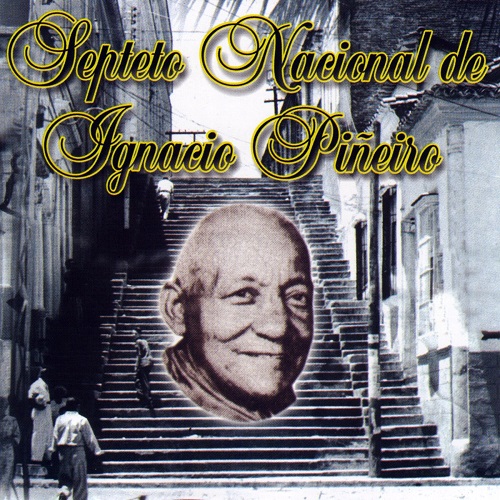
Founded by Havana-born bassist and vocalist Ignacio Piñero in 1927, the Septeto Nacional De Ignacio Piñero has played an important role in Cuba’s music for more than seven decades.
Fundado por el bajista y vocalista nacido en La Habana Ignacio Piñero en 1927

Pioneers of son, a rhythmic blend of African and Cuban music that evolved into salsa, mambo and Latin jazz, the group was the first son band to incorporate the trumpet as the main instrument.

Ignacio Piñero’s Septeto Nacional gained worldwide recognition with its performance at the 1928 Universal Exposition in Seville, and was reportedly the first group to mention “Salsa” in a song “Echale Salsita” recorded in 1933. The song composed by Piñero, was adapted by George Gershwin for the opening theme of his “Cuban Overture”.

Since Piñero’s death in 1968, after 41 years at the helm of the band, the Septeto Nacional De Ignacio Piñero has been led by a series of leaders.

Guitarist and composer Rafael Ortiz, who took over after Piñero’s death, bequeathed the position to vocalist Carlos Embale in 1982.

After leaving the group due to illness in 1998 Embale’s leadership was inherited by guitarist Richard Aymee Castro. True to their original musical roots, Ignacio Piñero’s Septeto Nacional continues to offer a danceable blend of montano, merengue, bolero, rumba and cha cha cha. Craig Harris.

Ignacio Pineiro
Ignacio Pineiro

Ignacio Piñero was one of the Pioneers of Son Cubano

In 1906 he already knew and had assimilated the different toques of the African cabildos that existed in the neighborhood of Pueblo Nuevo, which he later incorporated into some of his creations.

He began his artistic career with the group claves and guaguancó El Timbre de Oro, later he directed Los Roncos de Pueblo Nuevo, in which he developed as a decimist and director, at the same time he took his first steps as a composer.

From this stage are: Cuando tú, tu desengaño veas, Dónde estabas anoche, El Edén de Los Roncos, Mañana te espero, niña. Later he joined the group Renacimiento de Pueblo Nuevo.

To the folkloric values that Piñeiro cultivated in these groups, he contributed a wider melodic-harmonic development and a greater depth and poetic flight.

In 1926 he was one of the founders, together with María Teresa Vera, of the Sexteto Occidente, with which he made his first tour to the United States in order to record an album with this group.

In 1927 he founded the Sexteto Nacional, formed by Ignacio Piñeiro, director and double bass; Alberto Villalón, guitar; Francisco González Solares, tres; Abelardo Barroso, lead vocals; Juan de la Cruz, tenor; Bienvenido León, baritone and maracas, and José Manuel Carrera Incharte (El Chino), bongo; that same year trumpeter Lázaro Herrera joined the group. With this septet he traveled to New York, where he recorded his first works.

In 1929 he participated with the Septeto Nacional in the Fair-Exposition of Seville, Spain; in that country they were hired as exclusive artists by the company SEDECA, and toured other cities of that country: Vigo, La Coruña, Santander, Madrid and Valladolid; in addition, they performed in the theaters Torero, Jovellanos, the Cine-Teatro Grado, and the cabaret Maicú, all in Madrid. In 1930 he was one of the founders of the National Association of Cuban Soneros.

Pioneros del son, una mezcla rítmica de música africana y cubana

They performed at the Sans-Souci cabaret (1930); in 1931 they performed at the Lavín and CMCG radio stations; in 1932, at the Dos Hermanos Hotel, he premiered Buey viejo; that same year the American composer George Gershwin came to Havana, at the CMCJ radio station he listened to Piñeiro’s son Échale salsita, from which he later used the theme played on the trumpet in his Cuban Overture.

In 1933 he performed at the Fair-Exhibition A Century of Progress, held in Chicago, United States.

In 1934 Piñeiro retired from the septet, which from 1935 was directed by trumpeter Lázaro Herrera. In 1954, Piñeiro reappeared as leader of the septet, with which he appeared on the television program Música de Ayer y de Hoy.

As a composer, Ignacio Piñeiro broke, although he took elements from the form of the oriental son, in which its creators used the quatrain and the tenth; an example of this break is his son Buey viejo, from 1932:

Carretero no maltrates a ese pobre buey tan viejo, que ya doblbla la cabeza por el peso de los tarros, y por senda de guijarros va tirando la carreta, y nunca llega a la meta, término de su dolor.

Piñeiro was one of those synthesis cases that managed to capture, develop and express the full richness of the son.

The structural modifications, the cadence, the rhythm and the use of refined melodies and lyrics, achieved by this creator and interpreted by the Septeto Nacional, make it possible to say that the work of this singular artist, although he did not mark the boundaries of son (which corresponded to the Sexteto Habanero), he did turn it into a son that today we can call classic, which became a model for its further development.

When Ignacio Piñeiro founded the Septeto Nacional, his purpose was to be a high exponent of the Cuban son and its various variants, he himself made use of those variants, composing guajira-son, canción-son, afro-son, so he worked with the elements offered by the oriental son, to which he gave a broader treatment, both musically and literary.

According to Miriam Villa: “If we analyze the organization of the literary text, we observe in his work the formal use of metrically heterogeneous links subjected to rhythm, characterized by the presence of accented and unaccented elements within the system of units that are repeated at intervals between them.

Piñeiro must not have been concerned about the meter in the text as a pattern, since through the rhythm of the composition he achieves the contrast relations, making the change of meter express a change in the thematic movement, either from intermittences or accentuations or sometimes both, which give it different semantic nuances and alternations of tensions and distensions.

And elsewhere Villa states: “Another aspect that in relation to the literary text is reflected in Piñeiro’s creative work is that of the thematic contents; these are shown from a diversification with greater scope in relation to his contemporaries.

His work can be divided into multiple themes among which are love, homeland, philosophical reflection, politics, the bucolic, the infantile, expressed in a variety of forms: satirical, apologetic, humorous and with greater depth than in the sonorous production that preceded him and even with which he shared.

With the Septeto Nacional, Piñeiro appears in the musical short El frutero, and in the film Nosotros la música, by director Rogelio París.

Ignacio Piñeiro Septeto Nacional

Septeto Nacional de Ignacio Piñero El Son de Altura

El Son de Altura (1998)

Tracks:

  1. Mayeya – No Juegues Con Los Santos (Son) (I. Piñeiro)
  2. Bardo (Bolero-son) (I. Piñeiro)
  3. Lejana Campiña (Guajira-son) (I. Piñeiro)
  4. Canta La Vueltabajera (Guajira-son) (I. Piñeiro)
  5. Guanajo Relleno (Guaracha-son) (I. Piñeiro)
  6. Esas No Son Cubanas (Son) (I. Piñeiro)
  7. Suavecito (Son) (I. Piñeiro)
  8. Alma Guajira (Guajira-son) (I. Piñeiro)
  9. Castigador (Son) (I. Piñeiro)
  10. Échale Salsita (Son-pregón) (I. Piñeiro)
  11. EI Viandero (Son-pregón) (Ernesto Muñoz)
  12. Son De La Loma (Son) (Miguel MGllamoros)
  13. Trompeta Querida (Boleró-son) (Lózoro Herrera)
  14. La Mujer De Antonio (Son) (Miguel Matamoros)
  15. La Cachimba De San Juan (Son) (l. Plñeiro)
  16. EI Alfiler (Son) (l. Plñeiro)
  17. Noche De Conga (Son) (l. Plñeiro)
  18. EI Paralitico (Son) (Miguel Matamoros)

By:

EcuRed

Dj. Augusto Felibertt

L’Òstia Latin Jazz

Also Read: From Cuba El Septeto Son de Nipe vienen Abriendo Caminos

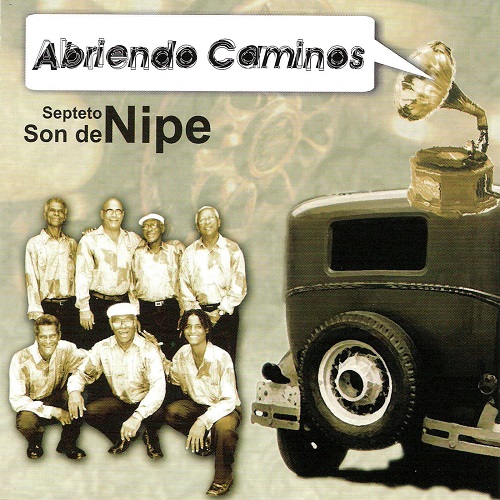
From Cuba El Septeto Son de Nipe come Abriendo Caminos (Opening Paths)

Son de Nipe. A musical septet born in the municipality of Antilla, it burst into the cultural world with an album of the In Situ label of the Colibri Record Production Company.

Antilla is the smallest municipality of the province of Holguin in Cuba and one of the smallest of Cuba, it was founded on January 21, 1925, it is famous from distant times for its beauty, legends and original aspect.

De Cuba El Septeto Son de Nipe vienen Abriendo Caminos


The group is formed by former musicians of the orchestra Brisas de Nipe of this municipality.

This project was born from the hands of Porfirio Núñez Cruz (Firo) who as Art Instructor at the Casa de Cultura Adelaida del Mármol of Antilla had experimented with other amateur groups, but not with the same results, because the members did not have the necessary musical training.

The album Abriendo Caminos includes 14 songs, 10 of which belong to Antillean authors.

“The value of Abriendo Caminos also lies in the fact that it helps Antillean composers and arrangers to open up to the recognition of their work and ways of doing things”.

From the singer and percussionist of the septet Son de Nipe, Alejandro Arencibia appears the guaracha Esa muchacha quiere bailar and the son, Honor al Guayabero; from Edalio Espinosa Alayo (Pupi), former member of the Brisas de Nipe orchestra, the son, Es caliente como el sol (It’s hot like the sun).

The songs A mi Antilla (bolero-son) and, Y no me niegues el beso (son) by José James Pinder, singer of the septet. By Oscar Fernández, former singer of the Brisas de Nipe Orchestra, the disc offers the themes Rebozo de amor (guaracha) and the son Que lástima.

Septeto Son de Nipe
Septeto Son de Nipe

From the director of the septet Son de Nipe Porfirio Núñez Cruz, Mi son tradicional.

And the guaracha Olvídate de esa nena by the Antillean composer Nemesio Palacio.

The remaining four musical numbers are; De que callada manera by Nicolás Guillén and Pablo Milanes, Culpable by Pepe Delgado, Rabo de nube by Silvio Rodríguez and Una alborada de amor by Ariel Dotres Zaldivar, these songs were arranged by Porfirio Núñez Cruz.

In the septet’s album Son de Nipe Abriendo Caminos “the guaracha, the bolero, the bolero-son and the genuine son are retaken with originality and revalued”.

The latter is due to the fact that the musical criteria followed by its director was the respect for traditional music, its deep knowledge, but imbuing it with very contemporary nuances, which results in a seal that distinguishes the septet Son de Nipe.

“We use the son, but more updated because we make innovations, harmonizing it in a more modern way, without losing its roots”.

The selection of the songs that made up the album Abriendo Caminos was in charge of the septet’s management, since the Casa Discográfica Colibrí wanted originality and the authentic exhibition of the work that has been developed with traditional music in the eastern part of the country.

Son Cubano de Nipe en Holguin

The graphic image of the disc, worked in sepia and black colors fundamentally manage to set the atmosphere that is offered to us with a vintage flavor and invites us to listen to these 14 songs full of tradition and contemporaneity.

“It will be a delight for the listener and the dancer, the good function of the tres in its solos and “entregas”, the beautiful and ingenious introductions, the exquisite mixture between text and music of the boleros, the harmonic patterns of the soneros that not for conventional reasons give up a significant finish, without neglecting, on occasions, the voices replacing wind instruments”.

The selection of the members was meticulous. Porfirio had in his favor the prestige he possessed and the convening power among his former colleagues of the Orquesta Brisas de Nipe, so much so that in the list of his group he planned to include Reyes Cástulo Urgellés Fáez, better known as Lulú as bassist and José James Pinder (Joseíto) as singer, both retired from the Orquesta Brisas de Nipe and linked to the Casa de Cultura in occasional activities.

The septet still needed to be completed with a key piece, the tres, for which the prestigious Mario Arencibia Rodríguez, one of the best tres players in Antilla, was summoned.

In the Arencibia family, musicians abound, that is why the group was completed with them: Alejandro, singer and Rafael on the tumbadora.

Alejandro and Mario had been part of an amateur group called Renovación Antillana for more than 20 years, which was very famous in its time and where a great number of aficionados were formed.

Alejandro sometimes played the tres in other groups, but in Son de Nipe he remained as a singer, he also had a work relationship that did not allow him to devote himself entirely to music; His nephew, trained at the Casa de Cultura and under the musical influence of the family, had taken over the tumbadoras, so Rafael Arencibia was the youngest of the group, he was barely 25 years old and at this young age he had already played in several amateur groups and got the Brisa de Nipe orchestra out of trouble, due to the unexpected absence of its percussionist.

Rafael Arencibia Rodríguez joined the project with enthusiasm despite the fact that the genre and style of the repertoire were not those used by the amateur groups of his contemporaries.

Iro had obtained the desired musicians, but he still had a big step to climb, his musicians were not professionals, they all had work commitments and he needed to prepare the project for the right day…(ecured).


Septeto Son De Nipe – Abriendo Caminos (2006)

Temas:

  1. Esa Muchacha Quiere Bailar (Alejandro Arencibia)
  2. Es Caliente Como El Sol (Edalio Espinosa Adayo)
  3. A Mi Antilla (José James Pinder)
  4. Rebozo De Amor (Oscar Fernández Paz)
  5. De Qué Callada Manera (N. Gillén / Pablo Milanés)
  6. Honor Al Guayabero (Alejandro Arencibia)
  7. Culpable (Pepe Delgado)
  8. Mi Son Tradicional (Porfirio Núñez Cruz)
  9. Y No Me Niegues el Beso (José James Pinder)
  10. Clodomiro (Oscar Fernández Paz)
  11. Rabo De Nube (Silvio Rodríguez)
  12. Qué Lástima (Oscar Fernández Paz)
  13. Una Alborada De Amor (Ariel Dotres Zaldívar)
  14. Olvídate De Esa Nena (Nemecio Palacio)
Septeto Son De Nipe - Abriendo Caminos (2006)
Septeto Son De Nipe – Abriendo Caminos (2006)


Research Sources:

L’Òstia Latin Jazz

Dj. Augusto Felibertt

Also Read: Virgilio Martí was an excellent rumbero and composer of the classic “Cuba Linda” where he was vocalist and percussionist in Grupo Folklorico Experimental Newyorkino

Marcial Isturiz from Capaya with soneos and melodic phrases and his popular “Agua pa’ los Gallos “Puerto Rico

In 2023 Sergio George, the famous “magician” who produced the artistic career of famous salseros and artists, said that salsa was “dead” and called on new artists to resurrect it and support each other as urban singers do.

Marcial Isturiz de Capaya

This caused commotion and controversy among salseros and made them doubt without a doubt what is the reality that salsa lives and more with the progressive physical departure of emblematic legends who made history in the world, coupled with the proliferation of the so-called “DJ” who multiply many times the nostalgia of the public for living the times of said legends and who became a trend due to this fact. In 2024 we saw how important salsa concerts were held in our country Venezuela where foreigners who had not visited us for a long time did so and so we enjoyed what some call “the last of the Mohicans”, as well as Venezuelans who took to various stages making it clear that, if they continue creating, either by adjusting the sound of the old and modernizing with quality staging or simply delighting with their career and style what they have already established.

We think that there is a lot missing since there is plenty of musical talent and a new generation in every sense, but not who listens to them and supports them, this being a truth bigger than the size of the sun.

Marcial Isturiz
Marcial Isturiz

After this necessary reflection we want to talk about Marcial Isturiz who was born in the sandunguera town of Capaya, Barlovento in the Miranda State of VENEZUELA, and we put it in capital letters because this “extraordinary sonero who wandered through the streets of Petareña hitting any pot he found in his path, finding out where and at what time the “arayé” was lit, always on the “hunt” for a good opportunity”, a quote was written by Ángel Méndez in his book “Entren que Caben Cien” describing how clear this man has been since childhood in pursuing and having the firm certainty of where he had to go to achieve his dream. He understood, from my point of view, that he who perseveres succeeds and we have seen his professional growth during all these years, thirty years recently completed, being a musician performing several instruments, going on to be also a composer and arranger, accompanying with his voice in duos of consecrated stars and groups, renowned orchestras as well as others not so well known, his voice being a characteristic seal that draws the attention of his followers, a sonero that we can say “gets lost from sight”.


A man who has earned the respect and affection of the public wherever he goes and to name one of the presentations in which he has demonstrated his “people skills”, we had the opportunity to travel and share with him closely accompanying him Sonero Clásico del Caribe in that free event that the Barquisimetanos salseros put on at the end of January 2024 to Ramón Méndez, where by the way Marcial took advantage of the invitation to perform the National Anthem the day before at the Cardenales – La Guaira Game, impeccably. Undoubtedly, that presentation was an omen of good fortune for what would be a year full of success.


Marcial Isturiz began hitting a home run this 2025 by performing on January 5 in Puerto Rico on the “Island of Enchantment”, at the traditional Three Kings Eve dance at the Sheraton Hotel, Convention District, with Don Perignon and La Puertorriqueña, with salsa figures such as Herman Olivera, Pedro Bull, Pichie Pérez, Joe González, Rico Walker, Josué Rosado, Jerry Rivas, Gilberto Santa Rosa and of course our Marcial Izturiz.

Joe, Rico, Marcial, Herman

We saw him singing choruses with these greats, specifically next to Herman Olivera and Rico Walker waiting for his turn like each of those called to this meeting until Peter Perignon introduced him for the first time with his Orchestra La Puertorriqueña and said that the person responsible for that invitation and presence of our sonero there was his friend Gilberto Santa Rosa.

Briefly, Perignon told the audience that he knew Marcial since he was part of Bailatino and he fell in love with that group, since then he had been following him and now recently in his participation with the Latin Dimension he knew that Marcial with this performance made his dream of being in that country come true.

Saying good night to Puerto Rico he performed the song “La Familia” (authored by José Curbelo and musical arrangement by Louie Ramírez, inserted in the production titled Indestructible by Ray Barretto and his Orchestra in the voice of Tito Alen for the year 1973) with soneos and melodic phrases and his popular “agua pa’ los gallos Puerto Rico” left established what this Venezuelan is made of, acclaimed and congratulated by his peers on stage.

Joy is not enough for what we salseros in Venezuela feel for this representation that should not be overlooked because if there are soneros from Venezuela and with class: Marcial Isturiz is one of them; with his own style and professionalism, this is how our “Mayor of Capaya” was seen next to these greats, comfortable, safe and proudly waving our tricolor wherever he goes.


At Swing Latino we say congratulations to Marcial, keep doing your thing without resting like until now, because later it will be too late:

AGUA PA’ LOS GALLOS  y

¡Ponle Sabor!

Source: Giorgenling Méndez from Swing Latino

Also Read: Salsa at its best, led by the leader of La Puertorriqueña: Don Perignon

Alberto Crespo and his magical muse

Latin America / Venezuela / Caracas

Alberto Crespo, a young pianist, arranger, composer and music producer, from an early age began his studies in Piano and Theory and music theory at the “José Ángel Lamas” music conservatory in the city of Caracas, to later continue his studies in harmony, counterpoint , orchestration and improvisation in different music schools

Alberto Crespo
Alberto Crespo

Since the age of seventeen he has accompanied and toured nationally and internationally with orchestras and artists such as Celia Cruz, Bobby Capo, Carmen Delia Depiní, Ray Barreto, Héctor Lavoe, José Alberto El Canario, Henry Fiol , Ismael Miranda, Mulenze Orchestra, Andy Montañés, Adalberto Santiago, Tito Nieves, La India, Herman Olivera, Frankie Vásquez, José Mangual Jr., Richie Ray and Bobby Cruz, Carlos Cano Estremera, Tito Allen, Pete Conde Rodríguez, Junior Gonzáles, Frankie Vazquez Guatacando.

Photo of Alberto Crespo

He has stood out as a producer, arranger and pianist for national and international artists such as Maikel Stuart Ny. Frankie Morales Former singer of Tito Puente Ny, Dancer Orchestra of Cheo Navarro, Grupo Mango.Grupo Bacheo, Naty y Su Orquesta, Rumberos Del Callejon de Carlitos Padron, José Papo Rivera Ny, Renzo Padilla Ny, Soneros De La Calle, Freddery el Frederyck El Coco II, Wilmer Cobos Cuenta Nueva II and his Orchestra, La Kindness Orchestra, Efrén Avellaneda and his Orchestra, Lisandro Torres and his Orchestra, Mariana La Sonera and his Orchestra, Canelita Medina, Andy Duran and His Latin Jazz, Herman Olivera Ny , Angie Rincón in London, among others.

With more than thirty years of experience in salsa and Latin Jazz, he has integrated the best groups in Venezuela, including the Orquesta Bailatino, Naty y Su Orquesta, Grupo Bacheo, Andy Durán and his Latin Jazz, El Pavo Frank and his orchestra, Orquesta La Renovación, Los Rumberos Del Callejón, Orquesta las Vibraciones, Verónica Rey and Her Orchestra, Salsa Silva and Guerra by Mauricio Silva Musician and, Mariana La Sonera and Her Orchestra, Grupo Mango. Between his tours he has visited countries such as the United States, France, Colombia, Peru, Argentina, Australia, Curaçao, Mexico and Aruba.

Photo - Alberto Crespo
Photo – Alberto Crespo

Alberto Crespo and Bacheo Latin Jazz has two record productions, the first el Chuchu del viejo and the second de África Soy, which will be on sale soon, and they feature musicians with a long career and perform salsa and Latin jazz with a varied repertoire in rhythms such as son, danzón, chachachá, guajira, salsa, etc.

He currently serves as director, arranger, composer of the Salsera Resistance of Venezuela Bailatino and at the same time working hand in hand with musicians of international stature.

Alberto Crespo anh his piano

El “Día de San Juan” Salsa Festival

North America / USA

El “Día de San Juan” Salsa Festival Western Region Puerto Rican Council, Inc.

Concilio De Organizaciones Puertorriqueños Del OEste

Countdown to El “Día de San Juan” Festival 2018

40th Anniversary

SAVE THE DATE

June 30, 2018

Due to the ongoing effects of the devastation of Hurricane Maria in Puerto Rico, the WRPRC will be directing all proceeds of El Dia de San Juan Festival to aid in the educational programs of the youth of Puerto Rico. http://www.wrprc.org/


“Día De San Juan” Salsa Scholarship Festival Line Up

Charlie Aponte

Charlie Aponte, one of the most beloved and remembered voices by millions of Salseros worldwide, returns to the stage as a  Soloist after 41 successful years with La Universidad de la Salsa…El Gran Combo de Puerto Rico.

Charlie Aponte
Charlie Aponte

With Charlie Aponte as their lead singer El Gran Combo recorded many hits Brujería; Amor Brutal; La Loma del Tamarindo; No hay Cama pa’ tanta Gente; Hojas Blancas; Arroz con Habichuelas; among many others.

Tony Vega

Internationally known salsa singer and band leader, Tony Vega, emerged from Puerto Rico in the 1980’s, He has worked with many of the greatest salsa stars from the beginnings of the genre, to the present.

Vega was exposed to music at a very early age; influenced by many adults in his family who were musicians.  Even in those early days, it was clear to Vega that nothing could satisfy his musical preferences like the music of his native Puerto Rico.

He was greatly influenced then by Ismael “Maelo” Rivera and Cortijo y su Combo, Rafael Ithierand El Gran Combo.  Vega signed with the then new RMM record label and released his solo debut with “Yo Me Quedo!” in 1988.

Tony Vega
Tony Vega

Vega’s riveting voice and his innate ability to perform contemporary salsa in the best tradition of the classic “soneros” has been honed and refined over 19 years as an artist, first as a percussionist and then as a singer. Thus far Vega has participated in the recording of 17 albums, including the last four on the RMM label with his own band.

Tony Vega has recorded Hablando del Amor, Greatest Hits, Aparentemente, Hoy Quiero Cantarte, the self-titled Tony Vega, and these have established Vega as a highly regarded salsa star.


Taino ​Orchestra​

Taino Orchestra began as a project to deliver salsa and latin jazz in August of 2010.  The concept is very simple, a nine piece band with the sound and elegant sophistication of a big orchestra.

Inspired by bands and individuals such as Ray Barretto, Tito Puente, Willie Rosario, Eddie Palmieri and many others, TAINO has developed into one of the most solid, hard-hitting salsa bands in the area.

The band is led by percussionist and lead vocalist, Aaron Routtenberg.  Aaron has toured and performed with some of the biggest names in the salsa industry including Jerry Rivera, Tito Nieves, La India, Tito Rojas and many more.

Taino ​Orchestra
Taino ​Orchestra

The percussion section features Carlos Caro on congas and Papo Martinez on bongo.  On bass, Taino is proud to have veteran bandleader and musician Gilbert Roman, while the extremely talented Erick Peralta occupies the piano chair.

The sizzling horn section is proud to have Mike Rinta and Charly Aguilar on trombones, while Carlos McCoy dazzles audiences on baritone sax and flute.  With this strong vocal section, swinging rhythm section, and blazing horn section that will make you move, we invite you to experience a musical masterpiece that you won’t soon forget!  Ya lo ves, que viene TAINO!

  • « Go to Previous Page
  • Page 1
  • Page 2
  • Page 3
  • Page 4
  • Page 5
  • Interim pages omitted …
  • Page 11
  • Go to Next Page »

International Salsa Magazine (ISM) is a monthly publication about Salsa activities around the world, that has been publishing since 2007. It is a world network of volunteers coordinated by ISM Magazine. We are working to strengthen all the events by working together.