• Skip to primary navigation
  • Skip to main content

International Salsa Magazine

  • HOME
  • Previous editions
    • 2026
      • ISM / March 2026
      • ISM / February 2026
      • ISM / January 2026
    • 2025
      • ISM / December 2025
      • ISM / November 2025
      • ISM / October 2025
      • ISM / September 2025
      • ISM / August 2025
      • ISM / July 2025
      • ISM / June 2025
      • ISM / May2025
      • ISM / April 2025
      • ISM / March 2025
      • ISM / February 2025
      • ISM / January 2025
    • 2024
      • ISM / December 2024
      • ISM / November 2024
      • ISM / October 2024
      • ISM / September 2024
      • ISM / August 2024
      • ISM / July 2024
      • ISM / June 2024
      • ISM / May 2024
      • ISM / April 2024
      • ISM / March 2024
      • ISM / February 2024
      • ISM / January 2024
    • 2023
      • ISM / December 2023
      • ISM / November 2023
      • ISM / October 2023
      • ISM – September 2023
      • ISM – August 2023
      • ISM July 2023
      • ISM Edition June 2023
      • ISM – May 2023
      • ISM April 2023
      • ISM March 2023
      • ISM February 2023
      • ISM January 2023
    • 2022
      • ISM December 2022
      • ISM November 2022
      • ISM October 2022
      • ISM September 2022
      • ISM August 2022
      • ISM July 2022
      • ISM June 2022
      • ISM May 2022
      • ISM February 2022
      • ISM January 2022
    • 2021
      • ISM December 2021
      • ISM November 2021
      • ISM October – 2021
      • ISM September 2021
      • ISM August 2021
      • ISM July 2021
      • ISM May 2021
      • ISM April 2021
      • ISM June 2021
      • ISM March 2021
      • ISM February 2021
      • ISM January 2021
    • 2020
      • ISM December 2020
      • ISM November 2020
      • ISM October 2020
      • ISM September 2020
      • ISM August 2020
      • ISM July 2020
      • ISM June 2020
      • ISM May 2020
      • ISM April 2020
      • ISM March 2020
      • ISM February 2020
      • ISM January 2020
    • 2019
      • ISM December 2019
      • ISM November 2019
      • ISM October 2019
      • ISM Septembre 2019
      • ISM August 2019
      • ISM July 2019
      • ISM June 2019
  • Spanish
  • Download Salsa App
    • Android
    • Apple

Search Results for: Tango

ROX’s new single “Cristal”

Cristal is dedicated to those strong women

“Composing is a magical process”, said a Venezuelan living in the United States that puts the name of her country very high. She is a multifaceted artist and this time presents her new single “Cristal”.

Roxana Frontini, her real name, known in the industry as “Rox”, unveils her new song: “Cristal”, inspired and dedicated to “all the queens of the world”, as its description dictates. Frontini wanted to consciously empower women and honor what they stand for. The song is within the Latin genre and has a very powerful message: “No one can stop her” is one of the phrases she mentions there, referring to “the glass woman.”

“Cristal” had the voice, melody and authorship of the artist, while the production and arrangements were in charge of Arturo Cabrera. The music video was directed by Nestor Cabrera. Since the beginning of December, it has been available on digital platforms. The positive comments have been increasing, as well as the support of her colleagues and followers; the views on YouTube exceed the 100 thousand.

“Cristal is a celebration of the Queen that each woman carries inside, whatever the path we have chosen, we all fulfill an essential role that contributes to the development of our society. The mother, the daughter, the sister, the cousin, the grandmother, the friend… We all matter”, stated the businesswoman.

In the music video, different women can be seen in their facets of everyday life as mothers and workers. This is the first song she has done in Spanish, and she hopes to release its English version soon.

“Our stories are full of challenges and victories that make us precious, like crystal. In each one of us there is a warrior, a friend, a teacher, an angel, and a queen. It is my greatest wish that by singing and dancing this song, each woman connects with her value, and together we shine more. This goes to my beloved, respected and admired Crystal Women all over the World!”

In the music video she wanted to reflect the process she went through while creating the song. She sought to stay fresh, natural, with little makeup, and everyday wardrobe. For this reason, she added some shots in her gym look, very constant in times of pandemic. With the phrase “This song is for each of you because we are all queens and together we shine more”, ends the credits of the music video.

“Part of the song came out one day exercising on my balcony (because we were in full lockdown); minutes before I had had a long conversation with my mother where we covered her life trajectory, and all the things she has overcome including cancer. Then, when the first part of the song was ready, I started working on a new fine art series called Reinas; this series shows very different women, all with something in common, Modern Crowns: hats of different styles, colors and sizes that symbolize the originality of each one. As this series began, the missing piece of Cristal emerged with total fluidity. Every time I sat down to work on the art pieces, it was like the information for Cristal was downloaded to me”

The work was made up of enterprising women who have obtained great merits in different areas: Almudena Álvarez, lawyer, LL.M, partner at Álvarez Lentner; Gisela Morichetti, Visual Communication designer; Lisset Galeyev, photographer, owner of Lisset Galeyev Photography; also Liz Nieves, fashion designer, owner of Ilogear Active & Dance Wear; and Ethel Schutz, Christian, faith leader, and the woman who taught Frontini to paint. All brilliant and worthy of admiration.

Rox is presenting her new single Cristal
Roxana Frontini better known as ROX.

ROX’s Biography

Rox is Venezuelan, born in Caracas and who has made her way internationally. She is an artist, a businesswoman, and has led projects in different areas. She has a very solid career in different aspects. She founded FashionCurators.com, a business that seeks to provide opportunities for stores, brands, and designers to broaden their horizons, and gain a further scope. She has combined her role as an artist and a businesswoman. She writes, paints, dances tango, sings, designs, creates content, and runs businesses. In fact, she has a personal blog. She has done volunteer work, is an expert in marketing and the digital area. A Crystal woman!

The singer began her musical career from a very young age. Her first steps were at the Juan José Landaeta National Conservatory, in her native Caracas. From the age of 15, she composed and collaborated with renowned artists signed by Sony Music. In addition, she is the daughter of a long-time musician, a member of the Fenix ​​Jazz Band, in Argentina. On many occasions, she accompanied him in his presentations, and learned many tips that she then put into practice, in addition to obtaining greater ease in the industry.

At the age of 17, she started in pop-rock covering songs by some greats of the genre and her favorite singers such as: Shakira, Soda Stereo, Fito Páez, The Police, Alanis Morisette, and No Doubt.

At an artistic level, she stands out for her beautiful pieces, inspired for the most part by the femininity that characterizes her so much. Elegant and very subtle pictures and illustrations. It also offers cell phone accessories, clothing, and details for home decoration. Frontini has other musical singles to her credit in English and Spanish. It fuses elements of pop, electro pop, and Latin music “Oasis”, “Your Groove”, “Better Choices”, among others.

She is one of the most renowned Latin exponents in the United States, and has achieved success in Europe, and Latin America. She has struggled to be successful and overcome life’s obstacles; among them, she had to recover from a facial paralysis that changed her perspective but gave her more strength to continue. Thanks to being a multifaceted woman, she was able to focus her energies in other areas.

Her passion for music, art and entrepreneurship gave her the hope she needed at that time. From this experience, she learned to value moments more, and that the greatest treasures are inner power, creativity, purposes in life, family, and wisdom. For this reason, she wanted to inspire others to grow and have tools to constantly face life.
The artist has been very excited about the release of her new single. She did not miss an opportunity to thank those who have supported her and the women who inspired her:

“Special thanks to all the women of the world, for inspiring this song”

For Frontini, composing is a magical process, she feels blessed to be able to collaborate with producers who challenge her as a singer and author. For her, it is a privilege that she is inspired to go beyond her own mental and emotional barriers.

Her musical career will continue to give something to talk about, and perhaps before we imagine, she will surprise us with her album!
Home

6 artists who helped make Latin Music successful in the United States

The success of Latin Music in the United States

Some artists have taken Latin music to another level. They fell in love with the public on American borders and helped shape the market as we know it today. We will tell you more details!

Latino immigrants who made their way into the United States gave way to Hispanic music as it is known today.

The Argentine tango, for example, was a success in the US in 1930 and is considered the first Latin genre to have participation on American soil. As you can imagine, from then on a movement was born that is here to stay. At the end of the 90s, this musical boom finished exploding. The numbers were increasing and more and more artists were honoring their Latin roots.

Currently, the industry numbers give prominence to Latin artists, having a greater incidence when they present their songs in Spanish. Also, there are a large number of versions that have been translated into English and are heard in renowned venues. In fact, it is enough to go to a nightclub or a Latin concert in iconic venues such as Madison Square Garden, located in New York or American Airlines Arena in Miami to check acceptance by the public. How much ground have they gained to have a leading role in the most powerful country in the world?

La Guarachera del Mundo - Latin America
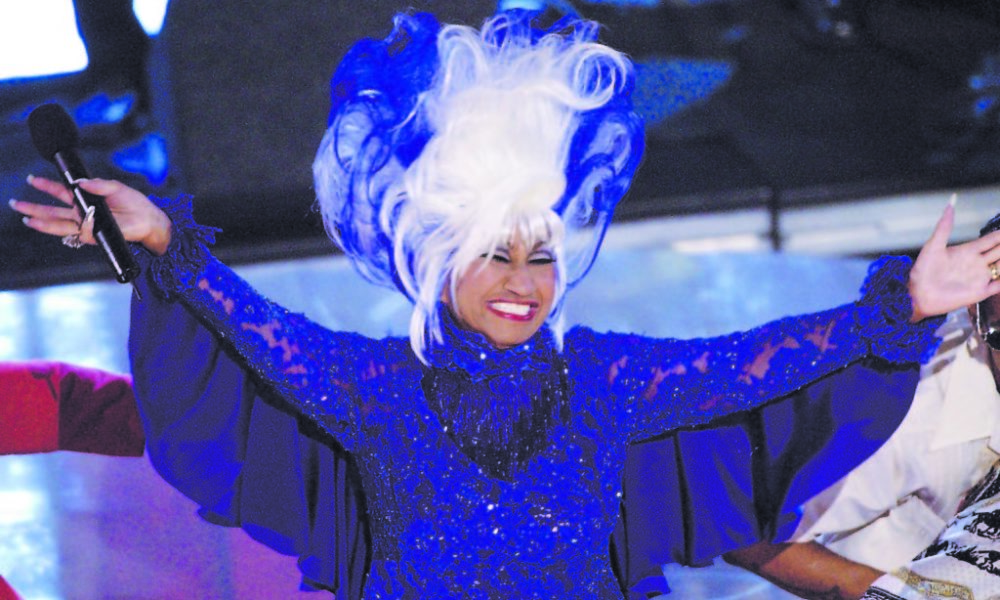
Celia Cruz is well known all around the latin world

The road has not been easy, it has been marked by countless artists who, little by little, were making known the rhythms of Caribbean countries. Salsa, for example, was one of the most popular rhythms at the time. Starting in 1960, it was catapulted into the United States, paving the way for Latina artists who are now considered legends of the genre. Celia Cruz, Willie Colón, Héctor Lavoe, Rubén Blades, Johnny Pacheco, among others, marked a before and after in the industry.

Today we want to talk about some famous singers who set the tone and promoted the careers of other Hispanics.

6 Latino artists who paved the way for new generations

Emilio Estefan, Cuba

The Cuban was born in 1953 and arrived in the United States at the end of 1960, from Spain. Estefan always had musical interests. Although, in principle he had to work in other areas. He formed the band “Miami Latin Boys”, which would later be called “Miami Sound Machine”. Thanks to his different presentations, he met Gloria Fajardo, today known as Gloria Estefan, who accompanied them as vocal reinforcement. No one imagined that this singer would become their life partner.

Despite the success of the group, it is other achievements of the artist that place him in this category. Emilio Estefan soon established himself as a producer for Latin American artists and contributed to Gloria Estefan’s success as a soloist. He quickly became known within the industry, working with artists such as Charliee Zaa, Cristian Castro, and Carlos Vives.

In 2002, Estefan became a producer for the Latin Grammy Awards, an annual event that awards artistic excellence for productions in Spanish, Portuguese or other languages ​​of Hispanic countries.

Emilio Estefan and his wife have been awarded the Presidential Medal of Freedom from the United States, the highest honor in the country, due to their work in the training of artists and projection of Latin music in the world.

Celia Cruz, Cuba

Celia Cruz, began her career in her native Cuba. She excelled in tropical music and was known as “The queen of salsa.” During her first years of career, she stood out in her country, and later ventured into Mexico and the United States. She moved to the US and at the end of the 70s she joined the Fania All-Stars, along with other artists, fully joining salsa. In 1987, her star was debuted on the Hollywood Walk of Fame.

Cruz is part of a legacy that will continue throughout history. Her songs remain current and are part of the heritage of Latin America. She was nominated for two Grammys and three Latin Grammys.

The Postal Service of the United States included it in a selected group of five stamps, destined to the greats of Latin music; together with Selena, Tito Puente, Carmen Miranda and Carlos Gardel.

Selena, Mexico

The singer was born in the United States and was of Mexican descent. Her genre leaned toward ranchera, Mexican cumbia, and ballads. Selena is known as “the queen of Latin music” and has exceeded 70 million records worldwide.

In the 1990s, the US Billboard magazine named her “the most influential and best-selling Latin artist.” In addition, she is credited with catapulting Latin music in the United States and the world. Selena featured five albums ranked on the Billboard 200 at the same time. Her album Live (1993) won a Grammy for best Mexican-American music album, leaving behind the paradigms of those who considered the Tejano musical style as exclusive to men.

Selena was murdered in 1995. A great loss to show business. Her fans still regret her departure and imagine what she could achieve thanks to your talent. However, it leaves a very broad legacy for Latinos. After her death, she continues to be an example and inspiration for those who want to enter the market.

Juan Luis Guerra, Dominican Republic

The Billboard Winner Juan Luis Guerra
An Artist who help the genre in USA

Juan Luis Guerra is one of the most recognized Latin artists in the world. In the United States, he has been the recipient of 24 Latin Grammys, three Latin Billboard Awards and two American Grammys. He has recorded in Portuguese, English and, of course, in Spanish.

She trained at the largest private music college in the world, Berklee College of Music, in Boston. Earning a degree in jazz composition.

Guerra has made different tours of the US obtaining a box office record. He is a recognized exponent in the genre of merengue and bachata. In 2015, he collaborated with the financing of the Juan Luis Guerra Scholarship, presented by the Latin GRAMMY Cultural Foundation for a low-income student.

The singer is of Dominican origin and today he works as a composer, arranger, musician and producer.

Héctor Lavoe, Puerto Rico

Considered one of the best salseros of all time. He is credited with helping to bring about the genre’s golden age in New York. In addition, to expand the popularity of salsa in the 60’s, 70’s and 80’s.

In New York City, he takes his first steps as a bolero vocalist to make his way in what would be a great musical career. The Puerto Rican’s success kept on rising, he sang with the famous Willie Colón and together they toured different stages. Lavoe was also part of the Fania All Stars, a salsa and Latin music group. The Singer, as he was also baptized, died on June 29, 1993. He left an unforgettable musical legacy in the United States and the world; his songs and style are inspiration for many salsa performers today.

Marc Anthony, United States

For many, it could come as a great surprise that an American artist has such a marked and extraordinary Latin musical rhythm. However, his parents are Puerto Rican and he grew up with part of this culture. Marc Anthony is a singer of ballads, pop, salsa and bolero; ambassador of Latin music and culture.

When he began his career, many doubted whether he would be successful in Latin music.

“My career was not easy at first, because I neither looked nor sounded like the ‘typical salsero’. My sound was not considered usual for purists, ”he told The Associated Press.

The singer and actor has sponsored young talents such as Luis Figueroa, a Latino who was just beginning his career in the artistic medium. In addition, it has sold more than 30 million records around the world. Received 2 Grammys and 7 Latin Grammys. Marc Anthony has many fans worldwide. However, Latinos have a very special appreciation for him. In 2012, he started the Maestro Cares Foundation, to raise funds to build orphanages in Latin America.

If we wanted to mention those musicians to whom the expansion of Latin music is due, the list would be endless. Infinity of people who overcame cultural barriers to carry the name of their country, its rhythms and culture high. Currently, the city of Miami is considered as the starting point. The first contact of the young musicians, before venturing to the rest of the country. In addition, the same experts call it “the epicenter of the Latin industry.” This is due to the number of media, producers, multinationals and locals that are willing to open their doors to them and boost their talent.

Latin music represents an industry that does not stop, is profitable and is taking more and more space in the United States. Therefore, a decline is not expected in the coming years.


Home

Mark Weinstein Flutist, composer and arranger

North America / United States / New York

With his heart in jazz, Weinstein contributed greatly to the development of the salsa trombone by playing and arranging

Flutist, composer and arranger, Mark Weinstein began his study of music at age six with piano lessons from the neighborhood teacher in Fort Green Projects in Brooklyn where he was raised.

Between then and age 14 when he started to play trombone in Erasmus Hall High School, he tried clarinet and drums. Playing his first professional gig on trombone at 15, he added string bass, a common double in NYC at that time.

Mark learned to play Latin bass from Salsa bandleader Larry Harlow. He experimented playing trombone with Harlow’s band and three years later, along with Barry Rogers, formed Eddie Palmieri’s first trombone section, changing the sound of salsa forever.

With his heart in jazz, Weinstein was a major contributor to the development of the salsa trombone playing and arranging. He extended jazz attitudes and techniques in his playing with salsa bands.

His arrangements broadened the harmonic base of salsa while introducing folkloric elements for authenticity and depth.

Flutist, composer and arranger, Mark Weinstein began his study of music at age six with piano lessons from the neighborhood teacher in Fort Green Projects in Brooklyn
Mark Weinstein Flutist, composer and arranger

The only horn in a Latin jazz quintet led by Larry Harlow in the jam session band at the Schenks Paramount Hotel in the Catskills

The only horn in a Latin jazz quintet led by Larry Harlow at the jam session band at Schenks Paramount Hotel in the Catskills, soloist and arranger with Charlie Palmieri in the first trumpet and trombone salsa band in NYC, arranger and featured soloist along with the great Cuban trumpet player Alfredo Chocolate Armenteros in Orchestra Harlow, and with the Panamanian giant Victer Paz in the La Playa Sextet, and with the Alegre All Stars, Mark’s playing and arranging was a major influence on Salsa trombone and brass writing in the 60s and 70s.

Mark Weinstein continued to record with Eddie Palmieri, with Cal Tjader and with Tito Puente. He toured with Herbie Mann for years, played with Maynard Ferguson, and the big bands of Joe Henderson, Clark Terry, Jones and Lewis, Lionel Hampton, Duke Pearson and Kenny Dorham. In 1967 he wrote and recorded the Afro-Cuban jazz album, Cuban Roots for the legendary salsa producer Al Santiago.

It revolutionized Latin jazz; combining authentic folkloric drum ensembles with harmonically complex extended jazz solos and arrangements. Chick Corea was on piano and the rhythm section included the finest and most knowledgeable Latin drummers: Julito Collazo, Tommy Lopez Sr. and Papaito (timbalero with La Sonora Matancera).

El único cuerno en un quinteto de jazz latino liderado por Larry Harlow en la banda de jam session del Hotel Schenks Paramount en los Catskills, solista y arreglista con Charlie Palmieri en la primera banda de salsa de trompeta y trombón en NYC, arreglista y solista junto con el gran trompetista cubano Alfredo Chocolate Armenteros en Orchestra Harlow, y con el gigante panameño Victer Paz en el Sexteto de la Playa, y con los Alegre All Stars, el hecho de que Mark tocara y arreglara fue una gran influencia en la escritura del trombón de salsa y los metales en los años 60 y 70.

Mark Weinstein continuó grabando con Eddie Palmieri, con Cal Tjader y con Tito Puente. Hizo giras con Herbie Mann durante años, tocó con Maynard Ferguson y con las grandes bandas de Joe Henderson, Clark Terry, Jones y Lewis, Lionel Hampton, Duke Pearson y Kenny Dorham. En 1967 escribió y grabó el álbum de jazz afrocubano Cuban Roots para el legendario productor de salsa Al Santiago.

Revolucionó el jazz latino, combinando auténticos conjuntos de tambores folclóricos con solos y arreglos de jazz extendido armónicamente complejos.

Chick Corea tocaba el piano y la sección rítmica incluía a los mejores y más conocedores bateristas latinos: Julito Collazo, Tommy López Sr. y Papaito (timbalero de la Sonora Matancera).

A principios de los 70 Mark se tomó un tiempo libre de la música para obtener un doctorado en filosofía con una especialización en lógica matemática.

Se convirtió en un profesor universitario y sigue siéndolo hasta el día de hoy. Cuando regresó a la escena musical en 1978 tocando la flauta, escribió produjo y grabó las Suites de los Orishas con la cantante Olympia Alfara, el gran pianista de jazz colombiano Eddy Martínez y los percusionistas Steve Berrios, Julito Collazo, Papaito y Papiro junto con un coro afrocubano. Inédito hasta hace poco, la música de las Suites de los Orishas se convirtió en el tema del Sunday Salsa Show de Roger Dawson en WRVR.

Mark Weinstein volvió al jazz con una venganza, trabajando en conciertos y grabando más de una docena de CDs desde 1997.

Seasoning, su primer CD de flauta experimentó con diferentes escenarios para la flauta, incluyendo un cuarteto con el vibrafonista Bryan Carrott y Cecil Brooks III en la batería y un trío de flauta y dos guitarras con Vic Juris y Rob Reich.

En 1998, Mark grabó Jazz World Trios con el maestro guitarrista brasileño Romero Lubambo y el premiado percusionista Cyro Baptista.

Su exploración de temas brasileños con guitarra clásica y percusión contrastaba con un trío de freebop con Santi Debriano en el bajo y Cindy Blackman en la batería.

Jean Paul Bourelly y Milton Cardone completaron el conjunto con música basada en temas de santería.

El lanzamiento de Three Deuces en 2000, emparejó a Mark con los guitarristas Vic Juris, Ed Cherry y Paul Meyers.

Mark continued to record with Eddie Palmieri, Cal Tjader and Tito Puente
With his heart in jazz, Weinstein contributed greatly to the development of the salsa trombone by playing and arranging – Mark Weinstein

Because of limited distribution and more demand that albums available, Mark rerecorded the material from the original Cuban Roots with new arrangements and the help of such giants of Cuban music as pianist Omar Sosa, percussionists Francisco Aquabella, Lazaro Galarraga, John Santos, Jose De Leon, and Nengue Hernandez. It was co-produced with his nephew, trombonist, violinist and arranger Dan Weinstein for Michael McFadin and CuBop Records.

In 2002 Mark had the incredible opportunity to go to Kiev, Ukraine, where his father was born, to record the music of the Ukrainian composer Alexey Kharchenko. Milling Time, the record that they made, stretched his playing in a number of directions, from modern classical music to smooth jazz to Ukrainian folk music.

He continued his exploration of his roots with a jazz album of Jewish music with Mike Richmond on bass, Brad Shepik on guitar and Jamey Haddad on drums and percussion.

He then turned to Brazil and the music of Hermeto Pascoal’s Calendario do Som, entitled Tudo de Bom with guitarist and vocalist Richard Boukas, Nilson Matta on bass, Paulo Braga on drums and Vanderlei Pereira on percussion.

In 2005 he began his ongoing association with Jazzheads record recording another version of Cuban Roots called Algo Más, with Jean Paul Bourelly playing electric guitar, Santi Debriano on bass, Thelonious Monk award winning percussionist and vocalist Pedrito Martinez,  as well as Nani Santiago, Gene Golden and Skip Burney on congas and batá drums.

His next release on Jazzheads was O Nosso Amor with Brazilian jazz masters Romero Lubambo, Nilson Matta and Paulo Braga along with percussionists Guilherme Franco and Jorge Silva.

In the early 1970s Mark took time off from music to pursue a doctorate in philosophy with a specialization in mathematical logic.
Mark Weinstein He became a university professor and continues to be one to this day

This was followed by Con Alma, a Latin Jazz album featuring Mark Levine on piano, Santi Debriano on bass, Pedrito Martinez playing conga and drummer Mauricio Hererra.

Next a straight-ahead album, Straight No Chaser, with guitarist Dave Stryker, bassist Ron Howard and Victor Lewis on drums. A return to Brazilian music, Lua e Sol, saw Romero Lubambo and Nilson Mata joined by award winning percussionist Cyro Baptista

Mark Weinstein took time out from Jazzheads to record an album for Otá records in Berlin with Grammy nominated pianist Omar Sosa playing vibes, marimbas and piano along with Ali Keita on balafon, Mathais Ogbukoa and Aho Luc Nicaise on African percussion, bassist Stanislou Michalou and Marque Gilmore on drums. Back to Jazzheads, Mark recorded Timbasa with the percussion team of Pedrito Martinez and Mauricio Hererra, joined by Roman Diaz with the young giants Axel Laugart on piano and bassist Panagiotis Andreou. This was followed by Jazz Brasil with NEH Jazzmaster Kenny Barron on piano along with Nilson Matta and drummer Marcello Pellitteri.

His most recent album, El Cumbanchero was recorded with a string ensemble and arranged by Cuban piano virtuoso Aruán Ortiz, along with Yunior Terry on bass and percussionists Mauricio Herrera and Yusnier Bustamante.

Next up is an album of tangos with GRAMMY and Latin GRAMMY nominee, bassist Pablo Aslan, and featuring Latin GRAMMY winner Raul Jaurena playing the bandoneon, pianist Abel Rongatoni and guitarist Francisco Navarro. And many more surprises to come.

Mark took time from Jazzheads to record an album for Otá records in Berlin with Grammy-nominated pianist Omar Sosa
Back at Jazzheads, Mark recorded Timbasa with the percussion team of Pedrito Martinez and Mauricio Hererra, along with Roman Diaz with young giants Axel Laugart on piano and bassist Panagiotis Andreou

Home

Los Angeles salsa and its origins

Salsa and its origins

Salsa is a musical genre of Latino origin that has become very popular around the world thanks to the enormous number of artists who have been responsible for spreading it far and wide. Neither salsa or any of the other genre remains static in time and this is because all the transformations and combinations suffered at the years begin to pass. This has given rise to a number of new styles that have also been spreading to many countries thanks to those interested in learning to dance them.

How Los Angeles Salsa Originated

Los Angeles salsa and how to dance it
Two people dancing Los Angeles salsa

One of those styles is Los Angeles salsa, which is named after the city where it was born. In Los Angeles, United States, a family of Mexican origin was directly involved in the origins of this style of salsa. Francisco Vásquez, who spent a significant part of his life in Los Angeles, was delighted with the way many of the greatest dancers of those years danced in nightclubs.

Around this time, this man began to mimic the movements made by these dancers, to perfect them and to add other Hollywood dance steps. After all this process experienced by Francisco, he gave rise to what would later be known as On1. Sometime later, Francisco would teach his brothers what he learned in these clubs, which gave origin to what would become a family business known as Los Rumberos. These brothers were real important in the expansion of this salsa style, but there were many other professional dancers and lovers of Latin culture who have created other companies focused on promoting many musical styles from Latin America.

A very important thing to say about this salsa style is that it was neither the only nor the first salsa rhythm to become famous around the world, as New York salsa has also become very popular in recent years and includes some of the sounds present in tango, jazz, among others.

The presence of Los Angeles salsa in Europe

Los Angeles salsa in Europe
A couple dancing Los Angeles salsa

A type of salsa that only emerged at the local level has become one of the most sought-after musical styles by European music festivals to give them a privileged place in their respective programs, which implies that Latin music has already expanded in its multiple variants to every corner of the Old Continent.

One of the most important reasons why this style has become so famous is the richness of its steps and the varied movements in relation to other typical dance forms of salsa. If Europeans were already very interested in Latin rhythms, such a diversity of rhythms and styles makes them even more curious about our musical culture.

These competitions and festivals held around Europe are very striking and prestigious, as they invite locals to learn to dance different rhythms in order to be eligible for one of the luxurious prizes offered therein. The best of all this is that these competitions include all levels, so you don’t have to be a professional dancer to have a good time and gain one or another recognition.

Home

Latin rhytms preferred by Europeans to learn to dance

A brief introduction about Latin music

In the last several years, Latin music has become a real phenomenon throughout much of the world, especially in Europe. Currently, Latin rhythms are heard in almost every corner of the Old Continent, which has been really beneficial for the great men of these musical styles, who have started their artistic careers in major cities of Europe.

After becoming an overwhelming success for this music in Latin America and the US, it gradually expanded throughout many European countries, in which Spanish and family languages ​​have a strong presence. In these countries, the Latino community has been growing steadily, which has made locals take an interest in its culture and traditions, including music. There are many Europeans who want to learn how to dance many Latin rhythms, but there are some that distinguish themselves from others.

Salsa

Europeans love Latin music
A drum for Latin music

Among the many Latin rhythms that many Europeans wanted to learn how to dance, salsa can never be lacking. This is because this world-renowned musical genre is very sociable and entertaining, which few Europeans were accustomed to see in ages past. Salsa is commonly danced in Los Angeles and very present at all kinds of parties and amateur competitions, especially in Continental Europe. In that part of the continent, it is quite common to find dance academies that teach this specific style.

There are many European nations that organize dance championships in which salsa occupies a very special place.

Bachata

Another genre preferred by Europeans in order to learn how to dance is bachata, which is from the Dominican Republic and characterized by very slow and sensual movements on the part of the members of the couple. After all the success achieved by bachata artists, this genre has become one of the rhythms with the largest presence in European music festivals.

There is no denying that a set of soloists and groups have offered an unimaginable contribution to the expansion of bachata throughout the world, such as Juan Luis Guerra, Romeo Santos, Prince Royce, among others.

Tango

Europeans dancing Latin music
A young couple dancing Latin music

If there is a genre that cannot be out of any list of options to learn how to dance, it is Argentine tango. One of the reasons why this elegant and distinguished dance has had this incredible success in Europe and elsewhere in the world has been the huge presence it has had in numerous Hollywood films and the great interest which ballroom dances have awakened in countries like England.

It is anticipated that its popularity will increase and have as much presence as salsa and bachata in dance events throughout the Old Continent. It is not long before it does.

Rumba

One of the most interesting details of a genre like rumba is that it has undergone a great number of changes in the mists of time. This is due to its Cuban origin and its many fusions with certain Spanish and African rhythms, so no wonder the sympathy that many Europeans have for this colorful musical genre.

The ones greatly responsible for the expansion of rumba in Europe have been the dance masters who have devoted much of their work to the promotion of this and other rhythms from Latin America.

Home

  • « Go to Previous Page
  • Page 1
  • Interim pages omitted …
  • Page 18
  • Page 19
  • Page 20
  • Page 21
  • Go to Next Page »

International Salsa Magazine (ISM) is a monthly publication about Salsa activities around the world, that has been publishing since 2007. It is a world network of volunteers coordinated by ISM Magazine. We are working to strengthen all the events by working together.