• Skip to primary navigation
  • Skip to main content

International Salsa Magazine

  • HOME
  • Previous editions
    • 2026
      • ISM / March 2026
      • ISM / February 2026
      • ISM / January 2026
    • 2025
      • ISM / December 2025
      • ISM / November 2025
      • ISM / October 2025
      • ISM / September 2025
      • ISM / August 2025
      • ISM / July 2025
      • ISM / June 2025
      • ISM / May2025
      • ISM / April 2025
      • ISM / March 2025
      • ISM / February 2025
      • ISM / January 2025
    • 2024
      • ISM / December 2024
      • ISM / November 2024
      • ISM / October 2024
      • ISM / September 2024
      • ISM / August 2024
      • ISM / July 2024
      • ISM / June 2024
      • ISM / May 2024
      • ISM / April 2024
      • ISM / March 2024
      • ISM / February 2024
      • ISM / January 2024
    • 2023
      • ISM / December 2023
      • ISM / November 2023
      • ISM / October 2023
      • ISM – September 2023
      • ISM – August 2023
      • ISM July 2023
      • ISM Edition June 2023
      • ISM – May 2023
      • ISM April 2023
      • ISM March 2023
      • ISM February 2023
      • ISM January 2023
    • 2022
      • ISM December 2022
      • ISM November 2022
      • ISM October 2022
      • ISM September 2022
      • ISM August 2022
      • ISM July 2022
      • ISM June 2022
      • ISM May 2022
      • ISM February 2022
      • ISM January 2022
    • 2021
      • ISM December 2021
      • ISM November 2021
      • ISM October – 2021
      • ISM September 2021
      • ISM August 2021
      • ISM July 2021
      • ISM May 2021
      • ISM April 2021
      • ISM June 2021
      • ISM March 2021
      • ISM February 2021
      • ISM January 2021
    • 2020
      • ISM December 2020
      • ISM November 2020
      • ISM October 2020
      • ISM September 2020
      • ISM August 2020
      • ISM July 2020
      • ISM June 2020
      • ISM May 2020
      • ISM April 2020
      • ISM March 2020
      • ISM February 2020
      • ISM January 2020
    • 2019
      • ISM December 2019
      • ISM November 2019
      • ISM October 2019
      • ISM Septembre 2019
      • ISM August 2019
      • ISM July 2019
      • ISM June 2019
  • Download Salsa App
    • Android
    • Apple
  • Spanish

Search Results for: Tito Puente

Tito Rodríguez The Unforgettable “Gentleman of Salsa”

A journey through the life and legacy of Pablo Rodríguez Lozada, the voice that defined an era between mambo and bolero.

Pablo Rodríguez Lozada, known worldwide as Tito Rodríguez, was born on January 4, 1923, in Santurce, Puerto Rico. From early childhood, young Tito displayed a natural affinity for Caribbean rhythms, organizing the ensemble Sexteto Nacional alongside his lifelong friend, Mariano Artau.
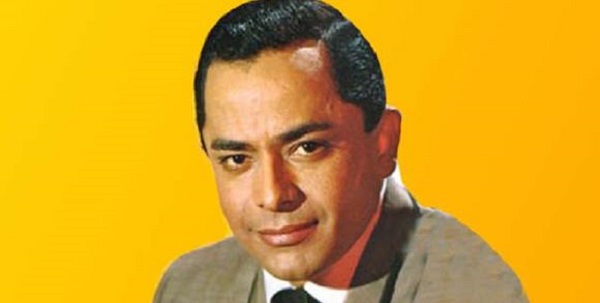
Pablo Rodríguez Lozada, conocido mundialmente como Tito Rodríguez

The Early Steps of a Prodigy

At the age of 13, his professional career began to take shape when he joined Conjunto Típico Ladí (also known as Conjunto de Industrias Nativas), led by Ladislao Martínez. Shortly after, he joined the Cuarteto Mayarí under the direction of Plácido Acevedo, where he played maracas and sang second vocals. Although this stint lasted only four months and left no studio recordings, it was fundamental to his musical development.

In 1939, at just 16 years old, Tito emigrated to New York City with hopes of carving out his own musical path. His first jobs in the Big Apple included collaborations with his brother Johnny Rodríguez’s orchestra and recordings with Cuarteto Marcano.

After passing through prestigious groups like Cuarteto Caney and the orchestras of Enric Madriguera and Xavier Cugat, he had to pause his rising career in 1945 to serve in the U.S. Army.
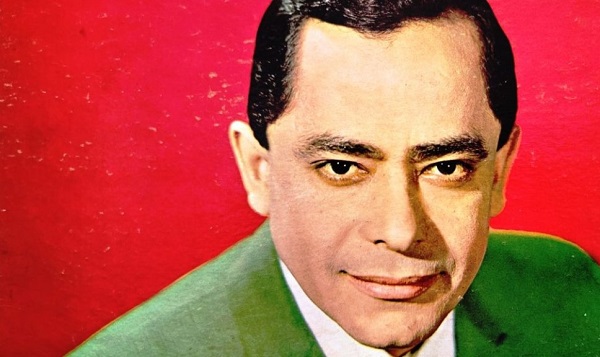
El legado de Tito Rodríguez es analizado este domingo en el Viejo San Juan. (Foto UA Latino)

The Rise of the “Mambo Devil”

Upon his discharge, Cuban pianist José Curbelo recruited him for his band. It was at the China Doll nightclub where Tito met Japanese-American chorus girl Takeku Kunimatsu (Tobi Kei), who would become his wife and lifelong partner.

In 1948, Tito founded his own group: the Mambo Devils. During the height of the mambo craze, Rodríguez entered into a legendary musical rivalry with Tito Puente and Machito’s orchestra.

Under the Tico Records label, he renamed his group Los Lobos del Mambo. Ever conscious of the importance of formal training, he enrolled in the Juilliard School of Music, where he studied percussion, vibraphone, and xylophone.
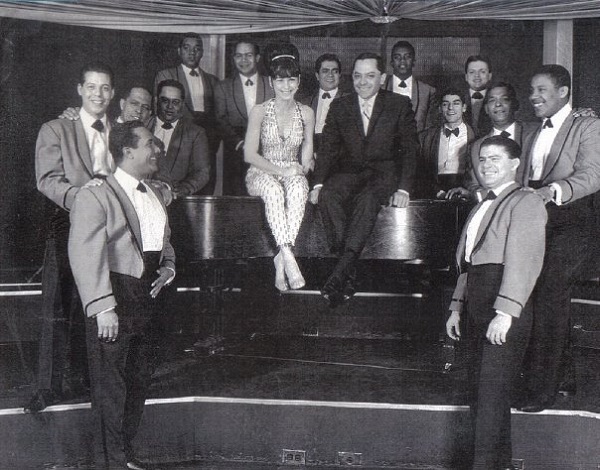
Un recorrido por la vida y el legado de Pablo Rodríguez Lozada, la voz que definió una era entre el mambo y el bolero

Reinvention: From Mambo to Bolero

In 1953, he signed with RCA Victor, formally establishing the name Tito Rodríguez and his Orchestra. Years later, in 1960, he achieved massive mainstream success with United Artists and the album Live at the Palladium.

However, in 1963, an artistic union dispute prevented him from performing with his usual musicians. Refusing to back down, he took on the challenge of radically shifting his style: he traded the frenzy of mambo for the intimacy of boleros accompanied by a string orchestra. The result was the album From Tito Rodríguez with Love, a commercial phenomenon that established him as an unparalleled romantic crooner.

Return to Puerto Rico and the Beginning of the End

After dissolving his orchestra in 1966 due to contractual issues, he returned to Puerto Rico to star in his own television program. However, nostalgia and his enduring passion brought him back to New York for the record Estoy como nunca.
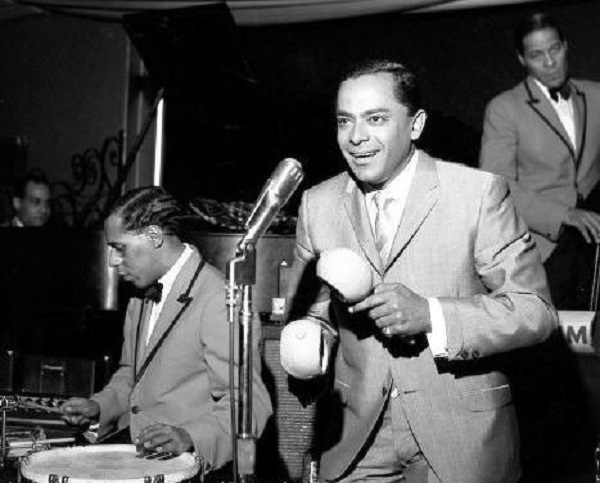
Tito Rodriguez era excelente tanto en guarachas como en boleros. Esto lo convirtió en uno de los artistas más versátiles de la época.

It was in 1967 when the first symptoms of leukemia appeared. Despite the diagnosis, Tito continued to work. In 1971, he founded his own label, TR Records, releasing the iconic album Inolvidable (Unforgettable).

A Final Farewell on Stage

In 1972, he celebrated 25 years in the industry with a show at the El Tumi club in Lima, Peru, alongside Lucho Macedo’s orchestra. This live recording would prove to be a premonition of his end.

Ignoring medical advice, he gave his final performance at Madison Square Garden on February 2, 1973, alongside Machito’s orchestra. During the show, his health failed, and he had to be hospitalized. Finally, on February 28, 1973, Tito Rodríguez passed away in New York in the arms of his wife.

Per the singer’s express wish, his remains were returned to Puerto Rico. At his funeral, legendary figures of the music world paid their respects, including his old rival, Tito Puente. Today, his ashes rest alongside those of his wife, while his voice continues to resonate as one of the most elegant and versatile pillars in the history of Latin music.

Also Read: Tito Rodríguez, Jr. “The Palladium legacy lives on”

Our friend Tito Allen supports the Salsa Museum

From the Salsa Museum, we can boast of having a long list of important artists who have supported us since the project started or over the course of all these years. One of them is Roberto Romero Caballero, better known as Tito Allen, who is called ”El Elegante de La Salsa” by his most loyal fans as a result of the book ”Swing Latino” by Angel Mendez.

Tito singing
Tito Allen singing live

A little bit of Tito Allen’s biography

Tito Allen was born in the neighborhood of Santurce, municipality of San Juan, Puerto Rico, in 1946. He began his professional career in music as a 16-year-old teenager, when he was already part of groups in which he played the guitar and even performed on Puerto Rico’s Channel 4.

Although it is true that, initially, he was much more inclined to rock and roll and also used to play the bass, he changed his mind as time went by and decided to become a salsa singer, to the delight of all fans of the genre who gained forever one of their greatest Puerto Rican references. The best thing is that he turned out to have an incredible voice, so it was a very wise decision.

Obviously, Tito had his own inspirations to become what he is. In interviews with Tito, from his point of view, Cheo Feliciano is one of the best salseros of all and he has been listening to him since he was with Joe Cuba Sextet. As for the orchestras, he has also revealed that his favorite is that of Bobby Valentín and the song with which he identifies the most is ”Contento”. Another artist for whom he also expressed his admiration and desire to collaborate is the legendary pianist Eddie Palmieri.

Tito and Johnny
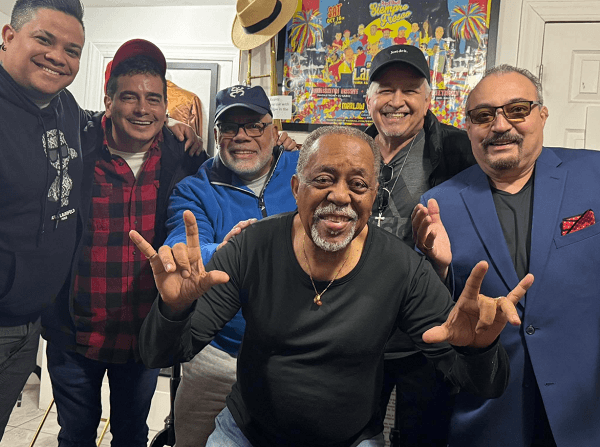
Johnny Cruz, Tito Allen, Viti Ruiz, Jorge Leureyro, Christopher Rey and Ray Sepulveda

Tito Allen’s career

This talented man’s career is so wide that it is impossible to list everything he has done since he started in music, but it is possible to highlight that he has always tried to collaborate with as many groups and artists as possible and the list of recordings he has with other great names proves it. Tito Allen has sung along with Cheo Feliciano, Ray Barreto, La Típica 73, Adalberto Santiago, Papo Lucca, Willie Rosario, Fania All Stars, Pupi Legarreta, among many others.

It should also be noted that the singer traveled to New York in 1972 in order to attend Tito Puente’s shows and try to sing with him, but unfortunately he had no vacancies at that time. In view of this refusal, he decided to meet with pianist Edite Martínez, which resulted in a quintet that used to play in nightclubs.

He went back to Puerto Rico, but traveled again to New York very soon after, since he got a chance to play at ”El Corzo” with Ray Barretto’s orchestra, which was in need of a singer after the departure of Adalberto Santiago. After that, he finally managed to sing with Tito Puente for a few months and then went on to join La Típica 73 and La Puerto Rico All Stars.

All this without counting the large number of productions and recordings in which Tito sang and delivered backing vocals with many other big names in the industry.

Supporting the Salsa Museum 

Recently, Tito visited us at the Salsa Museum to give us his support and promote the institution as so many of his colleagues have done. In our social networks, you can see two pictures of the artist with our president Johnny Cruz, Viti Ruiz, Jorge Leureyro, Christopher Rey and Ray Sepulveda. 

Johnny Cru ISM corresponde in New York City

Read also: Puerto Rican singer Max Rosado and what he had achieved in Washington DC

“Mambo Night in Miami Beach” celebrates the 100th anniversary of the birth of “El Inolvidable”, our own Tito Rodriguez


De izquierda a derecha, Tito Puente, Jr., Mario Grillo, Tito Rodríguez, Jr. Foto: sobejazzfestival.com

The initial idea of bringing together the three great orchestras of the Palladium in this innovative “three-in-one” orchestra concept came to Mario Grillo more than two decades ago.

As early as March 3, 2022, the mambo heirs celebrated the coming of age of The Big Three Palladium Orchestra in New York. Twenty-one years after the establishment of this remarkable big band, the concert entitled Palladium in the New Millennium took place in a packed Lehman Center for the Performing Arts.

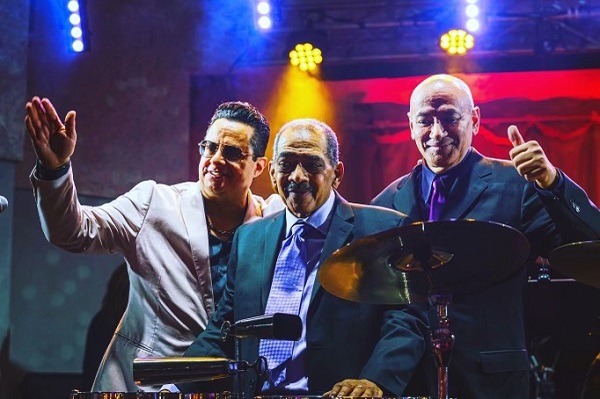
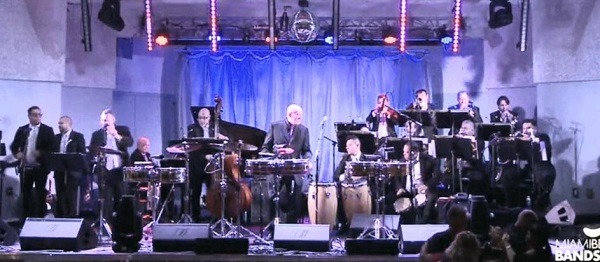
The first presentation of 2023 of the “three-in-one” big band and coinciding with the 100th anniversary of the birth of “El Inolvidable”, Tito Rodriguez, the South Beach Jazz Festival’s line-up opened its musical offerings on Saturday, January 7, 2023 with the concert entitled Mambo Night in Miami Beach. At around 8:00 p.m. The Big Three Palladium Orchestra took over the Miami Beach Band Shell when Mario Grillo, known in the music scene as Machito, Jr. kicked off the musical feast that awaited us, to the sound of Cuban Fantasy.

Foto:  Miami Bandshell broadcast

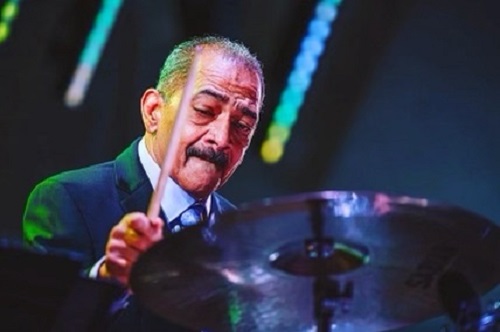
As you can see, each of the “big three of the Palladium” and owners of the mambo in its golden age inherited a timbalero son. These three bandleaders have made it their mission to keep the Palladium legacy alive and well.  Although the mambo heirs have transcended the label of being the sons of the mambo owners, they do not forget that the Patriarchs are still a topic of conversation in musical circles around the world.

For the concert at the Miami Beach Band Shell, The Big Three Palladium Orchestra was joined by the veteran musicians: Carmen Laboy on baritone saxophone and musical direction; Jose Heredia on tenor saxophone, Mark Friedman on alto saxophone and flute, Julio Andrade on alto saxophone; Larry Moses, Seneca Black, Dante Vargas and Julio Diaz on trumpets; William Rodriguez on piano, Jerry Madera on bass, Daniel Peña on bongo and Diego Camacho on tumbadoras.  On the vocal front, Sammy González, Jr. was backed by the coros of Starlyn Benítez and Tatan Betancurt.

Carmen Laboy en el saxofón barítono y la dirección musical de The Big Three Palladium Orchestra Foto: Ethan Dangerwing of Masterwing Creative Agency

The upscale repertoire vibrated and rumbled at the Miami Beach Band Shell, an elegant venue steps from the beach, which was filled to capacity.

Mario GrilloFoto: sobejazzfestival.com
Mario Grillo Foto: sobejazzfestival.com

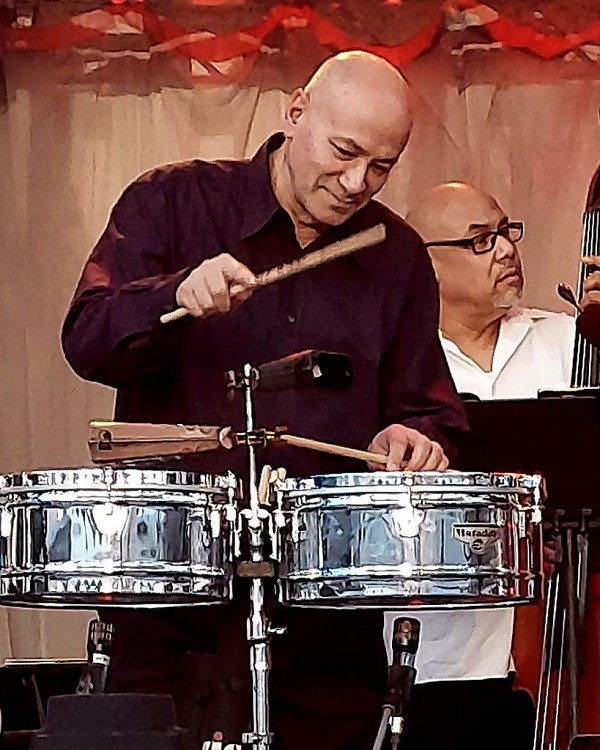
Mario Grillo’s highlights were: Cuban Fantasy, Oye la rumba (La rumba), Ahora sí, Piñero tenía razón (Piñero was right), Babarabatiri (Babarabatiri) and Rumbantela (Rumbantela). On the other hand, Tito Rodríguez, Jr. performed the following songs: El que se fue, Cheveré, Yambú, Avísale a mi contrario, Agua de Belén and Fagot’s world. In the performance of Avísale a mi contrario, the conga of Diego Camacho and the bongo of Daniel Peña, who “quinteando a lo bravo” and adjusting to the tuning of the timbal in charge of Rodríguez, Jr. opened the way for the winds. And the winds entered through the wide door to increase the tempo of the night, which was already heating up to the sound of mambo.

Tito Rodríguez, Jr.Foto: Migdalia Sánchez
Tito Rodríguez, Jr. Foto: Migdalia Sánchez

When it was Tito Puente, Jr.’s turn to play the timbal, he affirmed that Tito Puente was the pioneer in having a woman in the vocal front of an orchestra.

Then, preparing to close the first segment of the concert, he introduced Puerto Rican businesswoman and singer Melina Almodóvar, whom he backed for the performance of Mi socio.

Tito Puente, Jr. y Melina AlmodóvarFoto: sobejazzfestival.com
Tito Puente, Jr. y Melina Almodóvar Foto: sobejazzfestival.com

The grand finale of the event placed the three timbaleros heirs of mambo in front of the orchestra to delight us with a masterful performance in sync with the rhythmic base that Diego Camacho and Daniel Peña did not hesitate to maintain.

Last year such a show was promised in which the heirs of mambo honor the legacy of their fathers on Puerto Rican soil.  The show was to be entitled “Palladium in the new millennium” and was to be presented on Father’s Day at the Symphonic Hall of the Fine Arts Center in Santurce. However, it was cancelled.

I often say that the past is the past and the future is uncertain, so let’s hurry and wait for The Big Three Palladium Orchestra to perform in Puerto Rico.

I for one continue to live in salsa, which is still magic, fantasy and illusion.

Bella Martínez Writer, researcher of Afro-Caribbean music

You can read: Mike Arroyo the guitarist Using Jazz to praise God

Bella Martínez Writer, researcher of Afro-Caribbean music and author of Un conguero para la historia, Las memorias de Jimmie Morales.

787-424-8868

Talented Nicaraguan Ernesto Tito Garcia and his amazing artistic career

His life and career

Ernesto Tito Garcia is a Nicaraguan bandleader and timbalero who has been part of many musical groups that passed from romantic salsa to mambo and many other Latin genres.   

This astonishingly gifted artist has been playing professionally since the year 1971. A few years later, he formed his first orchestra called Ritmo 74, which was in charge of opening up for the biggest names in Latin music from back in the day. Both Ernesto and his fellow musicians were noted for their ages and the musical styles they used at the time. 

He experimented with Latin rock during his youth until he heard salsa for the first time and wanted to devote himself fully to that musical genre. After spending a long time playing romantic music, he decided to experiment with hard salsa and added his own style to the rhythms played by La Orquesta Internacional. 

Ernesto Tito García
Talented Nicaraguan Ernesto Tito García

Our conversation

We are very happy to get him in International Salsa Magazine today ready to go and talk a little about his life and musical career. 

My father signed me up for music lessons. I did not like them very much, but they kept me busy and interested me. Thanks to those lessons I took once a week, my ear opened wide and I learned to read music, which is a very rare thing for a timbalero. In 1969, I was 13 years old and my dad was paying for weekly accordion lessons and when Santana came out in my eighth grade, I heard my first timpani and knew it would be my instrument. That’s when I told my dad not to spend money because I wanted to play the timpani. He was a good man who died in my arms because of the same cancer I have today. 

On Broadway Street, San Francisco was where I began to learn how to play the timpani. My dad helped me buy my first timpani and I found a group that played Latin rock just like Santana, which gave me the opportunity to develop my technique. When I was in San Francisco, I did not hear much of salsa because it was more present in New York City, but my dad bought some records recommended by a friend containing the last of salsa. That was the first time I heard salsa and I was playing Latin rock with the group I already mentioned. When I heard that music, I met a girl who was interested in buying an electric piano that belonged to my girlfriend’s brother who was 15 years old at the time. From there, we formed our first orchestra in 1974, which we called Ritmo 74. When the music outside like Eddie Palmieri or Tito Puente came, people over 40 years old also came, but young people did not like it because the music was very regimented and had many pitoretas (wind musical instrument, also known as clarion). 

Tito on the beach
Ernesto Tito García on the beach

About the time Willie Colón came out was when the orchestra started getting big because we were the young people of salsa. I was 16 or 17 years old, while the oldest member was 26 or 27 years old. We had agents who gave us the opportunity to open up for the biggest names in New York like Eddie Palmieri and Willie Colón. At that time, we were the only orchestra of our generation with that kind of playing. We were growing up, but the thing is that I liked education and for whatever reason, I found that I made good grades.   

As our fame grew here in the Bay Area, I had to devote much time to rehearsals, learn new songs, among other things. That’s why my grades started to fall and I was about to graduate from high school. The last two years were the most important ones at school, so I realized I would not be able to do both at the same time. So I decided to quit music and knew the only way in which I could do it was to sell my timpani, so I went to a store and they gave me $60 for them. 

I got my grades up, was admitted by San Francisco State University and the first year was amazing, but I met other Latino students who also played music. They began renting a room right there on campus to rehearse, so I did not have to go somewhere else. It was there that we founded La Orquesta Salsa Caliente and as soon as we got to be known, people liked us. About two or three years later, my grades started to fall again, so I quit music again. I graduated from College and was admitted to the school of optometry in 1985 or 1986. Thanks to that diploma I started working with a very skilled Salvadoran doctor. He was a surgeon and ophthalmologist. When I formed my own orchestra, I had two very simple rules for the members. The first was that when we played, we could not take any kind of drugs or alcohol, while the second was that we had to always wear a suit and a tie, that’s what no other youth orchestra did.   

This is Mike Rios
Tito García and Mike Ríos, who designed the album covers for Santana

Do you think that the style of mambo that your orchestra plays is what makes it unique or are there other elements that stand out? 

First of all, when I formed the orchestra, romantic salsa was in vogue just like its exponents included Eddie Santiago, Tony Vega and many more. The problem was that the music was boring because the arrangements were very simple. In 1996 or 1997 was when I heard Tito Puente with his orchestra playing mambo and that is what gave me the idea to do the same with four or five pitoretas. That’s when I lost several musicians and singers because they wanted to sing romantic salsa, but I was tired of that. 

So, we started playing what I called hard salsa, which had mambo arrangements and singers who knew how to perform it. That combination pushed us on a new level. Those who wanted to sing romantic salsa formed their own orchestra. Julio Bravo was one of my favorite artists and I helped him with some musicians. There was also my comadre Denis Corrales, who formed her women’s orchestra. The orchestra looked very good with all the girls, but it was not what dancers were looking for. There is also the case of Venezuelan Eduardo Herrera whose voice was incredible and he also grew up with salsa music, but he did not know how to sing hard salsa. 

Tito García and Tito Puente
Tito Puente and Tito García

Do you think having musicians from so many different countries has to do with the final product you present to the public?  

This did not have a lot of influence on our music. Back then, our orchestra was called Salsa Dulce. When my agent retired, I got stuck with the orchestra. He wanted the orchestra to have my name in its title but did not want it to be too obvious, for example, Los Titanes de La Salsa Con Tito García or El Gran Combo Con Rafael Ithier. Regarding nationalities, the singer was Venezuelan, the bass player was French, the pianist was Peruvian, the conguero was Puerto Rican, the saxophonist was Irish and the trombonist was American as was the trumpet player. It was the reason why my agent suggested me to call it Tito García Y Su Orquesta La Internacional. I liked how it sounded so much that I called the group that.  

What are your future projects? 

I can mention an album dedicated to Tito Puente and am going to record it between San Francisco and Nicaragua. The problem is that his family has the rights to all his music and I do not know if they give me permission to do it. I hope they are not going to charge me a lot for those rights. Of course, we are going to make money with the project, but costs are much more comfortable and negotiable in Nicaragua. That is one of the reasons why I want to do it there.  

Timpani of Tito garcía
Tito García’s timpani

Tito Rodríguez, Jr. “The Palladium legacy lives on”
Timbalero, Arranger, Composer, Producer and Band Director, Tito Rodriguez, Jr. is one of the most important timbaleros of Salsa and Tropical Music as well as being one of the heirs of the mambo.

I had previously listened to, analyzed and shared my impressions about Transición (2017), by Tito Rodríguez, Jr. In conversation with Tito himself, he confirmed that Transición is his fourth album and the first to carry a Spanish-language title.  We are doing well, Tito.  This album was preceded by:

Curious?

Un clásico de 1978, originalmente en el sello TR de su padre. Con Sal Cuevas, Cachete, Ruben Figueroa, Gilberto Colon, un joven José Alberto El Canario en la voz - y una sección de coro con Adalberto Santiago y Ruben Blades. Vaya. ¿Curioso? ha sido una de las reediciones más solicitadas de la línea TR y los arreglos y el groove demuestran claramente por qué
Curious? (1975), featuring Adalberto Santiago, José Alberto “El Canario” and Rubén Blades.

Eclipse (1994) y

A classic! In the summer of '94, the Eclipse cuts and the infectious Erotic Woman.
A classic! In the summer of ’94, the Eclipse cuts and the infectious Erotic Woman.

The Big Three Palladium Orchestra live at the Blue Note (2004).

“The Big 3 Palladium Orchestra already may rank as the most brilliant large Latin jazz ensemble this side of Havana.”

The idea of bringing together the three great orchestras of the Palladium was Machito, Jr.’s, whom I will be approaching soon.

Promise is a promise, so here I am to elaborate a bit on what I left out of the previous report.

Why the title Transition?

For much of his productive life, Tito has held a conventional job so music has been his part-time love.  Well, we should clarify what this so-called “part-time” has meant for Tito because even part-time, from 1994 to 1999 his orchestra was performing once a month at the world famous Copacabana in New York City.  On the other hand, The Big Three Palladium Orchestra live at the Blue Note secured him a promotional tour – through Brian Theobald of BPR Music – that lasted a whopping eleven years.

Well, now it looks like Tito is getting ready to hit the stages that have been waiting for him so long.  So get ready, what is coming is not from friends.  I wonder if the title track Volver had something to do with Tito’s dream of surrendering to his first love: music.

Tito has been consistent in following the musical line of his progenitor’s orchestra although he has managed to modernize the baseline, adding his own forceful stamp.  That is why the musical line of Tito Rodriguez, Jr.’s big orchestra is more modern without straying from the classical foundation.

Reading several articles, I stumbled upon one by Robin Denselow published in 2010 for the international newspaper The Guardian.  My chest swells with Puerto Rican pride when I review the legacy left by the “Mambo Kings”: Machito, Puente and Rodriguez, those 3 bandleaders who transformed the American music scene.  The Palladium located on Broadway and West 53rd Street no longer offers mambo, chacha or rumba but the musical legacy of the mambo kings remains more alive than ever.  According to Denselow, when that Palladium Orchestra took the stage with a brass section it was Tito Rodriguez, Jr. who first led that historic reunion.  According to the British view Rodriguez, Jr. lovingly revived his father’s compositions while showing off his percussion skills.

This was just the hors d’oeuvre for when Larry Harlow arrived to raise the bar even higher.  Of course, having the luxury of having the pianist hero of not only the mambo kings but also the Fania All-Stars was no small feat for these virtuous offspring.  Perhaps they are the offspring of the most influential trio in Latin music.

Back to Borinquen:  In 2009 Tito Rodriguez, Jr. was in Puerto Rico fulfilling one of his musical dreams. With that dream in his suitcase, Tito, Jr. arrived behind his timbal to lead a very large orchestra.

Once on Puerto Rican soil, they joined that dream: Luis Nazario “Güiriche” on conga, Paquito Corselles on bass, Luisito Marín on piano, Pablo “El Indio” Rosario on bongo; Emilio Reales, Darío Morales, Simón Rivera and Edwin González on trumpets; Rafy Ruiz and Al Schnitzler on alto saxophone; Nelson Vega and Wilfredo de la Torre on tenor saxophone plus Angel “Chiqui” Vidal on baritone saxophone.

On vocals, Josué Rosado was backed by José Miranda and Juan Manuel Lebrón on backing vocals.

On that occasion, the orchestra performed in the Chucho Avellanet Show, at the gala of the Puerto Rico Chamber of Commerce, at the Yagüez Theater in Mayagüez with the special participation of Chucho Avellanet.

The show that closed the tour in Puerto Rico took place at the Science Park in Bayamón.  It is worth mentioning that Al Schnitzler and Emilio Reales were musicians in Tito Rodríguez’s orchestra in the 1960s.

Searching through the archives I think I fell for the performance of El Mulato Rumbero.

Although Tito, Jr. has not insisted on the label of being the son of the great vocalist Tito Rodriguez, it is not possible to escape the good shadow of being the son of a Puerto Rican glory who, almost fifty years after his death, is still a topic of conversation in musical circles.

WedSite: Tito Rodriguez, Jr.

By: Bella Martinez “La Escritora Irreverente de La Salsa”

Puerto Rico

Puerto Rico es Salsero
Bella Martinez “The Irreverent Salsa Writer”.

WebSite: Bella Martinez

Home

  • « Go to Previous Page
  • Page 1
  • Page 2
  • Page 3
  • Page 4
  • Interim pages omitted …
  • Page 42
  • Go to Next Page »

International Salsa Magazine (ISM) is a monthly publication about Salsa activities around the world, that has been publishing since 2007. It is a world network of volunteers coordinated by ISM Magazine. We are working to strengthen all the events by working together.