• Skip to primary navigation
  • Skip to main content

International Salsa Magazine

  • HOME
  • Previous editions
    • 2026
      • ISM / May 2026
      • ISM / April 2026
      • ISM / March 2026
      • ISM / February 2026
      • ISM / January 2026
    • 2025
      • ISM / December 2025
      • ISM / November 2025
      • ISM / October 2025
      • ISM / September 2025
      • ISM / August 2025
      • ISM / July 2025
      • ISM / June 2025
      • ISM / May2025
      • ISM / April 2025
      • ISM / March 2025
      • ISM / February 2025
      • ISM / January 2025
    • 2024
      • ISM / December 2024
      • ISM / November 2024
      • ISM / October 2024
      • ISM / September 2024
      • ISM / August 2024
      • ISM / July 2024
      • ISM / June 2024
      • ISM / May 2024
      • ISM / April 2024
      • ISM / March 2024
      • ISM / February 2024
      • ISM / January 2024
    • 2023
      • ISM / December 2023
      • ISM / November 2023
      • ISM / October 2023
      • ISM – September 2023
      • ISM – August 2023
      • ISM July 2023
      • ISM Edition June 2023
      • ISM – May 2023
      • ISM April 2023
      • ISM March 2023
      • ISM February 2023
      • ISM January 2023
    • 2022
      • ISM December 2022
      • ISM November 2022
      • ISM October 2022
      • ISM September 2022
      • ISM August 2022
      • ISM July 2022
      • ISM June 2022
      • ISM May 2022
      • ISM February 2022
      • ISM January 2022
    • 2021
      • ISM December 2021
      • ISM November 2021
      • ISM October – 2021
      • ISM September 2021
      • ISM August 2021
      • ISM July 2021
      • ISM May 2021
      • ISM April 2021
      • ISM June 2021
      • ISM March 2021
      • ISM February 2021
      • ISM January 2021
    • 2020
      • ISM December 2020
      • ISM November 2020
      • ISM October 2020
      • ISM September 2020
      • ISM August 2020
      • ISM July 2020
      • ISM June 2020
      • ISM May 2020
      • ISM April 2020
      • ISM March 2020
      • ISM February 2020
      • ISM January 2020
    • 2019
      • ISM December 2019
      • ISM November 2019
      • ISM October 2019
      • ISM Septembre 2019
      • ISM August 2019
      • ISM July 2019
      • ISM June 2019
    • 2016
      • ISM December 2016
  • Spanish
  • Download Salsa App
    • Android
    • Apple

Search Results for: Tito Puente

Tito Rodríguez, Jr. “The Palladium legacy lives on”

Timbalero, Arranger, Composer, Producer and Band Director, Tito Rodriguez, Jr. is one of the most important timbaleros of Salsa and Tropical Music as well as being one of the heirs of the mambo.

I had previously listened to, analyzed and shared my impressions about Transición (2017), by Tito Rodríguez, Jr. In conversation with Tito himself, he confirmed that Transición is his fourth album and the first to carry a Spanish-language title.  We are doing well, Tito.  This album was preceded by:

Curious?

Un clásico de 1978, originalmente en el sello TR de su padre. Con Sal Cuevas, Cachete, Ruben Figueroa, Gilberto Colon, un joven José Alberto El Canario en la voz - y una sección de coro con Adalberto Santiago y Ruben Blades. Vaya. ¿Curioso? ha sido una de las reediciones más solicitadas de la línea TR y los arreglos y el groove demuestran claramente por qué
Curious? (1975), featuring Adalberto Santiago, José Alberto “El Canario” and Rubén Blades.

Eclipse (1994) y

A classic! In the summer of '94, the Eclipse cuts and the infectious Erotic Woman.
A classic! In the summer of ’94, the Eclipse cuts and the infectious Erotic Woman.

The Big Three Palladium Orchestra live at the Blue Note (2004).

“The Big 3 Palladium Orchestra already may rank as the most brilliant large Latin jazz ensemble this side of Havana.”

The idea of bringing together the three great orchestras of the Palladium was Machito, Jr.’s, whom I will be approaching soon.

Promise is a promise, so here I am to elaborate a bit on what I left out of the previous report.

Why the title Transition?

For much of his productive life, Tito has held a conventional job so music has been his part-time love.  Well, we should clarify what this so-called “part-time” has meant for Tito because even part-time, from 1994 to 1999 his orchestra was performing once a month at the world famous Copacabana in New York City.  On the other hand, The Big Three Palladium Orchestra live at the Blue Note secured him a promotional tour – through Brian Theobald of BPR Music – that lasted a whopping eleven years.

Well, now it looks like Tito is getting ready to hit the stages that have been waiting for him so long.  So get ready, what is coming is not from friends.  I wonder if the title track Volver had something to do with Tito’s dream of surrendering to his first love: music.

Tito has been consistent in following the musical line of his progenitor’s orchestra although he has managed to modernize the baseline, adding his own forceful stamp.  That is why the musical line of Tito Rodriguez, Jr.’s big orchestra is more modern without straying from the classical foundation.

Reading several articles, I stumbled upon one by Robin Denselow published in 2010 for the international newspaper The Guardian.  My chest swells with Puerto Rican pride when I review the legacy left by the “Mambo Kings”: Machito, Puente and Rodriguez, those 3 bandleaders who transformed the American music scene.  The Palladium located on Broadway and West 53rd Street no longer offers mambo, chacha or rumba but the musical legacy of the mambo kings remains more alive than ever.  According to Denselow, when that Palladium Orchestra took the stage with a brass section it was Tito Rodriguez, Jr. who first led that historic reunion.  According to the British view Rodriguez, Jr. lovingly revived his father’s compositions while showing off his percussion skills.

This was just the hors d’oeuvre for when Larry Harlow arrived to raise the bar even higher.  Of course, having the luxury of having the pianist hero of not only the mambo kings but also the Fania All-Stars was no small feat for these virtuous offspring.  Perhaps they are the offspring of the most influential trio in Latin music.

Back to Borinquen:  In 2009 Tito Rodriguez, Jr. was in Puerto Rico fulfilling one of his musical dreams. With that dream in his suitcase, Tito, Jr. arrived behind his timbal to lead a very large orchestra.

Once on Puerto Rican soil, they joined that dream: Luis Nazario “Güiriche” on conga, Paquito Corselles on bass, Luisito Marín on piano, Pablo “El Indio” Rosario on bongo; Emilio Reales, Darío Morales, Simón Rivera and Edwin González on trumpets; Rafy Ruiz and Al Schnitzler on alto saxophone; Nelson Vega and Wilfredo de la Torre on tenor saxophone plus Angel “Chiqui” Vidal on baritone saxophone.

On vocals, Josué Rosado was backed by José Miranda and Juan Manuel Lebrón on backing vocals.

On that occasion, the orchestra performed in the Chucho Avellanet Show, at the gala of the Puerto Rico Chamber of Commerce, at the Yagüez Theater in Mayagüez with the special participation of Chucho Avellanet.

The show that closed the tour in Puerto Rico took place at the Science Park in Bayamón.  It is worth mentioning that Al Schnitzler and Emilio Reales were musicians in Tito Rodríguez’s orchestra in the 1960s.

Searching through the archives I think I fell for the performance of El Mulato Rumbero.

Although Tito, Jr. has not insisted on the label of being the son of the great vocalist Tito Rodriguez, it is not possible to escape the good shadow of being the son of a Puerto Rican glory who, almost fifty years after his death, is still a topic of conversation in musical circles.

WedSite: Tito Rodriguez, Jr.

By: Bella Martinez “La Escritora Irreverente de La Salsa”

Puerto Rico

Puerto Rico es Salsero
Bella Martinez “The Irreverent Salsa Writer”.

WebSite: Bella Martinez

Home

Alfredo “Chocolate” Armenteros: The Golden Legacy of the Cuban Trumpet

The history of Latin music cannot be written without mentioning the metallic brilliance and elegant phrasing of Alfredo “Chocolate” Armenteros.

Regarded by musicologists and peers as the “Latin Louis Armstrong,” Armenteros was more than just a trumpet virtuoso; he was a sonic architect who bridged the gap between traditional Cuban son, New York jazz, and the high-energy explosion of salsa.

Chocolate Armenteros🇨🇺fue una leyenda excelsa de la música cubana

Born on April 4, 1928, in Las Villas, Cuba, Armenteros carried the soul of his homeland to the world’s most prestigious stages.

His nickname, which became a hallmark of artistic quality, originated from a curious anecdote the musician shared in 2013: a young woman had mistaken him for the famous boxer “Kid Chocolate.”

What began as a case of mistaken identity ultimately became the name of a legend who would deliver his “knockouts” not with fists, but with perfect notes.

The Forging of a Master: From Arsenio Rodríguez to the “Bárbaro del Ritmo”

The career of Chocolate Armenteros serves as a detailed roadmap of the Golden Age of Cuban music. In 1950, he joined the ensemble of the “Blind Marvel,” Arsenio Rodríguez.

Alfredo Chocolate Armenteros el Legado de Oro de la Trompeta Cubana

Under Rodríguez’s tutelage, he recorded essential pieces of the Caribbean songbook such as “Deuda,” “Tengo que olvidarte,” and the iconic “La vida es un sueño.”

This period was vital in defining his style: a fusion of technical discipline and a gift for organic improvisation.

His rise was meteoric. By 1953, he was already a member of Sonora Matancera, the island’s most influential musical institution. That same year, he participated in a historic milestone: the founding of the band led by his cousin, the great Benny Moré.

Alfredo Chocolate Armenteros, Lino Frias, Carlos Patato Valdez y el Negro Vivar 1973

The sound of Chocolate’s trumpet was a key gear in the machinery of Moré’s “Tribu,” cementing his status as the most sought-after instrumentalist of his generation.

Conquering New York and the Global Stage

In November 1958, Armenteros’ destiny changed forever. He traveled to New York with the Fajardo y sus Estrellas orchestra for a private performance at the Waldorf Astoria Hotel.

The event carried high-level political weight: it was a gala for the presidential campaign of then-candidate John F. Kennedy. Following this encounter with the Big Apple, the trumpeter decided to settle permanently in the city, becoming an ambassador for Caribbean rhythms at the epicenter of jazz.

In New York, his talent flowed through the most influential groups of the era:

  • The Machito Orchestra (1963): Where he fused Cubop with Afro-Cuban jazz.
  • Eddie Palmieri (70s): Contributing his power to the experimental sound of salsa brava.
  • Tico-Alegre All Stars (1975): Sharing the stage with giants like Celia Cruz, Tito Puente, Ismael Rivera, and Cachao.

An Endless and Eternal Style

In the late 70s and early 80s, Armenteros not only returned to collaborate with Sonora Matancera but also took the definitive step as a bandleader.

Under his own direction, he left behind memorable productions such as Chocolate Dice (1982) and Estrellas de Chocolate (1987), proving that his creative well never ran dry.The most admirable aspect of Armenteros was his artistic longevity. He remained active in festivals and concerts well into his 80s, preserving a privileged embouchure and a sense of timing that seemed to defy the laws of physics.

Alfredo Chocolate Armenteros y Eddie Moltalvo

Today, nearly a century after his birth, Alfredo “Chocolate” Armenteros remains the gold standard for trumpeters. His life was a testament to elegance, his music a bridge between nations, and his trumpet an eternal echo of Cuban identity that continues to resonate in every jazz descarga and every salsa step around the world.

Also Read: Larry Harlow and Ismael Miranda: The birth of “Arsenian Salsa,” a tribute to the music of Arsenio Rodríguez the creator of Son Montuno and the “King of Guaguancó.”

Ray Rodríguez and The Colao Band promote Latin music in San Antonio, Texas

Ray Rodríguez is a talented professional musician and ex-serviceman with whom we’ve had the great pleasure of talking to about his career and other interesting details of his life in general. This descendant of Puerto Ricans has shown us a little-known side of himself, and we’re more than happy to share it with our dear readers today, May 1, 2026.

Ray posing
Ray Rodríguez posing for the camera

How Ray got his start in Music and who inspired him

Ray came from a family full of musicians, but his father and grandfather dedicated themselves to the craft of building string instruments such as guitars, requintos, and cuatros. His grandfather, besides being a craftsman, was also a very talented musician, so he was in high demand in his town to liven up events of all kinds. Seeing so many musicians testing the quality of the instruments at home all the time, little Ray tried to be around to learn the tones he heard.

Over time, he had his own guitar and carried it with everywhere he went, something that his family always supported, and he is so grateful for that.

Enlistment into the United States Army

Music was always very present in Rey’s life, but he had not yet mastered it very well, and his interest in it had not developed much at all, so he joined the United States Army. However, once there, some of his fellow soldiers were also musicians, and taught him to play other instruments, but it did not end there. It was at this stage that his interest in singing was sparked and he dedicated to this profession after his retirement. That was 26 years ago. 

He came to be there for a total of six years. In the beginning, he joined as an infantryman and later became an artilleryman. He also attended aviation school for about a year, but unfortunately had an accident that fractured his leg in six places, so he was given the option of staying or changing jobs again, and he chose the latter.

It should be noted that he spent much of his service in Germany, and being there, he devoted much of his free time to listening to music that reminded him of his roots and playing it as a hobby.

Ray and The Colao Band
Ray Rodríguez and The Colao Band at the Jazz Festival in Helotes

Why he chose Texas back to the United States

Having been born in Boston, Massachusetts, it struck us that he chose Texas as his new home. On this subject, he told us that his best friend was parked at Lackland Air Force Base in San Antonio and invited Ray to visit him. The artist enjoyed his walk around the city so much that he decided to stay there, so he applied to work at the City of San Antonio Aviation Department and got the position. After completing his retirement procedure, that was how he went directly to San Antonio, where he continues to live to this day. 

As for the musical panorama he found there, what dominated the most at the time was regional Mexican music, so salsa, merengue, and other genres of that type were just beginning to take their place on the local music scene. Fortunately, things have changed since then. During those same years, Ray was invited to a rehearsal with the merengue band Grupo Chocolate to serve as a backup singer, and he spent about six years singing with them, but also became the band’s manager and owner.

Already in the year 2007, the band unfortunately broke up and all the members went their separate ways, which is when Ray finally decided to form his own band, The Ray Colao Band. 

The Colao Band

For a time, Ray was the singer of Tito Puente Jr.’s band, and both he and the timbalero were having lunch at a restaurant and talking about the band Ray wanted to start. Ray explained to him that his project was like a mix of everything and that it was all “colado” (in this context, it means everything is mixed together). In addition, he always snuck into someone else’s stage without being part of the group (”colado’’ in Spanish), so Puente gave him the idea to use that name for his band, and it was.

Ray and Tito
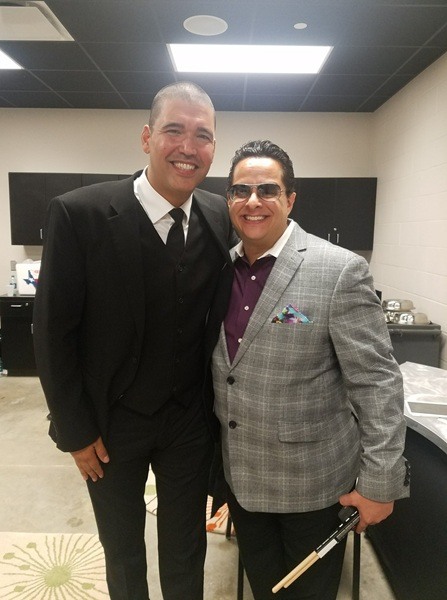
Ray Rodríguez and Tito Puente Jr.

As for his accompanying musicians today, we can mention guitarist and singer Jessi García, guitarist, pianist, and bassist Rogelio Romer Hidalgo, singer Gilberto Álvarez, percussionist Georgie Padilla, and the late Jesús Navarrete. These were the members who formed the core of the band, and almost all have been working alongside Ray for about 18 years continuously, except for Gilberto, who spent some time in Puerto Rico but then rejoined them. After them, The Colao Band also welcomed Hainel García and Robert García.

In addition to the band, Ray has also been able to open his own restaurant, Cuba 1918, which he has been running for about four years. He says the project is going very well and that it has become a music and arts venue where he hires various bands to entertain customers during their meal.

Read also: Actress, comedian, and singer Carmen Nydia Velázquez tells us about the best of her career

Rafaelito and his career between Munich and New York

We had a very personable and honest conversation with Rafael Pareja Ibañez, who via WhatsApp has given us a few minutes of his busy schedule to tell us a bit about his fascinating career to date and the group he currently leads, Rafaelito Y Su Tumbao. 

The artist, born in Lima, Peru, has a huge love for music and remains intact to date, so he says it is a pleasure to share the story of how he came to pursue it professionally, no matter how many times he tells it.

Rafaelito playing
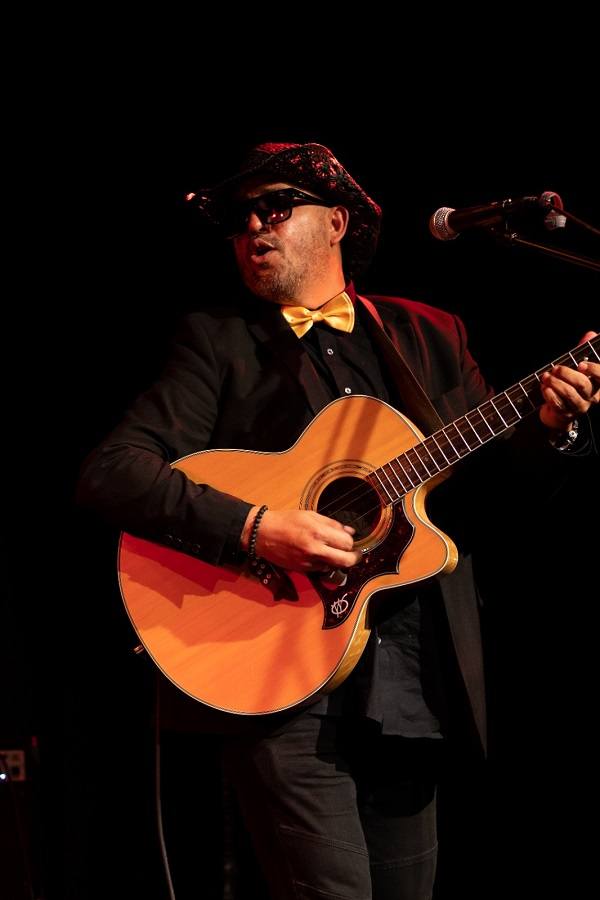
Rafaelito playing the guitar live

Rafael’s beginnings in music

Rafael was first inspired by the artists his parents used to listen to at home, including La Sonora Matancera, Celia Cruz, Tito Puente, and many others. Family social gatherings always featured iconic songs by these stars, so he could not help but be interested in music at the early age of 10.

It all started when his father caught him beating some paint buckets to make it look like he was playing a drum set on the roof of their house, which led him to enroll his child in a music school to take guitar lessons. While it is true that this was the first instrument he learned to play, he also plays the baby bass in salsa and the piano together with all the percussion instruments.

At that time, what the young man played the most was rock and pop because the radio and other media left little room for Latin music. In fact, Rafael formed his first rock band at 16, as this was the genre with which young people identified the most in the 1980s.

Move to Germany

At 20 years of age, Rafael decided to move to Germany, specifically to Munich, where he lived for more than 27 years. It was there that he came into contact with people of other nationalities and had far more access to Latin music, especially Peruvian music, which surprised him greatly. He also got to listen to international stars such as Eddie Palmieri, Miguelito Cuní, and Arsenio Rodríguez.

Rafaelito and Nicky Marrero
American Latin jazz percussionist Nicky Marrero and Rafaelito at Mamajuana Cafe in the Bronx

It was also in Munich where he began to have his first professional experience together with major musical groups from there such as the Sexteto Melaza, where he played alongside musicians from different parts of the world. At a student barbecue, Rafael was hanging out with many Latinos, and they began to sing and play instruments together, leading them to form a group, which they named Melaza. During that time, he dedicated himself to play salsa, guaracha, son, bolero, and cha-cha-cha in a sextet format.

The group featured a guitarist, a bassist, a conga player, a timbalero, a bongo player, and a singer. This sums up his first musical experience in Germany, which lasted about a year and a half. It also helped him draw the attention of other musicians in the city’s music scene, who convinced him to join other projects that were being created.

Another of those projects included a trio of young musicians called Madera Limpia which was founded in 2005, when rap, reggaeton, reggae, and many other genres mixed with Latin rhythms such as changüí or kiribá were super trendy. It turns out that a Romanian couple traveled to Cuba, produced a film called “Paraíso,” and went on a concert tour through Europe and North Asia. Therefore, they needed to hire many musicians, including the members of Madera Limpia, who contacted Rafael through connections and asked him to be their bassist. The Peruvian accepted the offer and toured all those places with these musicians, an experience he talks about with great affection.

Back in Munich, he met Lou Bega, the creator of the hugely popular swing-pop cover of Pérez Prado’s “Mambo No. 5,” which stayed at number one for 36 consecutive weeks in the United States. When his producer wanted to find a band to accompany him, there were very few Latin musicians in the city and Rafael was one of them. Obviously, they called him and his colleagues to work on some demos featuring Bega’s vocals and trumpet samples. After being selected, he became the director of his live band and accompanied him on many concerts in Europe between 2007 and 2008.

El Canario and Rafaelito
José Alberto ”El Canario” and Rafaelito

Rafaelito Y Su Tumbao

Right there in Munich, Rafael finally made up his mind and formed his own musical group, Rafaelito Y Su Tumbao, which currently has branches in Munich, Lima, and New York, where the artist currently resides. Rafael arrived in this city as early as 2020, which is when he got to perform with stars such as Charlie Aponte, Andy Montañez, Jose Alberto “El Canario,” Hildemaro, and many others. When he saw how good the human material was in his new place of residence, he also founded Rafaelito Y Su Tumbao in New York with musicians from there. 

What is striking about his move to New York is that it was motivated by Rafael’s reunion with his childhood sweetheart in Peru, whom he reconnected with in 2019. It turns out that his partner was living in New York, so he jumped on this new opportunity that life offered him and made the romantic decision to cross the Atlantic again and marry her. This radically changed his life both personally and professionally, but he’s glad he did.

Members of Rafaelito Y Su Tumbao
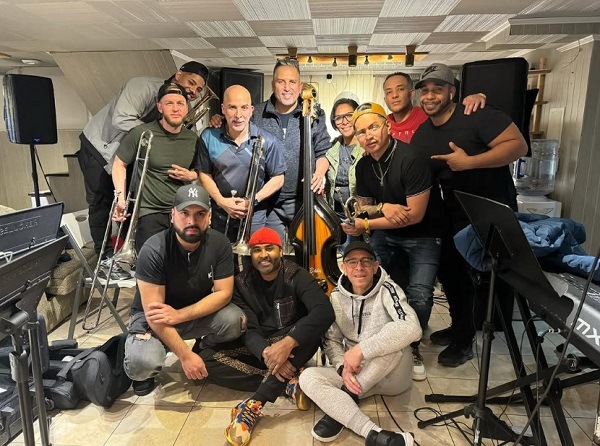
Members of Rafaelito Y Su Tumbao in New York
Line Up :
Rafael Pareja – Baby Bass
Ray Cabrera – Piano
Andres Garces – Vocal
Karla Olivo Moreno – Vocal
Dennis Hernandez – Trumpet
Christian Gomez – Trumpet
Jimmy Bosch – Trombone
Andre Carpio – Timbal
Hector “ Jereto “ Ferreyra – Congas
Chuito Quintero – Bongo

Read also: Dominican bandleader and musical director Orlando Santana talks about La Makina and his career in general

‘‘El Griego Rumbero’’ visited the Salsa Museum and donated some objects

The artist we will talk about today is a very particular case, since he comes from a country which is not usually related to salsa or Latin music in general. However, the passion for these rhythms has captivated people from all over the world, so it is not surprising that our guest has experienced the same thing.

We’re talking about the Greek-born trombonist and composer Demetrios Kastaris, whom El Rubio Boris and I were fortunate to welcome at the Salsa Museum. Here’s a little of his fascinating story.

Demetrios Kastaris playing
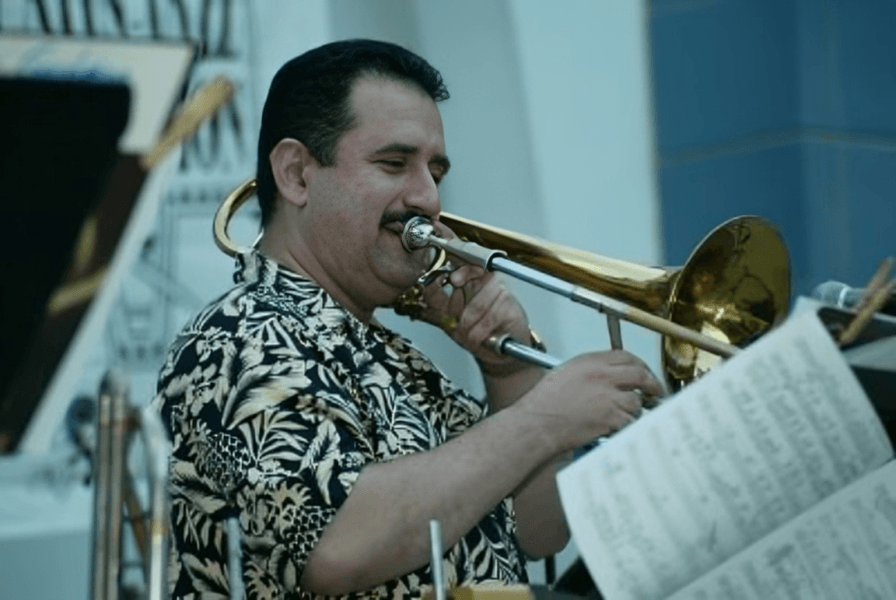
Demetrios Kastaris playing the trombone

Demetrios’ early years

Demetrios was born in Thessaloniki, Greece, but moved with his family to the United States when he was just two years old. After living in Ohio for a few years, the family moved again, but this time to St. Louis, Missouri, a place that would be critical to the training of the Young man in the times to come.

The first contact of the boy with music was in elementary school during a live performance by a classical music quintet, but what really captivated him was a demonstration of a slide trombone by a member of the St. Louis Symphony Orchestra. It was at that instant the aforementioned instrument inspired Demetrios to take trombone lessons and join the school concert band.

More importantly, as Demetrios grew older, he spent countless hours practicing the trombone, especially in summer when he was free from school work. Finally, On reaching the age of 17, his perseverance began to bear fruit, and he got the opportunity to rehearse with the Stan Keaton Jazz Orchestra, which was the first great experience for the teenager. Just one year later, he sang as a soloist at the Classical Rimsky-Korsakov Concerto. 

Other than that, Demetrios received the John Philip Sousa Band Award just before graduating from high school. He then studied music education at the University of Missouri-St. Louis, when he played in the jazz band and won several awards with the group.

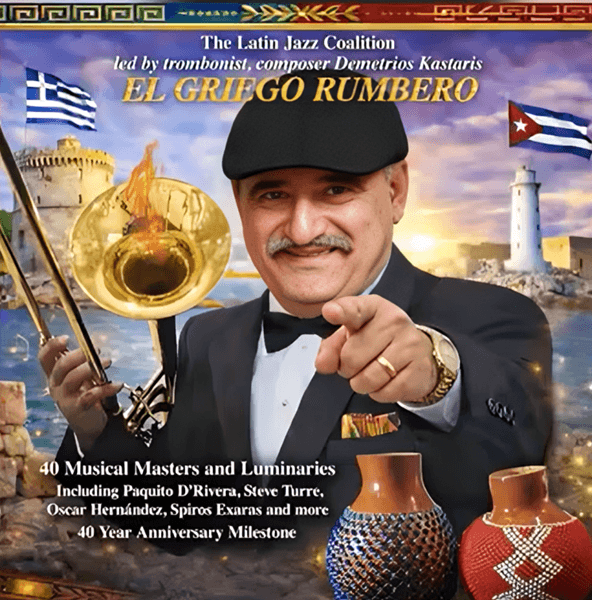
Cover of the album ''El Griego Rumbero''
Cover of the album ”El Griego Rumbero” by demetrios Kastaris

Moving to New York

Two years after having studied in Missouri, Demetrios moved to New York, where he received a scholarship that allowed him to attend New York University and take more steps in his musical career. While completing his studies, he met a bandleader on the subway and was invited to a rehearsal where he was given the opportunity to arrange Afro-Cuban jazz pieces for the first time in his life.

Latin music and its rhythmic features made such an impression on Demetrios that he began attending concerts by many of its great exponents, such as Willie Colón, Eddie Palmieri, Ray Barretto, Tito Puente, Mongo Santamaría, and many others. This led him to transcribe and conscientiously analyze these artists’ songs to satisfy his curiosity and learn more about these rhythms.

After graduating with honors, he earned a masters degree in jazz from the Manhattan School of Music. Soon after, he was already teaching in public schools while performing with one of the bands of the Concord Resort Hotel.

Other important details of his career

For over 50 years of artistic career, Demetrios has had the opportunity to perform with big Latin stars such as Tito Puente, Luisito Quintero, Alfredo De La Fé, Ray Barretto, Charlie Palmieri, Herencia Latina, Oscar Hernández from The Spanish Harlem Orchestra, and many others. 

Already in the decade of 1980, the artist founded the Latin-Jazz Coalition and recorded several of his original compositions in genres such as Brazilian and Afro-Cuban jazz. In certain Circles, his work has earned him the nickname of “El Griego Rumbero”, a moniker by which he is still known today.

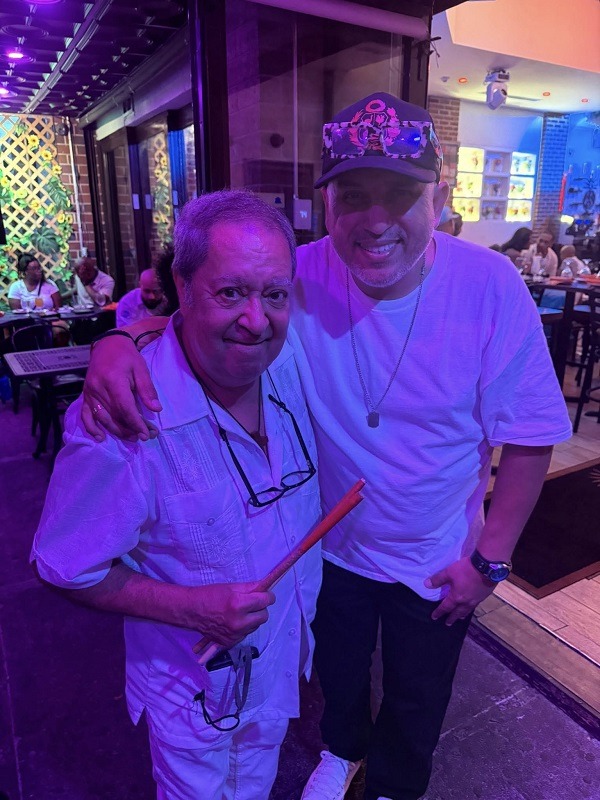
Johnny Cruz, Demetrios Kastaris and El Rubio Boris

Much more recently, Demetrios was invited to play with Los Leales de Cuba at the Buena Vista Curry Club and also to rehearse with Los Muñequitos de Matanza, which was a very learning afternoon and a memorable experience for him. Thereafter, he traveled to Cuba on several occasions to learn much more about this music.

Visit to the Salsa Museum

Just two years ago, Demetrios visited the Spanish Harlem Salsa Museum directed by yours truly and spent an enjoyable time with our entire team but he did not come alone. He brought us his photograph and a poster of the Latin Jazz Coalition, which were mounted on a wall alongside many other photographs of stars such as The Fania All Stars, Hector Lavoe, Tito Puente, Celia Cruz, El Gran Combo de Puerto Rico, Larry Harlow, and many others. 

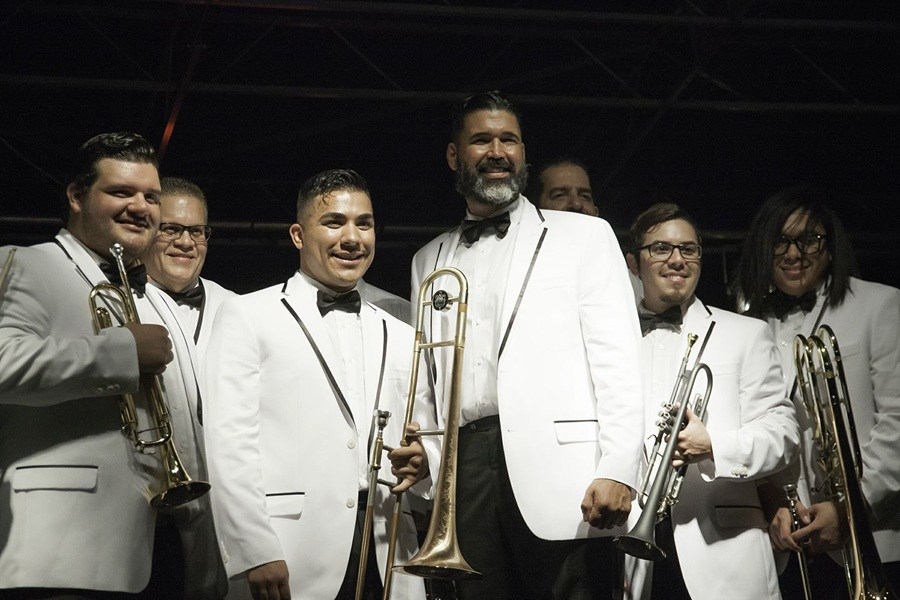
His childhood trombone was also added to our extensive display of objects donated by artists and their families. This took place on March 20, 2024, and the instrument remains at our institution to this day as a reminder of a Greek man’s love for our music and a thank you to his dedication over the years.

Johnny Cruz ISM

Read also: Rey Ruíz visits the Salsa Museum and talks about his prolific career

  • « Go to Previous Page
  • Page 1
  • Page 2
  • Page 3
  • Page 4
  • Page 5
  • Interim pages omitted …
  • Page 43
  • Go to Next Page »

International Salsa Magazine (ISM) is a monthly publication about Salsa activities around the world, that has been publishing since 2007. It is a world network of volunteers coordinated by ISM Magazine. We are working to strengthen all the events by working together.