• Skip to primary navigation
  • Skip to main content

International Salsa Magazine

  • HOME
  • Previous editions
    • 2026
      • ISM / March 2026
      • ISM / February 2026
      • ISM / January 2026
    • 2025
      • ISM / December 2025
      • ISM / November 2025
      • ISM / October 2025
      • ISM / September 2025
      • ISM / August 2025
      • ISM / July 2025
      • ISM / June 2025
      • ISM / May2025
      • ISM / April 2025
      • ISM / March 2025
      • ISM / February 2025
      • ISM / January 2025
    • 2024
      • ISM / December 2024
      • ISM / November 2024
      • ISM / October 2024
      • ISM / September 2024
      • ISM / August 2024
      • ISM / July 2024
      • ISM / June 2024
      • ISM / May 2024
      • ISM / April 2024
      • ISM / March 2024
      • ISM / February 2024
      • ISM / January 2024
    • 2023
      • ISM / December 2023
      • ISM / November 2023
      • ISM / October 2023
      • ISM – September 2023
      • ISM – August 2023
      • ISM July 2023
      • ISM Edition June 2023
      • ISM – May 2023
      • ISM April 2023
      • ISM March 2023
      • ISM February 2023
      • ISM January 2023
    • 2022
      • ISM December 2022
      • ISM November 2022
      • ISM October 2022
      • ISM September 2022
      • ISM August 2022
      • ISM July 2022
      • ISM June 2022
      • ISM May 2022
      • ISM February 2022
      • ISM January 2022
    • 2021
      • ISM December 2021
      • ISM November 2021
      • ISM October – 2021
      • ISM September 2021
      • ISM August 2021
      • ISM July 2021
      • ISM May 2021
      • ISM April 2021
      • ISM June 2021
      • ISM March 2021
      • ISM February 2021
      • ISM January 2021
    • 2020
      • ISM December 2020
      • ISM November 2020
      • ISM October 2020
      • ISM September 2020
      • ISM August 2020
      • ISM July 2020
      • ISM June 2020
      • ISM May 2020
      • ISM April 2020
      • ISM March 2020
      • ISM February 2020
      • ISM January 2020
    • 2019
      • ISM December 2019
      • ISM November 2019
      • ISM October 2019
      • ISM Septembre 2019
      • ISM August 2019
      • ISM July 2019
      • ISM June 2019
  • Download Salsa App
    • Android
    • Apple
  • Spanish

Search Results for: Tito Puente

Creator of Afro-Rican Jazz William Cepeda talks about this subgenre

When we talk about the best characteristics of Puerto Rican artists, innovation is definitely one of them, and our guest is an excellent example of this. Grammy nominee and composer William Cepeda was born and raised in Loiza, known as the heart of “Little Africa” in Puerto Rico, so we can sense that this had much to do with his later artistic inclinations. We will talk about this and other things in the next paragraphs of this gripping story. 
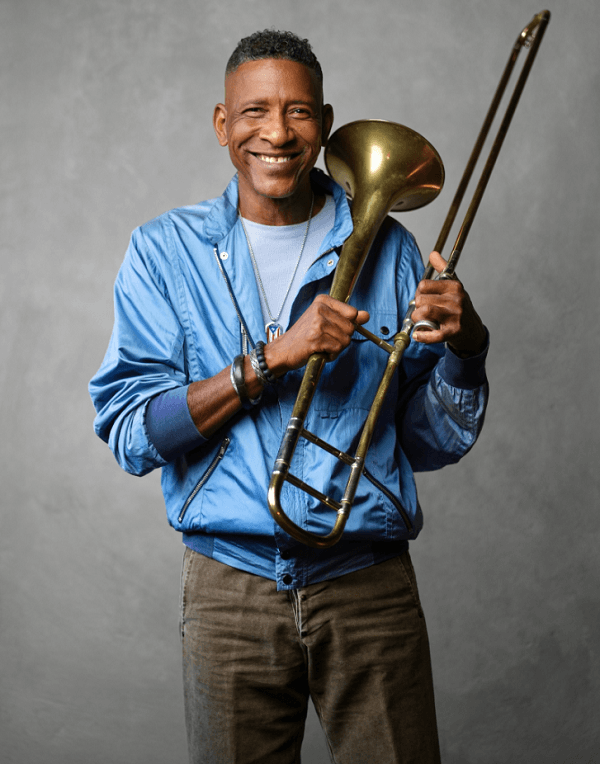
Musician William Cepeda
This is Puerto Rican Grammy nominee, composer, and musician William Cepeda

What got William interested in music

The environment in which William grew up had everything to do with his interest in music as a serious profession. In Loiza, Puerto Rican bomba was one of the most listened genres by the community, and cultural events based on it were passed down through generations. It was there that a very young William began attending the colloquially known as “bombazos” and connecting with this music from an early age.

Practically the whole town was involved in these traditions, including his family, so he could not escape all these activities carried out year after year. In fact, his grandparents and some of his uncles and cousins were musicians, so it was common for the young boy to see them play their instruments and know what that was about.

When he turned 14, he finally began seriously studying music, especially the theory part. Although one of his options to study was accounting, this career would never overcome his enormous taste for music, so he never materialized this interest.

How William got started professionally in music 

While still an inexperienced teenage musician, William started playing percussion with some local groups, one of them being La Orquesta Zodiac, composed of a group of salsa veterans with more than 50 years of professional experience. Although these gigs were already paid, the young man still saw music as a side hobby. 

However, long time later, he would completely change his mind after noticing that his skills and opportunities could take him further than he thought possible.

William Cepeda at the festival
William Cepeda at the Luminato Festival in Toronto

Afro-Rican Jazz

Having already a more or less consolidated career, William was part of the invention of Afro-Rican Jazz, which can be defined as a concept that celebrates Puerto Rico’s heritage and its African roots while offering a new version of the jazz that everyone knew, giving it a touch of modern flavor that was absolutely innovative for the time. 

Growing up in an environment where traditional Puerto Rican music was so present and having experience only with local groups, he still had a long way to go as an artist. His outlook started to broaden by going to study at Berklee in Boston and then to do a master’s degree in New York, which in turn led him to play with American groups and musicians such as Dizzy Gillespie, James Brown, Miriam Makeba, and many other famous jazz musicians.

Gillespie became one of his biggest mentors when playing with him and his group The United Nations Orchestra, which included Cuban, Colombian, Dominican, Panamanian, and Brazilian musicians. It was precisely because of this great diversity of nationalities and influences that the orchestra received this name. However, there were no Puerto Rican musicians or music, so Gillespie gave William the opportunity to become the youngest member and create a subgenre product of a mixture of jazz and some styles from his place of origin. 

William told us that many Boricuan musicians used to play Latin jazz based on Cuban music, but none of them had ever ventured to create a subgenre of jazz with a Puerto Rican base. That was when the artist realized that something had to be done about it, so he chose to fuse jazz with Puerto Rican music and later named his group Afro-Rican Jazz.

He also continued to experiment with genres until he found something he called “Plena jazz,” the name he used for one of his albums and the result of mixing plena, another traditional genre born in the neighborhoods of Puerto Rico, and jazz. He also made a symphonic rumba album at the time. 
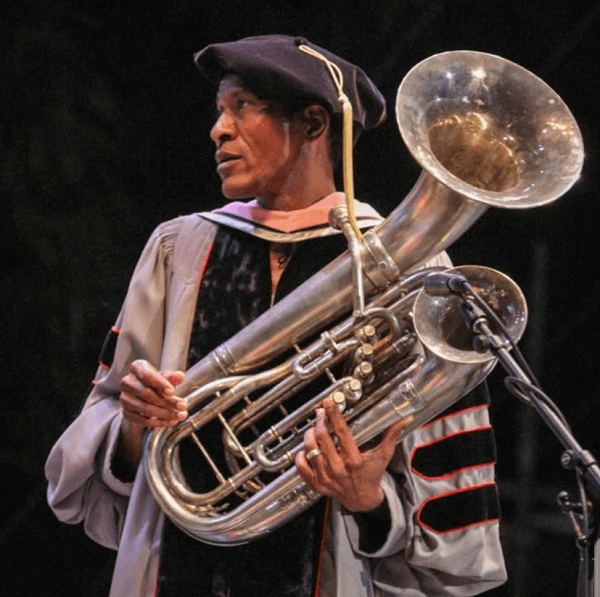
William Cepeda and his doctorate
William Cepeda receiving his honorary doctorate from Berklee College of Music

Dizzy Gillespie’s protégé

Although William was influenced by a number of artists, when we check out his story his history, there is no denying that the South Carolinian trumpeter was the greatest influence and role model for the young man. 

With respect to this stage of his life, William recalls with affection that Dizzy was always very attentive to his development within the group, to the point that he came to see him as an artistic father. As we said before, he knew nothing about jazz or American music when he left Puerto Rico, but Dizzy and his musicians were “a second university” where he learned what no educational institution could teach him, something he thanks to them.

“Dizzy saw talent in me, so he always pushed me to be better every day. He encouraged me, protected me, and guided me in my development as a musician,” he said of his teacher.

Artists he has collaborated with

William has collaborated with countless great Latin artists such as Celia Cruz, Rubén Blades, Eddie Palmieri, Tito Puente, Marc Anthony, Oscar D’León, and many others. Most of these contacts came about thanks to references of acquaintances, combined with the percussionist becoming known to the public for some time, which generated many recommendations. 

All the above artists also influenced him to a certain extent, but he also says that he liked and still likes other genres such as classical music, jazz, the folklore of other countries, and many others.

Read also: Argentine tango bassist and Latin Grammy winner Pedro Giraudo returned to his roots
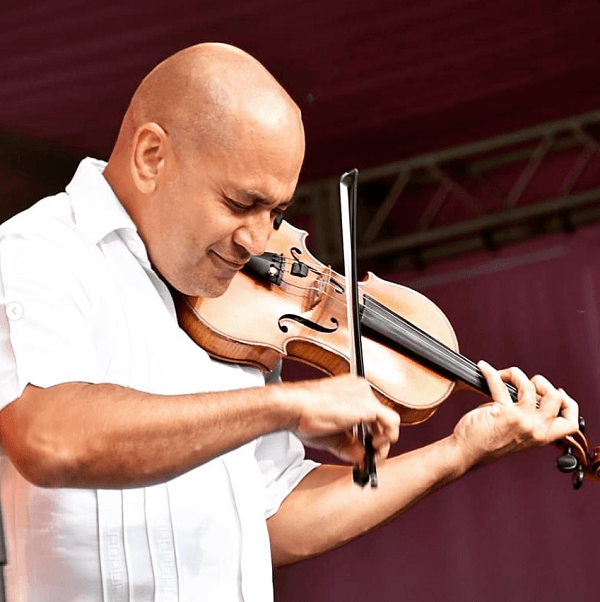
Venezuela violinist and former musician in El Sistema Ali Bello has many interesting things to say

Venezuelan musician Alí Bello has become one of the best Latin music violinists in New York, so we could not miss the opportunity to talk to him and learn as much as we could about his fascinating story. The young man has given his best to become a true icon of Latin Jazz in his current city of residence, so do not miss this great conversation.

Ali playing the violin
Venezuelan musician Ali Bello playing the violin live

Alí’s beginnings in the world of music thanks to El Sistema

From a young age, Alí became interested in music, which led him to join the National System of Youth and Children’s Orchestras and Choirs of Venezuela, where he studied classical music as an extracurricular activity. This in order for Alí and his classmates to be busy in any activity until their parents came to pick them up after work.

This was when an orchestra or school of music was formed clase to his father’s work, so Bello was enrolled in these classes from 2 to 5 p.m. after school. So it went for him since he was in kindergarten, and he learned to play the xylophone and the recorder. When the boy was seven years old, the school orchestra located in La Rinconada, Caracas, was officially created, but due to how small Ali was, the only instrument the school could assign him according to his size was the violin, which he keeps playing diligently to this day.

After many years of being part of the National Youth Orchestra, he got ahead with his musical career and decided to go to the United States to continue his university studies and train as a professional musician.

Other instruments besides the violin

In addition to the violin, Alí also plays a lot of percussion, since he considers it very important. He thinks every folk and Latin musician must handle percussion as efficient as possible and each of its rhythms in order to internalize the style they want to play on any instrument.

“Percussion and singing have always fascinated me, so I try to devote myself to both even a little bit, but it is undeniable that the violin has always been my main instrument. I’ve tried to focus all styles and everything I work on towards the violin to turn it into the main element,” the musician added on this subject.

Ali and Gustavo
Ali Bello, his son and maestro Gustavo Dudamel

How the opportunity to study in the United States came about

Initially, Alí was supported by his violin teacher Margaret Pardee, who taught at the Juilliard School and went to Venezuela to give master classes. It was Pardee who encouraged Alí to continue his education in New York, which he finally achieved thanks to the Gran Mariscal de Ayacucho scholarship fund and the Simón Bolívar Musical Foundation.

This is how the Venezuelan artist obtained his bachelor’s degree, master’s degree, and PHD.

At college, he met Johnny Almendra, thanks to whom he discovered genres other than classical music, in which he was not only the performer of melodies but could also create his own music. He then discovered styles of Venezuelan and Latin music that inspired him to explore more varied rhythms different from what he had known before.

He played regularly with Johnny Almendra and his modern charanga group Los Jovenes del Barrio for a time and subsequently played for La Típica Novel and other orchestras. As Alí gained experience in the world of charanga and Latin music in general, he started having opportunities to learn and explore other genres such as Brazilian music, Afro-Cuban music, Latin jazz, and many more. 

Collaborations with major artists in the industry

All this hard-won ground gave Alí the opportunity and the honor to collaborate with great artists in the industry such as Tito Puente, Eddie Palmieri, Johnny Pacheco, Rudy Calzado, Pedro Cortés, José Fajardo senior, Pupi Legarreta, and many more. All these figures helped him not only to have a better understanding of the Afro-Cuban style and tradition, but also of the influence of New York on music.

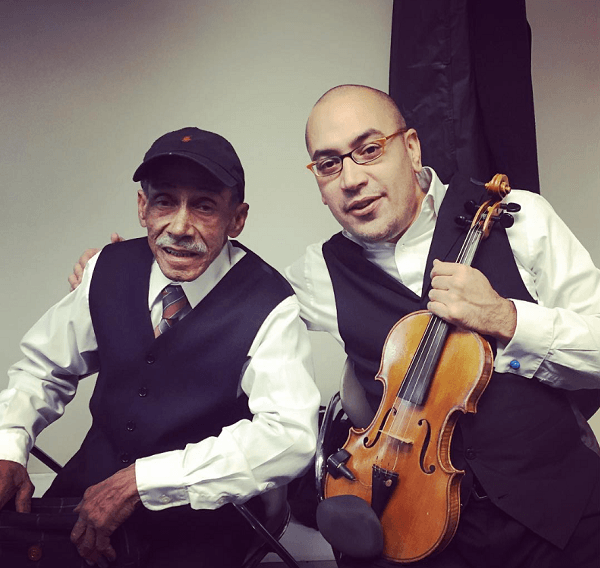
Ali and Pupy
Maestro Pupy Legarreta and Ali Bello

Thanks to this knowledge base, he had the courage to release a record album, La Charanga Syndicate, in which, as the name suggests, he uses charanga and all the influences coming from the musicians he has known and continues to know. For this reason, he feels he now has something to say and bring to the style. 

Another important thing for his career was his participation in Jay-Z’s concert to celebrate the anniversary of the release of his first album. The rapper wanted to mark the occasion by playing with a symphony orchestra, so hired many musicians of all kinds to make a great show at Radio City Music Hall in New York. Fortunately for Ali, he was well-known in the music scene at the time, so he was contacted to participate in the event.

In that sense, the violinist is very happy to be in New York, as the world’s greatest artists always take this city into account for their concerts, which gives musicians like him the opportunity to have access to these great figures in the industry.

Ali as an arranger

In addition to being a percussionist and violinist, Ali has also ventured into musical arrangements quite successfully thanks to all the academic training he had received up until then. However, as he became a more experienced professional, he began to notice that his own ideas and thoughts came to life in his work. So, having the theory in his head, he could take those ideas he had had and develop them within the rhythmic and stylistic elements which are willing to use on each occasion.

In addition to that, the artist also works on production and mixing a bit to achieve the necessary sound. He even has his own studio where he plays for his own productions and other artists’ records as a freelancer.

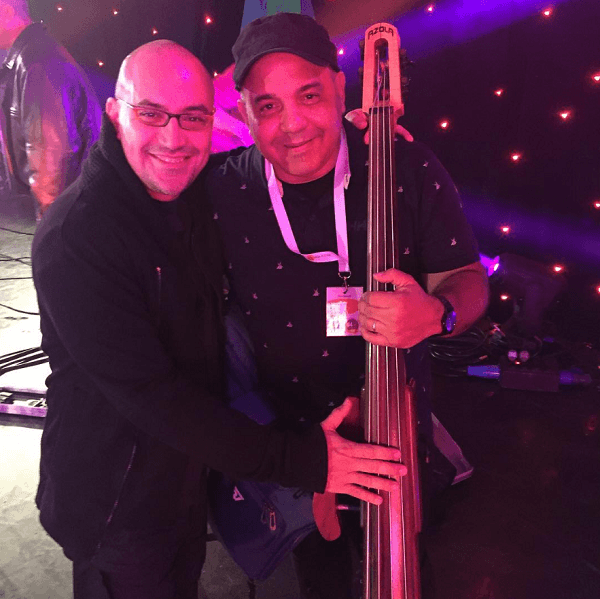
Ali and Juan
Ali Bello and Juan Carlos Formell from Los Van Van in Poland

Read also: Omar Ledezma Jr. shares with us the new from his project with Azesu

Julio Albino Y Su Secreto A Voces released ‘‘Pasaporte A Rumbero’’

After a few months of absence, we’re finally back with the batteries recharged to put a magnifying glass on the current projects of the best soneros right now. Today it is the turn of percussionist Julio Albino, who, as usual, delights us with every project he releases. 

But before that, we are going with a bit of the artist’s story so that everyone can know him better.

Julio during an event
Julio Albino during a live event

A little bit about Julio Albino’s beginnings

Julio Albino, also known artistically as Junito, became interested in music in his homecity of New York, and after his subsequent return to Puerto Rico, this curiosity did nothing but grow as time went by. It was then that he started listening to the music of legendary names in the industry such as “El Rey de Los Timbales” Tito Puente and Oreste Vilato, who inspired him to join the San German’s school band to some extent. He would later pursue an artistic career through collaborations with more experienced artists.

He ventured into this world professionally in the 1960s, when he began to be taken into account by several of the greatest salseros of the time, such as Frankie Ruiz, Hector Tricoche, Marvin Santiago, Paquito Guzman, Junior Gonzalez, Los Hermanos Colon, Joe Quijano, among others.

There is no denying that each of these collaborations contributed to Julio making known his great talent as a percussionist, but he would not rest until he was able to form his own project, which he eventually achieved. That was how he founded his own orchestra, Julio Albino Y Su Orquesta Secreto A Voces.

Secreto A Veces

Thanks to all the effort invested in his career, Julio has managed to secure a place for his orchestra in the salsa scene, and his best-known musical works are proof of this. His big debut came in 2005 with the album ‘‘Bailalo’’, which ranked high on the charts in countries such as Italy.

Ten years later, he also released the album “Haciendo Ruido” and, the following year, he came with his single “Chachara Con Cua” and the promise of a new album. In 2018, he released “Edén Borinqueño” as his second promotional single, and shortly after, Julio released the full album, which he named “El Secreto Ya No Es Secreto”.

secreto a voces
Cover art of the song ”Pasaporte de Rumbero”

Pasaporte de Rumbero

In 2025, Julio once again showed why he deserves the place he has earned and released his new single “Pasaporte de Rumbero”, with which he looks to consecrate himself as a worthy heir to the soneros who previously gave him the opportunity to join their ranks. Similarly, he shows absolute respect for Afro-Caribbean culture and its deepest roots. 

This joyful and energetic piece is not only a reflection of the Puerto Rican artist’s talent, but also of the strength and modernity of his orchestra, which is deeply connected to the Cuban musical tradition. From the very first seconds of the song, listeners can appreciate a festive street atmosphere, but at the same time with sophisticated percussion led by Julio himself, who boasts incredible technique that serves as a guide for the rest of the musicians accompanying him.

Among the members of the orchestra, we can mention trombonist Juan Colón, trumpeter Juan “Junito” León, saxophonist Ricardo Dávila, pianist Gabriel Rodríguez, and bassist Luis Rodríguez. Likewise, the lead vocalist is the charismatic singer Ángel Ríos, who contributes his exquisite phrasing and an enviable dominance of the clave at all times. 

Johnny Cru ISM corresponde in New York City

Read also: Our friend Tito Allen supports the Salsa Museum

Israel “Cachao” López, a Cuban musician and composer, has been hailed as “the Inventor of Mambo”

Born in Havana on September 14, 1918, and passing away in Coral Gables, Miami, on March 22, 2008, Israel “Cachao” López, often known simply as “Cachao,” was a Cuban musician and composer.

Israel Cachao López musico y compositor cubano, ha sido definido como el Inventor del Mambo

He became a legend in Cuban music with his masterful handling of the double bass and was renowned for his performances in mambo and Latin jazz.

His talent earned him two Grammy Awards (in 1995 and 2005), a Latin Grammy in 2003, an honorary doctorate from Berklee College of Music, and a star on the Hollywood Walk of Fame.

He has been described as “the inventor of mambo” and is considered a master of descarga (live improvisations).

He began by playing various instruments until he settled on the double bass, which allowed him, as a teenager, to join the Havana Philharmonic Orchestra, where his father and older brother also played.

“Cachao” left Cuba in 1962 with a long list of successes and stated in a 2007 interview that if it weren’t for his compatriot and colleague Dámaso Pérez Prado, “mambo would not have been heard worldwide.”

Israel Cachao López nacido en La Habana, un 14 de septiembre de 1918 y falleció en Coral Gables un 22 de marzo de 2008 en Miami

His first stop was Madrid, where he stayed for a year before emigrating to the United States. In the U.S., he resided in New York City, Las Vegas, and Miami.

López also played acoustic bass with his brother, the multi-instrumentalist Orestes López. They literally composed over 3,000 songs together and were highly influential in Cuban music from the 1930s to the 1950s.

They created the “nuevo ritmo” (new rhythm) in the late 1930s, which transformed the danzón by introducing African rhythms into Cuban music, ultimately leading to mambo.

He won several Grammy Awards for both his own work and his contributions to albums by Latin music stars, including Gloria Estefan. In 1995, he won a Grammy for Master Sessions Volume 1.

In 2003, he won a Latin Grammy for Best Traditional Tropical Latin Album alongside Bebo Valdés and Patato for El Arte Del Sabor. He won another Grammy in 2005 for his work ¡Ahora Sí!

His nephew, Orlando “Cachaíto” López, became one of the pillars of the famous Buena Vista Social Club.

Cachao performed with artists such as Tito Puente, and his music has been featured in films like The Birdcage and the soundtrack of the video game Grand Theft Auto: Vice City.

The Actor Andy Garcia produced a documentary titled Cachao… “Como Su Ritmo No Hay Dos” in 1993 about his music. He also shared stages with Celia Cruz and her husband Pedro Knight, as well as with trombonist Generoso Jiménez.

Leyendas de Nuestra Musica Latina Pacheco, Puente y Cachao

His last musical collaboration was with Gloria and Emilio Estefan on the singer’s album titled 90 Millas.

López passed away on the morning of March 22, 2008, in Coral Gables, Florida, at the age of 89, due to complications following kidney failure.

Cachao y Su Ritmo Caliente – Monte Adentro (2000)

Tracks:

  1. Monte Adentro (Cógele el golpe) (A. Castillo Jr.)
  2. Goza Mi Trompeta (O. Estivill)
  3. Guajeo de Saxos (E. Peñaver)
  4. Estudio en Trompeta (I. López)
  5. Gozar Timbero (O. Estivill)
  6. Trombón Criollo (O. Portillo)
  7. Malanga Amarilla (S. Contreras)
  8. Controversia de Metales (I. López)
  9. Descarga Cubana (O. Estivill)
  10. Pamparana (A. López)
  11. Sorpresa de Flauta (O. Estivill)
  12. Oye Mi Tres Montuno (A. Echevarria)
  13. La Floresta (O. López)
  14. Avance Juvenil (B. López)
  15. Redención (O. López)
  16. Descarga Mambo (D.P.) 

Musicians:

  • Israel López “Cachao” (Double Bass)
  • Guillermo Barreto (Timbales)
  • Tata Güines (Tumbadora)
  • Rojelio “Yeyo” Iglesias (Bongos)
  • Gustavo Tamayo (Güiro)
  • Alejandro “El Negro” Vivar (Trumpet)
  • Armando Armenteros (Trumpet)
  • Generoso “El Tojo” Jiménez (Trombone)
  • Oreste López (Piano)
  • Enemelio Jiménez (Alto Sax)
  • Emilio Peñalver (Tenor Sax)
  • Virgilio Lisama (Baritone Sax)
  • Richard Egües (Flute)
  • Niño Rivera (Tres)
  • Roliyo y Reyes (Chorus)

Recorded in Havana, 1957-1958

Cachao y Su Ritmo Caliente - Monte Adentro (2000)
Cachao y Su Ritmo Caliente – Monte Adentro (2000)


The tradition of being musicians comes from grandparents and great-grandparents, all the Cachaos are musicians.

By:

Dj. Augusto Felibertt

L’Òstia Latin Jazz

Also Read: Israel “Cachao” Lopez Sobrado in fame and respect in the seventies was dedicated to maintain the tradition at the highest level

Bachata Festival 2017 in San Francisco, California

North America / USA / California
Bachata Festival 2017 in San Francisco, California

The Ultimate Bachata, Salsa, Kizomba and Zouk Experience… A Dance Convention for Beginners, Intermediate & for all levels of dancing! The 9th Annual SF International  Bachata Festival

  • Date: JULY 21st – 24th, 2017
  • Bachata | Kizomba | Zouk | Salsa (4-Party Rooms)
  • 3 days and  3 nights of dancing
  • Friday, Saturday & Sunday from 10am until 6am!
Photos from the 2017 Bachata Festival in San Francisco

Transform your dance skills in one weekend with these world renowned dance instructors plus a dance experience of a lifetime!

  • Live Band
  • Dance Workshops from 10am to 5pm
  • Performances Every Night Ÿ Social Dancing until 6am
  • Jack and Jill Contest prize Giveaways

SFIBF, (San Francisco International Bachata Festival) is the largest and hottest Bachata festival in the world, located in one of the greatest city in the world – San Francisco. Created by Rodney Rodchata Aquino, along with its sister event Reno Bachata Festival, they are the first Bachata festivals in the USA. It celebrates the music and dance of Bachata, preserving its roots and accepting its evolution, as well as Salsa, Zouk and Kizomba.

Marriot Flyer
Marriot Flyer

Festival Line-Up

More than 20 instructors, DJs and Live Band for this year’s festival!

Adam Taub (Colorado)/ Bachata:

Adam Taub is one of the few ones who have seriously studied authentic bachata (the way Dominicans dance). SFIBF is extremely proud to present him with his special music, history and dance workshops at the San Francisco International Bachata Festival – July 21-23, 2017.

Adam Taub
Adam Taub

Adam Taub is a documentary film director from Colorado whose films include La Quinceañera, Don Angelo, and El Duque de la Bachata. His film La Quinceañera won the 2007 award for Best Documentary at the Angelus Student Film Festival in Hollywood, California and Best Documentary at the San Diego Latino Film Festival.

Alberto & Nola (Australia) / Bachata:

Nola Komis is the Founder, Director and Principal Instructor of A Touch of Salsa Latin Dance Studios in Sydney, Australia. A Touch of Salsa runs classes in Salsa, Bachata, Zouk and Kizomba. They also offer competition courses, workshops, performance courses and more and will this year will be celebrating 11 years.

Alberto and Nola
Alberto and Nola

Nola Komis and Alberto Torres-Perez have been teaching together for the past five years and they are both passionate and love sharing their passion for dance. Nola and Alberto have both travelled to Athens, Geneva, New Zealand, Hawaii and all over Australia where they have taught workshops at Festivals/Congresses to packed participants and have received many great reviews for their classes.

Nola and Alberto are looking forward to being part of the San Francisco Bachata Festival in July 2017.

Emelie Andagan (Sacramento) / Salsa:

The Yemaya Salsa Dance Company was founded by Emelie Andagan & Heather Wong-Xoquic in October, 2000. Emelie learned to dance salsa after only a few years due to her extensive dance background of over 20 years and many years of experience as a ballet and jazz student, and later a teacher at the Ballet Theatre of Dover Dance Conservatory.

Emelie Andagan
Emelie Andagan

The troupe started as a small group of only four couples that rehearsed twice a week in various garages and practically anywhere with a smooth surface. She owns and manages Yemaya Dance Studio in Sacramento, and is the main director of Yemaya dance Company.

Emelie Andagan
Emelie Andagan

Luis Aguilar (San Francisco) / Salsa:

Luis Aguilar debuted in 2000 with the Salsa Mania Dance Company in San Francisco. Since then, he performed with such giants in the Latin music industry as El Gran Combo de Puerto Rico, the Tito Puente Orquestra, Celia Cruz, Ray Barretto, Jose “El Canario” Alberto, Oscar de Leon, Eddie Palmieri, the Spanish Harlem Orquestra and Sonora Carruseles. In addition to his impressive performance credits, Luis has taken 1st place in many Latin dance competitions and Congresses such as The San Francisco International Salsa Congress and the Bay Area Salsa Dance Competition.

Luis Aguilar
Luis Aguilar

Since joining forces in 2007, Luis and Anya have become the ON 2 WORLD SALSA CHAMPIONS for the second year in a row, along with having become two time undefeated San Francisco Congress Salsa champions in ’09 and ’10, undefeated two time New York Congress champions in ’09, ’10, Puerto Rico Hustle and Salsa champions ’09, and are currently the North American Salsa Champions and two time winners of the NY/NJ salsa open. With their combined backgrounds, Luis and Anya make a dynamic duo that brings a fresh new element to the salsa dance floor.

Benga Da Beatz (Ohio) / Kizomba:

Benga is a Nigeria born international dancing sensation, with backgrounds in several African dances, ballroom dances, American dances, and latin dances. From Waltz to Tango, Makoussa to Kizomba, hip hop to west coast swing, and Irish dance to Bollywood. Benga has intensive dancing experiences all across the globe.

Benga Da Beatz
Benga Da Beatz

An Afro Beats and Afro-cuban solo performer, and a latin dance instructor well known to many now as the Da Beatz. With 26 years of African Dancing and 6 years of professional latin dancing, Benga is teaching and promoting at every Latin events possible with his own vibrant style of Fun Swagness.

Cymeone Mopao (France) / Kizomba:

Cymeone Mopao
Cymeone Mopao

Cymeone Mopao is a well-known kizomba instructor based in Paris. He is one of the first instructors to have taught kizomba in France beginning in 2009. Born into a family of musicians, he was accustomed to lots of music and quickly adapted to the dance lifestyle. As he immersed himself into dance, he became proficient in African style dances such as ndombolo and coupé décalé.

Cymeone Mopao
Cymeone Mopao

When he was 18, he joined a group of dancers called “les coeurs brisés “. From there he became interested in other Afro style dances like Zouk, Kompa and Kizomba. He gave his first Kizomba class in 2009 and became one of the most wanted instructors in international festivals. In 2010, he was the first French instructor to teach Kizomba in the United States (New York).

Bruno & Olga (Los Angeles) / Zouk:

Bruno and Olga started dancing together in November 2015 and have since taught and performed at numerous events around the country from local workshops to large international congresses.}

Bruno & Olga
Bruno & Olga

In 2016 they took second place in the semi-pro division of the Zouk US Open with their now well-known choreography piece “Worth It” and shortly after got featured in the “Fences” movie, that’s currently in production stage. Olga has a rich dance background in classical ballet, modern, contemporary and commercial jazz, as well as hip hop and heels choreographies. She is also an All-Star west coast swing dancer. Bruno is trained in hip hop, salsa, kizomba, tarraxinha, semba, and of course brazilian zouk.

He has been on the social dance scene of his hometown Braga, Portugal since he was 14 years old. Since his move to the US he’s been mainly focusing on zouk and kizomba, training and teaching around the country with his partner, performing in ISDC dance company for a while, and currently codirecting the Zouk team at Ivo Vieira’s Dance company and learning from the best dance professionals in the world.

Sandro (Brazil) / Zouk:

Sandro Soncini is a dancer, choreographer and dance instructor from Florianopolis, Brazil. He has studied and trained in dance for over 10 years. Sandro is experienced in many partner dance styles, and has intensively studied the concepts of body movement driven by his training in tango.

Sandro
Sandro

In 2010 Sandro moved to Argentina to continue to develop his dance skills and education at DNI tango school. Sandro has participated in various congresses and competitions, including BAILA FLORIPA DUO, where in 2012 together with his partner he placed 3rd.

Sandro has taught in zouk throughout Canada, United States and Brazil. Currently Sandro is living in Vancouver, Canada with a focus on promoting zouk in the Pacific North West.

Bachata Festival 2017, Tickets / Passes:

  • Tickets: Full Passes $200.00 Unlimited. (EXP July 15th)
  • Tickets at Doors: $250 Buy Your Passes in mybachatafestival.com

Location: The SF Marriott Hotel 1800 Old Bayshore Hwy, Burlingame, CA 94010 Discounted Nightly rate of $141 a night (you must use the site – www.sfibf.com) Free Shuttle 24 hours a day.

Bachata Festival 2017
  • « Go to Previous Page
  • Page 1
  • Interim pages omitted …
  • Page 5
  • Page 6
  • Page 7
  • Page 8
  • Page 9
  • Interim pages omitted …
  • Page 42
  • Go to Next Page »

International Salsa Magazine (ISM) is a monthly publication about Salsa activities around the world, that has been publishing since 2007. It is a world network of volunteers coordinated by ISM Magazine. We are working to strengthen all the events by working together.