• Skip to primary navigation
  • Skip to main content

International Salsa Magazine

  • Home
  • Previous editions
    • 2025
      • ISM / November 2025
      • ISM / October 2025
      • ISM / September 2025
      • ISM / August 2025
      • ISM / July 2025
      • ISM / June 2025
      • ISM / May2025
      • ISM / April 2025
      • ISM / March 2025
      • ISM / February 2025
      • ISM / January 2025
    • 2024
      • ISM / December 2024
      • ISM / November 2024
      • ISM / October 2024
      • ISM / September 2024
      • ISM / August 2024
      • ISM / July 2024
      • ISM / June 2024
      • ISM / May 2024
      • ISM / April 2024
      • ISM / March 2024
      • ISM / February 2024
      • ISM / January 2024
    • 2023
      • ISM / December 2023
      • ISM / November 2023
      • ISM / October 2023
      • ISM – September 2023
      • ISM – August 2023
      • ISM July 2023
      • ISM Edition June 2023
      • ISM – May 2023
      • ISM April 2023
      • ISM March 2023
      • ISM February 2023
      • ISM January 2023
    • 2022
      • ISM December 2022
      • ISM November 2022
      • ISM October 2022
      • ISM September 2022
      • ISM August 2022
      • ISM July 2022
      • ISM June 2022
      • ISM May 2022
      • ISM February 2022
      • ISM January 2022
    • 2021
      • ISM December 2021
      • ISM November 2021
      • ISM October – 2021
      • ISM September 2021
      • ISM August 2021
      • ISM July 2021
      • ISM May 2021
      • ISM April 2021
      • ISM June 2021
      • ISM March 2021
      • ISM February 2021
      • ISM January 2021
    • 2020
      • ISM December 2020
      • ISM November 2020
      • ISM October 2020
      • ISM September 2020
      • ISM August 2020
      • ISM July 2020
      • ISM June 2020
      • ISM May 2020
      • ISM April 2020
      • ISM March 2020
      • ISM February 2020
      • ISM January 2020
    • 2019
      • ISM December 2019
      • ISM November 2019
      • ISM October 2019
      • ISM Septembre 2019
      • ISM August 2019
      • ISM July 2019
      • ISM June 2019
      • ISM May 2019
      • ISM April 2019
      • ISM March 2019
      • ISM February 2019
      • ISM January 2019
    • 2018
      • ISM December 2018
      • ISM November 2018
      • ISM October 2018
      • ISM September 2018
      • ISM August 2018
      • ISM July 2018
      • ISM June 2018
      • ISM May 2018
      • ISM April 2018
      • ISM March 2018
      • ISM February 2018
      • ISM January 2018
    • 2017
      • ISM December 2017
      • ISM November 2017
      • ISM October 2017
      • ISM September 2017
      • ISM August 2017
      • ISM July 2017
      • ISM June 2017
      • ISM May 2017
      • ISM April 2017
  • Download Salsa App
    • Android
    • Apple
  • Spanish

Search Results for: Tropical

Toña La Negra The Unequaled Velvet Voice of Tropical Song

On November 19, 1982, in Mexico City, Antonia del Carmen Peregrino Álvarez, better known as “Toña La

Toña la Negra, passed away. She was a prominent Mexican singer and actress of African descent, famous for her interpretations of boleros and tropical songs by the composer Agustín Lara, who considered her “the greatest female singer of all time” due to her “highly personal style,” “the power of her expression, and the velvet of her privileged throat.”
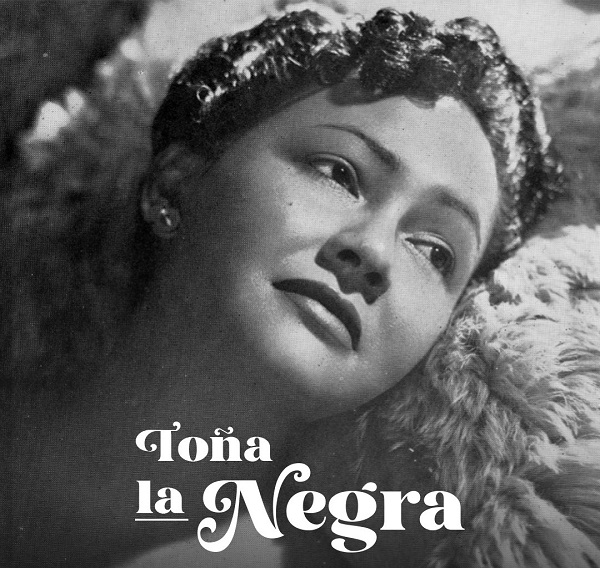
Toña La Negra The Unequaled Velvet Voice of Tropical Song

Antonia Peregrino was born in the city of Veracruz, in the La Huaca neighborhood, on November 2, 1912.

Her father, Don Timoteo Peregrino Reyes, played the guitar and worked as a freight opener for the crates arriving at the port; he was also one of the founders of the Veracruz Port Commercial Loaders and Openers Guild.

Her mother, Doña Daría Álvarez Campos, sang at family gatherings.

Her paternal grandfather, Don Severo Peregrino, was Haitian and had emigrated to Mexico in the 19th century.

By 1927, she had married Guillermo Cházaro Ahumada, who took her to Mexico City with their first child, who was only forty days old.

On July 16, 1929, she debuted at the cabaret El Retiro. While performing there, where she was known as La Peregrina, she met Don Emilio Azcárraga Vidaurreta. It was Azcárraga, along with Enrique Contel, who christened her “Toña La Negra.”

On November 19, 1982, in Mexico City, Antonia del Carmen Peregrino Álvarez, better known as “Toña La Negra”, passed away.

She began to gain recognition with her interpretation of the song “Enamorada” (In Love) by Agustín Lara. Lara also produced tracks for her such as “Lamento Jarocho,” “Veracruz,” “Noche Criolla” (Creole Night), “Oración Caribe” (Caribbean Prayer), “Palmera” (Palm Tree), “La Clave Azul” (The Blue Key), and “La Cumbancha.” They presented these together in a musical revue at the Teatro Esperanza in December 1932, achieving such success that they had to extend their performances for a long time.

Her voice tone was rather deep, with a velvety and rounded sound, and impeccable vocal techniquecharacteristics that became her interpretive signature.

Azcárraga added her to the cast of the XEW radio station, where she sometimes performed accompanied by Lara and other times by the Alfredo Girón orchestra.

Shortly thereafter, her spectacular performances began at the Teatro Politeama, across from Las Vizcaínas and next to San Juan de Letrán street.

Her recordings for the RCA Victor label constitute one of the most precious musical legacies in the history of the bolero.

One of the first records she cut for this label contained the song «El Cacahuatero» (The Peanut Vendor); this recording dates back to the 1930s. For RCA Victor, she recorded several long-play albums, including Caleidoscopio musical con Toña la Negra (Musical Kaleidoscope with Toña la Negra), Noche Criolla, vol. II, and La Sensación Jarocha, vol. III (The Jarocha Sensation, vol. III).

In the mid-sixties, she signed an exclusive contract with Discos Orfeón, where she recorded the last albums of her career.

“Este amor salvaje” (This Wild Love), “Por qué negar” (Why Deny It), “Obsesión,” “Mentiras tuyas” (Your Lies), “Y sin embargo te quiero” (And Yet I Love You), “Noche criolla,” “Pesar” (Grief), “Vereda tropical” (Tropical Path), “Cada noche un amor” (A Love Every Night), “Angelitos negros” (Little Black Angels), “Lágrimas de sangre” (Tears of Blood), “Estás equivocado” (You Are Wrong), “De mujer a mujer” (From Woman to Woman), “Como golondrinas” (Like Swallows), “Diez años” (Ten Years), and “Cenizas” (Ashes) are some of her successful titles recorded on over 75 LP records, some of them for the Peerless label. Already famous for many years, she recorded two songs with the legendary Sonora Matancera in 1974.

Toña La Negra y La Reyna Celia Cruz

In her final years, due to some health issues, she gradually withdrew from the stage and recording.

Toña La Negra always maintained a very reserved personal life. With her first husband, the musician Guillermo Cházaro Ahumada, she had three children: Ramón (b. 1932), Guillermo (b. 1933), and Ernesto (1935–1979). Toña and Cházaro Ahumada separated in 1945.

Later, in 1955, she remarried the Veracruz-born bassist Víctor Ruiz Pazos, known as “Vitillo.” This marriage lasted until 1963. In an interview, Ruiz Pazos spoke about Toña’s artistic qualities:

Her commitment, her feeling when she sang, her style, the way she did it, how she expressed things musically; I have lived a long time, I have heard many fabulous singers, but none of them come close to Doña Toña.

The German filmmaker Christian Baudissin made a documentary about Toña La Negra for television in 1993, featuring interviews with her ex-husband, the musician Vitillo (Víctor Ruiz Pazos), and other artists who knew her during her lifetime.

Collaborators:

Los Mejores Salseros del Mundo

Dj. Augusto Felibertt

Also Read: Santa La Salsera and Diva of Mexico with her unique voice and style will continue to conquer us all
Brisa Tropical con Taino

North America / USA / Oklahoma

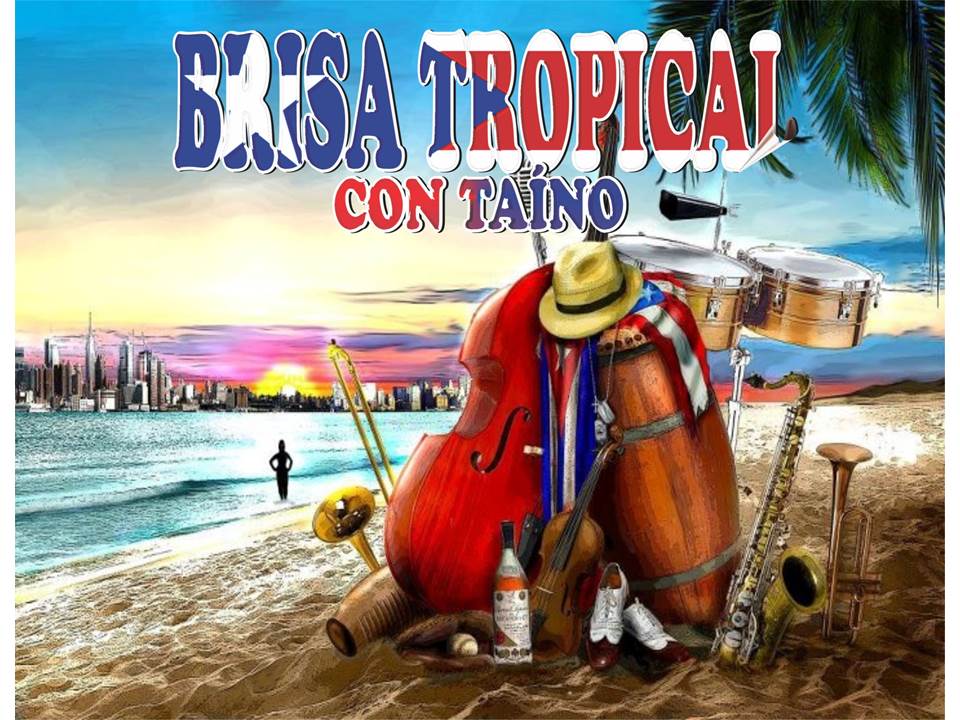
Brisa Tropical con Taino. The Oklahoma´s Salsero program in Spanish

For almost 30 years, the state of Oklahoma has among its ranks of entertainment, “Brisa Tropical con Taino”, the first spanish radio show with Salsero sound, made especially for the Latin community in the country.

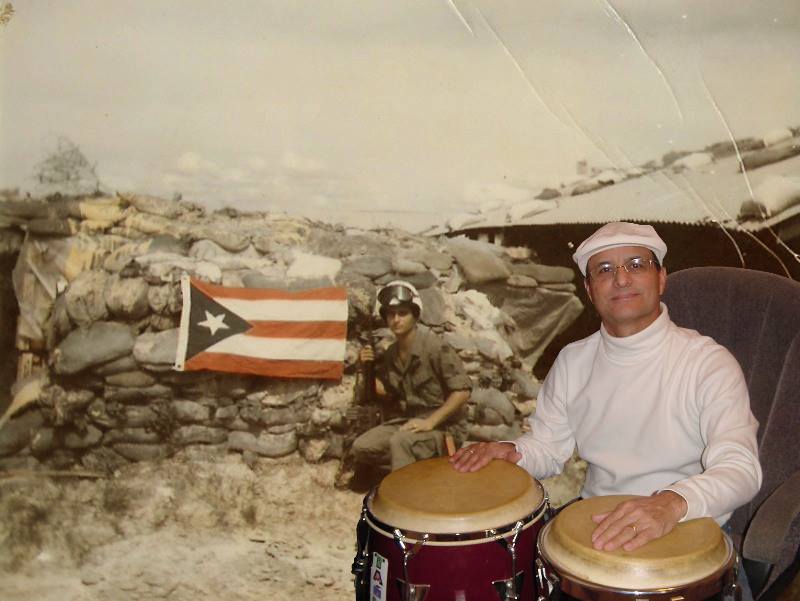
Its creator, founder, host and producer is the Puerto Rican Lino “Taino” Roldán Torres, a Disabled Vietnam and Persian Gulf wars Veteran, salsa lover, who together with his wife Carmen decided to undertake this project for the Latin market unattended for so many years.

Brisa Tropical with Taino

This pioneering program began its transmission for the first time in 1992, through the Amplitude Modulation (AM) dial. At first, this format had three hours of broadcast of only Tropical Music in its programming, novelty that made him a creditor of a preferential site in Frequency Modulation (FM) in 1995, with a duration of one hour in addition to the one established at the beginning in the AM circuit.

This way, Brisa Tropical con Taino had a total of four hours of continuous Latin music with advertising spaces, musical information and artists´ biographies, these transmissions lasted 18 uninterrupted years in that radio space.

Nam - Brisa Tropical con Taino
Nam – Brisa Tropical con Taino

“AN ANNOUNCER SHOULD FOCUS ON THE MUSIC AND LEAVE ASIDE ANY OTHER SUBJECTS THAT ARE NOT APPROPRIATE.”

Lino started with the idea of a Latin program for Latinos at a Local Radio Station when he arrived in Oklahoma after his work in the military in the early 90’s, at the same time, this retired military man with 23 years of service also worked as a DJ in two European countries: Italy and Germany. “… When I arrived to Oklahoma, I noticed the absence of a radio station in Spanish of tropical rhythms, such as Salsa, Merengue, Etc.

Taino in the studio
Taino in the studio

I went to several radio stations, but they were not interested in having a program in Spanish. I went to the commercial establishments of the city and told them about my idea that would bring them a market that was unexplored (the Hispanic market). The merchants and other commercial institutions immediately told me that they would give me their support. I presented the idea to an AM station, and they accepted it. (My goal was FM, but this opened the doors)”, Taino told us.

Currently, Brisa Tropical con Taino is developed only by network 2.0 since 2015, going from a Radio Program to a Digital Salsera Station with 24 hours programming each day with live interruptions between 10AM and 3PM, using that is commonly known as “Voice Track” for the rest of the time.

With this change, this interactive Web Station based in the city of Jenks, south of Tulsa in Oklahoma, has managed to obtain a loyal and numerous audience in Europe, the Caribbean, all of Latin America, the United States, and especially in remote areas such as: Iraq and Afghanistan, where the station fulfills a gratifying mission, as they carry greetings from the hundreds of soldiers deployed in those war zones to their relatives in the U.S. and Puerto Rico.

The also sociologist, Lino Roldan, along with his wife and great collaborating friends, are responsible for producing the varied programming for all Salseras generations all week, as well as to bring information capsules about Health, Consumer, Home Security, Maintenance of automobiles, etc., always with the firm purpose of bringing entertainment and, at the same time, education for the listening public.

Taino
Taino

“… LA SALSA LLEGÓ PARA QUEDARSE Y ES MUNDIAL”

This non-profit digital broadcaster is committed to the community, sponsoring Salsa events (without cost) such as: cruises and artist presentations, as well as helping to promote several activities of various organizations. In the same way, they are always present and united with the community in cases of emergencies such as natural disasters caused by the past hurricanes Mitch (1998) and María (2017), collaborating with the collection of food for the victims.

Lino “Taino” Roldán, as a good Salsa lover, hopes to continue praising this tropical music for many years, transmitting through his digital station different interpreters’ songs from all over the world, and to continue with this important work and pasion, Lino and Carmen need to raise $1000 in the account opened in “Go Fund Me” for maintenance expenses and music royalties that they promote. Would you like to help them?

Carmen and Lino Roldán - Brisa Tropical with Taino
Carmen and Lino Roldán – Brisa Tropical with Taino

“… AT MY AGE, PROJECTS AND GOALS ARE DONE EVERY DAY. I FEEL HAPPY WITH WHAT I DO”. Lino Roldán

For more information, please visit www.brisatropical.com or download the app for Smartphone Radio La Brisa Tropical.

Know the connections of tropical dances

Latin America / Venezuela /Caracas

Tropical Dances:

Did you know that people have several ways of communicating?

Oral communication is what we normally use to communicate in such a way to establish and maintain personal relationships, and to show not only words and express emotions and/or feelings, body communication is used, which can be said in a few words that it is a form creatively expressing through gestures, eye contact, poses, and arm and leg movements; turning this form of communication into something more intimate and accurate without the need for the use of words.

Salsa dancers

In social activities, one of the most popular is dancing, where body communication is very important since the couple or group needs to know certain signs that indicate “when” or “how”, in order to perform the steps and how. As a result, the success of said interpretation will test the quality, maturity and growth of the dancers in the rhythms they dance.

dancers dancing in a club tropical

Of course, it should be noted that each musical genre has its own rules, especially in the counting of steps in music, which gives grace, stability and rhythm to the dancers in the song played either in a musical event and is of vital importance not only for a casual event but for a competition. For this reason, it is important to know the steps and turns to perform and have excellent body communication (especially if it is as a couple) to know what they are going to do.

dancers dancing salsa, bachata and other tropical dances

In Latin rhythms, this type of communication is really important, otherwise the grace of the dance is lost. Among the most important Latin rhythms that are essential and/or significant are:

  • Salsa: a Latin tropical rhythm that, although it was born in Cuba due to the mixture of “Guaracha”, “Son”, “Mambo”, “Cha Cha Chá” with a unique style, through time several types emerged ( Salsa Cubana, Salsa en Linea, Salsa Casino, Salsa New York or Mambo style, Salsa Cali style, Salsa Puerto Rican and Venezuelan sauce). In this dance it is very important to pay attention to the look, the hands and arms (the latter in the case of the man since with him he dominates and/or controls the woman in the dance and she must interpret what the next movement is) to thus being able to perform either a simple step or a few laps, of which there is a great variety of them.
  • Bachata: is a danceable musical genre originating in the Dominican Republic, within what is called urban folklore. It is considered a derivative of the rhythmic bolero, with influences from other styles such as the Cuban son and merengue. This dance has great sensuality like the rest of the Caribbean rhythms, where it requires an unbeatable appearance on the part of the dancers when performing it, where that connection with the couple is important so that it can impress the public.
  • Merengue: is a dance music genre originated in the Dominican Republic at the end of the 19th century. It is very popular throughout the American continent, where it is considered, along with salsa, as one of the great dance musical genres that distinguish the Latin American genre.
  • Kizomba: a very sensual rhythm that emerged in Angola, which resulted from the mixture of 3 cultures (Angolan colony, Portuguese colony and part of Cape Verde “Brazil” as well as the French Caribbean of Martinique and Guadeloupe.). In this rhythm, the connection of the couple, especially the woman, is of vital importance, since the movement of the hips is slow and sensual, as are their steps. Did you know that many people have the prejudice that it is a very sensual dance, however, it is as sensual as you want to project it, in the same way it happens with Bachata and Merengue, they can be as sensual as you want to project them or as normal how you want to do it.”

So, if you want to give life, grace, elegance and popularity to your dance, keep in mind, keep in mind these characteristics and how you manage to synchronize with your partner and show your spectators either in a personal party, competition, event and/or or congress, whether national or international, which is a true dance.

dancers pre-performing tropical dances

Adelaide Tropical: Salsa reaches a wide audience at Disney California Adventure

North America – California – Anaheim

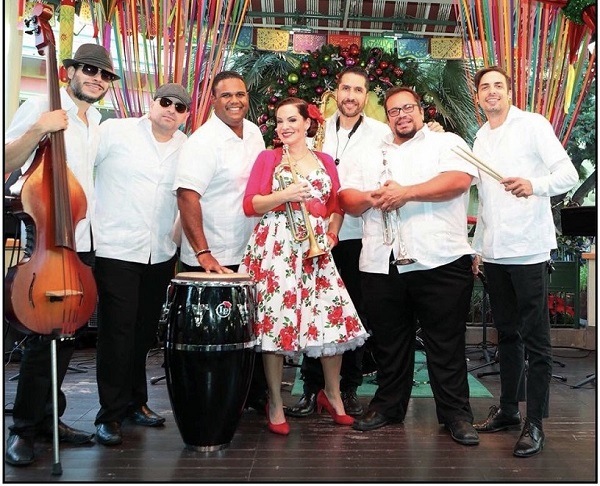
Adelaide Benavides is an artist, a businesswoman and the band leader of Adelaide Tropical.

Born in Texas, Adelaide is based in California with her different projects and putting a lot of creativity and innovation in each one of them.

Adelaide Tropica
Adelaide Tropical; a band that has become the official Salsa set of Disney California Adventure.

One of the projects that have brought her the most gratifying moments is Adelaide Tropical; a band that has become the official Salsa set of Disney California Adventure.

They are being featured on their largest stage for their Food and Wine Festival. As Adelaide expresses, this band differs from many other Salsa bands because she has achieved bring together a show of which she calls “Salsa Americana“.

Perform classics from Celia Cruz and Tito Puente, but also incorporate a lot of Latin pop that people of all cultures will recognize. Salsa arrangements of popular hits like “Havana”, “Despacito“, Cardi B, Selena and even some original Salsa arrangements of popular Disney songs. This presentation of Salsa has been very successful at Disney and many festivals because of its ability to reach such a wide spanned audience.

Currently, Adelaide Tropical is recording a salsa version and video of “Me voy a enamorar” which will be released this summer. While that moment arrives, you can see Adelaide Tropical perform at Disney California Food and Wine Festival. The Adelaide band is also continuing to perform at Downtown Disney and will be all over the west coast through the end of the summer at various festivals, city concerts, popular venues and every Sunday at Knott’s Berry Farm where they will also be doing a special tribute performance to Selena.

Adelaide Benavides
Adelaide Benavides

Adelaide Benavides has created different successful formats with great musical quality ando performances that have led her to a variety of venues ranging from Disneyland and Knotts Berry Farm, popular music festivals, grand casinos, and even the Staples Center. She was also a contestant on La Voz México 2018-2019 edition, and recently released her 2nd and all original album “Reflexiones De Mi Mente“, which can be found on all major streaming applications.

Adelaide Tropical
Adelaide Tropical Photo

You can also listen the new Adelaide’s album and presentations of Adelaide Tropical on her social media:

Website: Adelaidetheband.com

Email: [email protected]

Instagram: @adelaidepilarmusic

Facebook: Facebook.com/adelaidepilar

Twitter: AdelaidePilar

Maelo y su Klan want to bring tropical rhythms to the whole world

Maelo y su Klan is the latest project, and one of the dreams, of the producer with more than twenty years of experience, Johnny Ysmael Salaverria Dicurú. The popular “Maelo” as his dearest friends call him, continues his career by working and pouring his heart into this project. With them the first genre fusion between Son and Kizomba is known. In the following lines we will talk about Maelo and his most beloved project.

Who is Maelo?

Johnny Ysmael Salaverria Dicurú was born in San Juan parish, in Caracas, capital city of Venezuela, where he spent his childhood surrounded by the joy of the Caribbean “soneros and salseros”. He was a child when he first expressed his interest in one of the most popular tropical Caribbean rhythms, salsa. Part of his influences came from his uncle, Héctor Bruno Dicurú.

Ysmael D´La O, is his artistic name on stage and producing, but his closest friends call him “El Tiburón de la Salsa”. He left with $80, and a luggage full of dreams, to look out for adventures abroad. His destiny was Tenerife, where he quickly earned the love and respect of the natives, and was embraced as an adopted son.

Maelo as a producer has worked with renowned soloists and groups, from all over the world. To name a few: Nicky Jam, El Binomio de Oro, Tito Rojas, Oscar D’León, Porfi Baloa, Tony Vega, La Dimensión Latina, Ray Sepúlveda, Guayacán, El Grupo Niche. As a promoter and producer of events, one of his greatest achievements was El Gran Combo De Puerto Rico who celebrated their 50th anniversary, and visited Europe hand in hand with him.

We can call Maelo, the cultural ambassador of Caribbean rhythms, making more than 30 countries listen and enjoy them. He was the first Latin American to have 100 continuous virtual conversations during the pandemic, a time when creativity was the escape of many artists.

Among his awards and recognitions is being nominated as International Producer of the Year in 2020, Producer and Promoter of the Virtual Euro Festival in the 20/21 edition. But soon more will come, since Maelo’s talent is infinite.

Defining Maelo and his Klan

The band stands out in danceable rhythms such as: Son, Charanga, Guaguancó, Salsa, Tropical, Latin Jazz and a lot of fusion with an original sound, which is inspired by African rhythms. Of course, with the influences of great masters of the old tropical school. In this way, a combination is created that generates a modern sound, worthy of the new generation. But what most characterizes this Klan is the creation of the fusion of the genres between Son and Kizomba.

The works of Maelo y su Klan have the collaboration of the renowned arranger and director of Billo’s Caracas Boys, the Venezuelan Julio Cesar Estrada. Also by Paquito Barón, ex-member of the Orquesta Bronco of Venezuela, in the musical production.

The Klan has all the merits and the support of the Anglo-Saxon and Asian public. One of his productions entitled ¡Cultura viva! Fusion is positioned as the new sound in Afro-Caribbean music. Maelo not only puts his talent for the band, but also puts all his knowledge of the tropical rhythms of Latin America, as well as its movements through Europe and Asia. Let’s hope that the journey of Maelo y su Klan will be a very long one, full of great successes, so that they can continue to please the public that loves these tropical rhythms.

  • Page 1
  • Page 2
  • Page 3
  • Interim pages omitted …
  • Page 46
  • Go to Next Page »

International Salsa Magazine (ISM) is a monthly publication about Salsa activities around the world, that has been publishing since 2007. It is a world network of volunteers coordinated by ISM Magazine. We are working to strengthen all the events by working together.