• Skip to primary navigation
  • Skip to main content

International Salsa Magazine

  • HOME
  • Previous editions
    • 2026
      • ISM / June 2026
      • ISM / May 2026
      • ISM / April 2026
      • ISM / March 2026
      • ISM / February 2026
      • ISM / January 2026
    • 2025
      • ISM / December 2025
      • ISM / November 2025
      • ISM / October 2025
      • ISM / September 2025
      • ISM / August 2025
      • ISM / July 2025
      • ISM / June 2025
      • ISM / May2025
      • ISM / April 2025
      • ISM / March 2025
      • ISM / February 2025
      • ISM / January 2025
    • 2024
      • ISM / December 2024
      • ISM / November 2024
      • ISM / October 2024
      • ISM / September 2024
      • ISM / August 2024
      • ISM / July 2024
      • ISM / June 2024
      • ISM / May 2024
      • ISM / April 2024
      • ISM / March 2024
      • ISM / February 2024
      • ISM / January 2024
    • 2023
      • ISM / December 2023
      • ISM / November 2023
      • ISM / October 2023
      • ISM – September 2023
      • ISM – August 2023
      • ISM July 2023
      • ISM Edition June 2023
      • ISM – May 2023
      • ISM April 2023
      • ISM March 2023
      • ISM February 2023
      • ISM January 2023
    • 2022
      • ISM December 2022
      • ISM November 2022
      • ISM October 2022
      • ISM September 2022
      • ISM August 2022
      • ISM July 2022
      • ISM June 2022
      • ISM May 2022
      • ISM February 2022
      • ISM January 2022
    • 2021
      • ISM December 2021
      • ISM November 2021
      • ISM October – 2021
      • ISM September 2021
      • ISM August 2021
      • ISM July 2021
      • ISM May 2021
      • ISM April 2021
      • ISM June 2021
      • ISM March 2021
      • ISM February 2021
      • ISM January 2021
    • 2020
      • ISM December 2020
      • ISM November 2020
      • ISM October 2020
      • ISM September 2020
      • ISM August 2020
      • ISM July 2020
      • ISM June 2020
      • ISM May 2020
      • ISM April 2020
      • ISM March 2020
      • ISM February 2020
      • ISM January 2020
    • 2019
      • ISM December 2019
      • ISM November 2019
      • ISM October 2019
      • ISM Septembre 2019
      • ISM August 2019
      • ISM July 2019
      • ISM June 2019
    • 2016
      • ISM December 2016
      • ISM November 2016
  • Spanish
  • Download Salsa App
    • Android
    • Apple

Search Results for: Tropical

Fernando Lavoy The Montunero of Salsa and Son

The Indelible Footprint of a Masterful Voice in the Golden Era of SAR Productions.

Introduction and Musical Legacy, Fernando Lavoy was one of the best-kept and most dazzling secrets of 20th-century Afro-Cuban music.

Born on May 6, 1950, in Havana, Cuba, he possessed an exceptional mastery and vocal quality that quickly caught the attention of the era’s biggest icons.

It was the legendary trumpeter Alfredo “Chocolate” Armenteros who, blown away by Lavoy’s innate gift for traditional phrasing and improvisation, affectionately dubbed him “El Montunero” (The Montuno Master).

Fernando Lavoy El Montunero de la Salsa y el Son

Throughout his career, Lavoy showcased his talent as both a singer and songwriter in heavyweight ensembles, including:

  • The celebrated Sonora Matancera
  • Chocolate Armenteros’ orchestra
  • Conjunto Dinastía Diez
  • Roberto Torres’ mythical SAR All Stars

He also led his own group, “Los Soneros.” His tragic murder in 1992 in Miami, United States, cut short the life of a brilliant artist, but left an indelible mark on the heritage of tropical music.

The Rise in New York and the Alliance with SAR Productions

After emigrating to the United States in 1980 in search of new artistic horizons, Lavoy immediately immersed himself in New York’s effervescent Salsa and Son scene.

His first big break came courtesy of Chocolate Armenteros, contributing masterfully to the album “Y sigo con mi...” under the SAR Productions record label.
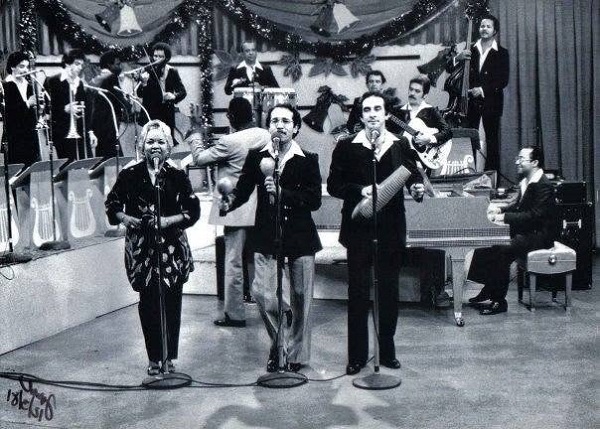
Sar All Stars La India de Oriente,Jorge Maldonado Y Fernando Lavoy y en el tres Charlie Rodriguez

Founded by Roberto Torres, this record label was characterized by a unique musical aesthetic: it championed the classic texture of Cuban son, extending song lengths to allow generous space for instrumental solos and pure improvisation.

In 1981, Lavoy solidified his place as a member of the SAR All Stars, catapulting his voice into the spotlight of the most demanding music lovers.

Unlike other commercial acts of the era (such as Fania Records) that leaned heavily into crossovers with the English-speaking market, SAR Productions stood firm in direct Cuban roots. While they injected subtle nuances of jazz, they preserved that traditional, deep, and organic cadence that captivated Hispanic audiences.

Fernando Lavoy y Los Soneros: A Distinct Identity

Between 1981 and 1982, Fernando Lavoy recorded two foundational albums under his own name: “Los Soneros” (1981) and “Fernando Lavoy y Los Soneros” (1982).
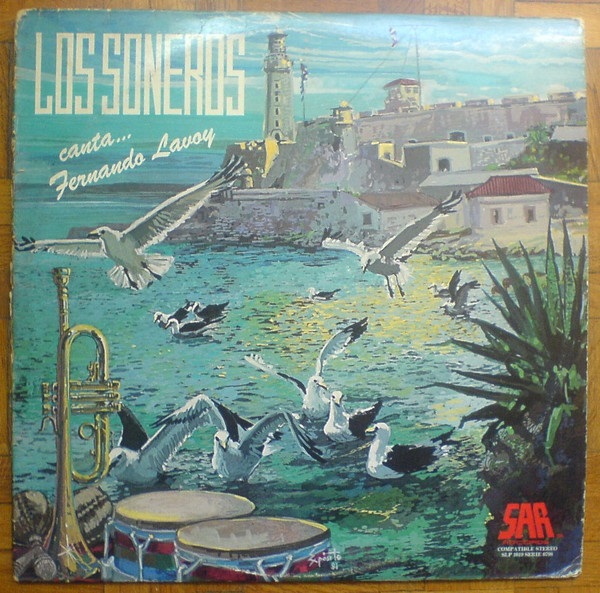
Los Soneros Canta Fernando Lavoy 1981.

Although the norm at SAR was to use the talented house band to back soloists, Los Soneros presented themselves as an autonomous group with their own identity, produced by the infallible Roberto Torres.

The ensemble stood out for its solid instrumentation led by trumpeter Juan González, who served as director and arranger, accompanied by his son Juan González Jr. on piano and the virtuoso Juan Méndez on bongo.

The band was formally structured as a classic, old-school conjunto: four powerful trumpets, bass, conga, bongo, and three backing vocalists stylishly led by Norman Rodríguez.

Analysis of a Masterpiece: The 1982 Album

The 1982 record is absolute proof of Lavoy’s musical maturity; he composed 50% of the repertoire.

  • “No voy a dormir”: The album opens electrifyingly, where a powerful trumpet introduction gives way to Fernando’s entrance, followed by a masterful trumpet solo by Juan González and an explosive bongo breakdown by Juan Méndez that builds into a montuno climax.
  • “Cóquela suave”: A son montuno penned by Lavoy that, true to its name, begins with a smooth, gentle cadence before transforming into a hard-hitting, danceable son, enriched by a sublime piano solo from Juan González Jr.
  • “Pegaditos”: A famous composition by Miguel Matamoros who, along with Arsenio Rodríguez, stands as one of the pillars of son is reinterpreted while respecting the purity of its traditional structure. The track shines with a high, piercing trumpet that floats above the Cuban singer’s vocals, experimenting with tempo variations that gradually increase the rhythmic intensity alongside flawless backing vocals.
  • “Juana la sin goma” & “No vuelo contigo”: The album closes with the former, a track packed with playfulness, dance energy, and high-octane lyrics, and the latter, a more laid-back son that, without quite becoming a bolero, maintains the majestic structure of Cuban son with a vibrant closing montuno.
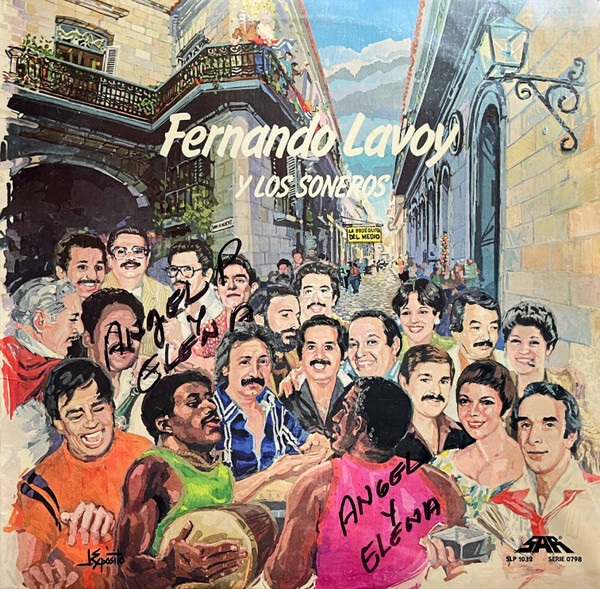
Fernando Lavoy Y Los Soneros 1982

Ultimately, Fernando Lavoy’s work remains a foundational pillar that vindicates the sabor, rhythm, and eternal essence of son montuno.

Text courtesy of Maida Lorena Lavoy.
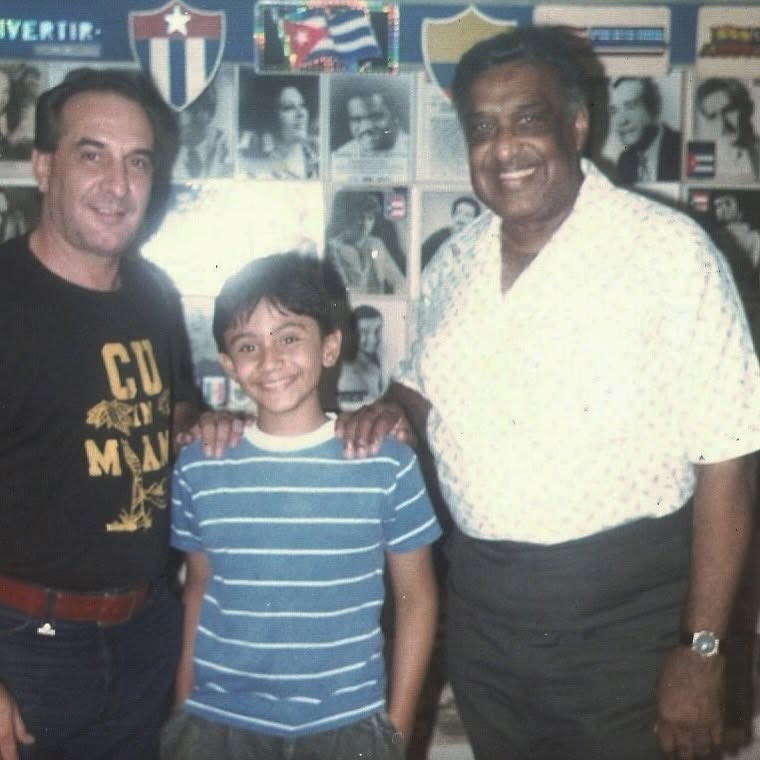
Foto Museo De La Salsa, en Barrio Obrero, en su visita en 1991 junto al gran cantante puertorriqueño Yayo El Indio y Carlos Molina Castellanos, actual director del Museo De La Salsa

Also Read: Alfredo “Chocolate” Armenteros: The Golden Legacy of the Cuban Trumpet
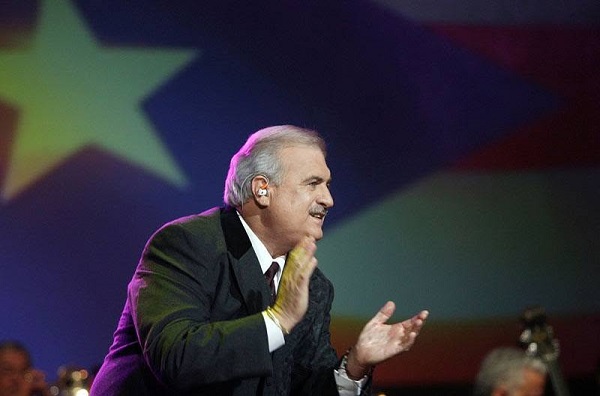
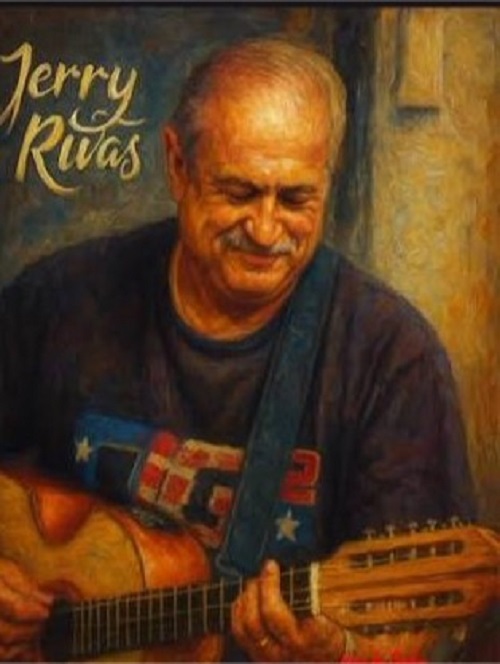
The Senior Mulato Jerry Rivas and His Half-Century Legend with El Gran Combo de Puerto Rico

From the chords of the Puerto Rican cuatro to the eternal voice of “Los Mulatos del Sabor”

Few names resonate with as much power, respect, and relevance in the salsa firmament as that of Jerry Rivas.

Born in Tampa, Florida, but with his soul deeply rooted in the heart of Orocovis through his parents’ heritage, Jerry Louis Rivas Díaz has carved his name in letters of gold into the history of Caribbean music.

El Mulato Mayor Jerry Rivas y su Leyenda de Medio Siglo con El Gran Combo de Puerto Rico

Nearing 50 years as the lead vocalist for El Gran Combo de Puerto Rico, Rivas is more than just a singer; he is a living institution of salsa, a definitive sonero of his era, and the guardian of a legacy that continues to keep the entire world dancing.

Roots, Strings, and the Making of a Self-Taught Musician

Jerry’s history with Puerto Rico formally began in 1960, when his family moved back to the “Isla del Encanto” to settle in Bayamón.

There, the young Jerry began to breathe in the folklore and rhythms that defined the Boricua identity. What many do not know is that long before commanding microphones and international stages, Jerry was deeply passionate about string instruments.

As a fundamentally self-taught musician and singer, his first great love was the guitar. Over time, his musical curiosity led him to master the Puerto Rican cuatro, the island’s national instrument par excellence.

De los acordes del cuatro puertorriqueño a la voz eterna de Los Mulatos del Sabor

Not content with just that, he decided to delve deeper into the roots of Afro-Caribbean music, learning the secrets of the Cuban tres under the tutelage of the renowned professor Carlos Seguí.

This solid foundation as an instrumentalist not only shaped his ear but also gave him an impeccable sense of rhythm and timing that would later define his unique style for soneo (improvisational singing).

The Path to the Top: From Local Bands to a Historic Recruitment

Before the spotlight of El Gran Combo fell upon him, Jerry Rivas honed his craft throughout the island’s musical circuit, leaving his mark on every project:

  • Grupo Complicación: His teenage musical battleground, where he served as a guitarist for three years.
  • Conjunto Cojoba: A group he joined in 1972, sharpening his stage presence.
  • Conjunto Chaney (1974): Jerry was part of the select group of founding musicians of this project, which years later would become a powerhouse of romantic salsa.
  • Latin Brass (1976): The definitive showcase where his voice truly began to shine on its own.

It was precisely in 1976 when destiny knocked on his door. Following the shocking departure of the iconic “Niño de Trastalleres,” Andy Montañez who left the orchestra after 14 golden years to join Venezuela’s Dimensión Latina El Gran Combo found itself facing one of the most difficult transitions in its history. Replacing a legend seemed like an impossible task.

However, the keen eye of Don Quique Lucca (founder of La Sonora Ponceña) did not fail. Don Quique recommended the young Jerry to Don Rafael Ithier. After hearing him perform, Ithier didn’t hesitate: in 1977, Jerry Rivas officially joined the “University of Salsa.”

Nacido en Tampa, Florida, pero con el alma arraigada en las entrañas de Orocovis por la herencia de sus padres, Jerry Louis Rivas Díaz

Nearly 50 Years of History at “The University of Salsa”

Joining such a demanding institution in the midst of an era-defining shift was a monumental challenge. Audiences initially viewed the new member with skepticism, but Jerry, armed with unwavering humility and immense talent, never tried to imitate his predecessor; instead, he forged his own legend.

Across nearly five decades, his voice has immortalized anthems of the global salsa songbook. Essentials on any dance floor like “Azuquita pa’ el café,” “Ojos chinos,” “Y no hago más na’,” “El menú,” “Cupido,” and “La clave” carry his unmistakable stamp.

His elegant performance style, combined with his sharp wit and deep respect for the dancer, solidified the orchestra’s golden age and ensured the transition was a resounding success.

“Joining El Gran Combo was a tremendous school and responsibility. Replacing Andy was no easy feat, but Don Rafael Ithier gave me the confidence to just be myself on stage.” Jerry Rivas, looking back on his beginnings.

Pocos nombres resuenan con tanta fuerza, respeto y vigencia en el firmamento de la salsa como el de Jerry Rivas.

The Present and Vibrant Legacy of an Eternal Sonero

Now in 2026, the tropical music landscape has changed drastically, but El Gran Combo de Puerto Rico remains unshakeable at the top.

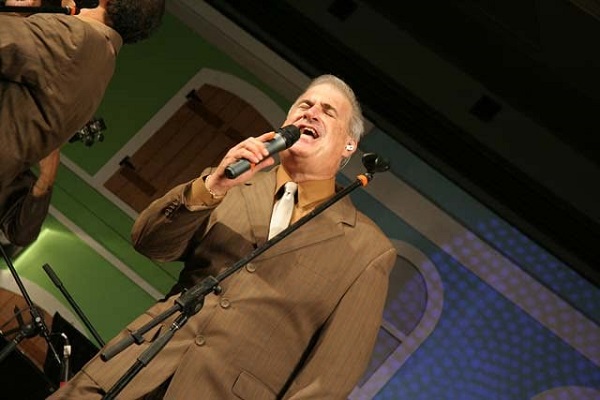
Jerry Rivas stays incredibly active, leading the vocal front of “Los Mulatos del Sabor” alongside the orchestra’s newer generations, Anthony García and Joselito Hernández. This blend of Jerry’s veteran wisdom and the energy of the new vocalists has injected a refreshing vitality into the group.

Jerry Rivas is not just a survivor of salsa’s golden age; he is the living bridge connecting the rich traditions of the 20th century with contemporary audiences.

From his days tuning strings in Bayamón to packed stadiums across Europe, Latin America, and the United States, his journey stands as a testament to discipline, passion, and love for his culture.

We wish lifelong health, inspiration, and continued success to this eternal maestro who, besides being one of salsa’s most beloved voices, has never ceased to be, in every sense of the word, a complete musician. Long live the music of Jerry Rivas, and let the drums keep rolling!


Jerry Rivas y Papo Rosario

Also Read: The Gran Combo of Puerto Rico “Los Mulatos del Sabor”

Angie Machado, “El Colorao” The Trumpeter’s Trumpeter and a Living Musical Legend

A legacy carved in brass and talent.

The history of Latin music especially Salsa and Afro-Cuban Jazz could never be written without mentioning the bright, precise, and melodic tone of a trumpet that has shaped the course of countless hit records.

Angie Machado Un legado tallado en bronce y talento

That signature sound belongs to one man: Ángel Vicente Machado Santiago, known universally throughout the artistic community as Angie Machado.

On June 23, 2026, the music world dressed to the nines to celebrate the birthday of this titan. Born in 1954 in the picturesque municipality of Arroyo, Puerto Rico, Angie Machado has not only witnessed the evolution of tropical music over the last five decades; he has been one of its foundational architects.

His career stands as living proof that musical genius, when cultivated with rigorous discipline, transcends passing trends and becomes legendary.

The Forging of a Virtuoso

His path to excellence was no accident. From a very young age, Angie understood that a natural gift for music required a solid vehicle for expression. His formal training began at the prestigious Escuela Libre de Música, a breeding ground for talent in Puerto Rico, where he developed the foundational skills to understand the language of brass and wind instruments.

Later, he made the leap to the Conservatory a space where, beyond musical theory, he absorbed a philosophy of life: discipline as the only route to mastery.

Angie Machado y Dj Andy Rodriguez

Under the tutelage of rigorous maestros and fueling his growth by analytically listening to history’s greatest trumpet virtuosos, Machado understood that music is not just played; it is studied, reflected upon, and felt deeply.

Those grueling hours of constant practice, where the sound of his trumpet filled every corner, became the bedrock of the “old school” style that distinguishes him today.

That school didn’t just teach notes; it taught phrasing, style, respect for the arrangement, and, above all, the intuition to know when the trumpet should lead and when it should elegantly embrace the melody.

The Trumpet That Defined an Era To speak of Angie Machado is to speak of the history of Salsa itself. His talent was never confined to classrooms or local bands; he rapidly became an indispensable session musician.

If you look at the liner notes of the most iconic albums that defined the “Golden Era” of Salsa, you are almost guaranteed to find his name in the credits.

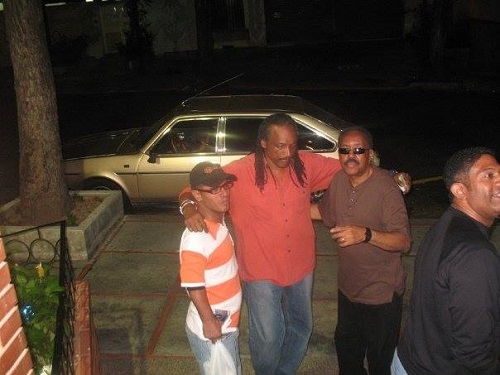
Dj Augusto Felibertt y Angie Machado

His ability to adapt to diverse styles from the required grit in Willie Rosario’s orchestra or the explosiveness of Tommy Olivencia, to the subtle elegance demanded by Gilberto Santa Rosa or the unmatched swing of Bobby Valentín positioned him as the most sought-after trumpet player in the industry.

The roster of icons with whom he has shared the stage and the studio is, quite simply, staggering. He has been the musical partner-in-crime to Cheo Feliciano, the soul of Frankie Ruiz’s recordings, the technical and creative backbone for Eddie Palmieri, and a brother-in-arms to Oscar D’León.

His trumpet has traveled the world, backing maestros like Justo Betancourt, Andy Montañez, Lalo Rodríguez, Paquito Guzmán, and Viti Ruiz, as well as a powerhouse of artists ranging from traditional sounds to contemporary fusions, including Luis Enrique and Alex León.

A Living Legend What makes Angie Machado a truly singular figure is not just his résumé, but his enduring relevance. In an industry in constant flux, he has preserved the absolute integrity of his sound.

His “privileged old-school” pedigree doesn’t mean he is stuck in the past; it means he possesses a technical foundation so robust that it allows him to collaborate seamlessly with any generation of musicians.

To those who know him, Angie is not just the trumpet player who can nail a recording session in minutes with breathtaking precision; he is a silent mentor a man who has watched the decades roll by while maintaining the same humility and love for the instrument he had when he first started out in Arroyo.
As we celebrate another year of his life, we are not just celebrating an exceptional musician; we are honoring a living piece of our cultural heritage.

Angie Machado reminds us that behind every great song that has made us dance or cry, there is a human being whose dedication and discipline have turned the brass of a trumpet into pure poetry.

Also Read: The King of Bass Mr. Bobby Valentin

North America / July 2026

Edgardo Cambón 7 2026

Jessica Pacheco 7 2026

Arturo Vazquez jr 7 2026

Alex Masucci 07 2026

July 2026 FESTIVALS

United States flag
UNITED STATES
Alohana 7 2026

ALOHANA Latin Dance Festival

Jul 22 / 26, 2026

Sheraton Waikiki Beach Resort
2255 Kalākaua Avenue, Honolulu, HI
96815, United States

$ 363.16


Eduardo Dance Class 7 2026Canto Tropical 2025Luis Medina

Spaha 06 2026Las Maracas promo

Martinez attorney

Directory of North American nightclubs

Canada flag
CANADA

Ontario, Canada
ONTARIO

Canada, Vancouver
VANCOUVER

United States flag
UNITED STATES
California US circular flag

CALIFORNIA

Florida circle flag
FLORIDA
Illinois circle flag

ILLINOIS

Michigan Circle flag

MICHIGAN

NJ circle flag

NEW JERSEY

New York Cicle flaga

NEW YORK

Ohio State
OHIO

Pennsylvania Circle Flag
PENNSYLVANIA

tEXAS CIRCULAR FLAG
TEXAS

Virginia Cirular Flag
VIRGINIA

Washington DC circle flag
WASHINGTON DC


The Elegant One of Salsa Life and Legacy of Tito Allen, one of the most refined voices in our Latin Music

The world of Afro-Antillean music celebrates the birth of one of the genre’s most distinguished and sophisticated voices Roberto Romero Caballero, universally known in the music scene as Tito Allen.

Born on May 1, 1946, in the iconic neighborhood of Santurce, Puerto Rico, this pillar of salsa has left an indelible mark on the history of Latin music throughout a career spanning over four decades of artistic excellence.

Tito Allen y Adalberto Santiago

The Origin of a Name with Tumbao

The stage name of this renowned sonero holds a curious history split into two parts. The first part, “Tito,” stems from a deeply rooted custom in Puerto Rican slang: the double diminutive. From Roberto, people began calling him “Robertito,” a nickname that over time affectionately evolved into “Tito.”

On the other hand, the surname “Allen” has a much more urban and accidental origin. The singer himself has confessed that during his youth, he saw the word painted as graffiti on a wall. The visual impact and the sound of the name pleased him so much that he decided to adopt it on the spot as his signature trademark for the entertainment world.

The Beginnings of a Multifaceted Star

Tito Allen’s musical journey formally began in 1962, when he was just a 16-year-old teenager. In his early days, the young Roberto showed a strong inclination toward rock and roll, a genre that was causing a frenzy among the youth of the 1960s.

During this formative period, Allen stood out as a bassist and guitarist, forming part of various musical trios that emulated the great bands of the era. These groups even enjoyed successful appearances on Puerto Rico’s Channel 4 television.

Fortunately for lovers of Caribbean rhythms, destiny guided him toward tropical music. His powerful voice, characterized by impeccable tuning and elegant phrasing, quickly made him a highly sought-after singer.

Dj. Augusto Felibertt, Orlando Watussi, Tito Allen y Jesus Torres

Among his major aesthetic influences, Allen has always expressed a deep admiration for Cheo Feliciano, whom he listened to with devotion during Feliciano’s era with the Joe Cuba Sextet. Likewise, he has repeatedly pointed to the Bobby Valentín Orchestra as one of his favorite bands of all time.

Conquering New York and the Big Leagues of Salsa

Determined to take his career international, Tito Allen traveled to New York in 1972. Although he initially tried to join the orchestra of the “King of the Timbal,” Tito Puente, Puente had no vacancies at the time. Far from discouraged, Allen joined forces with the prominent Colombian pianist Eddie Martínez to form a quintet that performed successfully in Big Apple nightclubs.
The true turning point came in May 1973. After a brief return to his native Puerto Rico, Allen went back to New York and, thanks to a recommendation from Eddie Martínez, scored an audition at the famous club El Corso. There, maestro Ray Barretto was looking for a vocalist to replace none other than Adalberto Santiago.

Tito Allen y Billy Crespo

Allen rose to the challenge masterfully, recording the acclaimed album Indestructible (1973), a work that instantly enshrined him in the pantheon of salsa royalty.

A Legendary Journey: Following his successful run with the Ray Barretto Orchestra, Tito Allen fulfilled his dream of working alongside Tito Puente. Later, he joined the ranks of the legendary Típica 73 before launching a solid solo career.

His impeccable reputation also led him to become a fundamental part of the Puerto Rico All Stars, participating in two of their most iconic album productions. Additionally, he collaborated closely with the virtuoso Louie Ramírez, leaving an indelible mark thanks to his versatility.

The Golden Backup Singer of the Latino Neighborhood

Beyond his brilliance as a soloist and bandleader, Tito Allen’s career stands out for his generosity and professionalism in the recording studio.

His trained, melodious voice graced countless productions for artists of the stature of Pupi Legarreta, Ralphy Santi, and Conjunto Clásico, among many other representatives of “the ultimate expression of the Latino neighborhood.” His work as a backup vocalist was essential in defining the sound of New York and Caribbean salsa during the ’70s and ’80s, solidifying his status as a complete artist and a gentleman of music who today, more than ever, deserves the applause of his audience.

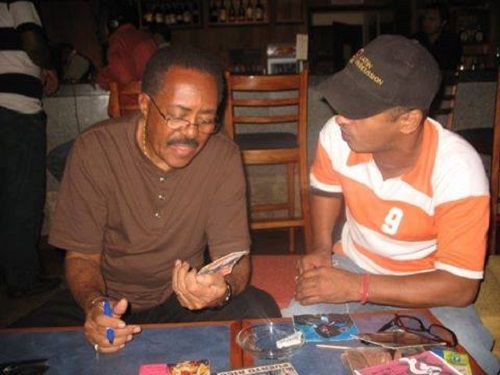
Tito Allen y Dj. Augusto Felibert

Also Read: Our friend Tito Allen supports the Salsa Museum

  • « Go to Previous Page
  • Page 1
  • Page 2
  • Page 3
  • Page 4
  • Page 5
  • Interim pages omitted …
  • Page 51
  • Go to Next Page »

International Salsa Magazine (ISM) is a monthly publication covering salsa activities around the world and has been publishing since 2007. It is a worldwide network of volunteers coordinated by ISM Magazine. Together, we work to strengthen salsa events around the world.