• Skip to primary navigation
  • Skip to main content

International Salsa Magazine

  • Home
  • Previous editions
    • 2025
      • ISM / November 2025
      • ISM / October 2025
      • ISM / September 2025
      • ISM / August 2025
      • ISM / July 2025
      • ISM / June 2025
      • ISM / May2025
      • ISM / April 2025
      • ISM / March 2025
      • ISM / February 2025
      • ISM / January 2025
    • 2024
      • ISM / December 2024
      • ISM / November 2024
      • ISM / October 2024
      • ISM / September 2024
      • ISM / August 2024
      • ISM / July 2024
      • ISM / June 2024
      • ISM / May 2024
      • ISM / April 2024
      • ISM / March 2024
      • ISM / February 2024
      • ISM / January 2024
    • 2023
      • ISM / December 2023
      • ISM / November 2023
      • ISM / October 2023
      • ISM – September 2023
      • ISM – August 2023
      • ISM July 2023
      • ISM Edition June 2023
      • ISM – May 2023
      • ISM April 2023
      • ISM March 2023
      • ISM February 2023
      • ISM January 2023
    • 2022
      • ISM December 2022
      • ISM November 2022
      • ISM October 2022
      • ISM September 2022
      • ISM August 2022
      • ISM July 2022
      • ISM June 2022
      • ISM May 2022
      • ISM February 2022
      • ISM January 2022
    • 2021
      • ISM December 2021
      • ISM November 2021
      • ISM October – 2021
      • ISM September 2021
      • ISM August 2021
      • ISM July 2021
      • ISM May 2021
      • ISM April 2021
      • ISM June 2021
      • ISM March 2021
      • ISM February 2021
      • ISM January 2021
    • 2020
      • ISM December 2020
      • ISM November 2020
      • ISM October 2020
      • ISM September 2020
      • ISM August 2020
      • ISM July 2020
      • ISM June 2020
      • ISM May 2020
      • ISM April 2020
      • ISM March 2020
      • ISM February 2020
      • ISM January 2020
    • 2019
      • ISM December 2019
      • ISM November 2019
      • ISM October 2019
      • ISM Septembre 2019
      • ISM August 2019
      • ISM July 2019
      • ISM June 2019
      • ISM May 2019
      • ISM April 2019
      • ISM March 2019
      • ISM February 2019
      • ISM January 2019
    • 2018
      • ISM December 2018
      • ISM November 2018
      • ISM October 2018
      • ISM September 2018
      • ISM August 2018
      • ISM July 2018
      • ISM June 2018
      • ISM May 2018
      • ISM April 2018
      • ISM March 2018
      • ISM February 2018
      • ISM January 2018
    • 2017
      • ISM December 2017
      • ISM November 2017
      • ISM October 2017
      • ISM September 2017
      • ISM August 2017
      • ISM July 2017
      • ISM June 2017
      • ISM May 2017
      • ISM April 2017
  • Download Salsa App
    • Android
    • Apple
  • Spanish

Search Results for: Trumpet and Percussion

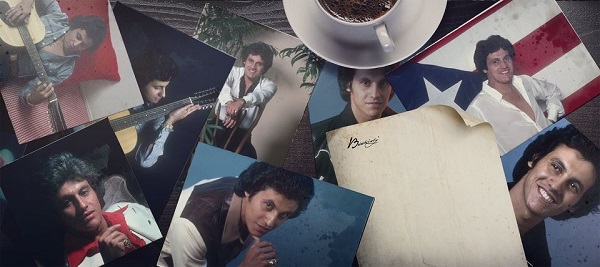
Ismael Miranda Carrero “El Niño Bonito of the Fania All Stars”

Where did Ismael Miranda’s artistic nickname “El Niño Bonito de la Salsa” (The Pretty Boy of Salsa), with which he became known, come from?

I liked to dress up and look nice for the presentations on one occasion I went to the hairdresser’s and bought a suit for the show when I arrived at the hotel, Johnny Pacheco said to me: ‘How nice, the pretty boy is late! As always.

And from that day on they called me “El niño bonito de la salsa” (the pretty boy of salsa). Pacheco gave the nicknames to everyone in the Fania All Stars.
Johnny Pacheco had a lot of faith when he came up with the idea of making this movie and it was a success.

People vibrated with our songs and we took advantage of 4 emblematic concerts to record it.

That’s how we have to walk through life. It is enough to know that we are doing things right to reap triumphs. Said the trumpet player and composer.

Perico also took the opportunity to tell where all that tasty Caribbean rhythm comes from, of which they are such good exponents. “The folklore of Latin American music was born in Africa”. He recalled the first time he arrived with La Fania to this continent. He still has in his mind the gesture of the Africans when he saw people from other parts of the world playing the congas like masters. We all felt proud, he said.

Miranda also recalled that on August 6, 1980, he arrived for the first time in Barranquilla to present a concert with Héctor Lavoe.

“We were used to performing on huge stages and singing with a well achieved sound; in Barranquilla there was nothing like that, but something magical happened, the affection and joy of the people infected us.

Hector and I gave a show of height, at the end we realized that we enjoyed it completely with all the people of Barranquilla.

During the conference, Perico Ortiz explained why he never recorded an album with Las Estrella de la Fania.

“I never recorded an album, but I participated in many concerts. At that moment I felt in my heart that it was time to sing and I told Jerry Masucci to give me the opportunity, but he did not see me as an artist, but as a trumpet player and arranger, so I decided to retire from La Fania and concentrated on recording my first album as a soloist in 1977 titled My Own Image”.

Ismael was born in Aguada, in western Puerto Rico, but as a child his family settled in New York. He began singing in English in school plays when he was only eight years old, and was even part of a children’s group called “Little Junior in the Class Mate”.

Soon after, he began taking singing lessons at a music school at 46th and Broadway, and then to improve his singing skills he studied with a music teacher recommended to him by Tito Rodriguez.

The environment in which he grew up helped him cultivate his love for music. First he wanted to be a percussionist and not a vocalist. That is why at the age of 10 he told his mother of his desire to buy a conga. Later he acquired a bongo, which resounded throughout the neighborhood. He got to play the conga in Andy Harlow’s sextet, and was part of the Sexteto Pipo y su Combo. But he finally turned to singing, for which he was assisted by Ismael Rivera.

He made his first recording in 1967 with José Luis Pastrana Santos, a musician, composer and timbalero from Santurce, known as Joey Pastrana, on the album Let’s Ball.

This album, recorded for the Cotique label, contains Ismael Miranda’s first big hit, the song “Rumbón melón”.

Facebook: Ismael Miranda

All the best from Stockholm to the world with Fredrik Kinbom and Valter Percussion

Innovative Percussion Instruments designed in Sweden

Timba Valteriana is the salsa project of Swedish percussionist Valter Kinbom.

Renowned Swedish percussionist Valter Kinbom released this January 14, 2022 the first single from his salsa project Timba Valteriana, “Mil Colores”.

Valter founded Timba Valteriana in 2006, when he started composing salsa songs in collaboration with Cuban musicians Lesmer Solenzar and Pepe Espinosa.

These early songs were never officially released, but received attention in the Peruvian timba scene. Now – after 15 years of silence – it’s time for Timba Valterana’s first official single! The new track “Mil Colores” is a love song that addresses the human inability to see all the nuances and the whole spectrum in the other, and the ease with which we slip into a black and white point of view. A theme that seems more relevant than ever in this day and age.

Timba Valteriana plays Cuban timba (salsa) with influences from many other directions.

Innovative Percussion Instruments designed in Sweden Timba Valteriana is the salsa project of Swedish percussionist Valter Kinbom.
All the best from Stockholm to the world Fredrik Kinbom and Valter Percussion

The vision is to be innovative by introducing new elements into the music while at the same time there are strong roots in the Cuban soil, also giving space for new means of expression to flourish.

In “Mil Colores” this can be heard through the use of the tres (Cuban three-string, six-string guitar) instead of the piano, and in that Valter here plays four congas for a richer and more melodic “tumbao”.

“Mil Colores” has been written, arranged and recorded by Valter Kinbom in his Stockholm studio, mixed by Monsito Music, Stockholm, and mastered by Fredrik Kinbom at Madame Vega’s Boudoir, Berlin.

Musicians:

Valter Kinbom – lead vocals and backing vocals, congas, timbales, bongo, guiro, bell, tres, synth bass.

Karin Hammar – trombones

Nils Janson – trumpets

Julian Montilla – baby bass

Caroline Schröder – backing vocals

Rapson Espinosa Torres – backing vocals

About Valter Kinbom:

Valter Kinbom, born in Stockholm, is a musician (mainly percussionist) and instrument builder. He studied music mainly in Cuba (Censea, Havanna) and at the Royal College of Music (Kungliga Musikhögskolan) in Stockholm, and over the years has played with many different artists in the Swedish world music scene (Simone Moreno, Hedningarna, Ale Möller, Massivet, Tarabband, Erik Steen, to name a few).

Valter has extensive knowledge of Cuban, Brazilian, Arabic and Western music, as well as other styles such as Flamenco. He loves the complex intricacies of polyrhythmic African music, but also the clean simplicity of Western folk music. His fascination with rhythms and instruments from all parts of the world has led him to a deep understanding of how they interconnect and relate to each other. This, along with his passion to innovate and improve, led him to found his company Valter Percussion in 1997.

Since then, Valter has designed and produced several new percussion instruments that have been recognized by percussion masters around the world, such as Jamey Haddad (Paul Simon), Trilok Gurtu, Marilyn Mazur and many, many more.

Fredrik Kinbom y Valter Percussion

After many years in his workshop and playing behind other artists, the time has finally come for Valter to release his own music. “Mil Colores” is just the beginning – there is much more to come.

Private link to listen to “Mil Colores” on SoundCloud:

Private link to “Mil Colores” electronic press kit (WAV and MP3 files, cover art, photos, etc.):

https://www.dropbox.com/sh/q4jbkx3r6pb6md7/AADdwU4zGRsj-JlELNppOZNsa?dl=0

Valter Percussion’s Instagram: 

Valter Percussion Facebook:

Valter Percussion website: 

Release Date was this January 14, 2022 (digital).

ISRC: USCGH2204179

Article of Interest: Gerardo Rosales meets Orlando Poleo, who invites him to study Afro-Caribbean percussion in Caracas

From Zurich-Switzerland MERCADONEGRO Orchestra presents its latest song titled “Que Ironia”

Since Friday, January 21, 2022, is available on Youtube the new video clip from the Mercadonegro.

Mercadonegro was Created at the end of 2000 with influences from Salsa Dura thanks to their experiences working with artists such as Celia Cruz, Alfredo de la Fe, Cheo Feliciano, Tito Nieves, and many more.

Orquesta Mercadonegro titled “Que Ironia” song that is part of the production SOMOS DEL BARRIO, returning to the radio waves and digital platforms, a song that had been on hold, but now takes off from this group of Latinos based in Europe.

Mercadonegro Created at the end of 2000 with influences from Salsa Dura thanks to their experiences working with artists such as Celia Cruz, Alfredo de la Fe, Cheo Feliciano, Tito Nieves, and many more
Orquesta Mercadonegro de Suiza

SOMOS DEL BARRIO is the 4th production, of which stand out songs like: Triste y Solo, Quien a Hierro Mata, Rumba Negrito and also this current song “Que Ironía”, as always the boys of Mercadonegro highlight their work by the mixture of different cultures and Latin roots that enrich their musical style.

“Que Ironía” was born from the inspiration and ideas of Rodrigo Rodriguez Puerta & Eddie Villanueva Chininin, which relates the daily experiences of human beings, in their day to day nonconformity, and as the same lyrics say

“Nobody knows what he has until he loses it”.

This time it is Oscar “Chucky” Cordero who is in charge of the musical arrangements and even participates in the trumpet solo.

Mercadonegro, based in Switzerland, was founded on November 15, 2002, since then they have participated in the biggest Latin/Salsa and Jazz Festivals in Europe, and they have toured China (Asia), Colombia and Mexico (Latin America).

Its Directors : Armando Miranda ” El Moro ” was born in Havana – Cuba, with studies in the conservatory and participation with different Cuban artists. He is the lead singer of the orchestra and composer of some songs.

Rodrigo Rodriguez Puerta, born in Cartagena, Colombia, since he was a child he awakened his interest in music, percussionist, chorister, singer, composer and music producer.

In this most recent title “Que Ironía” participate the following musicians: Authors: Rodrigo Rodriguez Puerta / Eddie Villanueva Chininin

Arranger: Oscar ” Chucky ” Cordero

Piano: Oscar Ivan Lozano ((Oilo)) Bass: Dimitris Christopoulos

Full Percussion: Rodrigo Rodriguez Trombones: Johan Escalante Trumpets: Oscar ” Chucky ” Cordero Baritone Sax : Gills Grivola

Backing Vocals : Roberto Marcano ” El Chamo ” & Rodrigo Rodríguez Vocals : Rodrigo Rodríguez Puerta

Sound and Mix Engineer : Jose Mendoza

Pasterization : Fernando Álvarez at 440 Mastering, Madrid-Spain Recorded at GO STUDIO Zurich-Switzerland.

Site: Mercadonegro

Article of Interest: Mercadonegro Orchestra of Switzerland

“International Salsa Magazine is SalsaGoogle.com“.

We are an organization that from the hand of its Founder, Director and Editor Eduardo Guillarte, in force since 2007 that has been working non-profit helping to promote: Orchestras, Singers, DJs, Clubs, Plastic Artists in North America, Europe and Latin America and Asia and with the contribution of volunteers in various parts of the world, which at the same time invite and recommend all lovers, dancers of our Latin music to follow La Orquesta MercadoNegro from Zurich-Switzerland.

Long live music and its only and great protagonist, La Salsa.

Junito Albino and his collaborations with many orchestras

How Junito Albino began his career

Junito Albino is one of those artists who has been influenced by some of the greatest artists in Latin music and that has led him to become what he is today. Julio Junito Albino was born in New York in 1962 and got curious about the same music at the age of 11, after which he joined the school band of San Germán until he graduated from high school. When he was still a teenager, he began to play timbales with the first group to which he belonged, whose name was Orquesta La Crítica and belonged to director and trumpeter Fernando Vega. 

When he attained the proper age, he began to study music education at the Interamerican University of Puerto Rico in 1980, when he would be a part of the Orquesta Kachende de Mayaguez whose direction was by Gilberto Gili Toro. With this group of musicians, he released his first record production. By that time, he met singer-songwriter Antony Martínez, with whom he would have a great friendship. 

Julio Albino
Renowed timbalero Julio Junito Albino

In 1983, he went to live in New York City and began collaborating with the Orquesta de Los Hermanos Colón, with whom he wasted no time in returning to the Island of Enchantment to do some live performances. With this same group, he recorded his second album Ámame Un Poquito Más, which was directed by Sergio George. 

Some of the orchestras with which Albino worked

Another of the most important society that Albino achieved realizing during his career was with Joe Quijano’s orchestra and his Conjunto Cachana, with whom he had the opportunity to share the stage with La Guarachera de Cuba Celia Cruz, The King of Timbales Tito Puente, Latin Grammy winner Ray Santos, talented pianist Charlie Palmieri and many others.   

In 1986, he was fortunate to accompany some of the greatest artists from Latin genres such as Paquito Guzman, Marvin Santiago, Hector Tricoche and many more. One of the greatest unions that he would give tangible shape to would be with Moncho Santana’s Orchestra, former vocalist of Grupo Niche, with whom he chalked up enormous successes and demonstrated all his talent. However, collaborations would not stop there. 

Junito also came to be part of the orchestra of Tito Nieves and that of Ramon Rodriguez. The latter was directed by pianist Gilberto Colón, Jorge González (bongo) and Willie Romero (conga). With all his accumulated experience at this point in his life, it was not difficult for him to find a place in the Orquesta Tártaro led by Franke Ruíz. 

When he moved back to Puerto Rico, he was also in other orchestras in the country such as Puerto Rican Power, Jorge Carrión, Luisito Escobar and many more. In addition to the foregoing, he has managed to work as a producer and musician in a large number of independent groups collaborating with percussion, timbales, bongo and other instruments.   

After a successful career in other groups, he decided to create his own orchestra, Secreto A Voces, in which genres such as salsa and Latin jazz stand out. His first album was called Báilalo and contained songs of his own that were big hits in some European countries such as Italy. His second album was entitled Haciendo Ruido and included the participation of artists such as Nino Segarra, Jaime Rivero, among others.  

Salsa Superior Award won by Secreto A Voces in the category of musical quality


By: Johnny Cruz correspondent of International Salsa Magazine in New York City, New York

A bit of history about Latin soul and its relationship with salsa

How Latin soul was born

There are certain musical genres that, despite their short duration on the public stage, marked history to such an extent that they continue to be named and taken into account when analyzing the process experienced by Latin music in the United States. One of them is Latin soul, which is defined as a musical genre born and developed in the 1960s in New York City, such as in the case of many of the rhythms we have today. 

Latin soul was born of the mixing of Cuban mambo and some elements coming from the American version of soul and Latin jazz. Even though it was a set of rhythms that became relevant only in the aforementioned decade, it played a particularly valuable role in the salsa movement that was starting to take shape at that time. 

One of its most striking characteristics is that it places a lot of emphasis on its Afro-Cuban rhythms, but at the same time, most of its songs are in English, which reveals an extremely interesting mix of Cuban and American cultures. After to have acquired a little more specific style, it started to become popular among New York-based Latin artists, who used the emerging genre to win over communities of their respective countries and local media at the same time. 

Among the greatest exponents of Latin soul is Joe Bataan, an American of Filipino descent who is regarded as the most famous vocalist of the genre. Something that made him really different from the rest of the artists of his kind was the merger between American soul and salsa that was already sounded at that time. For this and many other reasons, Bataan is still seen as one of the greatest idols of those golden years of music. 

This is Joe Bataan
Joe Bataan “The King of Latin Soul”

Bataan, Willie Colón, and other performers represented the emergence of a generation of musicians whose formation was the street itself and the harsh experiences occurring it. At the same time, there were others who had an academic background and studies that made them play and behave otherwise. When the union between both groups took place, the result was a display of talent that is still turning heads. All those who were trained in academies and on the street joined the new oncoming wave of rhythms. 

An important detail about this is that the Latin audience in general was eager to look for artistic role models through which to reflect their daily lives. We must remember that many of these people lived in poor conditions in some of the poorest neighborhoods in the country, so many did not really identify with educated music that came from the music academies and schools. All that changed greatly after the emergence of a group of artists who wanted to have their own place in the Anglo-Saxon entertainment business. In some cases, these young people came from an origin very similar to the one that has been described. 

This led to the creation of groups and orchestras in which formal and sophisticated music training had to coexist with other styles emerging from the humblest alleys in certain Latin neighborhoods. Music had ceased to be an elitist thing and would go on to become a mixture of different flavors and colors that were gradually brought together as the decades of the ’60s and ’70s went by. 

Around this time, the figure of Monguito Santamaría (Cuban percussionist and bandleader Mongo Santamaría’s son) emerged, who would be his biggest inspiration to take the path of music. The boy studied piano and proved a great talent for leading bands, but he needed something to push his career, since the mere fact of being a legend’s son was not going to guarantee the success he longed for. This led him to be carried away by the current of Boogaloo, another nascent genre that had gained overwhelming popularity at the time. 

Here you can see Monguito Santamaría
Monguito Santamaría

From there, Monguito created his own orchestra and invites some of his schoolmates to join him, which resulted in a quite complete group in which these guys designed their own American R&B versions and sounds and an accent that made them much closer to the African-American community that loved soul and funk. This made them put aside the Latin community for a while, but that would change sooner than expected.   

Long after Monguito completed his musical studies, he and his band decided to audition for Johnny Pacheco and Jerry Masucci. Let us not forget that Santamaria and the rest of his orchestra had a typically American vision of music, but they did not put aside the Cuban heritage behind them, so they always included songs in genres from the Caribbean island. This pleased the Fania All-Stars so much that they agreed to work with the orchestra, which adapted to the exigencies of the record label without losing sight of their goal: making music for Latinos in New York. 

This is how Monguito and Bataan became the Fania artists whose repertoires were more inclined to Latin soul. In view of the great success that Mongo’s son had with his projects on the label, he continued to immerse himself in the aforementioned rhythm and to enter Boogaloo, whose popularity was at its peak at that time. 

The bad news is that there were a set of factors that did not help the musician to make history as he wanted. One of them was the birth of salsa orchestras that perfectly read the social moment that lived by the poor Latin neighborhoods of the United States, a point on which Monguito stayed in the past. He and his musicians may have been better than many other bands of their generation, but they did not know how to read the historical moment when they were in. This and his little promotion in much of Latin America made much of his legacy be buried and forgotten. 

Monguito and his musicians
Monguito Santamaría, Rene McLean (saxophone), Harvey Hargraves (trumpet), Glenn Walker (trombone), Sam Turner (congas), Ronnie Hill (timbales), José Mangual Jr. (bongos), and Andy González (bass)

Eddie Palmieri’s role in this process 

American bandleader and pianist of Puerto Rican descent Eddie Palmieri played a very important role in the process carried out by Latin music during its evolution into what we know today. The artist radically changed the way Latin music was perceived thanks to his spectacular mix of Afro-Cuban rhythms and certain touches typically of Latin jazz. 

During the heyday of Boogaloo and Latin soul, Palmieri did his best to mix the best aspects of soul and funk with these Cuban rhythms, which would in turn be united with a typical revolutionary message of those years. Thanks to all these messages captured in his lyrics, the musician’s repertoire became more and more present in acts promoted by leftist movements and his music was brought to several prisons, giving it a nuance of denunciation that was very difficult to ignore.  

In contrast to other talents of those years, the New Yorker cannot be classified as a salsa, Boogaloo or soul musician. This is because he knew how to handle all genres and combine them in a novel way for that time.   

This is Eddie
Eddie Palmieri
  • « Go to Previous Page
  • Page 1
  • Interim pages omitted …
  • Page 8
  • Page 9
  • Page 10
  • Page 11
  • Page 12
  • Interim pages omitted …
  • Page 31
  • Go to Next Page »

International Salsa Magazine (ISM) is a monthly publication about Salsa activities around the world, that has been publishing since 2007. It is a world network of volunteers coordinated by ISM Magazine. We are working to strengthen all the events by working together.