The Birth of Swing in Chilly Bogotá
Bogotá, a city nestled more than 8,600 feet above sea level, cold and prone to drizzle, did not seem in the early 2000s like the most obvious birthplace for one of the 21st century’s most influential salsa orchestras.

However, in 2001, in the heart of the Teusaquillo neighborhood, La-33 was born. Breaking the stereotype that salsa only flourishes on warm coasts, this band proved that Caribbean flavor (sabor) also runs through the veins of the Colombian capital.
Founded by brothers Sergio and Santiago Mejía (musical director/bassist and keyboardist, respectively), the orchestra took its name from the street where they held their first rehearsals: 33rd Street (Calle 33).
From its inception, the project had a clear identity: to rescue the raw, urban, and gritty sound of 1970s salsa brava, evoking legends like Héctor Lavoe, Willie Colón, and the Fania All-Stars, while injecting it with the attitude, energy of rock, and Bogotá’s gritty street vibe. To finance their first album, the band members saved money earned from their gigs in local bars and nightclubs.
The “La Pantera Mambo” Phenomenon
La-33’s rise to international stardom was no accident, but rather the result of a brilliant recording masterstroke. In 2004, they released their self-titled debut album, La-33. The record included a track that would become their ticket to the world: “La Pantera Mambo.”
This piece a spectacular mambo-rhythm version of Henry Mancini’s cinematic classic, “The Pink Panther Theme” fused jazz, suspense, and a powerhouse horn section.
The song instantly became a radio hit and an essential anthem on dance floors from Cali to Berlin, proving that salsa was not a genre of the past, but a living language capable of reinventing Western pop culture.
Dynamic Evolution and Discography
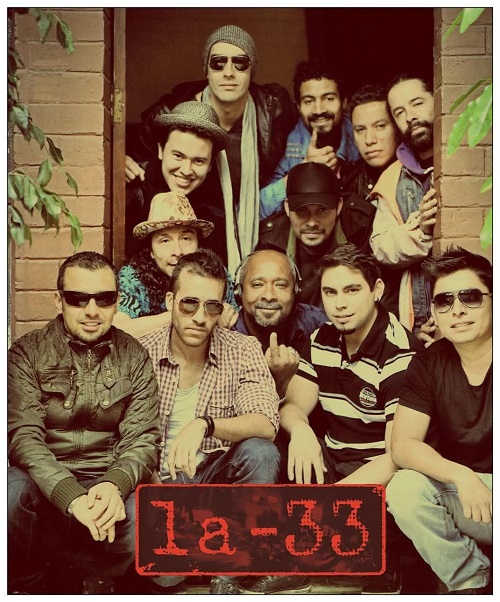
Unlike the salsa romántica orchestras that dominated the commercial hit charts in the ’90s and 2000s, La-33 bet on an organic sound heavily influenced by mambo, jazz, pasodoble, and ska.Their music dispenses with excessive synthesizers, prioritizing instead the raw power of percussion, the brilliance of the horns, and lyrics that narrate daily life, urban chaos, and bohemian nightlife.
Throughout their career, they have built an impeccable musical catalog across several studio albums:
- La-33 (2004): The debut album featuring “La Pantera Mambo” and “Qué Rico Boogaloo.”
- Gózalo (2007): Nominated for a Latin Grammy, it solidified their success with tracks like “Bye-Bye” and “Soledad.”
- Ten Cuidado (2009): A more mature record exploring fusions with ska and jazz.
- Tumbando por ahí (2013): A tribute to the band’s street-smart, party-loving spirit.
- Caliente (2016): Their fifth studio production, released to celebrate fifteen years on the scene.
- Si tú quieres salsa (2019): A return to their roots with a powerful, mature, and refreshed sound.
Global Ambassadors of Colombian Salsa
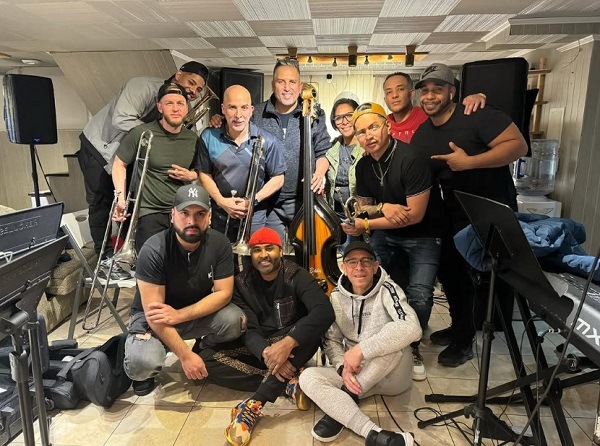
What began as a group of friends rehearsing in a Bogotá house transformed into a global phenomenon. La-33 has toured all five continents, performing at prestigious international events such as the Sziget Festival in Budapest, the Cali Fair (Feria de Cali), and various jazz and world music festivals across Europe, Asia, Africa, and the Americas.
Their ability to get audiences who don’t even speak Spanish dancing is a testament to the universal power of their horn section and rhythmic core.
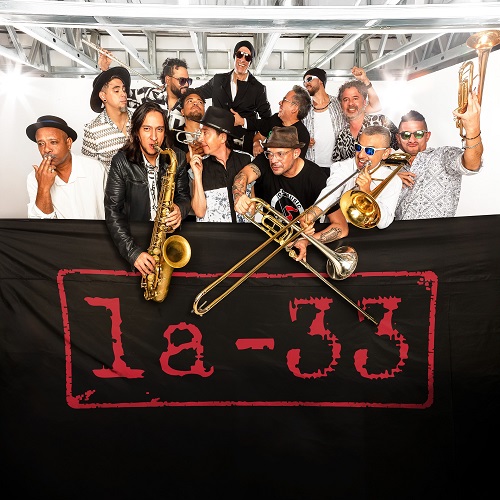
Today, La-33 is not just an orchestra; it is an institution of Colombian alternative music. They proved that salsa can be played wearing leather jackets and a punk attitude while maintaining absolute respect for Afro-Latin roots making it clear that to have swing, all you really need is passion.
Band Members
- Sergio Mejía (Bandleader and electric bass)
- Santiago Mejía (Keyboards)
- Guillermo Celis (Vocals)
- David Cantillo “Malpelo” (Vocals)
- Edison Velásquez (Vocals and flute)
- Alejandro Pérez (Congas)
- Juan David Fernández “Palo” (Timbales)
- Diego Sánchez (Bongos)
- Vladimir Romero (Trombone)
- José Miguel Vega (Trombone)
- Adalber Gaviria (Saxophone)
- Roland Nieto (Trumpet)
- Javier Galavis (Sound engineer)
- Ray Fuquén (Field producer)
Also Read: Colombia’s legendary Grupo Niche and its founder Jairo Varela