• Skip to primary navigation
  • Skip to main content

International Salsa Magazine

  • Home
  • Previous editions
    • 2025
      • ISM / November 2025
      • ISM / October 2025
      • ISM / September 2025
      • ISM / August 2025
      • ISM / July 2025
      • ISM / June 2025
      • ISM / May2025
      • ISM / April 2025
      • ISM / March 2025
      • ISM / February 2025
      • ISM / January 2025
    • 2024
      • ISM / December 2024
      • ISM / November 2024
      • ISM / October 2024
      • ISM / September 2024
      • ISM / August 2024
      • ISM / July 2024
      • ISM / June 2024
      • ISM / May 2024
      • ISM / April 2024
      • ISM / March 2024
      • ISM / February 2024
      • ISM / January 2024
    • 2023
      • ISM / December 2023
      • ISM / November 2023
      • ISM / October 2023
      • ISM – September 2023
      • ISM – August 2023
      • ISM July 2023
      • ISM Edition June 2023
      • ISM – May 2023
      • ISM April 2023
      • ISM March 2023
      • ISM February 2023
      • ISM January 2023
    • 2022
      • ISM December 2022
      • ISM November 2022
      • ISM October 2022
      • ISM September 2022
      • ISM August 2022
      • ISM July 2022
      • ISM June 2022
      • ISM May 2022
      • ISM February 2022
      • ISM January 2022
    • 2021
      • ISM December 2021
      • ISM November 2021
      • ISM October – 2021
      • ISM September 2021
      • ISM August 2021
      • ISM July 2021
      • ISM May 2021
      • ISM April 2021
      • ISM June 2021
      • ISM March 2021
      • ISM February 2021
      • ISM January 2021
    • 2020
      • ISM December 2020
      • ISM November 2020
      • ISM October 2020
      • ISM September 2020
      • ISM August 2020
      • ISM July 2020
      • ISM June 2020
      • ISM May 2020
      • ISM April 2020
      • ISM March 2020
      • ISM February 2020
      • ISM January 2020
    • 2019
      • ISM December 2019
      • ISM November 2019
      • ISM October 2019
      • ISM Septembre 2019
      • ISM August 2019
      • ISM July 2019
      • ISM June 2019
      • ISM May 2019
      • ISM April 2019
      • ISM March 2019
      • ISM February 2019
      • ISM January 2019
    • 2018
      • ISM December 2018
      • ISM November 2018
      • ISM October 2018
      • ISM September 2018
      • ISM August 2018
      • ISM July 2018
      • ISM June 2018
      • ISM May 2018
      • ISM April 2018
      • ISM March 2018
      • ISM February 2018
      • ISM January 2018
    • 2017
      • ISM December 2017
      • ISM November 2017
      • ISM October 2017
      • ISM September 2017
      • ISM August 2017
      • ISM July 2017
      • ISM June 2017
      • ISM May 2017
      • ISM April 2017
  • Download Salsa App
    • Android
    • Apple
  • Spanish

Search Results for: Trumpet and Percussion

Yissy García Calzadilla, former member of the Anacaona Orchestra, plays drums, timbal and bongo

On May 29, 1987, in Havana, Cuba, Yissy García Calzadilla was born.

With a great musical heritage that comes from her father and inspiration, Bernardo Garcia, who is a drummer of the ICRT Orchestra.

Since she was a child she has been inclined towards percussion and has her father as her first teacher.

At the age of 9 she began her elementary music studies at the “Manuel Saumell” school, later attending the Amadeo Roldan Conservatory where she excelled in the school’s Charanga band and was also a member of the Youth Symphony Orchestra.

As a student of the conservatory in 2004 she traveled to the island of Guadeloupe as part of a cultural exchange between music schools in both countries.

Also in 2005 she was invited as a soloist in the paila (Cuban percussion instrument) to play with the National Symphony Orchestra of Cuba under the direction of the prestigious conductor Zenaida Romeu. In the same year she obtained the Special Prize of the “Fiesta del Tambor” contest.

In 2006 he travels to Barbados to participate with the “Quinteto Chico de la Habana” (a group of outstanding students of the conservatory) in the Barbados Jazz Festival and shares the stage with prestigious jazzmen such as Horacio Hernández (El Negro), Giovanni Hidalgo, Arturo Tappin (saxophonist) and Roy Hargrove (trumpeter), his performance is reviewed by international television stations and for the English newspaper Daily Niticns.

In November of the same year he obtains a Special Performance MECION at the International Festival of Young Jazz Players “JOJAZZ” and plays drums with the Big Band of Canada.

It is in this same year that she graduates in Percussion with excellent grades.

Once graduated, she joined the female orchestra Anacaona with which she made multiple performances on stages all over the country, and also performed on national television and radio, recorded the album “No lo puedo evitar” for the Bis Music label, and has also accompanied the Buena Vista Social Club diva Omara Portuondo.

With a small orchestra format, he recorded in 2008 the song “Parampampán”, for the musical film: “Chico y Rita” by the Spanish filmmaker Fernando Trueba. And also participates in another recording of traditional music with an American singer, both in the Areito studios of the EGREM.

In 2009 she made two important international tours with Anacaona, first in several Canadian cities, among them, performing at the “Art Jazz Festival” in Toronto, and in the Lula Lounge of the same city, the “30th Montreal International Jazz Festival”, alternating with the famous salsa singer “La India” with whom she was also invited to play, During the days of this great festival she participated very actively in various Jan sessions with Canadian musicians and musicians from other countries, in the city of London in the “Sunfest”, the Festival “La Nuit de Africa” in Montreal in its 27th edition and in the cities of Chicoutimi in the Festival “Rhythms of the World” and in the City of Quebec in its festival “Musics of the World” in addition to other venues in some of these cities, monopolizing in all many applause and congratulations for his outstanding performance.

In September 2010 the Aruba Jazz Festival is presented where they have the responsibility to close the festival and also perform with great success with saxophonist David Sanborn with whom they have the honor of downloading to close his performance the first day of the festival, for all this they are welcomed with great success by the public and the press.

He has worked in Cuba with other important jazzmen such as Alexis Bosh and Orlando Cubajazz.

He also performs for a special program on French TV channel 33 about his musical life and appears on a web page of the Spanish magazine “The H”.

He competes again in the JOJAZZ Contest and obtains the 2nd place in interpretation.

He has also recorded the Cuban Television program “A todo jazz” with trumpeter Roberto García and saxophonist Emir Santa Cruz, and with the group “Joven Jazz” led by saxophonist Michel Herrera, with whom he also performs in Havana’s Jazz clubs. He has worked with the outstanding trumpet player Yasser Manzano and his group.

In early 2010 he made the national tour of the singer Cucu Diamantes and also participates in the film that was recorded of the same.

In June 2010 he performed with Anacaona a successful tour of Curacao presenting the show “Viva Cuba”, in order to raise funds for the fight against breast cancer, organized by the Sinte Rose Foundation of that country and also close the 1st International Film Festival of Aruba.

Solo career

Yissy and Bandancha.

In 2012 she decided to embark on her solo career, debuting as composer and leader of the project YISSY & BANDANCHA, a quintet that develops jazz from the fusion with other genres.

She is regularly invited to participate in the most important festivals in Cuba, such as Jazz Plaza, JoJazz, Ellas Crean, Havana World Music Festival, among others.

Along with her project, she develops an intense work of collaboration in record productions and with various artists and recognized groups in the country, as is the case of Interactivo, Alexis Bosch and Telmary Diaz.

In 2014 he participated in Argentina in the festival El sur suena a cubano, along with Kelvis Ochoa, William Vivanco and Yusa, whom he also accompanied on his tour of Japan. He participated in the recording of the album Feeling Marta, by singer Gema Corredera, and accompanied the Buena Vista Social Club diva, Omara Portuondo, on her tour of Mexico.

Since that same year and until now, he is part of the line up of the band Maqueque, led by the renowned Canadian saxophonist Jane Bunnet, with whom he has played in the most important festivals in Canada and USA, in addition to having recorded the album Jane Bunnett and Maqueque, winner of the 2015 Juno Award for Best Jazz Album.

She began 2015 with the recording of her debut album Última noticia, and with a tour with her band YISSY & BANDANCHA through several cities in the USA.

She was included in a documentary for Brazilian TV directed by filmmaker Max Alvim, which aims to collect the most outstanding of the vanguard of Cuban jazz today.

She was part of the concert Women of the World, led by M Alfonso. She participated, together with Brazilian artist Baddi Assad, in the Les Voix Humains festival, held in Havana and organized by the Leo Brouwer Office.

Invited by the prestigious drummer Terri Lyne Carrington, she gave a clinic on Cuban rhythms at Berklee College of Music.

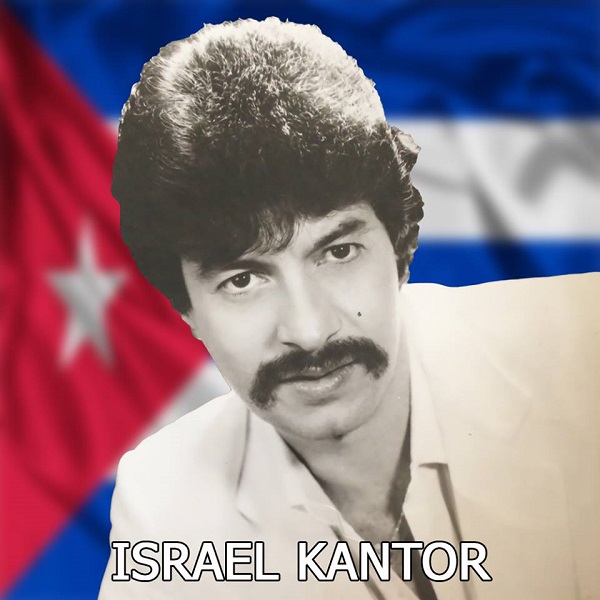
Israel Kantor was an excellent bassist, arranger and composer who achieved great popularity in Cuba for his vocal technique and original “Sonear” style.

His real name was Wilfredo Israel Sardiñas Domínguez. 

He was born on October 16, 1949 in Alturas de Canasí, a town in western Cuba between Havana and Matanzas, and his parents registered him a couple of years later in Bacuranao (birth date October 16, 1954).  A bassist, arranger and composer, he achieved great popularity in Cuba for his technique and original “sonear” style.

Although he was not very well publicized or acclaimed as a sonero, he managed to make a good name for himself in exile.

His mother played the tres and seven of his nine siblings formed a group with guitar, tres and lute; he played both sones and punto guajiro.

They used as bass a box called marímbula, which consisted of a box with four straps to produce the bass sound.  He began to sing with his brothers at the age of eight.

Later he went to Havana to study at the Conservatory of Guanabacoa, where he started playing trova sonera.

israel kantor
HE BECOMES A PROFESSIONAL

Israel Sardiñas improvised on the sonos with astonishing ease, and he is not exactly what you would call an interpreter “by ear”, or empirical. 

In fact, he played the bass before singing, and it was precisely his condition of bassist and arranger that made Meme Solis discover him in 1975 and took him and his group to work in the shows he was then directing in tourist centers on the beaches east of Havana.

“One night, at the dance show they were doing at the Hotel Atlántico, in Santa María del Mar, Israel took the microphone, I think because the group’s singer was not there,” Meme Solís recalls now.  “I saw him and told him: ‘But how well you sing!’ When I put on another show I gave him two numbers, and from then on people began to follow him”.

“I began to study Carlos Embale, Miguelito Cuní, Raúl Planas, Roberto Faz and Beny Moré,” he said, referring to the time when he stopped playing bass to devote himself to singing.  “There is everything that is Cuban music: guaracha, son, rumba. What I did was to listen to them and transfer them to the staff to understand how they moved their voices.

The one I liked the most was Raúl Planas; he was the one who rubateaba the most, the one who broke the syncopation the most.

Cuní had a good timbre, but always in time. Planas had a deeper timbre, and the sonero’s timbre must be metallic”.

That was the beginning of his professional career, which in Cuba would take him to the groups Ireson, Neoson, Los Yakos and Los Reyes 73. In 1979, he joined the Cuban group Los Van Van, founded and directed by bassist and composer Juan Formell (Juan Clímaco Formell Cortina was born on August 2, 1942 in Havana, Cuba).  As vocalist of the famous group, Israel became popular in Cuba for his vocal technique and his “sonear” style, which aroused great interest in the musical media, especially in popular music.  With the Los Van Van Orchestra he participated in the recording of the albums “Juan Formell y Los Van Van” in 1981 and “El Baile Del Buey Cansa’o” in 1982, both in the Egrem label of Cuba.  It was with this group that the artist became known, and left his stamp on the interpretation of the song “Seis Semanas”.

From that time on, he began to make musical arrangements.

After several international tours with Los Van Van he decided to leave them in Mexico in 1983, in search of greater freedom and possibilities for his career.

A month later he was already in Miami after crossing the border.  “I wanted to go to Grupo Afrocuba, but the bureaucracy wouldn’t let me,” he said on one occasion. “Van Van is very good, but Afrocuba came with a very strong force. I also wrote, I made arrangements, I had other ideas, and Afrocuba suited me better, because it was more jazzy”.  In an interview for a news agency years ago, he said: “I had a great school before being with Los Van Van. After traveling a lot with them, I was very anxious to see the world and the third time we were in Mexico, I decided not to return to Cuba”.

SUCCESS IN EXILE

When he arrived in New York in April 1984, he was still Israel Sardiñas, but when Johny Pacheco, the legendary director of the Fania All Stars, took him to an anniversary party of the group at the Cheetah two months later, the late “singer of singers”, Héctor Lavoe, heard him improvising and stopped the orchestra: “I want to baptize him right now as Israel Cantor”, said Lavoe.  The only thing left to do was to change the c for the k, spend two months with Lavoe’s band, and in October create his own, which he called La Verdad.

Thus, in 1984, he released the album “Israel La Verdad” with the production of Larry Harlow, on the Bacán Records, Inc. label. All the numbers were written and composed by Israel Kantor.

As its name indicates, La Verdad was a constellation of excellent musicians: Sonny Bravo on piano, Salvador “Sal” Cuevas on bass, Tony Barrero and Pedro “Pouchi” Boulong on trumpets, Barry Rogers on trombone, Mario Rivera on saxophone, Karen Joseph on flute, Frankie Malabé on congas and Nicolás “Nicky” Marrero on bongo among others.  Justo Betancourt and Adalberto Santiago collaborated on backing vocals, with Justo doing a duet track: “Rumberos De Nueva York”.  Other numbers on the album that deserve attention are: “La Verdad”, “Tu Lindo Pasado”, “María Antonia” and “A Mis Idolos”.

That same year he is invited to sing on the album by Ñico Rojas y su Orquesta entitled “Paso La Vida Pensando: ‘En Tí'”, on the Kanayón Records label, three songs: “Juan Ramón (El Chichón)”, which was popularized by José “Cheo” Feliciano when he was part of Joe Cuba’s group, “Por Encima Del Nivel”, which had the arrangements and piano of Luis Quevedo, in which he performs a superb piano solo, and in “Lo Voy A Matar”, composition by Tony Pabón and arrangements by maestro Kenny Gómez.

In 1986, he is the lead vocalist of the group Salsa Latina in the album “De Aquí . . Pa’ Lante!”, on the Coa Records label, which was produced by Isidro Infante and Israel Kantor himself and in which he composed half of the eight songs that make up the album.  The most outstanding numbers are: “En Honor A La Verdad”, “Se Acabó El Material”, “Saca Aserrín, Mete Madera”, “A La Mitad Del Camino” and “El Palo De China” (Composition by Raúl Marrero).

He temporarily left Miami to try his luck in Puerto Rico, Mexico and Italy until 1996, when he settled permanently in Miami.  He performed on various stages of the music scene: he inaugurated the Mamá Rumba Club in the Mexican capital, made arrangements for the orchestra of the Sábado Gigante program on Channel 23 in Miami, participated in a Cuban Jam Session at the Lincoln Center in New York, among others.

For more than two decades Kantor was the protagonist of important musical projects both in Latin America and Europe.  He recorded eight solo albums and six guest albums with orchestras such as those of Johnny Pacheco and Juan Pablo Torres.  Among his recordings are “Un Señor Kantor” for the BMG record label; a tribute album to Los Van Van for Sony Music and “Llegó La Música Cubana”, an album that took him on tour in Europe.

In 2003 he collaborated in the solo work of arranger and composer Jesús “El Niño” Pérez with Orquesta Sensación (not to be confused with the former group of Cuban Abelardo Barroso) entitled “Cuba y Puerto Rico Son De Un Pájaro Las Dos Alas”, in which Israel Kantor’s voice stands out over those of the other two singers: Danny Rojo and Rogelio Rente, as well as demonstrating his abilities to improvise on the soneo, in the number “Pa’ Puerto Rico” (which Jesus “El Niño” Perez composed for the album, “La Amistad” by Johnny Polanco).

His last great work, in 2003, was a tribute to Benny Moré his permanent artistic inspiration- entitled “To ‘El Bárbaro Del Ritmo'”, a live recording with the Tropicana All Stars orchestra, produced by Regu Records, owned by Recaredo Gutiérrez. 

The orchestra, made up of 22 musicians, mostly Cubans living in Miami, led by Israel Kantor, was nominated for a Latin Grammy Award in the traditional music category in 2004, and two other nominations for an Anglo-American Grammy.

The project, which consisted of a live show, recorded on DVD and seven albums, led them to share the stage with legendary figures such as Paquito D’Rivera, Marco Antonio Muñiz and Generoso “El Tojo” Jiménez, among other glories.

The Tropicana All Stars orchestra was made up of a large number of extraordinary musicians, all of them renowned and of the highest quality: Paquito Echevarría on piano, Cuban musician who has collaborated for a number of important singers such as Gloria Estefan, Rey Ruiz among others; Venezuelan Ramses Colón on bass, a virtuoso musician and desired in any band, Adalberto “Trompetica” Lara on first trumpet, possessor of a very Cuban technique when playing and improvising, he has been a musician of Irakere, Super Cuban All Stars, NG La Banda among others; Kiwzo Fumero on the second trumpet, comes from the conservatory “Alejandro García Caturla” of Cuba, since his beginnings he expressed his great interest in the instrument to which he has dedicated part of his life, he dominates the high notes with mastery for which he has been recognized by great masters of the genre; Lenny Timor on the third trumpet, participated with Los Sobrinos Del Juez for 14 years; Mario Del Monte on fourth trumpet, has been a member of prestigious orchestras such as Roberto Faz, Pacho Alonso, Tito Gómez among others; Alfredo Salvador on baritone sax, has been present in recordings for Celia Cruz, Paquito D’Rivera and Arturo Sandoval; José “Pepe” Vera on tenor sax, his resume includes recordings with the Tropicana Orchestra, Benny Moré, among others, Manuel Valera on alto sax; Juan Carlos Ledón on tenor sax, he has played with Orquestas Cubanas, Roberto Torres, Willy Chirino, Andy Montañéz, among others; Bayron Ramos on trombone, he has been a musician with Albita Rodríguez’s band and Fania All Stars; Braily Ramos on trombone, he has recorded with Gloria Estefan and Miami Sound Machine, Alejandro Sanz and others; Leonardo Timor Sr. on trombone; Leonardo García on timbales, has accompanied Luis Enrique, José Luis Rodríguez “El Puma”, Alexandre Pires, among others; Michael Gerald on percussion; Edwin Bonilla on congas, one of the best percussionists today who needs no further introduction; Juanito Márquez on arrangements, production and musical direction; Germán Piferrer is the musical director and arranger, and as very special guests Juan Pablo Torres, Roberto Torres, Generoso “Tojo” Jiménez, Carlos “Patato” Valdéz, Alfredo “Chocolate” Armenteros and Cándido Camero.

The vocal responsibility fell on Israel Kantor, who was emerging as one of the contemporary Cuban singers with the greatest international projection.  His voice can be heard in the twelve songs that made up the first musical volume: “Santa Isabel De Las Lajas”, “Oh! Vida”, “Maracaibo Oriental”, “Fiebre De Ti”, “Mata Siguaraya”, “Amor Fugaz”, “Bonito y Sabroso”, “Camarera Del Amor”, “Mucho Corazón”, “Yiri Yiri Bon”, “Perdón” and “Francisco Guayabal”, the cover was made by Cuban painter Andrés Puig.

Kantor’s love for his homeland turned his career into a constant homage to Cuban music.

“Over time, one assimilates growing up far from your homeland, not being able to return to stay connected to your roots, but time heals the wounds,” he said a short time ago.

“Inspiration is like a spring,” Kantor said, referring to the improvisations he made as a sonero singer.  “It’s born from the heart; ideas are constantly flowing to you. That’s why a sonero always sings the same song differently.

Cuban music is the continuity of what the singer generates: although the first thing is the vocal conditions, what you have to have is, above all, the clave; knowing how to play with the phrasing so as not to go against the clave”.

Kantor said, “You can train a vocalist to become a sonero, but if his relationship with the genre is not natural, from the heart, he will always end up giving clichés in his inspirations”.

He had no shortage of job offers, even though he was rarely heard on the radio in Miami.  When he was not performing with the Tropicana All Stars, he was performing with his group Havana Son -violin, flute, piano, bass, timbal and conga- in different stages both in the United States and internationally: at the Tropicana Hotel in Las Vegas; the Lincoln Center in New York (in 2003); at the Casa Cuba in Ponce, Puerto Rico, and on tours to the cities of Nicaragua, Lisbon, Oporto and Vigo, in Portugal and Spain, where he shared with other Cuban exiled stars like Willy Chirino and Albita Rodriguez.

Israel Kantor passed away on Saturday, July 1, 2006 at 11:00 p.m. at his residence in southwest Miami, victim of cancer, at the age of 57.  The artist, who had been suffering from liver problems for some time, had already undergone surgery in 2001 for colon cancer.  He is survived by his wife Rosalia Perez, aunts, uncles and cousins.  His body was laid to rest on Wednesday, July 5 at Caballero Rivero Funeral Home, 3344 SW 8th Street, in Miami, and buried the following day at Woodland Park Cemetery, located at 3260 SW 8th Street, in Miami.

“He always worked as if it was the first day,'” recounted his wife Rosalìa as she recalled the artist’s musical enthusiasm.  “He was never satisfied. He had a great hunger to play, to sing and to give people everything he had.”

REACCIONES POR SU MUERTE

 “Israel se hizo en Los Van Van. Tuvo una etapa muy brillante”, señaló Juan Formell, fundador de Los Van Van, ayer desde La Habana a El Nuevo Herald. “Está entre los cantantes más importantes con los que he trabajado. Para nosotros es una pena la pérdida de Israel”.

“Fue una de las voces más representativas de la música cubana de los últimos años”, dijo Adolfo Fernández, amigo personal y publicista de Kantor.  A su juicio, con la muerte del famoso sonero desaparece “una personalidad única y una manera de cantar irrepetible”. “El color de voz de Kantor era único”, destacó.

“Ha muerto uno de los mejores soneros que ha dado Cuba, y uno de los soneros auténticos, de los cuales no quedan muchos. Tenía una voz privilegiada, un ritmo y un sabor muy auténticos”, anotó la cantante Albita Rodríguez tras conocer la noticia de su deceso.

Fuente: herencialatina.com

The Tambor, Tumbadora or Conga is a percussion instrument of great importance in Latin music

The drum, tumbadora or conga as a soloist instrument in Cuban music or jazz bands, had as its first figure Chano Pozo, who, upon receiving the invitation of Mario Bauza and Dizzy Gillespie to participate in his big band, turned the world of jazz upside down.

This explosive union resulted in compositions such as Manteca or Tin Tin Deo.

They also created the roots of what is known today as Latin Jazz, which was originally called Afro Cuban Jazz “Cubop”.

After the surprising death of Chano Pozo, figures such as Cándido Camero, Carlos “Patato” Valdés, Mongo Santamaría, Armando Peraza, Tata Guines and Ray Barretto emerged who gave development and personality to the conga drum as a solo instrument.

It should be noted that Ray Barretto was born in New York and is of Puerto Rican descent.

He would be the first important figure in the world of conga drumming not born in Cuba. As a teenager, Barretto took care of his siblings in the evenings while his mother worked and spent hours listening to the radio.

There he was influenced by jazz and, in addition, his mother listened to Cuban and Puerto Rican music at home. This is how he formed his taste and love for music.

Mario Bauzá

He was a saxophonist in Justo Azpiazu’s orchestra and trumpet player in the Machín Quartet. Later, he joined Chick Webb’s orchestra as principal trumpet. In 1933 he was named director of the orchestra, and remained as such until 1937. Between 1937 and 1939 he played with the orchestras of Don Redman and Fletcher Henderson. And in 1938 he joined Cab Calloway’s band.

We can also affirm that Mario Bauzá is the musical godfather of two great jazz legends: Ella Fitzgerald and Dizzy Gillespie. Because it was Bauzá who made Calloway meet the then young trumpeter John Birks Gillespie, and Chick Webb incorporated Ella Fitzgerald into his band.

Chano Pozo

Luciano Pozo González, better known as Chano Pozo was born in Havana Cuba on January 7, 1915 and died in New York, December 3, 1948, was a Cuban percussionist, half brother of trumpeter Félix Chapolín.

Percussion instruments are instruments that produce sound when struck, shaken or percussed in some way.

This percussion can be done with drumsticks, with metal bars, with the hands, with keyboards or by striking two bodies against each other. This wide variety of possibilities allows for a wide range of sounds and types of instruments.

He shined shoes and sold newspapers, played music in many places and even danced in the well-known Havana comparsa of “Los Dandy”.

He belonged to the Abakuá Secret Society, which explains the perfect mastery he had of the drums of the rite. He had the habit of playing sacred rhythms on his congas, as well as singing Abakuá and Yoruba songs.

He worked in the public transmissions of the radio station Cadena Azul, together with figures of the stature of Charlie Parker and Dizzy Gillespie, being with Dizzy when he popularized the well-known theme of “Manteca”.

Dizzy Gillespie

He was born on October 21, 1917 in Cheraw, South Carolina.

Son of a bricklayer and occasional musician who treated him very badly.

The young Gillespie hit on everyone: “I was a devil, a strong devil”.

At the age of fourteen, he began playing the trombone, but soon switched to the trumpet, which he was already playing proficiently when his family moved to Philadelphia in 1935. There he got his first important contract with Frank Fairfax’s orchestra.

His life changed as he transformed from a thug in his youth to a true citizen of the world, supporting social causes such as racial integration.

Ray Barretto

Of Puerto Rican parents from Aguadilla, Raymundo Barretto Pagan was born on April 29, 1929 in Brooklyn, New York. He spent his childhood and youth in the Bronx and Spanish Harlem.

He grew up with his mother Dolores Pagan and his siblings Cecilia and Ricardo.

As a child, when he was only 10 years old, he listened to Arsenio Rodríguez, Machito, Duke Ellington, Benny Goodman, Harry James, Los Panchos, Pedro Flores, Daniel Santos and Miguelito Valdez.

At the age of 17, in 1946, he joined the U.S. Army.

In Germany he discovered his taste for music represented in Bebop, listening to the songs “Shaw Nuff” by Charlie Parker with Dizzy Gillespie and “Manteca” by Dizzy Gillespie with the Cuban Chano Pozo, who became his source of inspiration. It was at that time that he became thoroughly acquainted with jazz.

“The word percussion comes from the Latin percussio, a variation of the word percussus, which refers to the action of striking, shaking or vibrating something repeatedly.”

Percussion instruments have a great importance in music because, within a group of instruments, their usual function is to mark the rhythm of the piece. This means that they are often seen as the heartbeat of a musical composition.

Because of their primary role in creating and maintaining the rhythm of a piece, percussion instruments often work in conjunction with bass instruments, including the double bass or electric bass.

There are a large number of percussion instruments that can be classified according to different criteria. In this article you can find the most important classifications used today.

Many of these instruments are simple and rudimentary. It is due to their simplicity that percussion instruments are the oldest in the history of mankind.

The evolution of technology and music gradually allowed the development of more complex instruments, among which are wind instruments and stringed instruments.

Sources:

https://www.instrumentosdepercusion.com/

http://clasica.latinastereo.com/Salsero-del-mes/Mario-Bauza

http://old.latinastereo.com/html/genteLatina/salseroMes/RayBarretto/cronologia.shtm

Jesús Algarín is a Puerto Rican bassist who, at the age of 25, landed in the salsa scene


A graduate of Berklee College of Music, with his college degree in hand, the young bassist returned home to make his homeland in salsa time.

Jesús Algarín is a Puerto Rican bassist who, at the age of 25, landed in the salsa scene to make music his life project.  The young musician already walks with a firm step accompanied by the forceful interpretation of his bass, leading his own orchestra with confidence.

From the time he was born, according to what his parents told him, they used to party, so it was not surprising that at the age of 8 he was already the one who was the one who was livening up the parrandas while playing the Puerto Rican cuatro.  Algarín, who was born and raised in the heart of Puerto Rico (Caguas), candidly tells us that as a child, he discovered through our very own parrandera tradition, that music -which he refers to as a wonderful art- had a healing and restorative power.

Well advised by the adults in his family, he recounts that his uncle explained to him early in his life that if he failed to ignite his audience at the Choliseo during a parranda, it would become more difficult for him. Once he understood the advice, he applied it to himself.  Today he concludes that it is necessary to dominate every stage, from a marquee to a public square, and to take it one step at a time.

Through Puerto Rican folk music, studying and interpreting the seis, the aguinaldo, the bomba, and the plena, he was entering into what without planning it became his life project.  Later, playing the Puerto Rican cuatro purely by ear, he was able to enter the “magical” world of music, as he himself describes it.

Already in the sixth grade of elementary school, he began his formal apprenticeship at the Escuela Libre de Música de Caguas.  Before that time, he played the cuatro but did not read music.  Once he learned to read music, he decided to continue growing musically in his instrument.

Six years later, in grade 12, about to finish high school, he took part in the camps that Berklee College of Music brings to Puerto Rico every year. He auditioned for the Puerto Rican cuatro.  However, at the time, he did not achieve his goal of positioning himself. Determined not to give up, the following year he returned to the Berklee camp but changed tactics. He showed up to the workshops with a bass because he understood that the cuatro was not a good fit.  When he filled out the registration form for the workshops, he reported that his bass playing was at the advanced level, even though he knew it wasn’t true.  This adolescent idea, which added a good deal of pressure and stress to his musical performance, helped him get into the ensembles he aspired to qualify for. Today he admits that at that time, which today seems far away, he could not handle the bass because, as an instrument, it was still unknown to him.

In any case, Algarín qualified because, as we know, you have to take your chances with life.  The rest is history. 

With the bass as his main instrument, Algarín got Berklee to give him a scholarship and after four years in Boston, Massachusetts he graduated with a degree in Music Business. In other words, he spent four years making music while learning to see music as a business.

The young bass player confesses that he had not planned to be a musician nor had he thought he would make a living from music.  He did not see music as a possibility, since although it was always an integral part of his life, music was a hobby or a way to serve God in the church.  And that’s what he limited himself to until he came to Berklee’s summer workshops.  Before that, he saw himself as a lawyer and when it was his turn to enter college, he initially enrolled at Ana G. Mendez University.  There he attempted to complete a bachelor’s degree in accounting. However, from the very first accounting class he knew that accounting was not for him.

Algarín capitalized on what he learned, and has been able to stick to music as a way of life; from a more realistic and less idealistic perspective. Of course, all without losing the artistic focus of musical interpretation.  Along with his musical training, he has been preparing himself in legal issues, maintaining business awareness, focusing on the protection of music and copyrights.  He has also been responsible for making other musicians aware of the importance of registering their music with the Library of Congress and thus making the most of their work.  There is no doubt that Algarín knows his worth as a musician and from his space he has decided to serve and guide his counterparts to protect their work.

Before entering the studio to record his project, Algarín had recorded with Manolito Rodríguez.  During his student years in Boston, he was a musician in the Eric German Orchestra, the orchestra that accompanies visiting solo singers in the New England area.

Today, his main instrument is the bass, double bass, baby base or electric bass.

The bassist, a native of Caguas and graduate of Berklee College of Music, class of 2020, returned to Puerto Rico to lead his own musical project.

Two years after Algarín’s return home, the orchestra is already promoting its first production entitled “Dímelo Algarín”, which is part of his project “Jesús Algarín”. The format of the base orchestra of the project is as follows: winds (trumpet, trombone and baritone saxophone), bass, piano, conga, timbal, bongo and bell; backing singers and choirs. This, his first production, contains 5 songs, with contemporary themes in its lyrics. This lyric, however, embraces the nostalgic sonority of the sextet, complementing some of the songs with the Cuban tres. The bassist leader of his project arranged and composed these 5 unreleased tracks, which are merged in a production for which Jesús Algarín is also responsible.

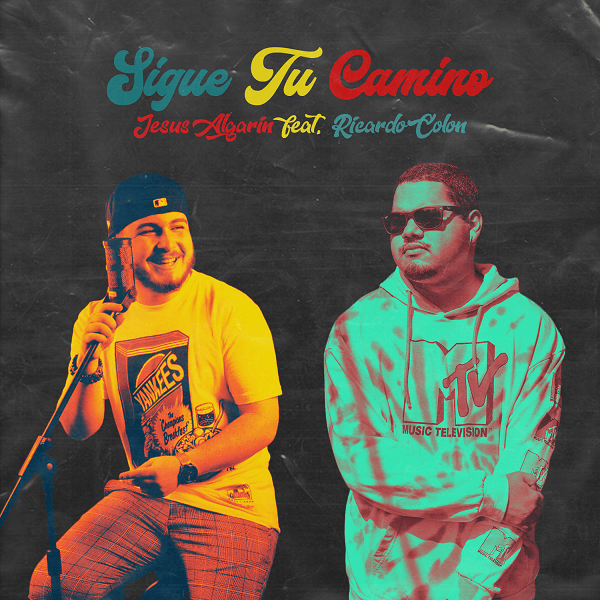
The production is available in digital format on all platforms. The promotional cut is Sigue tu camino performed by Ricardo Colón, who also sings in the Willie Rosario Orchestra. The other four tracks included in the production are:  Playita, Cadencia y sabor and La calle se prendió; performed by vocalist José Luis De Jesús and Caribeña, in the voice of Marisabel Vázquez Varela.

The recording studio musicians who participated in the production are from the Caribbean.  Puerto Ricans, Cubans and Venezuelans merge in a salsa embrace; as is to be expected.

Vocals: José Luis De Jesús, Ricardo Colón and Marisabel Vázquez Varela.

Backing vocals: Jorge Yadiel Santos, Carlos García, Ricardo Colón, José Luis De Jesús, Manolo Ruiz and Carloscar Cepero.

Bass: Jesús Algarín

Piano: Aníbal Cruz and Juan Rivera

Tres: Renesito Avich

Percussion: Miguel Martínez

Trumpets: Luis Arnaldo Ramos, Angel Segarra y Nicolás Benítez

Trombone: Johan Escalante y Carloscar Cepero

Baritone saxophone: Efraín Martínez

Cuatro: Jesús Algarín.

As the son of documentary filmmaker Juan Félix Algarín, Jesús considers himself blessed to have been mentored by a father with first-hand knowledge.  His father always instructed him to be aware of music as a business in the entertainment world. Jesus knows his worth and has kept himself informed as to the costs of production and is clear as to the rates of his work.  He identifies himself as a Puerto Rican and Caribbean musician. He is in every sense of the word, a music worker.

As it is, we are still in salsa.  Yes, salsa lives! The effort, discipline and talent -in that order- of this young bandleader attest to that. Congratulations, and may you continue to “catch the ride”.

For bookings, Ángel Ilarraza: 787-347-4662 or e-mail: [email protected]


By Bella Martinez, ISM Correspondents, San Juan, Puerto Rico


Jesús Algarín is a Puerto Rican bassist who, at the age of 25, landed in the salsa scene

A graduate of Berklee College of Music, with his college degree in hand, the young bassist returned home to make his homeland in salsa time.

Jesús Algarín is a Puerto Rican bassist who, at the age of 25, landed in the salsa scene to make music his life project.  The young musician already walks with a firm step accompanied by the forceful interpretation of his bass, leading his own orchestra with confidence.

From the time he was born, according to what his parents told him, they used to party, so it was not surprising that at the age of 8 he was already the one who was the one who was livening up the parrandas while playing the Puerto Rican cuatro.  Algarín, who was born and raised in the heart of Puerto Rico (Caguas), candidly tells us that as a child, he discovered through our very own parrandera tradition, that music -which he refers to as a wonderful art- had a healing and restorative power.

Well advised by the adults in his family, he recounts that his uncle explained to him early in his life that if he failed to ignite his audience at the Choliseo during a parranda, it would become more difficult for him. Once he understood the advice, he applied it to himself.  Today he concludes that it is necessary to dominate every stage, from a marquee to a public square, and to take it one step at a time.

Through Puerto Rican folk music, studying and interpreting the seis, the aguinaldo, the bomba, and the plena, he was entering into what without planning it became his life project.  Later, playing the Puerto Rican cuatro purely by ear, he was able to enter the “magical” world of music, as he himself describes it.

Already in the sixth grade of elementary school, he began his formal apprenticeship at the Escuela Libre de Música de Caguas.  Before that time, he played the cuatro but did not read music.  Once he learned to read music, he decided to continue growing musically in his instrument.

Six years later, in grade 12, about to finish high school, he took part in the camps that Berklee College of Music brings to Puerto Rico every year. He auditioned for the Puerto Rican cuatro.  However, at the time, he did not achieve his goal of positioning himself. Determined not to give up, the following year he returned to the Berklee camp but changed tactics. He showed up to the workshops with a bass because he understood that the cuatro was not a good fit.  When he filled out the registration form for the workshops, he reported that his bass playing was at the advanced level, even though he knew it wasn’t true.  This adolescent idea, which added a good deal of pressure and stress to his musical performance, helped him get into the ensembles he aspired to qualify for. Today he admits that at that time, which today seems far away, he could not handle the bass because, as an instrument, it was still unknown to him.

In any case, Algarín qualified because, as we know, you have to take your chances with life.  The rest is history. 

With the bass as his main instrument, Algarín got Berklee to give him a scholarship and after four years in Boston, Massachusetts he graduated with a degree in Music Business. In other words, he spent four years making music while learning to see music as a business.

The young bass player confesses that he had not planned to be a musician nor had he thought he would make a living from music.  He did not see music as a possibility, since although it was always an integral part of his life, music was a hobby or a way to serve God in the church.  And that’s what he limited himself to until he came to Berklee’s summer workshops.  Before that, he saw himself as a lawyer and when it was his turn to enter college, he initially enrolled at Ana G. Mendez University.  There he attempted to complete a bachelor’s degree in accounting. However, from the very first accounting class he knew that accounting was not for him.

Algarín capitalized on what he learned, and has been able to stick to music as a way of life; from a more realistic and less idealistic perspective. Of course, all without losing the artistic focus of musical interpretation.  Along with his musical training, he has been preparing himself in legal issues, maintaining business awareness, focusing on the protection of music and copyrights.  He has also been responsible for making other musicians aware of the importance of registering their music with the Library of Congress and thus making the most of their work.  There is no doubt that Algarín knows his worth as a musician and from his space he has decided to serve and guide his counterparts to protect their work.

Before entering the studio to record his project, Algarín had recorded with Manolito Rodríguez.  During his student years in Boston, he was a musician in the Eric German Orchestra, the orchestra that accompanies visiting solo singers in the New England area.

Today, his main instrument is the bass, double bass, baby base or electric bass.

The bassist, a native of Caguas and graduate of Berklee College of Music, class of 2020, returned to Puerto Rico to lead his own musical project.

Two years after Algarín’s return home, the orchestra is already promoting its first production entitled “Dímelo Algarín”, which is part of his project “Jesús Algarín”. The format of the base orchestra of the project is as follows: winds (trumpet, trombone and baritone saxophone), bass, piano, conga, timbal, bongo and bell; backing singers and choirs. This, his first production, contains 5 songs, with contemporary themes in its lyrics. This lyric, however, embraces the nostalgic sonority of the sextet, complementing some of the songs with the Cuban tres. The bassist leader of his project arranged and composed these 5 unreleased tracks, which are merged in a production for which Jesús Algarín is also responsible.

The production is available in digital format on all platforms. The promotional cut is Sigue tu camino performed by Ricardo Colón, who also sings in the Willie Rosario Orchestra. The other four tracks included in the production are:  Playita, Cadencia y sabor and La calle se prendió; performed by vocalist José Luis De Jesús and Caribeña, in the voice of Marisabel Vázquez Varela.

The recording studio musicians who participated in the production are from the Caribbean.  Puerto Ricans, Cubans and Venezuelans merge in a salsa embrace; as is to be expected.

Vocals: José Luis De Jesús, Ricardo Colón and Marisabel Vázquez Varela.

Backing vocals: Jorge Yadiel Santos, Carlos García, Ricardo Colón, José Luis De Jesús, Manolo Ruiz and Carloscar Cepero.

Bass: Jesús Algarín

Piano: Aníbal Cruz and Juan Rivera

Tres: Renesito Avich

Percussion: Miguel Martínez

Trumpets: Luis Arnaldo Ramos, Angel Segarra y Nicolás Benítez

Trombone: Johan Escalante y Carloscar Cepero

Baritone saxophone: Efraín Martínez

Cuatro: Jesús Algarín.

As the son of documentary filmmaker Juan Félix Algarín, Jesús considers himself blessed to have been mentored by a father with first-hand knowledge.  His father always instructed him to be aware of music as a business in the entertainment world. Jesus knows his worth and has kept himself informed as to the costs of production and is clear as to the rates of his work.  He identifies himself as a Puerto Rican and Caribbean musician. He is in every sense of the word, a music worker.

As it is, we are still in salsa.  Yes, salsa lives! The effort, discipline and talent -in that order- of this young bandleader attest to that. Congratulations, and may you continue to “catch the ride”.

For bookings, Ángel Ilarraza: 787-347-4662 or e-mail: [email protected]

  • « Go to Previous Page
  • Page 1
  • Interim pages omitted …
  • Page 7
  • Page 8
  • Page 9
  • Page 10
  • Page 11
  • Interim pages omitted …
  • Page 31
  • Go to Next Page »

International Salsa Magazine (ISM) is a monthly publication about Salsa activities around the world, that has been publishing since 2007. It is a world network of volunteers coordinated by ISM Magazine. We are working to strengthen all the events by working together.