• Skip to primary navigation
  • Skip to main content

International Salsa Magazine

  • Home
  • Previous editions
    • 2025
      • ISM / November 2025
      • ISM / October 2025
      • ISM / September 2025
      • ISM / August 2025
      • ISM / July 2025
      • ISM / June 2025
      • ISM / May2025
      • ISM / April 2025
      • ISM / March 2025
      • ISM / February 2025
      • ISM / January 2025
    • 2024
      • ISM / December 2024
      • ISM / November 2024
      • ISM / October 2024
      • ISM / September 2024
      • ISM / August 2024
      • ISM / July 2024
      • ISM / June 2024
      • ISM / May 2024
      • ISM / April 2024
      • ISM / March 2024
      • ISM / February 2024
      • ISM / January 2024
    • 2023
      • ISM / December 2023
      • ISM / November 2023
      • ISM / October 2023
      • ISM – September 2023
      • ISM – August 2023
      • ISM July 2023
      • ISM Edition June 2023
      • ISM – May 2023
      • ISM April 2023
      • ISM March 2023
      • ISM February 2023
      • ISM January 2023
    • 2022
      • ISM December 2022
      • ISM November 2022
      • ISM October 2022
      • ISM September 2022
      • ISM August 2022
      • ISM July 2022
      • ISM June 2022
      • ISM May 2022
      • ISM February 2022
      • ISM January 2022
    • 2021
      • ISM December 2021
      • ISM November 2021
      • ISM October – 2021
      • ISM September 2021
      • ISM August 2021
      • ISM July 2021
      • ISM May 2021
      • ISM April 2021
      • ISM June 2021
      • ISM March 2021
      • ISM February 2021
      • ISM January 2021
    • 2020
      • ISM December 2020
      • ISM November 2020
      • ISM October 2020
      • ISM September 2020
      • ISM August 2020
      • ISM July 2020
      • ISM June 2020
      • ISM May 2020
      • ISM April 2020
      • ISM March 2020
      • ISM February 2020
      • ISM January 2020
    • 2019
      • ISM December 2019
      • ISM November 2019
      • ISM October 2019
      • ISM Septembre 2019
      • ISM August 2019
      • ISM July 2019
      • ISM June 2019
      • ISM May 2019
      • ISM April 2019
      • ISM March 2019
      • ISM February 2019
      • ISM January 2019
    • 2018
      • ISM December 2018
      • ISM November 2018
      • ISM October 2018
      • ISM September 2018
      • ISM August 2018
      • ISM July 2018
      • ISM June 2018
      • ISM May 2018
      • ISM April 2018
      • ISM March 2018
      • ISM February 2018
      • ISM January 2018
    • 2017
      • ISM December 2017
      • ISM November 2017
      • ISM October 2017
      • ISM September 2017
      • ISM August 2017
      • ISM July 2017
      • ISM June 2017
      • ISM May 2017
      • ISM April 2017
  • Download Salsa App
    • Android
    • Apple
  • Spanish

Search Results for: Trumpet

Roberto Rodríguez was a Cuban trumpet player and composer, author of Ray Barreto’s hit song “Que viva la Música” (Long Live Music)

Roberto Reimundo Rodríguez (Cienfuegos, January 23, 1936 – April 18, 1988), was a Cuban trumpeter and composer, who belonged to Ray Barreto’s orchestra, which he would later leave to belong to Fania All-Stars, as lead trumpet player.

Roberto is the author of Ray Barreto’s hit “Que viva la música”.

Roberto was born in 1938, in Cienfuegos (Cuba). He began his musical career at the age of 12, in his native province; cradle of the world famous Orquesta Aragón.
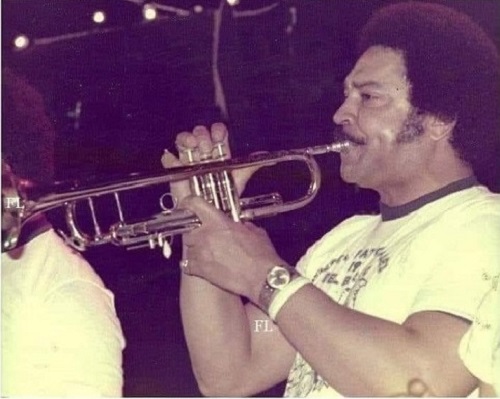
 

Roberto Rodríguez
Roberto Rodríguez

From an early age he participated in “Las Comparsas de Cuba” and with the orchestra “La Unión Fraternal de Cienfuegos”.

In 1955, he emigrated to the United States and in 1957 he married Nancy Zayas, with whom he had three sons: Roberto Jr., William and Richard.

While growing as an artist, Roberto co-founded the orchestra “Los Jóvenes Estrellas de Cuba” with his long-time friend Ernie Stairs. He later moved on to Wilfredo Figueroa’s orchestra and “Ritmo Swing”.

In 1965, Roberto was recommended to Ray Barreto by Eddie Martinez. Eddie was a pianist for both the TataVazquez and Ray Barretto orchestras.

After listening to Roberto, Ray Barretto recognized that he was in contract with Vivar, one of his former colleagues and musicians, and brought him on board. Roberto remained in Ray’s orchestra for 11 years.

His performance as first trumpet soloist was extraordinary. While in Ray’s orchestra, Roberto composed several famous songs such as: “Yo Soy La Candela”, “Fuego y Pa’Lante”, “Invitación al Son”, “Cienfuegos, Perla del Sur”, “Se Traba”, “El Tiempo lo Dirá”, “O’Elefante”, and the worldwide hit: “Que Viva la Música”.

Roberto Rodríguez
Que viva la música

In 1972, Roberto became a member of the Fania All-Stars as first trumpet and soloist. The documentary “Our Latin Thing” launched Roberto along with the other members of the All-Stars to international fame.

Our Latin Thing

On August 26, 1971 New York City gave birth to a sound that would change Latin music forever. That night at the renowned Cheetah nightclub, the Fania All Stars took the stage with their unique sound that echoed across all borders and reached every country. Fania Records re-releases “Our Latin Thing” on DVD, the film that sparked the salsa movement of the seventies.

Roberto Rodríguez
Our Latin Thing (Nuestra Cosa)

From the concert came a double LP entitled “Live At The Cheetah” and the historic film “Our Latin Thing”. Its director, Leon Gast, documented the events at the Cheetah with the addition of footage of the musicians in the recording studio and scenes of New York’s Spanish Harlem.

The 40th anniversary edition of “Our Latin Thing” includes a DVD with the remastered film, and two CDs with the music from the film and some additional tracks, which can be purchased on the label’s official website.

In 1975, Ray decided to take a turn towards a new musical facet and Roberto became part of the group “Los Kimbos”.
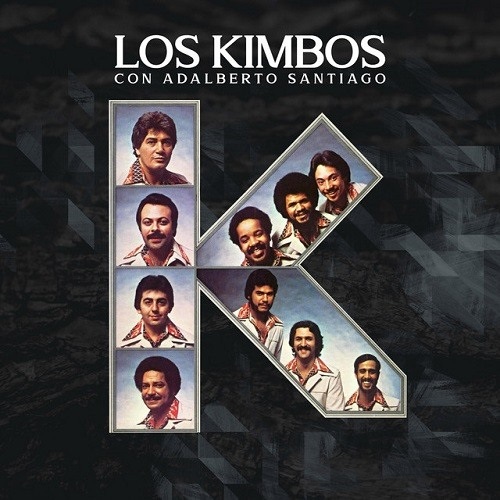
Roberto Rodríguez
Los Kimbos

Two years later, in 1977, Roberto joined the charanga band “Orquesta Broadway”. In this group he not only excelled as a trumpet soloist but also as a vocalist. Here he composed new hits, including: “No Se Va a Poder” and “Como Nueva York no Hay”.

In 1982, Roberto decided to assist his sons in their desire to continue their musical journey and produced the album: “Roberto Rodríguez Presenta a Los Rodríguez”, under the “Combo Records” label.
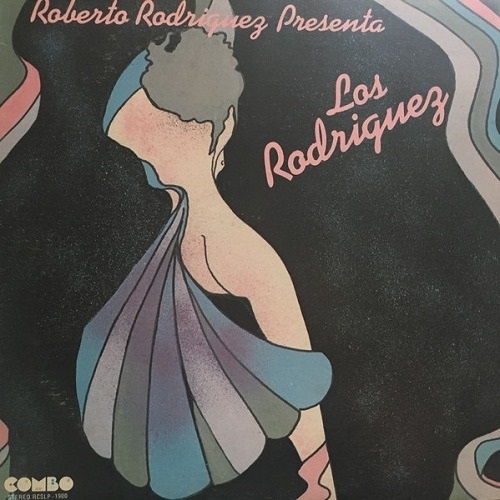
Roberto Rodrígue
Roberto Rodríguez Presenta a Los Rodríguez

In 1983, Roberto joined the “Los Rodriguez” Orchestra, to perform with his sons Roberto Jr (trumpet player) and Willie (bass player).

His health deteriorated in early 1988, and he finally passed away in April of that year, victim of skin cancer. His son Roberto Rodriguez Jr. followed in his footsteps and has excelled in salsa orchestras in New York.

 Roberto Rodríguez was a Cuban trumpet player and composer

Read Also: Miguelito Cuní recognized among the best soneros of Cuba


What famous trumpeter Luis Gonzalez is doing now

How Luis González began his artistic career

Luis González is one of those artists who really make Puerto Ricans proud of being born in the Island of Enchantment. The fascinating story of this boricua begins in March 1954 when he was born in the town of Arecibo, located on the north coast of Puerto Rico, the country from which he moved to look for new opportunities on U.S. soil, starting in Milwaukee, Wisconsin. It was in this city where he spent most of his childhood and began his artistic career in the Youth Orchestra of this place.   

A few years later, he returned to his native country and was notable for being the trumpet player of the Orquesta Concepto Latino de Arecibo, accompanying a big number of artists such as Celia Cruz, Adalberto Santiago and many others. After completing his studies at the Conservatory of Music in Milwaukee, he moved to New York, where he was part of many famous orchestras and worked with renowned artists such as Ray Barreto (whom many consider him his mentor) and Luis Perico Ortiz. Back in Puerto Rico, he worked with La Mulenze, Bobby Valentín, Willie Rosario, Roberto Roena, among other stars. 

This is Luis González
Renowed trumpeter Luis González

It was not until 2009 when he finally decided to give life to his own orchestra which he called Luis González Y Su Orquesta el Tsunami de La Salsa consisting of a total of 12 musicians with a long international career and an uncanny talent. At this time, it is seen as one of the best salsa orchestras in Puerto Rico in its history. The following year, he released what would be his first musical work with his new orchestra entitled Tributo A Un Gigante, which included the collaboration with Luis Perico Ortiz, Adalberto Santiago, Paquito Guzmán, Toñito Vázquez and others. This record production was recognized as one of the most outstanding of that year. 

Recent years

In 2015, he achieved the same feat with his second production Si te Preguntan…, which allowed him to gain great notoriety in the public and the media dedicated to promoting salsa in various parts of the world. 

Years later, González would be inducted into the Puerto Rico Music Hall of Fame thanks to his more than 45 years of musical career, but that was not all. The artist has also received other important recognition from cultural and musical institutions in his native country. Not to mention that he is a member of the Latin Academy of Recording Arts and Sciences (Latin Grammy), getting to participate in the commissions that choose the nominees in some categories. 

Luis next to to Adalberto
Luis González and Adalberto Santiago

In 2020, under the Carnival of Barranquilla, the trumpet player was selected as a member of the jury at the 2020 Orchestras Festival, a well-deserved honor he received on behalf of the Colombian city due to his talent and experience. 

For the moment, he is working hard on his fourth music production, which he has decided to call 50 años… mi música… mi pasión! and will be released to the public in March of this year. A special peculiarity of this new album is that it will be arranged by a top-line team, including Luis Perico Ortiz (who has worked with González on repeated occasions), Ricky González, Oscar Hernández, Javier Hernández, among other eminences. 

By: Johnny Cruz correspondent of International Salsa Magazine in New York City, New York

History of the Orchestra “La Terrífica” of trumpeter José “Joe” Rodriguez

In the early 70’s, the trumpet player of La Sonora Ponceña, José “Joe” Rodríguez, decided to leave the orchestra led by Papo and Quique Lucca.

Joe had been part of “La Más Sureña” since almost the foundation of the orchestra and was even the lead trumpet player in the successful productions “Hacheros Pa’ Un Palo” (1968), “Fuego En El 23” (1969), “Algo de Locura” (1971), “Desde Puerto Rico a Nueva York” (1972) and “Sonora Ponceña” (1972) with which the orchestra achieved great international recognition; however, this time, the trumpet player had decided to execute an idea that had been in his head for some time.

He was also joined by percussionist Mickey Ortiz and, incredibly, the lead voice of La Sonora Ponceña, Tito Gómez.

In the early 70's, the trumpet player of La Sonora Ponceña, José "Joe" Rodríguez, decided to leave the orchestra led by Papo and Quique Lucca.
La Terrífica 1974

Soon, Joe Rodríguez, with the collaboration of the resigning members and his first cousin, bongos player Francisco “Chalina” Alvarado, who curiously had also been part of La Sonora Ponceña in the past, organized his own orchestra which he called “La Terrífica” and began to travel all over Puerto Rico performing at festivals and patron saint festivals.

La Terrífica ‎"Sabor A Pueblo" 1976
La Terrífica ‎”Sabor A Pueblo” 1976

Sometime later they signed a contract with the powerful Fania Records label to record with its subsidiary, Internacional Records, their first album under the production of Larry Harlow, titled “Terrífica” (1974), which featured Adalberto Santiago on backing vocals, Héctor Lavoe and Yayo ‘El Indio’, which included the song ‘Hachero Mayor’ written by Francisco Alvarado and vocalized by Tito Gómez as a protest to one of the most popular Sonora Ponceña songs on the island: ‘Hacheros Pa’ Un Palo’ authored by Arsenio Rodríguez.

Libre Y Prisonero
La Terrífica 1977

“Yo traigo el hacha mayor, De aquella 72 Arsenio me la dejó la, con doble filo la traigo yo.

I come to chop down a stick, which they call ‘palo mayor’ because I’m the brave one here, I’m the axeman, I bring the axe, from that 72 Arsenio left it to me, I bring it with a double edge.

I come from the mountains and I bring a lot of firewood,

Gentlemen, I come waving, I am the main axeman.

Seventy-two axes for one stick, with my two-edged axe,

Now I cut it.

I bring the biggest axe, with a double edge I bring it.

 Gentlemen, I went to the mountain and I come very tasty, to distribute to the whole world, I’m the biggest axe man.

Double-edged, double-edged gentleman.

With double edge I bring it.

Careful, jump out of the way, gentlemen, so that they will know, I’m coming with “La Terrífica”.

If you don’t get out of the way, I’ll run over you with my truck.

I’ll bring it with a double edge”.

The new orchestra was doing well, they enjoyed the public’s acceptance.

The contracts began to arrive by themselves and they had a good future, however, Tito Gómez would surprise everyone when he announced that he was resigning from “La Terrífica” because he had received an interesting proposal from New York to join the powerful band of conguero Ray Barretto who, after the sudden departure of his singer Tito Allen, was looking for a new vocalist to accompany the young Panamanian Rubén Blades at the front of his orchestra.

Orquesta La Terrífica 1979

The following year, La Sonora Ponceña records in “Tiene Pimienta” (1975), its next production, the song “Hachero Sin Hacha” in the voice of Miguelito Ortiz (who arrives to the orchestra replacing Tito Gómez to accompany Luigui Texidor), written by Papo Lucca himself, in which he responds harshly about the alleged awarding of the axe to “La Terrífica” and even makes fun of the resignation of Tito Gómez with the pregón “una gallina que no pone porque ya no tiene gallo” (a hen that doesn’t lay because she no longer has a rooster).

“Where is that great hatchet man who advertises himself out therethe one who remembered Arsenio for a triumph to get.

You are nothing more than a parrot a head without brains a hen that does not lay because it no longer has a rooster.

That axe that you have looked for cardboard teeth that was that the great Arsenio, a joke played on you.

Search well in your memory the year sixty-nine when in your presence Arsenio with Lucia sent me an axe as a reward the sign of the woodcutter.

Axemen without an axe, they are.

Your axe does not break skulls, your axe is made of cardboard.

Arsenio mistook you, Arsenio misled you, your time is long gone Ay, I’m telling you, where is that great axeman?

Maybe he died, maybe he died, you have to put your head in it, you have to put inspiration in it”.

Orquesta La Terrífica Casa Pobre, Casa Grande 1980

Incredibly, when a strong response was expected from “La Terrífica”, its director Joe Rodríguez decided to concentrate his energy on finding a replacement for Tito Gómez and to reinforce his orchestra. Thus, Yolandita Rivera from New York and a 16-year-old teenager named Héctor “Pichie” Pérez joined the group and recorded “Sabor A Pueblo” (1976), their next LP under the production of pianist Jorge Millet.

The differences between both orchestras seemed to vanish as if by magic after a supposed private meeting between the founders of both groups, a situation that allowed them to have a peaceful party.

This fact would be verified later with the recording of two songs by La Terrífica: “Humo En La Cabeza” and ‘”Vida Se Llama Mujer” both authored by Luigui Texidor, the vocalist of La Sonora Ponceña; and the linking to Quique Lucca’s orchestra of vocalist Yolanda Rivera (the main voice of La Terrífica), who, besides other hits, recorded the merengue “Si No Me Meto” composed by Francisco Alvarado, co-founder and bongos player of La Terrífica in the album “El Gigante Del Sur” (1977).

The result of this determination gave great and good results for all, to the extent that Tito Gómez returned to La Sonora Ponceña to record several songs written by Francisco Alvarado, among them “Moreno Soy” included in the album “Explorando” (1978) and eventually Joe Rodríguez participated with Quique Lucca’s orchestra as a guest trumpet player for some trips.

From this moment on, “La Terrífica” would act as a kind of quarry of vocalists and musicians that would provide La Sonora Ponceña with salsa talents, this is the case of Manuel ‘Mannix’ Martínez, Héctor ‘Pichie’ Pérez, Yolanda Rivera, Luisito Carrión, Wito Colón, Luis ‘Cuchy’ Castro (trumpet), Efraín ‘Frao’ Hernández (bass), Freddie Del Valle (trumpet), Japhet Rodríguez (timbal), Jorge Miranda (bongo), among many others.

La Terrífica ‎"Mas Terrífica" 1992
La Terrífica ‎”Mas Terrífica” 1992

La Terrífica, from its creation until 1992, recorded ten incredible productions, saying goodbye to the Salsa market with the hit “Corazón Fracturado”.

For his part, Joe Rodriguez, the founder of La Terrifica, has been retired from music for quite some time and devoted to his religion; while Francisco “Chalina” Alvarado founded El Conjunto La Perla and is still immersed in the world of salsa.

Facebook: Orquesta “La Terrífica”

Source: Frank Manuel Orellana 

Article of Interest: Where the idea of the name of the Fania Record label came from

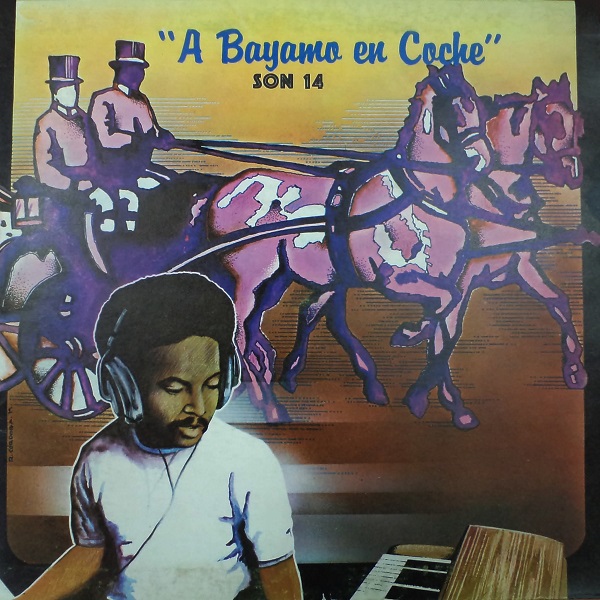
Son 14 The History of the Orchestra and the Success of “A Bayamo en Coche”

The Son 14 orchestra was founded in Santiago de Cuba in 1977 by vocalist Eduardo “El Tiburón” Morales (born in Cuba in 1935) and pianist and musical director Adalberto Álvarez.

As the name suggests, it is a 14-member ensemble dedicated to performing son, the national musical genre of Cuba. In 1978, Lázaro Rosabal (born in Santiago de Cuba in 1953) joined the group.

They quickly recorded several albums for the local EGREM label, many of which became bestsellers throughout Latin America, allowing them to undertake extensive tours across the Americas and Europe.

In 1992, co-founder Álvarez left the band to form his own group. Nevertheless, Son 14 continued its journey under the musical direction of Rosabal.

In addition to their continued success in the Latin market, the band began to gain international recognition, first with the song “El Son De La Madrugada,” included on the compilation Cuba – Fully Charged (Earthworks Records, 1993), and later with the release of Son – The BIG SOUND (Tumi Records, 1995), a compilation of their material from the Álvarez era.

Son 14 de «A Bayamo en Coche»

After introducing a modern, vibrant version of son and its variations (son montuno, bolero son, etc.) to non-Latin audiences, Tumi Records commissioned a new recording at Cuba’s EGREM studios. Released in 1996 as part of the Cuba Explosion series, the album Cubanía proved that the band had not lost an ounce of its musical talent and energy under Rosabal’s direction. Three years later, the group released La Máquina Musical, which incorporated Colombian tropical rhythms into their sound, promoting the album with a European tour that included a performance at the Cuba Presente Festival at the Barbican Centre in London. (Source: AllMusic)

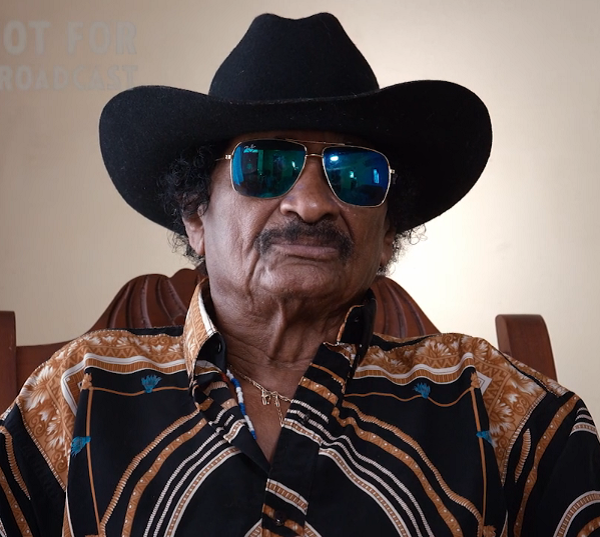
Eduardo Morales Orozco Tiburón

 The Milestone of “A Bayamo en Coche”

The album A Bayamo en Coche (A Bayamo by Carriage) was released in 1979, with its biggest hit being the title track itself. The album’s opening song, composed and arranged by Adalberto Álvarez from Camagüey, instantly transformed him into one of the leading figures in popular Cuban dance music from that year on.

The song “A Bayamo en coche” not only revives traditional son and enriches it with new sounds but also artistically recreates a cherished tradition rooted in Bayamo, the cradle of Cuban nationality. In this city, coches (horse-drawn carriages) are used for pleasure rides and recreation, and the song’s lyrics narrate these moments.

The album contained other tracks that were hugely popular in Cuba between 1978 and 1980, such as “Calle Enramada” (a son elegy to that main Santiago street), “El Son De La Madrugada” (with a beautiful later version by Omara Portuondo), “Se quema la trocha,” and “Elena la cumbanchera,” which turned the record into a landmark within this genre of Cuban music. Most of the tracks were performed by Tiburón Morales, the group’s lead vocalist.

Tribute to The Gentleman of Son

Recently, Son 14 founder Adalberto Álvarez, known as “El Caballero del Son” (The Gentleman of Son), was honored with a concert at the Karl Marx Theatre. This event celebrated his 46 years in music and the 35th anniversary of his later orchestra, Adalberto Álvarez y su Son.

The concert was a memorable tribute to the work of the composer of “A Bayamo en coche.” Some of his best songs were performed by notable Cuban musicians:

  • Septeto Santiaguero (Son para un sonero)
  • Pancho Amat and Alain Pérez (Tu fiel trovador)
  • Alexander Abreu (Pura imagen)
  • Paulo F. G. (Fin de semana)

At other points, Frank Fernández performed a duet accompaniment with the voices of Adalberto Álvarez and Jorge Luis Rojas, “Rojitas,” on Santa Cecilia.

Additionally, Rojitas sang with Tania Pantoja (Vivir lo nuestro) and solo (Y qué tú quieres que te den). Robertón and Lele, vocalists from Van Van, performed Agua que cae del cielo, while the orchestra Adalberto Álvarez y su Son took on De Cuba pa’l mundo entero, Son de la madrugada, and Los caminos de Ifá.

En La Sala Show “El Saraito” Adalberto Álvarez (R.I.P) Fundador, Director. Arreglista y Pianista del Son 14 de Cuba, Dj. Augusto Felibertt y Vicente López

That night, Maestro José Luis Cortés highlighted Álvarez’s musical quality, focusing specifically on “A Bayamo en coche,” the song that, in 1979, announced the existence of a great artist to the public. Álvarez was capable of bringing son to Cuban art schools and has defended Cuban son with grace and artistry, all while staying true to the essence of one of the dance music genres that best represents Cuban identity. (Source: Joel del Río, Cibercuba)

“A Bayamo En Coche” Album Details (1980)

No. Track Genre Composer
01. A Bayamo En Coche Son Adalberto Álvarez
02. El Son De La Madrugada Son guaguancó Adalberto Álvarez
03. Se Fue Mi Amor Y No Lo Vi Partir Bolero son Adalberto Álvarez
04. Calle Enramada Son Pedro Gómez
05. Elena La Cumbanchera Son Gerardo Martínez
06. Se Quema La Trocha Bachata-Son Adalberto Álvarez
07. Tal Vez Vuelvas A Llamarme Son montuno Adalberto Álvarez
08. Gimen Las Rosas Por Una Triste Ilusión Bolero Adalberto Álvarez
09. Vamos, Háblame Ahora Bachata-son Adalberto Álvarez

Musicians who participated in the recording (1979):

  • Director, Acoustic Piano, Keyboards: Adalberto Álvarez
  • Vocals, Minor Percussion: Eduardo “El Tiburón” Morales, Héctor Wedderbron, Daniel Carmenates
  • Bass: Jorge Machado
  • Guitar: Efisio Barroso
  • Trumpet: Eduardo Sánchez, Guillermo Femández, José Fernández, Dagoberto Rodríguez
  • Trombone: Lázaro Rosabal
  • Tumbadora (Conga Drum): Ubaldo Canes
  • Bongó, Cowbell: Guillermo Viera

Recorded at: EGREM Studios (1979)

Collaborators:

L’Òstia Latin Jazz

Dj. Augusto Felibertt

Also Read: Luis Conte: The Cuban-American percussionist who fuses Cuban son with global music

Ángel Luis Canales is a renowned Puerto Rican singer and composer known as “El Diferente” (The Different One) for his particular and irreverent style

Angel Canales was born on June 29, 1950, in Santurce, Puerto Rico.

During his childhood, around the age of 8 or 10, he moved with his family to New York City, where he lived in East Harlem (Upper Manhattan). Musical influences indicate that from a young age, he was strongly influenced by the music of Cortijo y su Combo and Ismael Rivera.

Before or concurrently with his musical career, he worked in the jewelry business; he was a messenger and later learned to cut and polish diamonds, a skill that allowed him to self-finance his musical career and pay high salaries to his musicians.

Ángel Luis Canales is a renowned Puerto Rican singer and songwriter known as El Diferente for his unique and irreverent style.

Musical Career

His Beginnings: He started as a timbalero in Ray Jay’s orchestra, where he debuted as a singer, replacing the lead vocalist.

His first album (1970), titled “Brujería,” was released in 1970 and recorded under the Alegre Records label, with musical direction by Mark Dimond. Hits from this production include “El Barrio,” “Yo No Tengo Pena,” and the title track.

Notable Hits: Among his most popular songs are: “Nostalgia,” “Sol de Mi Vida,” “Perico Macoña,” “Lejos de Ti,” “Hace Tiempo,” “El Cantante y la Orquesta,” “Sabor de los Rumberos Nuevos,” “Bomba Carambomba,” and his celebrated rendition of the bolero “Dos Gardenias.”

His Unique Style is recognized for its unorthodox approach and distinctive vocal timbre, which earned him the nickname “El Diferente” (The Different One).

He was a highly independent artist who self-financed his albums and founded his own record label, Celanac Records.

Tours and Retirement

International Tours: He toured internationally, visiting countries such as Panama (his first), Venezuela (where he performed at the Poliedro de Caracas in 1982), Colombia, and Peru. It is said that he never performed with his orchestra in his native Puerto Rico.

He retired in the late 1990s, deciding to leave the stage.

Currently, he is reportedly battling Parkinson’s disease, which has limited him and led him to choose silence and retirement, although he occasionally attends private events. He is currently 75 years old.

Àngel Luis Canales, y el pianista, compositor y arreglista Gilberto el pulpo Colòn

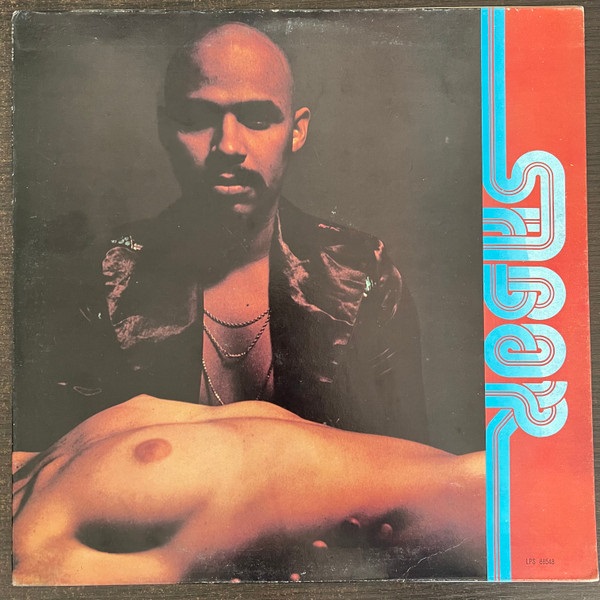
50 Years Since the Launch of “Sabor” (1975)

The Album: The album titled “Sabor” by Angel Canales was released under the Alegre Records label in 1975.

Only a boricua (Puerto Rican) who has been absent from their homeland knows what it’s like to be away from Puerto Rico when winter arrives in New York City. Or when you’re inside a taxi or walking the congested streets of the Bronx or the Latino barrio, and all you see around you are skyscrapers and more skyscrapers. The anxiety and sense of helplessness that overwhelm your spirit in the concrete jungle can only be calmed by memories.

50 years ago, on Monday, November 10, 1975, the unique voice of Puerto Rican singer Ángel Luis Canales consoled the thousands of boricuas oppressed by nostalgia with his composition “Lejos De Ti” (Far From You). It was a confession and affirmation of his Puerto Rican identity, in which he asserts that his love for his homeland will never die, even though he was raised in New York.

The song is a guaguancó with lyrics that evoke images of old San Juan, Villa Palmeras and its rich bomba heritage, Boca de Cangrejos, fried fritters on the grill, and the river that crosses through the old Ancón de Loíza Aldea, where his grandmother lived. “Lejos De Ti” remains the most remembered track from “Sabor,” an album produced by Joe Cain, recorded in late 1974, and released by Alegre Records on Monday, November 10, 1975.

Angle Canales Sabor 1975 Photography By Dominique

This album is considered one of the best salsa releases of the 1970s.

Canales’ Style: Canales favored a different style of interpreting Afro-Caribbean rhythms, combining elements from Héctor Lavoe, Ismael Rivera, Vicentico Valdés, and Paquito Pérez (the singer of the Orquesta Zodiac of Loíza). He extended the melodies with his nasal voice, challenging the poetry of the montunos, but going off-key and mispronouncing some words. His diction was far from perfect.

Production: The architect of Canales’ success was Colombian pianist Edy Martínez, who arranged seven of the eight tracks on this session, from cut #2 to #8. Due to a prior commitment with Mongo Santamaría’s band, he left his compatriot José Madrid in charge of the piano performance on this record.

Under Martínez’s direction, Canales embraced fame. “Sabor” was his second album between 1970 and 1971, he had recorded the “Brujería” session with pianist Mark Alexander “Markolino” Dimond, who founded Conjunto Sabor after spending several years with Willie Colón’s band.

Canales reappeared four years later with the Orquesta Sabor los Rumberos Nuevos with an arrangement by Louie Cruz. That same year, 1975, Larry Harlow produced Mark Dimond’s classic “Beethoven’s V” featuring vocalists Frankie Dante and Chivirico Dávila. “Sabor” was a huge hit.

Tours and Artistic Choices: The singer toured Europe, the United States, and South America, where Colombians, Panamanians, and Peruvians remember him fondly to this day, despite health issues forcing him to retire from the stage.

During the golden age of salsa, singers were expected to master all genres, and boleros were no exception. His vocalization on “La Hiedra” (a track written by Saverio Saratini and Vincenzo D’Acquisto) and “No Te Acostumbres” (a track belonging to Doris Aghian’s catalog) is notable for its theatricality, a trick Canales employed to mask the limitations of his voice.

Salsa dancers who thrive on piano, trombone, and percussion solos will be delighted with “Sabor Los Rumberos Nuevos,” “Sol De Mi Vida” (dedicated to his wife Brunilda), “El Cantante y La Orquesta,” and the hit “Hace Tiempo” (with its memorable chorus: ay, ay, ay, no me hagas padecer así – oh, oh, oh, don’t make me suffer like this).

Legacy: Before becoming a professional singer, Canales worked as a jeweler. A look at the covers of his first two albums is enough to conclude that he was a pioneer in the use of bling-bling in salsa. As a composer, Canales was a solid chronicler of barrio life. The story told in “Perico Macoña” is a good example: a man who smokes a joint and loses all self-control, insulting his own friends with his abrupt comments.

The re-issue of “Sabor” is a fitting tribute to the memory of the late Joe Cain.

Credits

  • Trombone: Juan Torres, Ricardo Montañez
  • Trumpet: Tom Malone
  • Baritone Saxophone, Flute: Emérito Benítez
  • Piano: José Madrid
  • Bass: Eddie Testo
  • Congas: Antonio Tapia
  • Timbales: Gadier Quiñones
  • Bongo: Aldemaro Luis Rivera
  • Producer: Joe Cain
  • Musical Director: Juan Torres
  • Recorded at: LE Studio NYC, December 1974
  • Engineer: Sandy Sina
  • Arrangements: Edy Martínez (except “Sabor Los Rumberos Nuevos” by Louie Cruz)

Torres, Montañez, Tapia, and Quiñones had previously collaborated with Canales on Markolino Dimond’s “Brujería” album.

Collaboration:

  • GonZalsa
  • L’Òstia Latin Jazz
  • Dj. Augusto Felibertt
  • Jaime Torres Torres
  • Fania Record
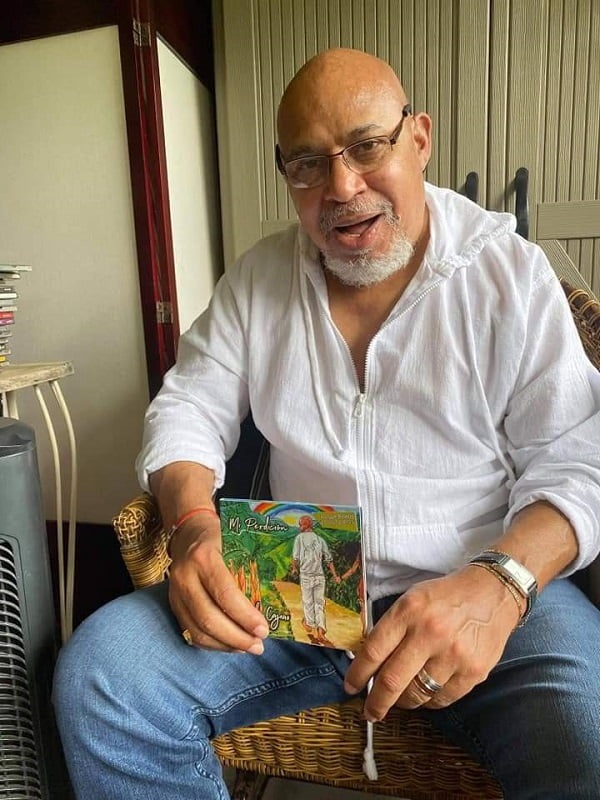
Angel Canales «El Diferente» recibiendo la produccion de Danilo Cajiao Titulada»Mi Perdicion» año 2020

Also Read: Angel Canales «El Diferente» receiving the production from Danilo Cajiao titled »Mi Perdicion» year 2020.

  • « Go to Previous Page
  • Page 1
  • Page 2
  • Page 3
  • Page 4
  • Interim pages omitted …
  • Page 55
  • Go to Next Page »

International Salsa Magazine (ISM) is a monthly publication about Salsa activities around the world, that has been publishing since 2007. It is a world network of volunteers coordinated by ISM Magazine. We are working to strengthen all the events by working together.