• Skip to primary navigation
  • Skip to main content

International Salsa Magazine

  • HOME
  • Previous editions
    • 2026
      • ISM / April 2026
      • ISM / March 2026
      • ISM / February 2026
      • ISM / January 2026
    • 2025
      • ISM / December 2025
      • ISM / November 2025
      • ISM / October 2025
      • ISM / September 2025
      • ISM / August 2025
      • ISM / July 2025
      • ISM / June 2025
      • ISM / May2025
      • ISM / April 2025
      • ISM / March 2025
      • ISM / February 2025
      • ISM / January 2025
    • 2024
      • ISM / December 2024
      • ISM / November 2024
      • ISM / October 2024
      • ISM / September 2024
      • ISM / August 2024
      • ISM / July 2024
      • ISM / June 2024
      • ISM / May 2024
      • ISM / April 2024
      • ISM / March 2024
      • ISM / February 2024
      • ISM / January 2024
    • 2023
      • ISM / December 2023
      • ISM / November 2023
      • ISM / October 2023
      • ISM – September 2023
      • ISM – August 2023
      • ISM July 2023
      • ISM Edition June 2023
      • ISM – May 2023
      • ISM April 2023
      • ISM March 2023
      • ISM February 2023
      • ISM January 2023
    • 2022
      • ISM December 2022
      • ISM November 2022
      • ISM October 2022
      • ISM September 2022
      • ISM August 2022
      • ISM July 2022
      • ISM June 2022
      • ISM May 2022
      • ISM February 2022
      • ISM January 2022
    • 2021
      • ISM December 2021
      • ISM November 2021
      • ISM October – 2021
      • ISM September 2021
      • ISM August 2021
      • ISM July 2021
      • ISM May 2021
      • ISM April 2021
      • ISM June 2021
      • ISM March 2021
      • ISM February 2021
      • ISM January 2021
    • 2020
      • ISM December 2020
      • ISM November 2020
      • ISM October 2020
      • ISM September 2020
      • ISM August 2020
      • ISM July 2020
      • ISM June 2020
      • ISM May 2020
      • ISM April 2020
      • ISM March 2020
      • ISM February 2020
      • ISM January 2020
    • 2019
      • ISM December 2019
      • ISM November 2019
      • ISM October 2019
      • ISM Septembre 2019
      • ISM August 2019
      • ISM July 2019
      • ISM June 2019
    • 2016
      • ISM December 2016
  • Spanish
  • Download Salsa App
    • Android
    • Apple

Search Results for: Trumpet

Dominican trumpeter Wilson Portuondo talks about La Sonora Nuyorkina

As shown in the most traditional media and digital platforms, Dominican artists belonging to diverse musical genres have been working hard for many years to finally be recognized in the world. That is the case of talented bandleader and trumpeter Wilson Portuondo, with whom we managed to contact to know much more about his life and career.

Trumpeter Wilson Portuondo
This is Dominican trumpeter Wilson Portuondo from La Sonora Nuyorkina

How Wilson became interested in music

Wilson, our protagonist in this story, became interested in the musical world shortly after his 15th birthday in his native Dominican Republic, which was already well known for various types of merengue at the time. The young man frequently attended concerts performed in parks on weekends, which were free of charge, allowing him to enjoy the bands from his town without representing excessive expenditure for his family.

This was awakening in the boy a great desire to imitate the musicians he saw on stage and be as great as them someday, so he wanted to start studying music and see what he could achieve with that knowledge.

Professional beginnings

Wilson’s first experience as a professional musician came from the hand of the town’s municipal band in the city of Santiago. He also got to play in the municipal band of the firemen and the municipal band of the Dominican National Police, which had a headquarters in the aforementioned city. 

Thanks to these groups and others, he specialized in playing classical music and merengue, but things changed greatly when he decided to move to New York as a young adult who was about to celebrate his 20th birthday.

Wilson playing
Wilson Portuondo playing the trumpet live

Wilson as a trumpeter

The instrument for which Wilson is best is the trumpet, which he confesses he began playing almost by accident. His fascination with the trumpet started when he was studying at the Culture and Art Institute while still in Santiago, as it was the first instrument he came in contact with that caught his attention at the institution.

At that time, he would never have imagined that he would play it, but he ended up feeling an enormous love for it and now considers it his favorite instrument among all others. However, he does not limit himself to this, as he can play the piano and is learning to play percussion, which includes the conga, bongo, Dominican tambora, güira and many more. 

Once he arrived in New York, he continued committed to learn as much as he could about music and studied at various institutes such as the Harlen School of the Art and later at the State University of New York (SUNY), where he studied classical trumpet for four years until he graduated.

He has learned to play the rest of the instruments through practice and lessons with other musician friends.

Arrival in the United States

When he arrived in New York, Wilson had to take an extra year in high school and, thanks to his studies, he was able to make friends with music students who invited him to enroll in the Harlem School of Art, a place where he had contact with many other people linked to the environment who began to call him to play with them as a freelancer.

Wilson at an event
Wilson Portuondo at the social dance event ”Salsita Social Pa’l Pueblo”

In parallel to this, he was taking dance classes in New York style, which allowed him to attend many social dances and such live music events. Something that the artist noticed at that time was that the groups he saw always played the same songs like ”El Cuarto de Tula”, ”Soy Pilongo”, ”No le pegue a la Negra”, ”Rebelión”, among others. In addition to notice that they did not meet to rehearse, but played together the same as always.

To some extent, he feels that these mistakes on the part of so many orchestras inspired him to create his own project which he would baptize as La Sonora Neoyorkina, since he wanted to offer the public a fresh and new repertoire that did not include the same old thing. However, he always makes sure that he and his musicians rehearse as much as possible so as not to make the same mistakes as other groups.

Among the musicians who are currently in the group, we can mention Anthony Almonte, Osay Calvo, Nestor Villar, Carlos Mena, Carly Maldonado, among others. Venezuelan percussionist Robert Quintero, Luisito Quintero’s cousin, has also played in the band.

However, although they usually do covers of various classic songs, they have also strived to create their own original music, so they already have original songs such as ”Sonora Llegó” and ”Summertime”. Also, the group is making preparations to complete their first studio album next year.

Read also: Juan Karlos Jiménez talks about his orchestra Salsa Nueva Band and freelance career

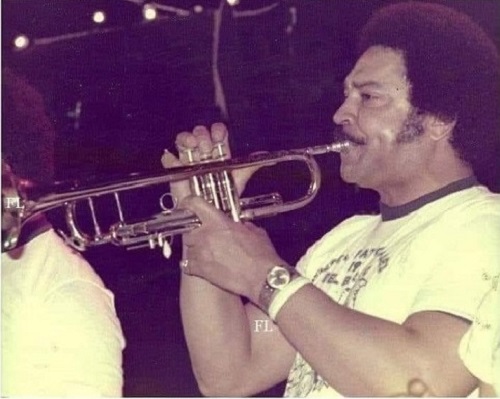
Roberto Rodríguez was a Cuban trumpet player and composer, author of Ray Barreto’s hit song “Que viva la Música” (Long Live Music)

Roberto Reimundo Rodríguez (Cienfuegos, January 23, 1936 – April 18, 1988), was a Cuban trumpeter and composer, who belonged to Ray Barreto’s orchestra, which he would later leave to belong to Fania All-Stars, as lead trumpet player.

Roberto is the author of Ray Barreto’s hit “Que viva la música”.

Roberto was born in 1938, in Cienfuegos (Cuba). He began his musical career at the age of 12, in his native province; cradle of the world famous Orquesta Aragón.


Roberto Rodríguez
Roberto Rodríguez

From an early age he participated in “Las Comparsas de Cuba” and with the orchestra “La Unión Fraternal de Cienfuegos”.

In 1955, he emigrated to the United States and in 1957 he married Nancy Zayas, with whom he had three sons: Roberto Jr., William and Richard.

While growing as an artist, Roberto co-founded the orchestra “Los Jóvenes Estrellas de Cuba” with his long-time friend Ernie Stairs. He later moved on to Wilfredo Figueroa’s orchestra and “Ritmo Swing”.

In 1965, Roberto was recommended to Ray Barreto by Eddie Martinez. Eddie was a pianist for both the TataVazquez and Ray Barretto orchestras.

After listening to Roberto, Ray Barretto recognized that he was in contract with Vivar, one of his former colleagues and musicians, and brought him on board. Roberto remained in Ray’s orchestra for 11 years.

His performance as first trumpet soloist was extraordinary. While in Ray’s orchestra, Roberto composed several famous songs such as: “Yo Soy La Candela”, “Fuego y Pa’Lante”, “Invitación al Son”, “Cienfuegos, Perla del Sur”, “Se Traba”, “El Tiempo lo Dirá”, “O’Elefante”, and the worldwide hit: “Que Viva la Música”.

Roberto Rodríguez
Que viva la música

In 1972, Roberto became a member of the Fania All-Stars as first trumpet and soloist. The documentary “Our Latin Thing” launched Roberto along with the other members of the All-Stars to international fame.

Our Latin Thing

On August 26, 1971 New York City gave birth to a sound that would change Latin music forever. That night at the renowned Cheetah nightclub, the Fania All Stars took the stage with their unique sound that echoed across all borders and reached every country. Fania Records re-releases “Our Latin Thing” on DVD, the film that sparked the salsa movement of the seventies.

Roberto Rodríguez
Our Latin Thing (Nuestra Cosa)

From the concert came a double LP entitled “Live At The Cheetah” and the historic film “Our Latin Thing”. Its director, Leon Gast, documented the events at the Cheetah with the addition of footage of the musicians in the recording studio and scenes of New York’s Spanish Harlem.

The 40th anniversary edition of “Our Latin Thing” includes a DVD with the remastered film, and two CDs with the music from the film and some additional tracks, which can be purchased on the label’s official website.

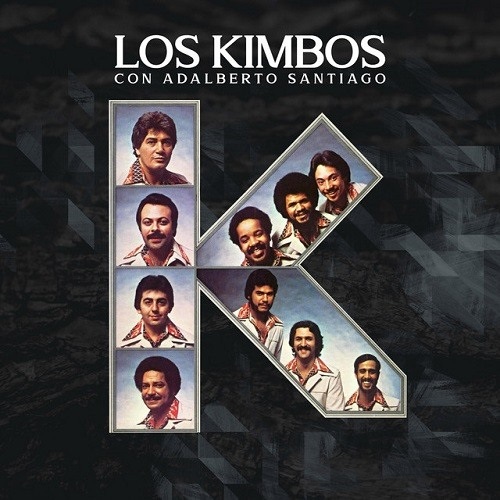
In 1975, Ray decided to take a turn towards a new musical facet and Roberto became part of the group “Los Kimbos”.

Roberto Rodríguez
Los Kimbos

Two years later, in 1977, Roberto joined the charanga band “Orquesta Broadway”. In this group he not only excelled as a trumpet soloist but also as a vocalist. Here he composed new hits, including: “No Se Va a Poder” and “Como Nueva York no Hay”.

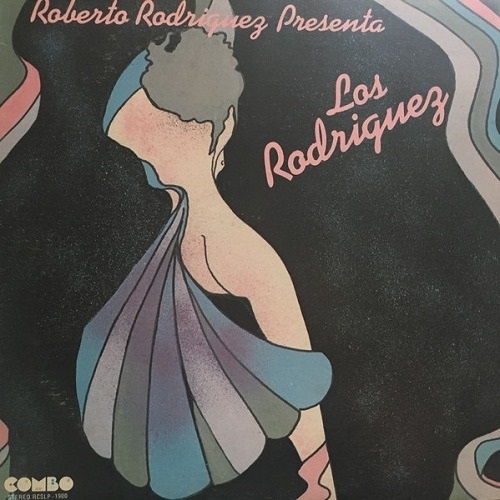
In 1982, Roberto decided to assist his sons in their desire to continue their musical journey and produced the album: “Roberto Rodríguez Presenta a Los Rodríguez”, under the “Combo Records” label.

Roberto Rodrígue
Roberto Rodríguez Presenta a Los Rodríguez

In 1983, Roberto joined the “Los Rodriguez” Orchestra, to perform with his sons Roberto Jr (trumpet player) and Willie (bass player).

His health deteriorated in early 1988, and he finally passed away in April of that year, victim of skin cancer. His son Roberto Rodriguez Jr. followed in his footsteps and has excelled in salsa orchestras in New York.

 Roberto Rodríguez was a Cuban trumpet player and composer

Read Also: Miguelito Cuní recognized among the best soneros of Cuba


What famous trumpeter Luis Gonzalez is doing now

How Luis González began his artistic career

Luis González is one of those artists who really make Puerto Ricans proud of being born in the Island of Enchantment. The fascinating story of this boricua begins in March 1954 when he was born in the town of Arecibo, located on the north coast of Puerto Rico, the country from which he moved to look for new opportunities on U.S. soil, starting in Milwaukee, Wisconsin. It was in this city where he spent most of his childhood and began his artistic career in the Youth Orchestra of this place.   

A few years later, he returned to his native country and was notable for being the trumpet player of the Orquesta Concepto Latino de Arecibo, accompanying a big number of artists such as Celia Cruz, Adalberto Santiago and many others. After completing his studies at the Conservatory of Music in Milwaukee, he moved to New York, where he was part of many famous orchestras and worked with renowned artists such as Ray Barreto (whom many consider him his mentor) and Luis Perico Ortiz. Back in Puerto Rico, he worked with La Mulenze, Bobby Valentín, Willie Rosario, Roberto Roena, among other stars. 

This is Luis González
Renowed trumpeter Luis González

It was not until 2009 when he finally decided to give life to his own orchestra which he called Luis González Y Su Orquesta el Tsunami de La Salsa consisting of a total of 12 musicians with a long international career and an uncanny talent. At this time, it is seen as one of the best salsa orchestras in Puerto Rico in its history. The following year, he released what would be his first musical work with his new orchestra entitled Tributo A Un Gigante, which included the collaboration with Luis Perico Ortiz, Adalberto Santiago, Paquito Guzmán, Toñito Vázquez and others. This record production was recognized as one of the most outstanding of that year. 

Recent years

In 2015, he achieved the same feat with his second production Si te Preguntan…, which allowed him to gain great notoriety in the public and the media dedicated to promoting salsa in various parts of the world. 

Years later, González would be inducted into the Puerto Rico Music Hall of Fame thanks to his more than 45 years of musical career, but that was not all. The artist has also received other important recognition from cultural and musical institutions in his native country. Not to mention that he is a member of the Latin Academy of Recording Arts and Sciences (Latin Grammy), getting to participate in the commissions that choose the nominees in some categories. 

Luis next to to Adalberto
Luis González and Adalberto Santiago

In 2020, under the Carnival of Barranquilla, the trumpet player was selected as a member of the jury at the 2020 Orchestras Festival, a well-deserved honor he received on behalf of the Colombian city due to his talent and experience. 

For the moment, he is working hard on his fourth music production, which he has decided to call 50 años… mi música… mi pasión! and will be released to the public in March of this year. A special peculiarity of this new album is that it will be arranged by a top-line team, including Luis Perico Ortiz (who has worked with González on repeated occasions), Ricky González, Oscar Hernández, Javier Hernández, among other eminences. 

By: Johnny Cruz correspondent of International Salsa Magazine in New York City, New York

History of the Orchestra “La Terrífica” of trumpeter José “Joe” Rodriguez

In the early 70’s, the trumpet player of La Sonora Ponceña, José “Joe” Rodríguez, decided to leave the orchestra led by Papo and Quique Lucca.

Joe had been part of “La Más Sureña” since almost the foundation of the orchestra and was even the lead trumpet player in the successful productions “Hacheros Pa’ Un Palo” (1968), “Fuego En El 23” (1969), “Algo de Locura” (1971), “Desde Puerto Rico a Nueva York” (1972) and “Sonora Ponceña” (1972) with which the orchestra achieved great international recognition; however, this time, the trumpet player had decided to execute an idea that had been in his head for some time.

He was also joined by percussionist Mickey Ortiz and, incredibly, the lead voice of La Sonora Ponceña, Tito Gómez.

In the early 70's, the trumpet player of La Sonora Ponceña, José "Joe" Rodríguez, decided to leave the orchestra led by Papo and Quique Lucca.
La Terrífica 1974

Soon, Joe Rodríguez, with the collaboration of the resigning members and his first cousin, bongos player Francisco “Chalina” Alvarado, who curiously had also been part of La Sonora Ponceña in the past, organized his own orchestra which he called “La Terrífica” and began to travel all over Puerto Rico performing at festivals and patron saint festivals.

La Terrífica ‎"Sabor A Pueblo" 1976
La Terrífica ‎”Sabor A Pueblo” 1976

Sometime later they signed a contract with the powerful Fania Records label to record with its subsidiary, Internacional Records, their first album under the production of Larry Harlow, titled “Terrífica” (1974), which featured Adalberto Santiago on backing vocals, Héctor Lavoe and Yayo ‘El Indio’, which included the song ‘Hachero Mayor’ written by Francisco Alvarado and vocalized by Tito Gómez as a protest to one of the most popular Sonora Ponceña songs on the island: ‘Hacheros Pa’ Un Palo’ authored by Arsenio Rodríguez.

Libre Y Prisonero
La Terrífica 1977

“Yo traigo el hacha mayor, De aquella 72 Arsenio me la dejó la, con doble filo la traigo yo.

I come to chop down a stick, which they call ‘palo mayor’ because I’m the brave one here, I’m the axeman, I bring the axe, from that 72 Arsenio left it to me, I bring it with a double edge.

I come from the mountains and I bring a lot of firewood,

Gentlemen, I come waving, I am the main axeman.

Seventy-two axes for one stick, with my two-edged axe,

Now I cut it.

I bring the biggest axe, with a double edge I bring it.

 Gentlemen, I went to the mountain and I come very tasty, to distribute to the whole world, I’m the biggest axe man.

Double-edged, double-edged gentleman.

With double edge I bring it.

Careful, jump out of the way, gentlemen, so that they will know, I’m coming with “La Terrífica”.

If you don’t get out of the way, I’ll run over you with my truck.

I’ll bring it with a double edge”.

The new orchestra was doing well, they enjoyed the public’s acceptance.

The contracts began to arrive by themselves and they had a good future, however, Tito Gómez would surprise everyone when he announced that he was resigning from “La Terrífica” because he had received an interesting proposal from New York to join the powerful band of conguero Ray Barretto who, after the sudden departure of his singer Tito Allen, was looking for a new vocalist to accompany the young Panamanian Rubén Blades at the front of his orchestra.

Orquesta La Terrífica 1979

The following year, La Sonora Ponceña records in “Tiene Pimienta” (1975), its next production, the song “Hachero Sin Hacha” in the voice of Miguelito Ortiz (who arrives to the orchestra replacing Tito Gómez to accompany Luigui Texidor), written by Papo Lucca himself, in which he responds harshly about the alleged awarding of the axe to “La Terrífica” and even makes fun of the resignation of Tito Gómez with the pregón “una gallina que no pone porque ya no tiene gallo” (a hen that doesn’t lay because she no longer has a rooster).

“Where is that great hatchet man who advertises himself out therethe one who remembered Arsenio for a triumph to get.

You are nothing more than a parrot a head without brains a hen that does not lay because it no longer has a rooster.

That axe that you have looked for cardboard teeth that was that the great Arsenio, a joke played on you.

Search well in your memory the year sixty-nine when in your presence Arsenio with Lucia sent me an axe as a reward the sign of the woodcutter.

Axemen without an axe, they are.

Your axe does not break skulls, your axe is made of cardboard.

Arsenio mistook you, Arsenio misled you, your time is long gone Ay, I’m telling you, where is that great axeman?

Maybe he died, maybe he died, you have to put your head in it, you have to put inspiration in it”.

Orquesta La Terrífica Casa Pobre, Casa Grande 1980

Incredibly, when a strong response was expected from “La Terrífica”, its director Joe Rodríguez decided to concentrate his energy on finding a replacement for Tito Gómez and to reinforce his orchestra. Thus, Yolandita Rivera from New York and a 16-year-old teenager named Héctor “Pichie” Pérez joined the group and recorded “Sabor A Pueblo” (1976), their next LP under the production of pianist Jorge Millet.

The differences between both orchestras seemed to vanish as if by magic after a supposed private meeting between the founders of both groups, a situation that allowed them to have a peaceful party.

This fact would be verified later with the recording of two songs by La Terrífica: “Humo En La Cabeza” and ‘”Vida Se Llama Mujer” both authored by Luigui Texidor, the vocalist of La Sonora Ponceña; and the linking to Quique Lucca’s orchestra of vocalist Yolanda Rivera (the main voice of La Terrífica), who, besides other hits, recorded the merengue “Si No Me Meto” composed by Francisco Alvarado, co-founder and bongos player of La Terrífica in the album “El Gigante Del Sur” (1977).

The result of this determination gave great and good results for all, to the extent that Tito Gómez returned to La Sonora Ponceña to record several songs written by Francisco Alvarado, among them “Moreno Soy” included in the album “Explorando” (1978) and eventually Joe Rodríguez participated with Quique Lucca’s orchestra as a guest trumpet player for some trips.

From this moment on, “La Terrífica” would act as a kind of quarry of vocalists and musicians that would provide La Sonora Ponceña with salsa talents, this is the case of Manuel ‘Mannix’ Martínez, Héctor ‘Pichie’ Pérez, Yolanda Rivera, Luisito Carrión, Wito Colón, Luis ‘Cuchy’ Castro (trumpet), Efraín ‘Frao’ Hernández (bass), Freddie Del Valle (trumpet), Japhet Rodríguez (timbal), Jorge Miranda (bongo), among many others.

La Terrífica ‎"Mas Terrífica" 1992
La Terrífica ‎”Mas Terrífica” 1992

La Terrífica, from its creation until 1992, recorded ten incredible productions, saying goodbye to the Salsa market with the hit “Corazón Fracturado”.

For his part, Joe Rodriguez, the founder of La Terrifica, has been retired from music for quite some time and devoted to his religion; while Francisco “Chalina” Alvarado founded El Conjunto La Perla and is still immersed in the world of salsa.

Facebook: Orquesta “La Terrífica”

Source: Frank Manuel Orellana 

Article of Interest: Where the idea of the name of the Fania Record label came from

Tony Vega Celebrates Half a Century of Romantic Salsa in Puerto Rico

On Saturday, April 25, 2026, the Coca-Cola Music Hall was swept up in the sounds of salsa as Tony Vega took the stage for his concert “49+1: Half a Century of Romantic Salsa.” Thanks to the production of Alexandra Fuentes and a promotional partnership with the radio station Salsoul, the legendary vocalist returned to Puerto Rico for a night filled with music, nostalgia, and profound emotion.

Tony Vega con su director musical, Jota Ruiz Imagenes Jorge Mas

Throughout the celebration, Vega was backed by the musical direction of the virtuous instrumentalist, composer, singer, and independent producer known in the salsa world as Jota Ruiz, of the prestigious Ruiz de Ponce musical dynasty. Jota led an elite ensemble featuring:

  • Savier Díaz (congas), Edwin Clemente (timbales), Jorge Mercado (bongo), Juan Rivera (piano), and Alexis Pérez (bass).
  • José “Pucho” Ruiz (the Ruiz family patriarch) and Víctor Ambert on trumpets.
  • César Ayala and Julio Hernández on trombones.
  • Fernando Muscolo on keyboards.
  • Hugo Maysonet and Alejandro Villegas on backing vocals.
  • A string section composed of Jonelys Ruiz, Sairilis Meléndez, Sinaí González, Sofía Acosta, Orlando Rivera, and César Jacomino, with Luis Rodríguez providing general assistance.
  • Tony Vega recordando su etapa con Eddie Palmieri Tony Vega con su director musical, Jota Ruiz Imagenes Jorge Mas
    Tony Vega recordando su etapa con Eddie Palmieri Tony Vega con su director musical, Jota Ruiz Imagenes Jorge Mas

Tony Vega’s performance made it clear that his storied career has been a cornerstone of salsa history, particularly within the salsa romántica movement. The audience made the Coca-Cola Music Hall in San Juan vibrate, singing at the top of their lungs to the many hits Vega has placed at the top of the charts over the decades.

Tony Vega y la orquesta acompañante Tony Vega con su director musical, Jota Ruiz Imagenes Jorge Mas

The artist of Puerto Rican descent structured his set to detail the various stages of his brilliant career. He opened the night with “Cosquillita,” representing his professional debut alongside Raphy Leavitt. He then playfully performed “Feo pero sabroso,” a nod to his time in the recording studio with Louie Ramírez, followed by “El cuarto” and “Vámonos pa’l monte” as a tribute to his artistic growth under the mentorship of Eddie Palmieri.

Tony Vega y su sección de percusión Tony Vega con su director musical, Jota Ruiz Imagenes Jorge Mas

A deeply significant and nostalgic moment arrived with a medley chronicling his years with Willie Rosario, prompting the crowd to sing even louder to “Busca el ritmo” and “Mi amigo el payaso.”

From there, the vocalist reminisced about the transition to his ongoing solo career. He shared the story of his historic contract with Ralphie Mercado of RMM, which, as Tony recalls, was famously signed on a napkin “without any formalities.” From this era, he highlighted staples such as “Yo me quedo,” “Tu prenda tendida,” “Lo mío es amor,” “Dile,” “Tengo curiosidad,” “Uno mismo,” and “Mi iglesia,” which he performed as a duet with the stellar guest Alex D’ Castro. He continued the marathon of hits with “¿Dónde estás?,” “Deja,” “Esposa,” “Si me miras a los ojos,” “Si yo vuelvo a encontrarla,” “Fui la carnada,” “Ella es,” “Olvídalo ya,” “Carita de sol,” “Haremos el amor,” “Esa mujer,” and “Aparentemente.”

Tony Vega, concierto CCMH Tony Vega con su director musical, Jota Ruiz Imagenes Jorge Mas

The closing theme, “Déjame soñar,” stirred the singer’s patriotic pride and featured a powerful timbal solo by Edwin Clemente, followed by guest appearances from Gerardo Rivas and his son, Gerardo Gabriel Rivas.

Tony Vega, Trombonista César Ayala al fondo Tony Vega con su director musical, Jota Ruiz Imagenes Jorge Mas

Throughout the evening, Tony Vega expressed his gratitude to those instrumental in his success. He showed profound respect for Humberto Ramírez, who is widely credited with laying the foundation for Tony Vega’s signature sound and establishing the musical concept for his orchestra at its inception. Another noteworthy moment occurred during an improvisation in “Déjame soñar,” where he affectionately declared José Alberto “El Canario” an honorary “Boricua.”

As he had anticipated, Tony Vega experienced the concert as a true celebration of all he has achieved in his 50-year career. He emphasized how much it meant to be surrounded by his people, “sharing music with those who have been with me from the start, right where it all began.”

Bella Martinez Puerto Rico

Photography: Jorge Más

Read Also: Bella Martinez, the irreverent Salsa writer

  • « Go to Previous Page
  • Page 1
  • Page 2
  • Page 3
  • Page 4
  • Interim pages omitted …
  • Page 59
  • Go to Next Page »

International Salsa Magazine (ISM) is a monthly publication about Salsa activities around the world, that has been publishing since 2007. It is a world network of volunteers coordinated by ISM Magazine. We are working to strengthen all the events by working together.