• Skip to primary navigation
  • Skip to main content

International Salsa Magazine

  • Home
  • Previous editions
    • 2025
      • ISM / November 2025
      • ISM / October 2025
      • ISM / September 2025
      • ISM / August 2025
      • ISM / July 2025
      • ISM / June 2025
      • ISM / May2025
      • ISM / April 2025
      • ISM / March 2025
      • ISM / February 2025
      • ISM / January 2025
    • 2024
      • ISM / December 2024
      • ISM / November 2024
      • ISM / October 2024
      • ISM / September 2024
      • ISM / August 2024
      • ISM / July 2024
      • ISM / June 2024
      • ISM / May 2024
      • ISM / April 2024
      • ISM / March 2024
      • ISM / February 2024
      • ISM / January 2024
    • 2023
      • ISM / December 2023
      • ISM / November 2023
      • ISM / October 2023
      • ISM – September 2023
      • ISM – August 2023
      • ISM July 2023
      • ISM Edition June 2023
      • ISM – May 2023
      • ISM April 2023
      • ISM March 2023
      • ISM February 2023
      • ISM January 2023
    • 2022
      • ISM December 2022
      • ISM November 2022
      • ISM October 2022
      • ISM September 2022
      • ISM August 2022
      • ISM July 2022
      • ISM June 2022
      • ISM May 2022
      • ISM February 2022
      • ISM January 2022
    • 2021
      • ISM December 2021
      • ISM November 2021
      • ISM October – 2021
      • ISM September 2021
      • ISM August 2021
      • ISM July 2021
      • ISM May 2021
      • ISM April 2021
      • ISM June 2021
      • ISM March 2021
      • ISM February 2021
      • ISM January 2021
    • 2020
      • ISM December 2020
      • ISM November 2020
      • ISM October 2020
      • ISM September 2020
      • ISM August 2020
      • ISM July 2020
      • ISM June 2020
      • ISM May 2020
      • ISM April 2020
      • ISM March 2020
      • ISM February 2020
      • ISM January 2020
    • 2019
      • ISM December 2019
      • ISM November 2019
      • ISM October 2019
      • ISM Septembre 2019
      • ISM August 2019
      • ISM July 2019
      • ISM June 2019
      • ISM May 2019
      • ISM April 2019
      • ISM March 2019
      • ISM February 2019
      • ISM January 2019
    • 2018
      • ISM December 2018
      • ISM November 2018
      • ISM October 2018
      • ISM September 2018
      • ISM August 2018
      • ISM July 2018
      • ISM June 2018
      • ISM May 2018
      • ISM April 2018
      • ISM March 2018
      • ISM February 2018
      • ISM January 2018
    • 2017
      • ISM December 2017
      • ISM November 2017
      • ISM October 2017
      • ISM September 2017
      • ISM August 2017
      • ISM July 2017
      • ISM June 2017
      • ISM May 2017
      • ISM April 2017
  • Download Salsa App
    • Android
    • Apple
  • Spanish

Search Results for: Trumpet

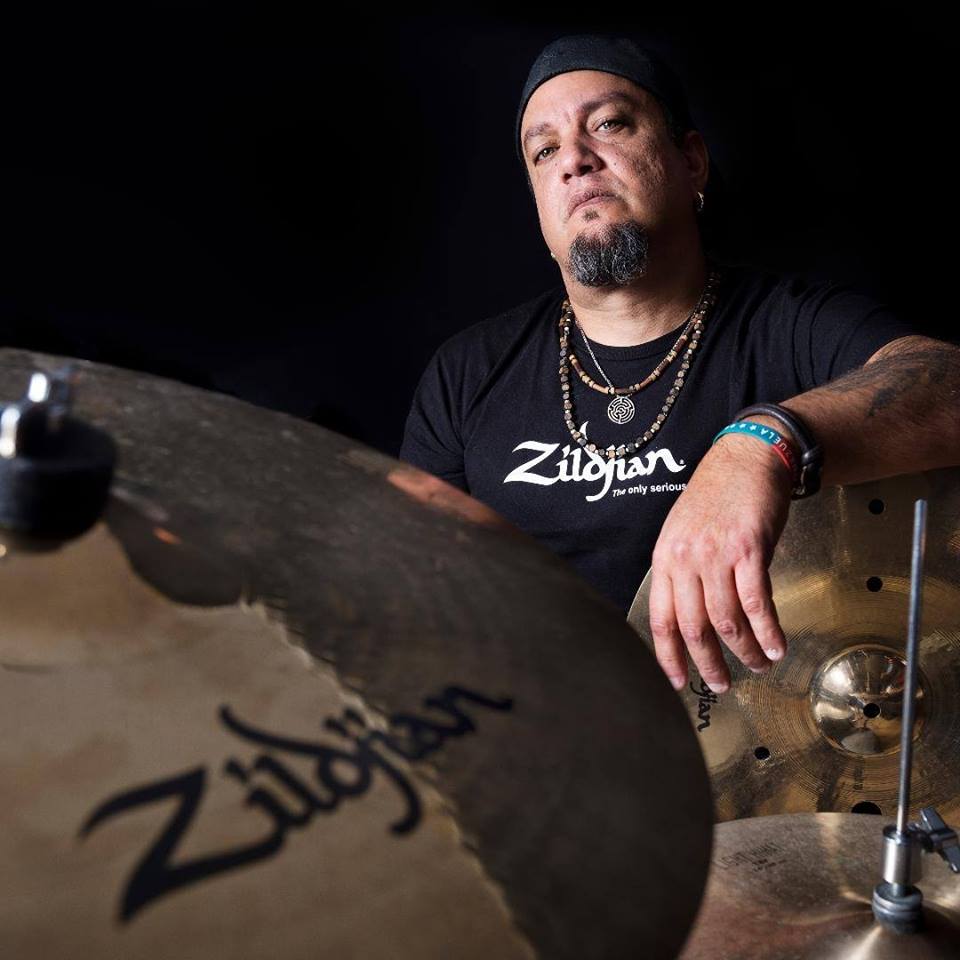
Marco Toro. The Versatile of Percussion

Europa/ Holanda

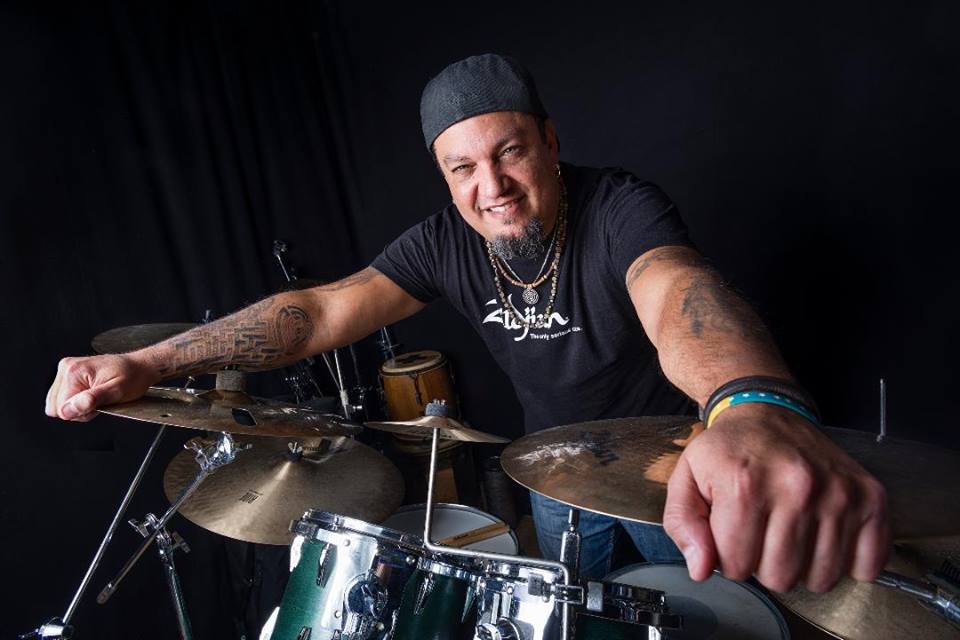
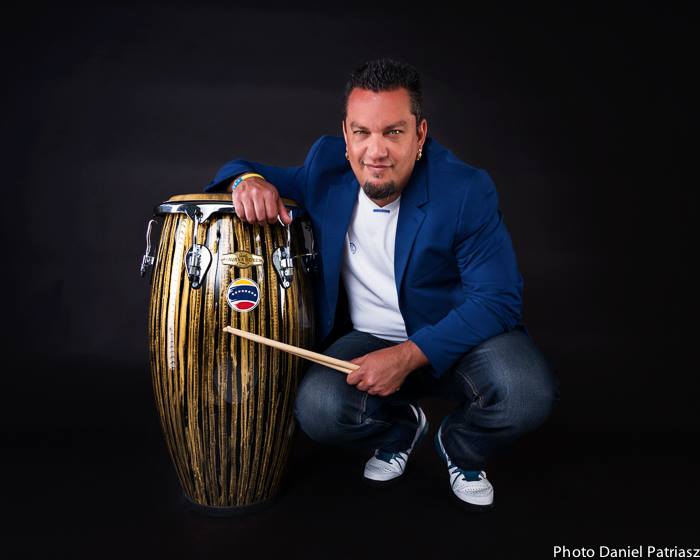
Marco Toro is a versatile drummer, percussionist and composer born in Caracas, whose roots are embedded in Venezuelan popular music and culture.
Marco Toro
Marco Toro

In October 2015 he released his latest work, this time it’s about Latin jazz: Marco Toro presents Zambo Jazz, a mix of rhythms and flavors that reminds the listener of places like Africa, South America and New Orleans.

Marco Toro once again shows his diversity on drums and percussion, playing as always with top-notch musicians who also share credits on this production.

Marc Bischoff, from Germany on piano, wrote two of the eight songs: Oh Lame Saint and Mojitos and Daikiries, trumpeter Oscar -Chucky- Cordero, from Venezuela, wrote The Tour. Michael Simon, also from Venezuela, arranged Marialí. James 2 AM It is a composition by Chilean Alekos Vuskovic and Let It Walk is by trumpeter and arranger Francisco Peña from Colombia. Matthias Konrad plays the trombone; He is also from Germany and the Venezuelan Samuel Ruiz plays the bass.

Marco Toro
Marco Toro

In addition to playing drums, timbales, congas, bongos and cowbells, he also plays typical Afro-Venezuelan instruments such as cumaco, culo e puya, bell drum, tamboras, maracas, etc.

He not only plays all kinds of percussion instruments, he also plays a wide variety of styles.

Already in 2004 he embarked on a solo project: Marco Toro y su Ensamble, exploring South American rhythms such as Son, Joropo and Salsa, among others. With this group he released eight albums; The last CD is from 2017: Marco Toro y su Ensamble 12+1 Anniversary more info (www.toro-ensamble.com).

Marco Toro is currently playing with Lucas van Merwijk’s Drums United and Cubop City Big Band since 2008, touring Europe, the United States, Canada, South America, China and Thailand.

In 1989 Marco Toro formed Laberinto, a rock band that became known for creating “Metalatino”, a unique blend of heavy metal and Latin percussion.

In 1992 Laberinto moved from Caracas to Amsterdam, where the band released eight albums between 1996 and 2010.

Dutch rap legend Osdorp Posse appears on The World Might Suck, since 2008.

A ninth album: The best of Labyrinth was released in Venezuela.

After years of successful and extensive touring in Europe, Colombia and Venezuela went their separate ways.
Marco Toro
Marco Toro

He has shared the stage and recorded with many renowned artists such as:

  • Andy González
  • La India, Jimmy Bosch
  • Pedro Arroyo
  • Metropole Orkest
  • Laberinto, Osdorp Posse
  • Def P
  • Beatbusters, Lucas van Merwijk’s Drums United
  • Cubop City Big Band
  • Ricky Luis N’Clave
  • Zambo Jazz
  • De Pana
  • Beatbusters and Def P
  • Santanico,
  • G. Clarinda y la Rítmica
  • Primera Plana Orchestra
  • Bembe Orchestra
  • El Trabucombo by Gerardo Rosales
  • Marejada, Tierra Caliente
  • Rudy Albano
  • Jacqueline Castro
  • Subject to change
  • Tumbao
  • Grupo Kilele
  • Javier Plaza and his Orquesta Sonrisa
  • FP La Banda
  • Chucky y su Trabuco Guarimba
  • Barrio Nuevo
  • La Misma Gente
  • Marike Jager Kuenta i Tambu
  • King of the bongo
  • Carmen Gabriela Lozada
  • Grupo Mate
  • Alejandro Carbajal
  • Flaco Carrillo
  • Silicon Head
  • Wereld Kinder Festival
  • The virtual school of Bart Noorman
  • Pistoleros de la Paz
  • Download Amsterdam
  • Ensemble Amsterdam
  • Cabo Cuba Jazz
  • The Soul of Spanish Harlem
  • Jean Paul Tamayo

among others.

Marco Toro
Marco Toro

Marco Toro is sponsored by Zildjian Cymbals, Pearl Percussion and Evans Drumheads.

Jerry Ferrao says in salsa key: “My life is a drum”.

With a lifetime dedicated to folk music, singer-songwriter Jerry Ferrao has been bringing us some good salsa for some time now. With seven recordings to his credit; Restauración, Esto sí es Navidad, Paisajes de mi Negrura, Puertorican Folkloric Jazz, Tiempo al Tiempo, De Guerreros y Batallas and Desafío, it is clear that the salsa path he decided to take a couple of years ago brought a lot of musical experience, and a very tasty one at that.

Jerry Ferrao afirma en clave de salsa “Mi vida es un tambor”

I invite you to listen to his latest single ‘Mi vida es un tambor’, also available on YouTube:

The track -whose musical arrangement is by Jerry Ferrao and John Rivera Rosa- features the participation of great recording studio musicians, such as: Efraín Hernández on bass; Juan Gómez on piano; Angie Machado, Jaimar Vázquez and Javier Meléndez on trumpets; Benny Marín, Víctor Román and Noel Abel on saxophones; Pedro Dueño on bongo; plus a parade of top-notch guests: Endel Dueño on timbal, Kachiro Thompson on tumbadoras and Luis Aquino, in a masterful trumpet solo.  Backing up Jerry Ferrao’s lead vocals, we hear the voices of Flor Angel Guilbe, Wiki Gonzalez and Nandy “El Sinsonte” on backing vocals.

“I do it first out of a desire to explore new horizons. I’ve been in the bomba and plena for many years. I was with La Familia Cepeda for more than 20 years and with Los Hermanos Ayala from the town of Loíza for six to seven years. I was a disciple of the great masters: Don Rafael Cepeda Atiles, Marcial Reyes Arvelo and Tomás Flores, among others. The time has come for me, I am a composer! I have composed songs for several orchestras and folklore groups, it was time to write for myself! I said to myself, I am a composer and singer and I am going to design my own music,” he said.

He lived in Buenos Aires, Argentina while studying cinematography. There, Ferrao sang with the salsa orchestra La Clave Genética. It may have been there that the definitive leap to salsa was conceived.

Following the scourge of Hurricane Maria in Puerto Rico (2017), Jerry dedicated a salsa track titled ‘Retoñando’ (available on YouTube) to the memory of all his compueblanos who left in the aftermath of the hurricane.

Jerry Ferrao relates that he began receiving suggestions for him to record salsa because his voice excelled in that sound. “That must be because I have been listening to salsa, enjoying and appreciating it since I was a child. I have a family of well-known musicians, particularly because they are percussionists, timbaleros, congueros, bongoseros,” he said.

Con toda una vida dedicada a la música folclórica, el cantautor Jerry Ferrao ha estado trayéndonos salsa de la buena

In 2012 he published what could be considered the most important documentary on the history of the Puerto Rican bomba, Ayeres de la Bomba. This document has been praised by prestigious ethnomusicologists, anthropologists, sociologists and researchers specializing in Puerto Rico’s black history. I add with certainty, that our Jerry Ferrao must be considered as the authority on our folkloric rhythms.

Since he was a child, he was influenced by the art of Afro-Antillean roots music, especially salsa and guaguancó. With uncles like percussionists Pedro Dueño, Ángel Dueño and Endel Dueño, nicknamed “Los Hermanos Dueño” in the popular artistic scene, who have been recognized in different parts of the world, mainly by salsa and Latin jazz lovers, it should come as no surprise that Ferrao has grown up immersed in the rhythm and flavor that continues to dictate his creativity.

Determined to focus on salsa, he affirms that his contribution to Borikua folklore was also his musical foundation. “Yes, it is something that lives with me and I will continue to cultivate it in some way. Who knows if in the future I will do my own little things for the public, that I will sneak in some bomba or plena between salsa and salsa. I have been in folklore since I was about eight years old”, Ferrao said shortly before affirming that with the album Desafío (2022), which contains 12 songs of his inspiration, he made his formal entry into salsa. Jerry Ferrao bets on salsa, and salsa fans bet on Jerry. His efforts have not gone unnoticed and as a salsa artist, the excellence with which he has produced his musical deliveries is striking. “I swear it was a tremendous challenge to do all this. For different reasons, the production took about three or four years. All the songs and arrangements are my own, and I don’t even play guitar, although I would love to!” he shared.

The images are by Kali Torres

Bella Martinez Puerto Rico


Also Read: ¡Attack Sergio! Unbreakable: A fun read because of the contradictory content

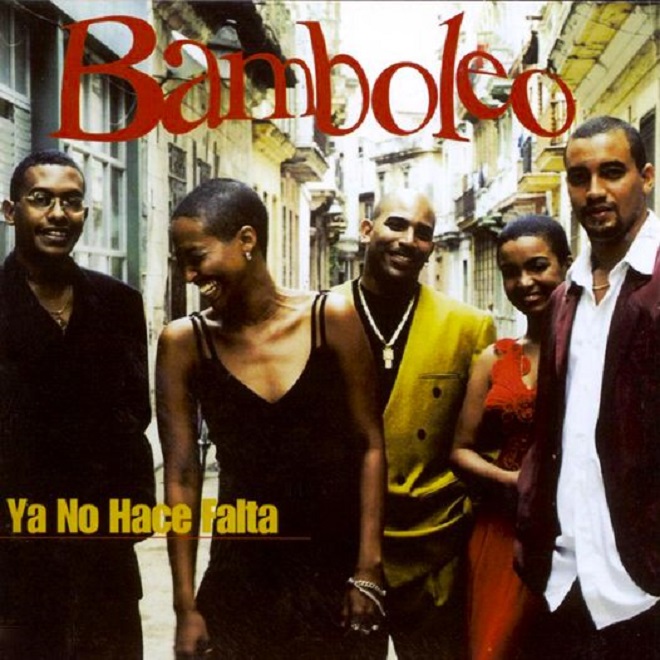
Bamboleo de Lázaro Valdés is another of those exquisite Cuban products, as well as sweet rum and mild cigars

Like the sweet rum and mild cigars, bamboleo is another one of those exquisite Cuban products that, once tasted, can’t get enough.

The 14-member timba group is a fiery number, from its music and choreography to its well-dressed singers and musicians.

Lazaro Valdes leads the group, plays piano, arranges, composes and writes songs. Born in Havana, he studied at the Alejandro García Caturla Academy in the 1970s.

Lazarito Valdés & Bamboleo

He created Bamboleo after spending time performing with artists such as Pachito Alonso, Bobby Carcasses and Héctor Téllez.

He selected the best musicians and incorporated into his new company many who had been trained at the Escuela Nacional de Arte de La Habana.

He added sparkle with vocalist Haila Mompie, who in turn recruited vocalist Vannia Borges. Another Havana native, Borges began studying music at the age of five, and first sang professionally with an all-female group known as D’capo in the early 1990s. Four years later, she became part of the band D’capo.

Four years later, she moved on to Pachito Alonso y su Kini Kini, which she left in 1997 to add her talents to Bamboleo.

Lazarito Valdés.
Lazarito Valdés.

Guantanamera Yordamis Megret joined the group in 1998, a year after Mompie’s departure. She began her musical training at the age of 10 and took up the guitar.

Like Borges, she is also a student at the Escuela Nacional de Arte. After graduating, she began singing professionally with Ricacha. Before joining

Bamboleo, Megret sang in José Luis Cortés’ salsa group PG. Bamboleo began touring outside Cuba in 1996, the same year the group debuted with Te Gusto o Te Caigo Bien.

The group has performed in major U.S. cities from Chicago to Miami, and from New York to Los Angeles. Following the release of Yo No Me Parezco A Nadie and Ya No Hace Falta, the group toured the world, with stops in Europe, the United States and Japan, as well as the Heineken 2000 World Music Festival in China.

Bamboleo also collaborated on the Temptations’ Grammy-winning album Ear-Resistable.

Lazarito Valdés
Lazarito Valdés

In addition, the group has appeared on MTV’s Road Rules and has worked with artists such as James Brown, Femi Kuti and George Benson.

Bamboleo, one of the best-known groups on the crest of the timba wave, a new style that blends salsa with funk and jazz elements and emanates from the streets of Cuba, remains at the forefront with 1999’s Ya No Hace Falta.

After leaping to international notoriety with 1997’s Yo No Me Parezco a Nadie, the pressure was on to deliver for his newfound fan base.

With smooth arrangements and a band with a tight drum kit, Bamboleo had no trouble making good on their reputation and, if anything, raised the bar for the entire genre.

Both the horn section and the vocalists have a cool, smooth approach that contrasts with the energetic sound of similar groups like Charanga Habanera or NG la Banda.

This smoky, jazzy sensibility juxtaposed with the sharp corners of the superfunky rhythm section makes for easy and enjoyable listening.

The group doesn’t lack for warmth, with salty montunos from pianist/arranger Lazaro Valdes and plenty of time changes from a percussion section as good as any operating today.

Sonically, the ears rejoice in listening to a timba album that lacks neither fidelity nor modern production sensibilities.

With its balanced overall sound, unique approach and expert musicianship, Bamboleo will set trends and erase boundaries for decades to come.

Bamboleo - Ya No Hace Falta (1999)
Bamboleo – Ya No Hace Falta (1999)

Evan C. Gutierrez

Bamboleo – Ya No Hace Falta (1999).

Musicians:

Lázaro M. Valdés Rodríguez (Director, piano, composer).

Abel Fernández Arana (Alto Saxophone)

Carlos Valdés Machado (Tenor saxophone)

Anselmo “Carmelo” Torres (trumpet)

Dunesky Barreto Pozo (Congas)

Alberto Para (Maracas)

Herlon Sarior (Timbales)

Jorge David Rodríguez (Voice)

Yordamis M. Mergret Planes (Vocals)

  1. Frank Cintra Cruz (Trumpet)

Alejandro Borrero Ramírez (Vocals)

Vannia Borges Hernández (Vocals)

José Antonio Pérez Fuentes (Violin)

Maylin de la Caridad González Aldama (Cello)

Ludwig Nunez Pastoriza (Drums)

Rafael P. Pacerio Monzón (Banjo)

Ulises Texidor Pascual (Bongos)

Sources:

Información realizada ( 27 de enero de 2024)

L’Òstia Latin Jazz 

Also Read: Irakere was a Cuban group that developed an important work in Cuban popular music and Latin Jazz under the direction of Chucho Valdés

Eva Cortés at present, her music reflects the influences received from her cultural miscegenation

Fragile voice, delicate and powerful at the same time, that moves with devotion and good work through the multiple paths of jazz.

Eva Cortés, born in Tegucigalpa (Honduras), 1972, is a Honduran jazz singer and composer.

Eva Cortés en la actualidad, su música refleja las influencias recibidas de su mestizaje cultural
Eva Cortés at present, her music reflects the influences received from her cultural mestizaje.

More than a voice, she is our jazz star in the world.

She is part of the fusion movement, incorporating in her music the influences of traditional Latin American music (zamba, bolero), blues, traditional Andalusian music and jazz.

He sings with a Latin American Spanish cadence and Andalusian echoes and accent.

He grew up in Seville and currently resides between Madrid and New York.

He became known in 1980 after recording an album of children’s songs entitled Cosas de niños with singers such as Ana Belén, Víctor Manuel, Mocedades and Miguel Bosé.

Eva Cortés born in Tegucigalpa (Honduras), 1972 is a Honduran jazz singer and composer.

Nowadays, his music reflects the influences received from his cultural miscegenation, as well as from the different musical genres developed throughout his career.

Growing up in a family of great musical tradition, she was exposed to Latin American music. Although we hear in her first compositions, at the age of 16, a strong influence of blues.

In January 2006 she flew to Santiago de Chile to record and co-produce Sola Contigo, her first solo album, which was later mixed and mastered in Paris.

In this work we can find South American rhythms fused with jazz and a soft touch coming from the south of Spain.

Eva feels honored to have had the collaboration of musicians with great international prestige: Jerry Gonzalez,

Antonio Serrano, Pepe Rivero and Nono Garcia among others.

In April 2008 Eva recorded her second album Como Agua entre los Dedos, which is an album of original songs composed mostly by Eva Cortés, although they also stand out in the two Spanish adaptations of two standards such as You don’t know what love is and La Vie en Rose.

Fotos Eva Cortés – Instagram @evacortes777

They released their third album El Mar de Mi Vida on April 6, 2010. With his personal jazz fusion, he has managed to carve a niche for himself among the most interesting and promising proposals of the Spanish jazz scene. [El Mar de Mi Vida brings together 12 songs that are maximum exponents of cultural crossbreeding.

On this occasion, in addition, the flamenco great Miguel Poveda joins in the version of the song C’est si bon, Perico Sambeat, Lew Soloff (considered one of the most brilliant trumpet players of recent times and who has collaborated with Marianne Faithfull or Frank Sinatra, among others), Santiago Cañadada, Rémy Decormeille, Georvis Pico, the electric bassist of the moment Hadrien Feraud and the English drummer Mark Mondesir (both musicians of John McLaughlin).

Eva once again signs most of the tracks and shares authorship in a couple of songs with Brazilian guitarist Kiko Loureiro.

In addition, we find tracks such as Alfonsina y el Mar (Ariel Ramírez-Felix Luna), Une chanson Douce (Henrie Salvador- Maurice Pon), C’est si bon (André Hornez-Henri Betti) and Que reste-t-il de Nos Amours (Charles Trenet-Leo Chauliac).

Eva Cortes - El Mar De Mi Vida (2010)
Eva Cortes – El Mar De Mi Vida (2010)

Eva Cortes – The Sea Of My Life (2010)

Tracks:

  1. The Sea Of My Life
  2. Casi
  3. C’es Si Bon / What’s Better? (Feat. Miguel Poveda)
  4. Desterrado
  5. Valsa Da Menina
  6. Remembering Tomorrow
  7. Little Matter If Later
  8. Que Reste-T-Il De Nos Amours / I Wish You Love
  9. Woman
  10. Alfonsina And The Sea
  11. Da Igual
  12. Une Chanson Douce

Information realized (January 13, 2024)

Sources:

L’Òstia Latin Jazz 

Iconos Mag

Also Read: Orquesta la Identidad is one of the most nationally and internationally recognized groups in the salsa genre

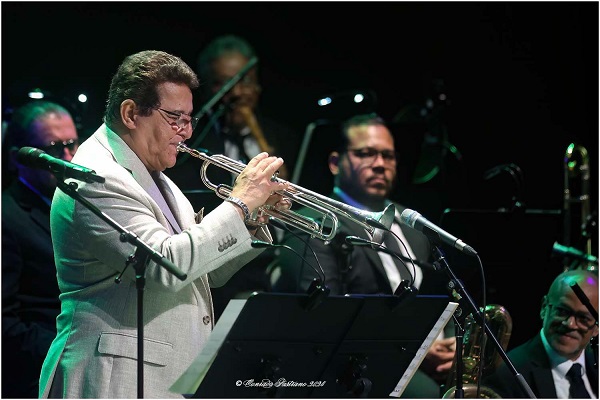
Luis “Perico” Ortiz: six decades of impeccable musical trajectory

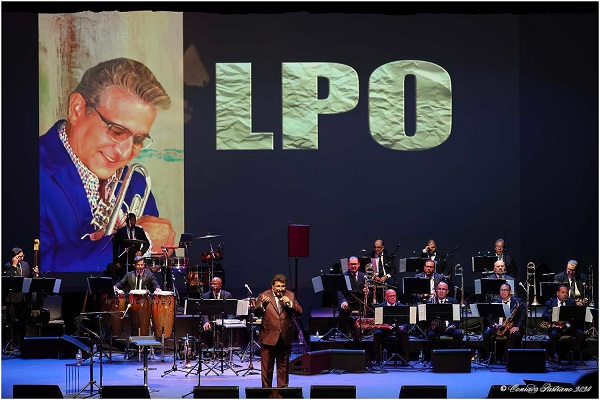
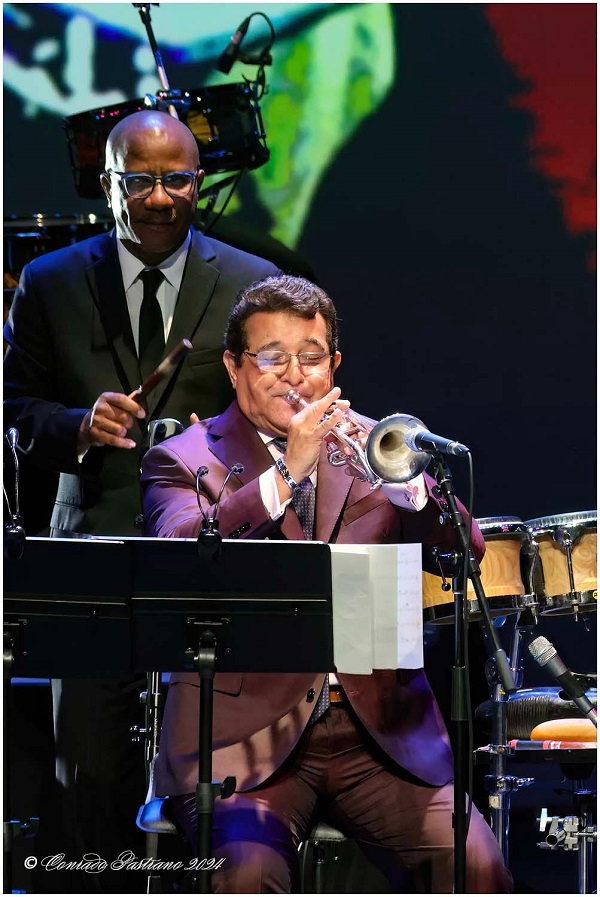
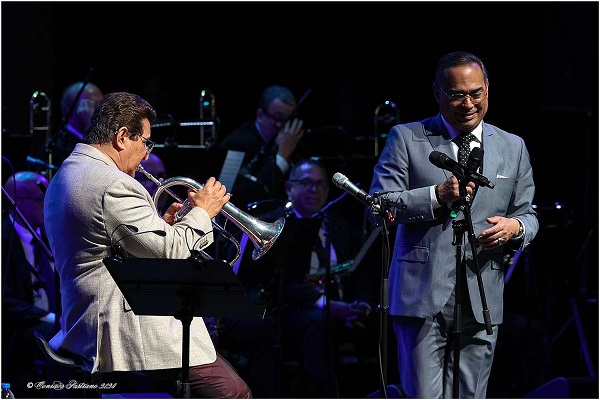
The lobby of the Centro de Bellas Artes in Caguas served as a prelude to the concert, entitled Tocando y contando historias (Playing and telling stories), for which we came to enjoy “Perico” and his guests. Mario Ortiz, Jr. brought together a dozen trumpet players (Luis Figueroa, Richie Segarra, Roby Texeira, Rafael Lebrón, Kevin Ibáñez, Ricardo Marrero, Kenneth Torres, Rubén Días, Ricky Zayas and Simón Rivera) to pay tribute to Luis “Perico” Ortiz by performing his most emblematic solo: ‘Coro Miyare’.

Luis "Perico" Ortiz and his Orchestra
Luis “Perico” Ortiz and his Orchestra

Once in the concert hall, the child trumpeter Daniel Torres (whom Perico predicted would be his successor) and Luis “Perico” Ortiz kicked off the concert with a fun trumpet correspondence. The musicians, turned into actors, shared with us the scene in which we saw Luis “Luisín” Ortiz as a child, playing ‘Quítate de la vía Perico’ with his trumpet; introduction that gave way to the custodian of Ismael Rivera’s legacy (“Moncho” Rivera) to sing the emblematic theme to which “Perico” owes his nickname, while the audience enjoyed images of “Maelo” on a giant screen. The short film defined how “El Sonero Mayor”, personified by “Moncho” told “Luisín”, that from that moment on he would be called “Perico”.

Moncho also interpreted ‘Bilongo’, a song in which Richard Carrasco stood out on the bongo after the saxophones made themselves felt with forcefulness. “Perico” also claimed his turn with the trumpet solo that preceded a resounding “Buenas noches” in the voice of the virtuoso trumpet player.

The orchestra was integrated by: Luis “Perico” Ortiz on musical direction; Yturvides Vilchez, Jan Duclerc and Rolando Alejandro Lora on trumpets; Rafy Torres, Jorge Díaz, Randy A. Román, Mario Alonso Ángel Marulanda on trombones; Roberto Calderón on baritone saxophone, Luis Daniel Valentín Muñiz on tenor saxophone; Antonio Luis Orta and Luis Fernando Hernández on alto saxophones; David Marcano on timbales; Gadwin Vargas Vélez on congas; Richard Carrasco Ayala on bongo; Juan Manuel Rivera Colón on piano; Carlos Luis Martínez Peña on bass; Henry Santiago and David Carrero on backing vocals.

Luis “Perico” Ortiz
Luis “Perico” Ortiz

Then, Henry Santiago received the microphone to sing ‘Tres grandes amigos’. For the song, which refers to Tito Rodríguez, Tito Puente, and Machito; “Perico” introduced “Manolito” Rodríguez and Arianelys Ortiz Cruz, a blind autistic timbalera player.

He was followed by Norberto Vélez, who performed ‘Julián Del Valle’ (1978, Súper salsa) and ‘De patitas’ (1979, Luis “Perico” Ortiz, One of a kind) – songs of great vocal and interpretative difficulty, popularized by the unmistakable voice of Rafael De Jesús – with his usual sympathy. Nor-Bert once again demonstrated his powerful voice, and was matched by the saxophones, whose forcefulness did not diminish the power of Vélez’s voice.

“La India” arrived with her usual energy to interpret ‘Químbara’ and “Manolito” did his part singing ‘La Reina es la rumba’, in company of “La India”, alternating on the soneos.

Coro Miyare” made use of Richard Carrasco’s unbeatable performance in the bongo solo with drumsticks -which had been popularized by Roberto Roena-, followed by the crushing solo by “Perico”, the piano solo by Juan Rivera, the conga solo by Gadwin Vargas and the timbales solo by David Marcano.

Richard Carrasco Ayala en el bongó y Luis “Perico” Ortiz

The highlight of the concert was Gilberto Santa Rosa’s brilliant renditions of ‘Atrevida’ and ‘Planté bandera’; recorded and immortalized by Tommy Olivencia’s La Primerísima, to which Santa Rosa briefly belonged.

After the intermission, as a tribute to the “Niño bonito de la salsa”, “Perico” invited Tony Vega to the stage to perform ‘Así se compone un son’ and ‘Borinquen tiene montuno’, the latter adorned with an elaborate trumpet solo by “Perico”.

“Perico” brought Gerardo Rivas to the stage to perform ‘Río abajo va’ (1985, La vida en broma), popularized in the voice of Domingo Quiñones. Gerardo explained that he had accepted the invitation to participate in the concert without knowing which song he was going to sing, in a clear allusion to the vocal difficulty of reaching Domingo’s vocal register. Gadwin Vargas sprinkled the theme with a conga solo with a mozambique beat, very well achieved. Gerardo’s second song, ‘Perico lo tiene’, brought to the stage the cacique of the Rivas dynasty (“Jerry” Rivas, singer of El Gran Combo de Puerto Rico) on the tres and Richie Bastar (bongos player of La Universidad de la Salsa). While Bastar took over on the bongo and the bell, Richard Carrasco took over the güiro. At the end of the intervention, “Jerry” asked for a round of applause for the mulato mayor, Don Rafael Ithier, who was enjoying the concert with all of us who were there.

Then, “Perico” dedicated ‘Perfume de gardenias’ to his mother; a speech that was enjoyed with an instrumental prelude performed by “Perico” and a great vocalization by “El Caballero de la Salsa”.

Next up was Rubén “Panamá” Blades, who received a standing ovation from the audience. This made visibility difficult, although it did not affect our enjoyment of the audio. Blades was in charge of the big hits ‘Plástico’ and ‘Pedro Navaja’ (1978, Siembra). During ‘Pedro Navaja’ Gadwin Vargas replicated the conga sound that Eddie Montalvo immortalized on the recording.

The stage was full when all the guests arrived to perform ‘Como vivo yo’, after Perico announced with a trumpet solo the song that would end the show.

As Luis “Perico” Ortiz said, the vote of love and confidence that we witnessed there will be remembered as an unrepeatable evening, which detailed what has been six decades of impeccable career that the trumpeter, composer, arranger and music producer has achieved.

Luis “Perico” Ortiz y Gilberto SantaRosa
Bella Martinez Puerto Rico 


Also Read: ¡Attack Sergio! Unbreakable: A fun read because of the contradictory content

  • « Go to Previous Page
  • Page 1
  • Interim pages omitted …
  • Page 20
  • Page 21
  • Page 22
  • Page 23
  • Page 24
  • Interim pages omitted …
  • Page 55
  • Go to Next Page »

International Salsa Magazine (ISM) is a monthly publication about Salsa activities around the world, that has been publishing since 2007. It is a world network of volunteers coordinated by ISM Magazine. We are working to strengthen all the events by working together.