• Skip to primary navigation
  • Skip to main content

International Salsa Magazine

  • Home
  • Previous editions
    • 2025
      • ISM / November 2025
      • ISM / October 2025
      • ISM / September 2025
      • ISM / August 2025
      • ISM / July 2025
      • ISM / June 2025
      • ISM / May2025
      • ISM / April 2025
      • ISM / March 2025
      • ISM / February 2025
      • ISM / January 2025
    • 2024
      • ISM / December 2024
      • ISM / November 2024
      • ISM / October 2024
      • ISM / September 2024
      • ISM / August 2024
      • ISM / July 2024
      • ISM / June 2024
      • ISM / May 2024
      • ISM / April 2024
      • ISM / March 2024
      • ISM / February 2024
      • ISM / January 2024
    • 2023
      • ISM / December 2023
      • ISM / November 2023
      • ISM / October 2023
      • ISM – September 2023
      • ISM – August 2023
      • ISM July 2023
      • ISM Edition June 2023
      • ISM – May 2023
      • ISM April 2023
      • ISM March 2023
      • ISM February 2023
      • ISM January 2023
    • 2022
      • ISM December 2022
      • ISM November 2022
      • ISM October 2022
      • ISM September 2022
      • ISM August 2022
      • ISM July 2022
      • ISM June 2022
      • ISM May 2022
      • ISM February 2022
      • ISM January 2022
    • 2021
      • ISM December 2021
      • ISM November 2021
      • ISM October – 2021
      • ISM September 2021
      • ISM August 2021
      • ISM July 2021
      • ISM May 2021
      • ISM April 2021
      • ISM June 2021
      • ISM March 2021
      • ISM February 2021
      • ISM January 2021
    • 2020
      • ISM December 2020
      • ISM November 2020
      • ISM October 2020
      • ISM September 2020
      • ISM August 2020
      • ISM July 2020
      • ISM June 2020
      • ISM May 2020
      • ISM April 2020
      • ISM March 2020
      • ISM February 2020
      • ISM January 2020
    • 2019
      • ISM December 2019
      • ISM November 2019
      • ISM October 2019
      • ISM Septembre 2019
      • ISM August 2019
      • ISM July 2019
      • ISM June 2019
      • ISM May 2019
      • ISM April 2019
      • ISM March 2019
      • ISM February 2019
      • ISM January 2019
    • 2018
      • ISM December 2018
      • ISM November 2018
      • ISM October 2018
      • ISM September 2018
      • ISM August 2018
      • ISM July 2018
      • ISM June 2018
      • ISM May 2018
      • ISM April 2018
      • ISM March 2018
      • ISM February 2018
      • ISM January 2018
    • 2017
      • ISM December 2017
      • ISM November 2017
      • ISM October 2017
      • ISM September 2017
      • ISM August 2017
      • ISM July 2017
      • ISM June 2017
      • ISM May 2017
      • ISM April 2017
  • Download Salsa App
    • Android
    • Apple
  • Spanish

Search Results for: Trumpet

Ramón “Mongo” Santamaría “I wanted to do something that sounded like home”.

April 7, 1917, Mongo Santamaría was born in the Jesús María neighborhood of Havana, Cuba.

Exceptional percussionist of Latin Jazz and related rhythms, whose first name was Ramón Santamaría.

Mongo left to continue playing his Congas hard in the sky on February 1st, 2003.

“I wanted to do something that sounded like home”. With these simple words, Ramón Santamaría Rodríguez “Mongo Santamaría” spoke of his essence.

The purpose of his music pursued a sonority and a memory, possibly located in Cuba, in Jesús María, a marginal neighborhood where he grew up and enjoyed a tradition attached to the drum, to religion, to the street and from where this great Cuban percussionist drank infinitely.

But surely those drums also came to him from far away, from the Congo, where his grandfather came from to be a slave on the island and who also filled his head with sounds full of meanings and colors, which he later masterfully spread around the world.

The name of Mongo Santamaría (Havana, April 7/1917 – Miami, Feb. 1/2003) is, for the glory of all music, an inevitable reference of Cuban percussion.

Since he was a child he knew that his thing was to play the drum and he was lucky enough to belong to a family of empirical musicians, singers and drummers who supported him in the learning and mastery of these instruments.

During his time in Cuba, already a professional musician, he participated in numerous groups that little by little gave him a place among the most outstanding percussionists of the time. Some names of these groups are El Conjunto Boloña, Lecuona Cuban Boys, with whom he was able to participate in the recording of his first album, Conjunto Matamoros, Segundo Grupo de Arsenio Rodríguez, among others.

Each group had its own style and stamp, but in each of them Santamaría put his personal “touch”.

At the prestigious Tropicana cabaret he played with Chano Pozo as a member of Armando Romeu’s orchestra.

From that moment on, his career would not stop. Conjuntos, Septetos de Son were the perfect selection to complete the sap from which he would draw all his style and technique.

Later, from carnival to carnival, he would gather with other percussionists to play in the comparsas and experience the festive musical atmosphere par excellence of those years.

Alongside him played other friends who soon became a Cuban reference in the United States: Patato Valdés and Armando Peraza.

As part of the Tropicana orchestra and located in a show in Mexico, he decided to settle there as did many musicians of his time and came to play with Pérez Prado and Benny Moré.

It was precisely in the latter orchestra where he met Clemente Piquero “Chicho”, another Cuban percussionist whose style made him rethink the role of percussion in Cuban popular orchestras.

Mongo Santamaría belongs to the second wave of Cuban percussionists who arrived in New York in 1950.

His new idea of restructuring and designing his own style in the use of Cuban percussion was perfectly in tune with the reality that a few years earlier was being experienced in the music produced and sold in New York, after the arrival of the Cuban rumbero Chano Pozo.

“The rhythm produced by the conga organizes all the percussion of a band, from which melodies and counter-melodies can be experimented with.”

“I think percussion is the base from which things come out.”

Already in the United States, Mongo plays with Gilberto Valdés, again he is part of Pérez Prado’s orchestra and finally with Tito Puente’s, where he stayed for 7 years. Once in the line of Afro-Cuban jazz, so popular at the time, he joined George Shearing’s group and later the vibraphonist Cal Tjader.

With his own orchestra, he accompanied La Lupe, one of his favorite singers, and undertook projects of novel formats for the time, such as small formations of brass trio, piano, bass, percussion and drums, at a time when jazz bands predominated.

Mongo Santamaría, perhaps without the theatricality to which Chano had accustomed the New York public, focused all his strength on achieving his own sonority, with a fusion of Cuban styles and genres, perfected and deepened in the introduction of Afro-Cuban rhythms with a naturalness and using colorful timbre elements by using several tumbadoras in his set.

His creativity is highly demonstrated in the great amount of music that is part of his catalog of works and the quality becomes indisputable when seeing the amount of outstanding jazz interpreters that version and recreate his work.

In 1959 he recorded Tambores y cantos, which contains the song Afro blue, which over the years became “a jazz anthem of all times”, according to Nat Chediak, author of the Latin Jazz Dictionary.
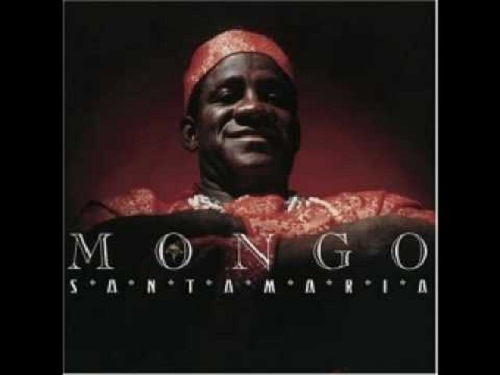
His long recording career (50 albums), testifies to the musical activity that this great percussionist carried out throughout his professional career. He worked with American jazz legends such as Chick Corea, Herbie Hancock, flutist Hubert Maws, Dizzy Gillespie, trumpeter Marty Seller, among other musicians who today still pay tribute to this Cuban conguero who was the architect of the fusion of rhythm & blues rhythms and Afro-Cuban music, recognized the connection of Cuban music to African roots and placed the congas in an indispensable instrument for the determination of Latin jazz.

In 1977 Mongo Santamaría received the American Grammy Award for “Best Latin Recording” for the work Dawn.

In 1999, Rhyno Record Company, based in Los Angeles, California, recognizing his contribution to Latin Jazz, released the “box set” (CD) Skin On Skin: The Mongo Santamaría Anthology (1958-1995), which includes 34 of his most successful pieces (from his rumba albums, his LP with La Lupe and his projects in the fusion of Jazz and Latin) and an extraordinary literature about his career written by actor Andy García, musician Poncho Sánchez and other connoisseurs of the Latin Jazz genre such as José Rizo, Luis Tamargo, Joel Dorn and Miles Pelich.

The legendary musician was extremely honored and grateful for the distinction Rhyno gave him by introducing this historic anthology to the world. As stated in the conversation with Jaime Torres, Mongo said:

“This is the fruit of many years of work, music made with taste and love.”

May he rest in peace and eternal glory to him.

Chucho Valdes and Paquito D’ Rivera Will Tour for Europe

Jazz virtuous will offer a series of concerts from June to November 

Paquito D’ Rivera and Chucho Valdés

The pianist, composer, and conductor Jesús “Chucho” Valdes and the saxophonist, clarinetist, and composer Paquito D’ Rivera come together again to offer a tour called Reunión Sextet.

This tour of 2022 begins at the Mastercard Jazz Festival (Puerto Rico) and will pass through Poland (Bielsko-Biala), Spain (Pamplona, Marbella, Madrid, and Girona), and Germany (Essen) in June and July, and will end on November 30th in Zurich, Switzerland. Tickets range from €25 – €65 and you can get them in advance on Chucho Valdés’s website. www.chucho-valdes.com

The history of this long friendship dates back to the 1960s when they began their musical partnership as partners in the Havana Musical Theater Orchestra and the Cuban Modern Music Orchestra. With the founding of the Irakere orchestra by Maestro Valdés in 1973, Chucho and Paquito worked together again promoting the fusion of elements of Jazz, Classical music, Rock, and Afro-Cuban music that meant a transcendental development in Latin Jazz, and where Paquito and Chucho were the key figures. “Paquito was the heart of Irakere,” Chucho said.

Eight years later, Paquito went into exile in Madrid and later moved to New York. He developed a successful career as a leader & composer and won recognition as a Jazz Master from the National Endowment for the Arts of the United States in 2005. At the same time, Paquito also maintained his passion for classical music, receiving a Guggenheim Scholarship and commissions for quartets of strings, chamber groups, and symphony orchestras.

Meanwhile, Chuco remained in Irakere until 2005. He led trios and quartets, and established himself as a solo pianist. He produced his most recent production La Creación, a three-movement suite for small ensemble, voices, and Big Band. The masterpiece had its world premiere on November 5th, 2021, at the Adrienne Arsht Center for the Performing Arts in Miami and after was presented in Lyon, Paris, and Barcelona.

Now, after four decades, they come together to present Reunión Sextet accompanied by an extraordinary ensemble that includes Diego Urcola (Trumpet), Dafnis Prieto (Drums), Armando Gola (Bass), and Roberto Vizcaino Jr. (Conga). The repertoire will include old Latin Jazz hits, Latin American classics, and new compositions from the I Missed You Too album.

The two Cuban virtuosos have accumulated more than 25 Grammys and Latin Grammys. “I’ve always had the hope of being close to Paquito again and playing with him again,” he said. “I’ve always had that hope. Well, this is our moment.” The Maestro Chucho expressed.

His first tour in Spain was in 1981

Chucho Valdés, an icon of modern Afro-Cuban Jazz, told for a digital medium that practices the piano from six to eight hours a day. During the confinement, he was in Florida and composed La Creación (a tribute to Olodumare, the god of the Yoruba religion). This instrumental musical gem is sung, composed, directed, and performed by Valdés, and tells the story of the meeting of Afro-Cuban music in the Caribbean and the United States and how this has influenced globally. He also composed minor works and dedicated part of his time to teaching and virtual concerts.

Likewise, he added that the country that he would contemplate for a possible retirement would be Malaga (Spain) because his great pleasures come together: the Mediterranean, the diet, and many friends in the city.

The Tempo Latino Festival is Back

The major European festival of Latin and Afro-Cuban music will present Los Van Van, Pacific Mambo Orquestra, Interactivo, and Minyo Crusaders (H2)

The benchmark Festival of Latin and Afro-Cuban music in Europe, Tempo Latino, resumes its activities after the forced cessation of its activities for two years due to the Pandemic.

From Thursday, July 28th to Sunday, July 31st, on the main stage Les Arènes, the whole family, heterogeneous public, and inveterate traveler will enjoy the performances of Los Van Van, Pacific Mambo Orquestra, and Interactivo, as well as an exceptional set & exclusive presentation on Saturday, July 30th  at 11 PM of “Con Tumbao All Stars” with the winners of Best Traditional Tropical Album at the Latin Grammy 2021 for their album “Chachachá…Homenaje a lo Tradicional”, Issac Delgado and Alain Pérez, as well as Oscar Hernández, Robby Ameen, Tony Succar, and many more.

Minyo Crusaders rediscovered the songs associated with the working classes.

The festival to be held in Vic-Fezensac, the heart of the Gers de Gascony department (France), will open its doors on Thursday, July 28th, with Tempo Latino Social Club on the stage of its satellite “Geo-rhythmic” Conga with a special performance by the Tokyo band, Minyo Crusaders.

This Cumbia band with a Japanese identity aims to make reversals between the traditional and foreign rhythms. Guitarist Katsumi Tanaka was in charge of bringing together the twelve musicians to perform these magnificent melodies with a fusion of the Caribbean (Reggae, Cumbia, and Cuban Salsa), Africa (Afro-Blues, Afro-Funk, Ethiopian rhythm), and Asia (Thai Pop) after of the Fukushima accident in 2011. The ticket for this show costs €15.80, and the opening is at 6 PM.

Pacific Mambo Orchestra is the only active Latin Big Band on the West Coast of the United States.

Continue on Friday, July 29th with the concerts of the Pacific Mambo Orchestra and Los Van Van together with the Cuban trumpeter, composer, singer, and leader of the band Havana D’Primera, Alexander Abreu.

The first orchestra to perform at the festival in its twenty-eighth edition at 9 PM will be the Pacific Mambo Orchestra. This North American band, a winner of the Grammy Award in the category “Best Tropical Album” in 2014, is the revival of the Latin sound of the Big Bands of the 40s with the combination of Mambo, Pop, Cha Cha, Timba, and Bolero. Pacific Mambo Orchestra founded 12 years ago by the Mexican pianist Christian Tumalan and the German trumpeter Steffen Kuehn has collaborated with renowned artists such as Carlos Santana, Poncho Sánchez, Pete Escovedo, and Arturo Sandoval.

Currently, this Latin Big Band performs on the West Coast of the United States with elite musicians from the Bay Area, and their repertoire is in English and Spanish. Their third album “The III Side” (2020) fuses the traditions of the Mambo of the 50s with the musicality of the moment. This Latin Big Ban considered one of the best in the United States will also is at the prestigious San Francisco Annual Jazz Festival on Wednesday, June 8th from 7:30 PM to 9 PM. Address: Miner Auditorium, 201 Franklin Street, San Francisco (EEUU).

“Legado” is an album in homage to the legacy left by maestro Samuel Formell.

The second orchestra is to take the stage on Friday at 11 PM and will be Los Van Van with their special guest Alexander Abreu. The emblematic Cuban music orchestra will celebrate its more than 5 decades of history.

Los Van Van known by many as the “Rolling Stones of Salsa” was founded in 1969 by bassist and composer Juan Formell, a legend of Cuban music, who accompanied by José Luis Quintana, known as “Changuito” and César “Pupy ” Pedroso, invented the “Songo”, a Cuban rhythm predecessor of the “Timba” or “Salsa Cubana”, which generated the “Salsa – Son” with a Cuban sound that has made generations dance.

In 2018, they recorded their first record production “Legado” since the physical departure of Juan Formell in 2014. This tribute album has 14 songs with 3 new versions of the international singles Te extraño, Por qué lo haces y Amiga mía.

On the third day of the Festival, Saturday, July 30th, the Latin sound will be awakened by the performances of the Interactivo group and the exclusive presentation of “Con Tumbao All Stars”. On Sunday, July 31st, Tempo Latino will close its doors on the Les Arènes stage with London Afrobeat Collective and Alain Pérez & La Orquesta Bassiste.

Most of the members of Interactive are representatives of currents such as Nueva Trova, son, and Cuban jazz.

The avant-garde collective, Interactivo, is one of the most representative bands of the current Cuban generation and will take to the Tempo Latino stage at 9 PM.

This emerging orchestra of international stages brings together the most brilliant and eclectic composers and producers in Havana. Each member contributes their specialty: Timba, Funk, Jazz, Hip Hop, Rock, Rumba, traditional Cuban music, and Soul for a result of great richness, where individual originality, musical creativity, and avant-garde ideas enrich the group.

London Afrobeat Collective has hypnotic flashes and powerful percussive beats.

Similarly, the addictive London Afrobeat Collective has been offering festive music based on Jazz, Funk, Rock, Dumb, and African Vibes for ten years. Its international DNA made up of nine members from England, Italy, France, Congo, Argentina, and New Zealand with the powerful voice of the Congolese singer Juanita Euka has made its rhythm addictive music with powerful and committed messages. The London-based band will open the night of concerts on Sunday, July 31st at 9 PM.

Alain Perez and the Bassiste Orchestra will offer a mixed show of Salsa, Son, Timba, and Latin Jazz

This musical evening ends with Alain Perez, bassist, singer, arranger, and who composes his orchestra of 13 young musicians on stage to offer a mixed show of contemporary Cuban Salsa, Timba, and Latin Jazz. His talent has given him wonderful experiences with internationally famous orchestras and musicians such as Los Van Van, Irakere, Issac Delgado, Paquito D’Rivera, and Celia Cruz. Always accompanied by his elephant-headed cane, in homage to Cuban musician Benny Moré, Alain has been influenced by flamenco through his work with Cuban artist Paco de Lucía.

The versatile artist born in Havana was twice-nominated for the Latin Grammy Awards in the category of Best Traditional Tropical Music Album with “El alma del Son, tribute to Matamoros” (2015) and “ADN” as Best Salsa Album. (2017).

El Cuento de la Buena Pipa (2020) is his most recent record production, and you can enjoy it on the main stage of the festival at 11 PM.

You can get the tickets for Tempo Latino 2022 on their official site http://www.tempo-latino.com/ for a four-beat tempo. The Tickets for the four nights of concerts are €86.70.

And while you wait for the Tempo Latino Festival (28th edition) you can enjoy its free predecessor event Clutcho at La Grainerie this May 4th. This place is emblematic of the circus and itinerant disciplines that take place with a large space that involves a large open-air square, and a performance hall with a capacity for 230 people through an “interior street” that serves for creative studios and workshops.

Palladium in the New Millenium engalana el “Lehman Center for the Performing Arts”

On March 5, 2022, the heirs to the mambo will reunite once again, this time the concert entitled Palladium in the New Millennium will grace the Lehman Center for the Performing Arts in the heart of New York’s Bronx.

This concert coincides with the coming of age celebration of the establishment of The Big Three Palladium Orchestra.  The initial idea of bringing together the three great Palladium orchestras in this innovative concept came to Mario Grillo, better known in the music world as Machito, Jr. approximately twenty-one years ago.

His counterpart, Tito Rodriguez, Jr. told me about it and, thanks to his complicity, I had a pleasant conversation during which Machito, Jr. shared with me a myriad of details.  Having previously collected and shared the conversations I had with Tito, Jr. and later with Machito, Jr. I must now share the point of view of the youngest of the three mambo heirs -Tito Puente, Jr.- about this trilogy, among other things.  During the beginnings of this historic reunion, Tito Puente, Jr. was barely 30 years old.

As with me, the two oldest members of the trilogy have been very supportive of Tito Puente, Jr.  During an exclusive interview granted for this special assignment, Tito Puente, Jr. expressed his deep appreciation for having been so lovingly guided by Tito Rodriguez, Jr. and Machito, Jr. to the recording of what has become the legacy of the Palladium big three: The Big Three Palladium Orchestra live at the Blue Note (2004).

On March 5, 2022, the heirs to the mambo will reunite once again, this time the concert entitled Palladium in the New Millennium will grace the Lehman Center for the Performing Arts in the heart of New York's Bronx.
Palladium in the New Millenium engalana el “Lehman Center for the Performing Arts” en pleno corazón del Bronx de New York

The youngest of the three heirs of the mambo is doubly celebrating, as he has just released his sixth production, entitled The King and I. It contains nine tracks, as you can hear on the album.  It contains nine tracks, as detailed below:  Picadillo, featuring Humberto Ramírez on trumpet; Salsa na ma, featuring José Alberto “El Canario” on vocals; Pa los rumberos, with a masterful performance by Domingo Quiñones; Oye como va, with a performance by “Mulato Rumbero”, Michael Stuart; Para la niña y pa la señora, with none other than Miguel Angel Barcasnegras, better known as “Meñique” (EPD) on vocals; Hong Kong mambo, instrumental theme that highlights the Puente dynasty, with Ronnie Puente on xylophone; El bribón del aguacero, with Yolanda Duke on vocals; 20 años and El Rey del Timbal.  Let’s be clear that this album is not the big band arrangement to which the eternal King of the Timbal has accustomed us.  It is, however, the best tribute that the youngest of the three heirs of the Palladium pays to his father, keeping the legacy alive and kicking.

As you can see, each of the “Palladium’s Big Three” inherited a timbalero son. Coincidentally, Machito, Jr., Tito Rodríguez, Jr. and Tito Puente, Jr. grew up surrounded by music.  Their family environments, respectively, supported them. Indeed, today, all three are musicians.  These three bandleaders have made it their mission to keep the Palladium legacy alive and well.  Although the mambo heirs have transcended the label of being the sons of the mambo owners, they do not forget that the Patriarchs are still a topic of conversation in musical circles around the world.

As the past is the past and the future is uncertain, here we are already waiting in despair. For this new reunion, first-class musicians have been secured, backing up the three heirs of the mambo.  The musical constellation that will be part of this historic night is formed by: Carmen Laboy on baritone saxophone and musical direction, Jorge Castro on tenor saxophone, Mark Friedman and Al Acosta on alto saxophones; Larry Moses, Seneca Black, Mike Mossman, and John Carlson on trumpets; Gilberto Colón, Jr. on piano, Jerry Madera on bass, John “Dandy” Rodríguez on bongo and Eddie Montalvo on tumbadoras.  On the vocal front, Sammy Gonzalez, Jr. leads with Luisito Rosario and Jeremy Montalvo on backing vocals.

I for one continue to live in salsa, which to put it in more earthly terms is, simply put: magic, fantasy, and illusion.

Article of Interest: Sigo entre amigos de Luis “Perico” Ortiz

By: Bella Martinez “The Irreverent Salsa Writer”

Puerto Rico

Get Through March With Latin Atmosphere And Sound

France is ready to enjoy Latin events during the third month of the year

Covid-19 and its multiple variants have already ceased in France and that is why this European country is ready to start enjoying Latin events during this third month of the year. So don’t miss the details of each of the Latin parties that we bring this month dedicated especially to you.

Mulatason & Alfredo Buendía Y Los Picaflores

(Salsa / Mambo)

The 5 Mulatason singers dressed in white
This event will comply with current health measures.

Join and enjoy the end of this winter in the country with the Latin concert of the female group Mulatason and the band with the singular joy of Mambo Alfredo Buendía y Los Picaflores, this Saturday, March 5th at 9 PM at 3 Rue Ferdinand Buisson, 82000 Montauban, France Association Le Rio. Try to pre-sale tickets for € 20 because the price at the door will be € 24 per person.

And for those who still don’t know Mulatason, here I make a summary of their history. This orchestra formed in September 2013 by its director Yarelis Martínez Chávez is made up of five women with harmonious voices, and their music is a mixture of dance rhythms that range from Salsa through Timba and ending with the traditional melodies of the island of Cuba. Their popular and peculiar choreography called “Rikiti” has been their hallmark that they have managed to spread across large national and international stages.

The orchestra is made up of nine talented artists residing in Havana (Cuba) who graduated from higher art schools. Each member of the band is no older than 25 years old and they have a repertoire of original compositions.

Mulatason “Las Princesas de la Salsa” returns to Europe to present their new album No Vale Rendirse celebrating almost nine years in the art scene.

The 7 members of Alfredo Buendía and the Picaflores dressed in blue and black card
Seven musicians with a good dose of humor and passion for Afro-Latin music and Jazz make up the Mambo band, Alfredo Buendía y Los Picaflores

On the other hand, and for those who have not heard before about Alfredo Buendía y Los Picaflores, below I will tell you a little about them. This project of seven musicians was born on an afternoon in December 2016 in order to have fun on stage, make a type of music that injects energy into the audience, and transports joy and light madness to the spirit.

Alfredo Buendía (Lead Vocals – Trumpet 2) was returning from three years as a Jazz crooner in Rio de Janeiro (Brazil), he wanted to bring something new, interesting, and different to the artistic scene in France since he had become accustomed to the type of show that it’s made in America. Also, he wanted to play rhythmic and deliberately festive music like the one he had been listening to for a long time-El Mambo by Pérez Prado-with its history from Cuba in the 1950s to Mexico.

This bewitching goal materialized with Pierre Levy (Tenor Saxophone), Jonas Chirouze (Drums), Clément Lefèvre (Trumpet), Hugo Lebeau (Congas), Guillaume Pique (Trombone), Youssef Ghazzal (Double Bass), and Alfredo Buendía managing to create El Mambo a novel concept between Afro-Latin music and jazz little explored on the French scene.

Le Balajo

(Salsa / Bachata)

Le Balajo Salsa Class Flyer in France
Le Balajo is located at 9 Rue de Lappe, 75011 Paris, France

Le Balajo nightclub open since 1936 brings Salsa and Bachata classes every Tuesday from 7:30 PM to 2 AM for beginners and intermediate level dancers. Salsa lessons for amateurs start at 7:30 PM while intermediate level classes begin at 8:30 PM followed by a Latin party hosted by DJ Karim until 2 AM.

Remember that to access the club you must present a Vaccination Certificate (Required) and an identity document.

The fees to attend this weekly event of joy and good humor are €8 and include non-alcoholic drinks and €12 if the drink is alcoholic, but if you just want to enjoy the bar and its atmosphere, the admission is €5.

La Pachanga

(Salsa)

Colorful flyer of La Pachanga club in France
On the dance floor of La Pachanga, you can dance to the rhythm of Salsa, Bachata, Merengue, and Kizomba

The Bar/Restaurant/Club La Pachanga is a place of reference for Salsa lovers, it is located in Paris at 8, rue Vandamme 75014. This club is designed with a cozy and Caribbean style. At the bar, you can enjoy different types of cocktails, Mojitos, Caipirinha, or Cuba Libre, just as they offer only Latin American dishes at the restaurant.

At Pachanga, you can attend classes for beginner and intermediate levels from Tuesday to Saturday from 7:30 PM to 8:30 PM with different instructors who will make you live an hour of Salsa Cubana and Salsa Puertorriqueña dance.

Latin Music Bonus In France

Dancing couple dressed in black
The Latin Party at Bar Le 3 is back

On Friday, March 18th, you can enjoy the Soireé Mix Latino “La Calle” event from 4 PM to 9 PM at Bar Le 3 located at the French city and commune Valence at 4 rue André Lacroix. This bar has a tropical atmosphere with living rooms with sofas and armchairs as well as a cozy and warm decoration. It also has a selection of 30 cocktails and a permanent musical atmosphere with a selected playlist of Jazz and other genres.

And the last Latin Music Bonus in France that I bring you for this edition is the Fiesta Latina Metz to be held on Friday, March 26th. This festival will offer you two workshops (Salsa and Bachata), in addition to having fun with the rhythm of Cuban Salsa, Dominican Bachata, Sensual Bachata, Kizomba, and other Caribbean melodies. There will be big parties with DJ Will, DJ Papy Culio, and DJ Kylian starting at 9 PM and ending with seven shows from 11 PM to 3 AM. Fiesta Latina Metz will have three rooms (Salsa/ Bachata/ Kizomba) and the prices to attend vary by combo: one workshop + evening: €12, while two workshops + evening: €20, and if you just want to attend to enjoy the shows the ticket has a value of €7. Fiesta Latina Metz will take place at the Quai Sablon Social and Cultural Center at 1 bis rue Castelnau 57000 Metz.

You Can Also Read: Enjoy 4 Latin Events In Prague

  • « Go to Previous Page
  • Page 1
  • Interim pages omitted …
  • Page 38
  • Page 39
  • Page 40
  • Page 41
  • Page 42
  • Interim pages omitted …
  • Page 55
  • Go to Next Page »

International Salsa Magazine (ISM) is a monthly publication about Salsa activities around the world, that has been publishing since 2007. It is a world network of volunteers coordinated by ISM Magazine. We are working to strengthen all the events by working together.