• Skip to primary navigation
  • Skip to main content

International Salsa Magazine

  • HOME
  • Previous editions
    • 2026
      • ISM / March 2026
      • ISM / February 2026
      • ISM / January 2026
    • 2025
      • ISM / December 2025
      • ISM / November 2025
      • ISM / October 2025
      • ISM / September 2025
      • ISM / August 2025
      • ISM / July 2025
      • ISM / June 2025
      • ISM / May2025
      • ISM / April 2025
      • ISM / March 2025
      • ISM / February 2025
      • ISM / January 2025
    • 2024
      • ISM / December 2024
      • ISM / November 2024
      • ISM / October 2024
      • ISM / September 2024
      • ISM / August 2024
      • ISM / July 2024
      • ISM / June 2024
      • ISM / May 2024
      • ISM / April 2024
      • ISM / March 2024
      • ISM / February 2024
      • ISM / January 2024
    • 2023
      • ISM / December 2023
      • ISM / November 2023
      • ISM / October 2023
      • ISM – September 2023
      • ISM – August 2023
      • ISM July 2023
      • ISM Edition June 2023
      • ISM – May 2023
      • ISM April 2023
      • ISM March 2023
      • ISM February 2023
      • ISM January 2023
    • 2022
      • ISM December 2022
      • ISM November 2022
      • ISM October 2022
      • ISM September 2022
      • ISM August 2022
      • ISM July 2022
      • ISM June 2022
      • ISM May 2022
      • ISM February 2022
      • ISM January 2022
    • 2021
      • ISM December 2021
      • ISM November 2021
      • ISM October – 2021
      • ISM September 2021
      • ISM August 2021
      • ISM July 2021
      • ISM May 2021
      • ISM April 2021
      • ISM June 2021
      • ISM March 2021
      • ISM February 2021
      • ISM January 2021
    • 2020
      • ISM December 2020
      • ISM November 2020
      • ISM October 2020
      • ISM September 2020
      • ISM August 2020
      • ISM July 2020
      • ISM June 2020
      • ISM May 2020
      • ISM April 2020
      • ISM March 2020
      • ISM February 2020
      • ISM January 2020
    • 2019
      • ISM December 2019
      • ISM November 2019
      • ISM October 2019
      • ISM Septembre 2019
      • ISM August 2019
      • ISM July 2019
      • ISM June 2019
  • Download Salsa App
    • Android
    • Apple
  • Spanish

Search Results for: Van+Van

Venezuela violinist and former musician in El Sistema Ali Bello has many interesting things to say

Venezuelan musician Alí Bello has become one of the best Latin music violinists in New York, so we could not miss the opportunity to talk to him and learn as much as we could about his fascinating story. The young man has given his best to become a true icon of Latin Jazz in his current city of residence, so do not miss this great conversation.
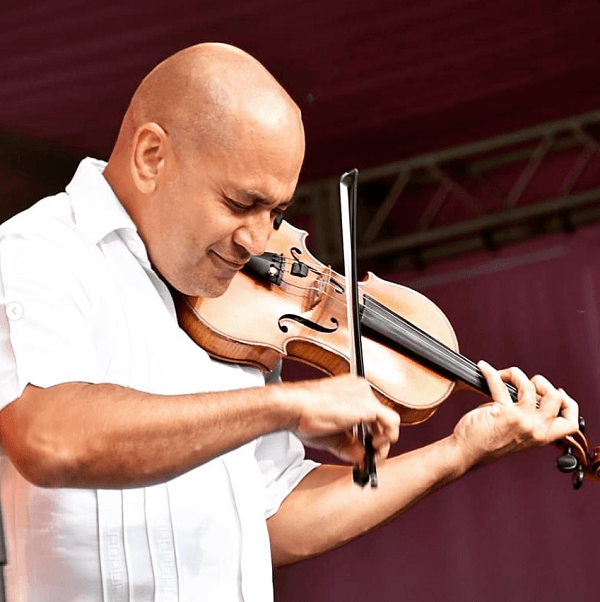
Ali playing the violin
Venezuelan musician Ali Bello playing the violin live

Alí’s beginnings in the world of music thanks to El Sistema

From a young age, Alí became interested in music, which led him to join the National System of Youth and Children’s Orchestras and Choirs of Venezuela, where he studied classical music as an extracurricular activity. This in order for Alí and his classmates to be busy in any activity until their parents came to pick them up after work.

This was when an orchestra or school of music was formed clase to his father’s work, so Bello was enrolled in these classes from 2 to 5 p.m. after school. So it went for him since he was in kindergarten, and he learned to play the xylophone and the recorder. When the boy was seven years old, the school orchestra located in La Rinconada, Caracas, was officially created, but due to how small Ali was, the only instrument the school could assign him according to his size was the violin, which he keeps playing diligently to this day.

After many years of being part of the National Youth Orchestra, he got ahead with his musical career and decided to go to the United States to continue his university studies and train as a professional musician.

Other instruments besides the violin

In addition to the violin, Alí also plays a lot of percussion, since he considers it very important. He thinks every folk and Latin musician must handle percussion as efficient as possible and each of its rhythms in order to internalize the style they want to play on any instrument.

“Percussion and singing have always fascinated me, so I try to devote myself to both even a little bit, but it is undeniable that the violin has always been my main instrument. I’ve tried to focus all styles and everything I work on towards the violin to turn it into the main element,” the musician added on this subject.

Ali and Gustavo
Ali Bello, his son and maestro Gustavo Dudamel

How the opportunity to study in the United States came about

Initially, Alí was supported by his violin teacher Margaret Pardee, who taught at the Juilliard School and went to Venezuela to give master classes. It was Pardee who encouraged Alí to continue his education in New York, which he finally achieved thanks to the Gran Mariscal de Ayacucho scholarship fund and the Simón Bolívar Musical Foundation.

This is how the Venezuelan artist obtained his bachelor’s degree, master’s degree, and PHD.

At college, he met Johnny Almendra, thanks to whom he discovered genres other than classical music, in which he was not only the performer of melodies but could also create his own music. He then discovered styles of Venezuelan and Latin music that inspired him to explore more varied rhythms different from what he had known before.

He played regularly with Johnny Almendra and his modern charanga group Los Jovenes del Barrio for a time and subsequently played for La Típica Novel and other orchestras. As Alí gained experience in the world of charanga and Latin music in general, he started having opportunities to learn and explore other genres such as Brazilian music, Afro-Cuban music, Latin jazz, and many more. 

Collaborations with major artists in the industry

All this hard-won ground gave Alí the opportunity and the honor to collaborate with great artists in the industry such as Tito Puente, Eddie Palmieri, Johnny Pacheco, Rudy Calzado, Pedro Cortés, José Fajardo senior, Pupi Legarreta, and many more. All these figures helped him not only to have a better understanding of the Afro-Cuban style and tradition, but also of the influence of New York on music.
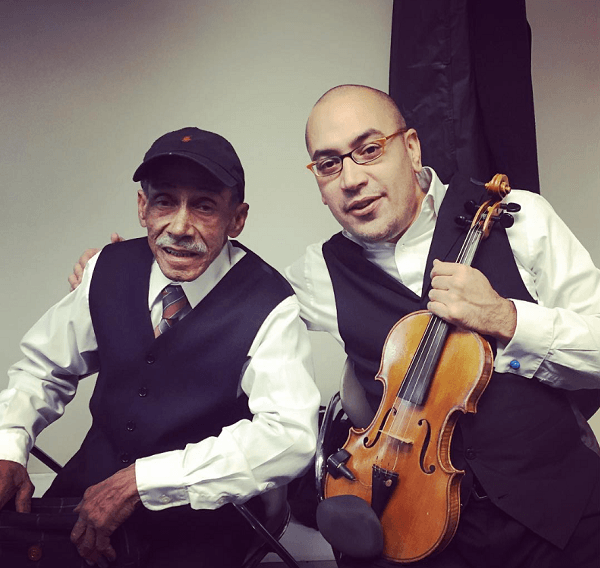
Ali and Pupy
Maestro Pupy Legarreta and Ali Bello

Thanks to this knowledge base, he had the courage to release a record album, La Charanga Syndicate, in which, as the name suggests, he uses charanga and all the influences coming from the musicians he has known and continues to know. For this reason, he feels he now has something to say and bring to the style. 

Another important thing for his career was his participation in Jay-Z’s concert to celebrate the anniversary of the release of his first album. The rapper wanted to mark the occasion by playing with a symphony orchestra, so hired many musicians of all kinds to make a great show at Radio City Music Hall in New York. Fortunately for Ali, he was well-known in the music scene at the time, so he was contacted to participate in the event.

In that sense, the violinist is very happy to be in New York, as the world’s greatest artists always take this city into account for their concerts, which gives musicians like him the opportunity to have access to these great figures in the industry.

Ali as an arranger

In addition to being a percussionist and violinist, Ali has also ventured into musical arrangements quite successfully thanks to all the academic training he had received up until then. However, as he became a more experienced professional, he began to notice that his own ideas and thoughts came to life in his work. So, having the theory in his head, he could take those ideas he had had and develop them within the rhythmic and stylistic elements which are willing to use on each occasion.

In addition to that, the artist also works on production and mixing a bit to achieve the necessary sound. He even has his own studio where he plays for his own productions and other artists’ records as a freelancer.
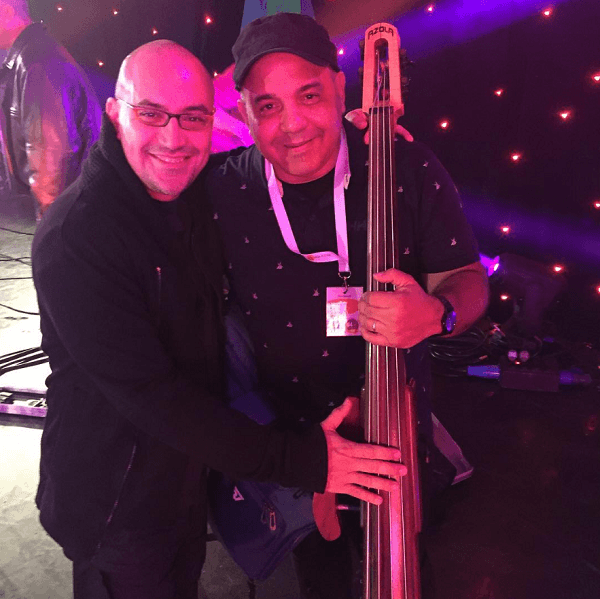
Ali and Juan
Ali Bello and Juan Carlos Formell from Los Van Van in Poland

Read also: Omar Ledezma Jr. shares with us the new from his project with Azesu

Salsa Sabor

North America / USA /

Salsa Sabor is a voluntary association formed by a group of salsa dancers passionate about sharing salsa with a focus on building New Hampshire’s Salsa Community. With the primary goal of introducing salsa to new people, they strive to provide a place for New Hampshire Salseros to dance without having to go into Massachusetts. They pride themselves on maintaining a friendly welcoming community where all can come to learn to dance.

Flyers Salsa Sabor
Flyers Salsa Sabor

The members of Salsa Sabor volunteer their time and skills to bring you Copacabana Salsa Nights at the Milly’s Tavern. A free salsa night where people can experience a true salsa night out dancing here in Manchester, NH. They put on events like their annual food drive to support the New Hampshire Food Bank in November to further help the community.

The membership is comprised of a group of experienced dancers, from different backgrounds, each volunteering their time and experience to bring salsa dancing to the community. Every Wednesday the Copacabana Salsa Night starts off with NY On2 club style salsa lessons from 7:45-9pm. Both a Beginner level and an Advanced Beginner/Intermediate level salsa class are taught each night.

Photo: Salsa Sabor
Photo: Salsa Sabor
Photo 1 : Salsa Sabor

On the first Wednesday of the month First Bachata Wednesday is hosted, with a progressive Bachata Lesson before the weekly salsa class in the 6:45-7:45 pm timeslot. No experience is required and no partner is necessary. All you need is the desire to try something new, the willingness to learn and ability to have fun to enjoy your night at Copacabana Salsa Wednesdays.

If you want to know a little more about Salsa Sabor, please go to the following link

Copacabana Salsa Night

http://www.salsasabor.org/ 500 N Commercial St Manchester, NH

Israel “Cachao” López, a Cuban musician and composer, has been hailed as “the Inventor of Mambo”

Born in Havana on September 14, 1918, and passing away in Coral Gables, Miami, on March 22, 2008, Israel “Cachao” López, often known simply as “Cachao,” was a Cuban musician and composer.

Israel Cachao López musico y compositor cubano, ha sido definido como el Inventor del Mambo

He became a legend in Cuban music with his masterful handling of the double bass and was renowned for his performances in mambo and Latin jazz.

His talent earned him two Grammy Awards (in 1995 and 2005), a Latin Grammy in 2003, an honorary doctorate from Berklee College of Music, and a star on the Hollywood Walk of Fame.

He has been described as “the inventor of mambo” and is considered a master of descarga (live improvisations).

He began by playing various instruments until he settled on the double bass, which allowed him, as a teenager, to join the Havana Philharmonic Orchestra, where his father and older brother also played.

“Cachao” left Cuba in 1962 with a long list of successes and stated in a 2007 interview that if it weren’t for his compatriot and colleague Dámaso Pérez Prado, “mambo would not have been heard worldwide.”

Israel Cachao López nacido en La Habana, un 14 de septiembre de 1918 y falleció en Coral Gables un 22 de marzo de 2008 en Miami

His first stop was Madrid, where he stayed for a year before emigrating to the United States. In the U.S., he resided in New York City, Las Vegas, and Miami.

López also played acoustic bass with his brother, the multi-instrumentalist Orestes López. They literally composed over 3,000 songs together and were highly influential in Cuban music from the 1930s to the 1950s.

They created the “nuevo ritmo” (new rhythm) in the late 1930s, which transformed the danzón by introducing African rhythms into Cuban music, ultimately leading to mambo.

He won several Grammy Awards for both his own work and his contributions to albums by Latin music stars, including Gloria Estefan. In 1995, he won a Grammy for Master Sessions Volume 1.

In 2003, he won a Latin Grammy for Best Traditional Tropical Latin Album alongside Bebo Valdés and Patato for El Arte Del Sabor. He won another Grammy in 2005 for his work ¡Ahora Sí!

His nephew, Orlando “Cachaíto” López, became one of the pillars of the famous Buena Vista Social Club.

Cachao performed with artists such as Tito Puente, and his music has been featured in films like The Birdcage and the soundtrack of the video game Grand Theft Auto: Vice City.

The Actor Andy Garcia produced a documentary titled Cachao… “Como Su Ritmo No Hay Dos” in 1993 about his music. He also shared stages with Celia Cruz and her husband Pedro Knight, as well as with trombonist Generoso Jiménez.

Leyendas de Nuestra Musica Latina Pacheco, Puente y Cachao

His last musical collaboration was with Gloria and Emilio Estefan on the singer’s album titled 90 Millas.

López passed away on the morning of March 22, 2008, in Coral Gables, Florida, at the age of 89, due to complications following kidney failure.

Cachao y Su Ritmo Caliente – Monte Adentro (2000)

Tracks:

  1. Monte Adentro (Cógele el golpe) (A. Castillo Jr.)
  2. Goza Mi Trompeta (O. Estivill)
  3. Guajeo de Saxos (E. Peñaver)
  4. Estudio en Trompeta (I. López)
  5. Gozar Timbero (O. Estivill)
  6. Trombón Criollo (O. Portillo)
  7. Malanga Amarilla (S. Contreras)
  8. Controversia de Metales (I. López)
  9. Descarga Cubana (O. Estivill)
  10. Pamparana (A. López)
  11. Sorpresa de Flauta (O. Estivill)
  12. Oye Mi Tres Montuno (A. Echevarria)
  13. La Floresta (O. López)
  14. Avance Juvenil (B. López)
  15. Redención (O. López)
  16. Descarga Mambo (D.P.) 

Musicians:

  • Israel López “Cachao” (Double Bass)
  • Guillermo Barreto (Timbales)
  • Tata Güines (Tumbadora)
  • Rojelio “Yeyo” Iglesias (Bongos)
  • Gustavo Tamayo (Güiro)
  • Alejandro “El Negro” Vivar (Trumpet)
  • Armando Armenteros (Trumpet)
  • Generoso “El Tojo” Jiménez (Trombone)
  • Oreste López (Piano)
  • Enemelio Jiménez (Alto Sax)
  • Emilio Peñalver (Tenor Sax)
  • Virgilio Lisama (Baritone Sax)
  • Richard Egües (Flute)
  • Niño Rivera (Tres)
  • Roliyo y Reyes (Chorus)

Recorded in Havana, 1957-1958

Cachao y Su Ritmo Caliente - Monte Adentro (2000)
Cachao y Su Ritmo Caliente – Monte Adentro (2000)


The tradition of being musicians comes from grandparents and great-grandparents, all the Cachaos are musicians.

By:

Dj. Augusto Felibertt

L’Òstia Latin Jazz

Also Read: Israel “Cachao” Lopez Sobrado in fame and respect in the seventies was dedicated to maintain the tradition at the highest level

Miguel Zenón is widely regarded as one of the most innovative and influential saxophonists and composers of his generation

“Miguel Zenón, this young musician and composer, is simultaneously re-establishing the artistic, cultural, and social tradition of jazz while creating an entirely new jazz language for the 21st century.”

Miguel Zenón is widely considered one of the most innovative and influential saxophonists and composers of his generation.

Born and raised in San Juan, Puerto Rico, Zenón has released seventeen recordings as a leader, including his most recent, the Grammy-nominated Golden City (2024), and the Grammy-winning album El Arte Del Bolero Vol. 2 (2023).

He has collaborated with luminaries such as The SFJAZZ Collective, Charlie Haden, Fred Hersch, Kenny Werner, David Sánchez, Danilo Pérez, The Village Vanguard Orchestra, Kurt Elling, Joey Calderazzo, Steve Coleman, Ray Barreto, Andy Montañez, Jerry Gonzalez & The Fort Apache Band, The Mingus Big Band, and Bobby Hutcherson.

Zenón is a Grammy Award winner, a Guggenheim Fellow, a MacArthur Fellow, and a recipient of the Doris Duke Artist Award.

He also holds an honorary Doctorate of Arts from the Universidad del Sagrado Corazón.

Widely considered one of the most innovative and influential saxophonists and composers of his generation, he has also developed a unique voice as a conceptualist, focusing his efforts on perfecting an excellent blend of jazz and its many musical influences.

enón ha lanzado diecisiete grabaciones como líder

Zenón has released numerous albums as a bandleader and has appeared on over 100 recordings as a sideman.

Música de las Américas: A Masterpiece

With Música de las Américas, Puerto Rican saxophonist Miguel Zenón has created his finest album to date since his professional debut twenty-two years ago.

On this album, Zenón is accompanied by the same combo he has worked with on his recent projects, notably Venezuelan pianist Luis Perdomo, with the addition of some high-caliber percussion reinforcements from his native Puerto Rico.

He has worked with luminaries such as The SFJAZZ Collective, Charlie Haden, Fred Hersch, Kenny Werner, David Sánchez, Danilo Pérez, The Village Vanguard Orchestra, Kurt Elling, Joey Calderazz

Música de las Américas presents a very appealing balance across its eight tracks, weaving classic Latin jazz with more modern jazz forms, venturing into the turbulent waters of free jazz when necessary (as heard in ‘Venas Abiertas’), and incorporating traditional music from his homeland.

Zenón’s compositions aim to reflect the dynamism and complexity of indigenous American cultures (‘Taínos y Caribes,’ which opens the album), as well as their encounters with Europeans and the resulting historical implications, exemplified by tracks like ‘Imperios.’

As Miguel Zenón himself has stated, “the music on the new album is inspired by the history of the American continent, not only before European colonization but also by what has happened since.”

Música de las Américas serves as a kind of manifesto for Zenón’s concept of America as a continent.

This new musical offering from the alto saxophonist, born in San Juan, Puerto Rico, in 1976, was conceived during the pandemic (does anyone remember that there was a pandemic in 2020 and 2021 originating in the People’s Republic of China that caused thousands of deaths?). The book ‘Venas Abiertas’ by Uruguayan writer Eduardo Galeano, who passed away in 2015 and was a prominent figure of the Latin American left, played a significant role in its development.

Zenon Nacido y criado en San Juan, Puerto Rico

Zenón has been featured in publications such as The New York Times, The Wall Street Journal, The Los Angeles Times, The Boston Globe, and The Chicago Tribune. He also topped the Jazz Artist of the Year and Alto Saxophonist of the Year categories in the 2014 JazzTimes Critics’ Poll and was selected as Alto Saxophonist of the Year by the Jazz Journalists Association in 2015, 2018, 2019, and 2020 (when he was also recognized as Arranger of the Year). In 2023, he was recognized by the same organization as Composer of the Year.

As a composer, he has received commissions from SFJAZZ, NYO Jazz, The New York State Council on the Arts, Chamber Music America, Logan Center for The Arts, The Hyde Park Jazz Festival, The John Simon Guggenheim Foundation, MIT, Spektral Quartet, Miller Theater, The Hewlett Foundation, Peak Performances, PRISM Quartet, and many of his colleagues. Zenón has given hundreds of lectures and masterclasses at institutions worldwide and is a faculty member of MIT’s Music and Theater Arts Department, as well as the current Visiting Scholar for the Jazz Harmony and Composition Department at Berklee College of Music.

Ultimately, Música de Las Américas is the product of Zenón’s intellectual curiosity to learn more about the history of America (the continent) and translate that history into music (distritojazz).

Miguel Zenón – Música De Las Américas (2022)

Tracks:

  1. Tainos y Caribes
  2. Navegando (Las Estrellas Nos Guían)
  3. Opresión y Revolución
  4. Imperios
  5. Venas Abiertas
  6. Bámbula
  7. América, El Continente
  8. Antillano

Musicians:

  • Miguel Zenón (Alto Saxophone)
  • Luis Perdomo (Piano)
  • Hans Glawischnig (Bass)
  • Henry Cole (Drums)

Guest Musicians:

  • Los Pleneros de La Cresta (Emil Martinez, Edwin “Wechin” Aviles, Joshuan Ocasio, Joseph Ocasio, and Jeyluix Ocasio) (Panderos, percussion, and vocals on #2)
  • Paoli Mejías (Percussion #3)
  • Víctor Emmanuelli (Barril de bomba #6)
  • Daniel Díaz (Congas #8)

Recorded at Big Orange Sheep, Brooklyn, New York, March 21-22, 2022.

Miguel Zenón - Música De Las Américas (2022)
Miguel Zenón – Música De Las Américas (2022)

Zenón lives in New York City with his wife, Elga, and their daughter.

By:

Miguel Zenón

Dj. Augusto Felibertt

L’Òstia Latin Jazz

Also Read: Luis Perdomo, one of the most diligent jazz pianists in New York

North America – July 2017

Advanced Salsa Dancers thubnails - North America - July 2017

Bachata Festival 2017 thubnails - North America - July 2017

Dance With Joy Studios thubnails - North America - July 2017

DF Dance Studio thubnails - North America - July 2017

Rumbao Latin Dance Company thubnails - North America - July 2017

Salsa Sabor thubnails - North America - July 2017

  • « Go to Previous Page
  • Page 1
  • Interim pages omitted …
  • Page 19
  • Page 20
  • Page 21
  • Page 22
  • Page 23
  • Interim pages omitted …
  • Page 135
  • Go to Next Page »

International Salsa Magazine (ISM) is a monthly publication about Salsa activities around the world, that has been publishing since 2007. It is a world network of volunteers coordinated by ISM Magazine. We are working to strengthen all the events by working together.