• Skip to primary navigation
  • Skip to main content

International Salsa Magazine

  • HOME
  • Previous editions
    • 2026
      • ISM / March 2026
      • ISM / February 2026
      • ISM / January 2026
    • 2025
      • ISM / December 2025
      • ISM / November 2025
      • ISM / October 2025
      • ISM / September 2025
      • ISM / August 2025
      • ISM / July 2025
      • ISM / June 2025
      • ISM / May2025
      • ISM / April 2025
      • ISM / March 2025
      • ISM / February 2025
      • ISM / January 2025
    • 2024
      • ISM / December 2024
      • ISM / November 2024
      • ISM / October 2024
      • ISM / September 2024
      • ISM / August 2024
      • ISM / July 2024
      • ISM / June 2024
      • ISM / May 2024
      • ISM / April 2024
      • ISM / March 2024
      • ISM / February 2024
      • ISM / January 2024
    • 2023
      • ISM / December 2023
      • ISM / November 2023
      • ISM / October 2023
      • ISM – September 2023
      • ISM – August 2023
      • ISM July 2023
      • ISM Edition June 2023
      • ISM – May 2023
      • ISM April 2023
      • ISM March 2023
      • ISM February 2023
      • ISM January 2023
    • 2022
      • ISM December 2022
      • ISM November 2022
      • ISM October 2022
      • ISM September 2022
      • ISM August 2022
      • ISM July 2022
      • ISM June 2022
      • ISM May 2022
      • ISM February 2022
      • ISM January 2022
    • 2021
      • ISM December 2021
      • ISM November 2021
      • ISM October – 2021
      • ISM September 2021
      • ISM August 2021
      • ISM July 2021
      • ISM May 2021
      • ISM April 2021
      • ISM June 2021
      • ISM March 2021
      • ISM February 2021
      • ISM January 2021
    • 2020
      • ISM December 2020
      • ISM November 2020
      • ISM October 2020
      • ISM September 2020
      • ISM August 2020
      • ISM July 2020
      • ISM June 2020
      • ISM May 2020
      • ISM April 2020
      • ISM March 2020
      • ISM February 2020
      • ISM January 2020
    • 2019
      • ISM December 2019
      • ISM November 2019
      • ISM October 2019
      • ISM Septembre 2019
      • ISM August 2019
      • ISM July 2019
      • ISM June 2019
  • Download Salsa App
    • Android
    • Apple
  • Spanish

Search Results for: Van+Van

Here we have Brazilian bandleader and composer Paula Maya

Today we have an exclusive that makes us very happy, since it is a talented artist from a country we had never talked about in this section: Brazil. We are talking about none other than the award-winning bandleader, composer, pianist, keyboardist and singer Paula Maya, with whom we had the privilege to talk by Zoom. 

Paula has a very interesting background, since she was born in the South Zone of Rio de Janeiro, the birthplace of the world famous bossa nova genre and the popular composer, pianist and singer Carlos Antonio ”Tom” Jobim. It is clar that this had much to do with artistic inclinations that the woman would show later in her life.   

Under her belt, she has several nominations and awards she received thanks to her talent and effort of so many years as her nomination to the Focus Web News Brazilian International Press Awards in the category of Best Brazilian Musician living in the US, her nomination to the Austin Chronicle Music Awards in the category of Top Ten World Music Bands, Winner of the Seattle Weekly Awards in the category of Best Brazilian Composer, her nomination to the Seattle Hot Rocks TV Show Music Awards in the category of Best Female Singer, among others. 

Here are the most important topics we touched with lovely Paula about her life and career.  

Singer Paula Maya
Brazilian bandleader, composer, pianist, keyboardist and singer Paula Maya

Paula’s early interest in music 

Paula first developed an interest in music when she was only four years old or even younger, as she had musical toys such as pianos or keyboards she used to play with all the time. To this it is added that her mother always listened to classical music, which she already found beautiful back then.   

What is interest about his direct family is the fact that there were no musicians in it. In fact, her father was a lawyer and her mother was a dancer and yoga instructor, but a cousin of hers was a bandleader, composer and music teacher who traveled to the United States and developed quite a big reputation at the time, so he became an example for Paula, who would end up following in his footsteps in the future. 

When she turned 10 years old, she began taking piano lessons, which was her first formal experience with music. Since then, she has continued to learn about a lot of instruments and areas related to this art, which she assures that it is so rich and diverse that you never stop learning new things.  

Paula’s mentors in music 

Paula has been very fortunate to be mentored by some of the most talented musical celebrities in Brazil and one of them was producer and percussionist Teo Lima, with whom she has continued to work on her latest album to the present. Paula met this Brazilian legend in Seattle, where she lived for 17 years, and music led them to form a great friendship that has lasted until today. 

They had wanted to make an album together for many years and it has finally happened, which was a dream for Paula, as she grew up listening to his greatest hits and dreamed about one day meeting him. Not only did she meet him, but also she became his friend and worked with him.   

Another name we can leave out is guitarist Baden Powell, whom Paula met in her early twenties and describes him as someone who supported her a great deal in her career and even came to her shows to watch her sing. 

Another artist who was important in her training was Luizihno Eça, who was one of the greatest exponents of bossa nova at the time and a great reference for all musicians who wanted to follow in his footsteps.  

Paula at ONE-2-ONE BAR
Paula Maya performing at ONE-2-ONE BAR in Austin, Texas

Music theory and the Brazilian Conservatory of Music 

Paula comments that, before entering the Brazilian Conservatory of Music, she had an excellent teacher who was a concert pianist of name Luis Magalhães, who taught her the best piano techniques that she uses today in her performances, meaning that she was admitted to the hous of studies with a solid foundation of knowledge that helped her a lot.  

In addition to that, music theory has been very useful for Paula at the time of teaching her classes, since she is a music teacher and thinks that all this knowledge is fundamental for an artist’s education, since music is very logical and occasionally you must look for quick answers to certain situations that certainly require studying and academic training. 

She also told us that she usually uses music theory when composing because of the theoretical part, but not always.   

Paula as a bandleader, pianist, keyboardist and singer   

When we asked Paula how she has developed and performed in all these areas of music, she laughs and says that this is just the beginning, as she is also in charge of producing, composing, recording her albums, running the business part, making booking arrangements, among other things. ”That’s the life of a musician nowadays, especially when you don’t have a machinery behind you to back you up” Paula said on this topic.   

This means that, apart from all the musical knowledge Paula has, she also takes care of all the details regarding her work, but they do not have to do with her profession directly. She does not have a large team of assistants to back her up, so she manages everything related to her career herself. 

Since there are so many things she should do, she has a calendar in which she arranges the day and time to do every activity and always follows it to the letter. The artist says that the hardest thing about this is finding the time to be inspired and compose, since so many occupations, sometimes, do not let her clear her mind. However, she has learned to take full advantage of those few spaces.  

Paula playing the keyboard
Paula Maya playing the keyboard at Barton Creek Farmers Market in Austin, Texas

Paula’s role as a Grammy Award voting member 

For some time, Paula was a Grammy Awards voting member in its version in English and Spanish, so we could not very well not ask her about this important issue. 

She told us that, although it is true that she is no longer part of the committee responsible for voting, social networks and these new forms of communication have made things much easier, since judges and committee members have groups on Facebook, WhatsApp and other platforms where they can conduct the necessary discussions. 

In her particular case, what she considered when the time comes to vote for a nominee was talent and how much she liked a type of performance, but all member had their own particular approach to choosing a specific artist. 

Something that Paula definitely did not like was that the majority of votes to an artist did not necessarily reward talent, but rather the popularity of the moment and promotion. She thinks this is not entirely fair, since talent, music skills and preparation do not always go hand in hand with popularity, but she is also aware that the ”game” is as well and she had to adapt to it. 

Paula Maya & Bosa Nova Plus 

Paula says laughing that everybody in Seattle expected her to play bossa nova because she was Brazilian, but she refused to do so. Eventually, she ended up doing exactly what the public expected and started playing bossa nova when she moved to Austin, Texas.  

The fact that this Texan city has so many residents and musicians from Brazilian descent living in Austin has been an advantage for this genre to continue to become more popular and this niche to develop more and more. This led her to meet the musicians who have accompanied her in the band, who also came from playing bossa nova and other genres during their respective careers. 

Read also: The Conga Room closes its doors, but says goodbye in style 
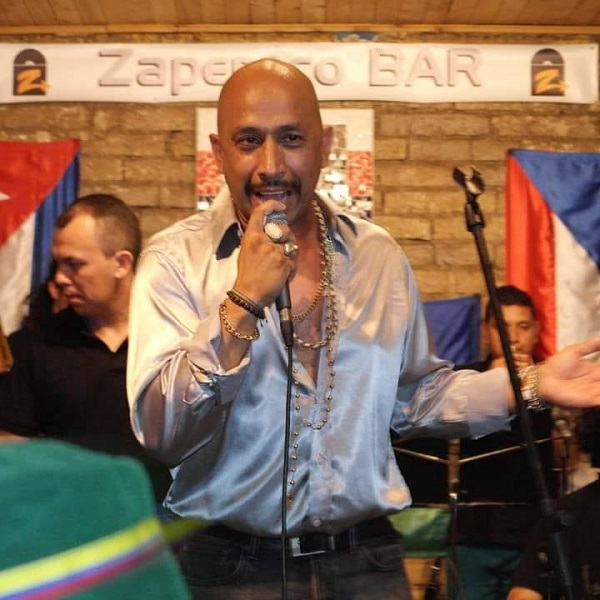
 

Cajiao, says he always had a taste for good music: the tangos and ballads of the 50s and 60s

Danilo Cajiao was born on February 9, 1969 in Cali Colombia son of Marina Munevar and Antonio Cajiao family with three siblings Walter, Patricia and Raul.

From my father I inherited the musical taste for Afro Antillean rhythms, we listened at home to the Sonora Matancera, Benny More, Arsenio, Daniel Santos and many more.

Danilo Cajiao was born on February 9, 1969 in Cali, Colombia.

There was always a taste for good music: the tangos and ballads of the 50s and 60s.

When I was a student I participated in several music festivals at school and I was part of several dance and Andean music groups.

I always liked salsa and my favorite artist of the genre will always be Angel Canales.

After the appearance of the program “YO ME LLAMO” in Colombia I was motivated to start the process to achieve the perfect imitation of Angel Canales.

I began my presentations in small salsa bars with a dance floor and I did about 4 songs of Diferente, as I went along the character was being perfected and the public and the owners of the bars were asking for something more.

I then created “the Orchestra SON DE LA 8″ in 2013 with the purpose of making the accompaniment and mount all the music of the different Angel Canales.

Orquesta SON DE LA 8

The market was opening and the support of the salseros was very large, We have had much acceptance in the salsero environment in Colombia.

Participating in major events locally, nationally and internationally:

Leyendas Vivas De la Salsa in Medellin Colombia,

Salsa al Parque Cali, Salsa al Parque Bogotá, Homenaje a la Salsa, Tributo a los salseros and Noche Blanca.

I have alternated and shared stages with several national and international artists and orchestras.

Orquesta Brodway, Orquesta Colon, Nelson y sus Estrellas, Gran Combo de Puerto Rico, Henry Fiol, Adalberto Santiago, Luisito Carrión, Papo Cocote, Cano Estremera, Moncho Santana, Orquesta Zodiac, Luigui Texidor, Frankie Vásquez, Tony Molina, Orlando Marín, Orquesta la Inmensidad and Orquesta la 33.

Danilo Cajiao, says there has always been a taste for good music, the tangos and ballads of the 50s and 60s.

International presentations:  

Guayaquil Ecuador and Caracas Venezuela.

Endorsed and supported by the family of ANGEL CANALES and by him I have taken my tribute to the most recognized places and salsa clubs in Colombia.

Apart from accompanying the Diferente Angel Canales with the orchestra Son de la 8 we have made our own music always keeping the line of heavy salsa and with good taste.

Angel Luis Canales “El Diferente”.

There were nine record productions by Angel Canales between 1975 and 1987, twelve productive years.

By 1970 Angel Luis Canales had put his voice on an album by African-American pianist Mark Dimond, and five years later Dimond’s orchestra was renamed “Angel Canales y Sabor”.

The immense musical freedom of Ángel Luis Canales Canales has much to do with the determining influence exerted on him by Rafael Cortijo, Ismael Rivera and the irreverence of the Combo de Cortijo as a whole.

The difference was that those two masons did not have enough money to support their ideas economically (discographically speaking) while Canales had enough because of the money he earned from his profession as a jeweler and diamond cutter.

That’s why he didn’t lower his head to anyone, that’s why he didn’t give in to any advantageous record contracts and made his own record label, that’s why he never paid or bribed radio producers, and he dressed the way he wanted.

That’s why the conservative salseros kept a CIA-like eye on him. And Canales revolutionized everything in his path: from his clothing to his vocal and orchestral arrangements, his presentations and his choice of repertoire.

By 1970 Angel Luis Canales had put his voice on a record by the Afro-American pianist Mark Dimond, and five years later Dimond’s orchestra was renamed “Angel Canales y Sabor”, and with it he would make a mark like few others in the world of salsa, from his total independence, to the freedom for the musicians, his revolutionary shaved head, and a wardrobe that had nothing to do with the salseros, in addition to his voice, repertoire and arrangements. Ángel Canales recorded in 1979 the album “El sentimiento del latino en Nueva York”, and an exquisite version of “Dos Gardenias”, by Cuban composer Isolina Carrillo.

“El sentimiento del latino en Nueva York” was a clarinada similar to “Imágenes Latinas”, the song by Argentine Bernardo Palombo presented a year earlier by Conjunto Libre, in terms of its contents of denunciation and clamor for justice. “Es el sonido que el americano oye/ y no entiende” (It’s the sound that the American hears/ and doesn’t understand).

Musical childhood

Ángel Luis Canales was born on June 29, 1950 in Santurce, Puerto Rico, son of Ángel Luis Canales and Ana Ilda Canales.

At the age of 8 he was already in New York with his parents, who liked to listen to romantic music and also to Cortijo y su Combo.

The Puerto Rican country song was also among his favorites; it was the jíbara song of his people. In time Canales would indicate that Cortijo and Ismael were determining influences in his musical and social journey.

Much has been said that his current retirement is due to Parkinson’s disease, but Ángel Luis Canales is there, he attends private invitations of his friends and remains in the battle line of salsa and life. He is currently 73 years old.

In those years and in school he was more inclined to practical workshops than books and that is why he went to work, recommended by one of his teachers in a jewelry store where from being a messenger he would learn all the secrets of the art of cutting, polishing and mounting diamonds. He became a professional, solvent, and with an extraordinary clinical eye that would serve him a lot later.

Vista larga, his new friends did not speak Spanish, his native language, but fortunately Angel Luis had peers of his generation, and Latinos like the Lebron brothers and Willie Colon himself.

He also took a long view of his internship in the U.S. Army and later assimilated the new trends that emerged in the music being made in New York.

He started out firmly, as we have already mentioned, with pianist Mark Dimond (Markolino), who had been linked to Willie Colón. With Mark he added his voice to some of the songs on the album “Brujería” and later, with the departure of the pianist, the orchestra was renamed “Ángel Canales y Sabor”.

With this band he would record “Sabor” in 1975 and other albums until “El Sentimiento del latino en Nueva York” in 1979.

Two years before the recording of this album, in 1977 Angel Canales made his first visit to a Latin American country, Panama, and the reception he received was such that he would later write a song dedicated to that country.

The same happened during his visit to Venezuela on November 13 and 14, 1981, which became a musical commotion of great proportions at the Poliedro de Caracas.

Likewise in Colombia and Peru he felt the devotion of the public of those nations. Perhaps he did not know the scope of his work and the projection he already had.

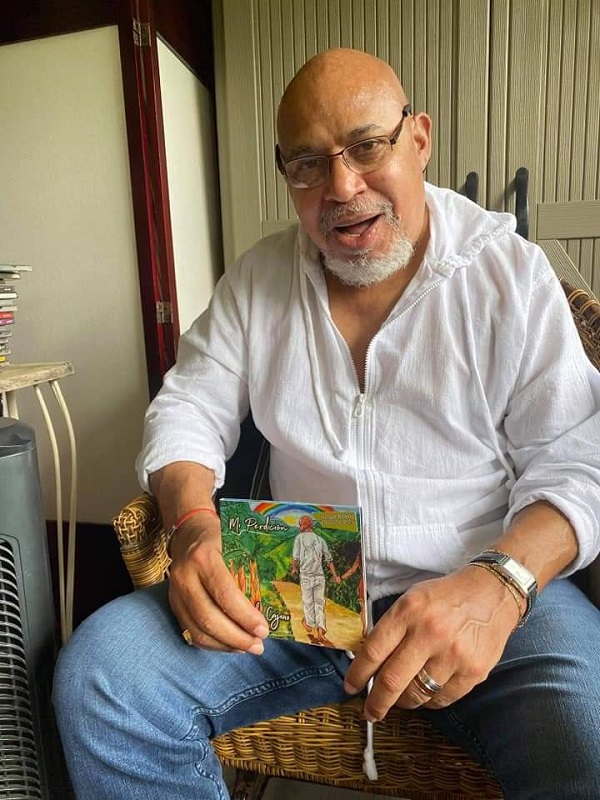
Angel Canales "El Diferente" receiving Danilo Cajiao's production "Mi Perdicion" year 2020.
Angel Canales “El Diferente” receiving Danilo Cajiao’s production “Mi Perdicion” year 2020.

Much has been said that his current retirement is due to Parkinson’s disease, but Angel Luis Canales is there, he attends private invitations of his friends and remains in the battle line of salsa and life. He is currently 73 years old.

Source: TeleSurTv

Also Read: Orquesta la Identidad is one of the most nationally and internationally recognized groups in the salsa genre

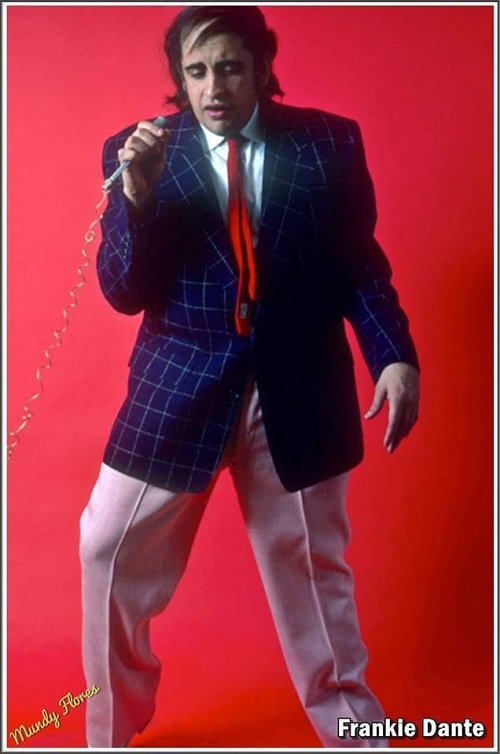
Lenin Francisco Domingo Cerda, better known as Frankie Dante, the “Underground” and “Irreverent” of Salsa in New York in the 60’s and 70’s.

“Cerda If I were president, if I were a president, there would be no armed forces, wars would end, the boys would go home where they belong.”

Lenin Francisco Domingo Cerda, mejor conocido como Frankie Dante el “Underground” e “Irreverente” de la Salsa en New York

Lenin Francisco Domingo Cerda, known as Frankie Dante, was born in Santo Domingo, Dominican Republic, on September 15, 1945.

He traveled to New York City in search of the sound of the barrio, influenced by Willie Colón and Eddie Palmieri with his Orquesta La Perfecta.

Frankie Dante, always characterized for being an authentic sonero, who interpreted the stories of the Latin barrio.

In 1968 under the label Cotique he appears in the album “Los Coquetones”, where Ismael Quintana also participated, the great influence in his development as a vocalist, this album is produced by Mr. George Goldner.

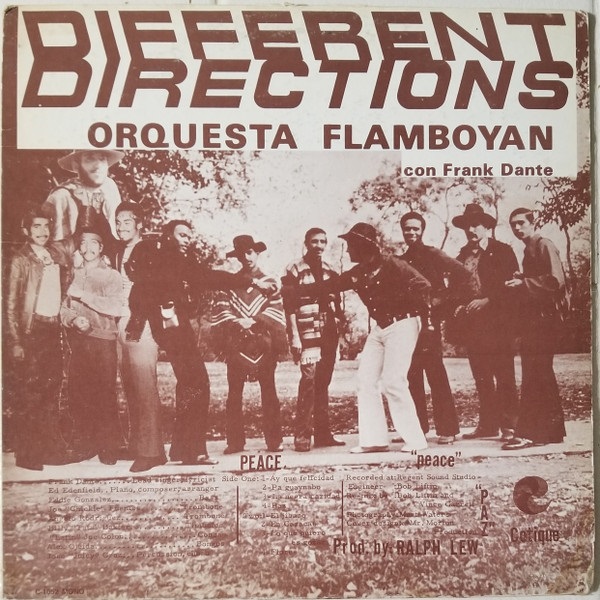
Cerda records a second production with La Orquesta Flamboyán, entitled: “Different Directions”, following the line implemented by maestro Eddie Palmieri with La Perfecta, where he continues the emphasis on social issues, raised in his first musical work, this time with the production of Ralph Lew.

Orquesta Flamboyan Con Frank Dante Different Directions1970
Orquesta Flamboyan Con Frank Dante Different Directions
1970

Launches the album: “Se Viste de Gala”. Resuming his social commitment, he includes the piece “Venceremos”, accompanied by the electric guitar played by Harry Vigianno, who also plays the tres in this production.

In 1972, Frankie Dante is invited by Larry Harlow to produce a new album entitled: “Orquesta Flamboyán Con Larry Harlow”.

Here Frankie achieved hits such as: “La Cuna del Son”, “Yo Te Seguiré”, “Vive La Vida Hoy” and “Presidente Dante”.

The album featured the participation of Larry Harlow on piano and musical production, Ray Romero and Jerry Gonzalez on Congas, Ismael “Pat” Quintana and Milton Cardona on backing vocals.

This album is considered as a recognition of Frankie Dante’s talent when he was asked by the “Wonderful Jew”, Larry Harlow to record together.

Frankie shows all his irreverence by substituting the montuno for a political speech in the manner of a candidate.

As a representative of the Underground current, Dante prefers to perform in a bohemian way in Clubs such as: El Caborrojeño and the Cheetah.

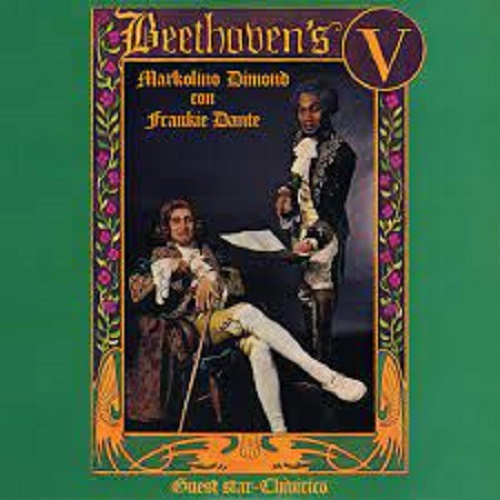
While in these clubs he meets pianist Marcolino Demond and they release the historic album: Beethoven’s V.

One of his best productions was with the extraordinary musician and pianist Markolino Dimond, who had played with Willie Colón, the album was titled: Markolino Dimond Con Frankie Dante Beethoven’s where in addition to his extravagances he imposed a different way of playing.

The album included five compositions by Marcolino Dimond: “Sabrosón”, “Camarones”, “El Quinto De Beethoven”, “Maraquero” and “Ahora Sí”, two songs with reserved author’s rights: “Los Rumberos” and “Yo No Tengo Amigo” and the hit “Porque Adore” by maestro Tite Curet Alonso.

Markolino Dimond Con Frankie Dante Guest Star Chivirico* Beethoven's V
Markolino Dimond Con Frankie Dante Guest Star Chivirico* Beethoven’s V

Dante and Marcolino were a duo without precedents, taking into account that both had the stigma of rebelliousness.

The album features Frankie Dante and Chivirico Davila on vocals and Yayo “El Indio”, Pete “El Conde” Rodriguez and Ismael “Pat” Quintana on backing vocals.

Other great musicians that participated in the band are Nicky Marrero – Timbales, Bongos; Pablito Rosario – Bongos; Barry Rogers – Trombone; Mike Collazo – Timbales, Eddie “Guagua” Rivera – Bass; Lewis Kahn – Trombone; Reinaldo Jorge – Trombone and Frank Malabé – Congas.

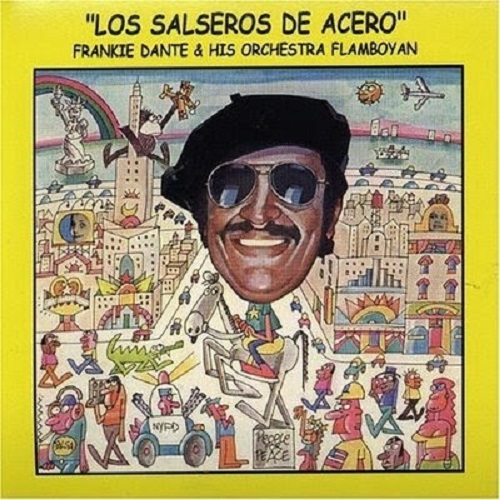
 In 1976, again with Marcolino, he released: “Los Salseros de Acero”, in an attempt to reunite the original line-up of Los Flamboyán with Joe “Chickie” Fuentes on trumpet, Ángelo Rodríguez on trombone and Alex Ojeda on timbales, plus the participation of stars of the moment such as: Charlie Palmieri, Tito Puente and Ricardo Marrero, in what was called: Flamboyán All Star Band.

Frankie Dante & His Orchestra Flamboyan Los Salseros De Acero

Among the songs on the album were “Ciencia Política” by Frankie Dante and “Chupa El Pirulí” composed by the wonderful Ciego Arsenio Rodríguez.

That year he published his seventh album “The Flamboyán All Star Band Frankie “Be Bop” Dante”, also recorded for Cotique Records, which included songs such as: “El Pipón”, “Son Retozón” and “Mumbo Jumbo”, compositions by Frankie Dante himself and a version of the song “María Cervantes” by the Puerto Rican Noro Morales.

Sonny Bravo, Norberto Cruz and Marty Sheller participated in the arrangements; Charlie Palmieri – Arrangements and Director and Mr. Ralph Lew as Producer.

The album also counted with the participation of other great musicians of the salsa movement such as: Leopoldo Pineda – Trombone, Ray Maldonado – Trumpet, Frankie Malabé – Congas, Orestes Vilató – Timbales, Ronnie Cuber – Sax and Flute, Willie Colón – Chorus and Tito Allen – Chorus.

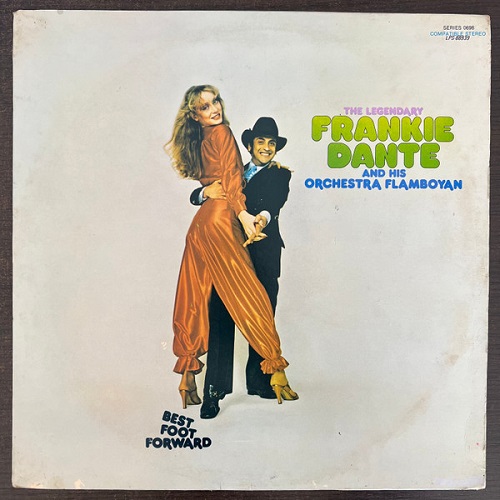
One of Cotique’s recordings was entitled “Frankie Dante and his Orquesta Flamboyán Best Foot Forward”, a compilation album with Frankie’s hits such as: “Paz”, “Los Rumberos”, “Presidente Dante”, “Venceremos” and the well known song “Yo Te Seguiré” written by the great Catalino Tite Curet Alonso.

The Legendary Frankie Dante And His Orchestra Flamboyan Best Foot Forward

His last recording appearance would happen in 1979 with the release of “Los Rebeldes”, where he decided to name his group: Frankie Dante Y Los Rebeldes.

This album has songs such as: “Los Congresistas” by Frankie Dante, a version of the song “Semilla De Caña Brava” by Cuban Luis Martinez Griñan “Lily” and “Vuelve El Rumbero” by Puerto Rican Johnny Ortiz.

Also participating in the recording were: Sal Cuevas – Bass, Louie Cruz, Marty Sheller, and Louie Ramirez in the Arrangements, Alberta Dering – Artistic Director, Ralph Lew as Producer and Milton Cardona as Musical Director.

Dominican Frankie Dante developed his musical career in New York City, where he died of cancer on March 1, 1993.

Dante, emulating his compatriot Johnny Pacheco, settles in the city of skyscrapers and takes with his “precursor” lyrical talent in terms of social conscience in salsa. With good artistic sense he perceives that the sound of the neighborhood and its hurtful musical style will be the main axis of the new concept that is born in the land of Uncle Sam.
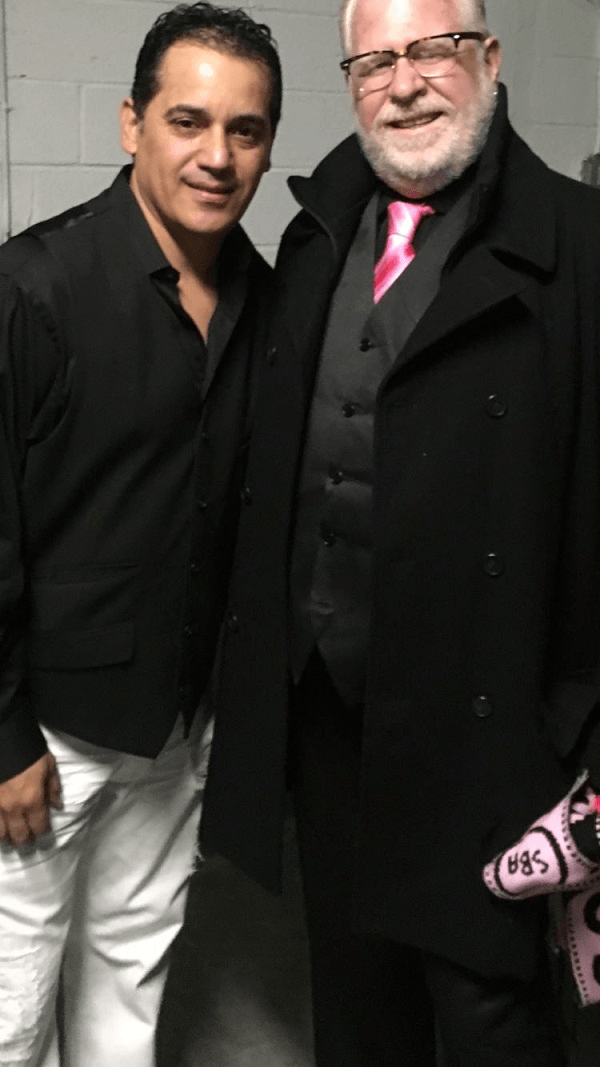
“He recognizes in the almost adolescent Willie Colón a style to follow, he is enormously attracted to that “sour” way of arranging the songs, the maestro Eddie Palmieri and his Orquesta La Perfecta (already in full swing) also influence the young Dante as well as Ismael “Pat” Quintana’s way of interpreting, a style that Frankie incorporates immediately in his first production in 1968 under the Cotique label (Ref. CS-1043) titled Los Coquetones”.
Sources and Bibliography:

  • http://www.megaupload.com/pt/?d=FR6AAPU0
    • http://ww.malianteo.com
    • http://www.salsajazz.com/i
    • http://apostolsalsero.soy.es/frankie-dante-la-orquesta-flamboyan/
    • Latinastereo 100.9 FM nuestra música

Also Read: Nicky Marrero is an innovator, timbalero and bongo player, living legend of our Afro-Latin and Caribbean music.

North America / April 2024

Joanna Torres from Arepas Latin CuisineDon Perignon

The NAMM Show

Julio Vilchez

Paula MayaPBS

Thumbnail about the salsa museum

Las Maracas promo

Martinez attorney


Canada flag

CANADA

DIRECTORY OF NIGHTCLUBS

Dirty Martini
Dirty Martini Oakville
2075 Winston Park Dr
Oakville, OntarioN, Canada L6H 6P5
+1 905 829-8400

El Rancho
El Rancho
430 College St
Toronto, Ontario, Canada M5T 1T3
+1 416 921-2752

LULA LOUNGE
Lula
1585 Dundas West
Toronto, Ontario, Canada M6K1T9
+1 416 588-0307

Marlowe Restaurant & Bar
55 York Blvd
Richmond Hill, Ontario, Canada L4B 3B4
+1 905-771-8645

Sahara
Sahara
1855 Dundas St E
Mississauga Ontario L4X 1M1
+1 905 282-0316

Smokeshow BBQ & Brew
744 Mt Pleasant Rd
Toronto, Ontario, Canada M4S 2N6
+1 416 901-7469

Mangos Kitchen Bar
Mangos Kitchen Bar
1180 Howe Street
Vancouver, BC, Canada V6Z 1R2
+1 604 559-5533

Baza
Baza Dance Studios
1304 Seymour Street
Vancouver, BC, Canada V6Z 1R2
+1 778-379-2292

Studio Nightclub
Studio Nightclub
919 Granville street
Vancouver, BC, Canada V6Z 1L3
+1 604 620-6604


United States flag

UNITED STATES

DIRECTORY OF NIGHTCLUBS

CALIFORNIA FLORIDA  ILLINOIS
MICHIGAN NEW JERSEY NEW YORK
OHIO PENNSYLVANIA TEXAS
VIRGINIA WASHINGTON
APRIL 2024 FESTIVALS
Colorado circle flag
COLORADO


Colorado CC 224

Colorado State Dance Championship

Apr 20 / 21, 2024

7000 Church Ranch Blvd, Denver, CO, United States,80021

Julio Vilchez and his orchestra conquer Miami

Peru continues to give us something to talk about thanks to all the salsa talent coming out that country in recent years and today we had the opportunity to talk with one of them, which is the producer, composer and singer Julio Vilchez. 

After we communicated with Vilchez via email and WhatsApp to schedule an interview, we have managed to have a great conversation in which we knew a little more about the artist’s beginnings in this fascinating world that is music.   

singer Julio Vilchez
This is Peruvian producer, composer and singer Julio Vilchez

Childhood and musical roots in the Vilchez family 

It is not surprising that Vilchez took that parth of life considering that his father, Juan José Vilchez Sanchez, was a talented actor, comedian and professional dancer who carried music in the blood and ran some of the most famous salsa clubs in the city of Lima, which served as a stage for important national and international groups and singers of all genres.   

Having referred with admiration to his father because of all that he achieved in life thanks to music, he assured that music definitely ran through the veins of his family and had always been a very important part of his childhood and youth. 

Seeing all this, the years were not many when Vilchez became interested in musical instruments such as maracas, the bongo bell and the güiro, which led him to participate in groups such as Raíces, La Fragua and Soy Calidad.   

Salsa and other genres 

A large majority of Peruvian artists whom we had the honor to interview have typically ventured in Peruvian Creole music before getting involved in salsa, but not Vilchez. In fact, he pointed out to us that his country was heavily influenced by Cuba musically speaking and there used to be a time when groups from the island visited Peru such as La Sonora Matancera and Los Compadres. Peru also received influence from Colombia, Venezuela and Puerto Rico, although to a lesser extent. 

The artist also remembers that, at home, he and his family always used to listen to Venezuelan singers and orchestras such as La Dimensión Latina, Oscar D’ León, Luisito Quintero, Nati Y Su Orquesta, among others. In the case of Puerto Rico, of course Vilchez and his family used to listen to La Fania All Stars.  

Vilchez was part of Raíces, La Fragua and Soy Calidad
Julio Vilchez was part of groups such as Raíces, La Fragua and Soy Calidad

Formal beginnings of Julio Vilchez in music 

In the neighborhood Vilchez and his family lived in, the singer made friends with other local boys and met up with them to sing in a completely amateur way. In addition to that, he liked to participate in school talent shows, in which he delighted the crowd performing songs from Oscar D’León, Rubén Blades and Willie Colón. 

After attaining the age of 17, he began working alongside his father in the business of running clubs, which gave him the opportunity to spend time with the members of the orchestra La Progresiva del Callao, who performed on Tuesdays, Wednesdays and Thursdays in one of those places.   

Since Vilchez loved to dance and the orchestra focused a lot on its choreographies, the young man identified himself a lot with the group and began to learn the steps the singers performed on stage. One day, the boys saw him dancing and invited him to sing with them in one of their shows, in which he danced very well, but he did not sing in the best way. For this reason, he got the opportunity to stay permanently in the orchestra, but only as a dancer for the moment.   

Over time, he was grabbing experience on stage and getting over stage fright until he managed to keep up with the rest of his orchestra fellows with the passing of days.  

Julio Vilchez with Cano Estremera
Julio Vilchez with Puerto Rican salsa singer Cano Estremera

Vilchez’s time in Venezuela 

Vilchez made friends with a group of Venezuelan musicians who accompanied Oscar D’ León in one of his concerts and invited him to travel with them to Venezuela because they wanted him to be part of the sextet they were going to create, which was meant to perform at a tavern in Caracas. 

Seeing that things were going well in Venezuela at that time, Vílchez decided to accept the invitation and immigrate to the South American country to try his luck. Once there, he spent a lot of time alone because the boys from the sextet traveled a lot, something which took advantage to get to know other groups, one of them being La Selecta de Cúa. One day, Vilchez was walking down the street and heard this orchestra rehearsing, but it needed a singer. That is when Vilchez proposed himself as an option, was admitted and worked for about two years in this orchestra. 

Although he did well in Venezuela, he ended up returning to his native country because he missed his homeland and his father could not get used to having him away, so he packed suitcases and decided to return.   

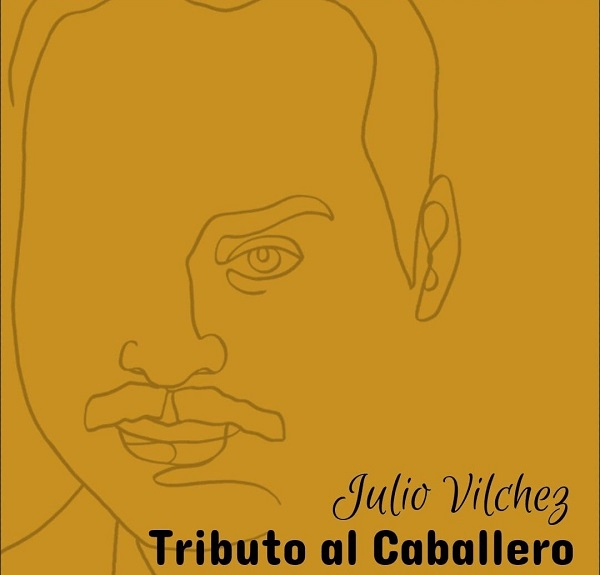
Tributo al Caballero by Julio Vilchez
Cover of the album Tributo al Caballero by Julio Vilchez

Life in the United States 

One of the songs he released in 1995 led him to make a video clip, which started to become very popular on music channels and shows, giving him the recognition Vilchez aimed for so long.  

Since things were not going as he expected on his solo career, he joined the Orquesta La Novel to continue working on music for the next two years. Although his name was not as well known as Vilchez needed it to be, his song was still sounding loud internationally for quite some time, which led him to receive a proposal to perform eight shows with his orchestra in the United States in 2000. 

When Vilchez and the rest of the musicians traveled to Miami, about nine members of the orchestra received proposals to stay in the country and decided to accept. It was there where the artist gathered his courage and says to himself ”I’m staying too”. That was over 24 years ago now.   

At that point, the Peruvian had to look for other musicians to replace the others in order to finish the concert tour they had scheduled. It was then when he contacted José Alberto ”El Canario” through a Peruvian colleague of his to use his band for the remainder of the tour and so he did. Vilchez did two or three shows with this band and stayed in Miami from 2001 to 2004.   

Given the lack of musical proposals, he spent a few years in New York, but returned to Miami some time later to work both with music and with a business sector linked to gastronomy, since living only from music is complicated. In addition to that, his children live in Miami and he wanted to spend more time with them, so this was also a powerful reason to return.   

Read also: Argentine-American composer and guitarrist Alejandro Meola kindly talked to us 

  • « Go to Previous Page
  • Page 1
  • Interim pages omitted …
  • Page 52
  • Page 53
  • Page 54
  • Page 55
  • Page 56
  • Interim pages omitted …
  • Page 135
  • Go to Next Page »

International Salsa Magazine (ISM) is a monthly publication about Salsa activities around the world, that has been publishing since 2007. It is a world network of volunteers coordinated by ISM Magazine. We are working to strengthen all the events by working together.