• Skip to primary navigation
  • Skip to main content

International Salsa Magazine

  • HOME
  • Previous editions
    • 2026
      • ISM / March 2026
      • ISM / February 2026
      • ISM / January 2026
    • 2025
      • ISM / December 2025
      • ISM / November 2025
      • ISM / October 2025
      • ISM / September 2025
      • ISM / August 2025
      • ISM / July 2025
      • ISM / June 2025
      • ISM / May2025
      • ISM / April 2025
      • ISM / March 2025
      • ISM / February 2025
      • ISM / January 2025
    • 2024
      • ISM / December 2024
      • ISM / November 2024
      • ISM / October 2024
      • ISM / September 2024
      • ISM / August 2024
      • ISM / July 2024
      • ISM / June 2024
      • ISM / May 2024
      • ISM / April 2024
      • ISM / March 2024
      • ISM / February 2024
      • ISM / January 2024
    • 2023
      • ISM / December 2023
      • ISM / November 2023
      • ISM / October 2023
      • ISM – September 2023
      • ISM – August 2023
      • ISM July 2023
      • ISM Edition June 2023
      • ISM – May 2023
      • ISM April 2023
      • ISM March 2023
      • ISM February 2023
      • ISM January 2023
    • 2022
      • ISM December 2022
      • ISM November 2022
      • ISM October 2022
      • ISM September 2022
      • ISM August 2022
      • ISM July 2022
      • ISM June 2022
      • ISM May 2022
      • ISM February 2022
      • ISM January 2022
    • 2021
      • ISM December 2021
      • ISM November 2021
      • ISM October – 2021
      • ISM September 2021
      • ISM August 2021
      • ISM July 2021
      • ISM May 2021
      • ISM April 2021
      • ISM June 2021
      • ISM March 2021
      • ISM February 2021
      • ISM January 2021
    • 2020
      • ISM December 2020
      • ISM November 2020
      • ISM October 2020
      • ISM September 2020
      • ISM August 2020
      • ISM July 2020
      • ISM June 2020
      • ISM May 2020
      • ISM April 2020
      • ISM March 2020
      • ISM February 2020
      • ISM January 2020
    • 2019
      • ISM December 2019
      • ISM November 2019
      • ISM October 2019
      • ISM Septembre 2019
      • ISM August 2019
      • ISM July 2019
      • ISM June 2019
  • Spanish
  • Download Salsa App
    • Android
    • Apple

Search Results for: Van+Van

In September: Latin Festival Madras In Their Ninth Edition

The Oldest Latino Festival In India Returns With More Salsa Immersion

Latin Festival Madras started in 2014 and is the only one of its style in Chennai

The largest and oldest ten-day Latin gathering in Chennai (India) will bring the Maestro Jimmy Bosch “El Trombonista Criollo” and one of the best timbaleros in Europe today, Joaquín Arteaga live at the five-star hotel, Vivanta Chennai It Expressway located at 309, Old Mahabalipuram Road, Shollinganallur Chennai, Tamil Nadu, India 600119.

In this ninth edition of the festival, you will also find carefully designed Salsa, Bachata, and Kizomba workshops, special training camps with instructors with more than a decade of teaching experience at festivals around the world, performances by national and international dancers (Korea, Japan, Malaysia, Canada, Vietnam, China, and Russia) acclaimed worldwide, also social dancing in the company of the seven best DJs from Asia, pool party, theme parties, surfing, buffet lunches, and dinners with a luxury stay that characterizes this event as the only one of its kind in Madras, currently known as the Chennai city, capital of the Tamil Nadu state.

Friday, September 2nd will be the opening of the Latin Festival Madras https://www.latinfestivalmadras.in/ at Surf Turf beach, where you can dance all day long with delicious local food, and if you prefer a little more excitement you can surf in the Bay of Bengal with your fellow dancers. But, if you don’t know this sports discipline, don’t worry because there will be instructors on-site to perform this water sport with the correct technique.

7 DJs will participate in this Latin event from Malaysia, Japan, Canada, Thailand, and India.

On Saturday, September 3rd, and Sunday, September 4th, all the activities (workshops, camps, shows, and parties) will take place at the Taj Vivanta hotel, a five-star venue to have a luxurious, memorable, and family experience.

Two of the peculiarities of this Festival are the parties before to the Latin event (August 29th – September 1st) and the getaway after the closing of the festival (September 5th – September 6th). The event’s organizers have planned to visit Pondicherry through Mahabalipuram for two days, the latter place a UNESCO World Heritage Site.

In Pondicherry they will be able to taste the typical dishes, dance, and do a guided exploration of the ruins and historical sites of the town.

On the second day, you will explore the old Franco-Tamil city. During the day they will visit the old Auroville community located 10 km from Pondicherry and during the night they will dance at the pool party at Anandha Inn Convention Center and Suites. And on Wednesday, September 7th, will be the big farewell to Chennai.

But, before leaving the city of Chennai, we must talk about the live music that will be present at this Latin event in India. The greatest exponents of the Trombone and the Timbal will say here, the maestro Jimmy Bosch and the creator of the hard Salsa orchestra Tromboranga, Joaquín Arteaga.

The objective of this festival is to provide a memorable experience and exposure to the educational value for future talents, artists, and instructors.

Jimmy Bosch is an exceptional Latin Music Trombonist acclaimed in more than 70 countries and has 11 Grammy Awards and more than 100 recordings in the Salsa and Latin Jazz genres. “El Trombonista Criollo” has worked with the FANIA All-stars, Eddie Palmieri, Ruben Blades, Ray Barretto, Machito, Cachao, and more. He has participated in Salsa conventions and Latin and Jazz music festivals around the world, as well as performed in clubs in Asia, Europe, America, and Oceania.

On the other hand, the second artist to perform on this special evening is the Leader, Director, and Timbalero of the Tromboranga salsa orchestra, Joaquín Arteaga. This Venezuelan timbalero based in Barcelona (Spain) has been part of the Gerardo Rosales Orchestra (2004) and has toured Europe accompanying international artists such as Andy Montañez, Andrés Cepeda, Jhon Lozano, Venezuelan Masters Orchestra, and Bloque 53, among many others.

Since 2009 he has been a sponsor of the prestigious Latin Percussion LP brand. Joaquín has produced and recorded nine albums for Tromboranga and has toured extensively throughout Latin America, North America, Europe, Australia, and Asia. This Venezuelan composer has also organized and taught salsa percussion workshops in Spain, Japan, Australia, Colombia, the USA, France, the UK, Morocco, Lebanon, Thailand, and South Africa, among many other countries.

The Full Passes for the event are USD 140 (travel to Pondicherry and Mahabalipuram is not included). The online sale ends on August 31st, and the prices of the passes increase every two months.

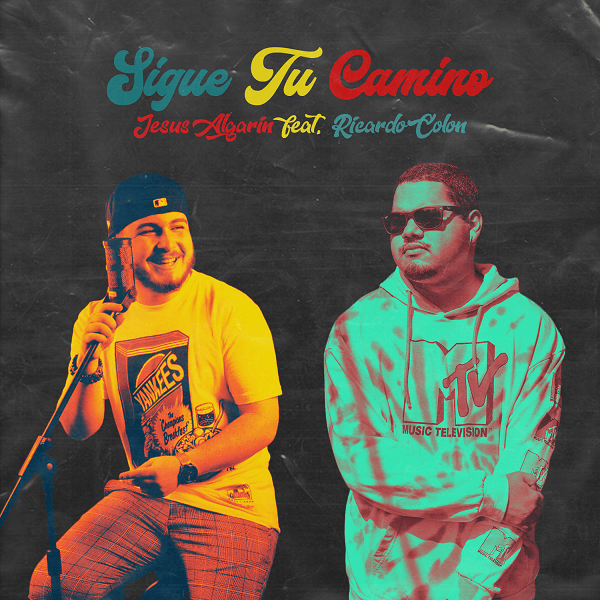
Jesús Algarín is a Puerto Rican bassist who, at the age of 25, landed in the salsa scene

A graduate of Berklee College of Music, with his college degree in hand, the young bassist returned home to make his homeland in salsa time.

Jesús Algarín is a Puerto Rican bassist who, at the age of 25, landed in the salsa scene to make music his life project.  The young musician already walks with a firm step accompanied by the forceful interpretation of his bass, leading his own orchestra with confidence.

From the time he was born, according to what his parents told him, they used to party, so it was not surprising that at the age of 8 he was already the one who was the one who was livening up the parrandas while playing the Puerto Rican cuatro.  Algarín, who was born and raised in the heart of Puerto Rico (Caguas), candidly tells us that as a child, he discovered through our very own parrandera tradition, that music -which he refers to as a wonderful art- had a healing and restorative power.

Well advised by the adults in his family, he recounts that his uncle explained to him early in his life that if he failed to ignite his audience at the Choliseo during a parranda, it would become more difficult for him. Once he understood the advice, he applied it to himself.  Today he concludes that it is necessary to dominate every stage, from a marquee to a public square, and to take it one step at a time.

Through Puerto Rican folk music, studying and interpreting the seis, the aguinaldo, the bomba, and the plena, he was entering into what without planning it became his life project.  Later, playing the Puerto Rican cuatro purely by ear, he was able to enter the “magical” world of music, as he himself describes it.

Already in the sixth grade of elementary school, he began his formal apprenticeship at the Escuela Libre de Música de Caguas.  Before that time, he played the cuatro but did not read music.  Once he learned to read music, he decided to continue growing musically in his instrument.

Six years later, in grade 12, about to finish high school, he took part in the camps that Berklee College of Music brings to Puerto Rico every year. He auditioned for the Puerto Rican cuatro.  However, at the time, he did not achieve his goal of positioning himself. Determined not to give up, the following year he returned to the Berklee camp but changed tactics. He showed up to the workshops with a bass because he understood that the cuatro was not a good fit.  When he filled out the registration form for the workshops, he reported that his bass playing was at the advanced level, even though he knew it wasn’t true.  This adolescent idea, which added a good deal of pressure and stress to his musical performance, helped him get into the ensembles he aspired to qualify for. Today he admits that at that time, which today seems far away, he could not handle the bass because, as an instrument, it was still unknown to him.

In any case, Algarín qualified because, as we know, you have to take your chances with life.  The rest is history. 

With the bass as his main instrument, Algarín got Berklee to give him a scholarship and after four years in Boston, Massachusetts he graduated with a degree in Music Business. In other words, he spent four years making music while learning to see music as a business.

The young bass player confesses that he had not planned to be a musician nor had he thought he would make a living from music.  He did not see music as a possibility, since although it was always an integral part of his life, music was a hobby or a way to serve God in the church.  And that’s what he limited himself to until he came to Berklee’s summer workshops.  Before that, he saw himself as a lawyer and when it was his turn to enter college, he initially enrolled at Ana G. Mendez University.  There he attempted to complete a bachelor’s degree in accounting. However, from the very first accounting class he knew that accounting was not for him.

Algarín capitalized on what he learned, and has been able to stick to music as a way of life; from a more realistic and less idealistic perspective. Of course, all without losing the artistic focus of musical interpretation.  Along with his musical training, he has been preparing himself in legal issues, maintaining business awareness, focusing on the protection of music and copyrights.  He has also been responsible for making other musicians aware of the importance of registering their music with the Library of Congress and thus making the most of their work.  There is no doubt that Algarín knows his worth as a musician and from his space he has decided to serve and guide his counterparts to protect their work.

Before entering the studio to record his project, Algarín had recorded with Manolito Rodríguez.  During his student years in Boston, he was a musician in the Eric German Orchestra, the orchestra that accompanies visiting solo singers in the New England area.

Today, his main instrument is the bass, double bass, baby base or electric bass.

The bassist, a native of Caguas and graduate of Berklee College of Music, class of 2020, returned to Puerto Rico to lead his own musical project.

Two years after Algarín’s return home, the orchestra is already promoting its first production entitled “Dímelo Algarín”, which is part of his project “Jesús Algarín”. The format of the base orchestra of the project is as follows: winds (trumpet, trombone and baritone saxophone), bass, piano, conga, timbal, bongo and bell; backing singers and choirs. This, his first production, contains 5 songs, with contemporary themes in its lyrics. This lyric, however, embraces the nostalgic sonority of the sextet, complementing some of the songs with the Cuban tres. The bassist leader of his project arranged and composed these 5 unreleased tracks, which are merged in a production for which Jesús Algarín is also responsible.

The production is available in digital format on all platforms. The promotional cut is Sigue tu camino performed by Ricardo Colón, who also sings in the Willie Rosario Orchestra. The other four tracks included in the production are:  Playita, Cadencia y sabor and La calle se prendió; performed by vocalist José Luis De Jesús and Caribeña, in the voice of Marisabel Vázquez Varela.

The recording studio musicians who participated in the production are from the Caribbean.  Puerto Ricans, Cubans and Venezuelans merge in a salsa embrace; as is to be expected.

Vocals: José Luis De Jesús, Ricardo Colón and Marisabel Vázquez Varela.

Backing vocals: Jorge Yadiel Santos, Carlos García, Ricardo Colón, José Luis De Jesús, Manolo Ruiz and Carloscar Cepero.

Bass: Jesús Algarín

Piano: Aníbal Cruz and Juan Rivera

Tres: Renesito Avich

Percussion: Miguel Martínez

Trumpets: Luis Arnaldo Ramos, Angel Segarra y Nicolás Benítez

Trombone: Johan Escalante y Carloscar Cepero

Baritone saxophone: Efraín Martínez

Cuatro: Jesús Algarín.

As the son of documentary filmmaker Juan Félix Algarín, Jesús considers himself blessed to have been mentored by a father with first-hand knowledge.  His father always instructed him to be aware of music as a business in the entertainment world. Jesus knows his worth and has kept himself informed as to the costs of production and is clear as to the rates of his work.  He identifies himself as a Puerto Rican and Caribbean musician. He is in every sense of the word, a music worker.

As it is, we are still in salsa.  Yes, salsa lives! The effort, discipline and talent -in that order- of this young bandleader attest to that. Congratulations, and may you continue to “catch the ride”.

For bookings, Ángel Ilarraza: 787-347-4662 or e-mail: [email protected]

Yova Rodriguez The Jibarito of Mayagüez in the Bronx New York

Mayagüez, is one of the 78 municipalities into which the Island of Enchantment is politically divided: Puerto Rico.

It is the eighth in size and located at the western and central end of the island. Its name comes from a Taino voice that means according to the official historian of this town – Don Federico Cedó Alzamora, “Lugar Grande De Aguas”.

It was founded by the Spaniards and history records a September 18, 1760 with the name of “Nuestra Señora de la Candelaria”, in the territory already occupied by a rural population that was called “Sitio de Mayagüez”. The city has also been known as “Ciudad de Dios”, “La Atenas de Puerto Rico”, “La Sultana del Oeste”, “La Ciudad de las Aguas Puras”, “Capital de la Hospitalidad”, among other names.

Giovanni (Yova) Rodríguez Ruiz was born in Mayagüez, being the youngest of six siblings, raised alone by his mother Doña Delia Ruiz Crespo. At the age of 7 years old, he began singing Christmas aguinaldos and was influenced by his maternal uncle José Ruiz Crespo ¨Pipo El Indio¨ and his great uncle Antonio ¨Toño Ruiz¨ who played the Puerto Rican cuatro. At the age of fifteen he began his studies at the Ernesto Ramos Antonini Music School in Mayagüez, Puerto Rico.

It is here that he began his singing and percussion career and at the age of 16 he became the singer of the school’s band. In 2004 he began the project ¨Yova Rodríguez & his ensemble Sakao – Akà, Homenaje a Polo Montañez¨.

Since the release of his musical work Yova Rodríguez conjunto Sakao – Akà has become one of the most sought after ensembles in Puerto Rico, Colombia, Venezuela and New York, since 2010 resides in the Big Apple, La Babel de Hierro N.Y, working in musical composition for singers of the stature, Danny Rivera, Herman Olivera, Marcial Isturiz, Orquesta Boricua Legends, and the great Andy Montañez among others and to mention a few and traveling through several Latin American countries with most of the artists already mentioned.

In 2016 he starts with his promotional song ¨Me Quedaré¨ with arrangements by trumpeter Nelson Jaime Gazu, a song dedicated to the thousands of Boricuas who have left their beloved Puerto Rico. In 2017 he composed the song ¨Mi Barrio¨ dedicated to his native neighborhood and was presented in Mayagüez, at the same time the Mayor José Guillermo Rodríguez gave him the keys of the city and a recognition, in the same year he composed the song ¨Borinquén se Levanta¨ with the participation of great luminaries of Salsa in New York such as El Pulpo Colon, Jhon Benítez, Luis Mangual, José Dávila among others and by the hand of the Cuban trumpeter and arranger Agustín Someillan Garcia, in January 2018 is presented in Medellín-Colombia in the outstanding local Son-Habana, returns to New York and composes the theme Medellín, is presented last June 23 with a resounding total success in the event a day of Salsa for Medellín.

Yova Rodriguez himself informs me that he is already preparing his fourth album with pianist and arranger Arturo Ortiz. And at the same time he belongs to the board of directors of the Galería de La Salsa in Spanish Harlem in New York.

Other themes that social networks have been responsible for spreading recently will see the light in the next production of Yova Rodriguez, the same that will be titled YOVA RODRIGUEZ ENTRE LOS PUEBLOS and will be part of this production the recent theme composed to the First Peruvian Port: El Callao; highlighting here the fact that Yova has never set foot in our territory but that has not been an impediment for his pen to recreate scenarios: neighborhoods, corners and, mainly, its people. As he says in his lyric “…he who knows about salsa, knows that it is enchanting there in the Chimpún Callao…”

We come to the final part of this biographical sketch, thanking Yova Rodriguez for his kindness in sharing with this server the data and images that accompany this publication.

We wanted to honor the musician, singer and composer, but without leaving aside the tremendous human being that our guest embodies, both as a son and brother, as a fellow professional musician and, especially, as a family man.

A facet that is hidden behind the public man (singer-songwriter) but that impresses greatly in Yova’s pen: first, when sharing a message in each of his lyrics; second, his constant attempts to honor his children Ariana and Kerby on a daily basis, taking as a guideline that old adage that says: “You preach by example”; finally his constant struggle to shorten the physical distances between them, something that surely his Muse manages to do.

For the year 2022 from the pen of the composer Yova is still in force.

Sr Ortegón is a big success in Hollywood

Our nice talk

Good afternoon, we have here José Miguel Ortegón. He is a music producer, composer, DJ and violinist. Pleasure to meet you, Mr. Ortegón, how are you feeling?

I’m fine. Thank you very much for the invitation.

Your name is José Miguel Ortegón, but you are known as Sr Ortegón in artistic circles. Why?

I think that is a cultural tradition in the Hispanic world. Men are always called by their last name. That was natural and came spontaneously. Taking advantage of that señor is a Latin cliché, it was perfect for the work I was doing.

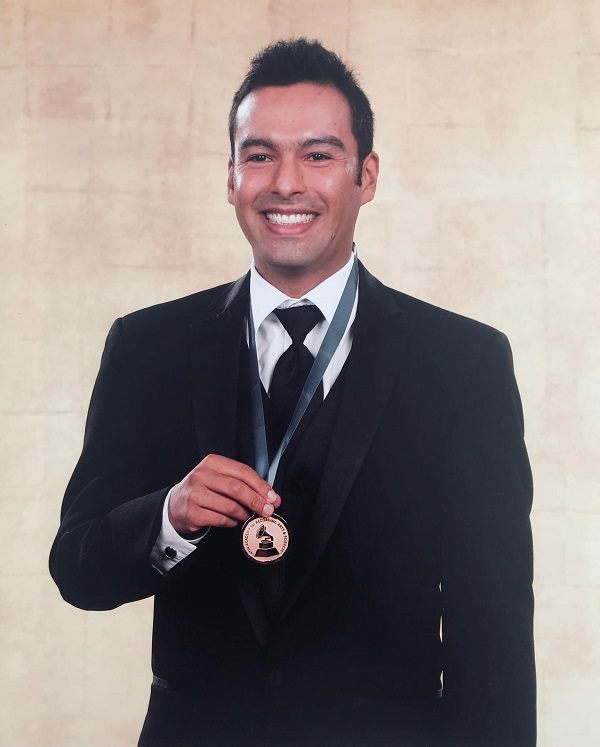
José Miguel Ortegón at the Latin Grammys

What was your first approach to the entertainment world?

I started recording with Guayacán, which is a salsa orchestra from Cali, Colombia. I received a lot of help from maestro Zumaque, who is a musician that does contemporary and classical fusion with Latin American rhythms. This was during my teens.

Then, you ventured into other facets, correct?

That’s correct. I started studying music at the conservatory when I was five years old and was in some rock bands. You know that our culture is divided into two musical styles in Latin America, which are classical and popular music. My first professional recordings came with the first computer we had at home as well as most of my generation. When the first computers came to our homes, the concept of music also changed.

How did you go from playing rock and classical rhythms to boogaloo and urban rhythms? How was that transition?

Cali has always been very linked to pachanga, boogaloo and charanga. Rock comes from blues and boogaloo is more or less part of the same trend, so it’s not uncommon for rockers to want to experiment with those rhythms I mentioned at the beginning. I also had teachers at the conservatory who taught classical music during the day, but played with professional orchestras at night. For me, that transition is inevitable.

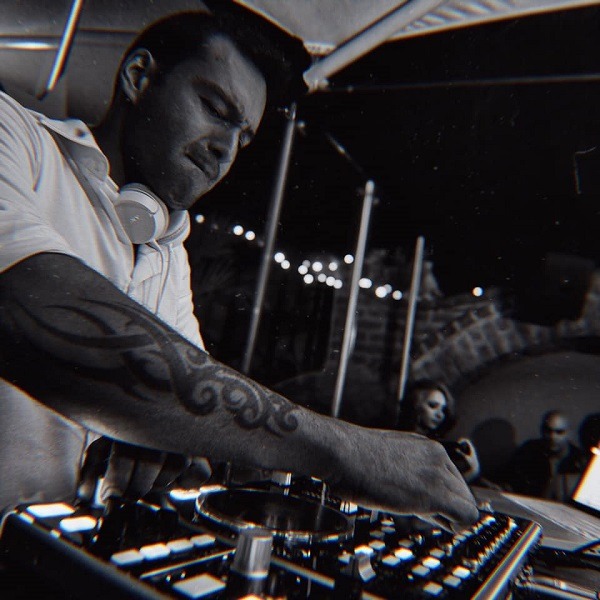
Sr Ortegón doing his job as a DJ

You have created music for series, movies, digital platforms, Disney, Netflix, animated series, etc. Did you think your career would go that far?

Thank you for your words. I make music. I have the same worry since I started in this world, I think I still have a lot to learn and maturing ideas, The truth is I never imagined it. I simply took the opportunity before me in Europe, where I was studying musicology at the Sorbonne. It is true that Latin music is very exotic there because there are not many Latin composers and producers.

At university, I got a chance to make music for a television channel. Subsequently, there was a snowball effect, a colleague who is now working in Hollywood contacted me for one of those jobs and that was my big opportunity. When I got the script, it was a Dominican series, which made me immediately discard salsa and mariachis. I thought about using bachata or something that really belonged to the Dominican Republic.

When you talk about Hollywood, it should be emphasized that there are several generations of Latinos born in the United States of any origin. A Cuban knows that a ranchera is not Cuban but from Mexico. Such a thing happenned a lot in the industry in previous years. The same rhythms and mixes were always used regardless of the Latin country involved in a production like, for example, West Side Story. I love that movie and think it’s excellent, but the music they used doesn’t sound Puerto Rican at all. That’s why I thought I should take this opportunity to respect the rhythms and traditions of each country. I know we all speak Spanish but each country has its own identity, so I respectfully take each rhythm and use it to make it authentic.

Latin music in Hollywood

When you did music for any series or film, were you given parameters to follow or did you have to be free to experiment with your music?

That’s one of the best questions I’ve ever been asked because the vast majority of producers are American and not connected with Latin culture, so salsa and merengue are the same for them. I just tell them to trust me, send me some samples to guide me, we analyze everything and move on. If the director or the editor doesn’t like what I did, we reach an agreement. Nowadays, this process is easier because there is more musical and cultural education on the part of the producers in the United States.

Sr Ortegón at the party in the Jetset Magazine

You were nominated for a Latin Grammy thanks to a mix of boogaloo and urban rhythms that you made. How did you think of it?

I’m 40 years old, so I spent my adolescence at the time when Californian hip hop was in full swing. Cali is one of the most Americanized cities in Colombia, so you were always listening to all those American groups and songs. Mixing all those rhythms with boogaloo has always seemed very interesting to me and I had no idea how to do that until I learned.

Since a mix between hip hop and Latin music is complex to make, a lot of people gsurrended and opted for reggaeton as culture. There are other groups such as Control Machete that have done an excellent job, but I felt they were lacking something. That’s how I started to learn, but it took me a long time because of lack of resources, since I didn’t have the right elements to respect the codes. So, I did a boogaloo song and a hip hop beat to mix them, which made me realize that they are sister rhythms. This work was very popular and even appeared in series and movies.

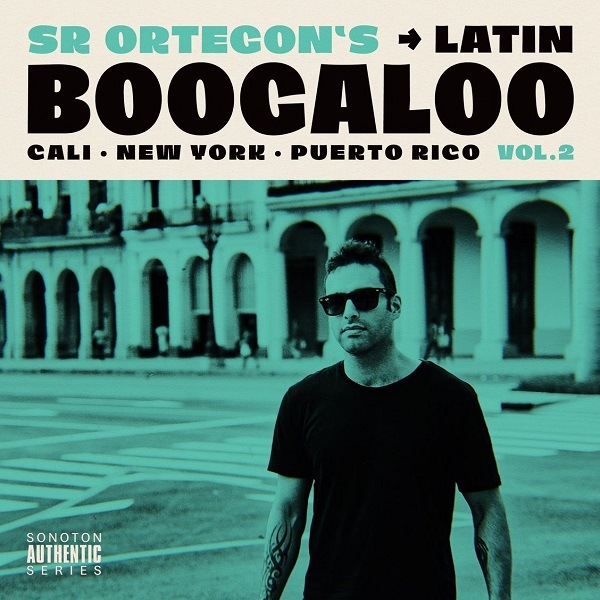
In fact, I heard about you from an email that included your new album entitled Latin Boogaloo Volume 2. I also listened to Volumen 1 and noticed the difference. What is the main difference between one volume and the other?

Volume 1 includes what I called Boogaflow, which is boogaloo with flow. Volume 2 is pure boogaloo. I tell you this because, for example, salsa is a term, but it’s really Afro-Cuban music made by Nuyoricans in New York if we go back to basics. Prior to that New York sound known as salsa, there was that phenomenon called boogaloo, shingaling or Latin soul.

I had to listen to disco to get to those rhythms because nobody teaches you anything about those genres. Unfortunately, those who created those rhythms are already dead or doing other things like Joe Cuba, Jimmy Sabater, the people from Sexta All Stars, Eddie Pamieri, Ray Barreto and many others. That fashion lasted about six or seven years and that was that. Every time I go to create a boogaloo, I have to listen very well because there are no scores or models to follow. Poncho Sanchez is one of the few who brings up the torch of that sound, although he is inclined more to Latin jazz.

I wanted to do a boogaflow, but my editor David Santiago proposed to me that we make two versions, one boogaloo version and the a little more acoustic one. What we were looking for was to please both audiences, the one who wants something urban and the one that wants something classic.

Which of the two volumes was more successful?

I know you have the answer (laughs). Volume 2 was the most successful. Number one has put me in touch with my salsa friends, but I didn’t want to tell them that I was going to make a volume two because boogaloo is not a very common rhythm.

Cover of the album Latin Boogaloo Vol. 2

How talented Puerto Rican singer Fernandito Rentas started his career

How his career started

We have here Fernandito Rentas, who is a Puerto Rican salsa singer. Good afternoon, Mr. Rentas, how do you do?

Good afternoon. Thank goodness, i’m doing just fine right in good health and working hard. We are doing what is done daily, which is my regular job, but on the other hand, we are making the music that I would be able to do up to the present time, or rshould I say, musical projects.

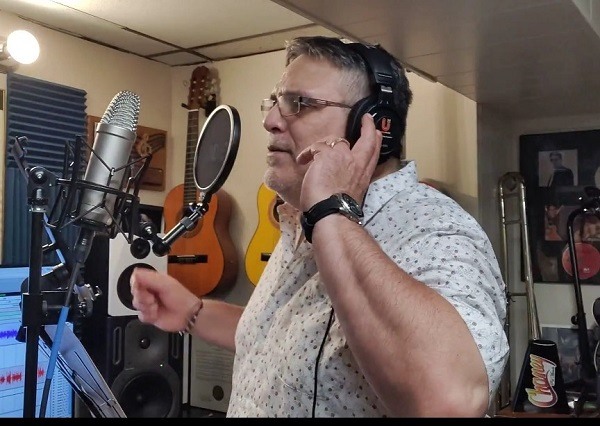
Fernandito Rentas recording one of his songs

You come from Ponce. This is a city from which many famous Puerto Rican artists come, especially in the salsa genre. Do you think that coming from that city had something to do with the road you would take later on?

Ar some point, yes because that influence was around me since I was a little boy. I have always been interested in music and sports, but I enjoyed more of music. I don’t come from a family of musicians as far as I know, but my biggest influences come from distant relatives like, for example, Mr. Esteban Tato Rico Ramírez, who was a singer in the orchestra La Solución.

Basically, what I remember most about my childhood is that it was from there that I became interested in music. At the same time, I would see my parents dancing at parties and there was all that excitement and feeling of celebration. The church and its chants were also important in that regard.

Those were earlier influences, but it was from the age of 7 that I began to understand tropical music. As time went by, I got more interested in it. I couldn’t take music lessons due to economic problems at that time, so I did everything by ear. I do remember that there was an instrument I liked a lot when I was in elementary school, which was marimba. I was strock by it, which led me to join a group of classmates at school who practiced in the school canteen in the afternoon. I also remember my music teacher, Mr. Fermín Torres, who was from the Adjuntas or Coamo area in Puerto Rico, but he was well known in the musical area of the school system.

I didn’t really jump right into music until a few years later because our family moved to Florida, where I began to look out for other interests such as the US Armed Forces. When I graduated from high school, I joined the army and there I met other colleagues from my homeland, which made me reconnect to Latin music. I was not only focused on music of Puerto Rico, but also from Colombia, Venezuela and other countries.

Fernandito Rentas singing on stage

My idol as an artist in the genre has always been Oscar D’ León since the first time I saw him when I was 7 or 8 years old during the patron festivities in my village. When I went into the army, many colleagues who were already veterans in this issue helped me to train me. The first person I met was bass player Héctor Cruz, who I say was my godfather in music. That was in Germany when I served on the force in 1989. When I returned to the United States, I went to North Carolina and began to succeed in music step by step.

I spent nine years serving in the South Korean peninsula, where I was blessed to pull together a group of musicians and perform live music with many fellow musicians, including Korean friends I made there. I returned to the United States in 2011 and thank goodness I stay on this. These days, I had the opportunity to connect or lift me up from where I were and do something different. What I was looking for was to create my own productions with the music that I like, so that’s what I’ve been doing these last two years.

His groups

You were part of various groups including Orquesta Mambo Son, Grupo Descarga, among others. When did you decide to go solo and create your own productions?

I decided to do it in 2020. I had already had this interest for many years and was always seeking the opportunity to break the ice through groups. I was looking to take part in the production of a group I was with and start from that point, but unfortunately none of my groups managed to get into production.

I finally got the chance with the pandemic, as I started to be able to be interacted with colleagues and friends through Facebook and connect with musicians from around the world. Then, other comrades who were also in the armed forces told me about Mr. Robert Requena, who is a Chilean who lives in Medellin, Colombia.

Fernandito Rentas in his military uniform

When I wanted to do things differently adapting myself to the new era, they put me in touch with Mr. Requena and I expressed my ideas. Then, he was the one who showed me the first composition for my first song, which we titled Bailando debajo del agua (Dancing under the water). The thing is that this song is based on an event that happened here in my house, which I told Requena about and we used it for the song. Then, we talked about its musical bases and what I was looking for in my future songs, so he came up with the formula. Today, we are working on my sixth record and thinking about releasing it in June, but there are seven others that are being created right now.

Seeing as your career practically started with Covid-19, do you think the pandemic precipitated what you had in mind?

Well, in a way, yes. My desire to make a solo album is very old, but the 20 years in which I was serving in the armed forces limited me, thing that also happened to other colleagues who are also launching their own albums today, such as Arnaldo LaFontaine, Edwin El Calvito Reyes, Josean Rivera, José Rivero, among others. Arnaldo La Fontaine, Jose Rivero and I were singers in the same orchestra in the southeastern United States during the 1990s.

My interest in being a soloist was present for a long time, but the opportunity to do so did not come until I made use of technology. I can tell you that all my albums are being made in Medellin, Colombia. All I do here in New Jersey is go to the studio and record the voice. That advantage that we have today really helped us and, at the same time, the arrival of the pandemic has prevented us from going to other places to bring our talent. I have accumulated unimterrupted 33 years of career, but the pandemic prevented us from going out and locked us up at home. It was there when many other artists began to take alternate measures to be able to continue reaching people.

In any way, I think we have turned this situation to our advantage in the best way that the Lord has not allowed.

Art of his last song Qué difícil es

An artist I interviewed told me that many musicians were preferring to release single songs instead of full recordings. Are you makings full recordings or single songs?

Based on advice that Mr. Requena gave me, I am releasing single songs. Nowadays, the matter of full albums has become complicated due to the lack of record labels and factories where these materials are produced. I would say that the idea of releasing singles was the best because you want to know if the public is going to accept or like the album. Instead of releasing all the songs at the same time, releasing one song at a time is more comfortable, less expensive and easier to work with. For the time beingt, I have no plans to release a CD.

How did you balance your musical and military activities?

I had to balance them because our obligations and priorities in the military service are focused on the mission and commitment to the defense of the country. During our free time, we liked to clear the mind and do different things. We went to parties.

We felt great making music for our fellow soldiers, their communities and families. We were able to bring our Latin culture to the countries we went to.

Music was our main hobby and the to entertain ourselves on the weekends.

Social networks and website

Facebook: Fernandito Rentas II

Instagram: Fernandito Rentas

YouTube: Fernandito Rentas

  • « Go to Previous Page
  • Page 1
  • Interim pages omitted …
  • Page 97
  • Page 98
  • Page 99
  • Page 100
  • Page 101
  • Interim pages omitted …
  • Page 135
  • Go to Next Page »

International Salsa Magazine (ISM) is a monthly publication about Salsa activities around the world, that has been publishing since 2007. It is a world network of volunteers coordinated by ISM Magazine. We are working to strengthen all the events by working together.