• Skip to primary navigation
  • Skip to main content

International Salsa Magazine

  • HOME
  • Previous editions
    • 2026
      • ISM / March 2026
      • ISM / February 2026
      • ISM / January 2026
    • 2025
      • ISM / December 2025
      • ISM / November 2025
      • ISM / October 2025
      • ISM / September 2025
      • ISM / August 2025
      • ISM / July 2025
      • ISM / June 2025
      • ISM / May2025
      • ISM / April 2025
      • ISM / March 2025
      • ISM / February 2025
      • ISM / January 2025
    • 2024
      • ISM / December 2024
      • ISM / November 2024
      • ISM / October 2024
      • ISM / September 2024
      • ISM / August 2024
      • ISM / July 2024
      • ISM / June 2024
      • ISM / May 2024
      • ISM / April 2024
      • ISM / March 2024
      • ISM / February 2024
      • ISM / January 2024
    • 2023
      • ISM / December 2023
      • ISM / November 2023
      • ISM / October 2023
      • ISM – September 2023
      • ISM – August 2023
      • ISM July 2023
      • ISM Edition June 2023
      • ISM – May 2023
      • ISM April 2023
      • ISM March 2023
      • ISM February 2023
      • ISM January 2023
    • 2022
      • ISM December 2022
      • ISM November 2022
      • ISM October 2022
      • ISM September 2022
      • ISM August 2022
      • ISM July 2022
      • ISM June 2022
      • ISM May 2022
      • ISM February 2022
      • ISM January 2022
    • 2021
      • ISM December 2021
      • ISM November 2021
      • ISM October – 2021
      • ISM September 2021
      • ISM August 2021
      • ISM July 2021
      • ISM May 2021
      • ISM April 2021
      • ISM June 2021
      • ISM March 2021
      • ISM February 2021
      • ISM January 2021
    • 2020
      • ISM December 2020
      • ISM November 2020
      • ISM October 2020
      • ISM September 2020
      • ISM August 2020
      • ISM July 2020
      • ISM June 2020
      • ISM May 2020
      • ISM April 2020
      • ISM March 2020
      • ISM February 2020
      • ISM January 2020
    • 2019
      • ISM December 2019
      • ISM November 2019
      • ISM October 2019
      • ISM Septembre 2019
      • ISM August 2019
      • ISM July 2019
      • ISM June 2019
  • Download Salsa App
    • Android
    • Apple
  • Spanish

Search Results for: Van Van

Ismael Miranda Carrero “El Niño Bonito of the Fania All Stars”

Where did Ismael Miranda’s artistic nickname “El Niño Bonito de la Salsa” (The Pretty Boy of Salsa), with which he became known, come from?

I liked to dress up and look nice for the presentations on one occasion I went to the hairdresser’s and bought a suit for the show when I arrived at the hotel, Johnny Pacheco said to me: ‘How nice, the pretty boy is late! As always.

And from that day on they called me “El niño bonito de la salsa” (the pretty boy of salsa). Pacheco gave the nicknames to everyone in the Fania All Stars.
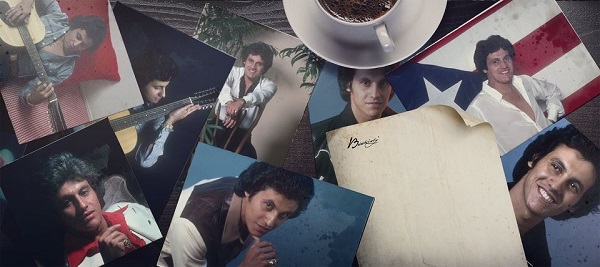
Johnny Pacheco had a lot of faith when he came up with the idea of making this movie and it was a success.

People vibrated with our songs and we took advantage of 4 emblematic concerts to record it.

That’s how we have to walk through life. It is enough to know that we are doing things right to reap triumphs. Said the trumpet player and composer.

Perico also took the opportunity to tell where all that tasty Caribbean rhythm comes from, of which they are such good exponents. “The folklore of Latin American music was born in Africa”. He recalled the first time he arrived with La Fania to this continent. He still has in his mind the gesture of the Africans when he saw people from other parts of the world playing the congas like masters. We all felt proud, he said.

Miranda also recalled that on August 6, 1980, he arrived for the first time in Barranquilla to present a concert with Héctor Lavoe.

“We were used to performing on huge stages and singing with a well achieved sound; in Barranquilla there was nothing like that, but something magical happened, the affection and joy of the people infected us.

Hector and I gave a show of height, at the end we realized that we enjoyed it completely with all the people of Barranquilla.

During the conference, Perico Ortiz explained why he never recorded an album with Las Estrella de la Fania.

“I never recorded an album, but I participated in many concerts. At that moment I felt in my heart that it was time to sing and I told Jerry Masucci to give me the opportunity, but he did not see me as an artist, but as a trumpet player and arranger, so I decided to retire from La Fania and concentrated on recording my first album as a soloist in 1977 titled My Own Image”.

Ismael was born in Aguada, in western Puerto Rico, but as a child his family settled in New York. He began singing in English in school plays when he was only eight years old, and was even part of a children’s group called “Little Junior in the Class Mate”.

Soon after, he began taking singing lessons at a music school at 46th and Broadway, and then to improve his singing skills he studied with a music teacher recommended to him by Tito Rodriguez.

The environment in which he grew up helped him cultivate his love for music. First he wanted to be a percussionist and not a vocalist. That is why at the age of 10 he told his mother of his desire to buy a conga. Later he acquired a bongo, which resounded throughout the neighborhood. He got to play the conga in Andy Harlow’s sextet, and was part of the Sexteto Pipo y su Combo. But he finally turned to singing, for which he was assisted by Ismael Rivera.

He made his first recording in 1967 with José Luis Pastrana Santos, a musician, composer and timbalero from Santurce, known as Joey Pastrana, on the album Let’s Ball.

This album, recorded for the Cotique label, contains Ismael Miranda’s first big hit, the song “Rumbón melón”.

Facebook: Ismael Miranda

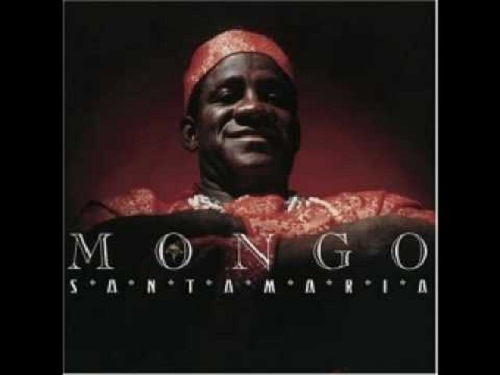
Ramón “Mongo” Santamaría “I wanted to do something that sounded like home”.

April 7, 1917, Mongo Santamaría was born in the Jesús María neighborhood of Havana, Cuba.

Exceptional percussionist of Latin Jazz and related rhythms, whose first name was Ramón Santamaría.

Mongo left to continue playing his Congas hard in the sky on February 1st, 2003.

“I wanted to do something that sounded like home”. With these simple words, Ramón Santamaría Rodríguez “Mongo Santamaría” spoke of his essence.

The purpose of his music pursued a sonority and a memory, possibly located in Cuba, in Jesús María, a marginal neighborhood where he grew up and enjoyed a tradition attached to the drum, to religion, to the street and from where this great Cuban percussionist drank infinitely.

But surely those drums also came to him from far away, from the Congo, where his grandfather came from to be a slave on the island and who also filled his head with sounds full of meanings and colors, which he later masterfully spread around the world.

The name of Mongo Santamaría (Havana, April 7/1917 – Miami, Feb. 1/2003) is, for the glory of all music, an inevitable reference of Cuban percussion.

Since he was a child he knew that his thing was to play the drum and he was lucky enough to belong to a family of empirical musicians, singers and drummers who supported him in the learning and mastery of these instruments.

During his time in Cuba, already a professional musician, he participated in numerous groups that little by little gave him a place among the most outstanding percussionists of the time. Some names of these groups are El Conjunto Boloña, Lecuona Cuban Boys, with whom he was able to participate in the recording of his first album, Conjunto Matamoros, Segundo Grupo de Arsenio Rodríguez, among others.

Each group had its own style and stamp, but in each of them Santamaría put his personal “touch”.

At the prestigious Tropicana cabaret he played with Chano Pozo as a member of Armando Romeu’s orchestra.

From that moment on, his career would not stop. Conjuntos, Septetos de Son were the perfect selection to complete the sap from which he would draw all his style and technique.

Later, from carnival to carnival, he would gather with other percussionists to play in the comparsas and experience the festive musical atmosphere par excellence of those years.

Alongside him played other friends who soon became a Cuban reference in the United States: Patato Valdés and Armando Peraza.

As part of the Tropicana orchestra and located in a show in Mexico, he decided to settle there as did many musicians of his time and came to play with Pérez Prado and Benny Moré.

It was precisely in the latter orchestra where he met Clemente Piquero “Chicho”, another Cuban percussionist whose style made him rethink the role of percussion in Cuban popular orchestras.

Mongo Santamaría belongs to the second wave of Cuban percussionists who arrived in New York in 1950.

His new idea of restructuring and designing his own style in the use of Cuban percussion was perfectly in tune with the reality that a few years earlier was being experienced in the music produced and sold in New York, after the arrival of the Cuban rumbero Chano Pozo.

“The rhythm produced by the conga organizes all the percussion of a band, from which melodies and counter-melodies can be experimented with.”

“I think percussion is the base from which things come out.”

Already in the United States, Mongo plays with Gilberto Valdés, again he is part of Pérez Prado’s orchestra and finally with Tito Puente’s, where he stayed for 7 years. Once in the line of Afro-Cuban jazz, so popular at the time, he joined George Shearing’s group and later the vibraphonist Cal Tjader.

With his own orchestra, he accompanied La Lupe, one of his favorite singers, and undertook projects of novel formats for the time, such as small formations of brass trio, piano, bass, percussion and drums, at a time when jazz bands predominated.

Mongo Santamaría, perhaps without the theatricality to which Chano had accustomed the New York public, focused all his strength on achieving his own sonority, with a fusion of Cuban styles and genres, perfected and deepened in the introduction of Afro-Cuban rhythms with a naturalness and using colorful timbre elements by using several tumbadoras in his set.

His creativity is highly demonstrated in the great amount of music that is part of his catalog of works and the quality becomes indisputable when seeing the amount of outstanding jazz interpreters that version and recreate his work.

In 1959 he recorded Tambores y cantos, which contains the song Afro blue, which over the years became “a jazz anthem of all times”, according to Nat Chediak, author of the Latin Jazz Dictionary.

His long recording career (50 albums), testifies to the musical activity that this great percussionist carried out throughout his professional career. He worked with American jazz legends such as Chick Corea, Herbie Hancock, flutist Hubert Maws, Dizzy Gillespie, trumpeter Marty Seller, among other musicians who today still pay tribute to this Cuban conguero who was the architect of the fusion of rhythm & blues rhythms and Afro-Cuban music, recognized the connection of Cuban music to African roots and placed the congas in an indispensable instrument for the determination of Latin jazz.

In 1977 Mongo Santamaría received the American Grammy Award for “Best Latin Recording” for the work Dawn.

In 1999, Rhyno Record Company, based in Los Angeles, California, recognizing his contribution to Latin Jazz, released the “box set” (CD) Skin On Skin: The Mongo Santamaría Anthology (1958-1995), which includes 34 of his most successful pieces (from his rumba albums, his LP with La Lupe and his projects in the fusion of Jazz and Latin) and an extraordinary literature about his career written by actor Andy García, musician Poncho Sánchez and other connoisseurs of the Latin Jazz genre such as José Rizo, Luis Tamargo, Joel Dorn and Miles Pelich.

The legendary musician was extremely honored and grateful for the distinction Rhyno gave him by introducing this historic anthology to the world. As stated in the conversation with Jaime Torres, Mongo said:

“This is the fruit of many years of work, music made with taste and love.”

May he rest in peace and eternal glory to him.

Frederlyn Mayora returns to Venezuela to sing Salsa Romántica to the dancing public.

Last Friday, April 22, at 7:00 p.m., a concert was presented at the Juana Sujo Hall of the Casa del Artista, in Quebrada Honda, Caracas. Tickets are already on sale at popular prices.

After several years out of the country, Venezuelan singer Frederlyn Mayora returns to Venezuela to relaunch his musical career and sing Salsa Romántica to Venezuelan dancers and music lovers.

Mayora, who has been part of the orchestras of Tony Vega, Maelo Ruiz, Jose Alberto “El Canario”, Luisito Carrion and Tito Nieves, among others, arrives in the country with a single called “Viernes Romantico” that promises to be a hit in a short time.

“I want everyone to know what I am doing and what I come to do in Venezuela”, said the singer who now has his own orchestra.

The singer will be in Venezuela until the end of his musical production loaded with romantic Salsa, ballads and merengues.

On April 1 and 2, Mayora offered a couple of concerts called “After Party de los Hermanos Primera”, that is to say, he performed in a well-known venue of the CCCT as soon as the presentation of the renowned singers Servando and Florentino was over, and it was a full house.

On Friday, April 8, at 4:00 pm, he will offer a press conference at the Doris Wells Hall of the Casa del Artista in order to announce in detail the entire agenda that he will fulfill on Venezuelan soil.

On Friday, April 22, he offered a concert at the Juana Sujo Hall of the Casa del Artista, located on Amador Bendayán Boulevard, Quebrada Honda, Caracas.

The event was scheduled for 7:00 pm. The occasion will be propitious to record a video click.

All Frederlyn Mayora’s events and presentations are in charge of her manager, Humberto Gonzalez, president of Producciones Salsayer.

A little bit of history

Frederlyn Alejandro Mayora Martínez, was born on July 27, 1982, in the populous Sucre Parish, west of Caracas, Venezuela.

He is a musician, singer and percussionist. At the age of 9 he began his musical studies, especially in percussion. He belonged to the estudiantina Héctor Pacheco and spent several years at the Bigott Foundation, where he received master classes with Professor Rodolfo González.

When Mayora turned 15 years old, he decided to focus his musical career as a singer and it is when the producer Humberto González, currently director of the Salsayer Orchestra, took him to sing in several salsa groups in Venezuela, among them, “Herencia”, “Neo Latino” and “El Combo Antillano”, among others.

In 2003 he moved to Spain, specifically to Galicia. There he became part of the orchestras “Panama”, “Filadelfia” and “Orquesta TV”, among others. His artistic commitments reached the beautiful city of Santander, located in the North of Spain, where he performed ballads, salsa and merengue.

In addition to the aforementioned orchestras, Frederlyn Mayora has been the lead voice in groups such as “Ekilibrio”, “La Junior”, “Mandinga Star Band”, “Puma Band”, “Patatín Orquesta” and the “Máquina de la Salsa” and has accompanied in the chorus, since 2002 to date, renowned singers such as “Maelo” Ruiz, José Alberto “El Canario”, Tony Vegas, Luisito Carrión and Charlie Aponte, former member of the Gran Combo de Puerto Rico.

Balance of the work carried out at the level of Social Media in Venezuela.

Publication of the Briefing

Noti-America (01-04-2022) Mexico

La Patilla (El Farandi) (02-04-2022) Venezuela

https://www.elfarandi.com/2022/03/30/briefing-vuelve-a-venezuela/

Notimundo (03-04-2022)

Press Conference

Day: Friday, April 8, 2022

Place: Doris Wells Hall of the Casa del Artista.

Attended by representatives from 10 media outlets and Instagram accounts. Examples: Venevisión, Portal La Patilla, Rumbas Venezuela, Intervez, Diario La Calle, Noticiero Digital, Analítica, El Universal, Tendencia Internacional and Radio Tiuna, among others.

Press releases published in digital media

Analitica.com (11-04-2022) Venezuela

https://www.analitica.com/emprendimiento/noti-tips/de-vuelta-al-barrio-toma-caracas-de-la-mano-del-salsero-frederlyn-mayora/

Tendencia Internacional (11-04-2022) Venezuela

https://www.tendenciainternacional.com/2022/04/11/de-vuelta-al-barrio-toma-caracas-de-la-mano-del-cantante-salsero-frederlyn-mayora/

Contraste Noticias Newspaper (12-04-2022) Venezuela

https://www.diariocontraste.com/2022/04/de-vuelta-al-barrio-toma-caracas-de-la-mano-del-salsero-frederlyn-mayora/

Vida y Arte (14-04-2022) Venezuela

http://www.vidayarte.com/farandula/cantante-salsero-frederlyn-mayora-esta-de-vuelta-al-barrio

Intervez (14-04-2022) Venezuela

Business and Destinations (15-04-2022) Venezuela

Cantante salsero Frederlyn Mayora regresa a Venezuela con “De vuelta al barrio”

La Calle Newspaper (17-04-2022) Venezuela

Mentions on Instagram accounts

@TendenciaInternalcional

@caracas_view

@augustofelibertt (Dj)

TV Programs, Portals and Radio

Wednesday, April 6, 2022

Venevisión, Channel 4. Presentation in the program “Sábado Sensacional” on the occasion of the 50th Anniversary.

Thursday, April 7, 2022

Globovision, Channel 33. Interview

Tuesday, April 12, 2022

Portal La Patilla. Interview. Broadcasted on April 20, 2022

Thursday, April 21, 2022

Program “Asi Suena”, Channel 8, with Rubén Jiménez. Broadcasted on Sunday 24-04-2022

Radio program 24-04-2022

“Ni tan Bravo”, with Isnardo Bravo. FM Center La Romántica 88.9 FM

This is a balance of the presence he has had in the media.

Wednesday, April 27, at 8:00 am, he was on Televen, Channel 10, in the program “Con lo actual”.

Sources

Salsayer Press Director: Yira Yoyotte, journalist. 0424-105-61-66. E-mail: [email protected]

Facebook: Frederlyn Mayora

Chucho Valdes and Paquito D’ Rivera Will Tour for Europe

Jazz virtuous will offer a series of concerts from June to November 

Paquito D’ Rivera and Chucho Valdés

The pianist, composer, and conductor Jesús “Chucho” Valdes and the saxophonist, clarinetist, and composer Paquito D’ Rivera come together again to offer a tour called Reunión Sextet.

This tour of 2022 begins at the Mastercard Jazz Festival (Puerto Rico) and will pass through Poland (Bielsko-Biala), Spain (Pamplona, Marbella, Madrid, and Girona), and Germany (Essen) in June and July, and will end on November 30th in Zurich, Switzerland. Tickets range from €25 – €65 and you can get them in advance on Chucho Valdés’s website. www.chucho-valdes.com

The history of this long friendship dates back to the 1960s when they began their musical partnership as partners in the Havana Musical Theater Orchestra and the Cuban Modern Music Orchestra. With the founding of the Irakere orchestra by Maestro Valdés in 1973, Chucho and Paquito worked together again promoting the fusion of elements of Jazz, Classical music, Rock, and Afro-Cuban music that meant a transcendental development in Latin Jazz, and where Paquito and Chucho were the key figures. “Paquito was the heart of Irakere,” Chucho said.

Eight years later, Paquito went into exile in Madrid and later moved to New York. He developed a successful career as a leader & composer and won recognition as a Jazz Master from the National Endowment for the Arts of the United States in 2005. At the same time, Paquito also maintained his passion for classical music, receiving a Guggenheim Scholarship and commissions for quartets of strings, chamber groups, and symphony orchestras.

Meanwhile, Chuco remained in Irakere until 2005. He led trios and quartets, and established himself as a solo pianist. He produced his most recent production La Creación, a three-movement suite for small ensemble, voices, and Big Band. The masterpiece had its world premiere on November 5th, 2021, at the Adrienne Arsht Center for the Performing Arts in Miami and after was presented in Lyon, Paris, and Barcelona.

Now, after four decades, they come together to present Reunión Sextet accompanied by an extraordinary ensemble that includes Diego Urcola (Trumpet), Dafnis Prieto (Drums), Armando Gola (Bass), and Roberto Vizcaino Jr. (Conga). The repertoire will include old Latin Jazz hits, Latin American classics, and new compositions from the I Missed You Too album.

The two Cuban virtuosos have accumulated more than 25 Grammys and Latin Grammys. “I’ve always had the hope of being close to Paquito again and playing with him again,” he said. “I’ve always had that hope. Well, this is our moment.” The Maestro Chucho expressed.

His first tour in Spain was in 1981

Chucho Valdés, an icon of modern Afro-Cuban Jazz, told for a digital medium that practices the piano from six to eight hours a day. During the confinement, he was in Florida and composed La Creación (a tribute to Olodumare, the god of the Yoruba religion). This instrumental musical gem is sung, composed, directed, and performed by Valdés, and tells the story of the meeting of Afro-Cuban music in the Caribbean and the United States and how this has influenced globally. He also composed minor works and dedicated part of his time to teaching and virtual concerts.

Likewise, he added that the country that he would contemplate for a possible retirement would be Malaga (Spain) because his great pleasures come together: the Mediterranean, the diet, and many friends in the city.

Izis La enfermera de La Salsa talks about her passion for music and nursing

This is our interesting conversation

Right now we are talking to Izis La Enfermera de La Salsa Good afternoon, Izis, how are you today?

I’m super happy and feel very blessed. I believe that being healthy is already a great blessing.

One of the things about you that has caught my attention the most is the name you chose. Why are you called Izis La Enfermera de La Salsa?

I have been a military nurse for the last 15 years. I mean, I’m a soldier in the United States Army. I work for the army as a nurse.

La Enfermera de La Salsa

So you use that name because of your first profession.

That’s correct. I loved the name because I believe that music has the power to cure, distract and heal. So, I think that mix was perfect. The fact remains that the name comes from my profession, but I also use music as part of the cure for my patients.

You come from a musical family. Evidently, that also influenced the path you took later on. What did you like most about the musical world while still a child?

I was born in Puerto Rico and my parents are Puerto Rican, but I moved out because my dad served in the army, so I followed in his footsteps. Indeed my family is musical and specialized in jíbaro music, which is very typical in Puerto Rico. I think this was the connection with my native island and my family, so to speak. When I listened to their songs, it inspired me to follow this path and, in particular, salsa was the genre with which I have made the strongest conection. My parents listen to a lot of salsa music and I fell in love with it. Since I was a child, I always wanted to be involved in these activities of dance and song.

Your first instrument was the flute. Do you play any other instruments?

I play a little bit of cuatro, which is the Puerto Rican string instrument, but I focus more on the flute and the vocal part. I used to play flute in classical music when I was in school, but I never thought I would use it in salsa. It’s the perfect combination.

How have you managed to combine your facets as a singer and a nurse?

That’s the question my family, friends and co-workers always ask me. My answer is that my profession requires 12 hours, but the advantage I have is that I don’t have to work every day. I take advantage of my spare time to pursue my other passion which is music; that’s why I always tell people that music is like my baby. Those who have children know that you have to make many sacrifices for them. That’s the same thing I do for music. Sometimes, it may happen that I don’t sleep or eat well, but I pour all that passion into music.

When asked how I combine both facets, I think I use my two passions to serve others. What feeds my heart and soul is to serve, so I serve my nation as a nurse and soldier. As a singer, I serve my community and anyone who listens to my music. That’s what fills me with energy.

Izis playing the flute

Salsa as a medicine

I recently interviewed Jérôme Martin, a Frenchman who runs an Internet site called La Salsa Es La Cura. When asked why he uses that name, he replied that salsa and music heal everything, whether it’s a physical or emotional pain, do you agree with that statement?

I totally agree. Karina, I began my career as a general nurse, but there came a point where I had the opportunity to specialize as a labor and delivery nurse. However, I felt I was missing something and that’s where I made the change for mental health. It is in this field that I have seen results related to music.

Although I was not a psychiatric nurse, I have had moments in which I have cared for patients with pills as I have mentioned in other interviews, but I felt they needed something more. When I started singing to them, I started noticing physical and mental changes. I remember a comatose patient who, when she came back, told me that all that she remembers was my voice. So, I myself have seen and experienced what music can do for your health.

Psycho-oncologist Argelia Melet states that the physical part won’t improve unless the mental part is well. In fact, she uses music in several of her therapies. It has much to do with what you are telling me.

That’s is absolutely true. If you don’t feed your body and your mental health, you are going to fail in many things.

Izis performing on stage

How was your musical activity during the pandemic?

As a soldier, at that time, the army had sent me to a town in the middle of the desert and that’s when I knew that I would not be able to have so much musical activity because I was far away from everything. I did events for the military community here and there, but all that is over because of Covid.

At that time, I started recording and connecting with other people through a virtual initiative called Corro Con Salsa with which people can listen to this genre from anywhere and at the same time. The point of the show is to exercise with music and that project combines everything I believe in, that is, the physical, mental health and music. That made me cheer myself up a bit, as I was a little sad not to see my audience. As artists, the audience is our fuel.

During the pandemic, I got connected to my musical roots, that is to say, my uncle, my aunt and my cousins. We join together to make a song together online, which I don’t believe we could have done without Covid due to our occupations.

Let’s talk about your new album and the genres in which it focuses on.

You know that my passion is salsa, but I sing anything. I usually record salsa, but I have also recorded several bachata songs and one or another merengue song. However, I am no longer focused on albums because the release of a full album is not like it was before. Now, what I’m doing is releasing one song at a time. I’m releasing a Madonna song in a salsa version called Like A Prayer. I have been releasing songs in English because I live in the United States, so if I want Americans to understand me and feel the same passion for salsa, we have to have something in common, that’s where the language comes into play.

Besides music and nursing, what other passions do you have?

I love to paint. I paint on hats, shirts and many other things. This passion for art is like an extension of my passion for music and my way of connecting with the public because, oftentimes, I perform on stage and then I go to my sales kiosk where I interact with my fans, sign autographs, paint hats, among other things.

Almost all of my designs are related to music. In fact, many important artists have used them such as Larry Harlow, La Sonora Ponceña, El Gran Combo, and so on. Almost all my designs include musical notes, maracas, drums, among other musical elements.

One of the hats where Izis has painted

  • « Go to Previous Page
  • Page 1
  • Interim pages omitted …
  • Page 101
  • Page 102
  • Page 103
  • Page 104
  • Page 105
  • Interim pages omitted …
  • Page 135
  • Go to Next Page »

International Salsa Magazine (ISM) is a monthly publication about Salsa activities around the world, that has been publishing since 2007. It is a world network of volunteers coordinated by ISM Magazine. We are working to strengthen all the events by working together.