• Skip to primary navigation
  • Skip to main content

International Salsa Magazine

  • HOME
  • Previous editions
    • 2026
      • ISM / May 2026
      • ISM / April 2026
      • ISM / March 2026
      • ISM / February 2026
      • ISM / January 2026
    • 2025
      • ISM / December 2025
      • ISM / November 2025
      • ISM / October 2025
      • ISM / September 2025
      • ISM / August 2025
      • ISM / July 2025
      • ISM / June 2025
      • ISM / May2025
      • ISM / April 2025
      • ISM / March 2025
      • ISM / February 2025
      • ISM / January 2025
    • 2024
      • ISM / December 2024
      • ISM / November 2024
      • ISM / October 2024
      • ISM / September 2024
      • ISM / August 2024
      • ISM / July 2024
      • ISM / June 2024
      • ISM / May 2024
      • ISM / April 2024
      • ISM / March 2024
      • ISM / February 2024
      • ISM / January 2024
    • 2023
      • ISM / December 2023
      • ISM / November 2023
      • ISM / October 2023
      • ISM – September 2023
      • ISM – August 2023
      • ISM July 2023
      • ISM Edition June 2023
      • ISM – May 2023
      • ISM April 2023
      • ISM March 2023
      • ISM February 2023
      • ISM January 2023
    • 2022
      • ISM December 2022
      • ISM November 2022
      • ISM October 2022
      • ISM September 2022
      • ISM August 2022
      • ISM July 2022
      • ISM June 2022
      • ISM May 2022
      • ISM February 2022
      • ISM January 2022
    • 2021
      • ISM December 2021
      • ISM November 2021
      • ISM October – 2021
      • ISM September 2021
      • ISM August 2021
      • ISM July 2021
      • ISM May 2021
      • ISM April 2021
      • ISM June 2021
      • ISM March 2021
      • ISM February 2021
      • ISM January 2021
    • 2020
      • ISM December 2020
      • ISM November 2020
      • ISM October 2020
      • ISM September 2020
      • ISM August 2020
      • ISM July 2020
      • ISM June 2020
      • ISM May 2020
      • ISM April 2020
      • ISM March 2020
      • ISM February 2020
      • ISM January 2020
    • 2019
      • ISM December 2019
      • ISM November 2019
      • ISM October 2019
      • ISM Septembre 2019
      • ISM August 2019
      • ISM July 2019
      • ISM June 2019
    • 2016
      • ISM December 2016
  • Spanish
  • Download Salsa App
    • Android
    • Apple

Search Results for: Van Van

Sr Ortegón is a big success in Hollywood

Our nice talk

Good afternoon, we have here José Miguel Ortegón. He is a music producer, composer, DJ and violinist. Pleasure to meet you, Mr. Ortegón, how are you feeling?

I’m fine. Thank you very much for the invitation.

Your name is José Miguel Ortegón, but you are known as Sr Ortegón in artistic circles. Why?

I think that is a cultural tradition in the Hispanic world. Men are always called by their last name. That was natural and came spontaneously. Taking advantage of that señor is a Latin cliché, it was perfect for the work I was doing.
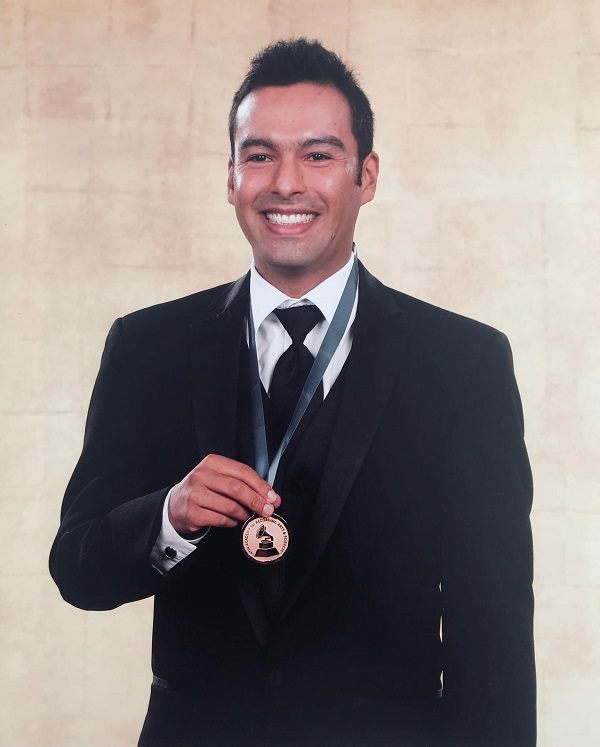
José Miguel Ortegón at the Latin Grammys

What was your first approach to the entertainment world?

I started recording with Guayacán, which is a salsa orchestra from Cali, Colombia. I received a lot of help from maestro Zumaque, who is a musician that does contemporary and classical fusion with Latin American rhythms. This was during my teens.

Then, you ventured into other facets, correct?

That’s correct. I started studying music at the conservatory when I was five years old and was in some rock bands. You know that our culture is divided into two musical styles in Latin America, which are classical and popular music. My first professional recordings came with the first computer we had at home as well as most of my generation. When the first computers came to our homes, the concept of music also changed.

How did you go from playing rock and classical rhythms to boogaloo and urban rhythms? How was that transition?

Cali has always been very linked to pachanga, boogaloo and charanga. Rock comes from blues and boogaloo is more or less part of the same trend, so it’s not uncommon for rockers to want to experiment with those rhythms I mentioned at the beginning. I also had teachers at the conservatory who taught classical music during the day, but played with professional orchestras at night. For me, that transition is inevitable.
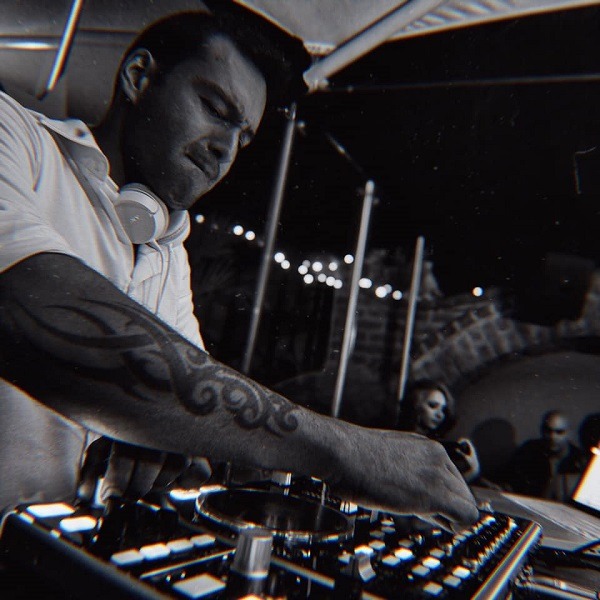
Sr Ortegón doing his job as a DJ

You have created music for series, movies, digital platforms, Disney, Netflix, animated series, etc. Did you think your career would go that far?

Thank you for your words. I make music. I have the same worry since I started in this world, I think I still have a lot to learn and maturing ideas, The truth is I never imagined it. I simply took the opportunity before me in Europe, where I was studying musicology at the Sorbonne. It is true that Latin music is very exotic there because there are not many Latin composers and producers.

At university, I got a chance to make music for a television channel. Subsequently, there was a snowball effect, a colleague who is now working in Hollywood contacted me for one of those jobs and that was my big opportunity. When I got the script, it was a Dominican series, which made me immediately discard salsa and mariachis. I thought about using bachata or something that really belonged to the Dominican Republic.

When you talk about Hollywood, it should be emphasized that there are several generations of Latinos born in the United States of any origin. A Cuban knows that a ranchera is not Cuban but from Mexico. Such a thing happenned a lot in the industry in previous years. The same rhythms and mixes were always used regardless of the Latin country involved in a production like, for example, West Side Story. I love that movie and think it’s excellent, but the music they used doesn’t sound Puerto Rican at all. That’s why I thought I should take this opportunity to respect the rhythms and traditions of each country. I know we all speak Spanish but each country has its own identity, so I respectfully take each rhythm and use it to make it authentic.

Latin music in Hollywood

When you did music for any series or film, were you given parameters to follow or did you have to be free to experiment with your music?

That’s one of the best questions I’ve ever been asked because the vast majority of producers are American and not connected with Latin culture, so salsa and merengue are the same for them. I just tell them to trust me, send me some samples to guide me, we analyze everything and move on. If the director or the editor doesn’t like what I did, we reach an agreement. Nowadays, this process is easier because there is more musical and cultural education on the part of the producers in the United States.

Sr Ortegón at the party in the Jetset Magazine

You were nominated for a Latin Grammy thanks to a mix of boogaloo and urban rhythms that you made. How did you think of it?

I’m 40 years old, so I spent my adolescence at the time when Californian hip hop was in full swing. Cali is one of the most Americanized cities in Colombia, so you were always listening to all those American groups and songs. Mixing all those rhythms with boogaloo has always seemed very interesting to me and I had no idea how to do that until I learned.

Since a mix between hip hop and Latin music is complex to make, a lot of people gsurrended and opted for reggaeton as culture. There are other groups such as Control Machete that have done an excellent job, but I felt they were lacking something. That’s how I started to learn, but it took me a long time because of lack of resources, since I didn’t have the right elements to respect the codes. So, I did a boogaloo song and a hip hop beat to mix them, which made me realize that they are sister rhythms. This work was very popular and even appeared in series and movies.

In fact, I heard about you from an email that included your new album entitled Latin Boogaloo Volume 2. I also listened to Volumen 1 and noticed the difference. What is the main difference between one volume and the other?

Volume 1 includes what I called Boogaflow, which is boogaloo with flow. Volume 2 is pure boogaloo. I tell you this because, for example, salsa is a term, but it’s really Afro-Cuban music made by Nuyoricans in New York if we go back to basics. Prior to that New York sound known as salsa, there was that phenomenon called boogaloo, shingaling or Latin soul.

I had to listen to disco to get to those rhythms because nobody teaches you anything about those genres. Unfortunately, those who created those rhythms are already dead or doing other things like Joe Cuba, Jimmy Sabater, the people from Sexta All Stars, Eddie Pamieri, Ray Barreto and many others. That fashion lasted about six or seven years and that was that. Every time I go to create a boogaloo, I have to listen very well because there are no scores or models to follow. Poncho Sanchez is one of the few who brings up the torch of that sound, although he is inclined more to Latin jazz.

I wanted to do a boogaflow, but my editor David Santiago proposed to me that we make two versions, one boogaloo version and the a little more acoustic one. What we were looking for was to please both audiences, the one who wants something urban and the one that wants something classic.

Which of the two volumes was more successful?

I know you have the answer (laughs). Volume 2 was the most successful. Number one has put me in touch with my salsa friends, but I didn’t want to tell them that I was going to make a volume two because boogaloo is not a very common rhythm.
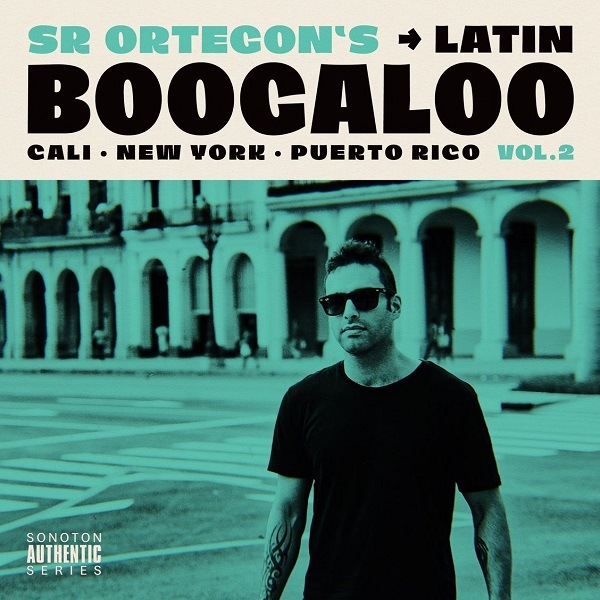
Cover of the album Latin Boogaloo Vol. 2
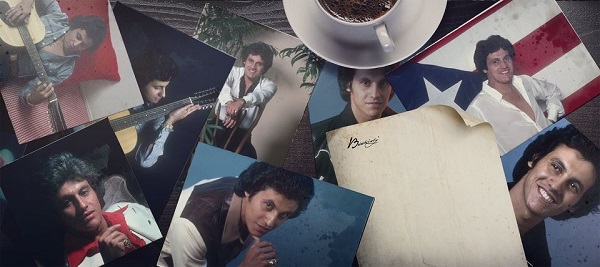
How talented Puerto Rican singer Fernandito Rentas started his career

How his career started

We have here Fernandito Rentas, who is a Puerto Rican salsa singer. Good afternoon, Mr. Rentas, how do you do?

Good afternoon. Thank goodness, i’m doing just fine right in good health and working hard. We are doing what is done daily, which is my regular job, but on the other hand, we are making the music that I would be able to do up to the present time, or rshould I say, musical projects.

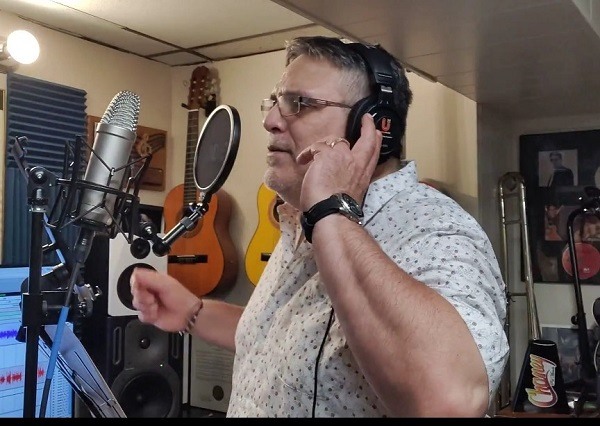
Fernandito Rentas recording one of his songs

You come from Ponce. This is a city from which many famous Puerto Rican artists come, especially in the salsa genre. Do you think that coming from that city had something to do with the road you would take later on?

Ar some point, yes because that influence was around me since I was a little boy. I have always been interested in music and sports, but I enjoyed more of music. I don’t come from a family of musicians as far as I know, but my biggest influences come from distant relatives like, for example, Mr. Esteban Tato Rico Ramírez, who was a singer in the orchestra La Solución.

Basically, what I remember most about my childhood is that it was from there that I became interested in music. At the same time, I would see my parents dancing at parties and there was all that excitement and feeling of celebration. The church and its chants were also important in that regard.

Those were earlier influences, but it was from the age of 7 that I began to understand tropical music. As time went by, I got more interested in it. I couldn’t take music lessons due to economic problems at that time, so I did everything by ear. I do remember that there was an instrument I liked a lot when I was in elementary school, which was marimba. I was strock by it, which led me to join a group of classmates at school who practiced in the school canteen in the afternoon. I also remember my music teacher, Mr. Fermín Torres, who was from the Adjuntas or Coamo area in Puerto Rico, but he was well known in the musical area of the school system.

I didn’t really jump right into music until a few years later because our family moved to Florida, where I began to look out for other interests such as the US Armed Forces. When I graduated from high school, I joined the army and there I met other colleagues from my homeland, which made me reconnect to Latin music. I was not only focused on music of Puerto Rico, but also from Colombia, Venezuela and other countries.

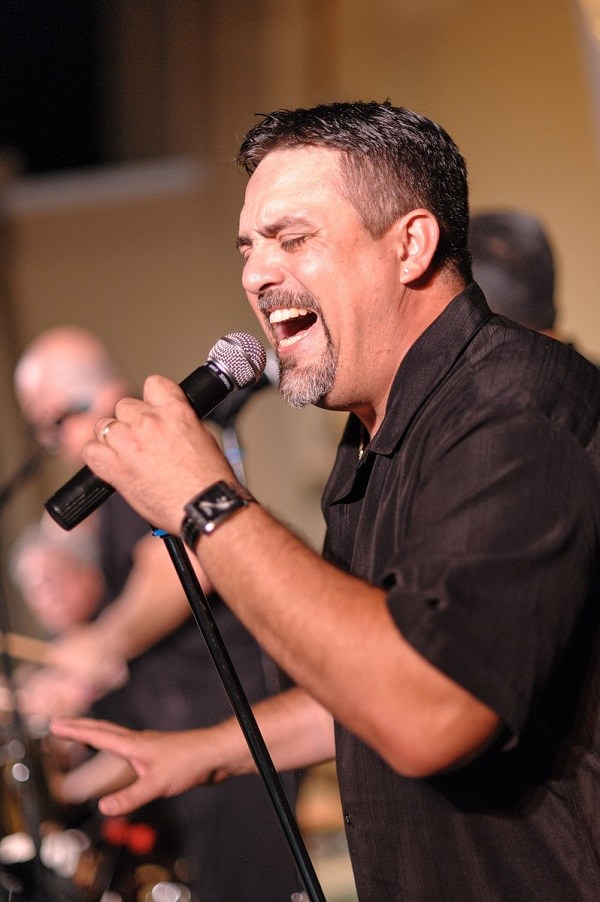
Fernandito Rentas singing on stage

My idol as an artist in the genre has always been Oscar D’ León since the first time I saw him when I was 7 or 8 years old during the patron festivities in my village. When I went into the army, many colleagues who were already veterans in this issue helped me to train me. The first person I met was bass player Héctor Cruz, who I say was my godfather in music. That was in Germany when I served on the force in 1989. When I returned to the United States, I went to North Carolina and began to succeed in music step by step.

I spent nine years serving in the South Korean peninsula, where I was blessed to pull together a group of musicians and perform live music with many fellow musicians, including Korean friends I made there. I returned to the United States in 2011 and thank goodness I stay on this. These days, I had the opportunity to connect or lift me up from where I were and do something different. What I was looking for was to create my own productions with the music that I like, so that’s what I’ve been doing these last two years.

His groups

You were part of various groups including Orquesta Mambo Son, Grupo Descarga, among others. When did you decide to go solo and create your own productions?

I decided to do it in 2020. I had already had this interest for many years and was always seeking the opportunity to break the ice through groups. I was looking to take part in the production of a group I was with and start from that point, but unfortunately none of my groups managed to get into production.

I finally got the chance with the pandemic, as I started to be able to be interacted with colleagues and friends through Facebook and connect with musicians from around the world. Then, other comrades who were also in the armed forces told me about Mr. Robert Requena, who is a Chilean who lives in Medellin, Colombia.

Fernandito Rentas in his military uniform

When I wanted to do things differently adapting myself to the new era, they put me in touch with Mr. Requena and I expressed my ideas. Then, he was the one who showed me the first composition for my first song, which we titled Bailando debajo del agua (Dancing under the water). The thing is that this song is based on an event that happened here in my house, which I told Requena about and we used it for the song. Then, we talked about its musical bases and what I was looking for in my future songs, so he came up with the formula. Today, we are working on my sixth record and thinking about releasing it in June, but there are seven others that are being created right now.

Seeing as your career practically started with Covid-19, do you think the pandemic precipitated what you had in mind?

Well, in a way, yes. My desire to make a solo album is very old, but the 20 years in which I was serving in the armed forces limited me, thing that also happened to other colleagues who are also launching their own albums today, such as Arnaldo LaFontaine, Edwin El Calvito Reyes, Josean Rivera, José Rivero, among others. Arnaldo La Fontaine, Jose Rivero and I were singers in the same orchestra in the southeastern United States during the 1990s.

My interest in being a soloist was present for a long time, but the opportunity to do so did not come until I made use of technology. I can tell you that all my albums are being made in Medellin, Colombia. All I do here in New Jersey is go to the studio and record the voice. That advantage that we have today really helped us and, at the same time, the arrival of the pandemic has prevented us from going to other places to bring our talent. I have accumulated unimterrupted 33 years of career, but the pandemic prevented us from going out and locked us up at home. It was there when many other artists began to take alternate measures to be able to continue reaching people.

In any way, I think we have turned this situation to our advantage in the best way that the Lord has not allowed.

Art of his last song Qué difícil es

An artist I interviewed told me that many musicians were preferring to release single songs instead of full recordings. Are you makings full recordings or single songs?

Based on advice that Mr. Requena gave me, I am releasing single songs. Nowadays, the matter of full albums has become complicated due to the lack of record labels and factories where these materials are produced. I would say that the idea of releasing singles was the best because you want to know if the public is going to accept or like the album. Instead of releasing all the songs at the same time, releasing one song at a time is more comfortable, less expensive and easier to work with. For the time beingt, I have no plans to release a CD.

How did you balance your musical and military activities?

I had to balance them because our obligations and priorities in the military service are focused on the mission and commitment to the defense of the country. During our free time, we liked to clear the mind and do different things. We went to parties.

We felt great making music for our fellow soldiers, their communities and families. We were able to bring our Latin culture to the countries we went to.

Music was our main hobby and the to entertain ourselves on the weekends.

Social networks and website

Facebook: Fernandito Rentas II

Instagram: Fernandito Rentas

YouTube: Fernandito Rentas

Catalino “Tite” Curet Alonso, the most important composer in the history of Latin music.

(Guayama, 1927 – Baltimore, United States, 2003) Puerto Rican composer considered the most important author of salsa music in his country and one of the most outstanding Latin American composers of the second half of the 20th century.

His songs, produced throughout a fertile creative career that gave birth to more than two thousand pieces, were brought to fame by the most famous interpreters of the genre (Rubén Blades, Tito Rodríguez, Celia Cruz, Cheo Feliciano or Willie Colón, among others).

The son of an orchestra musician and a seamstress, Tite grew up in a working class neighborhood in Santurce, where he remained after his parents separated.

He studied music theory and solfeggio with professor Jorge Rubián, and in 1965 he wrote his first melodies for Joe Quijano, one of the best pachangueros of the time.

Are the 100 most listened to songs by Catalino “Tite Curet” Alonso in alphabetical order.


1.Adelante siempre voy :Ray Barreto con Adalberto Santiago

2.Anacaona :Cheo Feliciano

3.Adios Adiós :Pedro Arroyo

4.Apelo:(tema brasilero adaptado al Español por Tite para Roberto Roena)

5.Aquella mujer: Bobby Valentín y Marvin Santiago

6.Aqui estoy yo con mi son: Frankie Hernández

7.Aqui se puede :Airto Moreira /versión Ray Barreto

8.Babaila :Pete Conde Rodríguez

9.Barra limpia: Sonora Ponceña y Tonito Ledee

10.Barrunto: Willie Colon y Héctor Lavoe

11.Bandolera :Héctor Lavoe

12.Boca mentirosa(Andy Montañez)

13.Buen Corazón:(adaptación de Tite para Bobby Valentín/Cano Estremera

14.Cha cha ri cha :Willie Rosario/Guillo Rivera

15.CAONABO:(canta TITE CURET/arreglo Jorge Millet)

16.Candilejas:(Versión en Español de Tite para Wilkins/o Graciela)

17.Cabellos Blancos: Orquesta Mulenze y Pedro Brull

18.Callejon :Arabella (para la película Retén de Catia/Venezuela)

19.Camaron :Justo Betancourt /& versión Marvin Santiago

20.Cenizas:Milly Quezada con Perico Ortiz

21.Con los Pobres Estoy :Roberto Roena y Apollo Sound

22.Con mi viejo amigo: Larry Harlow e Ismael Miranda

23.De todas maneras rosas :Ismael Rivera y Los Cachimbos

24.Distinto y Diferente: Justo Betancourt y Borincuba

25.Don Fulano: Tito Rodríguez

26.Efectivamente: Joe Quijano

27.El eco de un tambor Dimensión Latina con Andy Montañez

28.El hijo de Obátala :Ray Barreto con Tito Allen

29.Ella está en otra rumba ;Justo Betancourt

30.Ellos se juntan: Cortijo y su combo con Maelo

31.Escucha una voz latina: Conexión Latina de Alemania

32.Estaca de guayacán: Marvin Santiago

33.Estampa Marina :Cheo Feliciano

34.El antifaz:Willie Rosario con Gilberto Santa Rosa

35.El cantar de los pinales: Pacheco y Pete Conde

36.El verdadero aniversario :El combo del ayer

37.Felicitaciones: Cheo Feliciano

38.Flor de los lindos campos Ray Barreto y Adalberto Santiago

39.Galera 3:Ismael Miranda

40.Guaguanco del Adiós :Roberto Roena y Apollo Sound

41.Hace furo: Cheo Feliciano

42.Hermano Héctor: La 2013 canta: Van Lester

43.Huracan:Bobby Valentín con Frankie Hernández

44.Isadora: Celia Cruz y Estrellas de Fania

45.Juan Albañil: Cheo Feliciano

46.Juanito Alimaña: Héctor Lavoe y Willie Colon

47.La Cura: Frankie Ruiz

48.La esencia del guaguancó (Pacheco/Pete Conde/primer versión Willie Rosario con Meñique)

49.La Oportunidad :Ismael Miranda con Larry Harlow

50.La Oportunidad: Ismael Rivera

51.La palabra Adiós: Ruben Blades con Estrellas de Fania

52.La Perla: Ismael Rivera

53.La Tirana: La Lupe

54.Lamento de Concepción: Roberto Roena y Apollo Sound

55.Las Caras Lindas: Ismael Rivera

56.Las mujeres son de Azúcar: Sonora Ponceña y Luigui Texidor

57.Los Entierros: Cheo Feliciano

58.Luz Negra: Sonora Ponceña y Miguel Ortiz

59.Llevame: Adalberto Santiago

60.Marejada feliz: Roberto Roena y Apollo Sound

61.Me pongo yo: La Descarga Boricua de Frank Ferrer

62.Morejon: Frankie Hernández

63.Mi música: Ismael Rivera

64.Mi triste problema: Cheo Feliciano

65:Nabori:Cheo Feliciano

66.Noche como boca ‘e lobo: Sonora Ponceña y Luigui Texidor

67.Pa’ Colombia: Willie Colon y Héctor Lavoe

68.Pa’ los ponceños: Sonora Ponceña y Tito Gómez

69.Pa’ que afinquen: Cheo Feliciano

70.Part time lover:(tema de Stevie Wonder traducido al español por  Tite para Bobby Valentín)

71.Pase la noche fumando: Willie Colon y Héctor Lavoe

72.Pedregal:Justo Betancourt

73.Penas de amor: Bobby Rodríguez y la Compañía

74.Periodico de Ayer: Héctor Lavoe

75.Piano Man: Ismael Quintana y Estrellas de Fania

76.Pirana:Willie Colon y Hector Lavoe

77.Plantacion Adentro: Willie Colon y Rubén Blades

78.Por que adore :Markolino y Chivirico Dávila/Versión Truco &

Zaperoko

79.Plante bandera: Tommy Olivencia canta: Chamaco Ramirez

80:Presencia:Justo Betancourt y Borincuba

81.Primoroso cantar: Pacheco y Pete Conde

82.Profesion esperanza: Ismael Rivera

83.Pueblo latino: Pete Conde con las Estrellas de Fania

84.Punto Bare: Pete Conde Rodríguez

85.Primer Montuno: Andy Harlow con Johnny Vásquez

86.Puro teatro: La Lupe

87.Que me lo den en vida: Roberto Roena y Apollo Sound

88.Reunion en la cima: Andy Montanez con la Puerto Rico All Stars

89.Sali porque sali: Cheo Feliciano

90.Salome:Cheo Feliciano

91.Salsaludando:Cheo Feliciano

92.Saborea:Los Hermanos Lebrón

93.Sobre una tumba humilde: Cheo Feliciano

94.Susana:Jose Feliciano

95.temes:Vitin Avilés

96.Tiemblas:Tito Rodríguez

97.Tomatero: Kim de los Santos

98.tu loco, loco y yo tranquilo: Roberto Roena y Apollo Sound

99.Vale más un guaguancó: Ray Barreto y Rubén Blades

100.Vete y Pregona: Justo Betancourt

Curet Alonso, the most important composer in the history of Latin music.


Ismael Miranda Carrero “El Niño Bonito of the Fania All Stars”

Where did Ismael Miranda’s artistic nickname “El Niño Bonito de la Salsa” (The Pretty Boy of Salsa), with which he became known, come from?

I liked to dress up and look nice for the presentations on one occasion I went to the hairdresser’s and bought a suit for the show when I arrived at the hotel, Johnny Pacheco said to me: ‘How nice, the pretty boy is late! As always.

And from that day on they called me “El niño bonito de la salsa” (the pretty boy of salsa). Pacheco gave the nicknames to everyone in the Fania All Stars.

Johnny Pacheco had a lot of faith when he came up with the idea of making this movie and it was a success.

People vibrated with our songs and we took advantage of 4 emblematic concerts to record it.

That’s how we have to walk through life. It is enough to know that we are doing things right to reap triumphs. Said the trumpet player and composer.

Perico also took the opportunity to tell where all that tasty Caribbean rhythm comes from, of which they are such good exponents. “The folklore of Latin American music was born in Africa”. He recalled the first time he arrived with La Fania to this continent. He still has in his mind the gesture of the Africans when he saw people from other parts of the world playing the congas like masters. We all felt proud, he said.

Miranda also recalled that on August 6, 1980, he arrived for the first time in Barranquilla to present a concert with Héctor Lavoe.

“We were used to performing on huge stages and singing with a well achieved sound; in Barranquilla there was nothing like that, but something magical happened, the affection and joy of the people infected us.

Hector and I gave a show of height, at the end we realized that we enjoyed it completely with all the people of Barranquilla.

During the conference, Perico Ortiz explained why he never recorded an album with Las Estrella de la Fania.

“I never recorded an album, but I participated in many concerts. At that moment I felt in my heart that it was time to sing and I told Jerry Masucci to give me the opportunity, but he did not see me as an artist, but as a trumpet player and arranger, so I decided to retire from La Fania and concentrated on recording my first album as a soloist in 1977 titled My Own Image”.

Ismael was born in Aguada, in western Puerto Rico, but as a child his family settled in New York. He began singing in English in school plays when he was only eight years old, and was even part of a children’s group called “Little Junior in the Class Mate”.

Soon after, he began taking singing lessons at a music school at 46th and Broadway, and then to improve his singing skills he studied with a music teacher recommended to him by Tito Rodriguez.

The environment in which he grew up helped him cultivate his love for music. First he wanted to be a percussionist and not a vocalist. That is why at the age of 10 he told his mother of his desire to buy a conga. Later he acquired a bongo, which resounded throughout the neighborhood. He got to play the conga in Andy Harlow’s sextet, and was part of the Sexteto Pipo y su Combo. But he finally turned to singing, for which he was assisted by Ismael Rivera.

He made his first recording in 1967 with José Luis Pastrana Santos, a musician, composer and timbalero from Santurce, known as Joey Pastrana, on the album Let’s Ball.

This album, recorded for the Cotique label, contains Ismael Miranda’s first big hit, the song “Rumbón melón”.

Facebook: Ismael Miranda

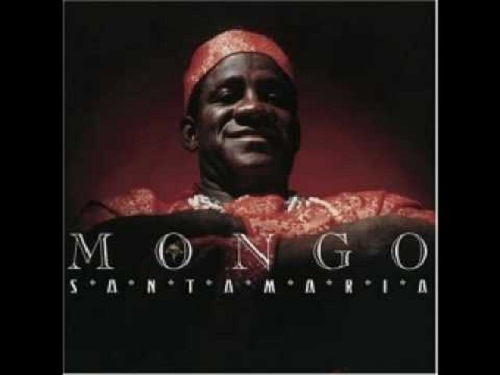
Ramón “Mongo” Santamaría “I wanted to do something that sounded like home”.

April 7, 1917, Mongo Santamaría was born in the Jesús María neighborhood of Havana, Cuba.

Exceptional percussionist of Latin Jazz and related rhythms, whose first name was Ramón Santamaría.

Mongo left to continue playing his Congas hard in the sky on February 1st, 2003.

“I wanted to do something that sounded like home”. With these simple words, Ramón Santamaría Rodríguez “Mongo Santamaría” spoke of his essence.

The purpose of his music pursued a sonority and a memory, possibly located in Cuba, in Jesús María, a marginal neighborhood where he grew up and enjoyed a tradition attached to the drum, to religion, to the street and from where this great Cuban percussionist drank infinitely.

But surely those drums also came to him from far away, from the Congo, where his grandfather came from to be a slave on the island and who also filled his head with sounds full of meanings and colors, which he later masterfully spread around the world.

The name of Mongo Santamaría (Havana, April 7/1917 – Miami, Feb. 1/2003) is, for the glory of all music, an inevitable reference of Cuban percussion.

Since he was a child he knew that his thing was to play the drum and he was lucky enough to belong to a family of empirical musicians, singers and drummers who supported him in the learning and mastery of these instruments.

During his time in Cuba, already a professional musician, he participated in numerous groups that little by little gave him a place among the most outstanding percussionists of the time. Some names of these groups are El Conjunto Boloña, Lecuona Cuban Boys, with whom he was able to participate in the recording of his first album, Conjunto Matamoros, Segundo Grupo de Arsenio Rodríguez, among others.

Each group had its own style and stamp, but in each of them Santamaría put his personal “touch”.

At the prestigious Tropicana cabaret he played with Chano Pozo as a member of Armando Romeu’s orchestra.

From that moment on, his career would not stop. Conjuntos, Septetos de Son were the perfect selection to complete the sap from which he would draw all his style and technique.

Later, from carnival to carnival, he would gather with other percussionists to play in the comparsas and experience the festive musical atmosphere par excellence of those years.

Alongside him played other friends who soon became a Cuban reference in the United States: Patato Valdés and Armando Peraza.

As part of the Tropicana orchestra and located in a show in Mexico, he decided to settle there as did many musicians of his time and came to play with Pérez Prado and Benny Moré.

It was precisely in the latter orchestra where he met Clemente Piquero “Chicho”, another Cuban percussionist whose style made him rethink the role of percussion in Cuban popular orchestras.

Mongo Santamaría belongs to the second wave of Cuban percussionists who arrived in New York in 1950.

His new idea of restructuring and designing his own style in the use of Cuban percussion was perfectly in tune with the reality that a few years earlier was being experienced in the music produced and sold in New York, after the arrival of the Cuban rumbero Chano Pozo.

“The rhythm produced by the conga organizes all the percussion of a band, from which melodies and counter-melodies can be experimented with.”

“I think percussion is the base from which things come out.”

Already in the United States, Mongo plays with Gilberto Valdés, again he is part of Pérez Prado’s orchestra and finally with Tito Puente’s, where he stayed for 7 years. Once in the line of Afro-Cuban jazz, so popular at the time, he joined George Shearing’s group and later the vibraphonist Cal Tjader.

With his own orchestra, he accompanied La Lupe, one of his favorite singers, and undertook projects of novel formats for the time, such as small formations of brass trio, piano, bass, percussion and drums, at a time when jazz bands predominated.

Mongo Santamaría, perhaps without the theatricality to which Chano had accustomed the New York public, focused all his strength on achieving his own sonority, with a fusion of Cuban styles and genres, perfected and deepened in the introduction of Afro-Cuban rhythms with a naturalness and using colorful timbre elements by using several tumbadoras in his set.

His creativity is highly demonstrated in the great amount of music that is part of his catalog of works and the quality becomes indisputable when seeing the amount of outstanding jazz interpreters that version and recreate his work.

In 1959 he recorded Tambores y cantos, which contains the song Afro blue, which over the years became “a jazz anthem of all times”, according to Nat Chediak, author of the Latin Jazz Dictionary.

His long recording career (50 albums), testifies to the musical activity that this great percussionist carried out throughout his professional career. He worked with American jazz legends such as Chick Corea, Herbie Hancock, flutist Hubert Maws, Dizzy Gillespie, trumpeter Marty Seller, among other musicians who today still pay tribute to this Cuban conguero who was the architect of the fusion of rhythm & blues rhythms and Afro-Cuban music, recognized the connection of Cuban music to African roots and placed the congas in an indispensable instrument for the determination of Latin jazz.

In 1977 Mongo Santamaría received the American Grammy Award for “Best Latin Recording” for the work Dawn.

In 1999, Rhyno Record Company, based in Los Angeles, California, recognizing his contribution to Latin Jazz, released the “box set” (CD) Skin On Skin: The Mongo Santamaría Anthology (1958-1995), which includes 34 of his most successful pieces (from his rumba albums, his LP with La Lupe and his projects in the fusion of Jazz and Latin) and an extraordinary literature about his career written by actor Andy García, musician Poncho Sánchez and other connoisseurs of the Latin Jazz genre such as José Rizo, Luis Tamargo, Joel Dorn and Miles Pelich.

The legendary musician was extremely honored and grateful for the distinction Rhyno gave him by introducing this historic anthology to the world. As stated in the conversation with Jaime Torres, Mongo said:

“This is the fruit of many years of work, music made with taste and love.”

May he rest in peace and eternal glory to him.

  • « Go to Previous Page
  • Page 1
  • Interim pages omitted …
  • Page 103
  • Page 104
  • Page 105
  • Page 106
  • Page 107
  • Interim pages omitted …
  • Page 137
  • Go to Next Page »

International Salsa Magazine (ISM) is a monthly publication about Salsa activities around the world, that has been publishing since 2007. It is a world network of volunteers coordinated by ISM Magazine. We are working to strengthen all the events by working together.