

Search Results for: Van Van
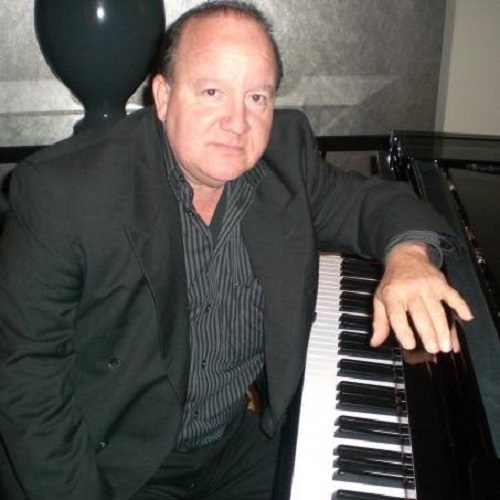
Isidro Infante is one of the most successful producers and arrangers in the history of Salsa
Born August 12, 1952, San Juan, Puerto Rico) is a professional pianist, arranger, composer and music producer, working in genres such as Classical Music, Rock, Pop Rock, Latin Ballad, Rock in Spanish, Salsa, Latin Jazz etc.

In addition, he has 5 awards and 47 Grammy nominations and several Billboard projects, Lo Nuestro Awards and Ace & Paoli Awards.
His parents were Dr. Isidoro Infante and Carmen Santiago.
From a young age Isidro was influenced by listening to his father play the violin, getting involved with music at age 14 when he participated in a band that played songs by Santana and Chicago.
At the age of 15 he formed his band “Carpe Diem” (Live Life), a Rock/Salsa group that played Rock’n’Roll, Pop, Salsa and included Tommy Villarini on trumpet, Cuto Soto on trombone and guitarist Manolo Sastre.
With this band Isidro wrote his first arrangement “Tiempo De Ti”.
Two years later, Infante was in charge of the background music for Myrta Silva’s television show.
After taking private piano lessons with the famous pianist Carmen Socorro Duclerc, he studied at the Conservatory of Music of Puerto Rico and at the University of Puerto Rico, obtaining bachelor’s degrees in music and chemistry.
Although he was inclined towards medicine because it was his father’s profession, he decided to delve into music and graduated in composition and arrangements at Temple University in Philadelphia in the late 1970s.
In 1995, Isidro Infante and ‘La Élite’ signed a contract with RMM Records as an exclusive artist. Isidro also signed as A&R director for RMM records.
With him he gained experience, quality and evident success in his productions for the label. His work with La India earned him double platinum sales and a Grammy nomination for their album “Sobre El Fuego.”
Within just four years of its founding, La Élite became a dominant force in the Salsa music industry. The band’s first release earned a gold record as well as awards from AS, Paoli and Diplo.

The hit songs “Que Tengo de Ti,” “Nave de Papel,” “Ganas” and “Has Quedado Retratada” all topped the Tropical Salsa charts.
On Isidro Infante y La Élite II, the group’s second production, Isidro added vocalist Maggie Ramos. This helped him create an album with an exceptional variety of music.
Songs like “Quítame ese Hombre” and “Santo Militar y Montuno” made Isidro Infante a favorite of many.
Along with Louie Ramírez, Infante was credited as one of the creators and pioneers in the Salsa movement. Romantic Salsa.
In 1998, his production “Licencia Para Engañar” was released, which was the result of his creativity and flexibility as a musician. In his orchestra, Isidro Infante y La Élite, Jennifer Jiménez and Guillermo Duval participate as vocalists.
In his first album “Secretos”, Kevin Ceballo made his debut as a soloist in “Licencia Para Engañar”, produced by Isidro Infante.
His work as a producer earned his album “India’s Sola” a Grammy nomination. Venezuelan Oscar D’León also received a nomination for “La Fórmula Original” which Isidro also produced.
Isidro’s commitment to everything related to the Latin community prompted him to produce the event “Canto Para La Guaira”.
The concert was held with the purpose of raising funds for the victims of the disaster that affected thousands in Venezuela and thus “Poliedro de Caracas” has been filled to full capacity.
Among the RMM artists who performed were Kevin Ceballo, Ray Sepúlveda, Cheo Feliciano, Tito Nieves, Roberto Avellanet, Michael Stuart and Tony Vega.
In 1981, Ramírez and Infante were approached with the idea of producing an album of famous ballads with Salsa arrangements.
Both found the project interesting and ambitious, so they accepted the challenge. Isidro added his experience in the field of ballads, acquired through his work with José Luis Rodríguez, Camilo Sesto and Yolandita Monge, to Ramírez’s knowledge of Latin jazz.
The result was “Noche Caliente”, the first album in the genre to sell over a million copies.

Isidro Infante is one of the most sought-after arrangers in Salsa.
Venturing into a genre other than salsa, he also participated in Willennium, Will Smith’s most recent recording where Isidro played piano and keyboards.
Isidro Infante was working with artists such as Stevie Wonder, Herb Alpert, Gloria Estefan, Dizzy Gillespie, Dionne Warwick, Patty La Belle, Will Smith, Wyclef Jean, Clark Terry, Jon Anderson & Yes, Vangellis, Sheila E., Tito Puente, Celia Cruz, Machito, Marc Anthony, La India, Fania All-Stars, Oscar D’Leon, Hector Lavoe, Willie Colon, Larry Harlow, Roberto Roena, Johnny Pacheco, Pete El Conde Rodriguez, Louie Ramirez, Ray De La Paz, Jose Alberto “El Canario”, Adalberto Santiago, Eddie Santiago, Lalo Rodriguez, Paquito Guzman, Marvin Santiago, Domingo Quinones, Camilo Azuquita, Kako, Rafael Cortijo, Ismael Rivera, Manny Manuel, Raul Marrero, Vitin Aviles, Papaito, Tony Vega, Puerto Rico All Stars, Ralphy Leavitt & La Selecta, The Latin Corporation, Jose Mangual Jr,Jr. Gonzalez, Ramon Rodriguez,Orquesta La Terrifica, German Olivera, Wichy Camacho, Johnny Ventura, Sergio Vargas, Cuco Valoy, Ramon Orlando, Los Hermanos Rosario, Los Niches, Los Fabulosos Cadillacs, Little Louie Vega, Robert Avellanet, Michael Stuart, Yanko, Kevin Ceballo Danny Rivera, Sophy, Mirta Silva, Ivy Queen, Tego Calderon, Mickey Perfecto, TNT and many more.
Among his compositions are “Viejo Pachanguero”, “Vicio de Quererte”, “Esa Niña” etc.
With more than 2,500 arrangements in his resume, Isidro is one of the most successful producers and arrangers in the history of Salsa.
Isidro Infante has been working for major record labels such as Sony BMG (Epic, Sony Discos, Sony International, etc.), Universal EMI Capitol TH Records Salsa International Velvet (Venezuela), Co Discos (Colombia), J&N Records, Univision Poligram, Luna Records Fonovisa, Sono Tone, Caiman Records, Faisán Records, GB Records, Ibero- Records, Salsoul Records and many more.
Isidro Infante produced the Special for Banco Popular 2010: Truibuto Al Gran Combo on CD & DVD which achieved platinum sales.
The project included the participation of El Gran Combo, Ismael Miranda, La India, José Alberto, Isaac Delgado, Michael Stuart, Domingo Quiñones, NG2, Luisito Carrión, Sammy García and El Sabor de Puerto Rico.
He was sharing the Fania All-Stars as musical director with maestro Johnny Pacheco in several concerts throughout Latin America and was involved in musical projects with the Mexican singer-songwriter Juan Gabriel.
In 2010, Isidro Infante and Iván Joy established the new company Artist System Inc. which is in collaboration with Diamond Music and has gained important positions in the market of digital production and promotion and also has a lot of experience in the creation and management of digital content.

The company is working with such artists as Isidro Infante, Lucecita Benítez “La Voz Nacional De Puerto Rico”, Lunna, Lourdes Robles, Conjunto Canayón, Сorporación Latina, Manolo Lezcano, Lou Briel, Jowell & Randy, Arcángel, Tego Calderón, Jadiel, Endo, Guelo Star, Kastrofobia, Los Metalicoz and many more.
Awards
5-time Grammy winner
47 Grammy nominations and several Billboard projects
Premios Lo Nuestro and Ace & Paoli Awards.
Also Read: Ezequiel Lino Frías Gómez was an excellent musician, pianist, arranger and composer.

Source and Collaboration: Marino de Jesus (1588) from Salsa History of the Dominican Republic
Omar Ledezma Jr. and Pacific Mambo on tour in Europe
We had several occasions to talk with Venezuelan singer and percussionist Omar Ledezma Jr. because he always has interesting things to say about his projects and tours, and this time it was no exception.
Recently, the artist along with the rest of Pacific Mambo Orchestra were doing a small tour in Europe, more specifically in France and Italy, and we wanted to know all he could tell us about these performances, most notably the great musical event Tempo Latino, which is held every year in Vic-Fezensac, France.

Pacific Mambo in Italy
Something interesting about this year is that Pacific Mambo not only went to Tempo Latino, but they also had a few shows in Italy prior to the festival. Before that, they played in one of the most important events of jazz and music in general which was the Umbria Jazz Festival that took place in Peruvia, where they had the opportunity to play after the impeccable performance by Brazilian singer and guitarist Djavan.
He also describes this concert as a great experience and a great opportunity to continue to demonstrate their talent to audiences that had never heard them before, so they enjoyed it and took full advantage of it.
Later, they had another performance in the city of Palermo, where they were accompanied by the Palermo Brass Orchestra. Omar says that this combination was spectacular and that the music sounded incredible with the brass in the background, to the extent that they spoke to the group and several of the musicians accompanied them to France to play with them at Tempo Latino as well.
Pacific Mambo at Tempo Latino one more year
Omar explained to us that he does not handle the details of the contact to Pacific Mambo to attend Tempo Latino again, but he did tell us that the singer of the group, Cristel Durandi, was the godmother of the festival, which was a real honor for all its members and they were very gratefulfor that. It can now be said that there is an important connection between the orchestra and the organization of the event for future editions.
He told us that there is nothing particularly different than previous years and that, in his case, he felt he was treated like family by the organizers and the other musicians with whom they had the opportunity to talk to. The ones with whom they shared the most were Latin jazz trumpeter Maite Hontelé and the guys from La Orquesta La 33, who had their own performances on that stage that has seen so many Latin talents shine over the years.

On Saturday 27 July, it was finally their turn after Maite played with her new orchestra of young musicians, which was preparing the audience for them when they had to delight the audience with the best of their repertoire.
We are always happy to be able to bring our music to the people of France and the world in general because, as always, there were people from all over the world who traveled just to attend the festival. It was very nice to be able to play there again and soak up so much energy. Whenever we go, we always feel at home” said Omar about Tempo Latino.
General details of the tour
Omar’s tour with Pacific Mambo was conducted entirely in Italy and France. As mentioned previously, the guys had never played in Italy before, so this was something very special for them, since the people they met had excellent receptivity to their music and the organization of these concerts offered them all the support they needed in the technical, administrative and hotel part.
The first place they visited was the city of Peruvia, Italy, where they participated in the Umbria Jazz Festival. From there, they moved to Palermo, Sicily, where they had their second performance, and finally, they flew to France for Tempo Latino.
Regarding the accommodation in France, the artist told us that he and his orchestra fellows stayed in a hotel in the town of Auch, a place they had never been to before and which was about 25 to 30 minutes by bus from Vic-Fezensac. Omar highlighted the spectacular view they enjoyed on their journey and all the fields of vineyards and crops they had the opportunity to observe.

Upcoming performances
As for the next Tempo Latino edition, it is still too early to know if Pacific Mambo will participate again in the festival, so those conversations with the group to go to France next year remain to be seen.
However, the musician could confirm that they will have a local performance in September. He also informed us that they will have a concert at Yoshi`s the first weekend of next year, which is already a tradition for the band every year.
For the time being, the band will use these months to refresh their repertoire, create new music and prepare for what is to come in 2025.
Read also: Yari More Latin Band, the orchestra that accompanied Celia Cruz
Samuel del Real was an excellent pianist, orchestra conductor, arranger and educator
Born on August 22, 1953 in Barranquilla, Colombia, he was a well-known pianist, orchestra conductor, arranger and educator.

He was part of renowned orchestras such as Pacho Galán, La Dimensión Latina and El Trabuco Venezolano and participated in a series of record productions in Caracas, Venezuela.
In 1983 he recorded his first album with his own band. His first hit “Ella No Baila Sola” became the theme song in every night club in Colombia, Venezuela, Peru, Panama, USA among other countries.
In 1985, Samuel moved to Chicago, USA, where he quickly formed his orchestra with members of different nationalities resulting in a mixed sound for his music.
Since then Samuel del Real and his orchestra participated in many festivals, concerts, private events in cities such as Chicago, London, New York, Minneapolis, St. Paul, Detroit, Indianapolis, Miami and more. “Piano Caliente”, ‘Piano Jamboree’ and ‘Piano Navideño’ are the most recent albums that include selections from his extensive Latin jazz repertoire, as well as new interpretations of Afro-Cuban classics from his album entitled Piano Caliente.

Samuel has ventured not only into the salsa genre, but also into Latin jazz that surprises even those who don’t know him.
It doesn’t take much to realize that Samuel was “El Maestro del Buen Ritmo” and that his music is here to stay.
Samuel del Real: the artist from Barranquilla who triumphed in the United States.
He trained musically and academically, open to the idea of expanding his artistic horizons.
“I began my musical studies in Fine Arts, among my teachers I remember Günther Renz.
In Venezuela I attended the Juan José Landaeta Conservatory and the Caracas Philharmonic Conservatory with the pianist Paul Rosenbloo.
I studied harmony and counterpoint. With maestro Antonio Lauro, composer and guitarist, I completed my academic training”.
At the age of 15 he began his professional career as a pianist in the Pacho Galán Orchestra. There he learned the tricks of popular dance music of the Colombian Caribbean, and the possibilities of sharing with national musicians opened up for him.

With him I learned the routine of Caribbean music, he had a very positive attitude towards me. He would summon me before rehearsals to teach me how to play, he would take the score and sit with me at the piano: ‘Play like this’, he would tell me, and ‘play the acor-des this way, this is the tumbao, this is the phrasing’, all with a lot of patience”, he recounted.
“There was Pi¬chirilo on bass, Jorge Pérez on timbales and drums; and Joaquín Pérez on congas. Chicho Sarmiento, Clí¬maco Sarmiento’s son, played the alto saxophone; Pacho Aragón played the tenor saxophone. On trumpets Armando Galán, Raúl Lastra and Chino Acosta.
Rosendo on trombone. Maestro Pacho Galán would arrive to conduct the first set and then he would leave, Armando would be in charge of the orchestra. That’s when my interest in Caribbean folklore began.
I did not record with Pacho’s orchestra because he did not record in that period, but I played a lot of his music and I still play it in Latin jazz.
“For me it was a great school,” he said.
Although he has lived outside the country for many years, when he returns to Barranquilla it is as if he had never left.
It shows in his confidence to walk the streets, to visit places, to call friends, to exchange anecdotes with people he barely knows.
He is a man who lives for music, to which he has dedicated a contagious enthusiasm. That is why when he comes, it is a pleasure to review his career.
“I come to take a little hot temperature and to bring my latest albums for the local public to get to know them,” he said.
In 1975 he formed an orchestra in Venezuela with which he worked at the Hotel Tamana¬co Internacional, while at the same time he was a pianist, administrator and producer of various musical projects in the recording industry of that country.
In 1979 he joined Dimensión Latina, an aggregation with which he recorded Di¬mensión desconocida (1979), el número uno con la núme¬ro uno (1980), Para siempre (1980), Combinación latina Nº 4 (1980), and Cuerda para rato (1981).
“In Dimensión Latina I spent three years with Andy Montañez, Argenis Carruyo and Gustavo Carmona, then I started the orchestra project with my name.
I also recorded with Andy Montañez as a soloist, and made arrangements in recordings for Velvet de Venezuela”.
Samuel also participated in the extraordinary Trabuco Venezolano, led by drummer Alberto Naranjo.
“With Trabuco Venezolano I participated in many concerts in Venezuela.
With them I recorded Irakere and Trabuco, in a live performance at the Poliedro de Caracas. I also recorded Imágenes Latinas.
The Flor y Nata, themes: No me engañes, Rosa de la Noche, Brujería, Almas Blues, Desilusión, (there I do a piano solo that has been highly praised), a pesar de Usted, Orquesta de moda, No quiero Confusión. Retrospectiva del Trabuco Venezolano Vol. 2 (1977- 1984)”.

In 1983 he recorded his first album with his orchestra, the hit was the song Ella no baila sola, which became his letter of introduction.
In 1984 he recorded his second album, repeating his success with the song Cara de Domingo, by the niuyorrican flautist Lou Perez.
The third album with his orchestra was produced in 1987, when he was already living in Chicago.
“When I left Dimensión Latina, Gustavo Cardona, Oscar D’León’s bass player, encouraged me to start my own orchestra.
One of the numbers was Ella no baila so¬la, and when it was played, people stopped to dance. That is why we decided to record that song.
I brought Frankie Paz, a boy from Maracaibo who had auditioned with Dimensión Latina as a replacement for Argenis Carruyo, but César Monje didn’t like it.
I told the boy, I’m going to have my orchestra soon and I’m going to bring you with me”.
Referring to his piano influences, Samuel recalls Noro Morales, Eddie and Charlie Palmieri, Richie Ray and Lino Frias.
Others such as Bud Powell, Thelonious Monk and Oscar Peterson, shaped his vision.
“I liked Noro Morales a lot, I had only one record of his, ‘Maria Cervantes’, which caught my attention since I was a child. One day I decided to arrange it a little differently. I still play it in my Latin concerts.
Del Real took up residence in Chicago in 1985. There he has continued his work moving between Latin dance music and Latin jazz.
I’ve been living there for 32 years, I have my orchestra, I give Latin jazz concerts, and I’ve also worked for other organizations in other cities like Minneapolis and Cleveland.
We do salsa and different Latin American rhythms. The music business has changed, it’s a big investment to make a record, and you have to project it to the singer, limiting the possibility of moving.
That’s why I decided to make Caribbean Latin jazz instrumentals; with that I expose my music without the need to write ten arrangements for a singer with whom you run the risk of him leaving”.
His recent recordings include the Pianos del Caribe series, which includes the discs Piano caliente, Piano jamboree and Piano navideño.
“The first disc of the series, Piano Caliente, brings songs from the 50’s such as Mata Siguaraya, El que siembre su maíz, Besitos de coco…. I made the themes a little more progressive with jazz, but preserving their essence.
I subtly changed the harmonic structures, without distorting them. There the singer is the piano.
Then came Pia¬no Jamboree, with some of my own themes. I do more complex things, trying to penetrate Latin jazz, looking for a space for my musical identity.
It is an interesting work that I would like music lovers from Barranquilla to listen to.
The third album also in the same series is entitled Piano Navideño,
“The first album in the series, Piano Caliente, brings songs from the 50’s like Mata Siguaraya, El que siembre su maíz, Besitos de coco…. I made the themes a little more progressive with jazz, but preserving their essence.
I subtly changed the harmonic structures, without distorting them. There the singer is the piano.
Then came Pia¬no Jamboree, with some of my own themes. I do more complex things, trying to penetrate Latin jazz, looking for a space for my musical identity.
It is an interesting work that I would like music lovers from Barranquilla to listen to.
The third album also in the same series is entitled Piano Navideño, I took as a reference the themes of Christmas. Christmas is very important to me. I am a lover of that celebration.
I took several themes from the international Christmas repertoire and put them in Latin jazz”.
No one doubts that Barranqui jazz or the International Carnival of the Arts would be the perfect setting for his work. Plus, it would be a homecoming in style.
“I think it would be a great opportunity to showcase my music in my city. I am glad that in Barranquilla they are creating spaces like the Carnival of the Arts and the Caribbean Cultural Park, so that people have access to that part of the culture that is music”.
He passed away at the age of 67 on December 10, 2020.
Samuel del Real, who suffered from diabetes, died in Chicago, United States, where he had settled 35 years ago.
Also Read: Thank you Rafael for all you have done for Salsa. Without you many of us would not be salseros

Asia / September 2024
| ASIA SEPTEMBER 2024 FESTIVAL by Karina Bernales | ||
|
|
![]() |
CARAMELO FESTIVALSep 19 / 22 2024 Leonardo Club Eilat |