


The Bailatino Ensemble, was born as a need to revalue and revitalize the Caribbean musical heritage so diverse and original; a heritage that refuses to die because it is part of our Cultural Identities, that is to say, it does not obey the dictates of fashion, nor the whims of the record companies, but our sense of belonging and our pride for the cultural contribution we have given to the world.
Bailatino represents the Salsa Resistance, Salsa without Concessions; it expresses the influences of the best musical groups that interpret the “Salsa Dura”, but, with its own identity.

The musicians that make up Bailatino are constantly invited to accompany the best national and foreign orchestras that visit Venezuela; they are also requested in important international stages;
They have recorded different musical genres and are members of various Venezuelan orchestras. José “Cheo” Navarro, Marcial Istúriz, Edgar “Dolor” Quijada, Felipe Blanco, Johan Muñoz, Eliel Rivero, Alberto Crespo, José “Mortadelo” Soto, and Alexis Escobar (R.I.P) and replaced by Leo Pérez, make up a compendium of talent, knowledge and experiences whose result cannot be other than excellence and quality expressed in each of their interpretations.

Bailatino is the result of national and international musical influences, such as: La Dimensión Latina, Federico y su Combo Latino, El Grupo Mango, La Salsa Mayor and Tabaco y sus Metales, just to mention a few Venezuelan groups; likewise, Eddie Palmieri, Charlie Palmieri, Grupo Libre, Grupo Experimental Newyorkino, Ricardo Ray, Sonora Ponceña, Fania All Star , Mon Rivera, among others.
In 1995, Bailatino debuted in the framework of the International Theater Festival of Caracas, coincidentally in the spaces that previously was one of the temples of salsa and dance, the now disappeared “Sabor Latino”, formerly called “La Pelota”, sacred contexts of salsa and the nightlife of Caracas.

Who organize throughout the year the best salsa parties in Caracas, promoted and spread by means of oral tradition or selling tickets in the famous “Tío Pepe” of Sabana Grande, in Caracas.
These CDs are dedicated to all of them, because with their encouragement we were able to make our dream come true.
Bailatino has also performed on various stages in our capital and internationally:
Museo de Bellas Artes, Corp. Group, Espacios Unión, Trasnocho Cultural del Paseo Las Mercedes; Banco Central de Venezuela, Colegio de Ingenieros, Colegio de Médicos, El Maní es Así; “El Rincón Caribeño (currently “Rumba Aché”), Hawai Kai, El Atrio, Centro de arte la Estancia, celebrated its tenth anniversary at Casa del Artista, Aula Magna, first Metropolitan Salsa Festival, Herman among others. Internationally Bailatino makes his first presentation at the Jorge Isaac theater in Cali Colombia, he was invited to the festival “Salsa al parque” in Bogota Colombia, in 2007 he travels to the city of Dax France for the festival “Toros y Salsa”, in 2008 he travels to Mexico and that same year he performed at the Salsa summer festival in Cali, in that city, he also performed at the prestigious Changó nightclub; in 2009 we were in Australia; all these presentations with resounding success and acceptance.
Bailatino is a network of alliances, solidarity and complicity between musicians, composers, arrangers and friends from different professions and trades, who have contributed their grain of sand so that the Bailatino project, once the proposal was approved by music lovers and dancers, would not remain only in multitudinous presentations and excellent comments from its heterogeneous audience that multiplies every day.

Bailatino, is musical memory transmitted from one generation to another, reinterpreted with all the care and respect that the great masters deserve, who have contributed to design the musical map of Latin America.
The Bailatino group vindicates, once again, the place of honor that Latin Music deserves, not only for the Caribbean, Andean and Afro-American countries; it is a proposal within the framework of a globalized society, but also in a historical moment in which our cultural identities have a great capital to contribute in this multicultural and multiethnic counterpoint that currently exists in the world, in diverse fields and of course in the musical plane.
Currently they are preparing their fifth production entitled “No hay quinto malo”, and at the same time they have released two excellent songs with the brand of “Bailatino”, “Lo mismo de siempre” from the pen of José “Cheo” Navarro and a masterful arrangement José Soto “Mortadelo” in the vocal part Edgar “Dolor” Quijada, the second song entitled “Salsero Soy” composition and arrangements by pianist Alberto Crespo in the voice of the talented young Francisco Rojas and as special guest in this production the Sonero del siglo XXI Herman Olivera performing the song “El que te ama” another excellent composition and arrangements by Alberto Crespo.

For next Friday May 5, 2023 from 8:00 PM they will be performing at the public works club of Maracay in Venezuela with the help of “Taylor Productions” celebrating their 28th anniversary, an event that promises for the public of Maracay since La Ciudad Jardín is their second home.
El Conjunto Bailatino “La Resistencia Salsera”
Read also: Ronald Gòmez One of the most respected young soneros of the New Generation

Latin America / Buenos Aires / Argentina
Hindy born in San Félix – Edo. Bolívar, in the south east of Venezuela, in 27 years of artistic career, has enriched her musical career through her different participations as a soloist, chorister, singer-songwriter and producer.

His beginnings in the Venezuelan salsa music elite are with a first place in the Record Report, at the hands of the international producer César Monges “Albóndiga” interpreting in his production “De Regreso a mi País” the version of the song A Flor de Piel del Venezuelan singer-songwriter Yordano Di Marzo, being in turn the leading voice of the Monges orchestra “Latín Girls” under the representation of Korta Records of the businessman “Negro Mendoza”.
Among some of the national and international celebrities with whom he has participated on different stages are: Cheo Feliciano, Viti Ruiz, Henry Fiol, Roberto Blades, Jr. Gonzáles, Paquito Guzmán, Richie Ray & Bobby Cruz, Gilberto S, Wladimir Lozano, Erick Franchesqui , Paquito Barón, Gustavo Rodríguez, Armando Manzanero, Pancho Céspedes, Gran Combo, S. Ponceña, Hildemaro, etc.
There is a long way to go, if it can be said, in the “short” artistic career of Hindy Castillo. His jump to internationalism was in 2007-08 to Europe, where he participated for two consecutive summers in different popular music orchestras touring more than 30 cities in Spain, and in France.

Hindy was selected to assemble an international orchestra and travel from Venezuela to do a 3-month tour, which lasted another 13 months, the immediate rapport of all its members was a total success, profiling a true blunderbuss in the salsa environment. Veracruz.
She was also chosen to participate in the 1st Boca del Río salsa festival and, among other presentations, shared the stage with the great composer Armando Manzanero and Pancho Céspedes, extending her presentations to Guatemala City. Later, she travels to the capital, DF, invited by a local producer, who, seduced by her talent, encourages her with her orchestra to perform on different stages of the Aztec capital, capturing the taste of the Mexican music lover and salsa dancer, who turn to her presentations. to appreciate and enjoy his voice and the special talent of the soneo Salsoso.
Hindy musicalizes, produces her first songs and debuts as a singer-songwriter, under the executive production of her representative Carlos Zapata.
They record four songs sprinkled with romanticism, maintaining the bases of “hard” salsa and with novel musical variants.
Flamenco was one of these variants that played an important role in this product since its mixture with salsa resulted in a very genuine and fresh sound, from the pen of select Venezuelan arrangers. Graduated instructor of Popular Singing.
He has developed musical studies of: vocal technique, German singing method in Spain, Latin piano and modern harmony. He is currently doing his Bachelor of Music and Popular Singing at the José Ángel Lamas High School of Music. And preparatory studies of trombone. Caracas.

As a musical producer, she manages the concepts “MujereSon & Boleros”, a musical of Boleros and sones, the social project Mujeres de la Escena, and her main project “Hindy & su Orquesta”, with a dynamic scene, full of salsa for all tastes, with the majestic quality that characterizes her performances.
Hindy is a talent full of energy, charisma, quality, with a Venezuelan flavor to export.
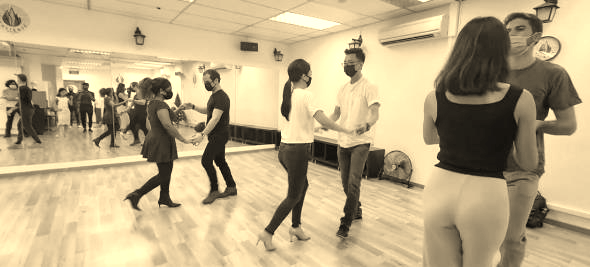
It was then that certain traditional dances of the African country and one of them was semba, began mixing with other rhythms both from its country of origin and other cultures after Africa was colonized by Europe in the 14th century. It is from there that a fusion of rhythms begins in which partner dancing takes center stage.
However, the old continent did not do all the work. Argentina and Cuba also played an essential role in the form in which semba must be danced.
In Portugal, the word Kizomba has its origin in all musical rhythms that derive from zouk, with which it is often constantly confused. It is a type of dancing laden with great sensuality and highly contagious that has become very popular with the passage of time, particularly in countries such as the United States, Canada, France, Spain, Poland, Belgium, Denmark, among others. Many Latin Americans consider that this is a breath of fresh air because it does not seem like anything they previously knew in terms of dance.
One of the reasons that it became so famous around the world is that this dance is very easy to learn due to its softness and simple dance steps. If you want to learn to dance, kizomba is a very good option to begin with.
Kizomba lets the couple play the music they dance. The more intimate the members of the couple, the more likely that the dance will be much more sensual and there will be much more complicity between men and women who enjoy this pleasure.
As we have said previously, kizomba has its origin in Angola, which was a colony of Portugal in the mid-1970s. With the arrival of Cuban military personnel, certain rhythms came from the Caribbean island that started to be used by various Angolan artists for their musical projects. The result was a fabulous mix of fast local rhythms with much slower, romantic and partially synthetic sounds.
The resulting genre was danced with semba and merenque, which made it known as kizombadas and, subsequently, kizomba.
By the 90’s, the word kizomba started to be used in Portugal to refer to all African rhythms danced in the nightspots of the most important cities in the European country. With the passage of time, the term would be used to refer to the musical genre and many other sub-genres with which it shares history.
Once this type of dance began to take hold in the rest of Europe, it was in France where all these rhythms that resemble one another started to be called kizomba, leading to the controversy over whether it and soft zouk are the same. Given that on certain islands belonging to France they were the cradle of zouk, it can be assumed that this has kindled heated debate even further still.
At the beginning, kizomba was only able to spread throughout the African continent, but migration allowed it to reach Europe and America respectively where a lot of passionate dance groups of this genre began to appear. The number of followers accumulated by this genre in countries such as Portugal, France or Spain was very huge.
Currently, there are a number of exponents of this kind of music that became famous worldwide such as Nelson Freitas, Djodje, Anselmo Ralph, Matias Damasio, among many others.

It is incredible the number of places where you can enjoy this spectacular dance. One of them is the world famous Eiffel Tower, where there are many options to learn or improve the dance steps. In France, the genre has been very popular, so much so that many places for dancing celebrate exclusive kizomba nights known as kizomba soirées by the locals. Considering the major African influence on this dance, those wishing to find out more will be able to enjoy a wonderful mix of dance styles and cultures that will leave no one indifferent.
In these places, you can share with a very impressive amount of tourists and foreigners from around the world. This contributes enormously to linkages and friendships between people of other cultures and other ways of seeing the world, which may be very rewarding from all points of view.
In the case of Lisbon, Portugal, it can be said that this is another place that every lover of kizomba in Europe should visit. Besides being a city that receives all its visitors with genuine hospitality, the dancing and music are ever-present. Among the many places you can go to enjoy the dance, it is important to mention the Estudio Sabor & Dança dance studio, the Academy World Dance and the Kizomba Power Dance School.
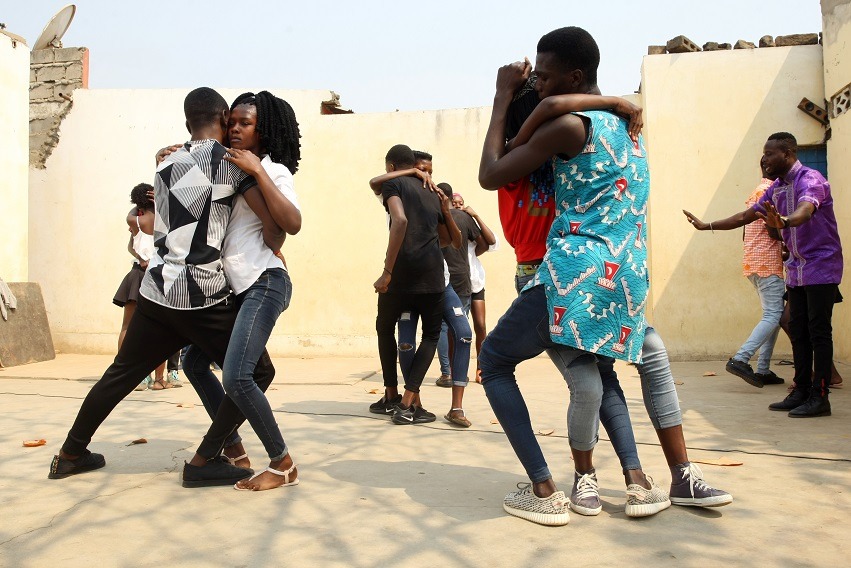
Regarding Barcelona, Spain, what can be said is that this is one of the best European cities for dancing as there is a gigantic variety of musical styles that can be found there. There are always parties and events worth attending. One of those dances that can be found in the city’s nightlife is kizomba that has gained popularity in recent years.
Latin music events and festivals were based on salsa and bachata, but kizomba has completely changed that reality. Today, it is very common to find festivals and congresses dedicated exclusively to this dance and its most loyal lovers. If you want to learn to dance this genre, there are a number of schools and workshops that could be very useful such as Así se Baila, Seven Dance and Baila Barcelona.
Many people who do not know the origin of the kizomba think that it originated in Latin America due to its type of dancing, but the fact is that this dance was not even known in most countries of the continent. In fact, its main boom started relatively recently in some places such as Colombia, where it began to be known not long ago. In that country, there are currently academies and teachers who are dedicated exclusively to this musical style, which has started to happen in other Latin nations.
In Venezuela, it is said that it has been danced for more than 10 years, but it began to be known a short while ago thanks to some videos on the major social networks after it became famous in Europe. The pioneers of this practice were a certain number of instructors born in the Caribbean country after being trained in Brazil. Following this, kizomba was the subject of a great deal of interest in many young Venezuelans who want to learn to dance it. There are not many records on places to dance where this genre may be found, but there is no doubt that soon it will be like this.

There are many events and congresses linked to kizomba in Asia, which have a great influx of visitors, even when it is commonly believed that Asians are not fans of this type of rhythm. Experience with congresses of the last years has given the impression that this is not true. In fact, there are many fans of this rhythm from the continent who want to know all events and competitions details that are carried out in their countries for the coming months.
Japan is one of the nations where this type of event can be found the most. Such is the case of the Japan Kizomba Festival that has been going on in the country for many years due to the high level of attendance of visitors.
Video: https://www.youtube.com/watch?v=6WOVBNULkYc
North America - United States - New York

Spanish Harlem Salsa Music Gallery, offered an exhibition and Master Class on the history of Salsa at the Escuela Especializada en Música Jesús T. Piñero in Cidra, Puerto Rico. We transported ourselves to Puerto Rico in search of an opportunity to publicize the Salsa Museum-Gallery in New York.
This is part of the efforts being made for the participation and dedication that is made to the people of Cidra in the Desfile Nacional Puertorriqueño 2020 and that is locally coordinated by the Patronato Cidreño along with other civic and professional organizations.
We were able to benefit hundreds of students at this school who are precisely focused on music. The knowledge offered in the three conferences and being able to closely observe the exhibition helped to foster the enthusiasm of the students who make up the campus, unique in the mountains of Puerto Rico, dedicated to the creation of good musicians and knowledgeable in musical art.
We are dedicated to enhancing Latin music and offering spaces focused on arts education, accessible and friendly to the community as a strategic partner.
I thank valuable people such as Laura Torres, Silkia Vázquez, Wilson Nazario and Wilfrido Torres “Puruco” for all the attention and teamwork that we were able to develop during our visit. I cannot stop also thanking my assistant in Puerto Rico, Carmen Cruz; and to Joseph Cruz for his magnificent and beautiful work with me during this pleasant experience.
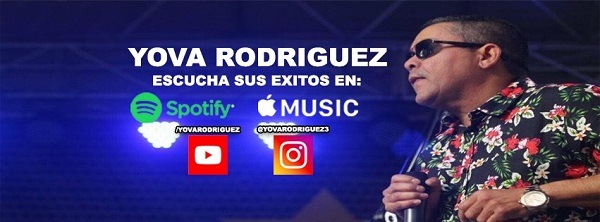
I also take advantage of this space in International Salsa Magazine because I want to tell you about an artist and a great friend who is doing his best for music and Salsa. Without a doubt, Yova Rodríguez is a long-standing professional who has developed countless projects and initiatives to support those who need it most. With his music, his work and his human quality, he has reached many hearts from New York.

Geovanni “Yova” Rodríguez Ruiz, born in Puerto Rico, had a musical inspiration since he was a child, his uncle Antonio “Toño” Ruiz – his mother’s uncle who played the cuatro – was his first music teacher (melody) and his uncle José Antonio “Pipo” Ruiz Crespo -mama’s younger brother- taught him how to sing aguinaldos (lyrics); and with this they formed the solid foundations that encouraged little Yova to prepare himself accordingly for his foray into the musical world.
The celebration of the Promesa de Reyes, a celebration in which he participated with his mother at his short seven years, leads him to worry about creating and recreating aguinaldos to be interpreted each year, which in some way becomes the seed of composer that we know today.
At the age of 14, he attended the Escuela Libre de Música Ernesto Ramos Antonini in Mayagüez, hand in hand with piano teacher César Toro, rising as vocal leader of the Orchestra after a year.
Years later he gave himself the task of forming his own musical concept, and thus Sakao Aká was born. This orchestra was in charge of accompanying singers such as Camilo Azuquita, Ray de la Paz, Pupy Cantor and Herman Olivera in their presentations in Puerto Rico; and the cover letter for some of these singers to integrate Yova as a chorus girl in their presentations in various countries in Central and South America.

At the end of the 90s, on a trip to Cuba, he was impacted by the music of Fernando Borrego Linares, better known as Polo Montañez, to the point that, some years later upon learning of his death, he had the idea of paying tribute to him, his musical reference, thus giving birth to the idea for her debut feature Homenaje a Polo Montañez (2005), a production of 10 songs by Montañez, and covered by Yova Rodríguez with the participation of renowned musicians from the patio such as Herman Olivera, Héctor “Pichie ”Pérez, Papo Lucca, Edwin“ Caneca ”Rosas, Edwin Colón Zayas, among others.
In 2008, like many of her compatriots, Yova prepares her luggage and heads to the southern United States, where she stays for two years and then moves to New York, a city that has become her center of operations and from where He has extended his working ties as a composer and where he records his next two productions.
The album Letras, canciones y sueños, musical work of 8 songs all written by Yova, comes to light after some years of having published his first production and of having worked silently composing and waiting for his opportunity. This possibility is materialized in 2013.
Already in 2015, the album Mi musa en las voces de mis amigos is released.
Recently, Yova Rodríguez has created more than 420 songs, and many of them have been duly registered with the American Society of Composers, Authors and Editors (ASCAP) under the registry “El Negrito De Delia Music” . “Exceso de amor” is the first composition he has interpreted and recorded; like the song “No me odies”, it is the first recording of a song by him made by a third party.
Now they are going to hear more from Yova, as some productions that will include her compositions are in the process of recording / publishing. Attentive to the upcoming releases of the young Puerto Rican percussionist José Jomar Marcano, the master trumpeter Luis González, the young trombonist, arranger musician and also singer Leo Morales; the renowned DJ Andy Rodríguez, better known as DJ ANDY and the Venezuelan sonero Marcial Isturiz .
As always, remember that Spanish Harlem Salsa Gallery is in 1708 Lexington ave New York N.Y. 10029. Open free to the public all Thursdays & Fridays from 4 to 7 pm and Saturdays from 1 to 8 pm. Check the updates in our website: spahasalsagallery.com.
Also, The Johnny Cruz Show, the # 1 Salsa Show on television on all 5 Boroughs of New York on CH67. Saturdays from 3:30 to 4:30 pm.
Contact: Johnny Cruz. 917-747-8505. [email protected]
 By Johnny Cruz, ISM Correspondent, New York, New York