• Skip to primary navigation
  • Skip to main content

International Salsa Magazine

  • HOME
  • Previous editions
    • 2026
      • ISM / March 2026
      • ISM / February 2026
      • ISM / January 2026
    • 2025
      • ISM / December 2025
      • ISM / November 2025
      • ISM / October 2025
      • ISM / September 2025
      • ISM / August 2025
      • ISM / July 2025
      • ISM / June 2025
      • ISM / May2025
      • ISM / April 2025
      • ISM / March 2025
      • ISM / February 2025
      • ISM / January 2025
    • 2024
      • ISM / December 2024
      • ISM / November 2024
      • ISM / October 2024
      • ISM / September 2024
      • ISM / August 2024
      • ISM / July 2024
      • ISM / June 2024
      • ISM / May 2024
      • ISM / April 2024
      • ISM / March 2024
      • ISM / February 2024
      • ISM / January 2024
    • 2023
      • ISM / December 2023
      • ISM / November 2023
      • ISM / October 2023
      • ISM – September 2023
      • ISM – August 2023
      • ISM July 2023
      • ISM Edition June 2023
      • ISM – May 2023
      • ISM April 2023
      • ISM March 2023
      • ISM February 2023
      • ISM January 2023
    • 2022
      • ISM December 2022
      • ISM November 2022
      • ISM October 2022
      • ISM September 2022
      • ISM August 2022
      • ISM July 2022
      • ISM June 2022
      • ISM May 2022
      • ISM February 2022
      • ISM January 2022
    • 2021
      • ISM December 2021
      • ISM November 2021
      • ISM October – 2021
      • ISM September 2021
      • ISM August 2021
      • ISM July 2021
      • ISM May 2021
      • ISM April 2021
      • ISM June 2021
      • ISM March 2021
      • ISM February 2021
      • ISM January 2021
    • 2020
      • ISM December 2020
      • ISM November 2020
      • ISM October 2020
      • ISM September 2020
      • ISM August 2020
      • ISM July 2020
      • ISM June 2020
      • ISM May 2020
      • ISM April 2020
      • ISM March 2020
      • ISM February 2020
      • ISM January 2020
    • 2019
      • ISM December 2019
      • ISM November 2019
      • ISM October 2019
      • ISM Septembre 2019
      • ISM August 2019
      • ISM July 2019
      • ISM June 2019
  • Download Salsa App
    • Android
    • Apple
  • Spanish

Search Results for: World Salsa

Juan Antón ”El Blanco” from La Clave Del Blanco

Everything started in Peru for Juan

There is always a pool of new talents to be known and analyzed, since our Latin countries are the cradle of great artists of all kinds, especially in the area of music. Today it was the turn of the talented Peruvian Juan Antón.  

We have taken the audacity to contact the leader of the orchestra La Clave Del Blanco, Juan Antón, to know the most important details of his professional life and his current group. We are very pleased to present to our readers the most important details of this pleasant and enlightening conversation, which lasted for almost half an hour.   

Peruvian singer Juan Antón
Peruvian singer Juan Antón, Leader of La Clave Del Blanco

First contacts with music 

Juan Antón was born in Peru, specifically in El Callao, a port city near Lima which is well known to all salsa lovers. Like most of the salseros who have passed through International Salsa Magazine, Juan started getting interested in music since he was a child and enjoyed La Sonora Matancera and, later on, the salsa music that came from New York. 

However, although he was always a lover of the aforementioned musical genre, his career began with Peruvian Creole music, which is composed of waltzes, jarana, black music, among other variants. 

When he leaned towards this kind of music, he sang with guitar, cajón and bass at parties in a bohemian way. He had some proposals to work with Creole music in a more professional way, but he accepted due to the pile of responsibilities he had with his work and studies. He was doing well at the time, but admits that he regrets that decision today because it would have been a good start.  

United States 

While it is true that his first steps in the world of music were taken in Peru, it was in the United States that he finally began to be part of more professional groups. 

Juan’s first opportunity in that respect came when he was at a Peruvian party where his compadre was given a Creole music ensemble. Knowing those present that he sang, they invited him to accompany the ensemble and perform with them, which Juan accepted and did. 

The musicians of the group liked his work so much that they asked him for his number and later called him to sing with them. At that time, he met Jorge Del Castillo, a well-known guitarist from the San Francisco Bay Area, who invited him to join a group he was forming and gave him a CD, asking him to learn those songs. The group would be called Kokos Band.   

When Juan was listening to the CD in his car, he found out that it was salsa and not Creole music. When he went to tell Jorge that he gave me the wrong CD, he said it was the correct one and the future group would be singing salsa. 

Since Creole music and salsa are very different, Juan had to learn a number of details such as the clave, the signals to the musicians, the way of singing, among other things. 

Some time later, the story repeated itself. The conguero of Kokos Band proposed him to join the orchestra he was creating, with which he became much more successful and went to more renowned events such as the inauguration of a museum for Puerto Rican and Cuban baseball players. Its name was Orquesta Liberazión. 

Being Peruvian, Juan was really proud that attendees mostly from Puerto Rico and Cuba complimented his work the way they did. Considering that both countries have been the cradles of the main exponents of salsa, the congratulations from this group were very important to him.   

The third and last orchestra he played with was Saboriche. His time with this group made him realize that he had what it took to become independent and create his own project.   

Juan Antón at The Cigar Bar
Juan Antón and La Clave del Blanco performing at The Cigar Bar & Grill

La Clave Del Blanco 

One of Juan’s greatest inspirations to devote himself to music was La Clave Del Callao, since the music of this band influenced him and he liked it very much. In addition to that, the name by which many began to know Juan in the San Francisco Bay Area was ”El Blanco”.  

Both of these things led him to name his own orchestra ”La Clave Del Blanco”. 

Salsa Con Caché  

In addition to his facet as a singer, Juan also had a radio show at La Grande 1010 AM and its name was ”Salsa Con Caché”, which was on the air for only one year. Its cancellation was due precisely to the professional commitments the artist had with his music.   

He decided to call ”Salsa Con Caché” to this space because ”caché” in many countries means ”elegant” and ”refined”. This is precisely the salsa style he has always liked. 

One of the things that set this program apart from others of their kind in the San Francisco Bay Area is that Juan always talked about the history of the artists and the orchestras playing on the air so that listeners would know all this information. Other programs only played background music and did not add more elements to the programming. 

Juan was so successful that he received hundreds of phone calls daily and was even appeared in the now defunct San Francisco Chronicles as one of the best salsa shows at the time. 

This success was due to the enormous constancy and important information the announcer had. Although Juan does not regard himself as a scholar in the matter, he assures us that he had what it took to keep listeners hooked to his knowledge. He even commented that he had a private collection of more than 600 original CDs in all languages, which he bought gradually.   

This extensive music collection helped him a lot to offer a varied repertoire during the time when ”Salsa Con Caché” was on the air.   

Juan Antón as an announcer
Juan Antón was also an announcer and his show was called ”Salsa Con Caché”

Recruiting talent for La Clave del Blanco 

During his journey through the orchestras where he played, Juan got to know a lot of musicians, especially during his time with Orquesta Liberazión. He became friends with many of them and, when he started forming his own orchestra, he asked them to be part of it. 

Since he managed to establish his group, the singer has always made sure to deliver what he promises. This means that, if he makes an offer for the work done, he always honors the full amount. For Juan, ”The most important thing in this business is the given word”, so you always have to deliver what you promise at the beginning. 

With respect to the above, Juan has lived this same situation with orchestras he has worked with, so he does not want to have debts with the musicians he hires. This is how he has gained their trust and, whenever he needs them, they are there for him. 

Read also: Guantanamo music director, arranger and composer Julio Avila 

Bulgaria Festivals / October 2023

World Stars Salsa Festival Albenna October 2023
Oct 27 / 30 2023
Maritim Hotel Paradise Blue AlbenaMain St, Albena Resort , Balchik, Bulgaria, 9620

Son del Monte

North America / United Stated / New York

Son del Monte, Something more than a “Charanga”

It was one of those nights of meeting with friends, those friends with whom you share the same musical preferences among other things, you know, of those gatherings where only you and your friends can spend hours discussing the best songs of Héctor Lavoe or remembering the best hits of the Fania, and in which there is no other way to end the evening than with the deities that brings the good Salsa music from a live band to close the night with a flourish.

Son del Monte
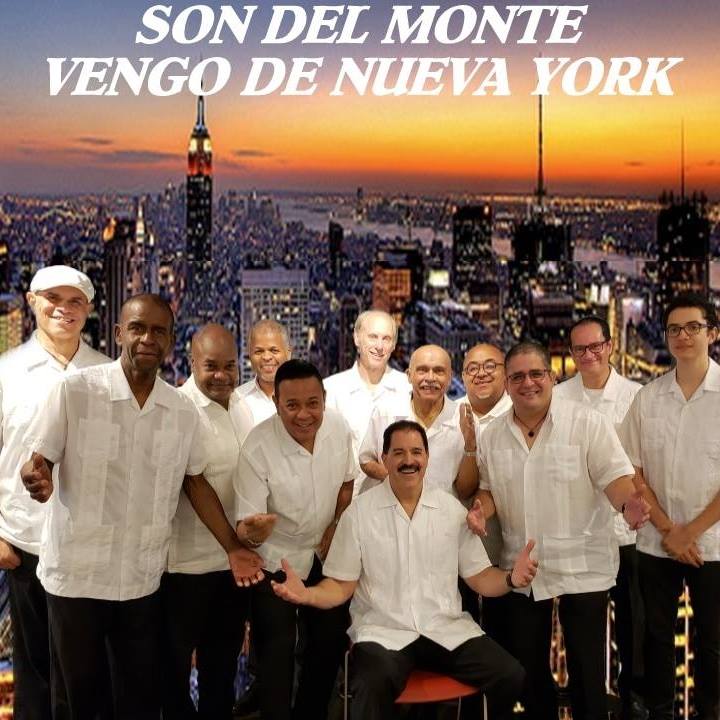
Son del Monte from New York

And so that was, when with the hours passed we came across one of these charming Latin clubs that fill the streets  and every day prevail more in the city of New York, where, of course, they offered Live Salsa. Eureka! If you allow me to say it … It was the perfect place to “Echarnos un Pie” (colloquial term that we usually give in some Latin countries when we refer to dance).

Upon entering, the characteristic sound of the band wrapped up the entire venue, no doubt, captivated us. It was the harmony of an orchestra that played the typical Cuban music: “La Charanga“, which had its maximum exposure in the 20th century. We were all enthralled or if you want to say “delighted”, it was the mixture of wind instruments with percussion instruments but especially with the string instrument that most caught our attention, the Violin.

When we asked for the name of the orchestra, they told us: “Son del Monte”. It’s the ideal name for an orchestra of 12 Latin musicians who project their virtuosity before an audience eager for Caribbean Music that bathes the senses and awakens the joy of living.

Son del Monte
Son del Monte

Son Del Monte is a band based in New York City that presents unique tunes from various artists. This orchestra was born from the musical director and timbalero, Manny Rivera whose aspiration was to create a Charanga band with a hard New York sound that paid homage to the orchestras of the 60s, 70s and 80s. “Our music is captivating for the listeners and dancers. Fans from all over the world have come to love Son Del Monte: Una Charanga Con Algo Más and our incredible musical swing”, said Manny Rivera.

This band that combines the typical sound of Cuba with the mixture of flute, violins and trombones with three singers that create a distinctive harmony of three parts, have performed in so popular Salsa venues, such as: Maryland Live Casino, the Baltimore´s Latino Festival, the boardwalk of Coney Island, SOB’s, Empire City Casino in Yonkers, Gonzalez y Gonzalez, La Marqueta, the Latina Hats Society, Industry City, Harlem Mist, among other recognized Salsa venues.

The members of this Charanga orchestra with “Sabor” and electrifying sound are: Mauricio Smith Jr. (Flute), Eric Roberto Salazar and David Rimelis (Violins), Michael Pallas, Juanga Lakunza and Charlie Garcia (Trombones), Eli Rivera (Piano), Bert Castro (Bass), Joe Gonzalez (Conga), Manuel Rivera (Timbales / Musical Director / Leader) and Luis Ayala, Armando Jiménez Sonji and Luis Soto (Singers).

Since the beginning of this year (2019), Son del Monte has been working on their record proposal for the Latin market with unpublished themes, rhythmic and unique sound – contemporary. To date they already have two singles: “Rumba Omelenko” and “Vengo de Nueva York” availables in: CD Baby, Deezer, iTunes, Apple Music, and Spotify. Likewise, the song “Herman” is in the process of recording. So, get ready because this Charanga orchestra promises their CD ended with great compositions for the public later this year.

Undeniable, the acceptance of Son del Monte has been so extensive on the part of New Yorkers and all who are Salsa lovers that they were recently awarded with the TANAE Digital Media Award for Band of the Year 2018, giving recognition to an arduous musical performance, but above all of great cultural value that keeps alive our Latin idiosyncrasy.

Son del monte - Premios Tanae
Son del monte – Premios Tanae

Manuel Rivera (Musical Director / Manager/  Timbales):

Manuel Rivera, have been a professional musician for more than 40 years and now Son Del Monte’s Leader/ Musical Director.  His musical career started playing Bongo in a Latin Workshop band which eventually became Orchestra Yambu.  Yambu was known for its Latin Jazz style and Disco Hit “Sunny”, his first recording.  Subsequently, I joined the original Charanga Orchestra Sublime of New York City, doubling up on Bongo and Timbales. He recorded on Sublime’s first two albums in 1977 and 1979.

In 2001, he rejoined Orchestra Sublime now known as “Sonsublime”. Manuel recorded on Sonsublime’s Gran Reserva and Bailando Con Sonsublime, their latest CDs. He studied various folkloric rhythms, Bata drums and sight reading at the Harbor’s Conservatory of Music in El Barrio in New York City under the guidance of the Master Louie Bauzo.

Manuel Rivera has performed with the Bassist: William Millan, of the original Conjunto Saoco, singers: Henry Fiol, Ray Ramos, and Luis Ayala.  Also, he performed with Yerason and the MTG All Stars Orchestra under the direction of Hector Leguillow, Joe Quijano at Lincoln Center and other various artists throughout his musical career.


Next Shows:

Monday, Jult 15TH   

Venue: Cunanele Restaurant and Lounge. 1 Route 46 W, Totowa, NJ 07512

Saturday, August 17TH   

Venue: La Placita de la Marqueta.  North trains between 111th and 112th Streets in East Harlem, “El Barrio” and uptown Manhattan, NY.


For more information, please visit:

https://www.SONDELMONTE.com

Or Follow them for their Social Channel:

https://www.facebook.com/MRSONDELMONTE/

Tito Rojas

Latino America/ Puerto Rico/ Humacoa

Tito Rojas, The Salsa Rooster

Julio César Rojas López better known as Tito Rojas was born in Humacao, Puerto Rico, June 14, 1955, is a Puerto Rican salsa singer.

Tito Rojas grew up and was educated in the city of Humacao, located on the eastern coast of Puerto Rico, where he attended primary and secondary school. From an early age Rojas enjoyed singing salsa to his family and friends.

In 1974 he had an audition with Pedro Conga and his International Orchestra. He sang the song ««Olvídate de mí»» accompanied by the orchestra and Pedro Conga hired him as a singer.

Tito Rojas
Tito Rojas

Some time later he left the band to join the “Borincuba Set”, led by Justo Betancourt, as lead vocalist. With this orchestra he participated in the recording of “Con amor” (“With Love”), becoming a success in 1978.

After a while, Rojas formed his own short-lived band, Conjunto Boricano. Between 1987 and 1988 he sang, with good success, salsa versions of “Noche de boda” and “Quiéreme tal como soy” together with the “Puerto Rican Power”.

In 1990, Rojas recorded the successful lp Sensual as a soloist for the “Musical Productions” label. Tito Rojas from 1992, A Mi Estilo” from 1993 and in 1995 he recorded in his own right, which he placed on Billboard’s Latin hits list.

He gained recognition from the recording industry by winning the double Platinum Album, the Paoli Award for “Best Salsa Artist of the Year” and the “ACE” award.

In 1996, Rojas had other successes with Humildemente and Pa’l pueblo, as well as 20º Aniversario, Alegrías y penas and Navidad Con Tito Rojas in 1999 and continued in the following years with the albums in 2000 Rompiendo noche, 2001 Auténticamente en vivo and Quiero. arriving home in 2003 Canta el gallo and Perseverancia 2004 The same as always, Fighting Hard and Traditional, 2005 Slate and new account, 2006 Better Than Always, 2007 No Comments and Successes and More

Tito Rojas
Tito Rojas in concert

Tito Rojas is currently performing concerts and tours around the world.

Guantanamo music director, arranger and composer Julio Avila
Julio Avila Cuban Band 

The Latin music scene in Canada is growing every day thanks to the large number of artists who have decided to move to this beautiful country to try their luck with their talent. Such is the case of Cuban musical director, arranger, composer and singer Julio Avila and the members of his great band Julio Avila Cuban Band.   

Given that we thought his career was very interesting, we decided to contact him to learn more about his work and he was kind enough to accept the invitation. Here are the issues we touched on during this fascinating interview.  

Julio Avila Cuban Band
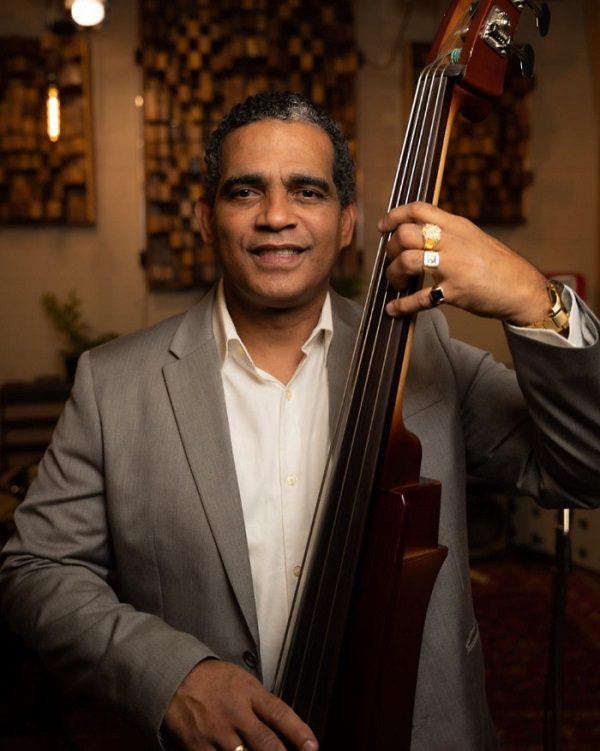
Julio Avila, musical director of Julio Avila Cuban Band

Life for Julio in Guantanamo, Cuba  

Contrary to the answer we might expect, Julio told us that making music in Cuba at that time was not difficult, as life was not so expensive and the economic crisis was not as severe as it is now.   

In his particular case, things were easier because his mother worked in a radio station and his father was a professional musician and the musical director of the popular music group Por Nuestros Campos for many years until he sadly passed away. It was undeniable that art ran through his veins. 

His sister Isabelita was also involved in popular music for many years and was even awarded on several occasions at the local Eduardo Saborit Festival. Today she is retired, but she was very successful locally at the time.   

Because all the brothers had a penchant for music, they decided to create a group called Los Hermanos Avila until they all went their separate ways and dedicated themselves to their own professions.   

Julio considers that today they would not have been able to devote to this branch of the arts due to the political and economic situation that the island is enduring, and he is thankful that it was not so. 

According to his words, the money was enough to buy the instruments in those times, but things become so complicated that developing an artistic career in the Caribbean country is much more difficult.  

All the members
All the band members with their instruments

Changüí 

Although he says he has played changüí because of his Guantanamo origins, he was never in a group that based its music on this traditional Cuban dance, as the artist has always liked popular music and salsa.   

”Changüí is a genre born in the province of Guantánamo that did not get much popularity, but today, it is impressive the large number of young people who play this dance, since they got a taste for it. In spite of all the years after it was created, there are guys who do not let it die, which makes me very happy” said Julio on this issue. 

When we wanted to know why he thinks that these young musicians have opted for this genre and not for other more modern ones such as trap or reggaeton, he replied that the latter two sound a lot in Cuba, but there have been music teachers and schools that have not let changüí die. They continue to teach it to their students and promote it whenever they can. 

In addition, there are always groups interested in preserving it in time and uniting it with son and other traditional Cuban genres. They even add flutes and violins, which were not present in the original changüí, in order to give it a unique and modern touch.  

Academic background 

Julio started playing the guitar being a child of five years old, as he had always seen his parents and older brothers involved in everything that had to do with music. Therefore, it all started in a very natural way and basically on instinct. It was later that both he and his siblings decided to educate themselves in order to become more complete professionals. 

In Guantánamo itself, he studied at a music school to become a bassist and began working fully on popular music, which had always been to his liking. 

With all that gained knowledge, he decided to move to the city of Havana, to get involved in other projects there and to compose his own material.   

Since he was 16, he earned a living as a bassist in a popular music group, which activity he alternated with his secondary education. It can be said that this is the formal beginning of Julio’s musical career. 

Julio Avila Cuban Band performing
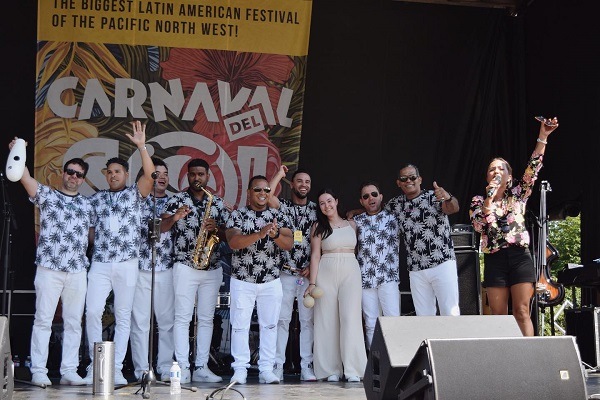
Julio Avila Cuban Band performing at The Carnaval Del Sol in July 2023

Sonora Universal and Brisas Del Palmar 

Before forming his own orchestra, Julio worked with La Sonora Universal and Brisas Del Palmar, which were his first opportunities to shine in the music world.   

When the artist was working in a quintet, a trio from the city of Santiago (Brisas Del Palmar) went to a music festival in Guantanamo and thet had the opportunity to meet in a club in 1999. ‘’The musical director of the trio saw us playing and liked the way I played the bass. He told me about the possibility of playing with them, but it did not happen until 2001 when I went to Havana and we met by chance,” Julio said. 

After having some time worked with the trio, this musical director met the talented tresista Cesar Echevarría, director of Sonora Universal, who needed a bassist because his stayed in Germany. It was then that he told him about Julio and asked him to see him play, which led them to meet and start working together. 

Within a few weeks, Julio was already traveling to Europe with Cesar to tour Germany, Denmark, Holland, Austria and Czechoslovakia. This trip is the one that began to open new doors for him and make him develop as an artist. 

Definitive departure from Cuba 

When Julio had some time with La Sonora Universal, the director of Brisas Del Mar again asked him to join the group for a tour of Canada in 2005. When he was included, the group went from being a trio to a quartet.   

Receptivity from Canadian businessmen was so good that he decided to stay with Brisas Del Palmar permanently until he decided to move from Cuba in 2014 due to the situation which the island was going through. 

The latter coincided with the beginning of his love relationship with the Serbian citizen Natasha Marjanovic, who today is his wife, manager of his orchestra and a great life support. It was she who convinced him to stay in Vancouver, a decision he says it was the right one. 

Singer of Julio Avila Cuban Band
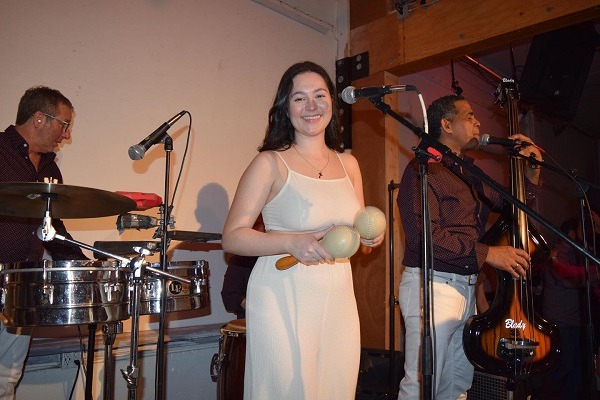
Singer of Julio Avila Cuban Band Isidora Bosanovic

Beginnings of Julio Avila Cuban Band 

It all started when Julio needed a pianist for Brisas Del Mar and hired Ernesto Benitez, who, once in Canada, told him that he was not going back to Cuba. That is when he saw the opportunity to start creating his own orchestra from himself and this musician. 

The next to be included was percussionist Norman García, with whom Julio and Ernesto formed a trio and began performing at festivals until Isidora Bosanovic, singer and his wife Natasha’s niece, arrived. Her case is very particular because she did not speak Spanish, but she learned it so she could sing in the orchestra. Today, she speaks and sings in Spanish very well. 

Finally, the band included Denis Barzaga, another musician originating from Guantánamo, who currently lives in Spain, but when required, travels to Canada to play with the orchestra in Vancouver.   

Recently, kettle – drum player Julio Paredes was included to replace Barzaga, who was unable to travel for the time being.  

Read also: Puerto Rican singer and talented sonero Charlie Maldonado 

  • « Go to Previous Page
  • Page 1
  • Interim pages omitted …
  • Page 106
  • Page 107
  • Page 108
  • Page 109
  • Page 110
  • Interim pages omitted …
  • Page 186
  • Go to Next Page »

International Salsa Magazine (ISM) is a monthly publication about Salsa activities around the world, that has been publishing since 2007. It is a world network of volunteers coordinated by ISM Magazine. We are working to strengthen all the events by working together.