• Skip to primary navigation
  • Skip to main content

International Salsa Magazine

  • HOME
  • Previous editions
    • 2026
      • ISM / March 2026
      • ISM / February 2026
      • ISM / January 2026
    • 2025
      • ISM / December 2025
      • ISM / November 2025
      • ISM / October 2025
      • ISM / September 2025
      • ISM / August 2025
      • ISM / July 2025
      • ISM / June 2025
      • ISM / May2025
      • ISM / April 2025
      • ISM / March 2025
      • ISM / February 2025
      • ISM / January 2025
    • 2024
      • ISM / December 2024
      • ISM / November 2024
      • ISM / October 2024
      • ISM / September 2024
      • ISM / August 2024
      • ISM / July 2024
      • ISM / June 2024
      • ISM / May 2024
      • ISM / April 2024
      • ISM / March 2024
      • ISM / February 2024
      • ISM / January 2024
    • 2023
      • ISM / December 2023
      • ISM / November 2023
      • ISM / October 2023
      • ISM – September 2023
      • ISM – August 2023
      • ISM July 2023
      • ISM Edition June 2023
      • ISM – May 2023
      • ISM April 2023
      • ISM March 2023
      • ISM February 2023
      • ISM January 2023
    • 2022
      • ISM December 2022
      • ISM November 2022
      • ISM October 2022
      • ISM September 2022
      • ISM August 2022
      • ISM July 2022
      • ISM June 2022
      • ISM May 2022
      • ISM February 2022
      • ISM January 2022
    • 2021
      • ISM December 2021
      • ISM November 2021
      • ISM October – 2021
      • ISM September 2021
      • ISM August 2021
      • ISM July 2021
      • ISM May 2021
      • ISM April 2021
      • ISM June 2021
      • ISM March 2021
      • ISM February 2021
      • ISM January 2021
    • 2020
      • ISM December 2020
      • ISM November 2020
      • ISM October 2020
      • ISM September 2020
      • ISM August 2020
      • ISM July 2020
      • ISM June 2020
      • ISM May 2020
      • ISM April 2020
      • ISM March 2020
      • ISM February 2020
      • ISM January 2020
    • 2019
      • ISM December 2019
      • ISM November 2019
      • ISM October 2019
      • ISM Septembre 2019
      • ISM August 2019
      • ISM July 2019
      • ISM June 2019
  • Download Salsa App
    • Android
    • Apple
  • Spanish

Search Results for: World Salsa

The multifaceted artist Yamila Guerra and all her projects

Who is Yamila Guerra

Yamila Guerra is a Cuban singer, dancer, actress and TV host who has always felt a great passion for music from an early age and knew she wanted to devote her life to the world of entertainment. She is the daughter of the famous Cuban duo Rosell y Cary and sister of famous producer, bandleader, arranger, composer, classical guitarist Yalil Guerra, who is a great friend of International Salsa Magazine.

Yamila Guerra in a studio

We had the honor of talking with Yamila for a while and know a little more about her both personally and professionally. It was really a pleasure for us to have had her here and to know more about her great career.

Inclination for the arts from an early age and academic background

Yamila reveals that she has always felt very attracted to the art world and started this journey doing impressions of certain Cuban and foreign artists who she saw on TV. Some of them were friends of her parents’or colleagues because they shared the stage with them in all the activities they did in Cuba.

Evidently, the fact that she grew up in an artistic and musical environment included a lot in the inclination she had towards this world, but it was not the only thing that made her dedicate herself to all this. She always felt a natural and organic attraction to the world of entertainment, music and art.

Seeing that her career began at the Cuba’s National Ballet School, it can be said that the first area in which she began to develop was dance. When she took the physical tests, she was admitted to the institution and attended as a listener until she was old enough to be able to participate in the classes. She feels that she had a complete training because, besides studying classical ballet, she learned all the Cuban dances such as contradanza, Cuban son, cha cha chá, danzón, among others.
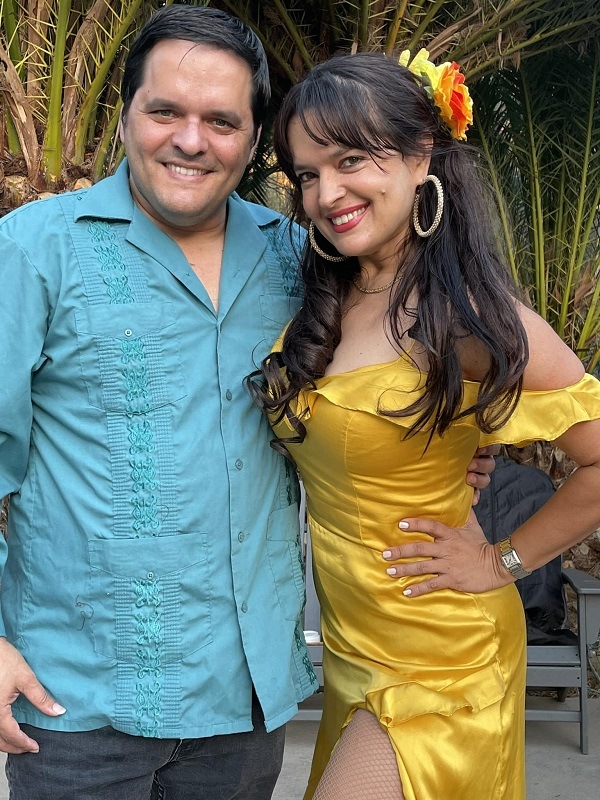
Yamila Guerra with his brother Yalil Guerra

At the School of Artistic Varieties, she developed in areas such as acting, singing, music and much more. All these disciplines mentioned above helped her a lot with her professional future.

Once in the United States, she studied at Berkley College of Music and took singing lessons in some genres such as blues, jazz, country, ballads, among others. At other schools, she studied art history, marketing, business, sales and other areas that have served her professionally speaking.

Life in Spain

Guerra tells us that she left Spain and moved to Miami because she could not tolerate its cold climate and wanted to be closer to her family in Cuba, but she has many good memories and is thankful to the European country, as it gave her the opportunity to be a TV host on channels such as TVE, Canal Satélite Digital, Antena 3 and Telecinco. Likewise, she was able to take her music to different stages and many parts of Spain. She felt that the Spanish people welcomed her art with open arms.

Once she moved to Miami, she worked on  ”Sábado Gigante” as an actress with Don Francisco, whom she thanks for the opportunity his team gave her.
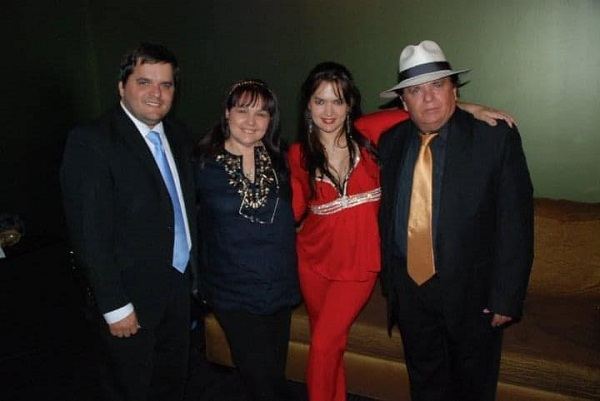
Yamila Guerra, His brother Yalil Guerra and their parents Rossel and Cary

How business, economics and legality have helped her in her career

One of the first pieces of advice Yamila gives to anyone who wants to work in entertainment in the United States is to master the English language. The artist defines herself as an eternal student because she has always liked to learn everything, especially languages. In fact, when she was in Spain, she paid for an English academy once a week to learn that language because she knew it would be very important in her career in terms of negotiation.

She also stresses that it is important to find out about legal and business issues to deal with clients and partners in the best possible way and avoid loopholes that naturally arise in the entertainment world. Yamila believes that it is very important to separate art from business and ”not to be trusted with money”. The Cuban highlights the importance of being pragmatic about making decisions and not allowing the artistic part to prevent people from making the right decisions at the level of business.

Social media

The talented performer considers that social networks are a fundamental part of her work and promotion, so she thinks it is important to have a presence on each and every one of them and design a strategy depending on the characteristics of each one. She considers that it is very important to post videos and photographs in order to promote her work, but also use her platforms to talk about other more personal topics such as family, beauty, nutrition, love and other things. That variety of facets is what attracts so many people to her content.
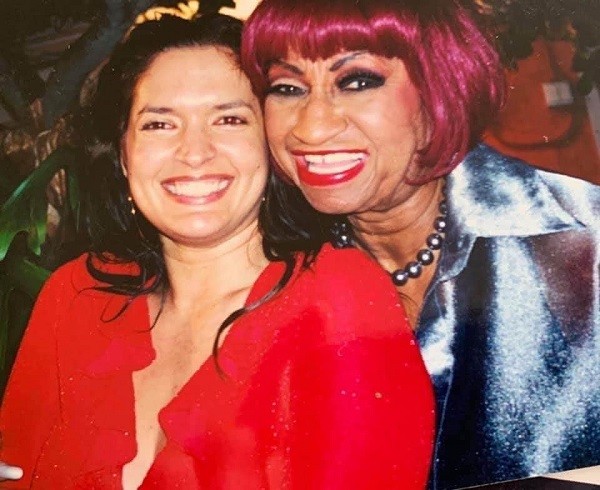
Yamila Guerra with Celia Cruz

As for her personal tastes, she confesses that she loves Tik Tok because she considers it a very organic and authentic platform. This is where she posts videos of herself acting and giving her opinion about all kinds of topics, something that gives her great exposure.

On this same issue, she stated that social networking has become essential to all types of professions and that we must all be present on them as much as possible because they have become part of our letter of introduction to others.

Tradicional Cubano

Yamila had been wanting to make an album fully dedicated to traditional Cuban music, which she considers to be the most flavorful, since it does not need a lot of instrumentation to feel it. It is very old, but it does not lose its flavor and its validity over the years. This is how her latest album ”Tradicional Cubano” came about.

This album includes composers such as Ignacio Piñeiro and Celina González. Guerra wanted to rescue this repertoire that she listened to when she was a child, since it always caught her attention and she was fascinated to be able to portray the Cuban culture and the lives of Cubans.

Read also: We interviewed IndiviDúo singers Tiffany Joy and Maqui Reyes

Producer, composer, and singer D’ William tells his story

Who is D’ William?

William Pagán Díaz, artistically known as D’ William, is a talented producer, composer and singer with extensive experience in various tropical genres. He was part of the Oro Negro Orchestra and the Tañón Band before starting his solo career. We were fortunate to talk to him and learn a little more about his history and career.

Producer, composer, and singer William Pagán Díaz

How his career began

The Oro Negro Orchestra represented his first musical experience and he was about 17 years old at the time. In fact, his mother had to sign a contract for him to be part of the group because he was underage. He stayed there for a year until he got asked to audition for the Tañón Band, a group that Olga Tañón was creating at the time.

After auditioning with 300 or 400 candidates, I was chosen as the last missing member for the group because it required four and there were only three. D’ William told us that he felt he had the world in his hands due to work with Olga Tañón, but unfortunately she decided to broke up the band because she had other plans. At that time, Pagan did not know what to do with his life because he thought he had already pursued the ultimate in his career, so he decided to turn his life around, enlist in the army and forget all music.

These years of his life contributed a lot to strengthen his discipline, but he also realized that he did not want to dedicate himself to military life forever. After he retired, he moved to Japan and lived there for about seven years, during that time he was introduced to Puerto Rican salsa thanks to some friends. He started singing salsa, but always saw music as sort of a hobby and not as something he wanted to do professionally.

He toured all over Japan with the Conquistando Orchestra and composed for other artists and various franchises, but nothing for himself. In 2010, he decided that he wanted to change that situation and recorded six salsa songs with the idea of moving to Puerto Rico thinking he was going to find the same country in the musical field. Then, all the songs recorded by him stayed on the hard drive of his computer and he could not do anything with them.

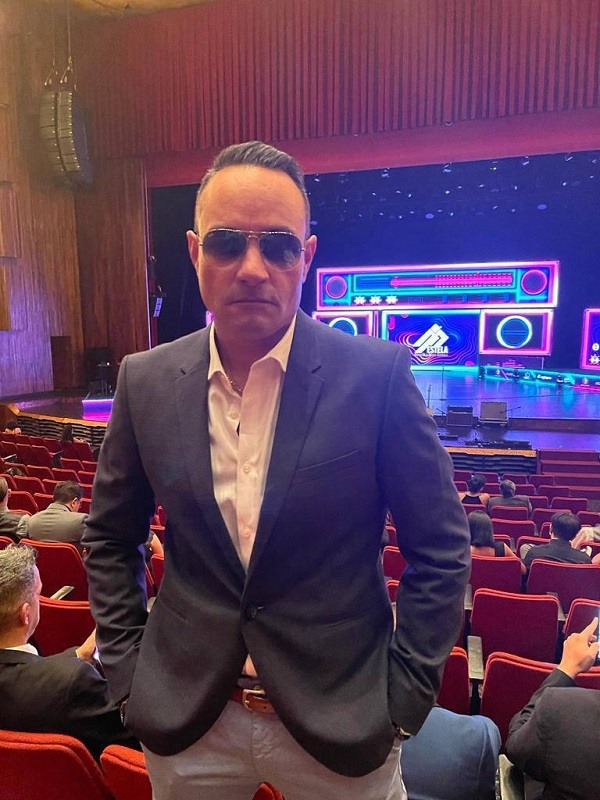
D' William at the Estela Awards
D’ William at the Estela Awards

Unable to get a job, he decides to use his veteran’s benefits to complete his education, which leads him to study criminal justice and law. In 2018, a job opportunity as a lawyer for the federal government in Washington DC arose, so he moves there and meets some people who reconnect him with music thanks to his career in Japan.

When the COVID-19 pandemic arrived, he finally made the decision to start his solo career and choose a stage name that referred to his real name, which led him to use D’ William. In September 2020, he recorded his first song titled “24 horas enteras” giving start to his solo career.

Why use merengue as a base for his music?

Although merengue has not had such a boom in recent years, D’ William is passionate about this genre that he never wanted to leave aside and even said that “a party without merengue is not a party”. The artist wanted to do something that included a tropical genre handled very well by him and he knows he was right about deciding on merengue, since he has observed a renaissance in the popularity of this set of rhythms with the help of artists such as Elvis Crespo, who was again seen in awards recently.

Music for millennial ears

D’ William points out that the most important elements of merengue will always be present in his work, but in his own words, ”the years and generations make the music evolve”. Since the performer did not want to stignate in the same thing, he tries to experiment with a new style of singing merengue and writes some of his lyrics with other genres in mind, such as dembow. He also incorporates kicks, snares, synthesizers and other sounds to reach millenial ears.

This combination of the above elements has made the reception to the artist’s music great.

D' William performing on stage
D’ William performing on stage

Experience in Guatemala

D’ William also told us about the Estela Awards in Guatemala, which he did not knew nothing about until he was invited to attend. Once there, he noticed the importance of these awards for Central America, as they recognize the talent of Guatemala, El Salvador, Costa Rica, Nicaragua, Mexico and many more.

He had the honor of being in its sixth edition and seeing how artists who did not have the opportunity to be in bigger events such as Billboard, Tu Música, Latin Grammy, among others, were awarded. Something very special about this year was the participation of a Puerto Rican delegation of for the first time in its history, in which D’ William was with several of his compatriots.

The reception of the public and press towards this group was great and they really enjoyed the show. They were so well received that they plan to return soon in December to continue delighting Guatemalans with their talent.

What did D’ William do during the pandemic?

D’ William told us that he did a lot of things for himself and other colleagues during the pandemic. He did a great collaboration on a track with Dominique Patrick Noel, a French percussionist with whom we had the pleasure to talk beforehand. They have done several songs together in which the Puerto Rican sings and does some arrangements with Noel.

He also sang with Eduardo Padua, who is a very famous Puerto Rican conguero in Virginia and Peruvian Andy Caseda.

D' William did interesting collaborations during the pandemic
D’ William did interesting collaborations during the pandemic

Read Also: The interesting story of French percussionist Dominique Patrick Noel

Shoemaker and shoe designer Carlo Farroni

We talked with shoemaker and shoe designer Carlo Farroni

In entertainment, singers, musicians and dancers are always the ones who show their faces to the audience, so they usually take the credit that comes from the final result, but there are many other professionals who also do their part so that a stage performance can be carried out, but unfortunately they do not get the recognition they deserve from the mass media.

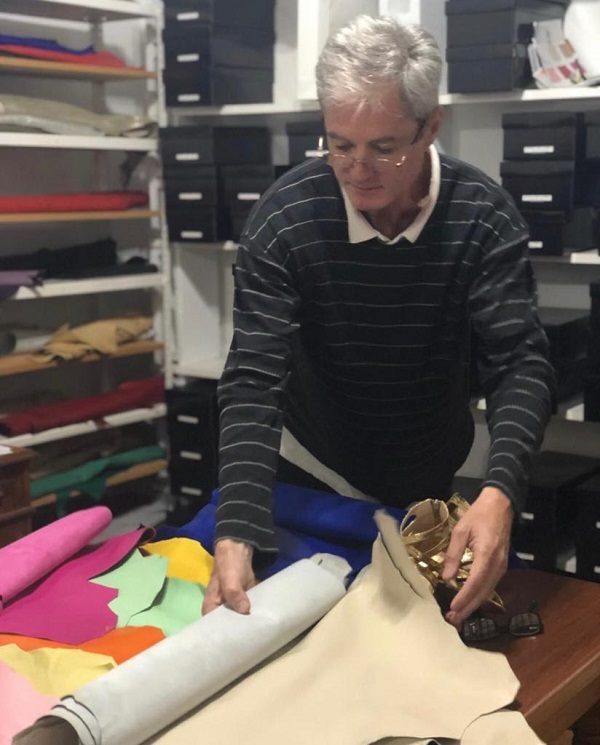
Carlo Farroni checking his materials for shoes

Some of those professionals are shoemakers and shoe modelists, who offer absolute comfort and elegance to artists during their shows, especially when it comes to dancers. Today, we are going to bring the story of Mr. Carlos Farroni, who kindly agreed to talk to us and told us how he began in this interesting and important occupation.

How did you start your career as a shoemaker and shoe designer? (título 3)

Carlos Farroni tells us that he started his apprenticeship at the age of 20, namely more than four decades ago. All this training took place at the shoemaking institute in Buenos Aires, Argentina, Farroni’s native country, but it was not the only place responsible for teaching this man everything he knows today. He also combined his studies with certain tasks in an artisan footwear workshop, something that would be a great support to the knowledge gained within the field of formal education.

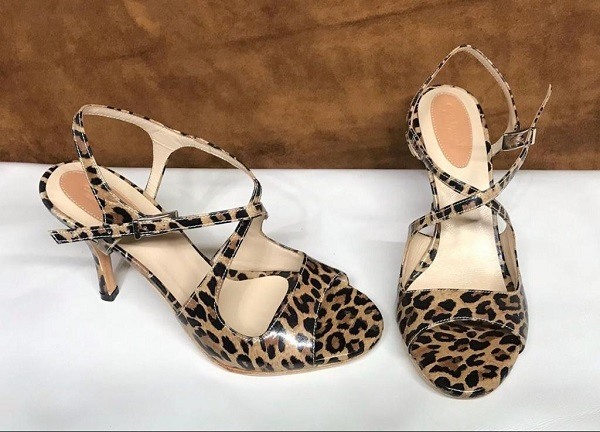
Dancing shoes for women made by Carlo Farroni

A few years later, he enbarked on a trip to Italy, where he worked in various areas of the creation of shoes, such as design and subsequent manufacturing, which was also extremely important for the Argentinean to continue learning how to navigate the world that has made him so well known.

Asked why he dedicates himself to the creation of special shoes to dance, he replied that he was carrying out exclusive footwear for theatre plays for many years, during this time his work started to become known in many parts of the world. After the quality of his products made news in many countries, many dancers started contacting Farroni to design exclusive shoes for them. It can be said that this is how he started the famous brand we know today.

More dancing shoes for women made by Carlo Farroni

How is your working methodology? (título3)

Regarding the production process, Mr. Farroni has revealed to us that everything is hand-made, which means that the tailoring, design, choice of materials, cutting, sewing, assembly and finished are handmade. In the same way, he ensures that the materials used for his products (most of the shoes are made of leather) are of excellent quality both in tanning and in thickness. This whole process is what makes the shoes look so professional and, at the same time, so comfortable and light as to allow the wearer to move freely.

It is also important to underline that the shoes handmade by Mr. Farroni’s brand can be used to dance every kind of musical genre without an problem. Obviously, tango dancers are the ones who most often seek out and promote these products, but there is no limit with regard to this detail. Anyone who wants the greatest elegance, sophistication and comfort at the moment of dance anything can contact Carlo Farroni, who will be happy to assist them and offer them the best of his work.

Dancing shoes for men made by Carlo Farroni

Read also: Omar Ledezma Jr talks about his experience at the Tempo Latino Festival

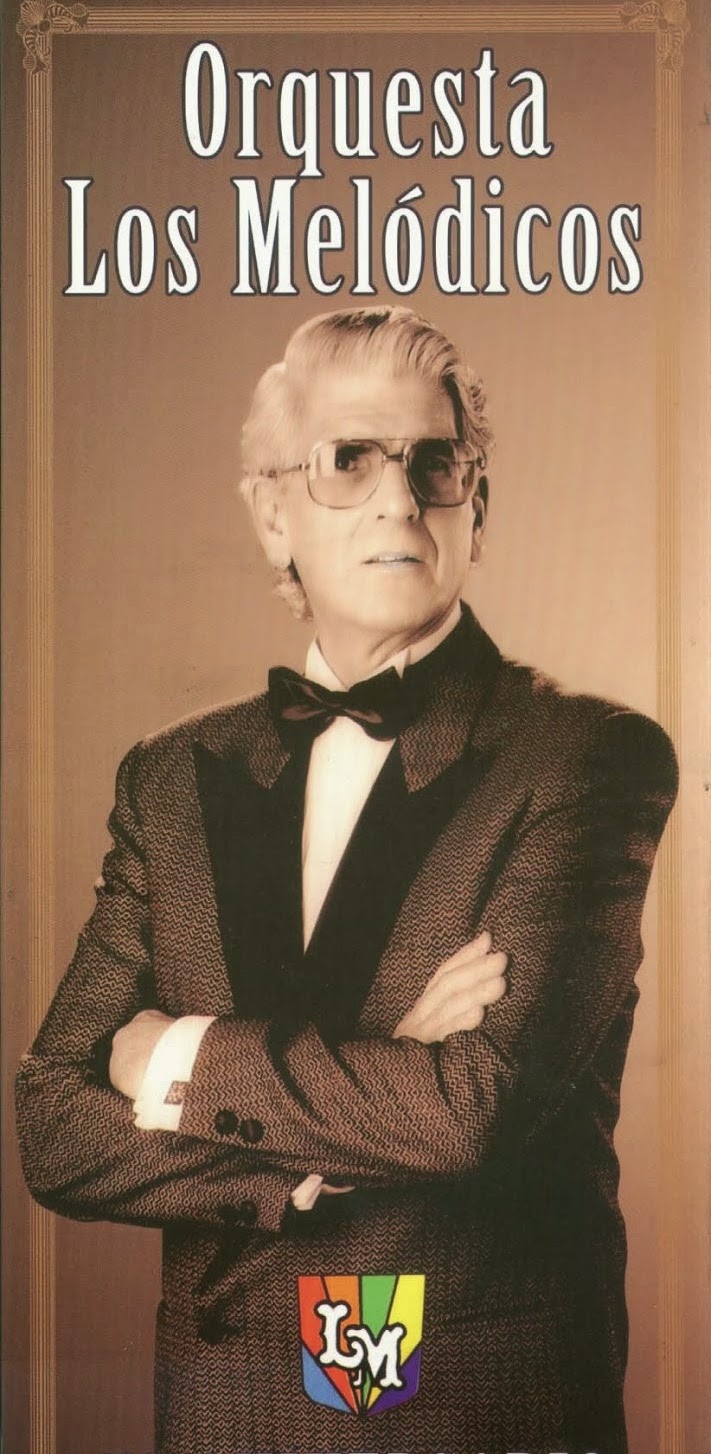
Renato Capriles, the man who imposed the rhythm with “Los Melodicos”

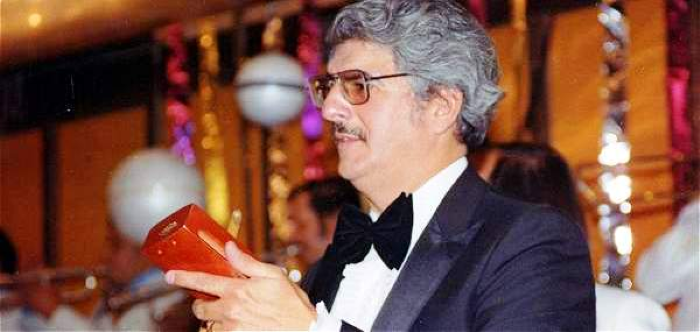
Dance bands have always added flavor and rhythm to parties in the Caribbean, but one of the greatest was born in Venezuela at the hands of Renato Capriles, “Los Melodicos”. An entrepreneur with an interesting vision of music, who knew how to adapt to what the public wanted, throughout the decades that accompanied his great project. In the following lines, we will tell you about his life and what he thought of his experiences.

Early years of Renato Capriles

Contrary to what many believe Renato was not born in Caracas, but in a small town called San Esteban located in Puerto Cabello, Carabobo state on December 28, 1931. In his own words:

“It was a town where only six or seven families lived. The rest of the inhabitants were people who served in those houses. San Esteban is about an hour from Puerto Cabello and it is still a very beautiful area.”

His arrival in Caracas is due to the death of his father, at that time his older brother, Miguel Ángel, decided to move the family to the capital and develop the businesses for which the Capriles family would later be well known in Venezuela. In addition, that is why it is known that he was born into a wealthy family, so business is something that he carried in his blood. They were also a large family, Renato being the 13th sibling of 14, which is why he always considered it his lucky number.

Arriving in Caracas, they settled in La Pastora, where the Capriles spent their childhood and adolescence. Renato himself even commented that he traveled those streets with a velocipede that was given to him for his birthday. During his adolescence he began to be closer to the dance bands of the time, although music always accompanied him, showing an innate ear since he was a child. But it was as a teenager that he went to parties in the main  square and listened to the radio:

“Already a little older – 16, 17 or 18 years old – the programs I listened to were “A Gozar Muchachos”, Billo’s program, of course, and the program that Luís Alfonso Larraín had. Those were the two great orchestras…”

At that time he also began his professional stage, first as an office boy at Inex S.A., owned by the German businessman Gustavo Zingg. Thanks to his friendliness and knowing how to treat people, he met Zingg and his children, who, seeing his hard work, promoted him to store salesman and then itinerant salesman aboard a Land Rover, with which he toured much of the Venezuelan territory selling everything, including power plants.

Then he decided to follow his family’s vein and set up his own business in Valencia, a clothing store that he bought from his brother-in-law who was a travel agent for two clothing factories. However, this only lasted 2 years, this being the only business that Renato failed. His mother asked his brother Miguel Ángel to take him to the company, known at that time as Cadena Capriles, which little by little became a publishing conglomerate.

Renato came to the organization and formed the company’s Public Relations department from scratch, something he was always very proud of and that he kept reminding in every interview. In fact, that vein of public relations is what led him to achieve that impressive success with “Los Melodicos”:

“I think I was born with that. I always make the comment that more than a musician I feel like a born relationist. All my life I have done it and I have applied it…”

The Birth of “Los Melodicos”

Although it may seem like a joke due to the supposed enmity between the two, it was Billo Frómeta’s orchestra that prompted Renato to form “Los Melodicos”. The young Capriles spent his adolescence listening to Billo’s Caracas Boys on his radio program “A Gozar Muchachos”, he also listened to other orchestras that competed with Billo’s for the popularity of Venezuelans and neighboring countries.

In addition to that, Renato Capriles was always linked in one way or another to music, not only did he have rhythm and an innate ear, but also his businessman’s mind led him to give his own orchestra a different organization. In fact, at the time that the Capriles family lived in La Castellana, he and his younger brother Juan Felipe had a small band of 5 musicians. Therefore, Renato already had experience in the formation of bands and orchestras.

In 1958 Renato finally decided to follow his most longed-for dream of having his own orchestra and taking advantage of the problem of the veto given to maestro Billo, Renato looked for him to help him with the composition and arrangements. As he commented in the interview he gave to Alfredo Churión D. and his space “Aquí están todavía”:

“There is a bit of fantasy about the creation of my orchestra. I was a big fan of Billo and always wanted to have an orchestra that sounded like his. I’ve always said it!… (Billo) he had opened a business in Sabana Grande which he baptized El Rincón de Billo in where he played the piano for the large number of friends who visited him there. And there I introduced myself to him one day with Tere, my first wife, to give an outlet for the concern I had had since I was a boy, which was to have an orchestra.

And my words were: ‘Billo, the reason for my visit is not to come and hear you play the piano or have drinks at the bar, but rather to propose that you make arrangements for an orchestra that I’m going to found and I’ll give you 50% of profits’… All in all, after seven months my orchestra appeared with its arrangements. He could not appear anywhere with them because no musician could get close to Billo at that time under penalty of being banned for life too.”

“Los Melodicos” made their debut in a television program that was sponsored by Cadena Capriles, it was called Su Revista Musical. Renato was the producer of the show and there the animator Henry Altuve made his debut, who had only worked on the radio until that moment. The orchestra’s first LP came with arrangements and a composition by Billo. So it had its sound but at the same time it didn’t:

“He arranged very lively with a very commercial sound, but it didn’t sound like him. On my orchestra’s first LP, although it’s his arrangement, it’s not his sound.”

Another important thing to highlight was the way of working and how Renato organized the orchestra, along with his innovative system of paying the musicians:

“I created a form of payment for musicians that did not exist at the time and that caught Billo’s attention when he reappeared with his orchestra in 1960. I invented the rates for musicians and I can prove it to you because I have the contracts saved. A first high earned eight hundred bolivars a month and a good second tenor earned six hundred. It was the first orchestra that earned salaries. It wasn’t like Billo’s where each musician earned a percentage. I created the orchestra as a company. They had, and still have, Social Security, Savings Bank, interest-free loans, etc.”

Renato’s golden age with “Los Melodicos”

The “Los Melodicos” orchestra has been faithful to the motto that has accompanied it throughout its extensive musical career: “The orchestra that imposes rhythm in Venezuela”. They began with the singers Víctor Piñero “Rey del Merecumbé” and Germán Vergara, but they were innovative by having a woman in the ranks of an orchestra for the first time: Emilita Dago.

Since then, singers and musicians like Rafa Pérez, Manolo Monterrey called the “Ciclón Antillano”, Niro Keller, Cherry Navarro, Cheo García, Roberto Antonio and Miguel Moly have passed through its ranks over the decades; while among the girls were Norma López, Diveana, Floriana and Liz.

What differentiated “Los Melodicos” from other orchestras in those decades was the innovation that Renato put into it. One of those great examples is presenting varied rhythms outside of the Latin dance rhythm. They came to play the twist with the singer Teresita Martí, which brought them great problems since it was considered “… a vulgar and ordinary rhythm.” They also came to play songs with touches of rock, but their most significant sound is techno with songs like “Papachongo” and “Que Rico”, where Diveana managed to capture more than one heart.

During all the years that Renato was in charge of the orchestra, there were many rumors of romantic love affairs with his singers, to which he himself replied:

“17 female figures have passed through my orchestra and I have had romantic relationships with 7 of them. Some are stormy and others very beautiful. People think that I’ve gotten involved with all of them, but that’s not the case. Raise fame and go to sleep.”

Renato’s rhythm went off before his time

Renato Capriles left us on the morning of July 8, 2014, he had already been hospitalized for days in a clinic in Caracas, all due to pneumonia. Currently, the direction of the orchestra is led by Iliana Capriles, daughter of Renato, who has been working hard for 11 years to continue contributing to the success of the orchestra as director. But all her life she has been in one way or another linked to the orchestra, and like a good Capriles she has gone through all the positions of the company that her father founded.

“For 30 years I have been part of the musical organization Renato Capriles, I have been the right hand of my father, his producer, promoter, sales, among others, until 2014 when I had to assume it, and it has been an enormous responsibility, and here we are paying tribute, honor to whom honor is due, and maintaining the legacy of great importance in Latin music”.

“Los Melodicos” are a key part of the musical history of Venezuela, with more than 100 productions under their authorship, and it cannot be forgotten that their professional enmity with Billo’s Caracas Boys is what kept the panorama of dance bands interesting. As they have always shown, they keep up to date with new trends and social networks are no exception, so you can find them everywhere like @orquesta_losmelodicos or La Orquesta Los Melodicos, because now they are “the orchestra that imposes the rhythm” in the digital world.

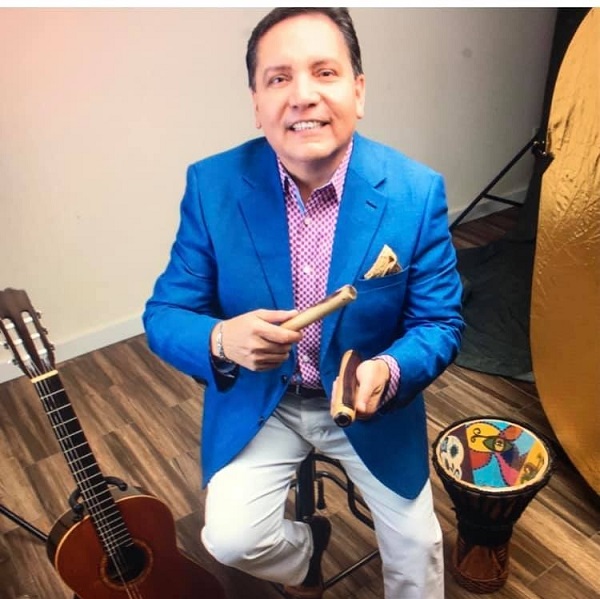
Marco Bermúdez extraordinary Musician, Percussionist, Singer, Composer

On october 19, 1961 in Portoviejo, Ecuador, Marco Bermudez Brito was born. Extraordinary Musician, Percussionist, Singer, Composer.

Nobody is a prophet in his own land. At the age of 23 he traveled to the United States as a singer. And in 2004, being a member of the Spanish Harlem Orchestra (SHO), he won the Grammy in the category Best Salsa Album for the album Across 110th street.

On a day like today, October 20, Marco Bermudez was born in Portoviejo, Ecuador. He is an excellent performer, composer and studio musician in all styles of Latin music.

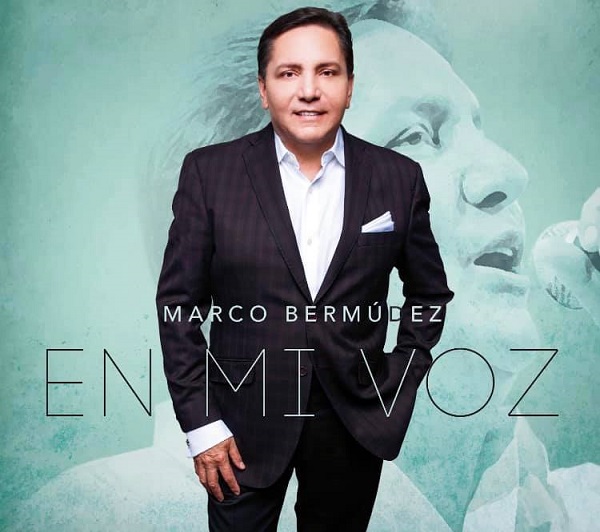
Marco Bermúdez
Marco Bermúdez

He was born into a family with a rich musical heritage and has resided in New York for the past thirty-four years. Marco has toured the world with Latin music greats: Tito Puente, Celia Cruz, Cheo Feliciano, Oscar D’ Leon, Tito Nieves, Domingo Quiñones, Jose Alberto and all the artists on the RMM Records label.

Marco’s discography includes: RMM All Stars 10th Anniversary CD/DVD Live at the Continental Arena New Jersey; Recorded a Selena (RMM) and Tropical Tribute to the Beatles CD/DVD recorded live at Radio City Music Hall in New York.

Marco is currently one of the singers of the Spanish Harlem Orchestra. As a performer and composer, Bermudez has collaborated in the record productions of the SHO, writing the lyrics of the songs Son de Corazón, Regalo de Dios, Qué Bonito, La Fiesta began.

(One more year of life for this Ecuadorian performer, composer and musician who has performed in different variations of Latin music.

Marco Berudesz en Mi Voz

Experiences with Isidro Infante y La Élite, Conjunto Clásico, Tito Puente, Celia Cruz, Cheo Feliciano, Oscar D’León, Tito Nieves, Domingo Quiñones, José Alberto “El canario”, and Ralph Mercado’s RMM Records family in which he participated in productions such as “RMM All Stars 10th Anniversary – Live in Continental Arena of New Jersey”, “Recorded a Selena”, “Recorded a Selena”, “Recorded a Selena”, “Recorded a Selena”, “Recorded a Selena”, “Recorded a Selena”, “Recorded a Selena”, “Recorded a Selena”, and “Recorded a Selena”; the album “Recorded a Selena” (RMM) and “Tropical Tribute to the Beatles”, a CD/DVD recorded live at Radio City Music Hall in New York.

The pinnacle of his career came when he became part of the Spanish Harlem Orchestra’s line-up of singers, collaborating in different record productions and strengthening his facet as a composer through titles such as “Son de corazón”, “Qué bonito”, “Regalo de Dios” and “La fiesta empezó”.

He has also been part of The Mambo Legends project sharing microphones with Frankie Vázquez and Jorge Maldonado.His story is told to us when he was in Ecuador on vacation with his wife.

“From a very young age, I was always surrounded by music,” she says proudly. He refers to his parents, siblings and most of all to his uncle, the great singer Eduardo Brito.

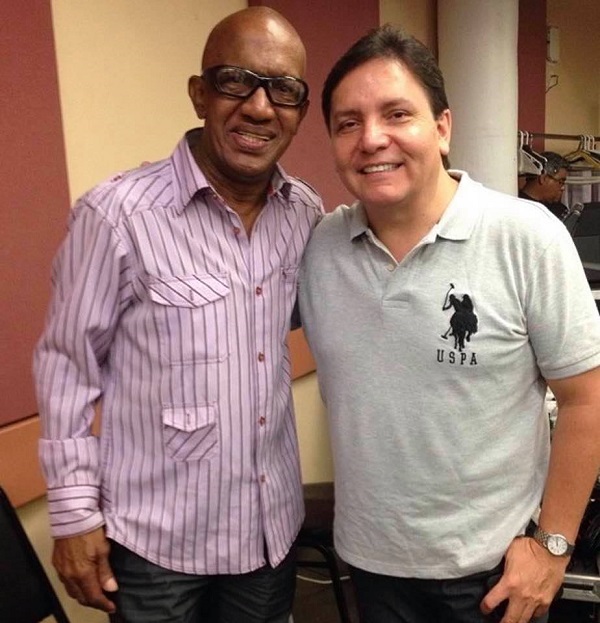
Eddie Palmieri y Marco Bermudez

Marco, at the age of 9, together with his brother Eduardo formed the duo Hermanos Bermúdez Brito, being the first to record the pasillo Romance de la tejedora manabita, lyrics by Paco del Casty and music by Filemón Macías, Marco’s uncle: “Con horma de esperanzas/y encajes de clavellina/ va tejiendo su sombrero/ la manabita más linda” (With a last of hopes/and lace of carnation/ she weaves her hat/ the prettiest manabita).

In the early eighties, brothers Mariano and Venancio Larrea invited him to join the Marfil group, from Guayaquil. That was when the group turned to salsa music, which was just becoming popular in these parts.

But his life and stage changed in 1984, when he and his brother joined the Manabita orchestra Los Profetas, which would perform in Los Angeles, Miami and Chicago.

With the illusion of succeeding in the north, Bermúdez stayed and formed El Combo de Nueva York, which was the staff orchestra of a chain of nightclubs in Queens.

Roberto Roena y Marco Bermudez

At that time, Marco was concerned about his musical training, besides being a singer and composer, he was also a percussionist. His entry into the big leagues of salsa came when he was part of La Élite, led by maestro Isidro Infante, for 6 years.

There he achieved fame as the interpreter of the songs Santo, Militar and Montuno and for the album Tributo Tropical a Los Beatles.

He was also part of La Charanga de Johnny Almendra and Los Jóvenes del Barrio, and was one of the singers of the legendary Conjunto Clásico orchestra. “Even when there is a tour they call me because I know the repertoire and I know the routine”.

At the beginning of 2003 he made a great leap when he joined the SHO, an orchestra that besides winning the Grammy and achieving nominations for two of its albums, is considered “the best salsa orchestra in the world”, according to the Puerto Rican critic Jaime Torres Torres, who in referring to Bermúdez affirms: “He is the only recognized Ecuadorian salsa singer who dominates the difficult art of soneo and clave”.

Spanish Harlem Orchestra

About the renowned SHO, Bermúdez says that in reality this orchestra “is the sound of the Harlem neighborhood, where urban salsa was born.

We are inspired by masters like Tito Puente and Mario Bauza, who left us that legacy”. And although every salsa singer is mistakenly called a sonero, very few are.

The soneo is an improvisation by the singer when the percussionist solos on the drums, he explains.

The next SHO album will feature three songs by Bermúdez: Son de corazón, Regalo de Dios and La fiesta empezó. “I like to write everything, romantic, jocular, nature and rumba songs,” says Marco who is currently selecting songs for his solo album which he hopes will be released this year. It will include a recording with Las Leyendas del Mambo, Tito Puente’s legendary orchestra.

These are his plans. His dream: “to come to Ecuador as a soloist or with SHO because I have had recognition abroad, but it must be nice to be recognized in your country”. Although they say that no one is a prophet in his own land, Bermúdez, the sonero, will surely be.

At the age of 9, together with his brother Eduardo, he formed the duo Hermanos Bermúdez Brito, being the first to record the pasillo Romance de la tejedora manabita.

In the early eighties, the brothers Mariano and Venancio Larrea invited him to join the Marfil group, from Guayaquil.

In 1984, together with his brother, he joined the Manabita orchestra Los Profetas, which would perform in the United States. He stayed in New York and formed El Combo de Nueva York, which was the staff orchestra of a chain of nightclubs in Queens.

Later he was part of La Élite, led by maestro Isidro Infante, for 6 years.

He was also part of La Charanga de Johnny Almendra and Los Jóvenes del Barrio, and was one of the singers of the Conjunto Clásico orchestra.

At the beginning of 2003 he joined the “Spanish Harlem Orquestra” of Maestro Oscar Hernandez. He has collaborated, among others, with the band of “Mister Moña” Jimmy Bosch and “La Mambo Legends.

You can read: Héctor “Bomberito” Zarzuela Calidad y Tuning en la Maquinaria Fania All-Star

Marco Bermudez

  • « Go to Previous Page
  • Page 1
  • Interim pages omitted …
  • Page 132
  • Page 133
  • Page 134
  • Page 135
  • Page 136
  • Interim pages omitted …
  • Page 186
  • Go to Next Page »

International Salsa Magazine (ISM) is a monthly publication about Salsa activities around the world, that has been publishing since 2007. It is a world network of volunteers coordinated by ISM Magazine. We are working to strengthen all the events by working together.