• Skip to primary navigation
  • Skip to main content

International Salsa Magazine

  • HOME
  • Previous editions
    • 2026
      • ISM / April 2026
      • ISM / March 2026
      • ISM / February 2026
      • ISM / January 2026
    • 2025
      • ISM / December 2025
      • ISM / November 2025
      • ISM / October 2025
      • ISM / September 2025
      • ISM / August 2025
      • ISM / July 2025
      • ISM / June 2025
      • ISM / May2025
      • ISM / April 2025
      • ISM / March 2025
      • ISM / February 2025
      • ISM / January 2025
    • 2024
      • ISM / December 2024
      • ISM / November 2024
      • ISM / October 2024
      • ISM / September 2024
      • ISM / August 2024
      • ISM / July 2024
      • ISM / June 2024
      • ISM / May 2024
      • ISM / April 2024
      • ISM / March 2024
      • ISM / February 2024
      • ISM / January 2024
    • 2023
      • ISM / December 2023
      • ISM / November 2023
      • ISM / October 2023
      • ISM – September 2023
      • ISM – August 2023
      • ISM July 2023
      • ISM Edition June 2023
      • ISM – May 2023
      • ISM April 2023
      • ISM March 2023
      • ISM February 2023
      • ISM January 2023
    • 2022
      • ISM December 2022
      • ISM November 2022
      • ISM October 2022
      • ISM September 2022
      • ISM August 2022
      • ISM July 2022
      • ISM June 2022
      • ISM May 2022
      • ISM February 2022
      • ISM January 2022
    • 2021
      • ISM December 2021
      • ISM November 2021
      • ISM October – 2021
      • ISM September 2021
      • ISM August 2021
      • ISM July 2021
      • ISM May 2021
      • ISM April 2021
      • ISM June 2021
      • ISM March 2021
      • ISM February 2021
      • ISM January 2021
    • 2020
      • ISM December 2020
      • ISM November 2020
      • ISM October 2020
      • ISM September 2020
      • ISM August 2020
      • ISM July 2020
      • ISM June 2020
      • ISM May 2020
      • ISM April 2020
      • ISM March 2020
      • ISM February 2020
      • ISM January 2020
    • 2019
      • ISM December 2019
      • ISM November 2019
      • ISM October 2019
      • ISM Septembre 2019
      • ISM August 2019
      • ISM July 2019
      • ISM June 2019
    • 2016
      • ISM December 2016
  • Spanish
  • Download Salsa App
    • Android
    • Apple

Search Results for: World Salsa

Tribute to Eddie López for his career

How were his beginnings?

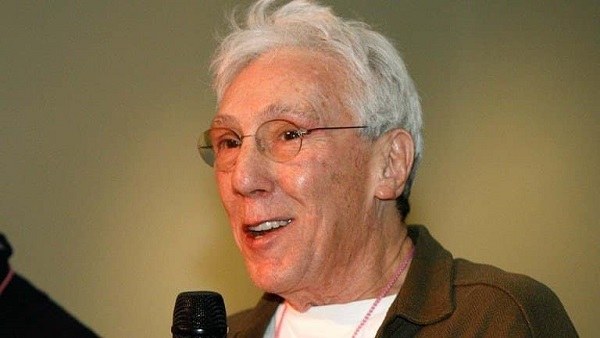
On January 10, 2023, the death of Eddie Lopez has been made known, who has been one of the greatest pillars of the radio station KXLU since 1976 when he started his career as a DJ. His arrival came during the third anniversary of the famous program ”Alma Del Barrio”, being a fundamental piece in the huge success the show had during several decades and making it remain part of the programming of the already mentioned radio station.
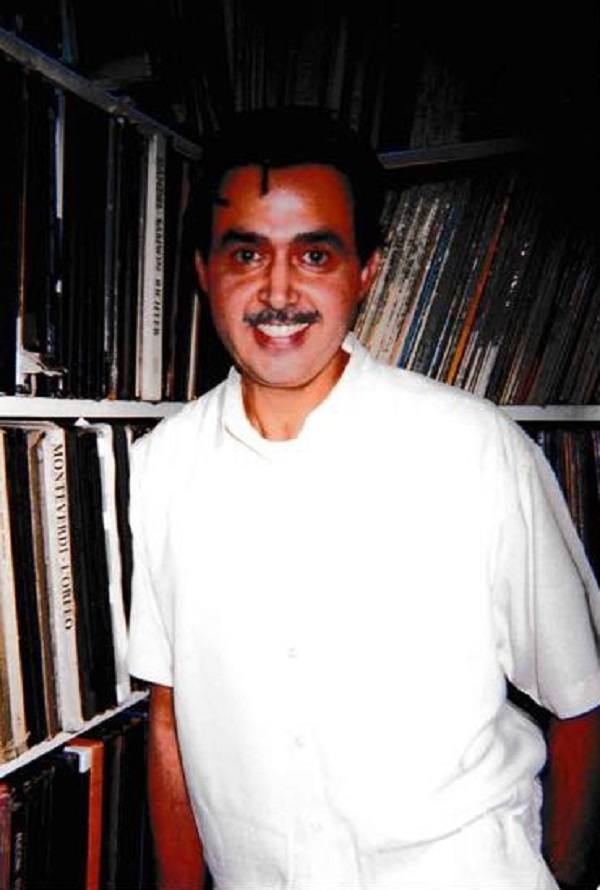
Host of the radio show ''Alma Del Barrio'' Eddie López
Host of the radio show ”Alma Del Barrio” Eddie López

A little bit of his life

Eddie Lopez was originally from Los Angeles and spent much of his childhood in his father’s photography studio, which may have been one of his greatest inspirations to dedicate his life to the arts in adulthood. After graduating from Cathedra High School, he was admitted to Pepperdine University, but switched to Loyola Marymount University, from where he finally graduated in 1978.

Although much of his professional career was spent at KVEA Channel 52 Telemundo, he spent 46 years working at ”Alma Del Barrio” and streaming the best Afro-Cuban music through the waves of KXLU from 2pm to 6pm. During all these years, Eddie always said that he wanted ”Alma Del Barrio” to be as professional as possible and encouraged all his colleagues to always be better every day to give their best to the audience. He also said that this show was not only a work team with common interests, but a family in which everyone supported each other to achieve their goals.

All those involved in his life who came to know him say that he was a man completely dedicated to his family who deeply loved his wife Vanessa and his daughter Nina, who were always his greatest motivation to get ahead day by day. He was loved by all his family and friends, who are very sorry for this sad loss in the Latino cultural world of Los Angeles and the United States in general.
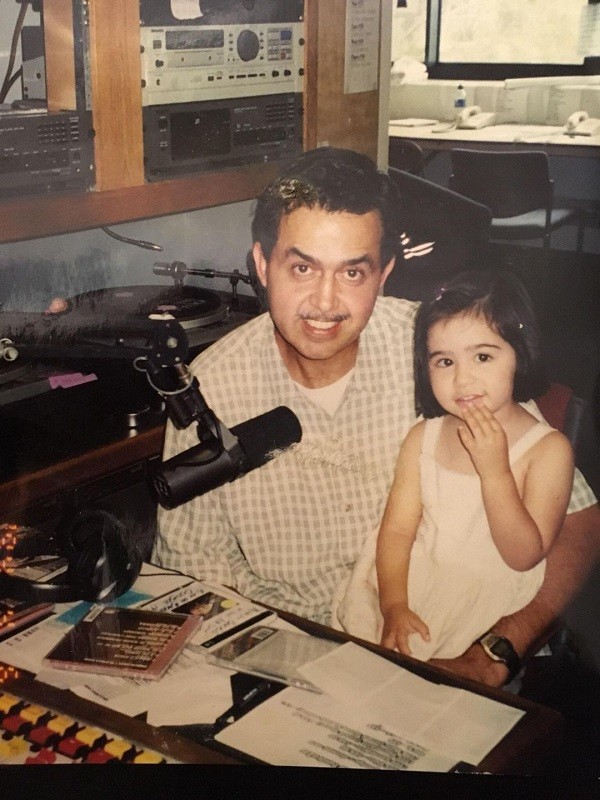
Eddie López with his daughter Nina

Reactions to his passing

In the social networks of ”Alma Del Barrio”, the sorrow of the team over the physical disappearance of the host can be clearly seen. On the Facebook account of the show, there are several messages referring to all that Eddie achieved during his professional life and all that he contributed to the show ”Alma Del Barrio” and to the radio station KXLU. These comments are accompanied by photographs in which Lopez can be seen carrying out his work with the enthusiasm that characterized him in those periods when he practiced the profession he so loved, which was communication.

One of those who mourned the loss of the broadcaster was the host of the program ADB, Alan Geik, who had been his personal friend for decades thanks to the passion for the media they both shared. It all started when Eddie hired Alan to host a evening show called ”Latin Dimensions” at a station that works in a small classroom.

Geik did not have any plans to become a broadcaster at the time, but Lopez convinced him by telling him it could be a great adventure and a learning experience for himself. When he accepted, he never thought that the programme presented by him would multiply the number of audience several times over thanks to the popularity he was gradually acquiring. Not to mention that the station where the program was aired moved to better facilities and became a radio power.

The host ends his note of mourning by expressing that he is proud to have been such a good friend of Eddie and all that they achieved together thanks to the professional team they formed during such a long time.
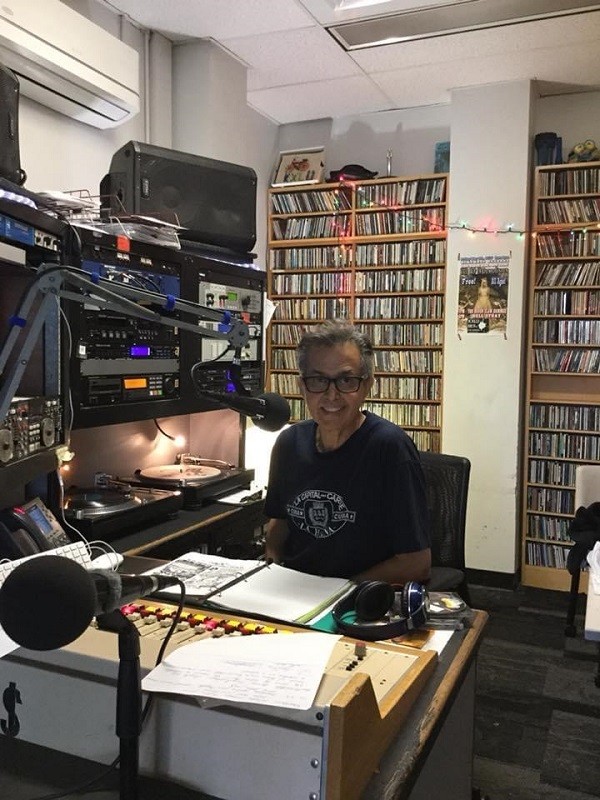
Eddie López working at the radio station

Read also: ”Salsa Con Sabor’’ and its contribution to salsa music

Almost two years of Leon Gast’s departure to another plane

Who was Laon Gast?

On March 8, 2021, we received the deplorable news of Leon Gast‘s death, who was a very notable American film director, producer, cinematographer and editor who was the director of the film based on the Fania All Stars, ”Our Latin Thing’‘. The unfortunate demise occurred when the director was 85 years old and the news was reported by friend and colleague Barbara Kopple.

Given the important contributions made by Mr. Cast offered to Latin music during his lifetime, we did not want to waste this opportunity to pay homage to his work through this material. Next, we will talk a little about his life and everything achieved both porfessionally and personally.

Leon Gast was the creator of ''Our Latin Thing''
Leon Gast was the creator of ”Our Latin Thing”

A little bit of his beginnings

Leon Jacques Gast was born on March 30, 1936 in New Jersey, studied at Henry Snyder High School and graduated with a degree in Dramatic Arts at Columbia University. During tha time of his life, he worked alongside writer and broadcaster Lowell Thomas in the television series ”High Adventure”, which meant one of his first triumphs at a professional level, but it definitely would not be the only one.

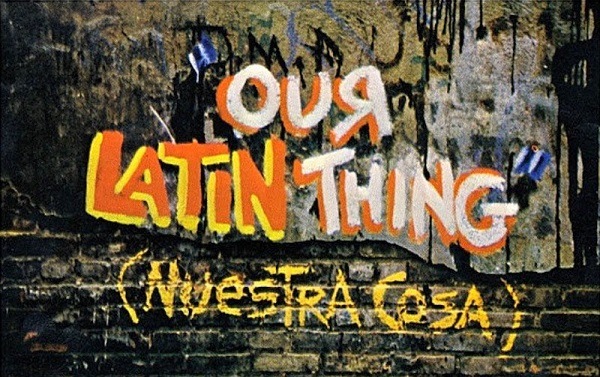
Another reason why Gast began to be so well known was thanks to his talent for photography, which would begin to be recognized in a number of famous magazines and print media such as Vogue and Esquire. In that regard, the producer began to create covers for the famous Fania All-Stars, which led him to create ”Nuestra cosa latina”. This documentary has been one of the greatest film projects that the filmmaker has carried out and many consider it a very important contribution to the consolidation of salsa as the cultural movement that it would later become.

Many people consider that Gast contributed a lot to the salsa genre as a movement

Our Latin Thing

”Our Latin Thing” is a documentary film that consisted in portraying how the Latin music scene in New York City was like in the 1970s. The material basically focuses on the concert made by the Fania All Stars at the Cheetah nightclub in August 1971. For many, this event marked the birth of the salsa genre as a movement.

The concert attracted two thousand people and resulted in the albums ”Live At The Cheetah Volume 1” and ”Live At The Cheetah Volume 2”, which were very well received by fans of that time. The event was the consecration of the Fania All Stars as one of the most famous musical groups in Latin music history.

In addition to that, Cast accompanied the famous orchestra and many other Latin music artists to Africa in order to record each and every one of their performances during the Zaire 74 Festival.

The film has been taken by many institutions as a reference to continue promoting salsa and music in general from its release to today.

Artwork for ''Our Latin Thing''
Artwork for ”Our Latin Thing”

Other hits and details about Leon Gast’s life

Another of the biggest successes of this famous filmmaker was ”When We Were Kings”, which was a film released in 1996 and focused on important events for the United States such as Waltergate, the resignation of President Nixon, activism against racism, sports, mythical boxing matches and much more.

Another important project conducted by him was ”Manny”, which was focused on world famous boxing champion Manny Pacquiao’s life and his most important moments.

Read also: Salsa singer Angel Rumba and what he has to say

Europe – February 2023

Goodbye to El Canario de Carolina

Music in mourning

The world of music, more specifically salsa, has lost one of its greatest stars later this year 2022 and is none other than the unforgettable Lalo Rodriguez, who leaves a huge void after his unfortunate departure. In view of the unfortunate things that happened to the humanity of the great artist, we want to take this opportunity to remember the most important of his musical work and the importance of the legacy left by him.

A little of his biography

Ubaldo Rodríguez Santos, better known as Lalo Rodríguez, was born in Río Piedras, Puerto Rico on May 16, 1958 in the family formed by his parents José Rodríguez and Magdalena Santos. As a child, he soon started singing in music festivals and radio and television shows, in which he already showed the great talent that would carry him for the rest of his life. So much so that, a few years later, he was already part of his first musical group, the Tempo Moderno Orchestra.

Lalo Rodríguez was found dead on December the 13th

When he was 15 years old, he received the necessary support to move to New York City, a place where some of the biggest salsa stars of the time were located. While there, he joined Eddie Palmieri‘s band and provided vocals for several songs on the album ”Sun of Latin Music”, which became the first salsa album to win a Grammy. The following year, the artists would team up again to create ”Unfinished masterpiece”, which got a nomination for the aforementioned awards. At that time, it was Palmieri himself who named him ”Lalo” for the first time.

After walking away from Palmieri, he participated in the Machito Grillo’s orchestra, with whom he recorded the album ”Fireworks”. Incredibly, this album also got a Grammy nomination, which represented fabulous numbers for Lalo. Upon coming of age, he already had three albums, a Grammy won and two Grammy nominations.

1980s

During these years, Lalo recorded a significant amount of albums and was beginning to be considered as one of the precursors of romantic and erotic salsa, a subgenre that was beginning to gain much more notoriety in those years. One of the biggest hits of his entire career was the song ”Ven devórame otra vez”, which won him a Lo Nuestro Award in the category of Tropical Song Of The Year and reached very good positions in the Latin Music charts.

Lalo Rodríguez and Eddie Palmieri

1990s

In the 1990s, he continued working hard in his career, resulting in the albums ”Nací para cantar” and ”Estoy aquí”, with which he won gold and platinum records due to the large number of copies sold. These were the last record productions of the artist to be released to the public.

Recent years

Lalo never stopped being active on stages of all types, both in his native Puerto Rico and in other countries around the world. In 2020, it was announced that he was going to release a new album and already had a song selection to include in the material, although no further details had been offered.

Unfortunately, fate would not allow him to go forward with his plans and he was found dead near a basketball court in Carolina, Puerto Rico. One of the first relatives to make an appearance was his road manager.

Lalo Rodríguez and Johnny Cruz

After knowing that Lalo was found dead, his road manager Francisco Pérez, who had been working with the artist for several years. He indicated that he had communicated with him that same day and they had agreed to meet, but instead, he received the unfortunate news about his death.

During the following days, many artists expressed their sorrow for the departure of the singer and highlighted his great talent in life, such as Víctor Manuelle, Elvis Crespo, Arnaldo Vallellanes, among many others.

Read also: This is the story of Percussionist Joe González

        By Johnny Cruz, ISM Correspondents, New York, New York City

Miguel “Angá” Díaz the percussionist who made his name in the ranks of Cuba’s legendary and enigmatic Irakere group

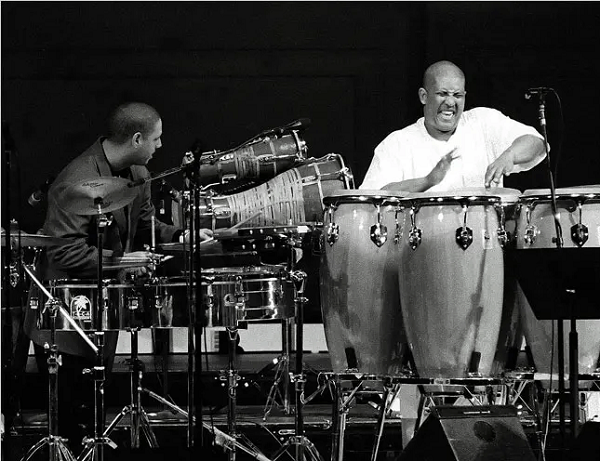
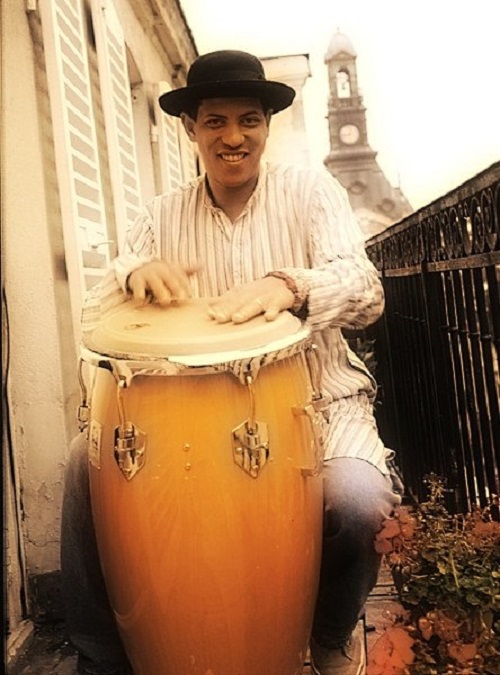
Miguel “Angá” Díaz (1961-2006) was a valuable and prolific Cuban percussionist. With his explosive solos and the creation of five conga toques, “Angá” was widely acclaimed as one of the world’s great congueros.

One of the mainstays of Afro-Cuban rhythm in recent times, Angá played with a multitude of jazz stars, from Chucho Valdés, Chick Corea or Steve Coleman, to Roy Hargrove, Minino Garay, Chano Domínguez and Herbie Hancock, among others.

The claim that he was one of the best percussionists in the world is backed up by the Grammy awards he won, his participation in such important projects as Buena Vista Social Club and the Afro-Cuban All Stars, and his status as sideman of geniuses like Tito Puente, Herbie Hancock, Carlos Santana or Danilo Pérez, as well as his membership in legendary groups like Irakere, according to Más i Más, the organizer of his concerts in Barcelona.

 Miguel "Angá" Díaz el percusionista que se dio a conocer en las filas del legendario y enigmático grupo Irakere de Cuba
 Miguel “Angá” Díaz el percusionista que se dio a conocer en las filas del legendario y enigmático grupo Irakere de Cuba

Father of three daughters – the eldest living in Cuba and the two younger ones in Paris – Angá never stopped searching for new forms of musical expression, experimenting with the fusion of different styles, such as jazz, African sounds, rock and hip-hop.

He was committed to the development of the conga, breaking the traditional barriers of percussion, to introduce them into classic Latin rhythms while preserving their distinctly Cuban roots.

He played with several Cuban artists, including Irakere, Afro-Cuban All Stars, Buena Vista Social Club, Omar Sosa, Omara Portuondo, Tata Güines, Rubén González and Orishas.

Miguel “Angá” Díaz
Miguel “Angá” Díaz

At that time he recorded and toured frequently with international musicians such as Steve Coleman, Roy Hargrove, Baba Sissoko, Ry Cooder, Pascal Coulon, Mezzadri Malik, Montgomery Buddy, Pascal Coulon and John Patitucci. Angá’s musical journey was a personal quest to investigate and create new sounds and rhythmic fusions.

More than just an artist, Angá demonstrated his commitment to the development of his instrument, teaching master classes at various schools and universities in North America and throughout Europe.

For Paris-based Argentine percussionist Minino Garay.

“He is indisputably one of the great percussionists of his generation; the greatest of all. His death causes me enormous sadness, as if it were a story that did not end,” lamented Garay, who will not attend the funeral this Friday, due to the fact that on that day he will give a concert in Vance, in the south of France. “I will certainly dedicate it to him,” he added.

Miguel Angá Díaz (1961-2006) fue un valioso y prolífico percusionista cubano

Angá Díaz received his formal education at the Escuela Nacional de Arte in Havana, Cuba, and after joining the Latin jazz groups Opus 13 and Irakere, where he perfected his conga playing technique, he moved to Europe, where he devoted himself to exploring the fusion of styles, bringing Cuban music closer to other musics and thoroughly investigating the relationship between Afro-Cuban polyrhythms and technology.

In the summer of 2005, Angá released his first solo album EChu Mingua, which the musician himself described as “a musical religious mass. Spiritual music is when the spirits are invoked to come down to earth, inviting them to a party or to talk to them”, and that is “the whole concept of the album”.

Transgressor of conventions, Angá emerged as an independent, free and committed musician with a wide variety of projects, from experimental jazz with Steve Coleman and Roy Hargrove, and hip-hop with the Orishas, to his participation in Omar Sosa’s tours, in addition to participating in numerous alternative projects with musicians from all over the world.

Angá’s musical trajectory was a tireless search, whose main purpose was to explore and create new sounds, as well as rhythmic fusions.

Source: jornada.com.mx

Miguel “Angá” Díaz

You can read: Freddy de Jesús Ortega Ruiz “Coco & su Sabor Matancero”

  • « Go to Previous Page
  • Page 1
  • Interim pages omitted …
  • Page 131
  • Page 132
  • Page 133
  • Page 134
  • Page 135
  • Interim pages omitted …
  • Page 189
  • Go to Next Page »

International Salsa Magazine (ISM) is a monthly publication about Salsa activities around the world, that has been publishing since 2007. It is a world network of volunteers coordinated by ISM Magazine. We are working to strengthen all the events by working together.